REVIEW · KYOTO PREFECTURE
Kyoto: Ikebana (Japanese Flower Arrangement)
Book on GetYourGuide →Operated by Tondaya, Co., Ltd. · Bookable on GetYourGuide
One good way to understand Kyoto is through your hands. This Ikebana class pairs a traditional Japanese flower-arranging lesson with time inside a preserved machiya townhouse in Nishijin.
I like that it’s built for beginners but still guided by an ikebana master, so you get real instruction instead of just making something and hoping for the best. I also like the photo setup: once you finish, your arrangement is displayed in front of the garden, which makes your work feel like part of the space, not just a souvenir. One thing to keep in mind: the overall 90-minute flow is tight, so if you’re expecting a long lecture on rules and theory, you may wish you asked extra questions early.
In This Review
- Key Things I’d Know Before You Go
- Ikebana in Kyoto: Harmony, Space, and a Real Sense of Tradition
- The 90-Minute Plan: What You Actually Do During the Lesson
- Step 1: Meet at Tondaya (Nishijin Japanese Cultural Experience Museum)
- Step 2: The Ikebana instruction part
- Step 3: Your finished arrangement is displayed for photos
- Step 4: The cultural follow-up inside the machiya
- Inside Tondaya’s Machiya: Why This Second Half Matters
- Price and Value: Is $122 a Good Deal?
- Languages, Communication, and Making Sure You Get What You Need
- What to Bring: Socks Only, No Bare Feet
- Who This Kyoto Ikebana Class Fits Best
- Should You Book This Ikebana Lesson at Tondaya?
- FAQ
- How long is the Ikebana experience?
- Where is the meeting point?
- What is included in the price?
- What should I wear or bring?
- What languages are offered during the lesson?
- Is this experience refundable if plans change?
Key Things I’d Know Before You Go
- Beginner-focused Ikebana: You get a guided starting point with seasonal flowers and tools provided.
- Meet an ikebana master: Instruction is the point, not just a demonstration.
- Your arrangement gets displayed: You can photograph it with the garden as a backdrop.
- A 140-year-old machiya stop: The experience continues inside a culturally significant Nishijin townhouse.
- Socks-only footwear rules: You’ll be nudged into the traditional indoor setup right away.
- Private group format: Your pacing tends to feel more relaxed than large group classes.
Ikebana in Kyoto: Harmony, Space, and a Real Sense of Tradition
Ikebana is often described as arranging flowers, but that’s only half the story. The lesson traces back to Kyoto in 1462, when a flower arrangement was admired for its beauty and elegance. The key idea then, and now, is different from most Western styles: it’s meant to express harmony between nature and human space, not just decorate a room.
That matters for you because it changes what you’re doing during class. You’re not only thinking about what looks pretty. You’re also learning how to place stems so the arrangement feels balanced, intentional, and connected to the space around it. Even if you’re a total beginner, this framing helps you stop guessing and start building.
And because the class is explicitly designed for beginners, you’re not expected to know terms or techniques on day one. You’re brought in with materials already set up for you: seasonal flowers and the necessary tools.
You can also read our reviews of more tours and experiences in Kyoto Prefecture.
The 90-Minute Plan: What You Actually Do During the Lesson
This is a 90-minute experience, which is important. It’s enough time to learn a basic structure, make an arrangement with guidance, and still move on to the second half in the machiya. It’s not built for multi-hour practice or deep, week-long skill-building.
Step 1: Meet at Tondaya (Nishijin Japanese Cultural Experience Museum)
You meet at Tondaya – Nishijin Japanese Cultural Experience Museum, 697 Ishiyakushichō, Kamigyo Ward, Kyoto. Once you’re there, the focus shifts quickly from “seeing Kyoto” to “doing Kyoto.” That quick shift is one reason this kind of class can feel so satisfying: you’re not just observing; you’re participating.
Step 2: The Ikebana instruction part
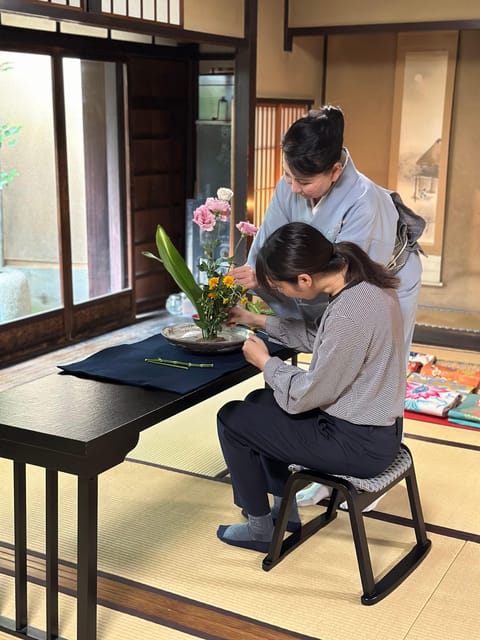
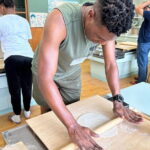
An ikebana master leads the session. The format centers on you making your own traditional flower arrangement, with hands-on coaching. Seasonal flowers and tools are provided, so you won’t spend your time in that annoying travel-moment of realizing you forgot something essential.
What you should expect in practice:
- You’ll get step-by-step guidance while you work.
- The instructor’s role isn’t only to show you what to do; it’s also to help shape your choices as you build the arrangement.
- Expect some explanation before your hands start moving, since the overall goal is to teach you how to think, not just what to copy.
A practical note: some people come hoping for lots of rules, lots of theory, and a long explanation of style choices. This experience is structured as a hands-on beginner class, so if you want more concept talk, ask for it as soon as the lesson begins. A short, direct question can change your entire experience.
Step 3: Your finished arrangement is displayed for photos
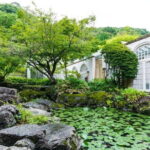
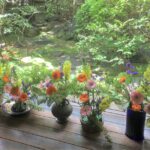
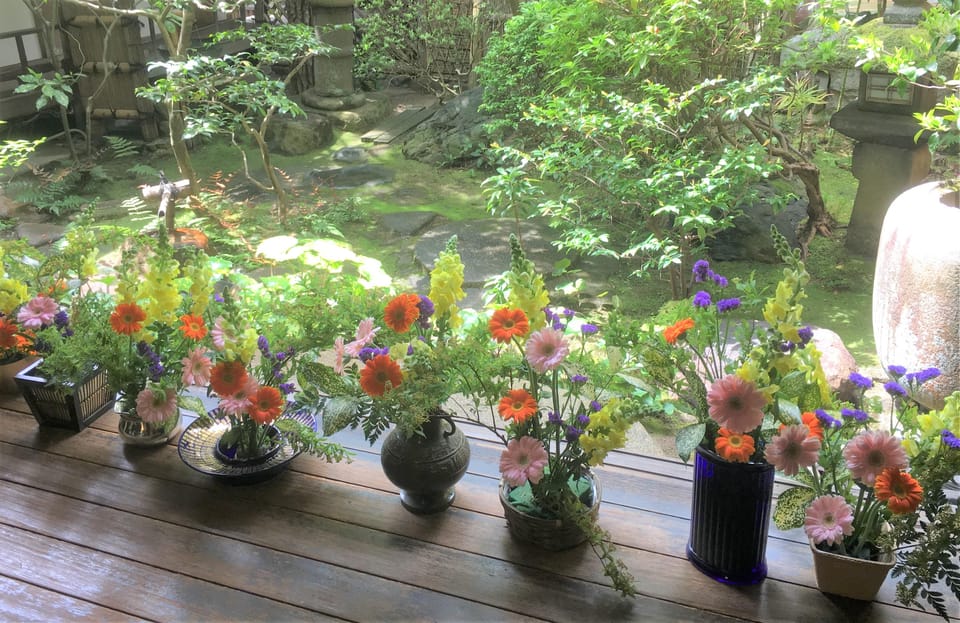
When your arrangement is complete, it’s displayed in front of the garden. This is a big deal for value, because it turns your work into something you can actually share and remember. Instead of packing materials and walking away, you get a moment where your finished piece is part of the environment.


Step 4: The cultural follow-up inside the machiya
After the Ikebana, the experience continues with a tour through Nishijin Lifestyle Museum Tondaya, housed in a 140-year-old machiya (a traditional Kyoto townhouse) that’s been designated by the Kyoto City Government as a culturally significant landmark.
This part is less about making and more about context. You’re guided through historically valuable artifacts and stories, which helps connect what you just learned to the wider idea of traditional Kyoto arts living inside real buildings.
Inside Tondaya’s Machiya: Why This Second Half Matters
Lots of flower classes stop at the arrangement. This one adds a deeper layer by moving you into a preserved townhome environment. A machiya isn’t just a pretty shell. It’s part of how Kyoto’s traditional culture holds together: craft, daily life, and space shape each other.
By the time you’re walking through the museum portion, you’ve already done something practical with your hands. That makes the building feel more meaningful. You’re not just looking at artifacts; you’re seeing how a dedicated space supports a living arts culture.
If you’re into photo stops, this is also where the day gets more interesting. A well-restored machiya gives you visual variety beyond typical street scenes. And since your arrangement is already meant for photos in the garden area, the museum tour gives you a second kind of memory: Kyoto as atmosphere.
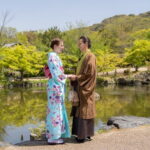
There’s also a hint of added craft overlap. The staff are experienced in multiple traditional arts, including kimono, tea ceremony, calligraphy, and ikebana. And in at least one case, visitors were invited to wear kimono for a small extra cost. If that matters to you, it’s worth asking what’s available on your day.
Price and Value: Is $122 a Good Deal?
At $122 per person for 90 minutes, you’re paying for a combination: an instructor-led beginner Ikebana lesson plus entry into a museum/townhouse experience.
So here’s how I’d judge value for you:
You’ll likely feel it’s fair if:
- You want a guided, hands-on class rather than a casual craft activity.
- You like structured learning with materials provided (flowers/tools are included).
- You care about the extra cultural context in the machiya, not just the workshop.
You might feel it’s expensive if:
- You want a long lecture on strict theory, deep rules, and lots of demonstration time.
- You’re expecting something closer to a half-day workshop rather than a tight 90-minute flow.
One more practical angle: some people can get disappointed when they feel the instruction time is shorter than expected or when the lesson focuses more on making than on explaining. You can reduce that risk by going in with the right mindset: think of it as learning by doing, with explanation as you go. If you want more rules, ask for them directly after the instructor’s first steps.
Languages, Communication, and Making Sure You Get What You Need
The instruction includes English and Japanese, and the meeting place is a museum setting run by Tondaya, Co., Ltd. Still, not all staff may speak English, so you might have an interpreter arranged. A translation device may be used when necessary.
For you, this means you should prepare in a simple way:
- Bring one or two questions you actually care about (for example: what makes a basic arrangement work).
- If something feels unclear, don’t wait until the end. Early clarification helps your hands follow your understanding.
In a beginner class, confusion can cause slow progress, and slow progress can make the whole session feel rushed. The best way to avoid that is simple: ask early, not late.
What to Bring: Socks Only, No Bare Feet
This is one of those details that can quietly make or break your comfort level.
You should bring socks. Bare feet are not allowed, and you’ll be asked to wear socks during your visit. The guidance also says to refrain from wearing stockings or tights.
Plan around it:
- Wear comfortable socks that you won’t mind being in for a class period indoors.
- If you normally travel with sandals, double-check that your socks travel plan is ready too.
This is the kind of rule you don’t want to discover at the door. It’s also part of the traditional indoor etiquette of Kyoto experiences.
Who This Kyoto Ikebana Class Fits Best
This is a strong match if you want:
- A beginner-friendly Ikebana lesson with seasonal flowers and tools provided
- A private-group pace (so you can ask questions without feeling lost in a crowd)
- A cultural add-on that’s not just a quick photo stop, but a machiya museum experience
It may be less satisfying if you:
- Want a long, rules-heavy lesson with lots of theoretical structure and multiple demonstration cycles
- Prefer an experience where you watch first, then copy exactly, then repeat a second arrangement
If you fall into the “I want theory” camp, you can still enjoy it. Just adjust your expectations: treat the class as a hands-on introduction, then ask for the extra explanation you want while you’re there.
Should You Book This Ikebana Lesson at Tondaya?
If you want a meaningful Kyoto souvenir that you made yourself, and you like the idea of pairing flower arranging with time inside a preserved 140-year-old machiya, I’d say this is a solid booking.
Book it if:
- You’re a beginner and want guided instruction, not a trial-and-error craft session.
- You care about the total experience: your arrangement plus the Nishijin townhouse museum visit.
- You’re comfortable following indoor etiquette like socks only.
Think twice if:
- You’re chasing a long lecture on theory and strict rules.
- You’re very price-sensitive and only want maximum time spent arranging flowers.
My practical tip: if you do book, go in ready to participate and ask questions early. When the session is hands-on, the best learning comes when you prompt the instructor while the tools are in your hands. That’s when this kind of Kyoto experience clicks.
FAQ
How long is the Ikebana experience?
The experience lasts 90 minutes.
Where is the meeting point?
Meet at Tondaya – Nishijin Japanese Cultural Experience Museum, 697 Ishiyakushichō, Kamigyo Ward, Kyoto, Japan.
What is included in the price?
The price includes materials (flowers and tools) and the entrance fee.
What should I wear or bring?
Bring socks. Bare feet are not allowed, and you should not wear stockings or tights.
What languages are offered during the lesson?
The instructor provides English and Japanese.
Is this experience refundable if plans change?
You can cancel up to 24 hours in advance for a full refund.