REVIEW · KYOTO
Kyoto Japanese Garden Lover’s Private Tour with Government-Licensed Guide
Book on Viator →Operated by Japan Guide Agency · Bookable on Viator
Kyoto gardens deserve a real plan. This private Kyoto tour pairs a government-licensed guide with a flexible route through famous temple gardens, so you spend time on meaning—not just moving between gates. I also like that you can shape the day around your tastes, with guides reported to handle last-minute changes without drama.
What I really love is the variety in a single 6-hour block: from gold-leaf Kinkakuji to the simple punch of a rock garden, plus moss and sand-garden styles in between. If you time it well, you can catch some sites feeling calm and uncrowded, including gardens like Taizo-in when the flow of groups hasn’t hit yet.
One possible drawback: this is a walking tour. Pickup is on foot in a designated area, and entrance fees are not included, so you’ll want to budget extra if you select several paid temples in one day.
In This Review
- Quick take: what makes this Kyoto garden private tour work
- Why a government-licensed guide changes the garden experience
- Building your perfect day: picking 3–4 gardens without overload
- From gold to silver: what Kinkakuji and Ginkakuji add to your visual story
- Honen-in and Nanzen-ji Suirokaku: gates, moss, and quiet pacing
- Ryoan-ji rock garden: the simplest scenes usually teach the most
- Taizo-in and Daitoku-ji: when Zen gardens feel like whole worlds
- Imperial flavor: Kyoto Imperial Palace and Shugakuin’s garden rhythm
- Arashiyama on your terms: Togetsukyo, bamboo paths, and Okochi Sanso
- Moss gardens and quiet corners: Gio-ji and Kyoto Botanical Garden
- Quick stops that still matter: Kennin-ji and how to fit it strategically
- Bonus option beyond Kyoto city: Byodoin in Uji for the Phoenix Hall
- Price and value: what $153.11 buys you (and what you still pay for)
- Who this tour suits best in Kyoto
- Should you book this Kyoto Japanese Garden Lover’s private tour?
- FAQ
- Is this tour private?
- How many sites can I choose?
- Is the tour mostly walking?
- Are entrance fees included?
- What’s the duration?
- Can I cancel for a full refund?
Quick take: what makes this Kyoto garden private tour work
- Government-licensed English interpreting helps you understand why rocks, sand, moss, and plant choices matter in each garden design
- Choose 3–4 sites from a long list, which keeps the day from turning into rushed temple sprinting
- Focused time at each stop (often ~20 minutes, with a few longer gardens) makes it easier to compare styles side by side
- A private group only for you means the guide can pace the route around your interests and comfort level
- Arashiyama classics with flexible options like Togetsukyo Bridge and the bamboo walk can fit neatly into your personal schedule
- Guides like Kaeko and Shun are specifically noted for being attentive and accommodating when plans shift
Why a government-licensed guide changes the garden experience
Japanese gardens in Kyoto can look beautiful on autopilot. But the magic is in the choices—how a curve in a path frames a view, how sand and stone suggest sea and islands, how moss is allowed to take over, and why a gate feels like a threshold rather than just an entrance.
That’s where a National Government Licensed Guide Interpreter (as stated for this tour) matters. You’re not just collecting photo angles. You’re getting context for the symbolism and historical setting behind the design, and that makes even a short stop feel intentional. When you’re moving quickly between multiple gardens, clear explanations are what prevent the day from becoming a blur of temple names.
I also like that this tour is built for efficient sightseeing. You’re on a schedule, but the guide’s job is to help you understand what you’re looking at while you’re there—so the time you spend is actually useful.
You can also read our reviews of more guided tours in Kyoto

Building your perfect day: picking 3–4 gardens without overload
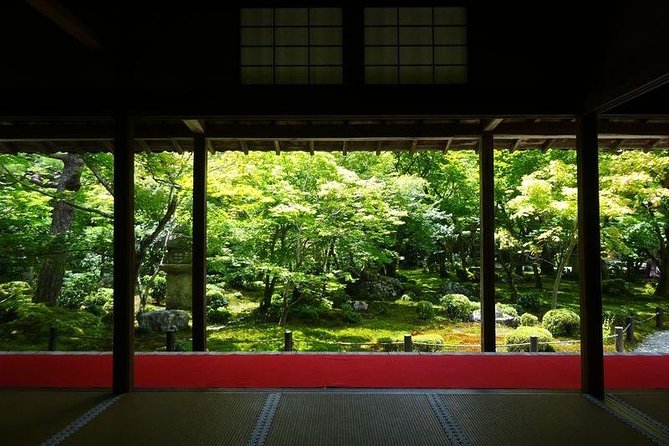
The biggest decision point is the customization. This is designed as a private walking tour where you choose 3–4 sites from the available list. That’s a smart sweet spot in Kyoto: enough variety to feel like you’re getting a real garden “education,” but not so many stops that you’re sprinting through ticket lines and forgetting what you just saw.
Here’s how I’d choose if you love Japanese garden design:
- Pick one icon (Kinkakuji or Ryoan-ji are the usual heavy hitters)
- Add one moss or sand-style garden (places like Honen-in or Taizo-in fit that vibe)
- Include one big-feeling Zen temple complex (Nanzen-ji Suirokaku or Daitoku-ji can work well)
- If you want a change of atmosphere, add Arashiyama (bridge + bamboo area), or an imperial villa-style garden
If you try to select too many paid temples, the entrance-fee total can surprise you, since the tour price does not include them. But if you pick carefully, you’ll end up with a day that feels curated to your taste rather than crammed.
From gold to silver: what Kinkakuji and Ginkakuji add to your visual story
Two of Kyoto’s most famous garden-temple experiences sit on opposite ends of a visual spectrum.
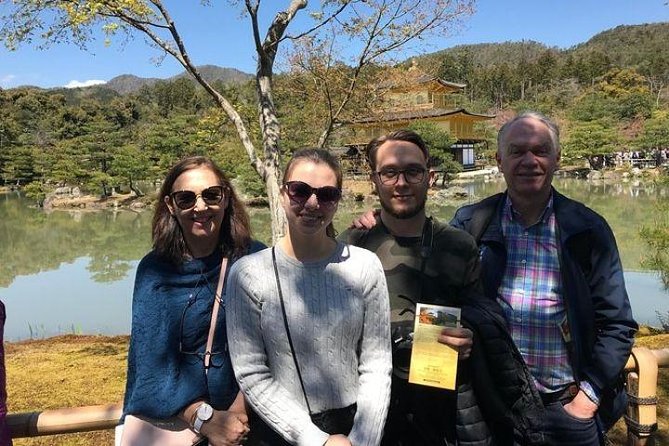
At Kinkakuji (Rokuonji), you’re looking at a Zen temple where the top two floors are fully covered in gold leaf. Even if you’ve seen photos before, the effect is different in person—light seems to bounce off the pavilion in a way that changes as the sky shifts. This stop is also tied to power and history, since the temple grounds are described as the retirement villa of shogun Ashikaga.
Then Ginkakuji (Silver Pavilion) gives you a contrasting mood. It sits along Kyoto’s eastern mountains in the Higashiyama area, and it was built as a retirement villa by shogun Ashikaga Yoshimasa, modeled after Kin. I like using this pair back-to-back (when your schedule allows) because it helps you see how garden aesthetics in Kyoto can be about more than one “look.” You start to notice restraint, proportion, and how the garden frames the pavilion rather than competing with it.
Practical note: both stops are shown as short in this tour format (about 20 minutes each). That’s enough time to get your bearings, see the core view, and appreciate the design cues—just don’t plan on a long, slow wander unless you intentionally keep your day light elsewhere.
Honen-in and Nanzen-ji Suirokaku: gates, moss, and quiet pacing
If you want your day to feel calmer and more textured, this is where it happens.
Honen-in is described as starting with an incredibly scenic approach that culminates in a moss-covered gate. That kind of arrival experience matters in Kyoto. You’re not walking into a site; you’re stepping into a mood. Inside, you pass between two sand mounds, a detail that helps reinforce how these gardens use simple materials to create deeper meaning.
Then Nanzenji Suirokaku brings a larger, more important Zen-temple atmosphere. Nanzenji is described as one of the most important Zen temples in all of Japan and the head temple of its Zen lineage. You’ll be at the base of the Higashiyama mountains, so the setting supports that open, breathing-room feeling that many people associate with big Zen temple grounds.
The trade-off is time. This tour format is designed for efficiency, so you get a short visit to each selected stop. If you’re the type who likes to sit and watch a garden for a while, choose fewer sites, or plan to spend extra minutes at the one stop you care about most.
Ryoan-ji rock garden: the simplest scenes usually teach the most
Ryoan-ji is famous for the rock garden that attracts hundreds of visitors daily. In Kyoto, that kind of attention can feel intimidating. But here’s the advantage of going with a guide in a private setup: you can understand what to look for and how to slow down your eye, even when crowds are present.
What makes Ryoan-ji worth building a day around is that it’s all about reduction. The garden uses stones and carefully arranged composition to create a scene that changes depending on where you stand and how you frame it mentally. A knowledgeable interpreter (again, this is a key part of the tour design) can help you connect the layout to the Zen intent, so you’re not just waiting for the next viewpoint.
If you choose this stop, I’d treat it as your anchor. Then let the rest of your selected gardens support it—moss and sand elsewhere, imperial elegance if you want contrast.
You can also read our reviews of more private tours in Kyoto


Taizo-in and Daitoku-ji: when Zen gardens feel like whole worlds
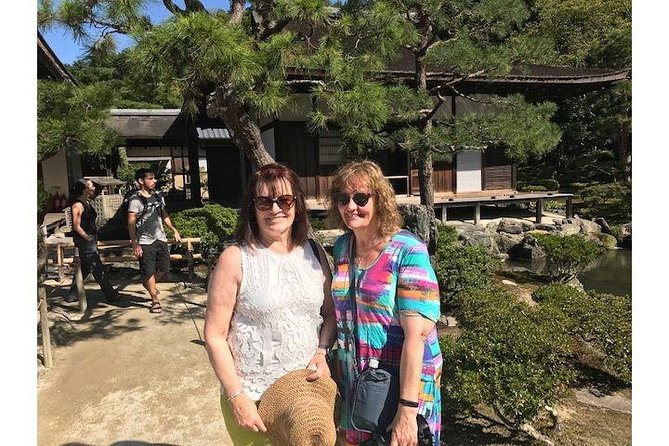
Some Kyoto gardens feel like a full universe packed into a small area. Taizo-in is described as one of Myoshin-ji’s subtemples and as one of Kyoto’s most famous. You’ll notice the tour suggests it works in any season, which is a useful hint: the key is not a single bloom cycle, but the texture and structure of the garden design.
I also like the idea that Taizo-in can be a calmer moment if timing lines up. Since this tour is private, you’re less tied to group arrivals, and the guide can help you move through the garden windows that tend to feel more relaxed.
Then Daitoku-ji is for people who want temple complexity. It’s described as a Zen temple complex where there are temples within temples, with many meditative gardens. When you’re the type who enjoys getting lost a little (in a good way), Daitoku-ji can deliver. The caution: if you select Daitoku-ji plus multiple other major sites, your day can start to feel like you’re constantly entering and exiting. Pick Daitoku-ji if it’s a top priority.
Imperial flavor: Kyoto Imperial Palace and Shugakuin’s garden rhythm
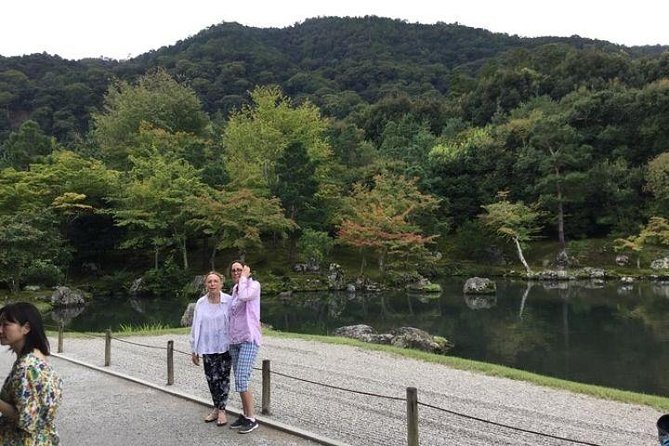
Not every garden lover wants only temple-style Zen. If you like a different kind of design—linked to political power, court life, and carefully managed aesthetics—Kyoto’s imperial sites fit the bill.
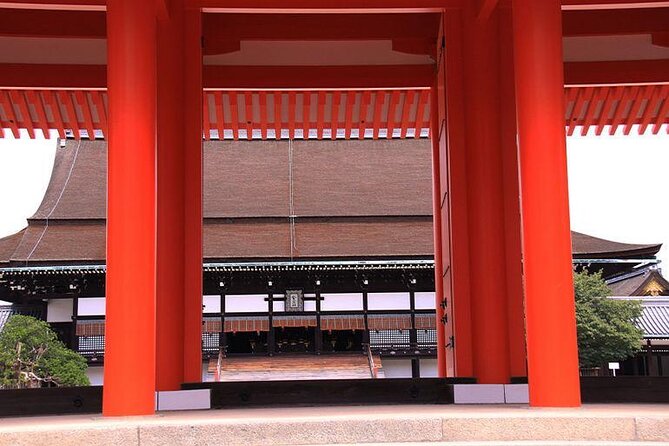
The Kyoto Imperial Palace is described as the former residence of Japan’s Imperial Family until 1868, when the emperor and capital moved to Tokyo. It’s located in spacious Kyoto grounds, which naturally supports an open, ceremonial feel. In a garden-focused day, it’s a nice way to step away from the strict Zen lens and see another side of Japanese spatial design.
Shugakuin Imperial Villa adds even more of that atmosphere. It was built in the 17th century by Emperor Gomizuno and is managed by the Imperial Household Agency. The villa consists of Upper, Middle, and Lower Villa areas, which signals variety in how the garden and built elements unfold.
If you pick an imperial site, I’d suggest choosing it alongside one temple garden rather than pairing it with three heavy Zen hits. This keeps the day from feeling like one long temple marathon.
Arashiyama on your terms: Togetsukyo, bamboo paths, and Okochi Sanso

Arashiyama is the part of Kyoto many people come for. The best move in a private tour is to treat it as a flexible chapter, not a rushed checklist.
Togetsukyo Bridge is the iconic landmark. It’s described as originally built during the Heian Period and reconstructed in the 1930s. Even in a short visit, you can catch why it’s a “moon crossing” famous view—Arashiyama river scenery plus a strong historic silhouette.
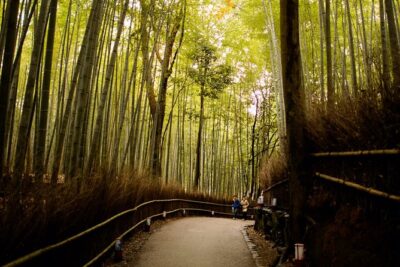
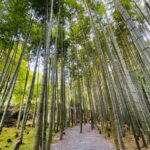
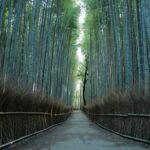
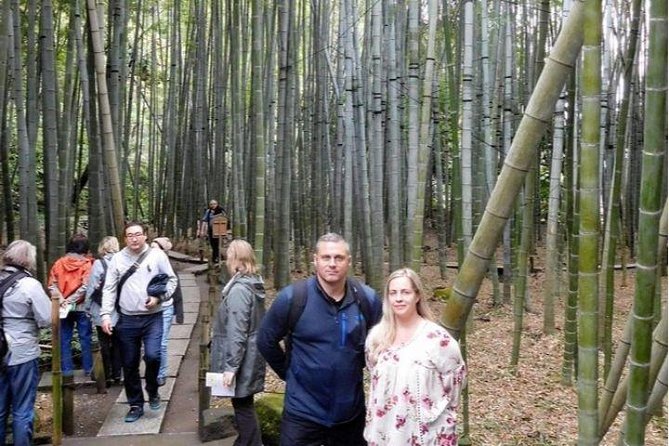
Next comes the Bamboo Forest Street walking paths. It’s described as especially attractive when there’s light wind and the tall bamboo stalks sway gently. This is one of those places where the day’s weather can change everything. If your schedule allows, I’d plan to spend a bit more attention on the motion and sound of the bamboo rather than chasing the perfect photo.
For a garden twist behind the bamboo, Okochi Sanso Garden is a former villa of actor Okochi Denjiro. It includes several different gardens and buildings, giving you more than just the bamboo-photo effect. In this tour format, it’s allotted a longer stop (around 30 minutes), which helps you actually experience the variety.
Note: Togetsukyo Bridge and Bamboo Forest Street are listed as free admission in this tour summary, so they’re good anchors if you want to keep paid entry costs down.
Moss gardens and quiet corners: Gio-ji and Kyoto Botanical Garden
If you’re chasing texture—moss, shade, and a sense of stillness—this is your section.
Gio-ji is described as even more nestled into the forest than nearby sub-areas (like Jojakkoji and Nisonin). It’s known for its moss garden, punctuated with tall maple trees, and it has thatched elements in the entrance gate and small main hall. The detail here is the feel: forest shade and moss create a soft, muted look that photographers and slow walkers tend to appreciate.
If you want something less famous but still worthwhile, Kyoto Botanical Garden is described as an overlooked and affordable option. It’s a good choice when you want garden design without the pressure of the most crowded temple classics.
Quick stops that still matter: Kennin-ji and how to fit it strategically
Kennin-ji is near Hanamikoji and Shijo streets, which means you get a contrast between city energy and temple calm. The grounds are described as expansive and pleasant to walk, and it has two karesansui (dry sand garden) areas.
In this tour format, Kennin-ji is shown as a very short stop (about 1 minute), which tells me the best way to include it is as a strategic “in-and-out” between bigger experiences. If you truly care about seeing the sand gardens closely, you may want to choose Kennin-ji only if you can afford that time within your selected 3–4 sites.
Bonus option beyond Kyoto city: Byodoin in Uji for the Phoenix Hall
One standout option in the list is Byodoin Temple in Uji city. It’s known for its Phoenix Hall, which is described as a National Treasure of Japan and also a UNESCO World Heritage Site.
The tour notes extra travel time is expected here. That’s an important consideration for a 6-hour walking tour format. If you choose Byodoin, you’ll likely want to reduce how many other far-flung stops you pick, so you don’t lose time to transit.
Price and value: what $153.11 buys you (and what you still pay for)
At $153.11 per person for about 6 hours, the value here is less about included admissions and more about what you avoid: confusion, wasted time, and missed meaning.
What’s included:
- A licensed local English-speaking guide
- A customizable walking tour with your choice of 3–4 sites
- A meeting point on foot in a designated Kyoto area
- A mobile ticket
- Pickup is offered, but it’s described as a walking-tour pickup approach
What’s not included:
- Transportation fees
- Entrance fees
- Lunch and personal expenses
- Any private vehicle
So the budget math is simple: your tour price covers the guide and the tour structure; you cover site admissions and any transit costs. If you select several paid temples, expect extra out-of-pocket spending. If you select Arashiyama free areas plus one or two paid highlights, the day can feel much more cost-friendly.
Also keep in mind: you can’t combine multiple tour groups. The private-group setup is the selling point, and it’s why the day feels more flexible than a standard joining tour.
Who this tour suits best in Kyoto
This private Kyoto Japanese garden tour is a great fit if:
- You love garden design and want the stories behind rocks, sand, moss, and plant choices
- You want help picking which iconic sites to prioritize
- You’d rather walk a smart route with context than follow a generic route with no explanation
- You want flexibility within your day, especially if plans change
It might not be ideal if:
- You hate walking and long time on your feet. This is explicitly a walking tour format.
- You want to pay as little as possible in entrance fees. The tour doesn’t include them.
- You want a slow, lingering session at every garden. The pacing is designed to sample and compare multiple styles within 6 hours.
Should you book this Kyoto Japanese Garden Lover’s private tour?
If your goal is to understand Kyoto’s Japanese garden aesthetics—and not just tick off famous names—this is a strong booking. The guide element is the real value, and the ability to choose 3–4 sites is what keeps the day enjoyable instead of exhausting.
Book it if you want a day with meaning, good pacing, and flexibility. Pass or rethink it if you’re trying to turn it into a full day of admissions you haven’t budgeted for, or if walking for 6 hours is a deal-breaker.
If you’re on the fence, I’d choose your must-see list first, then build your 3–4 picks around what you’d genuinely enjoy explaining and comparing with your guide. That’s when this tour turns into a memorable Kyoto day rather than a busy one.
FAQ
Is this tour private?
Yes. It’s a private tour/activity, meaning only your group participates.
How many sites can I choose?
You can choose your walking tour route from the provided options, with a customizable itinerary based on 3–4 sites.
Is the tour mostly walking?
Yes. It’s described as a walking tour, and pickup is on foot within a designated Kyoto area.
Are entrance fees included?
No. Entrance fees are not included, and the guide entry fees are only covered for sights listed under what to expect.
What’s the duration?
The tour is listed as about 6 hours.
Can I cancel for a full refund?
Yes, there is free cancellation. You can cancel up to 24 hours in advance for a full refund. If you cancel less than 24 hours before the experience starts, the amount paid is not refunded.