REVIEW · KYOTO
Kyoto, Osaka, Nara Full Day tour by Car English speaking Driver
Book on Viator →Operated by NIHON HORIZON TOUR · Bookable on Viator
Kyoto can feel like a maze until a car drops you where you need to be. This private day tour is built for convenience: English-speaking driver/guide, point-to-point transport, and a packed route through the city’s most famous areas.
Two things I like a lot are the air-conditioned private vehicle (so your energy stays for walking) and the fact that the day is organized as an easy flow of stops rather than you trying to connect buses and trains all on your own. In one example from the service team, a driver/guide named Rana Usman was noted as punctual and friendly while helping with the day’s pacing.
One possible drawback: some people expecting a full-on, lecture-style guide may feel this is more driver-led than classroom-guided. You’ll still get explanations, but it’s not the same feel as a professional group tour guide with heavy narration all day.
In This Review
- Key points before you go
- A private car tour that turns Kyoto into a manageable day
- Arashiyama Bamboo Grove: your fastest path to Kyoto’s most photographed trees
- Kiyomizudera: the temple view that makes you understand why Kyoto gets famous
- Kinkaku-ji (Golden Pavilion): short stop, big visual payoff
- Fushimi Inari Taisha: torii gates, stairs, and the best kind of walking workout
- Gion: a short stroll through Kyoto’s most famous old-street zone
- Sanjusangendo and the 1001 statues: spiritual art, not just another temple photo
- Ginkaku-ji (Silver Pavilion): the quieter counterpoint to Kinkaku-ji
- Nishiki Market: where Kyoto becomes a food-and-shopping stroll
- Kyoto Imperial Palace and Nijo Castle: power sites with very different feels
- Eikando Zenrinji and Yasaka Shrine: you finish with Kyoto still feeling alive
- Price and logistics: is $650.30 per group actually a value?
- Who this Kyoto full-day car tour is best for
- Should you book this Kyoto private full-day tour?
- FAQ
- Is this tour private?
- How many people can be in the group?
- Are entrance fees included in the price?
- How long is the tour?
- Is pickup and drop-off included?
- Does the tour include meals?
- Is the driver English speaking?
Key points before you go
- Private car for your group (up to 6): you’re not stuck sharing the day with strangers.
- English-speaking driver/guide: useful for timing, navigation, and practical context.
- A/C vehicle: Kyoto summer heat and winter chills don’t get to win.
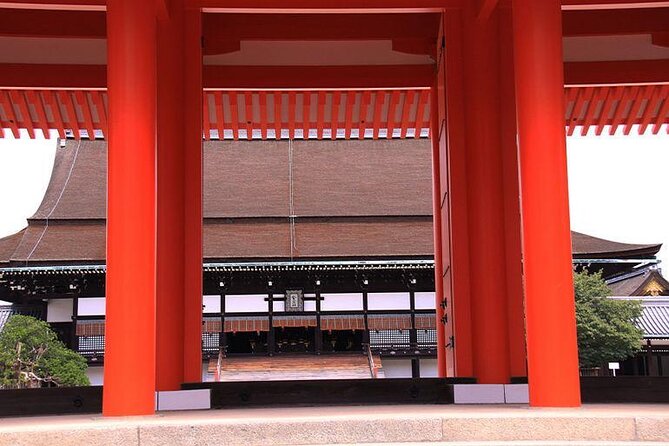
- Icon + neighborhood mix: bamboo, temples, torii gates, markets, and classic palace/castle sights.
- Admission fees are extra: some key stops charge entry, and you choose what to pay for or skip.
- A fully customizable day: you can add or skip stops to match your interests.
A private car tour that turns Kyoto into a manageable day
Kyoto is gorgeous, but it’s also spread out. Doing a top-sights day on your own can turn into a game of hop-on, hop-off stress. With this private full-day car tour, you get picked up and dropped back, then spend the day moving between districts with a driver handling the roads.
The day is also designed around real walking time. You’re not just seeing a sight from a parking lot. Most stops have set time blocks (for example, Arashiyama Bamboo Grove is about 30 minutes; Kiyomizudera about 1 hour; Nishiki Market about 1 hour), which helps you avoid the common problem of losing half your day to travel and indecision.
Just know the schedule is full. If you want long, slow temple wandering or extra time for photos at every stop, you may need to skip something—or be ready to keep it brisk.
You can also read our reviews of more tours and experiences in Kyoto


Arashiyama Bamboo Grove: your fastest path to Kyoto’s most photographed trees
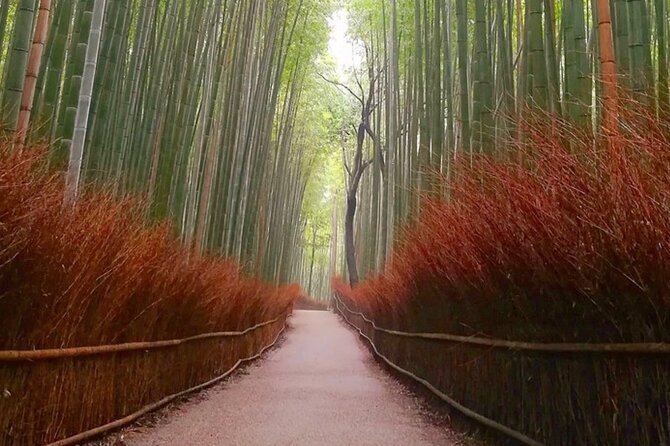
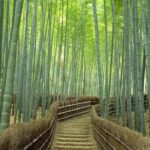
Arashiyama is a major sightseeing district, and the Arashiyama Bamboo Grove is the star. Even if you’ve seen the grove in photos, the real effect is different in person: the height of the bamboo, the light filtering through, and the sense of being inside a corridor of green.
What works well here is the time balance. You’re given about 30 minutes, which is long enough to walk the main areas, take photos, and still not feel trapped in a slow-moving crowd for hours. If you arrive when it’s busy, expect foot traffic. If you arrive with a calmer mindset, you can still enjoy the atmosphere and grab your pictures efficiently.
The main consideration is that “bamboo grove time” is usually standing and walking at a fixed attraction. If your group is more into temples or gardens than photo spots, you might want to keep your expectations realistic and treat this as the quick icon stop.
Kiyomizudera: the temple view that makes you understand why Kyoto gets famous
Next is Kiyomizudera, one of Kyoto’s best-known temples. It’s founded in 780, and it’s located at a wooded hillside site connected to the Otowa Waterfall area. Practically speaking, Kiyomizudera is not just about a single building; it’s about the scene—views, the approach, and the feeling of climbing into the historic hillside.
You get about 1 hour here. That’s enough time to see the main areas and soak up the views without turning it into a half-day hike. The likely downside: the site can feel busy, and you may deal with stairs, uneven paths, and crowds depending on the time of year.
Also, entry isn’t included. Kiyomizudera charges about ¥400 for adults (students lower, as listed). You can also choose not to pay and skip, since entrance fees are not included and you can omit stops.
Kinkaku-ji (Golden Pavilion): short stop, big visual payoff
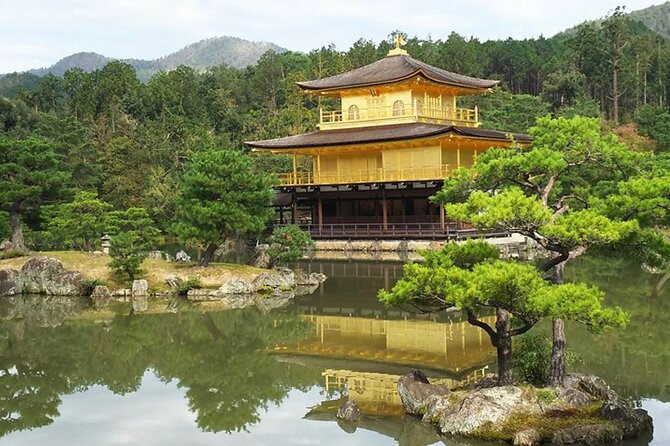
Then it’s on to Kinkaku-ji (Rokuon-ji), the Zen temple known for the Golden Pavilion. This is one of those Kyoto sights where you don’t need a lot of explanation to understand why people line up. The building and setting create an instant “wow,” especially when the day’s light hits the gold.
Your time block is about 40 minutes. For this stop, that’s a good amount: long enough to see the key views and walk the areas you need, short enough that you still keep momentum for the rest of the day.
Cost-wise, Kinkaku-ji’s admission is about ¥500 for adults. That fee is separate from the tour price. If you’re deciding whether to add an extra temple payment during a busy day, I’d frame it like this: Kinkaku-ji is usually the “pay once, get photos and memories” stop.
Fushimi Inari Taisha: torii gates, stairs, and the best kind of walking workout
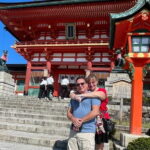
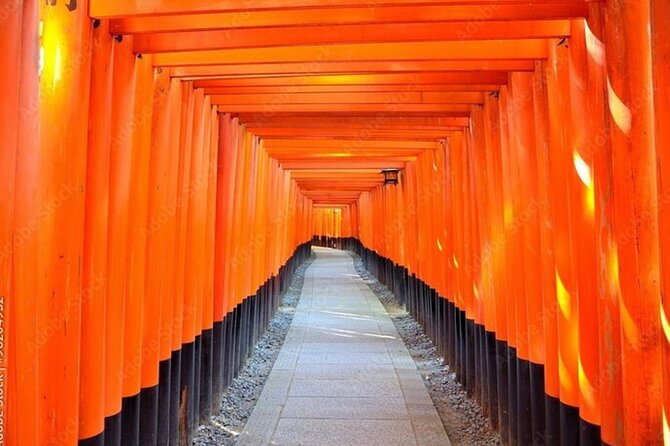
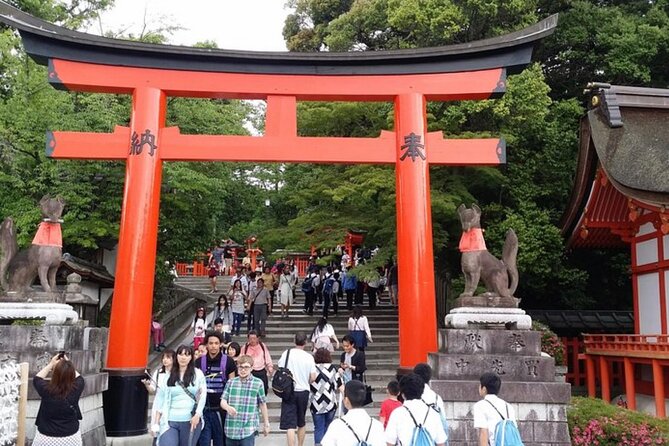
Fushimi Inari Taisha is famous for its thousands of vermilion torii gates. The big reason this works on a private car day is that you can get there as part of a planned route, then spend focused time in one place rather than trying to solve transportation while you’re excited (and tired).
You get about 40 minutes. That’s enough to see the main torii paths and experience how the gates create a tunnel-like feeling. The drawback is physical effort: there can be steps, uneven ground, and plenty of walking if you push deeper into the route. If you’re with kids or anyone who tires easily, you can still enjoy it by sticking to the most accessible segments.
Admission isn’t listed as included, so if you’re paying attention to costs, plan based on what you choose to enter or walk through. The bigger cost here is energy—good shoes matter.
You can also read our reviews of more tours and experiences in Kyoto

Gion: a short stroll through Kyoto’s most famous old-street zone
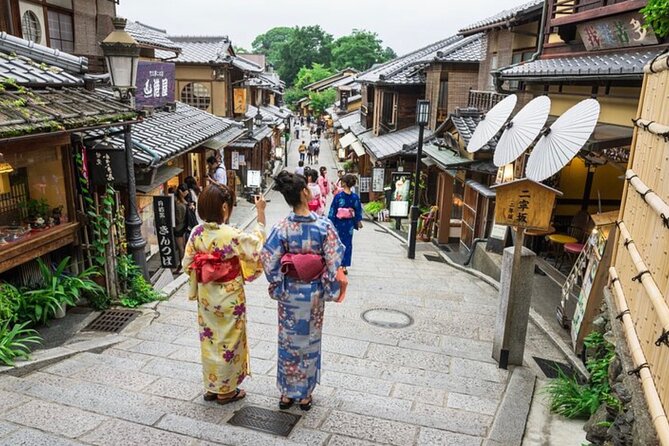
Gion is Kyoto’s best-known geisha district area. It’s centered around Shijo Avenue between Yasaka Shrine and the Kamo River. The vibe is shops, restaurants, and ochaya (teahouses), with a strong historic streetscape feel.
You get about 30 minutes. For Gion, that’s actually a solid time box. You don’t need hours to appreciate the lanes and atmosphere. Think of it as a chance to reset from temple-heavy walking and get a sense of how Kyoto feels day to day—not just as an attraction map.
A realistic note: famous sightings of geisha or maiko aren’t something you can count on. Even without that, Gion is worth seeing for the street mood and traditional storefronts.
Sanjusangendo and the 1001 statues: spiritual art, not just another temple photo
Sanjusangendo (Rengeo-in) is known for 1001 statues of Kannon, the goddess of mercy. This stop is different from many other temples because the main experience is the sheer number and arrangement of the figures—more focused on the hall and artwork than wide outside views.
You have about 40 minutes. That’s enough to see the hall setup and move through without feeling rushed to the point where the details never register.
One advantage of including a stop like this is variety. After the torii-gate walking and outdoor temple scenes, Sanjusangendo gives you a calmer, more indoor, structured experience.
Like many stops today, entrance fees aren’t included, but you can choose whether to pay and how much to do.
Ginkaku-ji (Silver Pavilion): the quieter counterpoint to Kinkaku-ji
Ginkaku-ji is often called the Silver Pavilion, and it’s a Zen temple along Kyoto’s eastern mountain side. It became famous as a retirement villa area for Shogun Ashikaga Yoshimasa in the 1400s, and today it’s appreciated for its calmer mood compared to flashier sights.
You get about 1 hour. This is the stop where I’d slow down a touch. Even if you don’t know every detail, you’ll feel the difference in pacing: more space, less “snap and go,” and a stronger sense of Zen style design.
Again, admission isn’t included, so consider it an optional paid moment if you’re keeping track of total spend. The route is still worth it for the movement variety: going from loud crowds in the morning icons to something with more breathing room.
Nishiki Market: where Kyoto becomes a food-and-shopping stroll
Nishiki Market is one of Kyoto’s most famous shopping districts, originally known as a fish market during the Edo period. Today it’s lined with stalls and shops, and it’s a great spot for snack breaks or souvenirs that feel specific to Kyoto.
You have about 1 hour. I like this timing because it breaks up temples with something sensory and easy. If your group wants gifts, small food tastings, or just a change of scenery, Nishiki helps.
The only real drawback: it can be crowded. Also, because the tour price doesn’t include meals, you’ll likely pay for food here yourself. Bring a little cash and don’t expect one perfect “shopping plan.” Wander, compare, and pick what looks good in the moment.
Kyoto Imperial Palace and Nijo Castle: power sites with very different feels
The tour continues into classic “old authority” Kyoto with Kyoto Imperial Palace and Nijo Castle.
At the Kyoto Imperial Palace, you’re seeing the former residence of Japan’s imperial family until 1868, when the emperor and capital moved to Tokyo. The stop is about 1 hour, and it works well if you like the idea of Kyoto as a political center, not only a spiritual or scenic one.
Then you move to Nijo Castle, built in 1603 as the Kyoto residence of Tokugawa Ieyasu, and completed by his grandson Iemitsu. This stop is about 1 hour too. Castles are one of the best places to get a feel for how power was built and displayed—thick walls, formal spaces, and a sense of rule that still comes through even now.
Fees for these stops aren’t included, but you can decide what you want to pay for. The bigger challenge is time and stamina. Two major sites back to back can feel like information overload if you’re trying to read everything. I recommend focusing on just a few standout areas per stop.
Eikando Zenrinji and Yasaka Shrine: you finish with Kyoto still feeling alive
After Nijo, you head to Eikando Zenrinji Temple, which is the main temple of the Jodo-shu Seizan-Zenrinji school. It began as a training temple of Shingon sect esoteric Buddhism in 853. Your time here is about 1 hour.
This is a meaningful inclusion because it adds another type of Kyoto experience: a temple stop that’s not just about a single landmark building. You’re also getting a sense of how old religious education and training shaped Kyoto’s temple network.
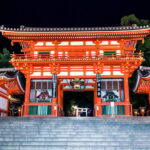
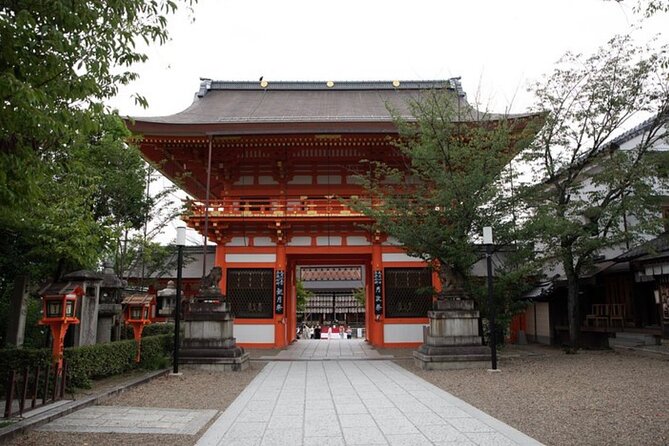
Finally, you wrap with Yasaka Shrine, with history that may go back to 656 (Heian era), based on the shrine’s records. It’s a 30-minute stop. Yasaka is a good closer because it’s tied to neighborhood Kyoto energy. You end with a shrine that feels connected to the city rather than isolated as a “destination only.”
Price and logistics: is $650.30 per group actually a value?
This tour costs $650.30 per group (up to 6) for about 10 hours. That price includes private transportation, an air-conditioned vehicle, highway tolls and gasoline, plus meet-and-greet and an English-speaking driver/guide.
Here’s how I think about value for this kind of day in Kyoto:
- If you’re traveling with 3–6 people, the private car can be cheaper than you’d expect versus multiple taxis or complicated transit.
- You’re paying for time savings and stress reduction. Kyoto’s top sights are spread out, and this route avoids the constant “what bus do we take” problem.
- You still control where you spend extra money. Entrance fees aren’t included, so if the budget is tight, you can skip a paid site and keep moving.
Costs to watch:
- Admission fees are extra and vary by stop. Two listed examples: Kinkaku-ji is about ¥500 for adults and Kiyomizudera is about ¥400 for adults.
- If your day runs longer than the planned 10 hours, there’s an overtime charge listed as ¥5,000 per extra hour after 10 hours (hotel-to-hotel time). If you tend to lose track in markets or photos, plan for that.
One more practical note: the day requires good weather. If weather is poor, you may need to move dates or adjust plans.
If you’re trying to do a similar day yourself with trains and walking, you might save money but you’ll likely spend more time in transit and more time coordinating. This is a pay-for-ease style of value.
Who this Kyoto full-day car tour is best for
This tour makes the most sense for you if you want:
- A high-sight-density day without the navigation grind
- A private setup for a group of up to 6
- Comfort via an A/C vehicle, especially in hot weather
- A day structured around major Kyoto areas: Arashiyama, Kiyomizu, Kinkaku, Fushimi Inari, Gion, and more
It may not be the best fit if:
- You want a deeply scripted, continuous commentary like a full guided group tour
- Your group prefers long stays at just 1–2 places instead of “many hits” in one day
- You’re expecting admission fees to be covered in the package price
It’s also good if you have kids or multi-generation travelers, because the car helps everyone stay together. The key is walking comfort and pacing.
Should you book this Kyoto private full-day tour?
I’d book it if your main goal is to see a lot of Kyoto’s headline sights with minimal hassle. The private car and A/C alone help a full day feel doable. I also like the balance of stops: bamboo, iconic temple exteriors, torii gates, a market break, and classic power sites.
You should think twice if you’re the type who needs a constant guided lecture. If your ideal day is all about detailed commentary for every step, you may want to request a stronger “guide” style of interaction before you confirm.
If you’re traveling in a group of up to 6 and you’d rather spend your energy on walking, photos, and actually enjoying each place, this is the kind of Kyoto day that keeps the city from running you.
FAQ
Is this tour private?
Yes. It’s a private tour/activity, and only your group participates.
How many people can be in the group?
The group size is up to 6.
Are entrance fees included in the price?
No. Entrance fees are not included. Some listed examples are Kinkaku-ji and Kiyomizudera.
How long is the tour?
It’s about 10 hours.
Is pickup and drop-off included?
Yes. Pickup and drop-off are included, with meet-and-greet, and pickup is offered from locations including Osaka, Kyoto, Kobe, Nara, Osaka Kansai Airport, and the Osaka cruise terminal.
Does the tour include meals?
No. Meals are not included.
Is the driver English speaking?
Yes. The tour includes an English-speaking driver/guide.