REVIEW · KYOTO
Full Day Biking Tour Exploring the Best of Kyoto
Book on Viator →Operated by Cycle Kyoto · Bookable on Viator
Kyoto by bike beats walking every time. This full-day loop mixes famous landmarks with calmer neighborhoods in a small group format, and you get real context at stops like the Golden Pavilion. One drawback: it’s a long day on a bicycle, so you’ll want comfortable riding skills and a moderate fitness level.
You’re out about 7 to 8 hours, typically covering roughly 18 to 20 miles plus short temple and shrine walks. The tour starts at Cycle Kyoto near Kyoto Station, where you get a properly fitted Cannondale bike, a helmet, and bottled water for the ride.
In This Review
- Key things to know before you pedal off
- A Kyoto overview tour that actually moves
- Starting at Cycle Kyoto: bikes, helmets, and an easy launch
- How the 7 to 8 hours feel in real life
- Stop 1: Cycle Kyoto and the quick set-up
- Stop 2: Nishi Honganji for one of Kyoto’s biggest wooden spaces
- Stop 3: Kitano Tenmangu Shrine and the local shrine mood
- Stop 4: Kinkaku-ji, the Golden Pavilion, with commentary and a sanity check on crowds
- The ride-by Imperial Palace grounds: history you can see from the road
- Stop 5: Gion in a small-group way, not a maze
- Stop 6: Tofuku-ji for calm Zen views from the bridge
- Stop 7: Fushimi Inari-taisha and the art of not getting stuck
- Lunch and bottled water: the included fuel that keeps you sane
- Price and value: what $119.38 really covers
- How the guides shape the whole day
- Who should book this, and who should skip it
- Should you book this Kyoto bike tour?
- FAQ
- How long is the full-day bike tour?
- What’s included in the price?
- What kind of fitness level do I need?
- How large is the group?
- Where does the tour start and end?
- What happens if the weather is bad?
Key things to know before you pedal off
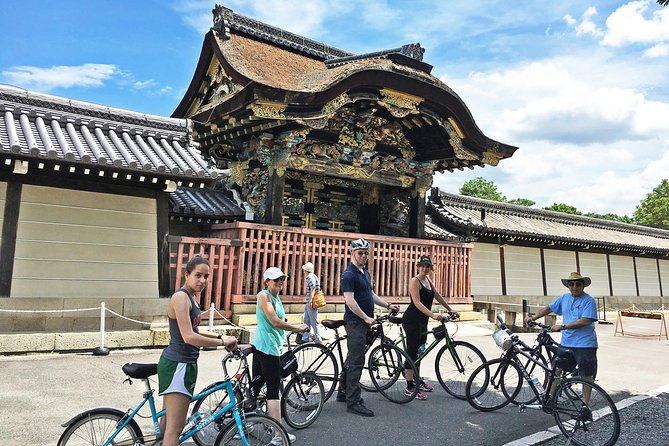
- Max 8 riders, not a crowd: the route feels flexible, and your guide can actually watch for questions and pacing.
- Famous sights, smart order: you hit big-ticket stops like Kinkaku-ji and Fushimi Inari-taisha without spending the whole day lost.
- Nishi Honganji and Kitano Tenmangu: two quieter, less obvious stops that add variety beyond the usual temple checklist.
- Guides route you through Inari crowds: the tour helps you pick a path at Fushimi Inari instead of getting stuck in bottlenecks.
- Lunch is built in, not an afterthought: you refuel with a hearty Japanese meal so the afternoon doesn’t feel like a slog.
A Kyoto overview tour that actually moves
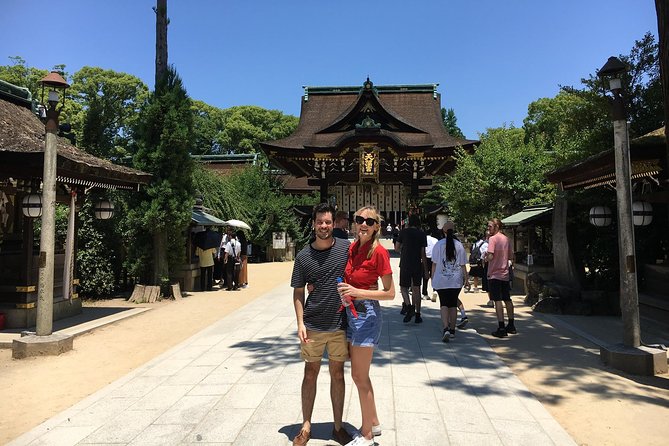
This is the kind of tour you choose when you want to understand Kyoto fast. Walking only gets you so far, and buses can feel distant. Cycling hits a sweet spot: you cover ground quickly, but you still experience streets, storefronts, temple approaches, and riverside vibes up close.
The best part is the balance. You get major icons—Kinkaku-ji, Gion, and Fushimi Inari-taisha—then you also visit places that add depth without turning the day into a temple marathon. That mix helps you come away with a mental map of Kyoto, not just a pile of photos.
You can also read our reviews of more cycling tours in Kyoto
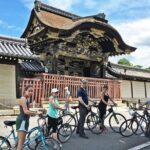
Starting at Cycle Kyoto: bikes, helmets, and an easy launch
The tour meets at Cycle Kyoto in Minami Ward (7 Higashikujō Nishisannōchō, Kyoto). It’s near public transportation, and one practical detail that matters: the shop is close to Kyoto Station, so it’s not a big scramble to reach the start.
After you meet your guide and the other riders, you’ll get your bike fitted and your helmet on before you roll. The bikes included are high-quality Cannondale models, and the fact that they’re set up for you is a huge time-saver. You’re not spending your morning bargaining, adjusting, or worrying about whether the seat fits your body.
How the 7 to 8 hours feel in real life
On paper, this looks like a full-day tour with multiple stops. In practice, it’s paced with short ride segments and short visits, which keeps the energy up. Many days like this can become either too rushed or too slow. Here, it tends to be a steady rhythm.
Expect a mix of:
- cycling time between sights
- brief temple/shrine time blocks (often 5 to 20 minutes)
- occasional walking inside grounds where you’ll naturally slow down for photos and views
Based on what people report, you can finish with big numbers—one rider mentioned about 20 miles of biking plus around 14,000 steps. That’s not the goal, but it’s a good reality check. If you’re comfortable on a bike and okay with hills or occasional longer stretches, you’ll feel fine.
Stop 1: Cycle Kyoto and the quick set-up
Your day begins at the shop, where you meet the guide and the group. You’ll get your bike fitted, and you’ll get ready for the route. It’s a small start that matters because a correct fit affects comfort all day.
This is also your first chance to get guidance on how the tour rides. You’ll be in a small group of up to 8, so you’re not glued to a bus window or swallowed by a crowd. You’ll ride with some control, and the guide can adjust pacing when needed.
Stop 2: Nishi Honganji for one of Kyoto’s biggest wooden spaces
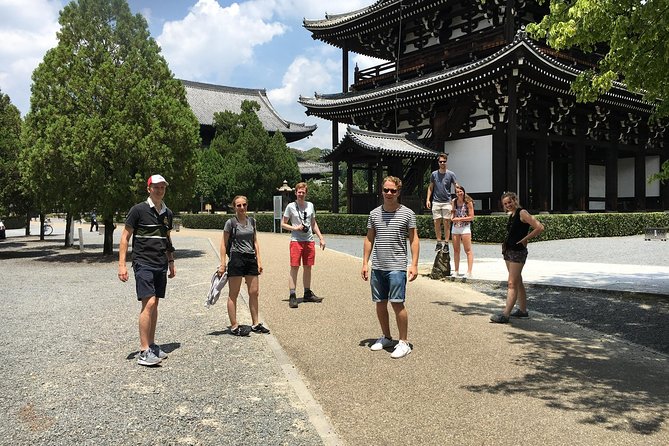
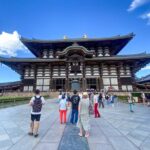
Nishi Honganji is a standout because it’s both impressive and not as overhyped as some other stops. You’ll spend about 15 minutes here, and the tour highlights that it’s one of the least visited religious sites in Kyoto and also one of the largest wooden buildings in the world.
Why this works on a bike tour: you get a change of pace. After riding, you settle into a more still, reflective environment. And because the stop is short, you won’t feel like you’re stuck reading plaques while other people impatiently move on.
Practical note: even when you’re only there 15 minutes, expect you’ll want a few minutes to look around. If you rush, you miss what makes it memorable.
You can also read our reviews of more tours and experiences in Kyoto
Stop 3: Kitano Tenmangu Shrine and the local shrine mood
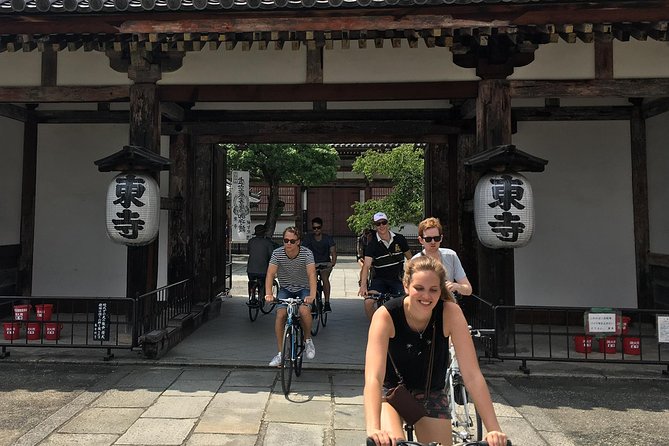
Next comes Kitano Tenmangu Shrine, with about 20 minutes on the schedule. The tour leans into something you can feel immediately: it’s not just a monument. You’re joining local shrine goers, so the atmosphere is calmer and more everyday.
This stop is valuable for two reasons. First, it breaks up the more famous temple sequence. Second, it gives you a Kyoto feeling beyond postcard sights. You see how people actually show up for shrine time—quiet, habitual, and unperformed.
If you like photography, shrine spaces usually reward you here because you’re not competing with the busiest tour gates in town.
Stop 4: Kinkaku-ji, the Golden Pavilion, with commentary and a sanity check on crowds
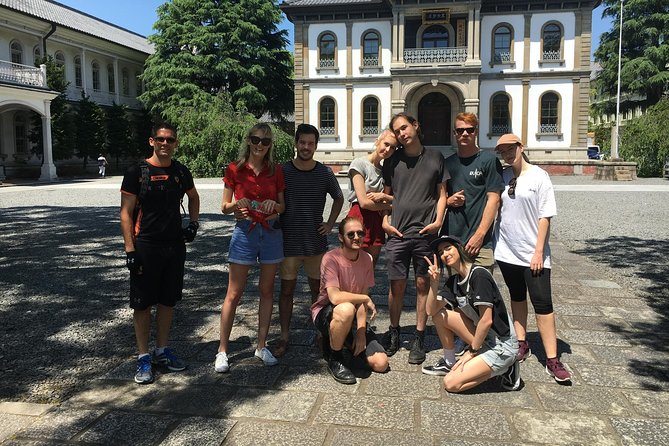
Kinkaku-ji is where the day hits a headline. You’ll spend about 30 minutes at the Golden Pavilion, and admission is included. The tour also builds in time for commentary and even a moment to grab an ice cream, so you’re not purely in sightseeing mode.
A quick reality check: Kinkaku-ji is famously visited. That means you should expect crowds in some areas. The good news is that you’re not arriving alone with zero context. The guide’s storytelling helps you understand what you’re looking at, and that can make the crowd feel more manageable.
One drawback to keep in mind: 30 minutes goes fast at a major icon. If you like to linger, you’ll want to focus your energy on the views that matter most to you before you drift toward side areas.
The ride-by Imperial Palace grounds: history you can see from the road
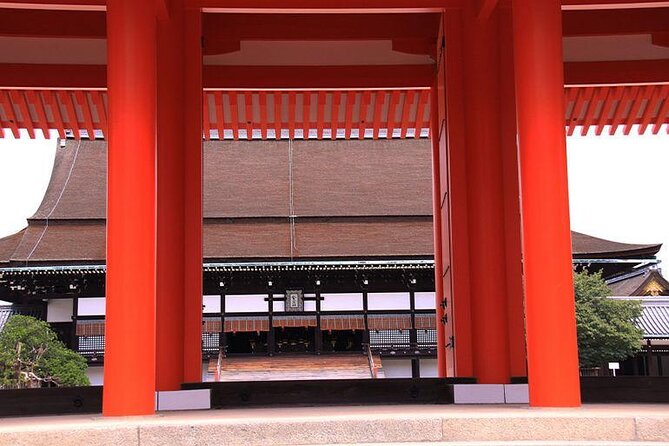
Between Kinkaku-ji and Gion, the tour includes a ride through the grounds of the former seat of Japan’s imperial family. This is a smart addition because it adds scale and a different kind of Kyoto image.
You’re not standing in one spot trying to read every sign. Instead, you’re moving through the space, so you get a broader sense of layout and space. For many people, this section is a mental reset between two dense sightseeing zones.
If you’re the type who hates long transitions, you’ll like this segment because it’s part of the flow rather than an extra stop that eats time.
Stop 5: Gion in a small-group way, not a maze
Gion is where Kyoto becomes theatrical. You’ll spend about 15 minutes here, exploring the geisha district area and its surroundings. The tour frames this as a hidden-world kind of stroll, with the chance you might even catch a glimpse of entertainers, though you shouldn’t count on it.
What you will get is the guide’s perspective: how Gion’s streets work, why the area feels different at walking speed, and what you’re noticing when you look at details in the lanes. In a large crowd, that kind of context often gets lost. In a small group, it sticks.
A simple tip: treat Gion like a photo neighborhood with ethics. Move slowly, don’t block doorways, and keep your voice low. You’ll get better moments and a better vibe.
Stop 6: Tofuku-ji for calm Zen views from the bridge
Tofuku-ji is next, with only about 5 minutes on the schedule. That short time can feel limiting, but it’s set up for what the stop does best: views from the bridge and a quick look at spacious temple grounds.
Even in a brief visit, you can notice why it’s popular: open sightlines and an atmosphere that feels less rushed than the busiest headline sites. If you want one stop in the day that feels like a breather, this is it.
The trade-off: you won’t have time for deep exploration. If you come away wanting more, that’s not a failure of the tour. It’s a nudge to plan a return with extra time later.
Stop 7: Fushimi Inari-taisha and the art of not getting stuck
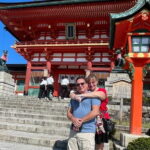
Fushimi Inari-taisha is the tour stop that needs the most help. The schedule gives you about 20 minutes, and the tour specifically says guides choose paths between crowds so you can actually enjoy it.
This is a big deal. Fushimi Inari can feel like a controlled traffic jam. The guide’s job isn’t just route planning; it’s pacing and selection—getting you where the experience feels best within the time window.
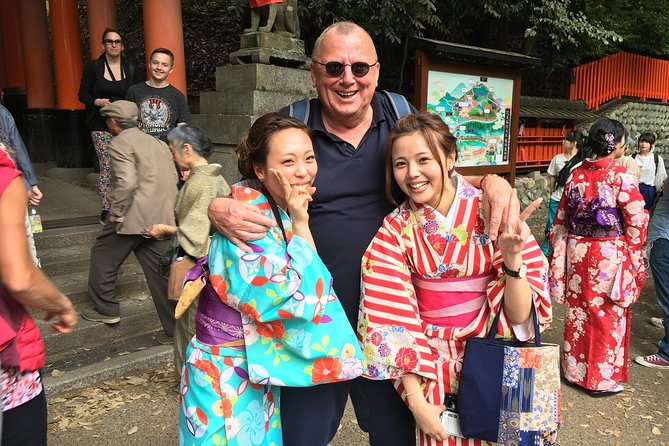
What I’d tell you to watch for: torii gates change the whole mood as you move. Even small shifts in where you stand can make the scene feel more spacious or more compressed. So follow your guide’s directions instead of wandering off to hunt your own perfect angle.
Lunch and bottled water: the included fuel that keeps you sane
Lunch is included, plus bottled water. On a long bike day, this matters more than people expect. When you’re tired, even a quick snack can become a decision problem. With lunch planned, you stop making choices and start enjoying the ride.
Dietary requirements need to be known ahead of time, so if you have restrictions, don’t wait until the morning of the tour. Tell the operator when you book.
Some riders describe the lunch as a family-style spot with local patrons, which is exactly the kind of thing you want from an included meal. You’re not stuck eating at the nearest tourist restaurant.
Price and value: what $119.38 really covers
At $119.38 per person, this is not a bargain-bin tour. But it also isn’t just a bike rental with a flag-waving guide. You get:
- a high-quality Cannondale bicycle and helmet
- bottled water
- lunch
- small-group guidance (max about 8 riders)
- at least one admission cost handled for you (Kinkaku-ji is included)
Most other listed sites have admission listed as free in the schedule, which means the cost isn’t inflated by entry fees everywhere. The value comes from logistics and time. You’re saving the effort of figuring out bike routing, coordinating entrances, and pacing major attractions.
If you’re the type who likes to see a lot but also wants stories while you’re there, the price starts to look fair fast.
How the guides shape the whole day
The tour stands or falls on the guide. And the pattern in the feedback is strong: guides show up ready with stories, practical tips, and a sense of timing.
You’ll see names pop up like Quinn, Juan, Paul, Indra, Karl, Jay, Carl, Jamie, and Jaimie. Different personalities, same theme: Kyoto explained with human details, plus humor and small cultural pointers that help you look at sights differently.
One style point I like for this kind of tour: guides don’t only talk at the stops. They also keep the group organized, handle photos, and make sure you don’t feel left behind. That matters when you’re riding through busy areas and then hopping off to walk.
Who should book this, and who should skip it
You should book if:
- you’re comfortable biking for several hours and riding between stops
- you can handle a moderate fitness level
- you want an overview of Kyoto without paying for separate bike rentals or spending the day planning logistics
- you want a small-group feel (max 8) rather than a long line of people following a bus route
You might skip (or consider a gentler option) if:
- you hate long days on two wheels
- you’re not comfortable navigating with a group
- you prefer to linger for long periods at fewer sights instead of moving through several areas in one day
- your schedule only gives you a short window and you can’t afford a 7 to 8 hour commitment
Should you book this Kyoto bike tour?
If you want the best use of one day in Kyoto, I think this is a strong pick. It’s built for people who like moving, seeing, and learning in short bursts—then resting when the day requires it. The small group size, the included lunch, and the guide-driven navigation at crowded sites like Fushimi Inari are the reasons this tour feels worth your time.
Book it if you’re ready for a real day of activity. Don’t book it if you want a slow, low-effort stroll. For everyone else, this is an efficient, fun way to connect Kyoto’s big landmarks with the quieter rhythms in between.
FAQ
How long is the full-day bike tour?
It runs about 7 to 8 hours.
What’s included in the price?
The tour includes a bicycle and helmet, bottled water, lunch, and guided visits. Kinkaku-ji admission is included.
What kind of fitness level do I need?
The tour is for travelers with a moderate physical fitness level, and you should be comfortable riding a bike.
How large is the group?
The tour has a maximum of 8 travelers.
Where does the tour start and end?
It starts at Cycle Kyoto (7 Higashikujō Nishisannōchō, Minami Ward) and ends back at the same meeting point.
What happens if the weather is bad?
This experience requires good weather. If it’s canceled due to poor weather, you’ll be offered a different date or a full refund.