REVIEW · KYOTO
PERFECT KYOTO 1-Day Bus Tour
Book on Viator →Operated by Japan Panoramic Tours · Bookable on Viator
Kyoto’s top sights, timed for real life. This one-day bus tour strings together Kyoto’s biggest landmarks with an air-conditioned coach and multilingual audio so you spend less energy figuring out logistics and more energy looking up.
What I like most is that admission is included for several major stops, including Kiyomizu-dera, Sanjusangendo, Tenryu-ji, and Kinkaku-ji. The other big win is the human touch: guides (from Sakura to Mai to Nagomi) keep the day moving with clear explanations, plus audio support in multiple languages.
One consideration: it’s a long, walking-heavy day. You’ll deal with hills, stairs, and crowds, and a few places can feel fast if you want to linger and explore at your own pace.
In This Review
- Key highlights at a glance
- The value question: what $129.25 buys you in Kyoto
- Meeting point and the “start early, move smart” rhythm
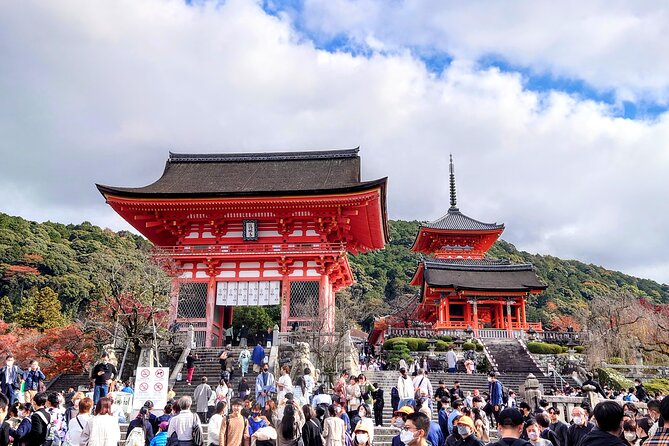
- Kiyomizu-dera: the hilltop view that makes Kyoto feel theatrical
- Sanjusangendo: 1,000 statues, one quiet inside moment
- Arashiyama lunch break: a reset before the greenery
- Bamboo Forest Trail to Tenryu-ji: fast time for one of Kyoto’s icons
- Tenryu-ji garden: why “700 years” feels real in your eyes
- Kinkaku-ji: the Golden Pavilion in a carefully timed visit
- Fushimi Inari Taisha: thousands of torii, one unforgettable walk
- Nijo Castle passing: a quick history note on the return drive
- The real pace: crowd reality, short stops, and how to enjoy it
- Who this Kyoto bus tour is best for
- FAQ
- FAQ
- What time does the tour start?
- Where do I meet the tour?
- How long is the tour?
- Is lunch included?
- Are temple admission tickets included?
- Is there WiFi and multilingual support?
- Do I get hotel pickup or drop-off?
- What happens if something is closed or can’t be done due to conditions?
- What if I’m late?
- Should you book this one-day Kyoto tour?
Key highlights at a glance
- Major UNESCO-area stops in one run: Kiyomizu-dera, Tenryu-ji, and Kinkaku-ji get prime time
- Admission included for four big temples: you don’t have to line up for every ticket
- Arashiyama + Bamboo Forest in the same flow: morning greenery, then lunch in the area
- Sanjusangendo’s 1,000+ Kannon statues: a rare indoor “wow” moment
- Fushimi Inari’s torii-gate walk: the most iconic Kyoto shrine experience
- Upbeat guide energy with multilingual audio: you’re covered even if English feels limited
The value question: what $129.25 buys you in Kyoto

At $129.25 per person, this tour is priced like a convenience product. You’re paying for three things that add up fast in Kyoto: transportation between far-flung sights, a guide, and admissions that would otherwise become a scavenger hunt.
Here’s the practical part. You get an air-conditioned coach, WiFi on board, and multilingual audio guidance in English, Spanish, French, Italian, German, Portuguese, Ukrainian, and more. On top of that, admission is included for Kiyomizu Temple, Sanjusangendo, Tenryu-ji, and Kinkaku-ji. Those four stops alone usually justify part of the ticket price, and you also save time because the group process tends to be easier than figuring it out yourself mid-day.
If your Kyoto days are limited, or you don’t want to study bus routes and train timetables, this is the kind of tour that can actually protect your trip. You’re trading flexibility for certainty, and in Kyoto, certainty is gold because crowds and lines can crush your timing.
You can also read our reviews of more tours and experiences in Kyoto


Meeting point and the “start early, move smart” rhythm
The tour starts at 7:50am at Tully’s Coffee, Kyoto Avanti (Avanti building, 1st floor). The end is back at the meeting point, so you’re not left guessing where your route ends.
Expect the day to run about 8 to 9 hours, and know that the order can shift with traffic and weather. That flexibility matters because Kyoto’s roads can get slow, and temple timings can be impacted.
The day is built for group flow:
- You ride between neighborhoods in the coach
- You get a set amount of time at each major stop
- You regroup and head to the next site without using your phone for directions every time
Also, there’s WiFi on board and a professional English-speaking guide, plus audio guidance for backup. If you want to follow along even on the move, this format works.
One more reality check: you’ll walk. The tour notes stairs and hills at each location, and the physical level is listed as moderate. Wear shoes you can trust for uneven pavement and temple steps.
Kiyomizu-dera: the hilltop view that makes Kyoto feel theatrical
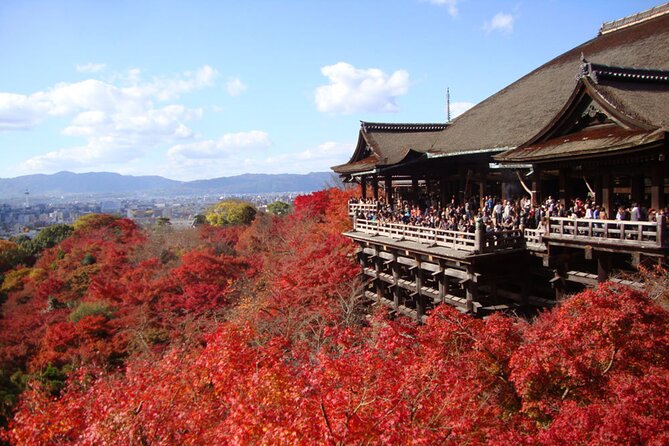
Kiyomizu-dera is a showstopper. You’ll visit for about one hour, and the location on Higashiyama hill is part of why it feels so Kyoto. This is the temple that’s famous for panoramic views over the city, and it’s also a place where the experience is as much about the setting as it is about the structures.
What to do with your one-hour window:
- Focus on the main viewpoints first, then circle back for details if time allows
- Don’t wait until the last minute to take photos; crowds can build
- Expect stairs and uneven walking paths
It’s a World Heritage-listed site, and it’s one of those Kyoto experiences where you’ll understand why people don’t just pass through. The temple terrace and the city views create that “this is why I came” feeling.
Sanjusangendo: 1,000 statues, one quiet inside moment
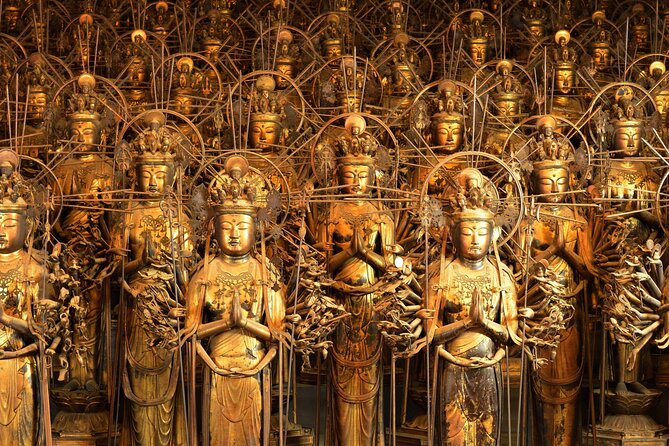
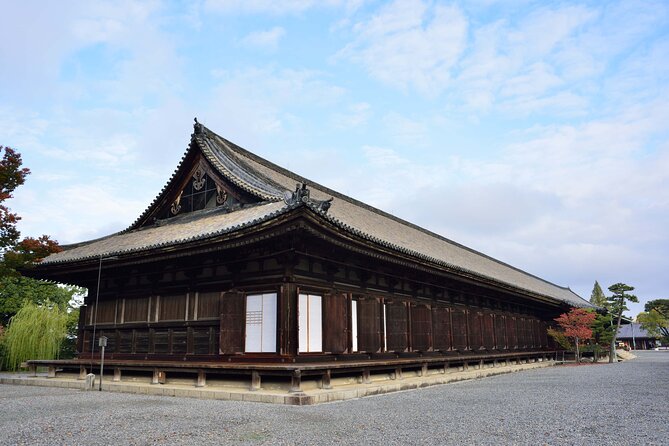
Next up is Sanjusangendo Temple for about 40 minutes. This stop is special because it’s not just another exterior photo spot. The main hall is home to 1,001 Senju Kannon statues, which is exactly the kind of detail that turns a normal visit into a mind-bending one.
Inside a hall like this, your eyes keep finding new patterns:
- you’ll notice how the statues repeat
- you’ll start seeing groupings instead of one single object
- you’ll appreciate how much space is dedicated to a single theme
This is also a nice break from the open-air crowds. You may not walk as much here as at some hillside sites, so it can feel like a slower, more absorb-and-look stop.
If you’re the type who likes to understand what you’re seeing, the guide commentary helps here. If you’re sitting toward the back of the coach, audio guidance can also help you keep up with context.
Arashiyama lunch break: a reset before the greenery
You’ll take a lunch break in Arashiyama for about 50 minutes. Lunch is only included if you select the lunch option.
When included, it’s described as a Japanese-style buffet with local foods. Vegetarians also have the same lunch setup per the tour info, which is helpful in a city where dietary needs can sometimes be a gamble.
A practical tip from the way people talk about this stop: buffet quality can vary, especially if food isn’t kept warm. If you know you’re sensitive to temperature changes, pack a snack you trust or plan to eat lightly before the next temple.
Also, this is a good time to hydrate and cool down. You’ll be back in walking mode soon, including bamboo areas and temple gardens.



Bamboo Forest Trail to Tenryu-ji: fast time for one of Kyoto’s icons
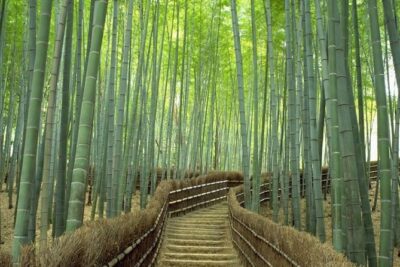
After lunch, you move into the Bamboo Forest Trail area for about 20 minutes, with the plan to reach Tenryu-ji Temple.
The bamboo stretch is short, which is exactly what makes the timing work. This is one of Kyoto’s most photographed scenes, and crowds can thicken quickly. You’ll want to:
- keep your head up and look for depth lines through the stalks
- take your main photos early in the time window
- don’t get stuck waiting for the perfect moment if the group is moving soon
Then you’ll visit Tenryu-ji Temple for about 30 minutes. Tenryu-ji is also listed as a World Heritage site, and the garden design is described as unchanged for more than 700 years. That matters, because it’s one thing to see a garden; it’s another to see a garden shaped to last.
Tenryu-ji garden: why “700 years” feels real in your eyes

Tenryu-ji gives you the calmer, more grounded Kyoto experience. This is where you slow down slightly, even if the clock is still ticking.
The tour focuses on the traditional Japanese garden layout. Since the design is described as staying consistent for centuries, you get a chance to see how Japanese garden principles hold up across time:
- you can compare viewpoints as you move
- you can notice seasonal planting cues (even if you only catch a slice of the year)
- you’ll start understanding why people return to Kyoto for the same places across different months
If you’re the type who only “sprints” through sightseeing, this stop is a good nudge back to observation. Let your eyes do the work for a while.
Kinkaku-ji: the Golden Pavilion in a carefully timed visit

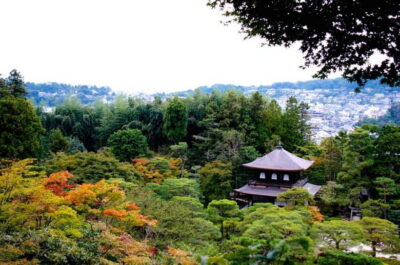
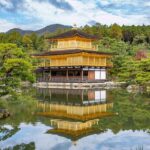
Then comes Kinkaku-ji Temple, the Golden Pavilion, for about 40 minutes. This is one of the most famous symbols of Kyoto, built in the same era as Tenryu-ji.
What makes it feel worth the hype is how the pavilion sits against the surrounding setting. The tour notes it’s covered with pure gold leaves, and the sight is visually striking even when crowds are present.
In a 40-minute slot, here’s your best strategy:
- prioritize the main pavilion view first
- then use the remaining time for angles and walkways nearby
- don’t assume you’ll get a calm photo moment; plan for people
The payoff is real. Kinkaku-ji is one of the few places in Kyoto where the architecture and the identity of the city lock together instantly in your brain.
Fushimi Inari Taisha: thousands of torii, one unforgettable walk
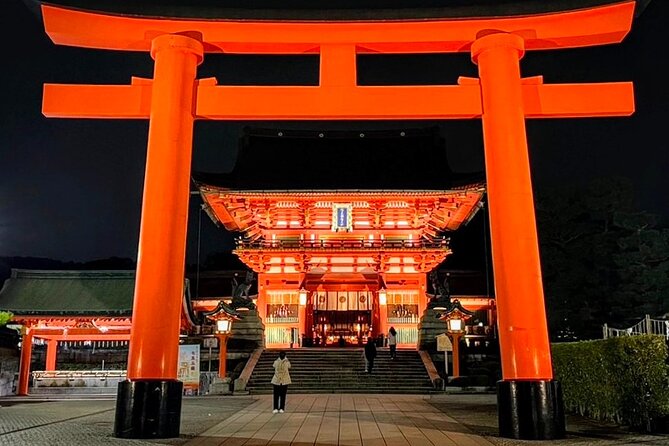
Your final major shrine stop is Fushimi Inari Taisha, about one hour, and it’s the Kyoto shrine that people talk about for a reason. You’ll see the famous thousands of torii gates, and the tour experience includes the chance to walk through them.
This part can feel like a choose-your-own-adventure—short stroll or deeper climb—but you’re still on a schedule. If you want the best mix of experience and comfort:
- start your walk early within your hour
- keep going until you feel you’ve hit the visual rhythm you came for
- turn back before you feel rushed
Fushimi Inari is also often crowded, so the guide and group timing help. Even when it’s busy, the place has a strong visual pull. The repetition of gates creates depth, and your brain ends up doing the geometry for you.
Nijo Castle passing: a quick history note on the return drive
On the way back, you’ll pass Nijo Castle and get commentary. You don’t go inside on this schedule, but the context is useful: it’s described as important in Japanese history because the Tokugawa shogunate returned political power to the emperor.
This is one of those moments where you get a little extra meaning without spending extra time on another ticketed stop. For a day that’s already packed, it’s a smart add.
The real pace: crowd reality, short stops, and how to enjoy it
This tour is designed to cover a lot. That’s why it works for first-timers with limited time, and why it can frustrate people who want long, slow exploration.
Here’s what you should expect:
- temples and shrines can be very crowded, especially midday
- some sites have stairs and hills, even if others are flatter
- the time at each stop is structured, so you’ll move with the group
If you want to avoid feeling like you’re always sprinting to catch the bus, plan your expectations. Think of this day as a highlights sampler. After you’ve seen the main scenes, you can decide what deserves a longer return on a different day.
Good prep habits make a difference:
- wear supportive shoes with grip
- bring water and a light snack
- consider a small weather layer (Kyoto can change fast)
- arrive on time, because the tour notes you can’t join mid-way if you’re late
Who this Kyoto bus tour is best for
This is a strong match if:
- you have limited time and want a high-hit list of temples and shrines
- you prefer a guide and audio support over self-planning
- you want multiple World Heritage-listed stops without spending your day navigating transit
- you want an easy, single-day structure with a clear start and finish
It may be less ideal if:
- you can’t handle walking on uneven paths and stairs
- you want long, quiet time at one site instead of short highlights across several
- you’re very sensitive to tight schedules and crowd levels
FAQ
FAQ
What time does the tour start?
The tour start time is 7:50am.
Where do I meet the tour?
You meet at Tully’s Coffee – Kyoto Avanti Japan (Kyoto Avanti, 1st floor).
How long is the tour?
It runs about 8 to 9 hours.
Is lunch included?
Lunch is included only if you select the lunch option. It’s a Japanese-style buffet, and the tour says it is the same for vegetarians.
Are temple admission tickets included?
Yes. Admission is included for Kiyomizu Temple, Sanjusangendo Temple, Tenryu-ji Temple, and Kinkaku-ji Temple.
Is there WiFi and multilingual support?
Yes. There is WiFi on board and multilingual audio guidance, with languages listed including English, Spanish, French, Italian, German, Portuguese, and Ukrainian.
Do I get hotel pickup or drop-off?
No. Hotel pickup and drop-off are not provided, and the tour starts and ends at the meeting point.
What happens if something is closed or can’t be done due to conditions?
If a visiting place is closed, the tour tries an alternative place. The tour notes there may be changes due to weather, traffic, or suspension of operation, and refunds are not given for those changes.
What if I’m late?
If you’re late for the start time, you won’t be able to join the tour mid-way.
Should you book this one-day Kyoto tour?
If you want Kyoto’s biggest temple moments in a single day without planning on hard mode, this tour is a smart buy. The combination of an air-conditioned coach, a professional English-speaking guide, multilingual audio, and included admissions for several major sites makes it feel efficient rather than just crowded.
I’d book it if you’re on a tight schedule, you like structure, and you’re okay with a packed day and some stair-and-hill walking. I’d think twice if you need a slower pace or you can’t handle extended walking.
In short: if your goal is to see Kyoto’s classic highlights fast, this is built for you. If your goal is to linger and explore like a local, you’ll probably want fewer stops and more time.