REVIEW · KYOTO
Kyoto and Nara Day Trip from Kyoto
Book on Viator →Operated by JTB Global Marketing & Travel Inc. · Bookable on Viator
A single day, two ancient worlds. This Kyoto to Nara trip is interesting because it connects major UNESCO sites with air-conditioned transport and a licensed English guide, so you can spend your energy looking up instead of figuring out bus lines. I like that the day mixes Kyoto’s political story with Nara’s huge religious scale.
The best part for me is the people factor. Guides named KC and Momo show up in the praise with sharp English, jokes that land, and clear answers, and that makes dense temple history feel workable. You also get a comfortable group rhythm with safety handled as part of the plan.
The main drawback to plan for is the pace. It’s a long 10–11 hour day, and a couple of people wished they had more time in Nara, especially near the end when walking adds up.
In This Review
- Key takeaways before you go
- Kyoto and Nara in One Long Day: what the 10–11 hours really feel like
- Nijo Castle: Tokugawa power, plus the inside–outside contrast
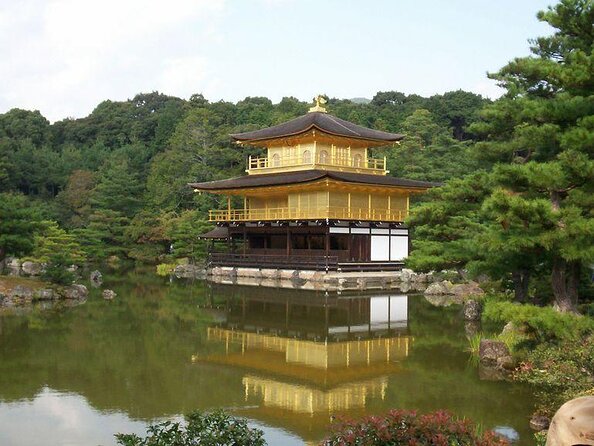
- Kinkaku-ji Golden Pavilion: the photo stop everyone understands
- Kyoto Imperial Palace grounds: the Shishin-den moment (or the swap)
- Driving to Nara: when the morning history turns into full-scale spirituality
- Todai-ji and Nara Park: the Great Buddha and the deer you can’t ignore
- Kasuga Taisha lanterns: shrine atmosphere you walk through
- Shoe rules, walking loops, and timing: how to make the day feel easier
- Price and value around $194.85: paying for speed, guides, and bundled entry
- Lunch options: useful, but watch the set-menu limits
- Who should book this Kyoto and Nara day trip, and who should skip it
- Should you book this Kyoto and Nara day trip?
- FAQ
- How long is the Kyoto and Nara day trip?
- What does the tour price include?
- What time does the tour start and where does it end?
- Is lunch included?
- What happens if Kyoto Imperial Palace is closed?
- What happens if Nijo Castle is closed?
Key takeaways before you go
- Air-conditioned bus keeps this day trip comfortable even when Kyoto traffic slows things down
- English guide spotlight: people repeatedly mention guides like KC, Momo, Yuki, Yoshito, Etsuko, Keicy, and Tammy for explanations and timing
- UNESCO-hit route: Nijo Castle, Kinkaku-ji, Todai-ji, Kasuga Shrine, plus Imperial Palace grounds
- Nara Park deer reality: fun to watch, but the day ends with a lot more “deer logistics” than you might expect
- Lunch is optional (and it’s a set menu), so meal flexibility is limited unless you choose the right option in advance
- No hotel drop-off at the end: you’re pointed back to Kyoto Station around 6:30 pm
Kyoto and Nara in One Long Day: what the 10–11 hours really feel like
This is a full-day sightseeing push. You start in Kyoto early (8:20 am), tour several major sites in a structured order, then drive south to Nara for the “big hitters” there. Expect about 10 to 11 hours total, including transit time and entry windows.
What makes the format work is that someone else handles the connections: guide, timing, transport, and admissions for the stops that are included. That’s not just convenience. In Kyoto and Nara, queues, shoe rules, and timing can eat your day if you’re going DIY.
The trade-off is that you can’t treat this as a slow “wander and linger” day. A visit you’d happily stretch to half a day gets condensed into a set window. If you love one temple enough to want 2–3 hours there, you’ll likely feel the squeeze and want a second day on your own later.
You can also read our reviews of more tours and experiences in Kyoto


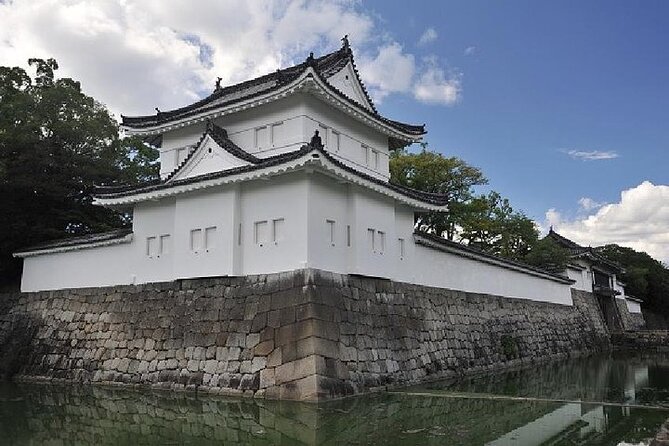
Nijo Castle: Tokugawa power, plus the inside–outside contrast
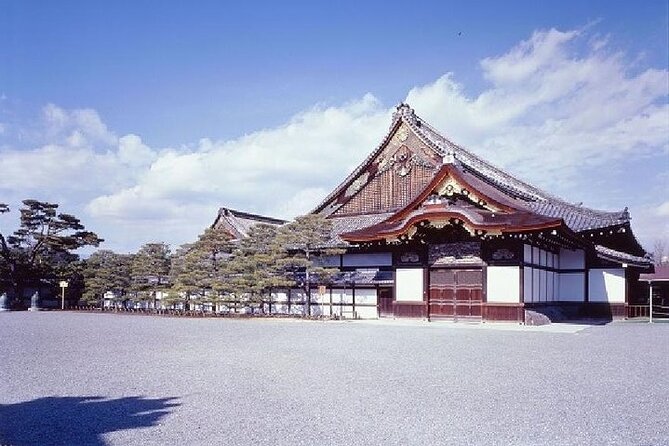
Nijo Castle sets the historical tone fast. It’s a World Heritage site tied to Japan’s shogunate era, built as lodging for the Tokugawa shogun and meant to protect the Kyoto Imperial Palace. The standout detail is the contrast: an elaborate interior with a more solemn exterior façade. That’s a useful theme for the day—Kyoto’s power was often more about control and performance than comfort.
You’ll get about 50 minutes here, with admission included. Plan for the practical stuff: at Nijo Castle, you should be ready for shoe removal. That can feel minor, but when you’re doing it multiple times across a day, it’s good to mentally prep so you don’t rush.
One more tip: castle carvings and architecture rewards calm looking. If your group is moving efficiently (good tour, strong guide), you’ll still get enough time to read details, spot the craftsmanship, and take photos without feeling like you missed the point.
Kinkaku-ji Golden Pavilion: the photo stop everyone understands
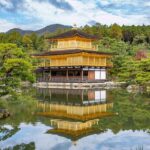
Next up is Kinkaku-ji, Kyoto’s most famous temple stop for a reason. It’s a World Heritage site where the wooden structure is covered in thin layers of pure gold leaf, set beside a pond. Even if you’ve only seen photos, seeing it in person is different because you understand the design as a whole: the building, the water, and the reflections work together.
Your time here is about 45 minutes, with admission included. That’s enough to walk the key viewpoints, get your photos, and still read what the space is trying to say. The garden setting also helps if you’re tired from transit; it gives you a visual “reset” before the next move.
If you hate crowds, know this: Kinkaku-ji is a popular site. The tour structure helps, but you can’t erase the fact that you’ll be sharing space with other people chasing the same perfect angles.
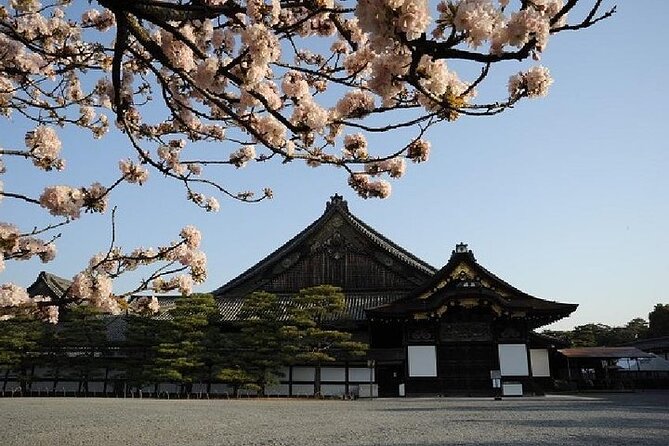
Kyoto Imperial Palace grounds: the Shishin-den moment (or the swap)
You’ll also stop at Kyoto Imperial Palace. Your time here is about 40 minutes, and this part is free. The focal point is the Shishin-den, described as a key site connected with important state ceremonies.
Here’s the smart part for your planning: the tour notes that the palace is closed to visitors on Mondays (and sometimes the following day if it’s a holiday), plus on event days tied to the Imperial Household Agency. If that happens, the tour swaps in Kitano Tenmangu Shrine. If the closed day falls on the 25th, Nishi Hongan-ji Temple can be visited instead.
From a reader’s point of view, this is valuable because it protects your day. You might be the type who wants the palace specifically, but you’ll still get a meaningful alternative rather than losing a whole stop to a locked gate.
Driving to Nara: when the morning history turns into full-scale spirituality
After Kyoto, you head to Nara in stress-free air-conditioned transport. That matters more than it sounds. The drive time gives your brain a break between two different ways of “reading” Japan: Kyoto’s power structures and Nara’s religious monuments.
Once in Nara, the tour aims at a World Heritage cluster rather than scattering you. That’s a practical way to experience Nara quickly: Todai-ji and Kasuga Shrine are major anchors, and Nara Park comes in as the emotional payoff.
If you’re prone to getting tired on long travel days, this is where you’ll feel it, so come prepared to stand and walk at multiple points after you arrive.



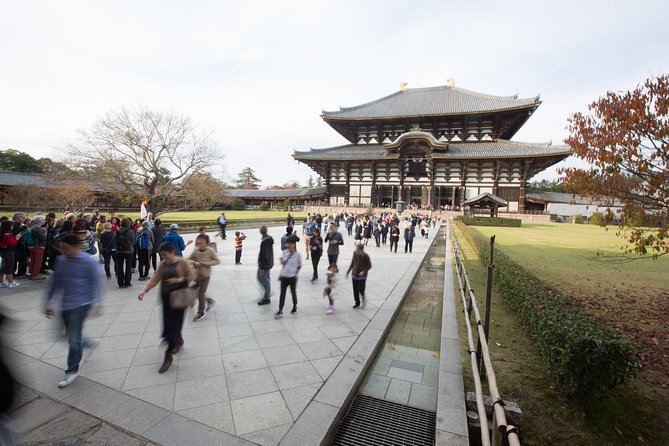
Todai-ji and Nara Park: the Great Buddha and the deer you can’t ignore
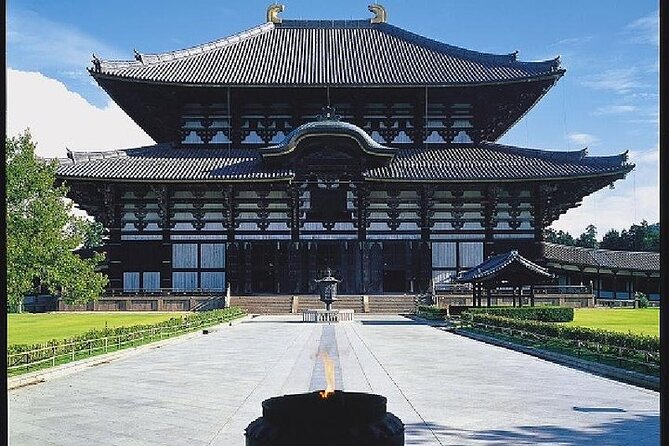
Todai-ji is the big religious stop. It’s a World Heritage site and a symbol of the Nara period, known for its huge wooden structure and the bronze Great Buddha. You’ll have about 1 hour 10 minutes here, with admission included.
This is one of those sights that’s hard to fully “get” from pictures. Size changes how you perceive space. The hall and the statue don’t just look impressive. They change your sense of scale, especially if you’ve been seeing smaller-scale Kyoto details earlier in the day.
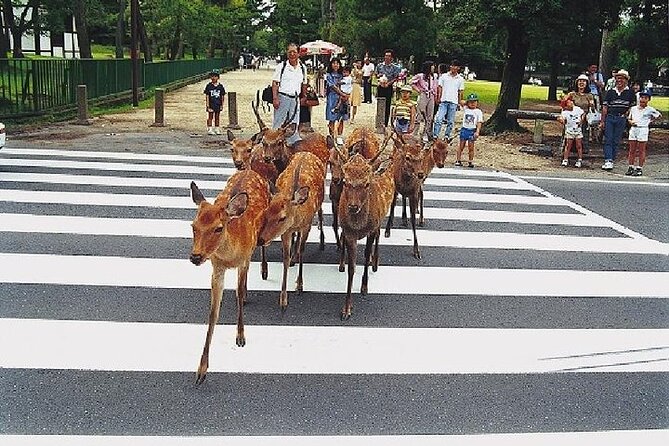
Todai-ji sits next to Nara Park, where the day turns into deer watching. Deer roam freely and are part of the area’s identity, including being described as messengers of Kasuga Shrine. You’ll finish with Deer Park time, and yes, it’s cute. But it’s also real wildlife behavior in a public space, not a zoo. A guide warning about deer being potentially aggressive shows up in the advice given during the day, and it’s worth taking seriously.
Practical note: if you’re not a comfortable walker, this part can feel like more than you expected, especially toward the end when you’re tired and the route back to transport still involves walking.
Kasuga Taisha lanterns: shrine atmosphere you walk through
Kasuga Taisha is another World Heritage stop, and it’s a different vibe from Todai-ji. The signature feature is the famous lanterns lining the interior, with more than 3,000 lanterns mentioned as part of the experience.
You’ll get about 1 hour here, with admission included. The atmosphere tends to do the storytelling for you. The lanterns give you a “visual memory” that doesn’t require you to know Japanese history perfectly. It’s also a great contrast to the Great Buddha scale—Kasuga is more intimate and rhythmic, even when it’s busy.
There’s also a special access detail that affects how the visit feels. The tour enters the Main Sanctuary special visit area, but if that area can’t be entered due to events or operational circumstances, the Kasuga Taisha Museum or Todaiji Museum may be visited instead. That’s a clear backup plan, and it helps prevent you from losing the core value of the shrine visit.
Shoe rules, walking loops, and timing: how to make the day feel easier
This tour is efficient, which is good, but it also means you’ll spend time moving between sites rather than sitting in one place. A few people point out that it can feel rushed if you want to fully enjoy each stop. That doesn’t mean it’s bad. It just means you should bring the right expectations.
Here’s what helps you get through the day comfortably:
- Wear easy shoes and be ready for footwear rules at places like Nijo Castle
- Keep your day bag light, since you’ll be carrying things as you line up and move
- Bring water and plan for breaks only where you can fit them into the group flow
Also, there’s a note about bus seating: seats may not be designated. That usually means you’ll board and find whatever spot is open. On a 10–11 hour day, that’s not trivial, so a quick “I’ll be flexible” mindset helps.
For timing, the tour can run in slightly different orders based on road conditions and congestion. That’s normal for Kyoto and Nara days.
One more logistics detail that matters: the tour ends at Kyoto Station, around 6:30 pm, and there’s no hotel drop-off. So don’t plan a long, complicated evening transfer unless you’re confident with Kyoto Station navigation.
Price and value around $194.85: paying for speed, guides, and bundled entry
At about $194.85 per person, the sticker price looks high if you compare it only to the cost of train tickets. But the value changes once you look at what’s included.
You get:
- a national government licensed English guide interpreter
- admission fees and transportation costs included for the stops in the program
- an optional lunch package, depending on which option you pick
For a one-day sweep, bundling admissions and transport usually saves time and prevents “oops” moments, like arriving at a site that’s more crowded than expected or missing an entry window. In Kyoto and Nara, saving time is a real form of comfort.
Is it cheap? No. But it’s not paying for fluff. You’re paying for structure: guide explanations, transport between cities, and admission coverage that reduces friction.
If you already enjoy planning routes and don’t mind juggling buses, you can DIY parts. But if you want a stress-free day that covers the major UNESCO hits, this price starts to make sense.
Lunch options: useful, but watch the set-menu limits
Lunch is included only if you choose the “With Lunch” option. The tour offers different set menus depending on the option selected.
- For a Western-style lunch option: it’s a Western-style set menu. If you want vegetarian, you have to inform the team at reservation time.
- For an Indian thali option: it’s an Indian thali set menu suitable for vegetarians, and the menu includes several curries, vegetable pakora, yogurt, naan or roti, rice, salad, and a non-alcoholic drink.
Important limits are clearly stated: halal, gluten-free, and other meal requests are not available. So if you have strict dietary needs beyond what’s offered, you’ll need to plan carefully.
One practical tip: if you don’t pick lunch, you’ll have free time to eat on your own around Kyoto Station. That can be a relief if your schedule is tight or your tastes are specific.
Who should book this Kyoto and Nara day trip, and who should skip it
This tour fits best if you want a first-timer-friendly sweep of Kyoto and Nara without a lot of decision-making. The guided approach helps a lot when you’re trying to understand what you’re seeing—especially when the day moves quickly between very different sites.
You’ll likely enjoy it if:
- you want to see the main UNESCO highlights in one day
- you appreciate a guide who keeps the day on track and answers questions
- you’re okay with walking and standing for extended periods
You should think twice if:
- you struggle with long days on your feet (some people say it’s not ideal if you’re not good at walking)
- you want lots of unstructured time in Nara
- you need meal accommodations not covered by the provided set-menu options
Because it’s a shared bus group experience, I’d also bring a personal comfort plan for health (like having sanitizer and your preferred mask choice) if you’re sensitive to crowded indoor spaces.
Should you book this Kyoto and Nara day trip?
I’d book it if you want a straightforward, guided route that hits the Kyoto classics and Nara’s big monuments in one shot. You’re paying for the time savings, the admissions coverage, and the English guide support that makes temple history feel less like a memorization game.
I wouldn’t book it if your ideal day is slow, solitary wandering where you spend hours in one place. This tour is built for momentum. If you want depth, follow this with extra time in either Kyoto or Nara on your own.
If you can handle a long day and you like the idea of finishing in Nara Park with deer around you, this is a solid way to get your bearings fast.
FAQ
How long is the Kyoto and Nara day trip?
It runs about 10 to 11 hours.
What does the tour price include?
The tour includes an English guide interpreter, admission fees for the included sites, and transportation costs. Lunch is only included if you choose the With Lunch option.
What time does the tour start and where does it end?
It starts at 8:20 am at the JTB SUNRISE TOURS DESK KYOTO at AVANTI (Kyoto Station area). The tour ends at Kyoto Station around 6:30 pm, with no hotel drop-off.
Is lunch included?
Lunch is only included with the With Lunch option. The tour offers Western-style set menu or Indian thali (vegetarian), based on which option you select.
What happens if Kyoto Imperial Palace is closed?
If Kyoto Imperial Palace is closed, the tour visits Kitano Tenmangu Shrine instead. If the closed day falls on the 25th, it visits Nishi Hongan-ji Temple.
What happens if Nijo Castle is closed?
If Nijo Castle is closed (including specific seasonal closure dates), the tour visits Ryoan-ji Temple instead. No refunds are issued for substitutions.