REVIEW · KYOTO
Kyoto 1 Day Tour from Kyoto
Book on Viator →Operated by JTB Global Marketing & Travel Inc. · Bookable on Viator
Six Kyoto icons, one focused day. This Kyoto 1 Day Tour from Kyoto strings together UNESCO World Heritage sites and famous shrines fast, with your guide filling in the stories you would otherwise miss. I like how admission fees and transportation are handled, so you can spend your energy on the places instead of ticket math. The tradeoff is real: it’s a packed schedule, with a lot of walking and a pace that may feel brisk if you prefer to linger.
You’ll start early and end back near Kyoto Station around 5:30pm. It’s set up for maximum “big hits” in one day, not for slow, detailed museum-style exploring. If you’re sensitive to volume and group timing, keep an eye on where you sit on the bus and how quickly you’re expected to move between stops.
In This Review
- Key things I’d pay attention to
- Price and timing: is $168.43 worth your one day?
- Where you meet the tour (and why finding it can be tricky)
- How the bus day works: comfort, air-conditioning, and a group pace
- Stop 1: Nijō Castle and its surprise interior
- Stop 2: Kinkaku-ji and the Golden Pavilion in real scale
- Stop 3: Kyoto Imperial Palace, or Kitano Tenmangu when it’s closed
- Stop 4: Fushimi Inari-taisha and the red torii tunnel
- Stop 5: Sanjusangendo, 1,001 statues, and a long wooden hall
- Stop 6: Kiyomizu-dera and the shopping lane to the terrace views
- Lunch options: Western set menu, vegetarian thali, or no lunch
- Western-style set menu
- Vegetarian Indian thali
- The guide: when it turns from sightseeing into understanding
- Who should book this Kyoto 1 Day Tour
- Should you book it?
- FAQ
- What’s included in the tour price?
- How long is the Kyoto 1 Day Tour, and what time does it run?
- Which major sites are covered?
- What happens if Kyoto Imperial Palace is closed?
- What happens if Nijo Castle is closed?
- Is lunch included, and what lunch types are available?
- Is there a no-lunch option?
- Can I cancel for a full refund?
Key things I’d pay attention to
- Admissions + transport included, so your day runs smoother than DIY planning
- Six major stops that cover castles, temples, shrines, and palace grounds
- Backup plans when Kyoto Imperial Palace or Nijō Castle are closed
- Gold Pavilion time at Kinkaku-ji plus the statue hall at Sanjusangendo
- Fushimi Inari walking includes a 15-minute one-way walk from the parking area
- Lunch options are available, but dietary changes are limited to what’s booked in advance
Price and timing: is $168.43 worth your one day?
At $168.43 per person, this tour isn’t cheap, but it’s also not just “bus sightseeing.” You’re paying for a full day that includes licensed English guiding, admission fees, and all transportation between stops. When you add up Kyoto ticket prices plus the hassle of moving around efficiently, this starts to look like value—especially if you only have one day.
The schedule also matters. You depart at 8:20am and return around 5:30pm for about 9 hours 40 minutes of total time. That early start helps you avoid some of the worst crowds and gives you enough daylight for a proper visit at Kiyomizu-dera later in the day.
One practical note: the tour has a maximum group size of 40 travelers and seats may not be designated. That usually keeps things workable, but it also means you should be ready for close quarters and a “follow the guide” rhythm.
You can also read our reviews of more tours and experiences in Kyoto

Where you meet the tour (and why finding it can be tricky)
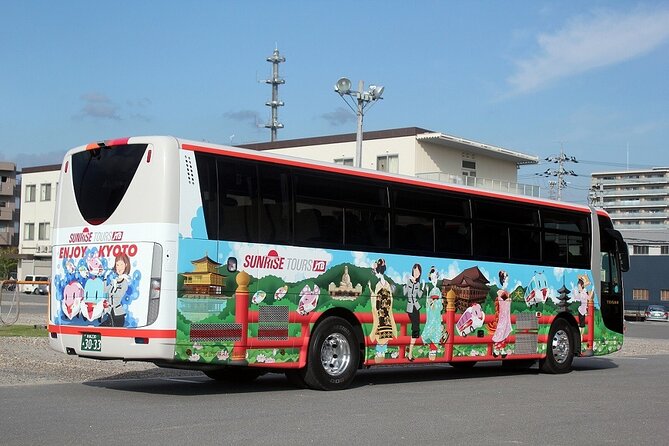
You meet at the JTB SUNRISE TOURS DESK KYOTO at the Avanti building, listed at B1F. The address is in Kyoto’s Minami Ward, near Kyoto Station, and the tour ends back at Kyoto Station.
Because the desk is in a basement level, I strongly suggest you map it before morning-of. One of the most common travel frustrations is losing time at the start, and starting late can put stress on the rest of the day.
You’ll also use a mobile ticket, which is convenient if you don’t want paper.
How the bus day works: comfort, air-conditioning, and a group pace
This is run on an air-conditioned and heated coach, and that alone is worth something in Kyoto’s extremes. The bus rides also let your guide talk as you travel, so you’re not just sitting in silence between sites.
Expect a group cadence. Even in a well-run tour, you move as a unit: park, walk, enter, exit, repeat. Some people will love this structure because it turns Kyoto’s sprawl into an efficient route. Others will find it less ideal if you’re the type who wants to stop for side streets, smaller lanes, and extra photos without being pulled along.
Stop 1: Nijō Castle and its surprise interior
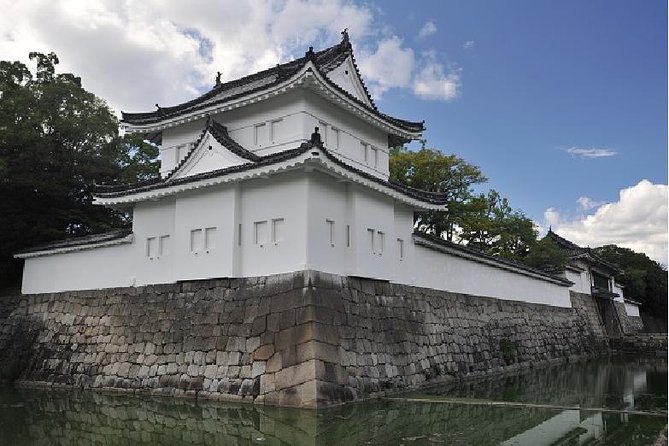
First up is Nijō Castle, a UNESCO World Heritage site with admission included. You get about 50 minutes here, which is enough time to see the key rooms and also pause for the details that make the castle more than a simple viewpoint.
Nijō Castle is completed in 1626, and it was built as lodging for the Tokugawa Shogun and tied to Kyoto’s imperial power. The standout idea to keep in mind is that the castle’s exterior doesn’t prepare you for the interior experience. You’re there for what the rooms are like: decorated chambers, strong visual design, and the feeling of a place meant to impress.
Seasonal closures can change this. Nijō Castle is closed on Tuesdays in January, July, August, and December. If your day lands on one of those closures, you’ll visit Ryoan-ji Temple instead. That means your “castle day” may shift toward a temple setting, so don’t be surprised if the vibe turns more contemplative.
Stop 2: Kinkaku-ji and the Golden Pavilion in real scale
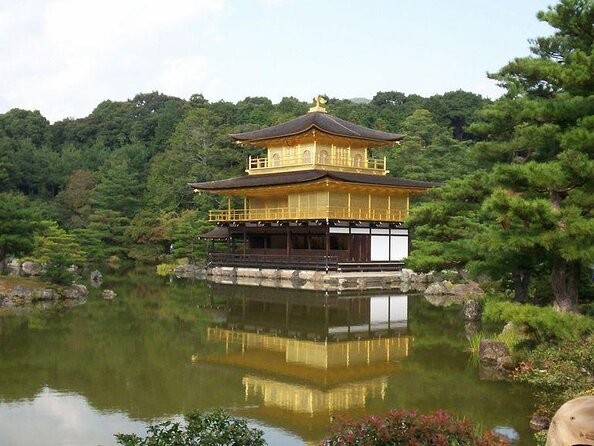
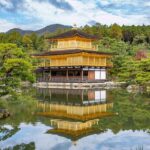
Next is Kinkaku-ji Temple, usually the emotional high point for many people. You’ll spend about 45 minutes, and admissions are included.
This is the Golden Pavilion—a wooden structure covered in thin layers of pure gold, set within a garden and surrounded by a pond. You don’t need a background in Japanese art to appreciate what you’re seeing; the scale and the reflective effect on the water are immediate. It’s one of those sites where photos almost feel like they should be pointless, because the real thing catches the light differently in person.
Crowds can be part of the experience here. The best move is to focus on your own pacing: take your time getting oriented first, then use the rest of your time for your favorite view angles.

Stop 3: Kyoto Imperial Palace, or Kitano Tenmangu when it’s closed
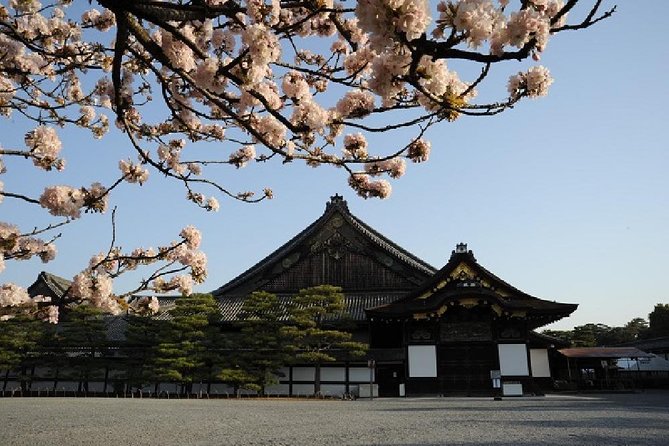
You’ll visit Kyoto Imperial Palace for about 40 minutes. Admission is free on this tour, and your guide uses the time to explain what you’re looking at—especially since it isn’t a museum in the way some Western palaces are.
This palace was used as the Emperor’s residence until about 150 years ago, so the setting has a lived-in feel rather than just being “ruins.” You’ll walk through opulent spaces and learn about ceremonies that historically happened within these walls.
But Kyoto loves its calendar complications. On Mondays (or the following day if Monday is a holiday) and on days when the Imperial Household Agency has events, the palace is closed to visitors. When that happens, your tour visits Kitano Tenmangu Shrine instead.
There’s also a special rule: if the closed day falls on the 25th, the tour will visit Nishi Hongan-ji Temple instead. So if you’re building your Kyoto plan around the idea of the Imperial Palace, it’s smart to know this tour already has a backup ready.
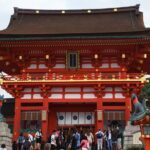
Stop 4: Fushimi Inari-taisha and the red torii tunnel
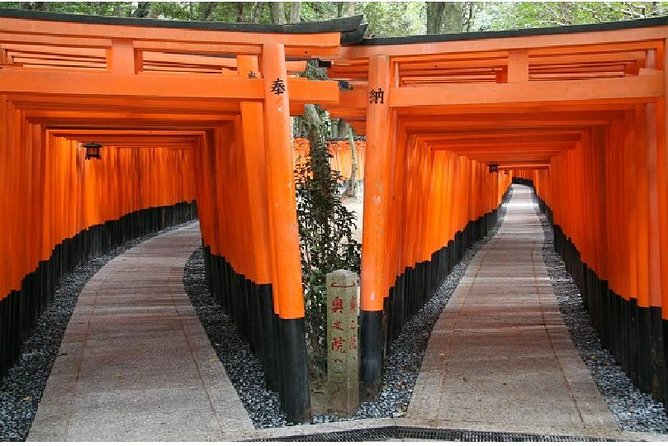
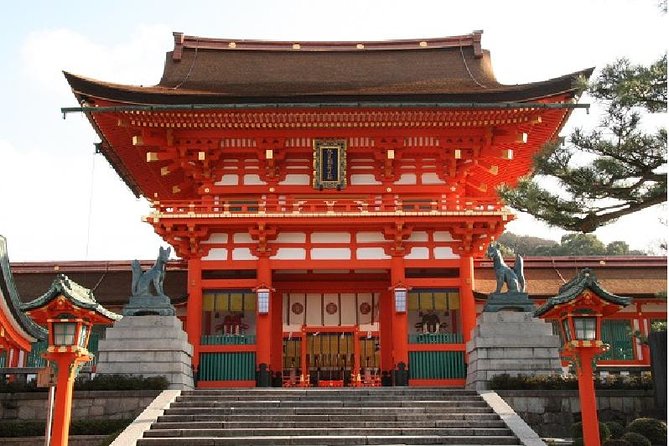
At Fushimi Inari-taisha, you get about 30 minutes. Admission is free on this tour, but the big “workout” detail is what happens right after you park.
The tour includes a walk from the parking area to the shrine—about 15 minutes one-way. That’s long enough to matter if you don’t usually walk, so plan accordingly and wear shoes you can move in comfortably.
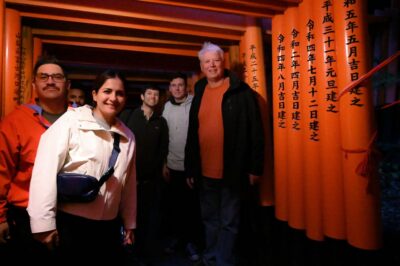
Fushimi Inari is famous for its bright red Senbon Torii gates. It’s the head shrine of around 40,000 inari-jinja shrines across Japan. The thing I’d keep in mind is that this site works on two levels: you can enjoy it just from the main approach and gates, or you can go farther if you want more of the tunnel effect.
With only half an hour here, you’re not meant to do a full hike. You’re meant to see the iconic entrance experience and return with your time intact for the later stops.
Stop 5: Sanjusangendo, 1,001 statues, and a long wooden hall
Sanjusangendo Temple is one of the most unusual stops on the itinerary. You’ll get about 30 minutes, and admission is included.
This temple is housed in the world-famous long wooden hall concept: it contains the world’s longest wooden structure, and inside it holds 1,001 life-size statues of Buddhist Kannon deities. The statues are from the 13th century, which means you’re looking at something that has been arranged and kept for centuries, not just built recently for tourism.
Even if you’re not an art or religion specialist, this is a “wow” stop because it’s overwhelming in a specific way. The sheer quantity changes how your brain reads the space.
Stop 6: Kiyomizu-dera and the shopping lane to the terrace views
The final stop is Kiyomizu-dera, with about 1 hour 10 minutes of time. Admission is included here too, and this stop tends to end the day on a strong note.
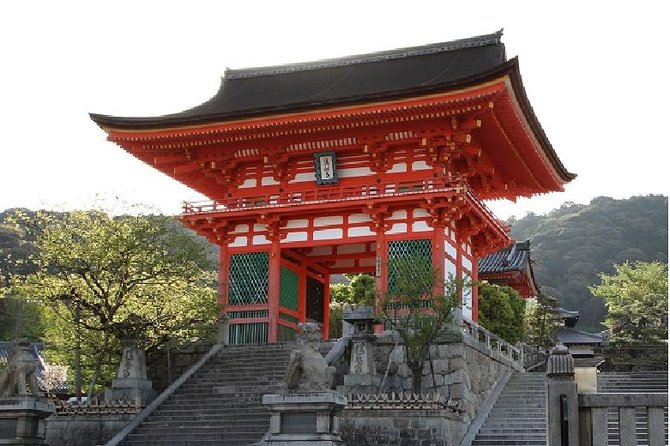
Kiyomizu-dera is a World Heritage site, and the big hook is the panoramic city views from the terrace area. You also get a bonus Kyoto experience: the temple’s approach includes a historic shopping lane lined with pottery shops, which makes the walk feel like part of the attraction, not just a transfer.
Because you’re finishing the day at a viewpoint-temple, this is where you’ll really notice changes in weather. If it’s raining, you may still get views, but the vibe turns more dramatic and less postcard-like. Either way, it’s a strong capstone.
Lunch options: Western set menu, vegetarian thali, or no lunch
Lunch is a choose-your-own-style option. It’s only included if you book the With Lunch option. If you don’t, you’ll have free time to eat on your own in the Kyoto Station area.
Western-style set menu
If you pick the Western-style lunch, you’ll get a set menu. There’s a vegetarian option, but you must request it at reservation time. If you don’t request in advance, you can’t expect same-day changes. Also, halal and gluten-free meal requests aren’t available for this lunch option.
Vegetarian Indian thali
There’s also an Indian thali lunch option designed for vegetarians. The menu includes three kinds of curry (bean curry, vegetable curry, spinach and potato curry), vegetable pakora, plain yogurt, naan or roti, rice, salad, and a non-alcoholic drink. Like the Western option, dietary changes beyond what’s booked aren’t offered.
One detail that affects your day: people selecting Western-style lunch and people selecting Indian thali are served in separate dining areas, and you can’t swap lunch types on the day.
In real-world terms, this setup is convenient if you’ve already decided what you want. It’s not ideal if you’re hoping to manage dietary needs last minute.
The guide: when it turns from sightseeing into understanding
This tour runs with a National Government Licensed English guide interpreter, and the guide’s role is the difference between seeing buildings and understanding why they matter.
In the tour experience you can expect, the guiding approach tends to be a mix of history and human details: how Kyoto’s power shifted through time, what daily ritual looks like, and how the city’s layouts shape what you see.
Some departure groups have guides like KC (described as friendly, humorous, and attentive), Miyuki (noted for engaging history commentary), or Yoshitaka Harada (credited with thoughtful cultural insights). You should take these names as examples, not guarantees—but they point to the kind of energy that can make this route feel lighter and more meaningful.
That said, pace and audio can be a factor. A few past experiences described moments when the guide was hard to understand or moved too quickly for the group. If you know you prefer slower explanations, choose your seat on the bus wisely and plan to keep up with the group when it’s time to move.
Who should book this Kyoto 1 Day Tour
This is a great match if:
- You have one day and want the big Kyoto hits in a logical route.
- You like the idea of having admissions and transport included.
- You want an English-speaking guide to connect castles, temples, shrines, and palaces into a single story.
You might want to think twice if:
- You hate group pacing and prefer to wander without boundaries.
- You need long, quiet stops at every site, because this tour is built for efficient coverage.
- You’re sensitive to crowd intensity and rapid movement between locations.
Also, this tour is listed as usable by most travelers, and service animals are allowed.
Should you book it?
If your goal is to see Kyoto’s top icons in one day without juggling tickets and transit, I’d say this tour is a strong choice. The biggest reason: the route is structured around high-demand UNESCO sites and major landmarks, and you’re not paying extra for admissions and transport.
Book it if you can handle a packed itinerary and you want the convenience of a guided plan. Skip it only if you’re aiming for slow discovery or you know you’ll struggle with a brisk group pace. If that sounds like you, Kyoto is full of places where independent time wins—especially once you’ve gotten the big highlights covered.
FAQ
What’s included in the tour price?
The tour includes the licensed English guide interpreter fee, admission fees, and transportation costs, plus an air-conditioned and heated tour bus. Lunch is only included if you choose the With Lunch option.
How long is the Kyoto 1 Day Tour, and what time does it run?
The tour lasts about 9 hours 40 minutes. It starts at 8:20am and ends at Kyoto Station around 5:30pm.
Which major sites are covered?
The tour includes Nijo Castle, Kinkaku-ji Temple, Kyoto Imperial Palace (or an alternative if closed), Fushimi Inari-taisha Shrine, Sanjusangendo Temple, and Kiyomizu-dera Temple.
What happens if Kyoto Imperial Palace is closed?
Kyoto Imperial Palace is closed to visitors on Mondays (or the following day if Monday is a holiday) and on days with Imperial Household Agency events. If closed, the tour visits Kitano Tenmangu Shrine instead. If the closed day falls on the 25th, the tour visits Nishi Hongan-ji Temple.
What happens if Nijo Castle is closed?
Nijo Castle is closed on Tuesdays in January, July, August, and December. If it’s closed, the tour visits Ryoan-ji Temple instead.
Is lunch included, and what lunch types are available?
Lunch is included only if you select a lunch option during booking. You can choose a Western-style set menu or an Indian thali option. Vegetarian requests are limited and must be provided at reservation time for the Western option; halal and gluten-free requests are not available. Lunch type cannot be changed on the tour day.
Is there a no-lunch option?
Yes. If you choose No Lunch, you’ll have free time to eat on your own in the Kyoto Station area.
Can I cancel for a full refund?
Yes, you can cancel for free up to 24 hours before the experience’s start time for a full refund. If you cancel less than 24 hours before, the amount paid is not refunded.