REVIEW · KYOTO
Early Half Day to Kyoto Highlights
Book on Viator →Operated by Mandala Japan Experience · Bookable on Viator
Kyoto before the crowds feels like a cheat code. This early half-day route hits Kyoto’s biggest icons—Fushimi Inari, Arashiyama bamboo forest, and Kinkakuji—while you’re still beating the rush, plus you get culture context on Shinto and Buddhism as you go. One thing to plan for: Kinkakuji entrance (¥500) and public transport (¥1,300) are not included, so your day has a couple of extra line items.
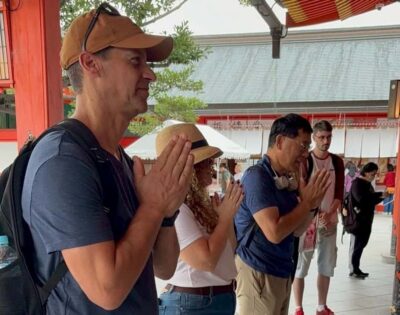
What I really liked was the pacing with a small group and a strong guide. With Indra leading, the morning stays efficient, questions get answered, and you don’t waste time figuring out what’s next or where to stand for the best views.
Key points to know before you go
- Early start (8:00am) for easier photos and calmer walking
- Small group size (max 8) so you can actually ask questions
- Public transport route that helps you get a real feel for moving around Kyoto
- Culture lessons on Shintoism and Buddhism tied to the sights you’re seeing
- Kinkakuji fee is extra (¥500), while most other stops are free to enter
- Half-day timing leaves your afternoon open for food, shopping, or quieter temples
In This Review
- Why This 5-Hour Early Route Works in Kyoto
- Meet at Kyoto Tower Starbucks: Getting Oriented Fast
- Fushimi Inari Taisha: Red Gates, Shinto Meaning, and Early Calm
- Arashiyama Bamboo Forest: Morning Light and a Lesson in How People Live
- Kinkakuji Golden Pavilion: What You Pay for (and Why It’s Worth Planning)
- Back to Kyoto Station: Keeping Your Afternoon Flexible
- Price and Value Breakdown: What $94.71 Covers (and What Doesn’t)
- Who This Tour Suits Best
- Should You Book This Early Kyoto Highlights Tour?
- FAQ
- What time does the tour start?
- How long is the experience?
- Where is the meeting point?
- How many people are in a group?
- What’s included in the tour price?
- What fees are not included?
- Does the tour run in any weather?
Why This 5-Hour Early Route Works in Kyoto
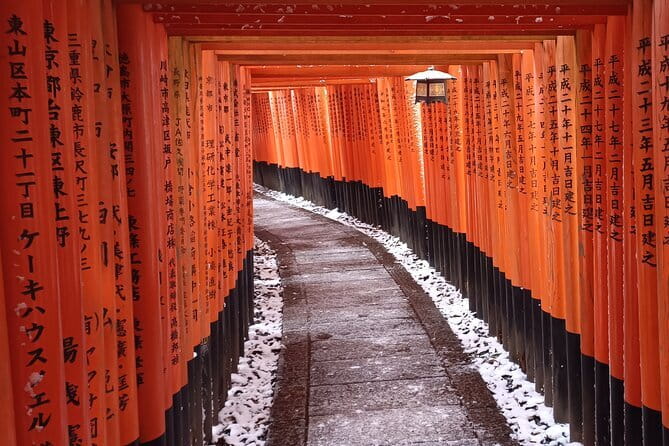
Kyoto has a talent for turning a simple plan into a time sink—lines, wrong turns, and crowds at the exact wrong moment. This tour is built to fight that. You start at 8:00am, then you focus on three heavy-hitters in the morning: Fushimi Inari, Arashiyama bamboo, and Kinkakuji. That combo can be a headache to string together on your own, especially if you want to keep momentum.
The other big win is the group size. With a maximum of 8 people, it’s easier to move as a unit and still feel flexible. The vibe is closer to “good local guidance” than a big bus tour. And because it’s about public transport, you’re not just seeing Kyoto—you’re learning the rhythm of getting around.
The pacing also respects a simple truth: in Kyoto, half a day can still feel full. You end back near Kyoto Station, which is handy if you want to continue your day without a complicated return plan.
Meet at Kyoto Tower Starbucks: Getting Oriented Fast
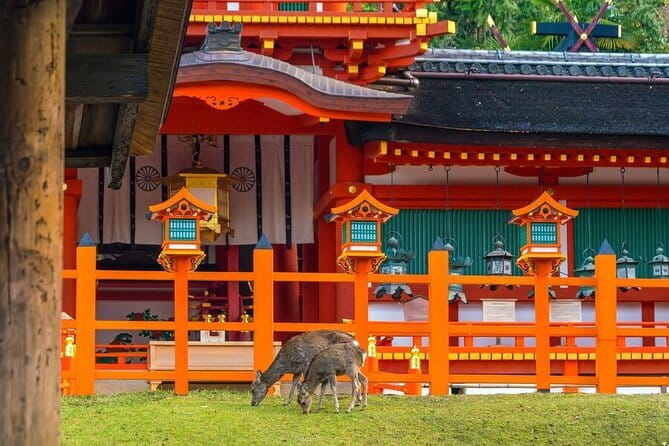
Your tour begins at Starbucks Coffee inside Kyoto Tower Sando, right by Kyoto Station. The meeting point is very clear, and it’s the kind of location that helps you get your bearings fast. You’re also starting from the area where Kyoto’s train options make it easiest to jump into the day’s route.
Even though the “Starbucks stop” is only about 15 minutes, it matters. That short pause sets up the entire morning: you can confirm where the group is lining up, hear how the walk/transport flow will work, and be ready before your first major sight. If you’ve ever watched people scramble at dawn trying to connect trains and match up with a plan, you’ll appreciate how much less stressful it feels when someone else has already smoothed the path.
Also, this is a mobile ticket tour. That’s a small detail, but it reduces friction—no paper ticket hunting, no last-minute confusion.
You can also read our reviews of more tours and experiences in Kyoto.



Fushimi Inari Taisha: Red Gates, Shinto Meaning, and Early Calm
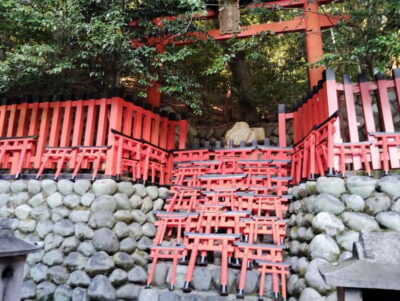
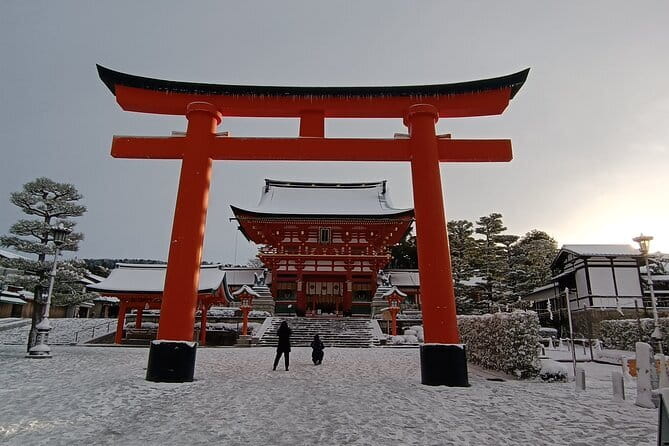
Fushimi Inari-taisha is the famous Kyoto stop with the thousand red gates. The obvious reason to go is the view: long rows of vermilion torii create a visual rhythm that pulls you forward. But the deeper value is what you learn while you’re there.
This is where the tour connects the scenery to Shintoism, the belief system that shapes so many Japanese shrine traditions. You’re not only walking through gates; you’re learning why this kind of sacred space matters in Japanese culture and daily thinking.
The other big point is timing. You go early specifically to enjoy the shrine without the crowds. That doesn’t mean it’s empty—Fushimi Inari is famous for a reason. It just means you’re less likely to feel boxed in. You’ll have an easier time moving, stopping for photos, and taking in the details around you rather than constantly sidestepping shoulder-to-shoulder visitors.
Practical tip: wear shoes that can handle uneven ground and lots of steps. Inari isn’t a “stand and admire” kind of stop. You’ll walk, and you’ll likely want to keep moving to enjoy the way the torii pattern changes as you progress.
Arashiyama Bamboo Forest: Morning Light and a Lesson in How People Live
Arashiyama is where Kyoto swaps its shrine energy for something quieter and more natural. The bamboo forest has that instantly recognizable look—slender stalks, a narrow corridor feel, and a soft rhythm created by wind in the leaves.
What makes this stop work well inside a tour is that you’re not just photographing. You get cultural context about Japanese society while you’re in the area. That matters because bamboo forests can become “just scenery” if you don’t connect them to what people actually do around these places.
And again, the early schedule helps. Arashiyama can get packed later in the day. Going while the morning is still relatively calm gives you more breathing room to notice how the forest changes around you—how it looks from different angles, how the light falls through the stalks, and how the space feels as you slow down.
One consideration: the bamboo forest is a popular location, so you’ll still see other people. The difference is you’re less likely to feel rushed. That’s the whole point of this half-day format—speed with purpose, not chaos.
Kinkakuji Golden Pavilion: What You Pay for (and Why It’s Worth Planning)
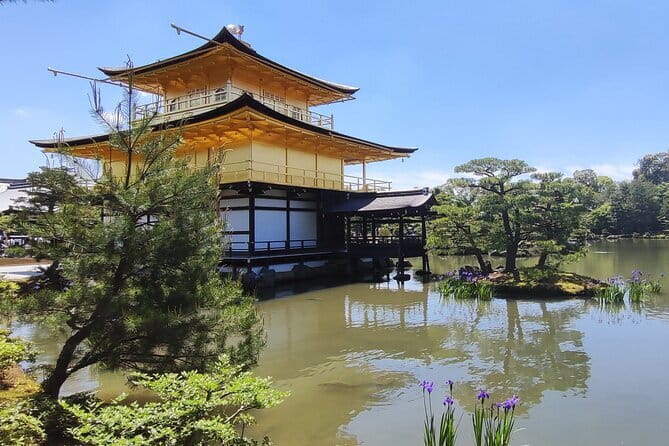
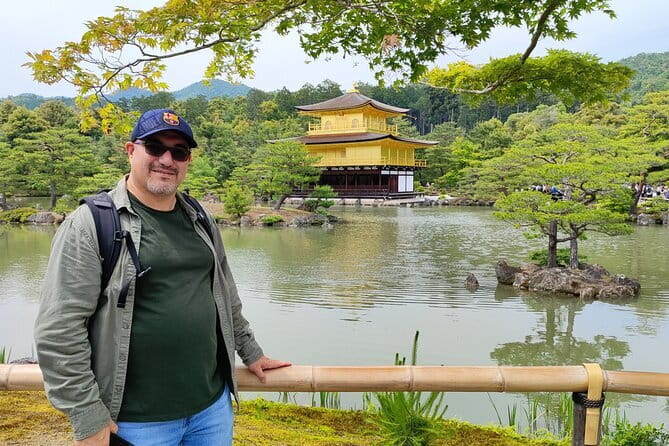
Kinkakuji—officially known as the Golden Pavilion—is one of Japan’s most visited temples for a reason. Even if you’re not a “temple person,” the sight tends to land. The tour keeps it focused: you learn Buddhism in Japan and the temple’s background while you’re there, then you get time to enjoy the view.
The important practical detail: Kinkakuji entrance isn’t included. The fee is ¥500 per person. You should treat that as part of your real cost for the day, not a surprise add-on.
Why this stop is a strong pick for a morning tour: it’s easier to enjoy the surroundings when you’re not arriving in peak congestion. And because you’re there as part of a structured route, you spend less time worrying about logistics and more time just watching what’s in front of you.
Tip for your own enjoyment: plan to look longer than you think you need to. Kinkakuji’s impact comes in layers—the pavilion itself, the reflections/view angles, and the overall temple setting around it. If you rush, you’ll miss some of the payoff.
Back to Kyoto Station: Keeping Your Afternoon Flexible
After Kinkakuji, the tour returns to the meeting area near Kyoto Station. That “back to start” design is more useful than it sounds. Kyoto can be great for wandering, but you don’t want to lock yourself into complicated travel just to keep the day going.
Because this is only about 5 hours, you’re left with the afternoon to do what fits your style—another neighborhood stroll, a meal you’ve been planning, or even a second look at a place you want to revisit without the pressure of a tour schedule.
That’s one of the hidden values of the format. Full-day tours are satisfying, but half-day tours can be smarter. You get the classics, then you regain control.


Price and Value Breakdown: What $94.71 Covers (and What Doesn’t)
The headline price is $94.71 per person for an approximately 5-hour tour, using public transport and led by an experienced local guide with good English. The schedule hits major sights efficiently, and the group stays small (max 8), which is where a guide actually earns their keep.
Here’s what you should budget for based on the tour details:
- Included: guide service and the tour structure, plus entry is marked as free for the start location, Fushimi Inari-taisha, Arashiyama bamboo forest, and Kyoto Station return.
- Not included:
- Kinkakuji Golden Pavilion entrance fee: ¥500 per person
- Public transportation: ¥1,300 per person
- gratuity
So is it good value? For Kyoto highlights, yes—especially because you’re getting early timing, a small group, and someone to explain what you’re seeing instead of you guessing on the fly. If you were going to do these stops anyway, the main comparison is your own time and stress versus paying for organization.
Also, keep your expectations aligned: this tour is “high-impact, half-day.” You’re not trying to cover every temple in Kyoto. You’re choosing the best-known classics with strong interpretive guidance and a schedule designed to reduce waiting.
Who This Tour Suits Best
This fits you if:
- you want Kyoto’s top sights in one morning
- you like being guided but still want time to roam later
- you prefer public transport to get a real feel for the city
- you want culture explanations tied to Shinto and Buddhism, not just directions and photo stops
It may not be the best match if:
- you hate walking and standing for extended periods
- you want everything fully included without any extra fees
- you’re the type who needs long, slow stays at every stop (because the morning is intentionally structured)
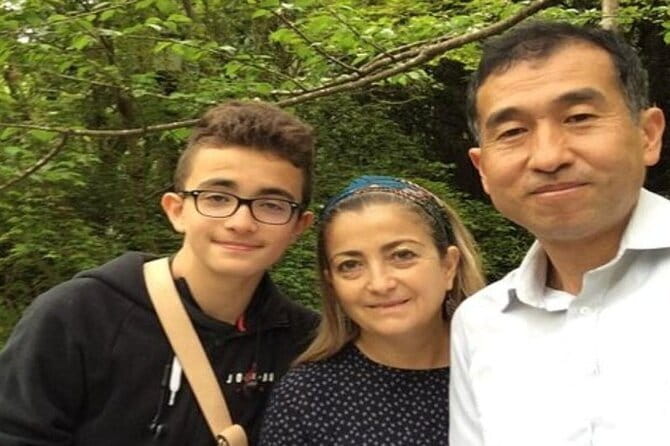
One more note: the reviews highlighted how smoothly Indra kept the schedule, how friendly and enthusiastic he was, and how the group felt almost private with plenty of chances to ask questions. If you like a guide who can do storytelling without turning it into a lecture, this is the right style.
Should You Book This Early Kyoto Highlights Tour?
I’d book it if your goal is to see Kyoto’s big-name highlights with less crowd pressure and less hassle than DIY planning. The early 8:00am start plus the small group size do real work for you, and the guide-led culture explanations make the stops feel more meaningful than just a checklist.
It’s also a smart option for people who want an afternoon free, not another full-day commitment. You’ll come away with the iconic photos and a clearer sense of what Shinto shrine space and Buddhist temple tradition mean in Japan.
Just go in knowing the add-ons: ¥500 for Kinkakuji and ¥1,300 for public transport. If you can handle that, you’re set for a very well-run morning that gets straight to the heart of Kyoto.
FAQ
What time does the tour start?
The tour starts at 8:00am.
How long is the experience?
The duration is about 5 hours.
Where is the meeting point?
The meeting point is Starbucks Coffee – Kyoto Tower Sando at Kyoto Tower Sando, in front of Kyoto Station.
How many people are in a group?
This tour has a maximum of 8 travelers.
What’s included in the tour price?
The price includes an experienced local guide with good command of English and the tour features a mobile ticket. Entry is listed as free for the included stops.
What fees are not included?
You pay Kinkakuji entrance fee (¥500 per person), public transportation (¥1,300 per person), and gratuity is not included.
Does the tour run in any weather?
This experience requires good weather. If it’s canceled due to poor weather, you’ll be offered a different date or a full refund.