REVIEW · KYOTO
Kyoto Ramen Noodle Making Class
Book on Viator →Operated by byFood · Bookable on Viator
Handmade ramen starts in Gion. In Musoshin’s Kyoto workshop, you’ll make ramen noodles from scratch on a professional noodle machine, then finish with a chef-prepared bowl. I love the hands-on step-by-step teaching, and I like that the class is led with clear English so you can actually follow what matters. The whole thing runs about an hour, which makes it an easy fit into a busy Kyoto day.
One possible drawback to know up front: this experience is mostly noodle-focused, not a full ramen cooking lesson. You’ll learn how to knead, roll, and cut the dough, then eat what the chef has prepared, so plan your expectations around noodles first.
In This Review
- Kyoto Ramen Noodle Making in Gion: The Real-World Setup
- What You’ll Make: Wheat Noodles With Two Flours
- The Chef’s Bowl: Vegetable Broth, Kyotamba Rice, and Local Condiments
- Instructor Coaching in English: How the Lessons Feel
- Dietary Options in Plain Terms: Vegetarian, Vegan, and No Meat or Fish
- Price and Value Check: Why $48.27 Can Make Sense
- Logistics in Central Kyoto: Meeting Point and Getting There
- Who This Class Fits Best (and Who Should Rethink It)
- Should You Book the Kyoto Ramen Noodle Making Class?
- FAQ
- How long is the Kyoto ramen noodle making class?
- Where is the meeting point?
- Is the class in Musoshin Gion or Musoshin Ramen Academy?
- What’s included in the price?
- Are dietary restrictions handled?
- What kind of noodles do you make?
- Do you make noodles yourself or just watch?
- How big is the group?
- Can I get a refund if my plans change?
Kyoto Ramen Noodle Making in Gion: The Real-World Setup
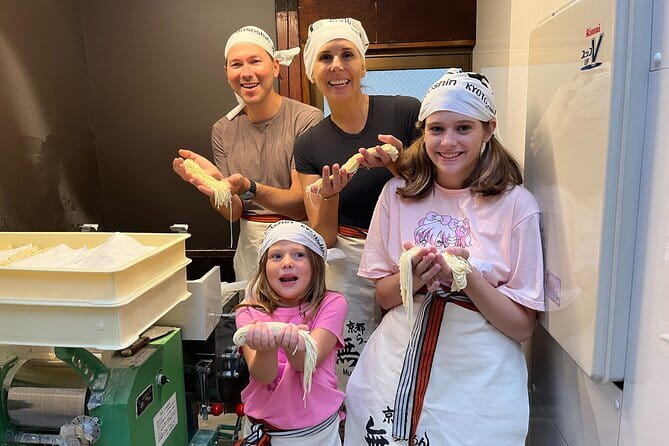
Musoshin’s ramen workshop is set in central Kyoto’s Gion area, in a specialty shop location called Musoshin Gion. It’s not at Musoshin Ramen Academy, so take note when you’re mapping your route. That matters in Kyoto, where two similar-sounding places can still be a trek if you’re wandering with jet lag.
The experience is designed for small groups (up to 6 travelers), so you’re not lost in a crowd. You’ll also get a mobile ticket, and you’ll return to the meeting point at the end. Time-wise, it’s about 1 hour, which is a sweet spot: long enough to learn a real process, short enough that you don’t feel like you’ve traded away your whole afternoon.
The class includes an English-speaking instructor, ingredients and tools for noodle making, and a bowl of ramen plus one soft drink. You’ll wear a rental apron, and you’ll take home a bandana used during the workshop as a souvenir. That’s a lot of value bundled into a compact schedule.
What You’ll Make: Wheat Noodles With Two Flours
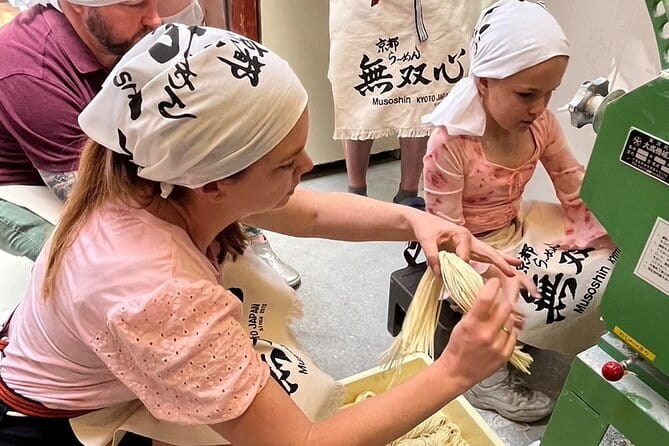
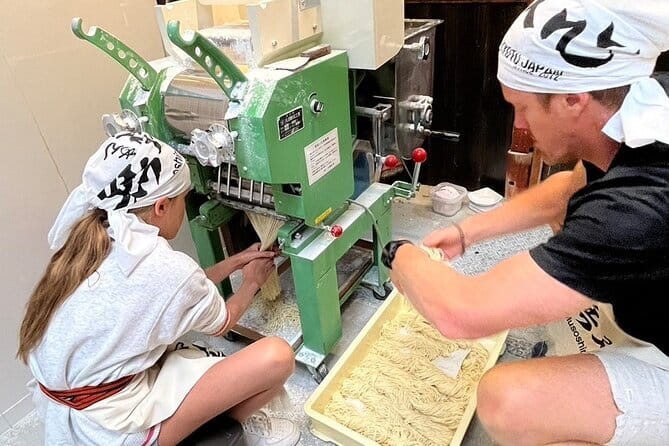
Here’s the heart of the class: you’ll make ramen noodles from dough prepared with two types of flour. The noodles are made from wheat flour, and the teaching is built around doing the work yourself. That means you aren’t just watching a demo and taking notes. You pour water, knead the dough, then roll and cut the noodles.
You’ll use a professional noodle-making machine, which is a big part of why this workshop feels different from a basic cooking class. Hand-kneaded, hand-rolled noodles would be fun, but this machine turns the learning into something more repeatable. You get a real sense of thickness, texture, and the way cuts affect bite.
And since ramen is all about the chew—how the noodle holds up in broth—you’re learning the mechanics that matter. The goal isn’t perfection on your first try. It’s understanding the process well enough that you can appreciate why good ramen noodles feel the way they do.
You can also read our reviews of more tours and experiences in Kyoto


The Chef’s Bowl: Vegetable Broth, Kyotamba Rice, and Local Condiments
After you make the noodles, you’ll eat a bowl of ramen made by the chef. The broth is described as a blend of vegetables, and Musoshin uses high-quality Kyotamba rice and condiments from local makers. Even if you’re not a food nerd (I am, but you don’t have to be), these details help the meal feel connected to place.
One thing to keep in mind: the workshop portion focuses on the noodle-making steps. The broth and the final bowl come from the chef’s preparation. That split is useful. You get hands-on skill for the part you can’t easily practice at home, then you get the finished results the shop does well.
The class also includes one soft drink with your ramen. It’s a straightforward pairing that helps you relax right after a hands-on session.
Instructor Coaching in English: How the Lessons Feel
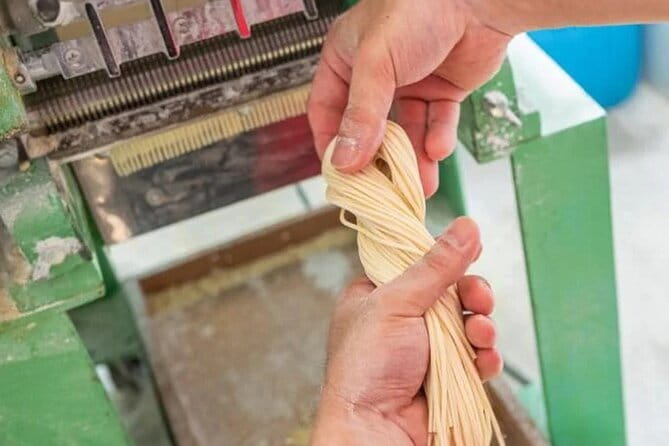
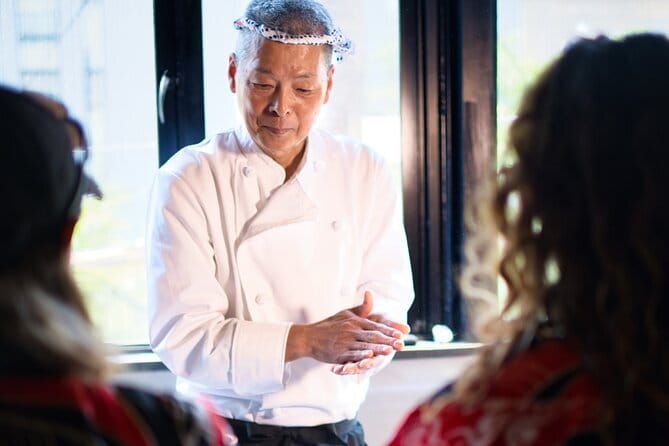
A noodle machine can be intimidating if you’ve never used one. The instructor’s job here is to make it simple and calm: where to put your hands, how to shape the dough, and what to watch for as you roll and cut.
The coaching is described as English-speaking, and the teaching style seems intentionally interactive. Names like Kaz, Azu, and Amiru come up in feedback for friendly guidance and clear step-by-step explanation. You should expect instructors who focus on process, not just outcomes.
The best part about this setup is that you learn by doing. You’ll likely start out worried you’ll mess up the dough. Then, as the instructor corrects angles and pacing, you get traction. That’s when it turns from workshop to real skill-building.
Dietary Options in Plain Terms: Vegetarian, Vegan, and No Meat or Fish
If you follow a vegetarian or vegan diet, this class is set up for you. The info says that vegetarian, vegan, and no meat or fish options are available for the tasting session. It also notes pescetarian accommodation.
There’s one practical catch: you need to inform the provider in advance of your dietary restrictions. That’s not red tape. It’s how they can prepare the right tasting session without last-minute substitutions.
Also note that the noodles are made from wheat flour. That’s relevant for people who need to plan around ingredients, even if your main concern is avoiding meat or fish in the broth and toppings.
Price and Value Check: Why $48.27 Can Make Sense
At $48.27 per person, this isn’t the cheapest meal experience in Kyoto. But it’s also not just a sit-down ramen lunch. You’re paying for several things that add up:
- English-speaking instruction
- Ingredients and tools for noodle making
- Use of a professional noodle-making machine
- Rental apron (plus a bandana souvenir)
- A chef-made bowl of ramen and one soft drink
- A class length of about 1 hour in a small group
If you compare it to the cost of eating ramen out plus adding a hands-on activity, the workshop starts looking more reasonable. Even better, the experience is compact. One hour is easier to protect than a half-day tour when your Kyoto schedule is already tight.
My advice: if you’re the type who likes learning one real cooking skill (not just taking photos), this price usually lands well.




Logistics in Central Kyoto: Meeting Point and Getting There
The meeting point is listed as 558-2 Komatsuchō, Higashiyama Ward, Kyoto, 605-0811, Japan. The activity is near public transportation, which matters because Kyoto streets can be slower to walk than you expect.
This is also a “return to the meeting point” style experience. So you’re not sent off into the city with no clear way back. That keeps your day simpler.
One more detail: because it’s in Musoshin Gion, double-check your directions. Kyoto has enough similar names and nearby areas that it’s easy to land in the wrong spot if you’re relying on a vague search result.
Finally, confirmation is received within 48 hours of booking subject to availability. So if you’re traveling on a tight plan, don’t wait until the last minute.
Who This Class Fits Best (and Who Should Rethink It)
This class is a strong choice for:
- Ramen lovers who want to understand the noodle side of great ramen
- People who enjoy hands-on food activities
- Anyone who wants a shorter workshop that still teaches real technique
- Families and groups, since the class format supports interaction and small-group attention
It might not fit as well if:
- You want a full ramen cooking class where you also learn to make broth from scratch. This workshop is focused on noodles, then you eat the finished chef bowl.
- You’re looking for a long cultural tour with lots of walking and sightseeing. This is a kitchen-first experience.
Should You Book the Kyoto Ramen Noodle Making Class?
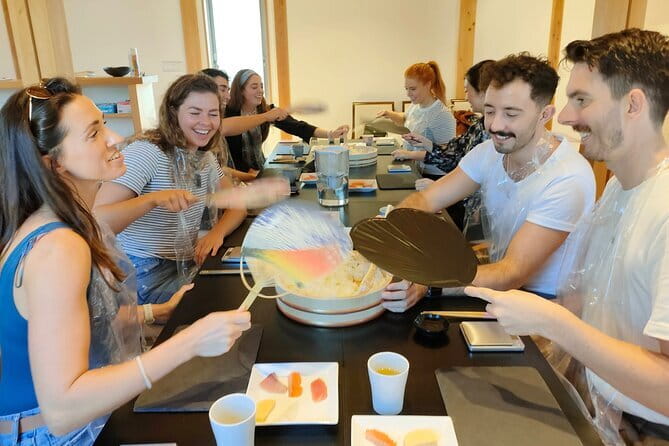
Book it if you want a memorable Kyoto experience with a clear payoff: you learn the noodle process and you eat the result. The small group size, English instruction, and the use of a professional machine make it feel more structured than a casual cooking workshop.
Skip it (or pick something else) if your main goal is learning broth-making or building a complete ramen recipe step-by-step from start to finish. This one is noodles first, chef bowl second.
If you’re open to rolling up your sleeves and learning the mechanics behind chewy ramen noodles, Musoshin’s Gion class is the kind of activity you’ll remember when you taste ramen later and think about dough texture and cutting thickness.
FAQ
How long is the Kyoto ramen noodle making class?
It lasts about 1 hour.
Where is the meeting point?
The meeting point is 558-2 Komatsuchō, Higashiyama Ward, Kyoto, 605-0811, Japan.
Is the class in Musoshin Gion or Musoshin Ramen Academy?
The cooking venue is Musoshin Gion in central Kyoto, not Musoshin Ramen Academy.
What’s included in the price?
Included are an English-speaking noodle making instructor, ingredients and tools, a bowl of ramen and one soft drink, a rental apron, and the bandana used during the workshop (given as a souvenir).
Are dietary restrictions handled?
Yes. Vegetarian, vegan, and pescetarian diets are accommodated for the tasting session. The info also says there are no meat or fish options, and you should inform the provider in advance.
What kind of noodles do you make?
The noodles are made from wheat flour, and the dough uses two types of flour.
Do you make noodles yourself or just watch?
You do the work. You’ll pour water, knead the dough, then roll and cut the noodles using a professional noodle-making machine.
How big is the group?
The class has a maximum of 6 travelers.
Can I get a refund if my plans change?
Yes. You can cancel for a full refund if you cancel at least 24 hours before the experience start time.