REVIEW · KYOTO
Kyoto: Fushimi Inari Shrine Walking Tour
Book on Viator →Operated by Traveling Kyoto · Bookable on Viator
Torii gates at dusk feel personal. This Fushimi Inari guided walking tour turns a famous Kyoto sight into a guided story of faith, symbols, and those famous orange-red steps upward. I especially like how the walk is paced so you understand what you’re seeing instead of just snapping photos.
Two things I truly enjoy: first, the guide’s Inari and fox deity explanations that make the shrine details click (from fox imagery to shrine rituals you might otherwise miss). Second, this tour saves time with included admission and a mobile ticket, so you can start walking without ticket-line hassle.
One heads-up: it is still a real climb. Even though it’s guided, you’ll be on mountain trails for about 2 hours, and busy areas mean you’ll want comfortable shoes and a little patience for foot traffic.
In This Review
- Key things to know before you go
- Why Fushimi Inari makes more sense with a guide
- Your route starts at Yamazaki and heads into the complex
- Stop 1: Fushimi Inari-taisha, the torii path and the meaning behind it
- Learning as you walk
- Where the guide helps most
- The climb: scenic trails, reflection spots, and Kyoto’s views
- Small group pacing: you won’t lose the guide
- Admission included and time saved (it’s part of the value)
- Evening timing at 6:00 pm: calmer energy for a busy icon
- What to bring so the climb feels easy
- Who this tour suits best (and who should skip it)
- Should you book this Kyoto Fushimi Inari tour?
- FAQ
- How long is the Kyoto: Fushimi Inari Shrine Walking Tour?
- What time does the tour start?
- Where is the meeting point?
- Is admission to Fushimi Inari-taisha included?
- Is this tour in English?
- How big is the group?
- Do I need to purchase a paper ticket?
- Are food and drinks included?
- Do I need to tip?
- What is the cancellation policy?
Key things to know before you go
- Small group (max 10) keeps the guide easy to hear and helps you stay together
- Entry included means less waiting and more time moving through the shrine
- Evening start around 6:00 pm gives you a calmer feel than peak daytime rush
- Fox deity explanations connect the statues, gates, and offerings into one story
- Scenic trail walk with viewpoints turns the famous torii path into a Kyoto viewing experience
Why Fushimi Inari makes more sense with a guide
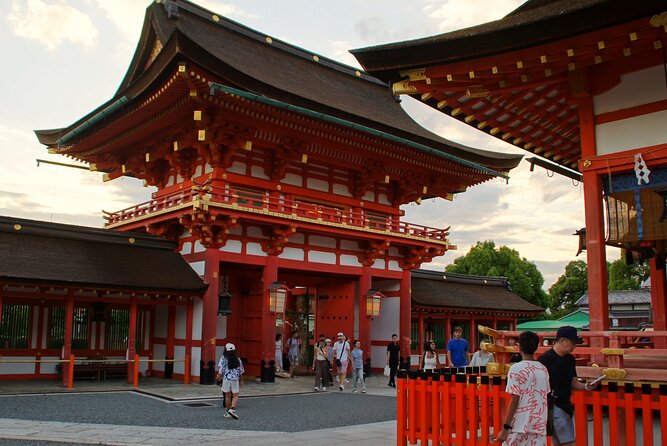
Fushimi Inari-taisha is one of those places where first-time confusion is normal. You arrive expecting torii gates, statues, and a quick stroll. Then you look closer: there are repeated patterns, offerings, fox imagery, and small rituals happening all around you.
That’s exactly where this tour earns its keep. Instead of treating the shrine like a theme park, you learn how the shrine’s elements connect to Inari worship—and why fox-related symbols show up so often. When you understand what you’re looking at, the gates stop being just a pretty photo line. They become part of a living religious space.
The best part for me is the way the guide builds meaning as you walk. You’re not stuck listening the entire time. You move through the grounds, notice details, then the guide explains what they point to. It’s the difference between seeing the shrine and actually reading it.
You can also read our reviews of more walking tours in Kyoto


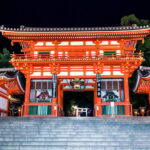
Your route starts at Yamazaki and heads into the complex
The tour meets at Daily Yamazaki Fushimi Inari Shrine, at 93 Fukakusa Inarionmaechō, Fushimi Ward, Kyoto. You’ll return back to the same meeting point at the end, and the schedule starts at 6:00 pm.
There’s practical value here. Meeting at a local, easy-to-find spot helps you avoid the typical last-minute scramble. And since the meeting area is near public transportation, you can plan your evening without stress.
Also, this tour is built for people who don’t want to guess. Having someone else handle the flow means you can focus on what matters: walking the shrine path and picking up cultural context at the right moments. I like that kind of support, especially in a complex site like this.
Stop 1: Fushimi Inari-taisha, the torii path and the meaning behind it
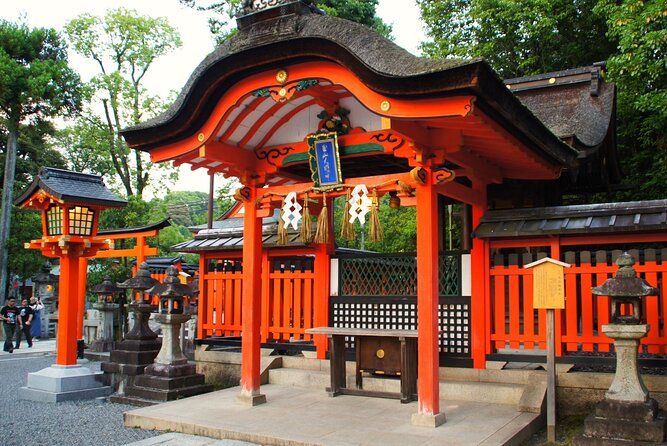
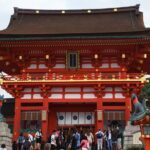
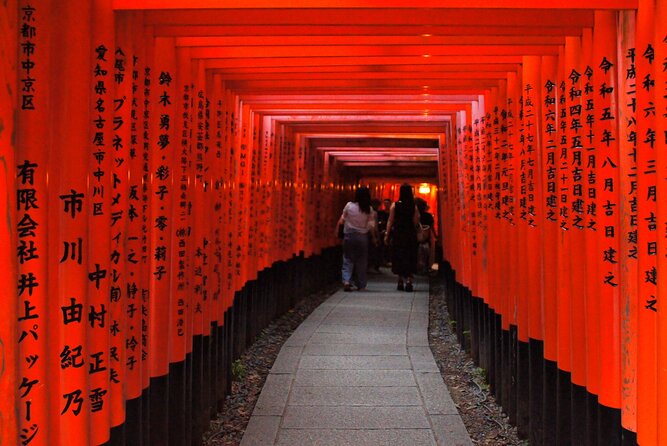
Your main stop is Fushimi Inari-taisha Shrine, Kyoto’s icon with thousands of bright orange-red torii gates winding through a forested mountain. Even without a guide, you’d feel the atmosphere. But with one, you’ll notice the structure and purpose behind what looks repetitive.
Learning as you walk
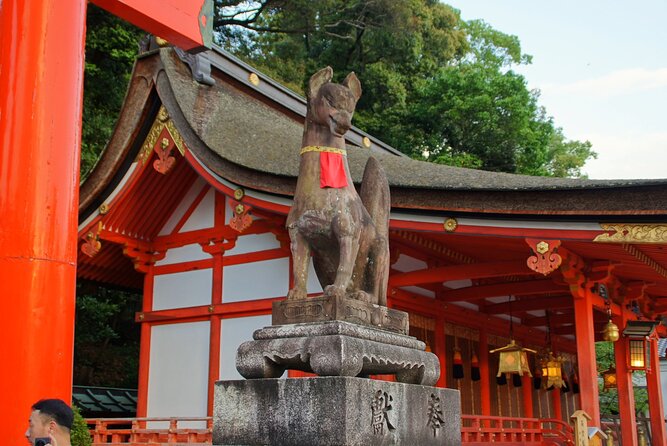
The guide shares historical and religious context around the shrine. You’ll hear about the fox deity Inari and how worship connects to the shrine’s visual language. You also get explanations about shrine rituals you see in real time.
That matters because Fushimi Inari isn’t just about architecture. It’s about practice—what people do, where they pause, and what offerings mean. Once you understand the symbolism, the statues feel less like random ornamentation. They feel like part of a tradition with logic.
Where the guide helps most
This is one of those sites where it’s easy to wander without understanding. A guided route helps you avoid “tourist tunnel vision,” where you only notice the biggest gates and miss the smaller context.
People often expect a guided tour to just name locations. Here, the value is stronger: the guide points out meaning behind what you’re seeing—especially fox statues and the shrine details tied to worship. It’s the sort of context that makes the entire complex feel coherent.






The climb: scenic trails, reflection spots, and Kyoto’s views
A major part of the experience is walking along scenic trails to reach panoramic viewpoints over Kyoto. This is not a flat stroll. You’ll be moving uphill through the shrine mountain setting, with chances to pause and take in the view.
What I like about the “guided ascent” format is that you don’t just get the destination. You also get the mindset. The guide typically sets up moments for reflection—helping you slow down at the right points rather than rushing from gate to gate.
You’ll also get help with timing through the busiest areas. Evening tours can still get crowded around the signature sections, and the guide helps you find less hectic spots so you can move with less stop-and-start.
Just be ready for this reality: if you’re not comfortable walking uphill for roughly 2 hours, it might feel like work. But if you can handle a steady climb, the payoff is real: the gates, the forest path, and then those Kyoto views.
Small group pacing: you won’t lose the guide
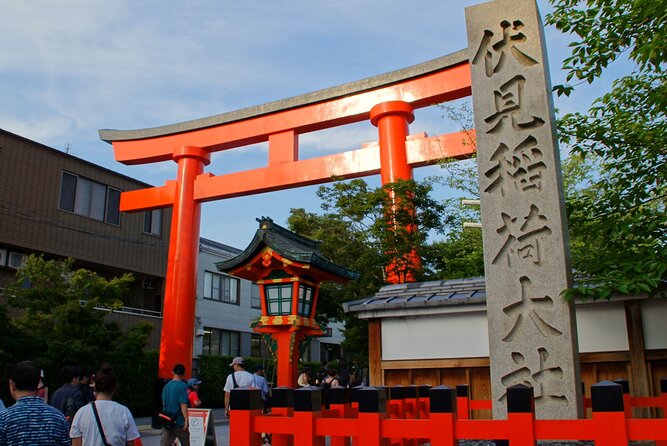
This tour caps at 10 travelers (so no giant group blob). That number sounds small on paper, but on-site it makes a big difference.
In a site like Fushimi Inari, the crowd flow can be chaotic. When the group is small, it’s easier for the guide to keep track of you, easier for you to hear explanations, and easier to adjust when paths get crowded.
In practice, that means you’re more likely to spend time at the meaningful moments instead of getting separated and catching up later.
Admission included and time saved (it’s part of the value)
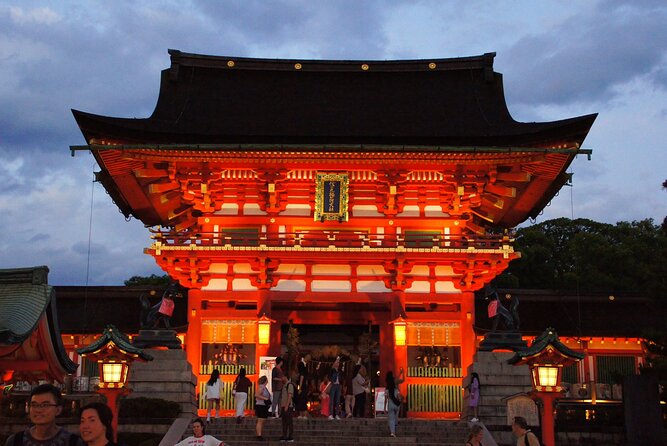
The tour includes entry/admission to Fushimi Inari-taisha, and ticketing is handled with a mobile ticket. That’s a straightforward value point: you pay for a guided experience and the admission piece is already covered.
At $39.64 per person, you’re not paying only for walking. You’re paying for:
- an English-speaking guide
- on-the-ground historical and cultural context
- admission included
- a small-group experience
So the cost makes more sense if you care about meaning, not just scenery. If all you want is a self-guided photo route, you could do it alone for less. But if you want to understand shrine rituals, Inari symbolism, and why fox statues matter, the guide turns your time into something thicker than sightseeing.
For me, that’s the key value question: do you want photos, or do you want understanding you can feel while you’re there?
Evening timing at 6:00 pm: calmer energy for a busy icon
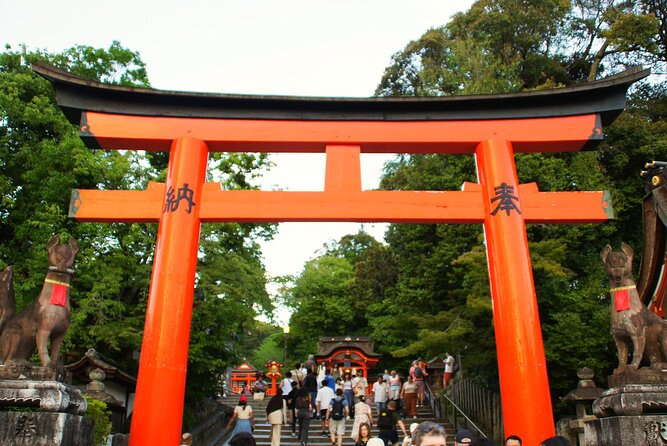
This tour runs with a start time at 6:00 pm, and it lasts about 2 hours. Evening can be a smart choice at Fushimi Inari because it often feels less frantic than midday.
It’s still popular, though. The shrine is famous, and the gates draw crowds. The good news is that the guide helps you navigate busy sections and suggests when to go to certain areas during the walk.
If you like your sacred places to feel more quiet and personal, an evening start is a good match for the way this tour is designed.
What to bring so the climb feels easy
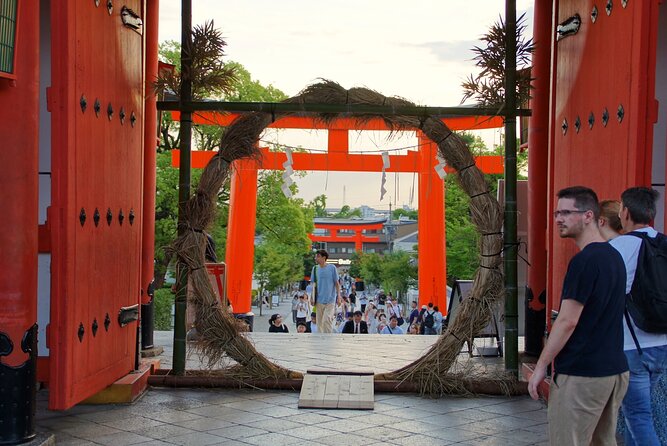
Nothing fancy is required, but you’ll want to plan like you’re going hiking on uneven grounds. Since the tour includes a mountain-trail walk, I recommend:
- comfortable walking shoes with grip
- a light layer (evenings can feel cooler)
- water (food and drinks aren’t included)
That last point is practical: the tour doesn’t list food or drinks as included. So plan a meal before you go or pick something nearby after.
Who this tour suits best (and who should skip it)
This is a strong pick for you if:
- you want the meaning behind Inari and shrine symbols, not just the gates
- you like small groups where you can ask questions
- you want panoramic viewpoints without figuring out everything solo
It may not be the best fit if:
- you need fully flat walking
- you’re not comfortable with a steady climb on shrine mountain trails
- you prefer zero structure and don’t want a guide’s narrative
Should you book this Kyoto Fushimi Inari tour?
I’d book it if you want Fushimi Inari to feel like more than a checklist photo stop. The combination of small-group pacing, included admission, and the guide’s explanations about fox symbolism and shrine rituals is exactly what turns the torii gates into a meaningful experience.
If you’re the type who likes understanding places as much as seeing them, this tour is good value at $39.64. You’re paying for interpretation—so your time adds up.
FAQ
How long is the Kyoto: Fushimi Inari Shrine Walking Tour?
It lasts about 2 hours.
What time does the tour start?
The start time is 6:00 pm.
Where is the meeting point?
The tour meets at Daily Yamazaki Fushimi Inari Shrine, 93 Fukakusa Inarionmaechō, Fushimi Ward, Kyoto, 612-0881, Japan.
Is admission to Fushimi Inari-taisha included?
Yes. Entry/admission to Fushimi Inari-taisha Shrine is included.
Is this tour in English?
Yes. It includes an English-speaking guide.
How big is the group?
The tour has a maximum of 10 travelers.
Do I need to purchase a paper ticket?
No. It uses a mobile ticket.
Are food and drinks included?
No. Food and drinks are not included.
Do I need to tip?
Tips are optional.
What is the cancellation policy?
You can cancel for free up to 24 hours in advance for a full refund. If you cancel less than 24 hours before the start time, the amount you paid will not be refunded.