REVIEW · KYOTO
Kyoto Newly Opened Tea Ceremony – Sanjo Chasuian
Book on Viator →Operated by Sanjo Chasuian · Bookable on Viator
Kyoto changes when you slow down. This newly opened tea ceremony in Sanjo Chasuian keeps it small, quiet, and intensely hands-on. You’ll watch matcha prepared the traditional way, then you’ll make it yourself—plus you get Japanese sweets that feel like part of the ritual.
I especially like the structure: you receive two bowls of matcha—one made by the host and one you whisk. I also love that the tea master (Yuko) walks you through the why behind the steps, not just the motions, so it’s educational without turning dry.
One thing to plan for: the ceremony room is very strict about timing and entry, and you’ll need to bring or wear socks. Also, even though chairs are available, expect some floor seating, so it’s smart to wear clothing that lets you get comfortable.
In This Review
- Key things you’ll notice right away
- Sanjo Chasuian’s Kyoto tea ceremony: calm, focused, and actually learnable
- Nijiriguchi: the crawl-in entrance that turns the volume down
- Matcha preparation in real life: watch, then whisk your own
- What you’re really learning (beyond the ritual)
- Optional purchases
- Kyoto sweets with a long pedigree
- Your socks and your timing: the two rules that can make or break it
- Socks are required
- Entry is time-tight
- Where it is and how to find it fast
- Price and value: why $32.77 can be fair for Kyoto
- Who this tea ceremony suits best (and who might skip it)
- Should you book Sanjo Chasuian’s tea ceremony?
- FAQ
- How long is the tea ceremony session?
- What’s included in the ticket?
- How many people are in the group?
- What do I need to bring or wear?
- What happens if I’m late?
- Where does the experience start?
- Can I get a refund if I cancel?
Key things you’ll notice right away
- Small group size (up to 10) keeps the experience intimate and question-friendly
- Nijiriguchi crawl-in entrance sets the tone the moment you arrive
- Two matcha tastings: host-made first, then you whisk your own
- Seasonal Japanese confectionary from a Kyoto sweet shop with 100+ years of history
- Strict start-time rule: entry only up to 5 minutes before, then the door locks
- Optional traditional dress touch like an uchikake robe (formal ceremonial style)
Sanjo Chasuian’s Kyoto tea ceremony: calm, focused, and actually learnable
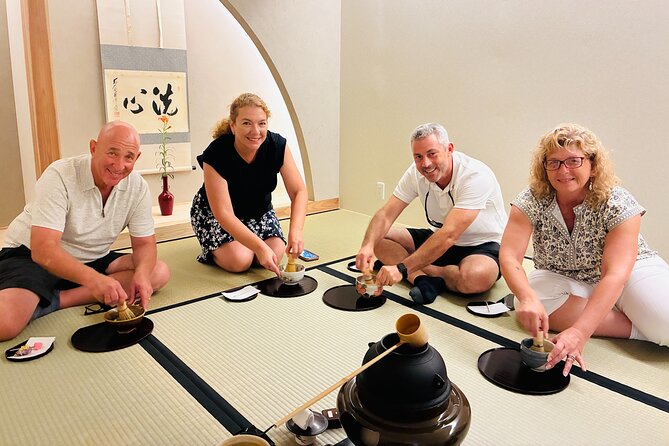
Kyoto has tea ceremonies all over the map, but this one stands out because it’s built for learning. The session is about matcha preparation using traditional utensils and ritual steps, with a tea master giving step-by-step guidance as you go.
The time is short—about 1 hour—but the flow is efficient. You don’t just watch. You get a demonstration, you get guided practice, and you get to taste. That matters because matcha isn’t like brewing coffee; technique affects texture, foam, and the overall feel of the cup.
And since the place is quiet and serene, you’re not battling street noise or a fast-moving crowd. Think of it as a reset button in the middle of a busy Kyoto day.
You can also read our reviews of more tours and experiences in Kyoto.



Nijiriguchi: the crawl-in entrance that turns the volume down
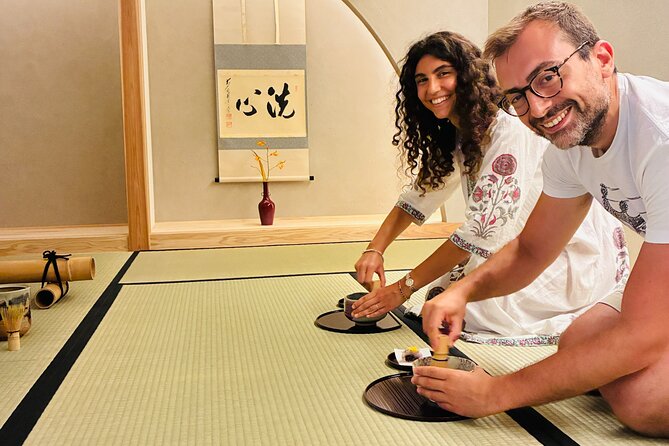
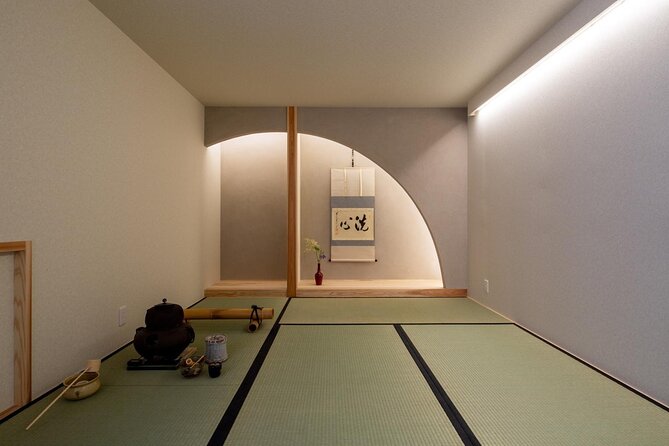
The moment you enter, you’re pulled into the ceremony setting. Your tea room has a Nijiriguchi—a crawl-in entrance designed to make you slow down, lower yourself, and leave the outside world behind.
For practical travelers, this is more than a cool photo moment. It’s also a built-in cue that the session is serious about atmosphere. Once you’re inside, the tone changes: voices soften, the pace settles, and you can focus on the tools and the steps.
It also helps explain why tea ceremonies feel so different from a typical “activity.” The setting is part of the lesson.
Matcha preparation in real life: watch, then whisk your own
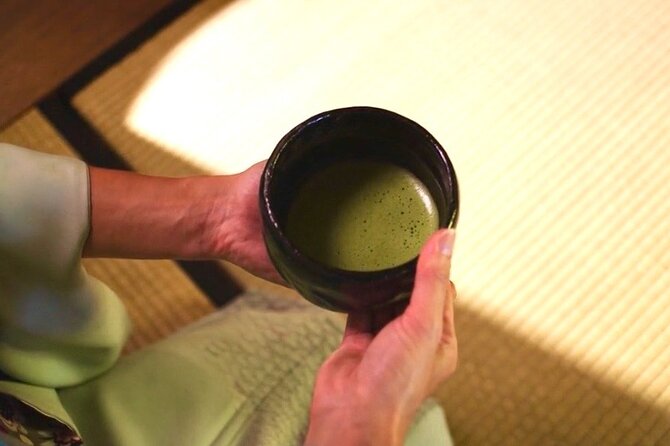
Here’s the core payoff: you get two bowls of matcha.
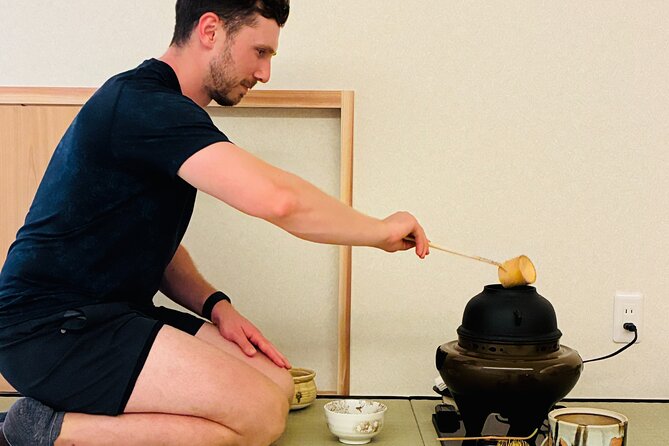
First, the host prepares matcha for you using traditional movements and utensils. Then, it’s your turn. You choose a tea bowl, pick up the whisk, and practice making your own cup. You can do this alone or with a companion, depending on your group.
What I like about this setup is that it mirrors how you’d learn at home. You see the professional version once, then you try it yourself while the instructor can correct the key points. In other words, you’re not stuck guessing.
What you’re really learning (beyond the ritual)
You’re learning technique and mindset together:
- How the tools are used in order (and why the order matters)
- How to whisk for the right result, not just to finish the cup
- How to pay attention while you work
This is why the ceremony can feel both relaxing and surprisingly skill-based. It’s one thing to drink matcha. It’s another to understand what makes a good bowl.
Optional purchases
If you catch yourself wanting to recreate the ritual later, note that matcha, tea bowls, and select items may be available for purchase. That’s useful if you want to take something home that isn’t just a souvenir.

Kyoto sweets with a long pedigree
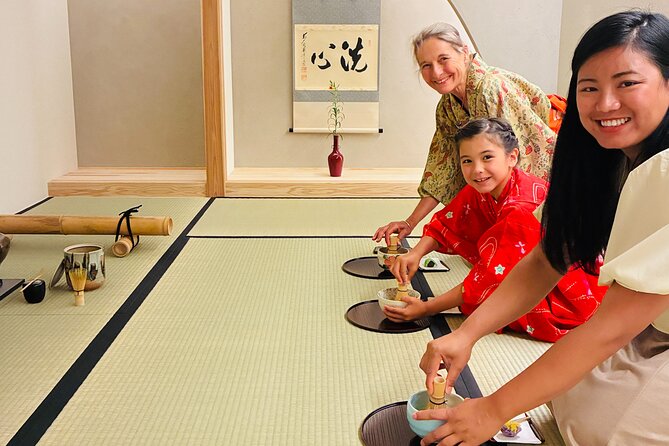
Your ticket includes seasonal Japanese confectionary served as part of the ceremony.
A standout detail here: the sweets come from a Kyoto sweet shop with over 100 years of history. That small piece of context helps you understand why the sweets feel integrated, not just added for tourists. In a tea ceremony, sweets are typically part of the timing and balance—something you eat before your matcha so the flavors and mood line up.
Also, the confectionary is described as beautiful in presentation. So yes, you’ll probably want to look first, then taste.
Your socks and your timing: the two rules that can make or break it
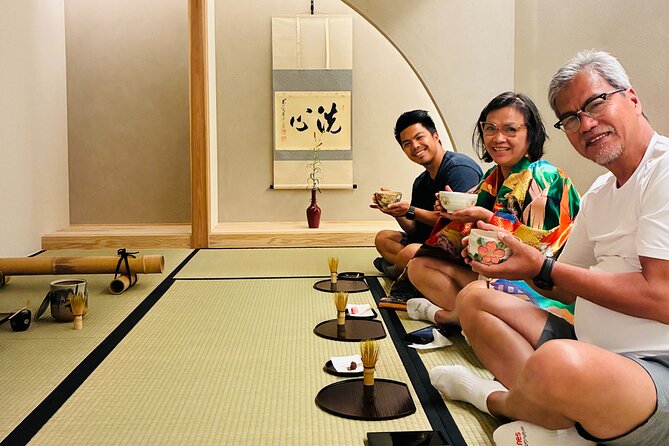
Two practical points matter more than most people expect.
Socks are required
You’re asked to bring or wear socks during the experience. Don’t assume it’s optional, especially because the session is done in a quiet, controlled room.
Entry is time-tight
Entry is allowed from 5 minutes before the start time. Once the session begins, the door locks. The rule is strict: even being 1 minute late means you can’t join, and no refund is given.
This is one of those rare Kyoto experiences where punctuality isn’t just polite—it’s essential. If you’re trying to fit it into a tight day with buses and trains, I’d plan to arrive early enough that you’re not rushing at the last minute.
Where it is and how to find it fast
The meeting point is Tea Ceremony & Sake Tasting Kyoto – Sanjo Chasuian, 324-2 Sanjōchō, Nakagyo Ward, Kyoto, 604-8205, Japan.
It’s near public transportation, which helps a lot in Kyoto’s traffic-and-walking mix. One extra navigation tip is worth saving: Google Maps may route you toward a smaller side street. If that happens, stay on the main street and look for a green matcha ice cream cone in front—use it like a visual landmark.
This kind of tip can save you the “where are we” scramble right before the door locks.
Price and value: why $32.77 can be fair for Kyoto
At $32.77 per person, this isn’t the cheapest “thing to do” in Kyoto—but it’s also not overpriced for what you get.
Here’s the value equation that makes sense:
- Hands-on matcha practice (not just watching)
- Two servings of matcha (one host-made, one you whisk)
- Seasonal Japanese sweets included
- Small group size (up to 10) so you aren’t lost in a crowd
- About 1 hour of guided cultural skill, in a serene setting
If you’ve ever done a tea ceremony where you whisk once and then you’re rushed out, this format feels more complete. The two-bowl approach is the difference. You’re not just consuming an experience; you’re leaving with a repeatable memory of how it feels to make matcha properly.
Who this tea ceremony suits best (and who might skip it)
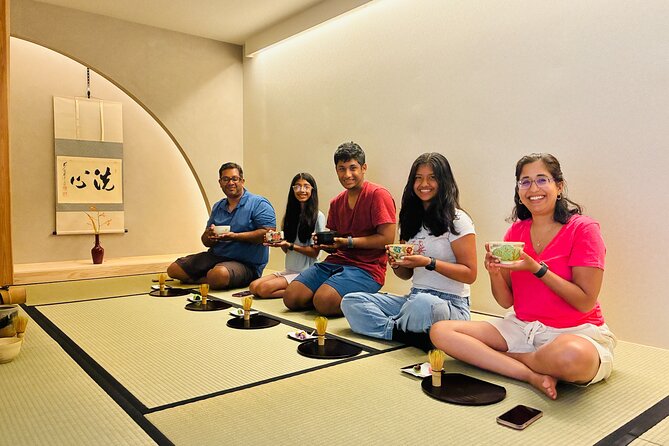
This is a great choice if you:
- Want a true Kyoto cultural activity that’s calm and not exhausting
- Like learning by doing, not just listening
- Enjoy matcha or want to try it in a setting that explains the steps
- Appreciate a small-group format where your questions are welcome
It may be less ideal if you:
- Hate strict timing rules and can’t reliably arrive early
- Have trouble with floor seating, especially if you don’t plan to use the chairs
- Prefer highly casual, no-structure activities
That said, the ceremony is described as relaxing, and there are chairs available, so you’re not forced into one uncomfortable option.
Should you book Sanjo Chasuian’s tea ceremony?
I’d book it if you want a short, meaningful Kyoto experience with real skill practice. The combination of two matcha bowls, guided instruction by the host (Yuko), and seasonal sweets makes it feel well worth the time—even if your Kyoto schedule is packed.
One last decision tip: if you’re the type who likes to move fast, you’ll still enjoy this, but you need to respect the doorway and timing rules. Arrive early, put on your socks, and give yourself permission to slow down for an hour. This is the kind of activity where the best souvenir is learning how to make matcha with care.
FAQ
How long is the tea ceremony session?
The session is about 1 hour (approx.).
What’s included in the ticket?
You get two cups of matcha from Kyoto—one prepared by the host and one you make yourself—plus traditional seasonal Japanese confectionary.
How many people are in the group?
The group is small, with a maximum of 10 travelers.
What do I need to bring or wear?
You’re asked to bring or wear socks during the experience.
What happens if I’m late?
You can enter from 5 minutes before the start time. Once the session begins, the door locks. If you’re even 1 minute late, you can’t join, and there’s no refund.
Where does the experience start?
The meeting point is Tea Ceremony & Sake Tasting Kyoto – Sanjo Chasuian, 324-2 Sanjōchō, Nakagyo Ward, Kyoto, 604-8205, Japan.
Can I get a refund if I cancel?
Yes—there’s free cancellation. You can cancel up to 24 hours in advance for a full refund. If you cancel within 24 hours of the start time, you won’t receive a refund.