REVIEW · KYOTO
TAIKO, Japanese Drum Experience from Kyoto
Book on Viator →Operated by EE tour · Bookable on Viator
Taiko drumming hits fast. This Kyoto experience teaches you the basics of taiko with step-by-step coaching, then layers in hachimaki calligraphy and a professional-style performance so you understand what you’re doing. I like that it’s truly beginner-friendly with no prior experience needed, and I like the small-group setup that keeps the instructor close. One possible drawback: the big demonstration may include some pre-recorded elements, so if you’re expecting only fully live playing, adjust your expectations.
I also appreciate the “learn it, then play it” rhythm. You start with history and context, write on your headband, watch a powerful demo, and then get your hands moving—ending with a simple piece you perform with the group and a costume photo moment.
Logistics are straightforward, but you do need to show up on time. You’ll meet near Kyoto Station’s Central Exit area, take a short train to Takatsuki, then ride by car to the studio; if you’re late, they can’t wait and you may miss the session.
In This Review
- Key points before you go
- Why this Kyoto taiko lesson feels different from just watching
- Getting from Kyoto Station to Takatsuki studio without stress
- The opening flow: taiko history, your hachimaki, and the pro demo
- Hands-on drumming: basics that match your fitness and skill level
- The finale: playing together, costume photo, and leaving with something real
- Price and what you truly get for $115.62
- Best fit: who will enjoy this Kyoto taiko experience most
- Timing, weather, and the one thing to guard against
- Should you book this Kyoto taiko experience?
- FAQ
- How long is the Kyoto taiko experience?
- Where do we meet, and how early should we arrive?
- What’s included in the session?
- Do I need prior musical experience to join?
- What if I want to observe instead of playing?
- How do I pay on the day?
- Are there age restrictions?
- What happens if the weather is bad?
Key points before you go
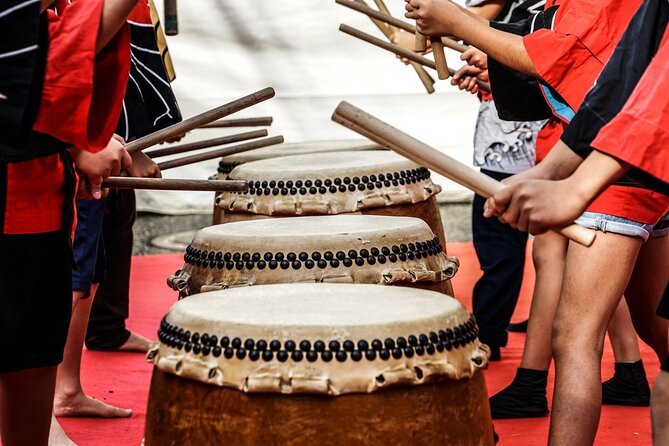
- Beginner lesson (no experience required): you’ll learn basic movements and techniques at your level
- Small group size (up to 15): more instructor attention, less standing around
- Hachimaki calligraphy included: you write wishes on a traditional headband
- Pro demonstration first, then you play: watch a performance, then copy the fundamentals
- Photo in happi and hachimaki: you leave with a souvenir tied to your drumming lesson
Why this Kyoto taiko lesson feels different from just watching
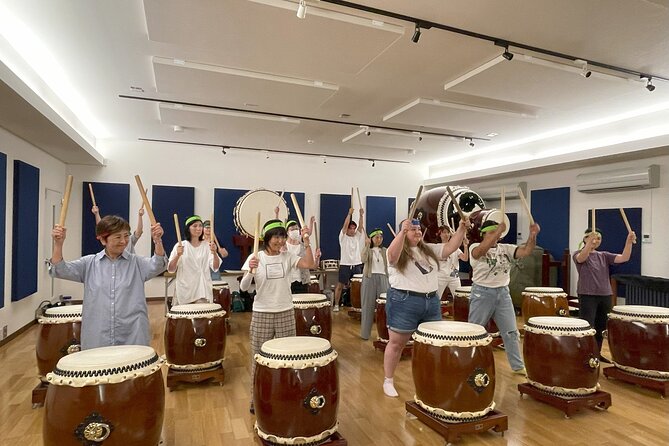
A lot of Japan sightseeing is visual. Taiko is not. It’s physical, loud, and strangely precise once you get the pattern. Even if you’re not a musician, you’ll learn how the drum is struck, how your body keeps time, and how group rhythm locks together.
What I like here is the structure. You don’t jump straight to hitting a drum. You get a short history and cultural framing first, which makes the lesson more than a craft class. Then you try the movements. Then you play a simple piece as a group, so you get the satisfaction of doing it yourself, not only watching someone else.
Also, the tone tends to be supportive rather than strict. Multiple guide/instructor names come up (Michiko and Aoi are standout examples), and the experience is consistently described as patient and encouraging. That matters, because your first minutes with a taiko can feel awkward if nobody guides your posture and striking height.
You can also read our reviews of more tours and experiences in Kyoto.



Getting from Kyoto Station to Takatsuki studio without stress
Plan on about 2.5 to 3 hours total door-to-return, including the transfers. The active teaching time is only part of the day; the rest is getting you to a proper studio setting.
Here’s how the route works:
- You start at Kyoto Station (meeting point near Higashishiokoji Kamadonocho area).
- You take a 12-minute JR train from Kyoto Station to Takatsuki Station.
- Then there’s a 10-minute cab ride to the studio area.
- Return transfers bring you back to Kyoto Station afterward.
Two practical tips that save time:
- Arrive 15 minutes early. They can’t wait for latecomers. Kyoto Station is huge, and getting turned around is easy.
- When you ask staff, aim for the Central Exit (not the Shinkansen Central Ticket Gate). That wording gets you to the right flow of people fast.
On the transportation side, the experience includes the one-way train ticket and a car ride to/from the studio. The cab cost is noted as about 2000 yen for four people, which hints the ride is shared rather than private. That’s normal here and helps keep the price reasonable.
The opening flow: taiko history, your hachimaki, and the pro demo
Most taiko experiences start with sound. This one starts with meaning.
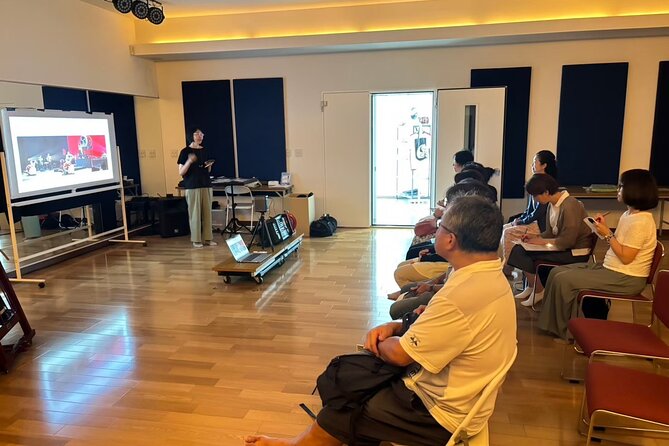
First, you get a brief explanation of taiko’s history and its importance in Japanese culture. It’s the kind of intro that helps you understand why taiko shows up at festivals and ceremonial events, not just in entertainment. You don’t need a background in Japan to follow along, and the lesson pace is friendly.
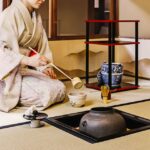
Then you try something creative before the drums. You’ll do simple calligraphy on a hachimaki—a traditional headband—writing your wishes. It’s a small activity, but it changes the feeling of the class. You’re not only learning technique; you’re participating in a cultural ritual-like moment that connects drumming to community and intention.
After that comes a powerful taiko demonstration by the professional instructor. Aoi is one of the names tied to the instruction and performance, and several people highlight how impressive the demonstration is. One caution from a less-than-perfect experience rating: in at least one case, the demo included a mix of live drumming and pre-recorded accompaniment. If you care deeply about “only live, always live,” keep that in mind. Still, the energy and instruction value are the main point.
Hands-on drumming: basics that match your fitness and skill level
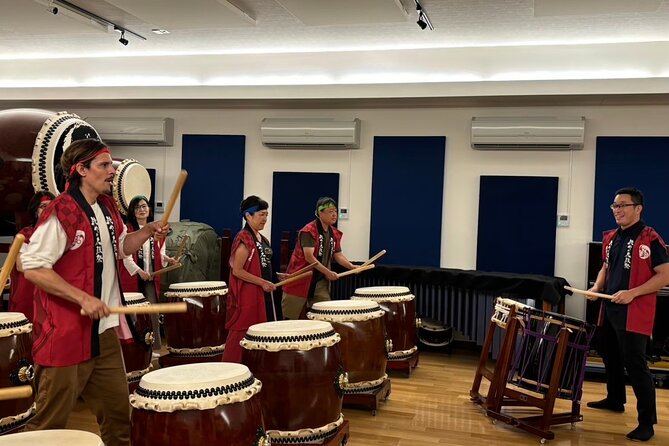
The core of the lesson is where you’ll feel the value. This is a real teach-and-practice session, not a sightseeing performance where you stand far away.
You’ll learn:
- basic movements and techniques for striking the drum
- how to hold your body for control and balance
- how your timing fits into a group rhythm
- how to follow instruction even if you’re brand new
The lesson is tailored to your skill and fitness level. That’s a big deal for taiko, because the physical demand can surprise people. At least one description mentions it can feel like cardiovascular exercise if done right and for long enough. Translation: you’ll likely get your heart rate up, but you’ll also get corrections so you don’t just brute-force it.
The coaching style matters. In the guided experience, the support is repeatedly described as patient and encouraging. That includes guides like Michiko, as well as other hosts mentioned such as Akayo and Akemi in different sessions. The point is consistency: you’re not left to guess.
Language support is available in English through the guide. If you don’t speak Japanese, you can still keep up with what matters: posture, strikes, and how to count the rhythm.
The finale: playing together, costume photo, and leaving with something real
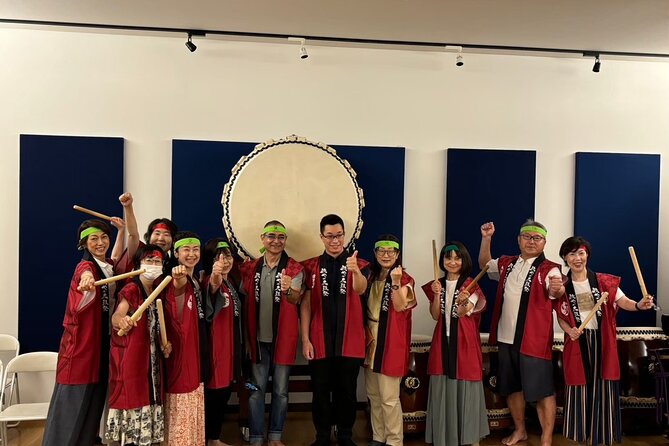
After the teaching and practice, you get a chance to play a simple piece with your fellow participants. This is the moment that turns skills into a memory.
Why this ending works:
- You’ll have enough guidance to succeed even as a beginner.
- The piece is designed so the group can perform together.
- You get the satisfying feeling of creating rhythm as a team, not just tapping on your own.
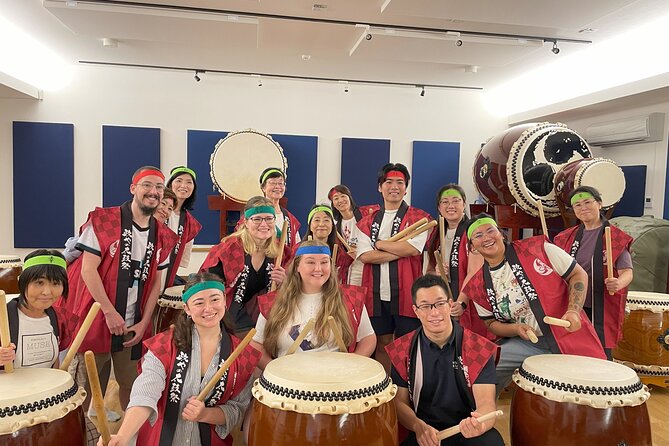
Then you finish with a commemorative photo in traditional costume, including a happi and hachimaki. That photo is more than a tourist souvenir. It’s tied to the specific thing you just learned and wore during your calligraphy and drumming.
If you like hands-on activities where you leave with a usable skill (even a small one), this ending is exactly what you want.


Price and what you truly get for $115.62
At $115.62 per person, you’re not only paying for “time at a drum.” You’re paying for:
- guided English support
- a professional studio environment
- instruction from an instructor who teaches technique
- the taiko setup and class flow
- calligraphy materials and the included hachimaki
- transfers: train ticket to Takatsuki plus car ride to the studio
- a final photo moment with traditional costume
That’s why the value feels fair. Many cultural activities in Japan either cost more for access (studio time, instruction) or cost less but include less actual participation. Here, the balance tilts toward doing. You’re also capped at 15 travelers, which helps keep it from turning into a big conveyor belt.
One more pricing note that’s easy to miss: if you choose to observe without participating, the cost listed is 9000 yen per person. Observing may require advance notice because transportation may not be arranged if they don’t expect you. If you’re deciding between participating and watching, that observer option is there, but it’s not treated like a free add-on.
Also, plan for payment expectations. The day-of payment is described as cash in Japanese yen at the drum studio. If you prefer not to carry cash, this is one detail you should plan around before you arrive at the studio.
Best fit: who will enjoy this Kyoto taiko experience most
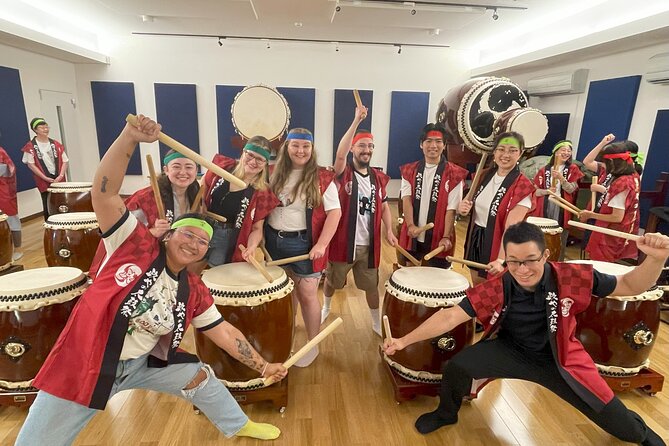
This works well for you if:
- you’re a beginner who wants to learn something physical and cultural
- you want a break from temples and photo stops
- you like small-group classes where someone corrects your technique
- you’re traveling with family or friends who can handle a hands-on activity
It’s also a solid choice if you want a “Japan skill moment” rather than another museum hour. Taiko gives you a story you can retell: the drum basics, the calligraphy headband, and the feeling of playing together.
A clear limitation: children under 7 aren’t allowed. If you’re traveling with little kids, this may not work.
Timing, weather, and the one thing to guard against
Two timing realities to plan around:
- You’ll return to Kyoto Station about 2.5 to 3 hours after start, and the exact timing depends on the train schedule.
- Leaving early isn’t recommended, so don’t schedule your next big plan too tightly.
And this experience depends on good weather. If conditions are poor, you’ll be offered another date or a full refund.
If you want the day to go smoothly, I’d treat this like a “primary activity.” Put it in the middle of your afternoon or morning buffer, not as a quick add-on right before dinner reservations.
Should you book this Kyoto taiko experience?
If you’re choosing between another show and a real lesson, I’d lean toward booking. This gives you a clear lesson arc: history context, hachimaki calligraphy, a pro demonstration, then hands-on teaching and group playing, plus costume photos at the end.
Book it if:
- you’re excited to learn basics even if you’re not musical
- you like experiences that let you participate right away
- you value small-group access (max 15)
Skip it (or choose another option) if:
- you’re very strict about a completely live-only demonstration setup
- you’re not willing to carry cash in yen for the studio payment
If your goal is to feel Japan through sound and movement, not just pictures, this one is a strong match.
FAQ
How long is the Kyoto taiko experience?
The experience runs about 2 hours 30 minutes approximately, and the total timing includes transfers. You can expect to return to Kyoto Station about 2.5 to 3 hours after the start time.
Where do we meet, and how early should we arrive?
You meet at Kyoto Station at the specified meeting point. Plan to arrive 15 minutes early, because latecomers may not be able to participate and the team can’t wait.
What’s included in the session?
It includes taiko drumming instruction, a Japanese hachimaki (headband), an English-speaking guide, and a taiko instructor. Transfers are also included (train to Takatsuki and a car ride to the studio), plus a one-way ticket to JR Takatsuki Station. A commemorative photo in traditional costume is part of the experience.
Do I need prior musical experience to join?
No. The lesson is described as no experience required and is tailored to different skill and fitness levels.
What if I want to observe instead of playing?
For those observing without participating, the listed cost is 9000 yen per person. If you plan to observe, you should notify the provider so transportation can be arranged.
How do I pay on the day?
You’re asked to pay in cash (Japanese yen) at the drum studio on the day of the tour.
Are there age restrictions?
Yes. Children under 7 years old are not allowed to participate.
What happens if the weather is bad?
If the experience is canceled due to poor weather, you’ll be offered a different date or a full refund.
If you want, tell me your travel dates and whether you’re coming from Osaka or staying in Kyoto, and I’ll help you choose the best time of day so the transfers and meeting point don’t stress you out.