REVIEW · KYOTO
Shamisen Experience in Kyoto 【Private】
Book on Viator →Operated by Shamisen Dojo · Bookable on Viator
Jack music lesson beats another temple stop.
This private shamisen experience in Kyoto swaps sightseeing for hands-on music making, with one-to-one teaching and a relaxed hang with the instructor. It’s built for first-timers, yet still pushes you to play something real using traditional scales, not just theory.
I especially like the English instruction and the way the curriculum starts from basics that actually translate to playing. I also like the included tea break, which turns the lesson into a calm, human conversation rather than a rushed class.
One thing to consider: since it’s a music lesson, it’s not a see-everything add-on. If you’re in Kyoto for a full day of walking and photos, this will feel like a different kind of experience—more listening, tuning, posture, and practice than sightseeing.
In This Review
- Key things that make this private shamisen lesson work
- What this private shamisen lesson gives you in Kyoto
- Meeting point and timing: plan around a focused 1.5 hours
- Inside the lesson: what you’ll do, step by step
- 1) Learning the shamisen basics (even if you’re a total beginner)
- 2) An English-focused class that keeps momentum
- 3) A tea break that’s part of the experience, not an add-on
- 4) The jam session: play melodies with guidance
- 5) Left-handed support
- Who this shamisen lesson is perfect for (and who should rethink it)
- Value and price: what you’re really paying for
- How to get the most out of your session
- Cultural context: why shamisen is worth your time in Kyoto
- Should you book the Private Shamisen Experience in Kyoto?
- FAQ
- FAQ
- How long is the shamisen experience?
- Is this a private lesson or a group activity?
- Do I need any prior musical experience?
- Is the lesson taught in English?
- What’s included during the lesson?
- Is there a jam session as part of the experience?
- Does the experience offer a left-handed shamisen?
- Where do I meet for the tour?
- Do I need paper tickets?
- Is it easy to get to the meeting point?
Key things that make this private shamisen lesson work

- One-to-one teaching means you don’t wait your turn to get corrected.
- English-friendly lessons make the instrument easier to understand fast.
- Tea break plus conversation keeps the mood relaxed and welcoming.
- Jam session with traditional scales helps you play melodies right away.
- Left-handed shamisen available so you’re not forced into a left-right compromise.
- Souvenir gift included, so you leave with something tangible, not just a memory.
What this private shamisen lesson gives you in Kyoto
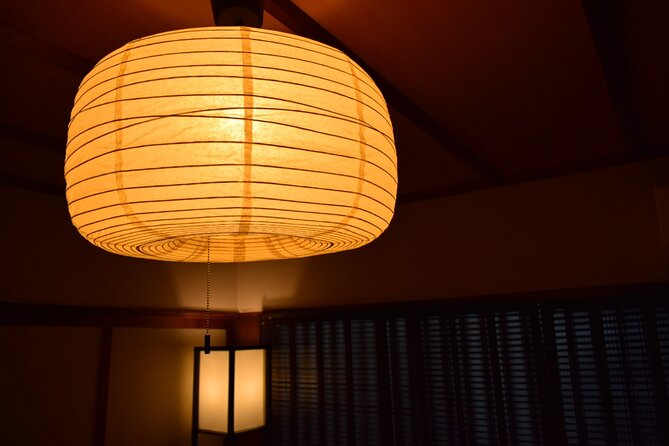
Kyoto can tempt you into doing the same thing again and again: shrine, street, crowd, photo, repeat. This private shamisen lesson is a clean break from that rhythm. You trade part of your day for a real skill—how to tune, hold, and play a classic three-string Japanese instrument called a shamisen—guided in English by Jack-san, a professional shamisen player and teacher.
The pitch is simple: no previous experience required. But the smarter part is how that goal is achieved. The lesson is structured to be beginner-friendly, then builds toward a jam session, using traditional scales and song material so you’re not only learning mechanics. You’re also learning how the music feels when it comes alive in your hands.
This is also private, so you’ll get undivided attention. If you’ve ever tried a group lesson and felt lost, you’ll appreciate the pacing here. You can ask questions as you go and actually get corrected before bad habits take root.
You can also read our reviews of more private tours in Kyoto

Meeting point and timing: plan around a focused 1.5 hours
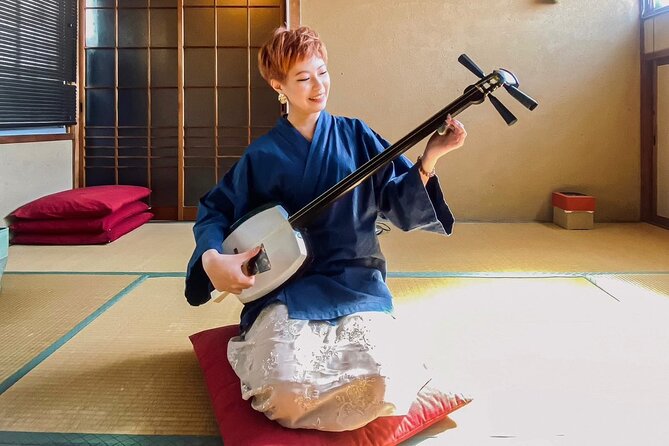
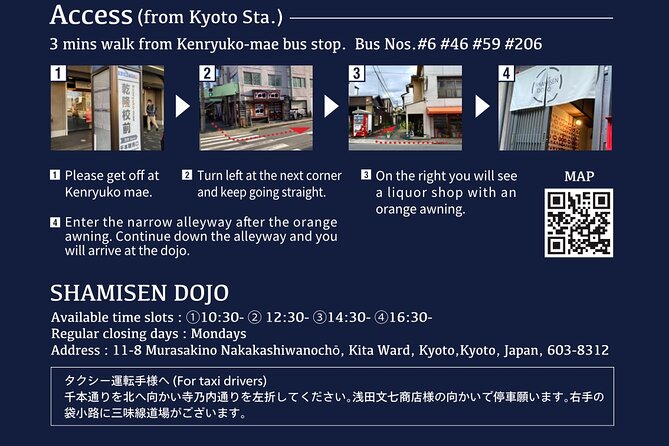
The session runs about 1 hour 30 minutes and ends back at the same meeting point. You’ll meet at Murasakino Nakakashiwanocho, Kita Ward, Kyoto, 603-8312, Japan, which is noted as being near public transportation. That matters more than it sounds: Kyoto can be spread out, and music lessons don’t work if you’re late and stressed.
Because this isn’t a wandering tour, the best strategy is to build your day around it. I’d treat it like a small appointment: eat beforehand if you want a full energy level, and don’t stack it too tightly with another demanding activity. If it’s raining, this is still a solid plan, since the lesson itself is the main event.
You also get a mobile ticket, and confirmation happens at booking. For many people, that reduces friction: you show up and focus on learning, not paperwork.
Inside the lesson: what you’ll do, step by step
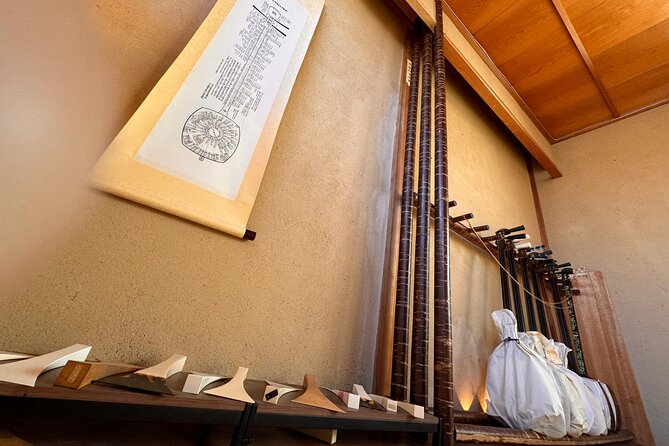
Here’s the shape of the experience and why it’s valuable.
1) Learning the shamisen basics (even if you’re a total beginner)
The core teaching is designed for people with no experience required. That means you’re not expected to already know how to tune, position the instrument, or read musical ideas the way a musician might.
You’ll get guided help on the practical fundamentals like tuning and proper seating and posture. This is one of the reasons the lesson works so well for first-timers: posture and instrument angle affect everything—sound, comfort, and control. Once those pieces click, playing stops feeling random.
From the feedback, the instruction is patient and detailed, with Jack-san taking his time to cover basics and then adding extra technique where it fits. You may not walk out as a performer, but you’ll walk out with the kind of correct starting points that help you practice at home.
2) An English-focused class that keeps momentum
The lesson is taught in English, which is a big deal in Kyoto if you don’t speak Japanese fluently. You can understand what you’re doing and why, instead of copying finger patterns blindly. That speeds up learning and makes it easier to remember the steps later.
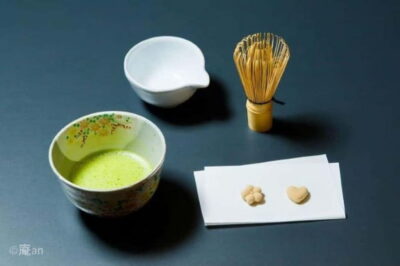
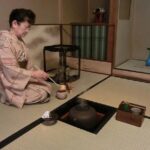
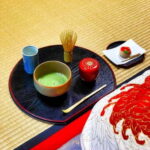
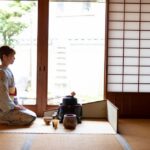
The teaching also includes relaxed conversation. The experience isn’t stiff. You’ll get Japanese tea while you talk, which makes the whole lesson feel more like a friendly dojo session than a scripted performance.


3) A tea break that’s part of the experience, not an add-on
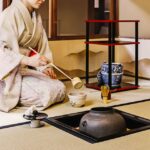
Tea is included, and it’s part of the pacing. You’re not just handed a drink. The tea break supports the tone: calmer mind, slower tempo, more listening. In a city where you might otherwise be sprinting from one landmark to the next, this is a nice reset.
If you’re doing this on a travel day—arriving late, switching neighborhoods, or battling jet lag—this calm pause can make the lesson feel more enjoyable than it would otherwise.
4) The jam session: play melodies with guidance
The highlight is the moment you shift from learning to playing. The jam session uses traditional Japanese scales, with Jack-san accompanying you.
You’re encouraged to freely play melodies and express yourself. That’s key. Some lessons focus only on repeating notes the teacher plays. Here, you get a real chance to interact with the music, with support coming through accompaniment and guidance.
From the strong ratings, this is exactly the point where the experience becomes memorable. In roughly the time window, you can reach a level where you’re not only holding the instrument—you’re making sound that resembles a traditional piece.
5) Left-handed support
They specifically mention lefty shamisen available. That’s rare enough that it’s worth flagging. If you’re left-handed, you won’t have to guess how to adapt a standard setup on the fly.
That can save you from frustration and help you focus on learning the instrument, not fighting the basics of orientation.
Who this shamisen lesson is perfect for (and who should rethink it)
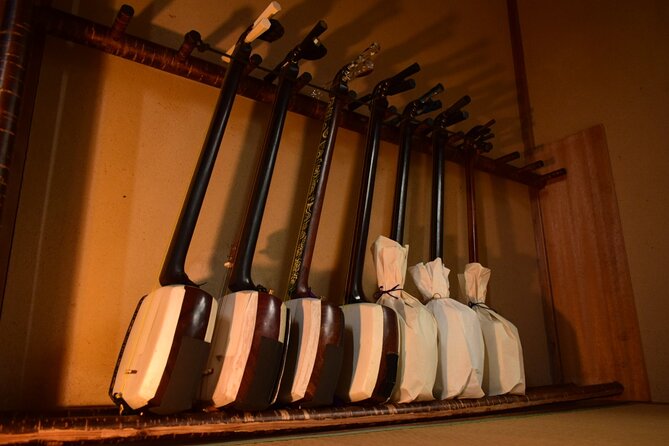
This works best if you want a hands-on cultural activity with a clear outcome. You’ll probably enjoy it if you fall into one of these groups:
- Music-curious travelers who want to do something more interactive than a museum visit
- First-timers who are worried they won’t understand traditional music
- People who like one-on-one instruction and want corrections in real time
- Food-and-culture fans who appreciate that tea is part of the rhythm
- Left-handed travelers who want an instrument setup that respects how you play
It may be less ideal if your trip style is all about long walks and constant sightseeing. Since the main value here is skill-building in a fixed time, you’ll want to plan it like a destination of its own.
Also, if you hate sitting still or prefer large-group energy, a dojo-style lesson might feel quieter than you expect. The payoff is the learning and the personal attention.
Value and price: what you’re really paying for
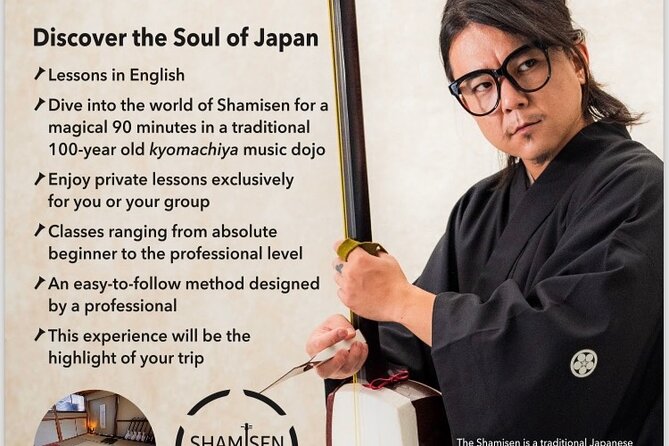
At $99.10 per person for about 1.5 hours, you might wonder if it’s pricey compared with a typical Kyoto activity. The value comes from three things that matter in practice:
1) Private instruction
You’re not splitting time with other people. That changes everything—mistakes get corrected faster, and the teacher can adjust the lesson to your questions and comfort.
2) The teacher’s professional level
Jack-san isn’t just teaching a hobby version of the instrument. He’s a professional shamisen player and teacher, and the lesson includes a jam-style component with traditional scales, not only beginner drills.
3) Included tea and a souvenir
It’s not just the lesson. You get Japanese tea during relaxed conversation, plus a special gift to remember the experience.
One more subtle value point: people leave with more than a song. The instruction covers tuning, posture, and the basics of playing properly. That means you’re closer to being able to continue later, even if you never become a full-time musician.
In Kyoto, where many cultural experiences are ticketed but passive, this is a rare case of paying for participation.
How to get the most out of your session
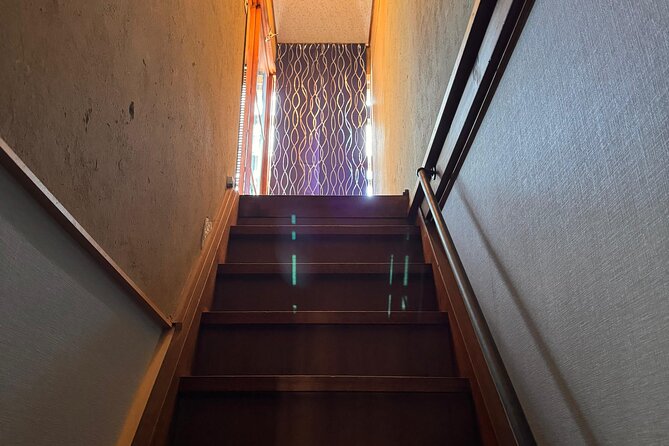
You’ll get better results with a small mindset shift. This is not a performance you’re watching; it’s a skill you’re borrowing temporarily.
- Come ready to learn posture and tuning. That’s often where beginners gain the most quickly.
- Ask questions as they happen. The private format exists for that purpose.
- Treat the jam session as practice, not pressure. The goal is playing and experimenting with guidance.
- If you’re left-handed, mention it early so the lefty setup can match you.
Also, wear comfortable clothes. You’ll be sitting and holding an instrument, and you don’t want to fuss with anything restrictive.
Cultural context: why shamisen is worth your time in Kyoto
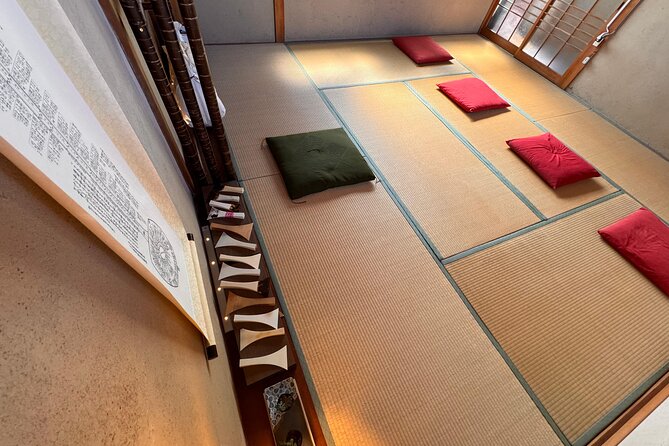
Kyoto is full of traditional arts, but many are difficult to access in a way that lets you participate. Shamisen stands out because it’s physical and immediate. You learn how sound happens: pressure, angle, tension, and rhythm.
Learning it also connects you to a living tradition of Japanese music. Even if you only play a simple traditional song during your lesson, you’re still getting close to the instrument’s logic: scales, phrasing, and the feel of accompaniment.
And because this is in English, you’re not just collecting a postcard version of culture. You’re understanding what you’re doing and what the music is trying to express.
Should you book the Private Shamisen Experience in Kyoto?
Book it if you want one of your Kyoto moments to be hands-on, personal, and skill-based. If you’ve been leaning toward lectures and sightseeing-only plans, this is a refreshing change—and it’s the kind of activity you’ll remember long after the photo roll fades.
Skip it only if your schedule is packed with walking-heavy sights and you can’t spare a focused 1.5 hours for sitting, tuning, and learning. Also reconsider if you’re expecting a classic sightseeing route. This is a lesson first.
If you’re the type who loves culture you can touch—music, technique, correction, and conversation—this is a strong choice.
FAQ
FAQ
How long is the shamisen experience?
It lasts about 1 hour 30 minutes.
Is this a private lesson or a group activity?
It’s private. Only your group participates.
Do I need any prior musical experience?
No experience is required. The curriculum is beginner-friendly.
Is the lesson taught in English?
Yes, the shamisen lesson is taught in English.
What’s included during the lesson?
You’ll learn shamisen basics and play a traditional Japanese song, plus there’s a Japanese tea break. A souvenir gift is also included.
Is there a jam session as part of the experience?
Yes. The highlight is a jam session with the instructor using traditional Japanese scales.
Does the experience offer a left-handed shamisen?
Yes. They state that a lefty shamisen is available.
Where do I meet for the tour?
The meeting point is Murasakino Nakakashiwanocho, Kita Ward, Kyoto, 603-8312, Japan.
Do I need paper tickets?
No. You get a mobile ticket.
Is it easy to get to the meeting point?
The meeting point is described as near public transportation, so it should be straightforward to reach.