REVIEW · KYOTO
Private Pewter Sake Cup Experience with a Kyoto Artisan
Book on Viator →Operated by Saluk · Bookable on Viator
Hammering pewter in Kyoto feels like magic.
In this private workshop with artisan Kanako, you’ll shape your own pewter sake cup by hand, choosing hammers and striking to form patterns, then adding your personal stamp. I love the hands-on craft focus and the chance to leave with something functional, not just a trinket. Only consideration: the studio sits outside central Kyoto, so you need extra transit time.
This is a small, intimate class (and only your group), with materials provided so you don’t have to bring a thing. You’ll also get an experience that’s usually closed to the public, along with clear guidance throughout the process.
In This Review
- Key things you’ll notice right away
- What you’ll make: a Kyoto pewter sake cup you can actually use
- Hammering pewter with Kanako: how your patterns form
- Finishing steps: rim bevel, filing, and safe polishing
- Personalization: letters, numbers, initials, and dates
- The studio location outside downtown Kyoto (and how to plan your time)
- What’s included (and what that means for your effort level)
- Value check: why $144.96 can make sense
- Is it relaxing or intense? What the experience feels like
- Who should book this pewter sake cup class
- Should you book Saluk’s private pewter sake cup workshop?
- FAQ
- Is this workshop private?
- Do I need to bring anything?
- How long does the workshop take?
- Can I personalize the pewter cup?
- Where does the workshop start?
- Can I get a full refund if I cancel?
Key things you’ll notice right away
- A private workshop in Kyoto where only your group participates
- Hammer-made patterns on pewter, with multiple hammer styles to choose from
- Personalization options (letters, numbers, initials, or a date)
- Practical finishing so the rim feels good to drink from
- A real keepsake: the cup is usable and comes with travel-ready packaging
What you’ll make: a Kyoto pewter sake cup you can actually use
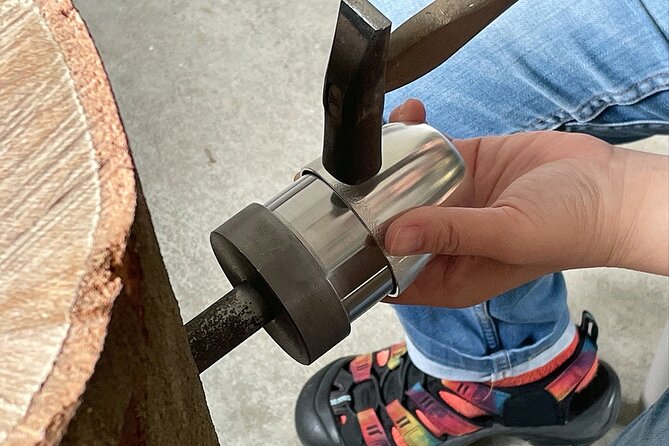
You’re not just decorating a blank. You’ll create a pewter cup from start to finish, with a shape designed to sit comfortably in the hand. The finished size is about 64 mm across and 53 mm tall, and it holds roughly 90 ml (about 115 ml when filled to the rim).
Pewter matters here because it’s a traditional drinking material in Japan, appreciated for how it performs as a sake vessel. And the best part for modern travelers: this cup isn’t limited to sake. You can also use it for whiskey, chilled green tea, and other drinks where you’d like a small, warming-in-the-hand serving.
You can also read our reviews of more food & drink experiences in Kyoto


Hammering pewter with Kanako: how your patterns form
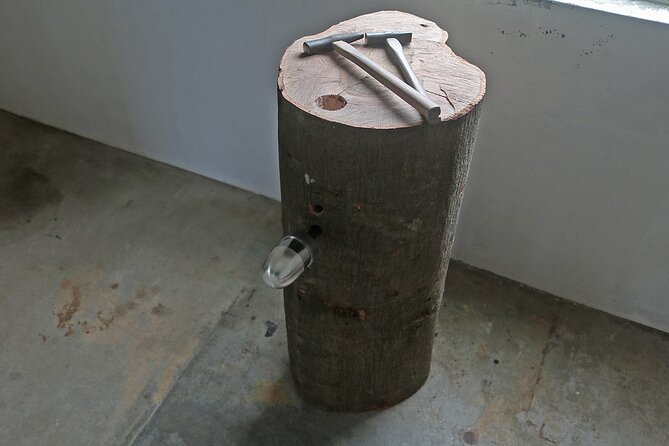
The workshop starts with the fun part: picking your hammer. You’ll have several types to choose from, and you’re encouraged to experiment. Then you place the pewter cup on the anvil and strike—while rotating the piece—to build patterns all the way around.
You can use just one hammer for a consistent look, or mix hammers for variety. That choice shapes the final personality of your cup: some designs look crisp and repeatable, while others feel more organic and hand-done. Either way, the metal responds instantly, so you can see your work take shape in real time.
This is also where the class feels like Kyoto craft at its most human. You’re doing the physical work yourself—your arm learns the rhythm, your eyes track the texture, and the cup stops being an object and becomes your project.
Finishing steps: rim bevel, filing, and safe polishing
Once the hammering is done, you move to shaping the drinking edge. You’ll adjust the height and bevel the rim at an angle, so the cup feels right when it touches your lip. It’s the difference between something that looks good on a shelf and something you want to use.
For safety, the final polishing is done by the craftsman using a rotary machine. That means you get the best finish without the risk of handling the final equipment step yourself. The result is a rim that feels considered, not rough, and that’s a big deal if you’re planning to actually drink from it.
Personalization: letters, numbers, initials, and dates
After your surface texture is set, you can stamp text on the base. You can choose letters, numbers, initials, or even a date. It’s a small step, but it turns the cup into a memory you can read years later.
Practical tip: pick something simple and high-contrast. A couple initials or a short date tends to look clean and readable, even after normal handling. If you’re making a gift, this is also the moment to add who it’s for—because you’ll remember the day, but they’ll remember the story.
The studio location outside downtown Kyoto (and how to plan your time)
The meeting point is at Craft Gallery SALUK, 35-2 Shizuichinonakachō, Sakyo Ward, Kyoto 601-1122. The workshop ends back at the same meeting spot, so you’re not piecing together multiple transfers.
Location-wise, this is not a quick hop from the busiest sights. It’s out toward the edge of Kyoto, and that means a bit of a trek. In return, you get a calmer setting than the city center—plus the feeling that you’re stepping into a working craft environment rather than a retail stop.
One helpful way to think about it: plan this as a half-day anchor. If you’re coming by train from Kyoto Station, expect something like about an hour by scenic ride plus local transit time. If your plan is packed with temples back-to-back, you’ll feel rushed. Build a little breathing room and the workshop will feel like the reward part of your day.
You can also read our reviews of more private tours in Kyoto






What’s included (and what that means for your effort level)
You don’t need to bring supplies. Materials are provided, and you’ll be guided through the process step by step. That lowers the friction for beginners, even if you’ve never worked metal before.
You’ll spend about 2 hours 30 minutes total, and the structure is hands-on without being chaotic. The class is designed to help you produce a clean, usable cup even if you take a few experimental turns. From what I see in the experience style, the artisan keeps things practical: hammering choices matter, but your instructor helps you keep control so the final cup looks right and drinks well.
If you’re pairing this with other Kyoto sightseeing, treat it like a workshop with a real start and end time. The materials and finishing steps don’t like being rushed.
Value check: why $144.96 can make sense
At $144.96 per person, this isn’t a budget souvenir. But it can still be good value because you’re paying for a lot more than a pre-made item:
- Your time becomes the craft. You’re not just buying a cup; you’re building it by hand.
- Materials and tools are included. You don’t have to rent anything or bring supplies.
- Exclusive access: the workshop is usually closed to the public.
- A functional object: it’s built as a real drinking cup, not a decorative prop.
Also, the cup is sized for everyday use. With the stated volume (around 90 ml, up to about 115 ml to the rim), it’s the kind of piece you’ll actually reach for at home. That’s the difference between spending money on a memory versus spending money you’ll miss later.
If you’re traveling as a couple, this is also a nice format: you can both make matching-but-different cups. It’s one of those experiences where you leave with something personal that isn’t dependent on what store you walked past.
Is it relaxing or intense? What the experience feels like
The pace feels balanced. Hammering is physical, but it’s also rhythmic and satisfying. You’re working in short, focused motions—strike, rotate, assess—so the work doesn’t feel overwhelming.
The mood also matters. Several experiences of this type emphasize calm surroundings and a welcoming host, and that lines up with what you’re likely to get here: you’ll be treated as someone there to learn, not a person to process. Kanako is described as patient and clear, and many people note that the instructions in English are understandable.
One more practical detail: many workshops start with tea and small snacks. And if you’re not planning to drink sake, you might be offered green tea instead. Don’t count on tasting as a guarantee, but it fits the hospitality style reported for this workshop.
Who should book this pewter sake cup class
This is a great pick if you want a Kyoto souvenir with a story you can actually explain in one sentence. It’s also ideal if you like tactile experiences: you don’t just watch craft—you make it.
It works well for:
- Couples and small groups looking for a shared activity with a keepsake
- Beginner craft fans who want clear guidance and a manageable skill progression
- People who prefer quiet craft time over rushing between major landmarks
It might not fit you if:
- You hate hands-on work or you’re worried about metal tools and noise
- Your day has no buffer time for getting out to the studio area
- You’re only interested in very fast, low-effort sightseeing
Should you book Saluk’s private pewter sake cup workshop?
If you want a Kyoto craft experience that’s intimate, hands-on, and ends with a usable item you’ll keep, yes, this is worth booking. The best reason is simple: you leave with a personalized pewter cup that reflects your choices—hammer pattern and stamped markings—plus the experience includes a finishing process that keeps it drink-ready.
If your schedule is tight or you don’t want to travel outside central Kyoto, you can skip it and choose a closer craft shop. But if you can spare the time, this is the kind of workshop that turns a souvenir into a real memory.
FAQ
Is this workshop private?
Yes. It’s a private tour or activity, so only your group participates.
Do I need to bring anything?
No. Materials are provided, so you don’t need to bring supplies.
How long does the workshop take?
The duration is about 2 hours 30 minutes.
Can I personalize the pewter cup?
Yes. You can stamp letters, numbers, initials, or a date on the base.
Where does the workshop start?
It starts at Craft Gallery SALUK, 35-2 Shizuichinonakachō, Sakyo Ward, Kyoto 601-1122, Japan, and it ends back at the meeting point.
Can I get a full refund if I cancel?
You can cancel up to 24 hours in advance for a full refund.