REVIEW · KYOTO
Kyoto: Nijo, Kinkaku-ji, Arashiyama, Kiyomizu & Fushimi Inari
Book on Viator →Operated by Amigo Tours Japan · Bookable on Viator
One long day, five Kyoto icons. This bus tour ties together Arashiyama Bamboo Grove, Kinkaku-ji (Golden Pavilion), Nijo Castle, Kiyomizu-dera, and Fushimi Inari in a tight route designed for maximum sightseeing without the research headache.
I like the way the day is structured so you’re not stuck guessing between far-flung neighborhoods. The biggest plus is the early start and early access timing at Arashiyama, plus guide commentary that brings context while you still get time to wander. The main drawback to plan for: it’s a long, outdoor-heavy day, and in hot weather you’ll want to think ahead about water and pacing.
In This Review
- Key highlights worth your attention
- Why this Kyoto bus route is such good value
- Meeting point and pacing: the 7:00 am start that keeps you on track
- Arashiyama Bamboo Grove: early photos and how to use your time
- Kinkaku-ji (Golden Pavilion): short visit, long impact
- Nijo Castle: UNESCO-style architecture with time to breathe
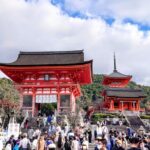
- Kiyomizu-dera: a hillside temple stop with city views
- Fushimi Inari Taisha: torii gates and your own walking style
- Guide energy, bilingual format, and what it means for your day
- Ticket and lunch options: choosing what matches your priorities
- Admission tickets
- Lunch
- Who this tour is best for (and who should rethink it)
- Should you book this Kyoto highlights bus tour?
Key highlights worth your attention
- Early timing at Arashiyama Bamboo Grove to help you get photos before the heaviest crowds
- A bilingual English/Spanish guide who explains what you’re looking at, not just where you’re going
- Ticket options you can choose for Kinkaku-ji, Nijo Castle, and Kiyomizu-dera
- Up to 30 people in the group, so it usually feels controlled rather than chaotic
- Mobile ticket for quicker check-in
- Plenty of photo moments, especially around the torii at Fushimi Inari
Why this Kyoto bus route is such good value
At $51.80 per person, the headline value is transportation plus a bilingual guide for nearly 11 hours (about 10 hours 45 minutes). In Kyoto, where key sights are spread out, the “bus + expert” combo is often the difference between a fun day and a day spent stuck in transit and lines.
What I find especially practical is the optional ticket setup. You can choose a package that includes admission for major sites (Golden Pavilion, Nijo Castle, and Kiyomizu-dera) or choose the version that leaves admissions up to you. That lets you match your spending to your priorities instead of forcing one fixed bundle.
Also, this route is built around “big-name” Kyoto. If it’s your first trip or you’re short on time, you’ll cover the essentials without needing to build a custom itinerary from scratch.
You can also read our reviews of more tours and experiences in Kyoto.

Meeting point and pacing: the 7:00 am start that keeps you on track
The tour begins at 7:00 am at Hotel Keihan Kyoto Grande (Kyoto, Minami Ward, Higashikujō). It ends back at the meeting point, so you don’t have to worry about tracking the group to a different area at the end of a long day.
The day is paced around short bus rides between stops. Expect roughly:
- about 40 minutes to Arashiyama
- about 30 minutes between several later stops
- about 30 minutes back to Kyoto Station area near the end
One more practical note: the itinerary can change due to weather, traffic, road closures, or other day-of circumstances. That’s not unusual in Kyoto. It does mean you should keep a flexible mindset and be ready to roll with route tweaks.
Group size matters too. This tour caps at 30 travelers, which typically helps with meeting points inside crowded areas. It’s not private, but it should feel manageable.
Arashiyama Bamboo Grove: early photos and how to use your time
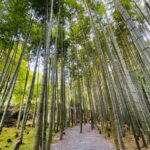
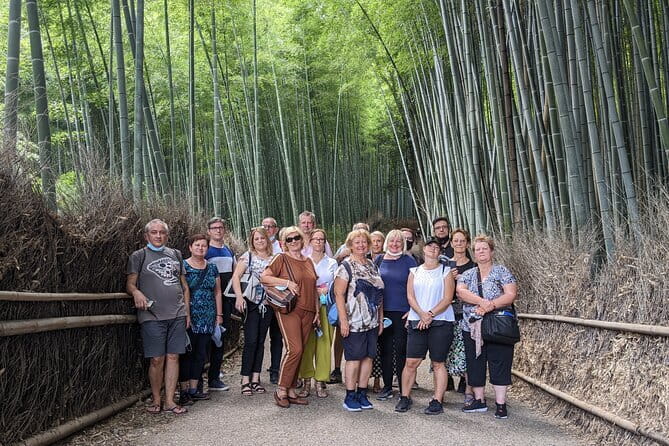
Your first big sightseeing hit is the Arashiyama Bamboo Grove. You arrive after about 40 minutes on the bus, then you get roughly 1 hour 20 minutes to stroll through the bamboo lanes.
This stop is famous for a reason. The bamboo creates a tunnel-like feeling, and the walk is the attraction. The tour specifically aims for early access before crowds intensify, which matters a lot for both photos and the overall vibe.
How to make the most of your time:
- Slow down near the densest bamboo sections, not just at the first viewpoint
- Plan a simple photo rhythm: wide shot first, then step aside for height/texture shots
- If the path feels packed, you can still get great frames by shifting your angle slightly rather than trying to fight for the exact perfect spot
One reality check: this is a popular area. Even with early timing, you’ll want to move carefully and watch your footing—bamboo is photogenic, and sidewalks can still be busy.
Kinkaku-ji (Golden Pavilion): short visit, long impact

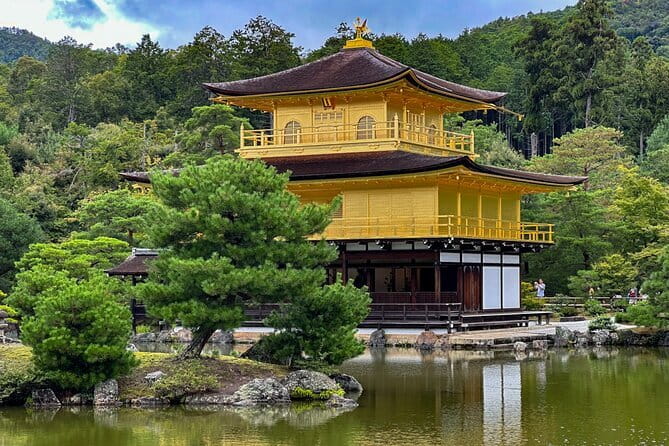
After Arashiyama, the route heads to Kinkaku-ji Temple, also called the Golden Pavilion. You’re there for about 45 minutes, and admission is not included by default unless you selected the ticket package.
Why that matters: Kinkaku-ji is one of those places where you can burn time if you get stuck planning on the spot. If you didn’t buy the admission option, you’ll want to manage your time so you don’t lose the best part of the visit to tickets and lines.
What you’re looking at here is iconic Kyoto architecture with a reflective, gleaming presence. In a short window, the move is to keep your priorities straight:
- Spend your first minutes orienting yourself to the main viewpoints
- Don’t get stuck scanning every corner detail if your goal is the overall pavilion composition
- Use the remaining minutes for the angles that give you the best contrast between water/structure and the surrounding temple grounds (depending on what’s open that day)
If you’re the kind of person who loves photographs more than long museum-like pacing, 45 minutes is probably plenty. If you want deep temple details, you might wish you had more time.
Nijo Castle: UNESCO-style architecture with time to breathe
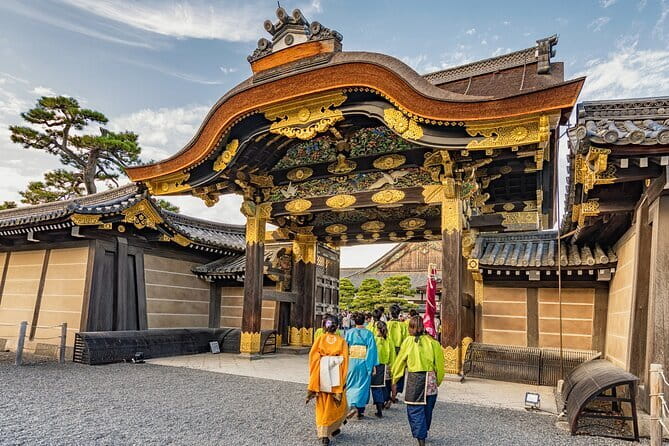
Next up is Nijo Castle, a UNESCO World Heritage site. You get about 1 hour 30 minutes, but again admission is only included if you chose the option that covers it.
Nijo Castle’s appeal is mostly architectural and atmospheric. You’re not just walking through halls—you’re moving through a carefully designed space that reflects how Kyoto elites lived and governed in earlier centuries. That longer stop length (compared with Kinkaku-ji) helps because castle grounds can take time to actually enjoy.
A few practical tips for how to spend 90 minutes:
- Start with the main highlights first, so your visit isn’t dependent on later decisions
- Leave a little time for garden walking and calmer corners
- If you have any interest in historical design, don’t rush the areas you’re most curious about. This is one of the places where “moving slower for a moment” pays off
This is also a good break point mentally. After heavy sightlines (bamboo and pavilion photos), Nijo can feel like the more structured, slower Kyoto.
Kiyomizu-dera: a hillside temple stop with city views
The route continues to Kiyomizu-dera Temple, where you get about 2 hours 30 minutes. Admission may or may not be included depending on which ticket option you selected.
This stop is different from the others because it’s about the setting. The temple sits on a hillside, and you’ll likely feel that elevation as you move through viewpoints. Even if you don’t remember every historical detail, the city view component is part of what makes Kiyomizu-dera feel like Kyoto.
In practical terms, plan for:
- more walking than you might expect if you treat it like a quick photo stop
- stairs and uneven surfaces in temple areas
- time for at least one viewpoint pause instead of constantly on the move
Two and a half hours sounds like a lot, and it is—until it isn’t. This is one of those stops where you’ll appreciate having room to choose your pace.
Fushimi Inari Taisha: torii gates and your own walking style

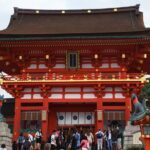
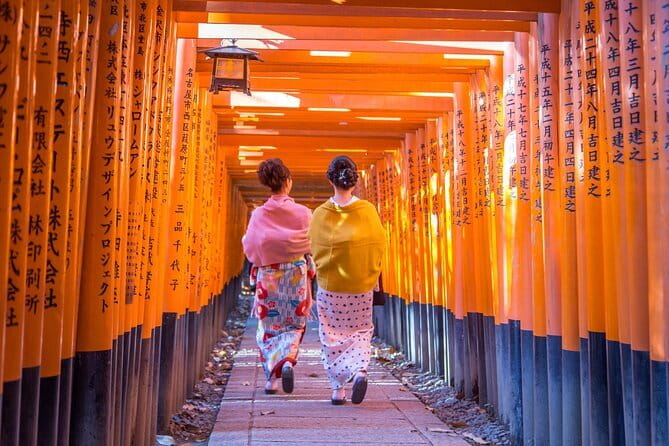
The final major sightseeing highlight is Fushimi Inari Taisha Shrine, known for its thousands of vermillion torii gates. You’ll have about 1 hour 30 minutes, and admission is free.
This is a “go at your own pace” kind of stop. Some people want a full walk deep into the hillside pathways. Others prefer the best early stretches for photos and then head back. With a time box, you can do either—you just have to pick your style fast.
What I like about this being last on the schedule: your legs are already warmed up, and the gates make a natural emotional ending. Kyoto tends to feel overwhelming when you’re cramming it all in. Here, the torii give you a clear visual theme to carry through the last part of the day.
If you want the easiest plan:
- start early inside the gate sequence
- hit one or two “signature” viewpoints for photos
- keep track of time and turn back before your group call window
Guide energy, bilingual format, and what it means for your day
The best part of a guided day like this is not just facts. It’s flow. When the guide keeps the bus moving and the group together, you gain time at the sights that matter.
From the experience feedback I’ve seen, guides like Ángeles, Cesar, and Paula are praised for mixing history with enthusiasm, while still giving guests room to explore on their own. One driver mentioned in particular, Nishimura-san, was also credited with keeping the day running smoothly.
Language is bilingual English/Spanish. That’s a big plus if you speak either language, but it also means you may hear switching or overlapping explanations at different moments. If you strongly prefer one language, it’s worth being mentally ready for some back-and-forth.
Also watch for heat and comfort. When the weather is extreme, the tour will still run on its schedule. The best strategy is personal: wear light layers, plan your water use, and don’t try to “win” every uphill stretch.
Ticket and lunch options: choosing what matches your priorities
One reason this tour stands out is you can tailor what you pay for up front.
Admission tickets
Admission for Golden Pavilion (Kinkaku-ji), Nijo Castle, and Kiyomizu-dera is included only if you selected a package with tickets. If not, those entries become your responsibility.
I think this decision comes down to one question: do you want less friction?
- If you want a smoother day with fewer on-site decisions, pick the ticket-included option.
- If you like flexibility or you’re budgeting tightly, pick the package without tickets and plan your entries carefully.
Lunch
Lunch is included only in the Premium option. So if you’re going for value on a budget, you might want to bring a plan for food. If you choose Premium, you remove one more uncertainty from a long day.
Either way, treat this as an all-day route. Even with lunch, you’ll likely want a small snack or two in your bag for the long middle stretches.
Who this tour is best for (and who should rethink it)
This works best for you if:
- it’s your first time in Kyoto and you want the highlights in one organized sweep
- you hate the logistics of moving between distant sites
- you like having a guide to give context while still exploring on your own
It might be less ideal if:
- you want a slow, deep-dive temple day with lots of off-the-beaten-path wandering
- you’re very sensitive to heat or long walks (the schedule is long and multiple stops involve outdoor movement)
- you need a single-language experience with zero switching
The group cap of 30 helps. But Kyoto’s most famous sites are still famous, so expect some crowding where you’d expect it.
Should you book this Kyoto highlights bus tour?
Yes, I’d book it if you want a one-day Kyoto overview that saves you planning time and still delivers the major hits: Arashiyama Bamboo Grove, Kinkaku-ji, Nijo Castle, Kiyomizu-dera, and Fushimi Inari. The price-to-coverage ratio is strong, especially because you’re getting guided commentary and transport for nearly 11 hours, plus mobile ticket convenience.
Book smart, though:
- Pick the ticket-included option if you want less on-site hassle at Kinkaku-ji, Nijo Castle, and Kiyomizu-dera.
- If you’re booking without tickets, make sure you’re comfortable adding those admissions to your day.
- On hot days, treat hydration as part of the plan, not an afterthought.
If you’re short on time, this is the kind of tour that helps you see Kyoto’s biggest symbols without turning your vacation into a spreadsheet.