REVIEW · KYOTO
Elegant Tea Ceremony While Wearing Kimono Experience in Kyoto
Book on Viator →Operated by H.I.S.Co., Ltd. · Bookable on Viator
A kimono in Kyoto changes your whole day. You’ll start at Nishiki Orizuruya, a traditional tea house just a minute from Nishiki Market, then learn how matcha is made in a proper tea room. I really love the kimono + hair styling setup because it feels like you’re being cared for, not rushed. I also like that you get hands-on matcha preparation (not just watching). One possible drawback: if you want a super deep lecture on every step, you might find the explanation a bit light.
You’re booking one of a few formats, all guided in English, all centered on tea culture. After the ceremony, you either add calligraphy, try gold leaf art, or walk Nishiki Market with a guide to connect the tea moment to Kyoto’s everyday food-and-shop life.
In This Review
- Key highlights you will actually feel
- Nishiki Orizuruya: a minute from Kyoto’s food street
- Kimono dressing and hair styling: where the magic begins
- Tea ceremony basics: matcha, a bamboo whisk, and calm rules
- Your choice after tea: calligraphy keepsake, gold leaf souvenir, or Nishiki Market walk
- Option 1: Tea ceremony plus calligraphy (write your kanji)
- Option 2: Tea ceremony plus gold leaf workshop (take home your plate)
- Option 3: Tea ceremony plus Nishiki Market tour (food culture with structure)
- What you take home: keepsakes, souvenirs, and kimono time
- Timing, crowding, and group size: plan it like a pro
- Price and value: why this feels like a fair deal at $50.58
- Who should book, and who should skip this one
- Should you book this elegant tea ceremony in kimono?
- FAQ
- Where does the experience start?
- How long is the experience?
- What’s included in the package?
- Is the ticket mobile?
- Do I need to arrive early?
- Is this activity suitable for children?
- How large is the group?
- What if the weather is severe?
- Can I get a refund if I cancel?
Key highlights you will actually feel
- Kimono rental included with free hair styling for women, plus help getting dressed
- Professional tea instruction in an intimate tea room, with demonstration and your own matcha whisking
- Seasonal wagashi paired with matcha, including sweets from a 100-year-old confectionery
- Pick your extra art or culture option: calligraphy (write your kanji) or gold leaf plate decoration
- Nishiki Market walking time focused on food culture, shrines, and historic shops with an English guide
- Small group size (max 10), which makes it easier to ask questions and get photos
Nishiki Orizuruya: a minute from Kyoto’s food street
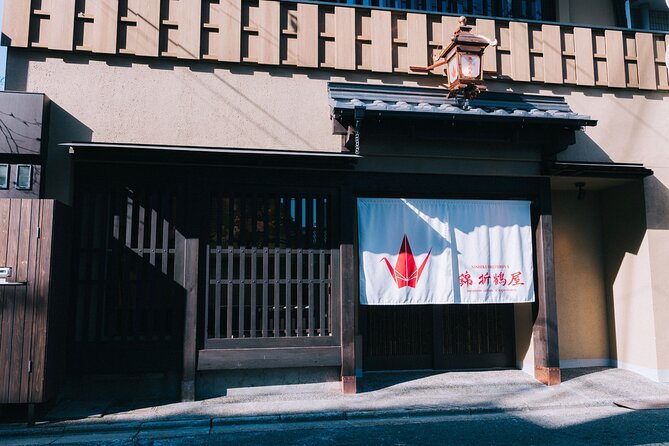
The meeting point is Nishiki Orizuruya at 452 Jūmonjichō in Nakagyo Ward—right by Kyoto’s famous Nishiki Market area. That location matters more than it sounds. Nishiki Market is packed with smells, sauces, snacks, and tiny shops. Starting your experience there means you’ll already be in Kyoto mode the moment you arrive.
This is also a big reason the whole outing feels special. You don’t just do a tea ceremony in a random room and escape back to the street. You connect the quiet tea room to the lively market neighborhood right next door.
And because it’s near public transportation, you can build this into a day that’s already full—no long commute needed just to reach a cultural stop.
You can also read our reviews of more tours and experiences in Kyoto.



Kimono dressing and hair styling: where the magic begins
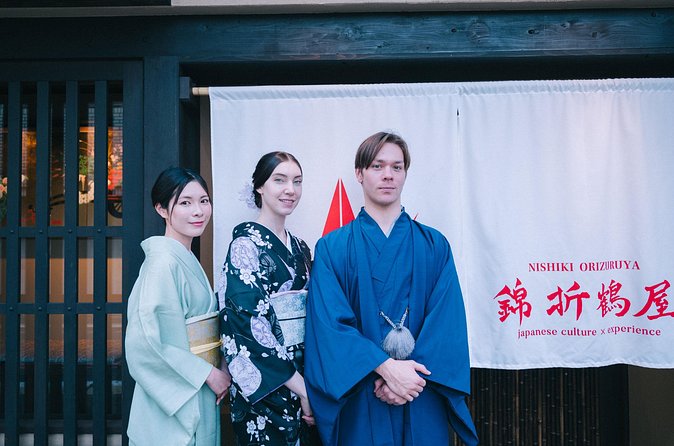
Your experience starts with kimono rental at the tea house. Women also get free hair styling, and the staff help you get dressed properly. That support is more than convenience. A kimono can be tricky to manage, and if it’s fitted well, you’ll actually feel comfortable while you sit for tea and move around for photos.
A few practical details you’ll be glad you thought about:
- Choose styles that you can breathe and sit in comfortably. You’ll be in the kimono for a while.
- If you have trouble sitting on the floor, ask what options are available. A chair is offered for making the ceremony easier.
You’ll also have strong photo opportunities. Staff are used to this, and they help with posing while you’re in full kimono mode. Expect that part to be one of the best photo “waves” of your trip.
One note for men: there’s a large kimono selection overall, but some people find the women’s options more fun to choose from. If you’re coming as a couple, that’s a good conversation starter.
Tea ceremony basics: matcha, a bamboo whisk, and calm rules
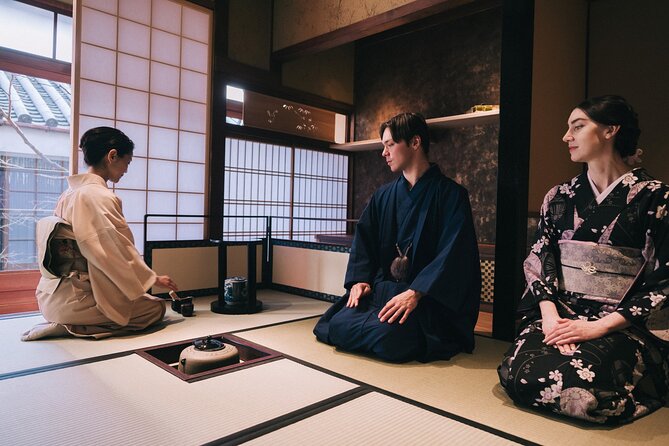
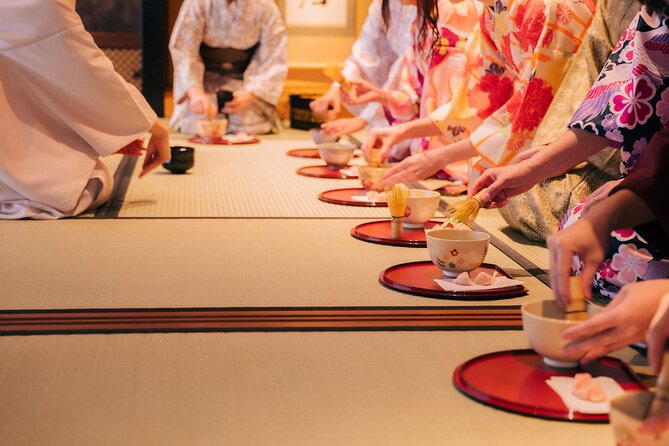
After you’re dressed, you move into the tea room for the tea ceremony portion (about 90 minutes for the stand-alone plan). You’ll watch a demonstration first, then you’ll do it yourself.
Here’s what you can expect in plain terms:
- You learn the sequence of the ritual as you prepare your matcha.
- You use a bamboo whisk to make your own bowl of matcha.
- You don’t just drink tea—you pair it with traditional sweets.
Those sweets are seasonal wagashi from a 100-year-old confectionery, which adds a nice layer of meaning. It’s not random “snacks in a box.” The pairing is part of the experience: sweet, tea, and the timing of when you taste each.
The English guidance is part of the value. You’ll get enough explanation to understand what’s happening and why people do it this way. Still, there is a small consideration: one review-style note from past visitors is that not every step gets a long history lecture. If you want every single meaning behind every tiny movement, you might wish for more. If you just want to feel the ritual and understand the basics, you’ll likely love it.
Your choice after tea: calligraphy keepsake, gold leaf souvenir, or Nishiki Market walk
After matcha and sweets, you pick one of three add-ons. This is where the price feels most “worth it,” because you’re getting more than one type of cultural activity.
Option 1: Tea ceremony plus calligraphy (write your kanji)
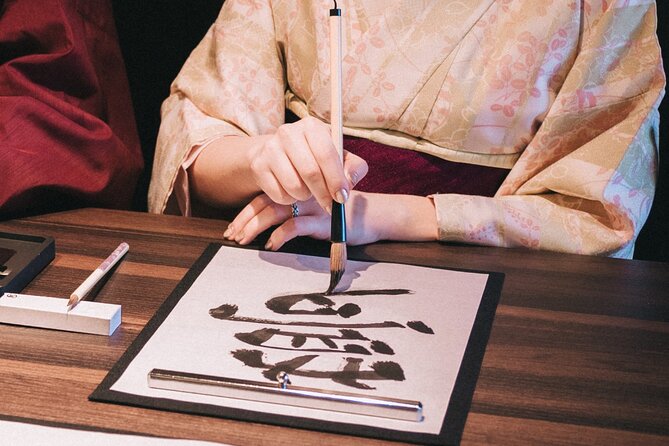
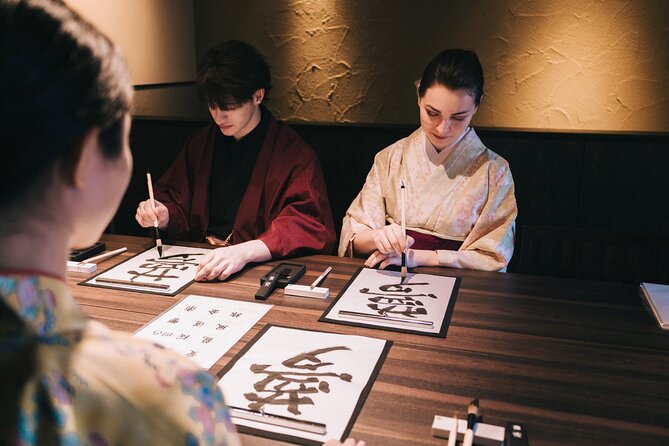
If you choose the calligraphy plan (about 130 minutes total), you’ll combine tea-time with Japanese writing. After enjoying matcha, you learn how to use a brush and ink to create a piece on washi paper.
The payoff: you write your favorite kanji. And it’s designed as a keepsake. This is one of the best options if you want something personal that doesn’t just live on your camera roll.

Option 2: Tea ceremony plus gold leaf workshop (take home your plate)
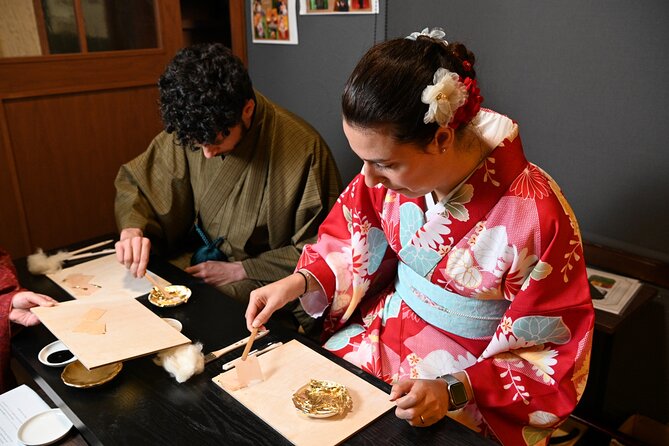
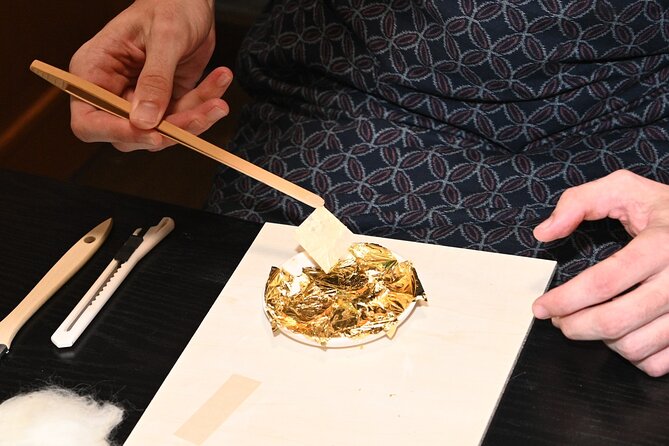
If you go with the gold leaf plan (about 130 minutes total), the second half becomes hands-on craft. You decorate a small plate using high-purity gold leaf.
This is a fun choice if you like tactile experiences. The gold leaf work is delicate, and the staff guide you through applying it carefully. You’ll take home your handmade souvenir, which is a great way to extend the experience beyond the tea room.
Option 3: Tea ceremony plus Nishiki Market tour (food culture with structure)
If you pick the Nishiki plan (about 150 minutes total), the ceremony leads into an English-guided walk around Nishiki Market and the nearby area. Nishiki Market is often called Kyoto’s Kitchen, and this portion is about more than shopping. You’ll learn about Kyoto’s food culture, visit shrines, and hear about historic shops.
If you like to eat your way through a city, this is probably your best match. It turns your tea experience into a broader Kyoto day, with context for what you’re seeing on the street.
What you take home: keepsakes, souvenirs, and kimono time
There are three categories of “takes” from this experience.
1) Your tea memory: You taste matcha made by you, not just served to you. That alone tends to stick longer than a passively watched activity.
2) Your art keepsake or souvenir:
- Calligraphy option: your kanji on washi paper.
- Gold leaf option: your decorated plate.
3) Your kimono day: Many experiences like this let you keep the kimono for a while afterward, so you can walk in the neighborhood dressed in traditional style. Some schedules allow kimono time extending to the evening (around 6pm is what people have reported), which turns the outfit into part of the street experience rather than a quick before-and-after costume moment.
Bottom line: you’ll leave with more than photos. You’ll leave with something made by your own hands, plus an actual reason to look closely at Kyoto’s craft traditions.
Timing, crowding, and group size: plan it like a pro
This tour runs about 2 hours 30 minutes for the overall experience format you select. It also uses a mobile ticket, and the group is capped at 10 travelers, which helps keep the atmosphere calm and personal.
You should arrive at least 10 minutes early. That’s not just “nice etiquette.” Kimono dressing takes time, and arriving late can put you into a rushed flow.
Crowds are a reality here. Nishiki Market is busiest on weekends, holidays, and during special events. If you’re trying to get the most relaxed photos and the quietest feeling during the tea portion, schedule this on a less peak day if you can.
One more practical point: the tour is guided in English, and you’ll have time for photos during the process. That matters because kimono photography is not something you want to do “between everything else.” It deserves dedicated moments.
Price and value: why this feels like a fair deal at $50.58
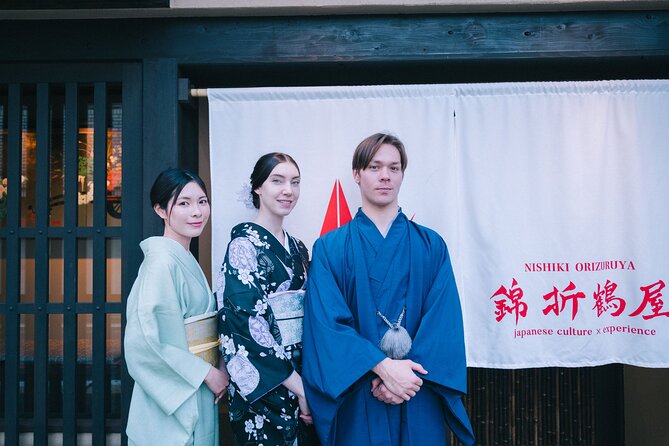
At $50.58 per person, this isn’t priced like a bare-bones tea “show.” You’re paying for multiple components that add up fast:
- Kimono rental (with women’s free hair styling)
- English guidance
- A guided tea ceremony with your own matcha preparation
- Seasonal wagashi included
- Plus a second activity depending on your choice: calligraphy, gold leaf, or a Nishiki Market tour
In other words, the cost isn’t just for the tea. It’s for the full cultural package plus the craft time. If you were to book kimono dressing separately, add a tea ceremony separately, and then pay for a calligraphy or gold-leaf workshop, the total would likely climb quickly.
So this is good value if your goal is one structured, high-impact cultural block in Kyoto—without spending half the day figuring out logistics between stops.
Who should book, and who should skip this one
This is a strong pick if:
- You want a hands-on Kyoto experience (you whisk the matcha; you make the keepsake).
- You enjoy kimono culture and want real help getting dressed.
- You want something meaningful that still feels relaxed and photo-friendly.
- You’d like a plan that’s guided in English and doesn’t require prior knowledge.
You might rethink it if:
- You’re extremely sensitive to crowd levels and you’re traveling on a busy weekend without flexibility.
- You want long, step-by-step historical lectures for every movement. The ceremony is explained, but it may not feel like a full academic seminar.
Should you book this elegant tea ceremony in kimono?
I’d book it if you want a Kyoto experience that mixes elegance with participation. The kimono setup, the calm tea room, and the fact that you actively make matcha (not just watch) combine into something memorable. Then, whichever option you choose—calligraphy keepsake, gold leaf plate, or a Nishiki Market walking tour—you leave with a “reason to remember it,” not just a screenshot.
If you’re the type who likes to plan your day around one excellent cultural anchor, this works. And if you’re traveling as a family, it’s designed to handle different group needs; just note the age rule is 5 and up, with no child discount.
FAQ
Where does the experience start?
It starts at Nishiki Orizuruya, 452 Jūmonjichō, Nakagyo Ward, Kyoto, 604-8121, Japan. The activity ends back at the meeting point.
How long is the experience?
The full experience is about 2 hours 30 minutes. The tea ceremony portion is listed as about 90 minutes, with longer options that add calligraphy, gold leaf, or a Nishiki Market tour.
What’s included in the package?
All plans include kimono rental. Women also receive free hair styling. The tea ceremony is guided in English and includes matcha preparation and traditional sweets. The second activity depends on the option you choose (calligraphy, gold leaf, or Nishiki Market tour).
Is the ticket mobile?
Yes. The tour uses a mobile ticket.
Do I need to arrive early?
Yes. You should arrive at least 10 minutes before your scheduled reservation time.
Is this activity suitable for children?
Children aged 5 and above may join. There is no child discount.
How large is the group?
There is a maximum of 10 travelers.
What if the weather is severe?
If canceled due to severe weather or natural disasters (for example a typhoon), the tour will be canceled and fully refunded.
Can I get a refund if I cancel?
No. This experience is non-refundable and cannot be changed for any reason.