REVIEW · KYOTO
Kyoto: Private 2.5 Hour Historical Walking Tour
Book on GetYourGuide →Operated by Enjoy KyotoWalking · Bookable on GetYourGuide
Gion to Kiyomizu, minus the guesswork. I love the chance to slow down inside a Zen dry rock-and-sand garden at Entokuin, and I love the view from Kiyomizu-dera’s wooden stage and the Kannon focus there. The only drawback: this is a walking tour on crowded temple streets, and admission fees are not included, so it’s not a total-one-price deal.
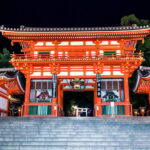
You start right at Yasaka Shrine’s west gate—the red Nishiromon Gate—where the guide sets the Kyoto story with a map and then walks you through how to worship. I also like that it’s a private group up to 5, so you can ask questions without holding up the pace.
If you want Instagram-only temple photos, this may feel too explanatory. But if you want to understand what you’re seeing—Shinto, Zen, and the big cultural names—you’ll get a lot more out of it.
In This Review
- Key things to know before you go
- Meeting at Yasaka Shrine: start where Kyoto history actually begins
- Yasaka Shrine and Maruyama Park: learning the Shinto basics before the crowd hits
- Entokuin Zen temple: the calm you can feel, not just read about
- Yasaka Kōshin-dō and the viewpoint: small temples, big clues
- Yasaka-no-to pagoda photo spot: a five-storied beauty from outside
- Kiyomizu-dera: Kannon worship, a nail-less stage, and pure water lines
- What you’ll learn about Jishu Shrine matchmaking—plus how this ends
- Price and value: $80 per group up to 5 makes sense if you’ll ask questions
- Who this tour suits best (and who might want a different plan)
- Should you book this private Yasaka-to-Kiyomizu walk?
- FAQ
- FAQ
- Where is the meeting point?
- How long is the tour?
- Is this tour private?
- What’s included in the price?
- Are admission fees included for the temples?
- What is the main walking route between stops?
- Which temple or garden is the Zen highlight?
- Where do you end the tour?
- How do I get there by train?
- How do I get there by bus?
Key things to know before you go
- Meet at Yasaka Shrine’s red west gate so you start oriented, not wandering.
- Entokuin’s Zen dry rock garden gives you a calm break from the busy streets nearby.
- Nene-no-michi connects power history to everyday walking along the route.
- Yasaka-no-to (the five-storied pagoda) is a great photo target—you’ll see it from outside.
- Kiyomizu-dera delivers the wow factor: Kannon worship, statues, and the nail-less wooden stage.
- The tour ends at Kiyomizu-dera, with a final note on Jishu Shrine match-making.
Meeting at Yasaka Shrine: start where Kyoto history actually begins
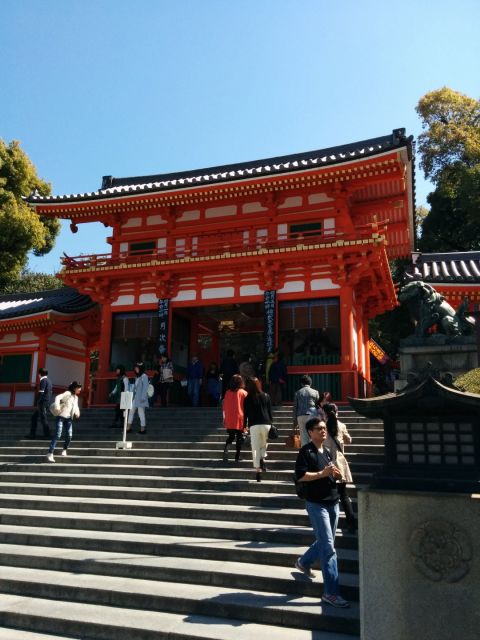
This tour starts at Yasaka-Jinja Shrine, at the west gate, the red Nishiromon Gate. That’s a smart choice. Instead of starting in the middle of crowds and guessing what everything means, you begin at a shrine that anchors the whole area—Gion included.
Right at the start, the guide explains Kyoto’s background using a map. Then you go into Yasaka Shrine itself. You’ll also learn basic shrine-worship etiquette: what you’re supposed to do, and what the space is for. It’s the kind of info that makes temple visits feel less like sightseeing and more like understanding a living tradition.
The meeting point is easy to find if you plan your last few minutes. If you’re coming by train, get off at Gion Shijo Station (Keihan Line) or Kawaramachi Station (Hankyu Line). Walk east along Shijo Street, then go up the stone steps at the top and look for your guide at the gate. If you’re coming by bus, get off at the Gion bus stop and look for the stone steps before you reach the red gate.
Practical tip: wear shoes that can handle stone steps and uneven temple paths. This isn’t a stroller-friendly loop.
You can also read our reviews of more walking tours in Kyoto


Yasaka Shrine and Maruyama Park: learning the Shinto basics before the crowd hits
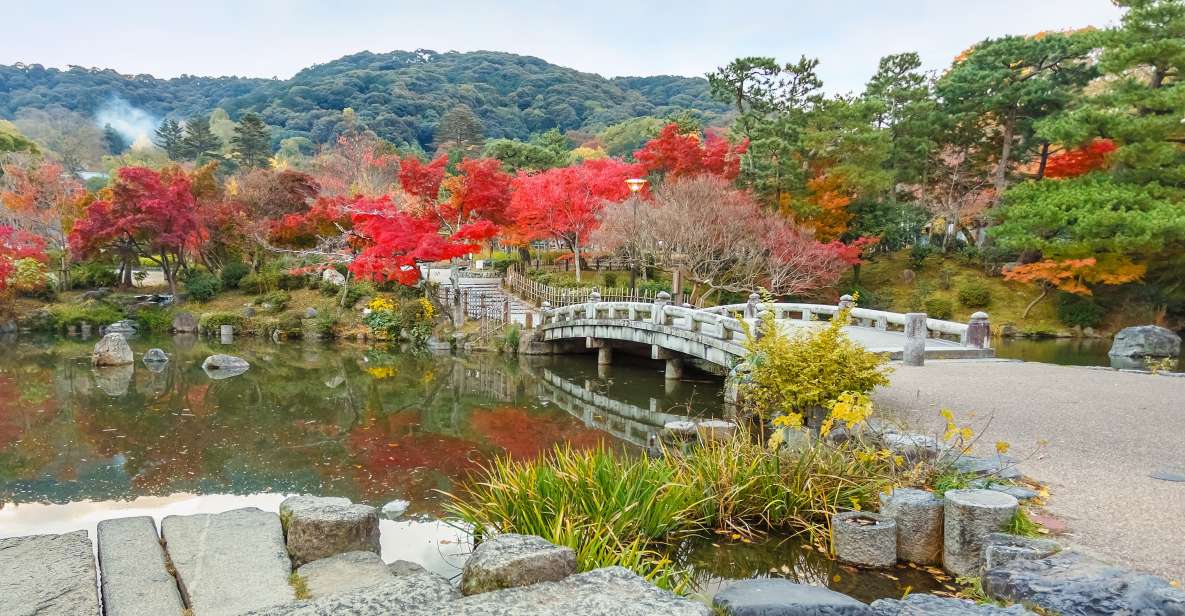
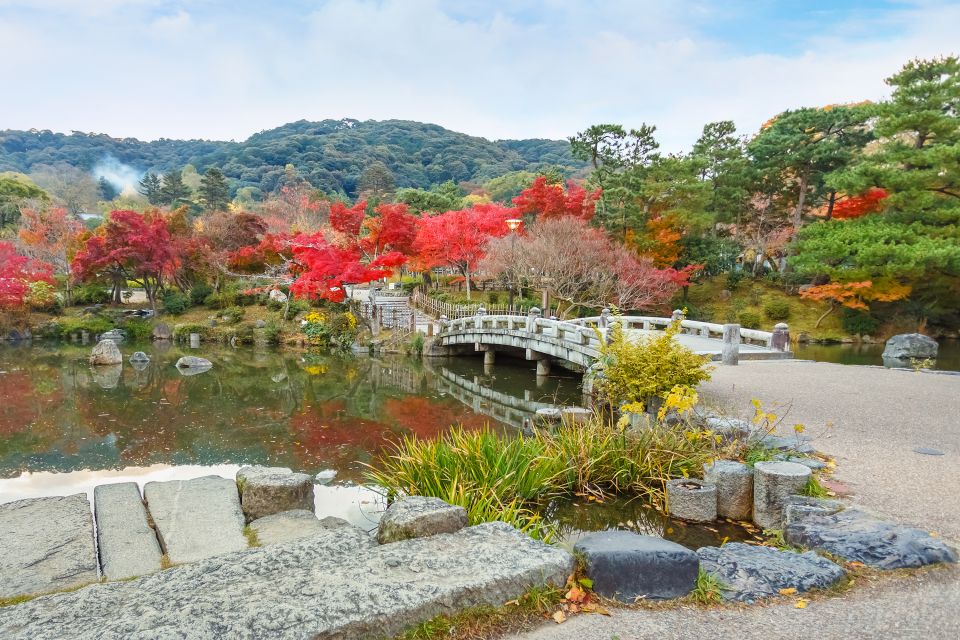
After the intro at Yasaka Shrine, the walk continues through Maruyama Park. That’s where the route shifts. The park acts like a breather before you hit the streets.
Next comes the street called Nene-no-michi. This is one of those Kyoto details that turns a random lane into a story. Nene was the wife of Toyotomi Hideyoshi, a major late-16th-century political figure. Along this route, the guide connects that name to what you’ll see next—especially the temple tied to Nene.
As you walk, the tone stays practical. The guide is explaining why people build places of worship where they do, how the ideas traveled over time, and how Kyoto’s spiritual landscape ties into power and daily life.
If you like history but hate long lectures, this pacing works. It’s short walks broken up by meaning.
Entokuin Zen temple: the calm you can feel, not just read about
Entokuin is where the mood changes. This Zen temple visit lasts about 40 minutes, and the highlight here is the calm of its dry rock-and-sand garden. Zen gardens can look simple from a distance. Close up, they feel like a designed pause—nothing loud, no theatrics, just carefully arranged stillness.
You’ll also get context for what you’re looking at. The guide points out how the temple uses art and interior design to communicate meaning. One standout detail: you can see traditional Japanese rooms and famous pictures depicted on sliding doors. That matters, because it helps you understand these places as more than outdoor scenery.
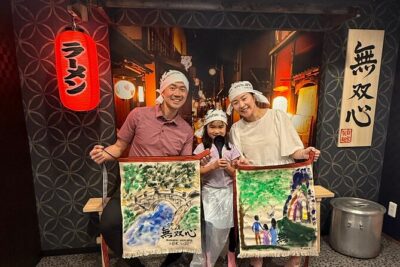
In several bookings, guides have brought hand-prepared visuals—drawings and written notes—to make the religious and historical ideas easier to remember. Even if your Japanese is limited, the guide’s explanations plus the visual aids make the experience click.
One consideration: this is a popular area, and some parts may feel quieter only in short pockets. If you want maximum stillness, be ready to take a slower moment at the garden and not rush for photos.
Yasaka Kōshin-dō and the viewpoint: small temples, big clues
From Entokuin, the tour continues toward Yasaka Kōshin-dō (a visit of about 15 minutes). This stop isn’t just a photo break. The guide uses it to layer more meaning onto the walk, so you understand how different religious spaces sit side-by-side in Kyoto.
Then you move to a viewpoint for about 10 minutes. In Kyoto, viewpoints are rarely about one skyline shot. More often, it’s about giving you a mental map—how the streets and structures relate, and where the major sights sit in the larger layout.
This part of the tour is also your chance to breathe. After temple interiors and narrow lanes, standing still for a moment makes the next big stop feel worth it.
Yasaka-no-to pagoda photo spot: a five-storied beauty from outside
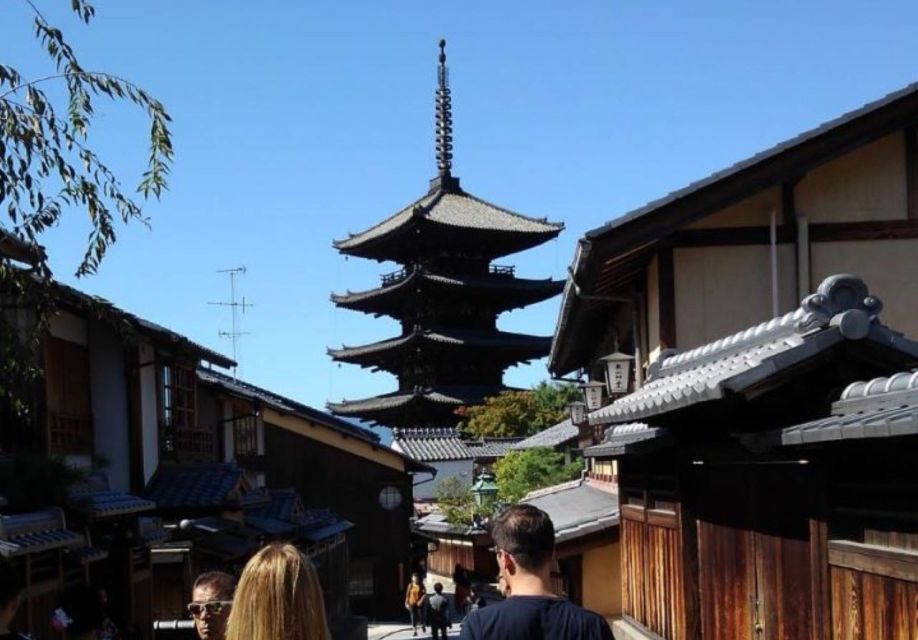
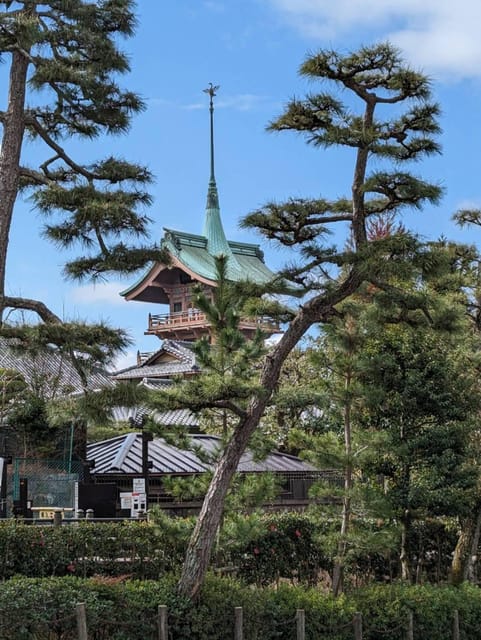
Not every pagoda in Kyoto is something you enter. This one is different. The five-storied pagoda, commonly called Yasaka-no-to (Yasaka-no-to), sits close to Koshindo. On this tour, you’ll see it from outside.
Even without going inside, this is a strong stop. It’s a classic Kyoto visual—multi-story, elegant, and instantly recognizable once you spot it. There’s also a famous photo spot near the street, so it’s one of the easiest places to get a clean image without playing “spot the angle” for ten minutes.
This is also where your guide’s context helps. When you know the names and the roles these structures played, the pagoda stops being a pretty background and becomes part of the story the tour is building.
You can also read our reviews of more private tours in Kyoto


Kiyomizu-dera: Kannon worship, a nail-less stage, and pure water lines
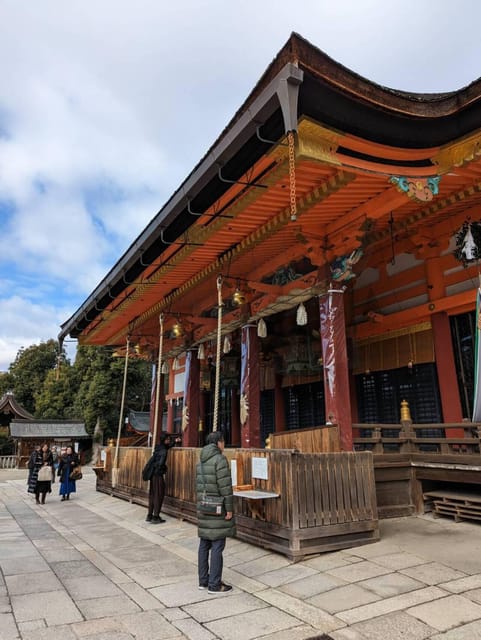
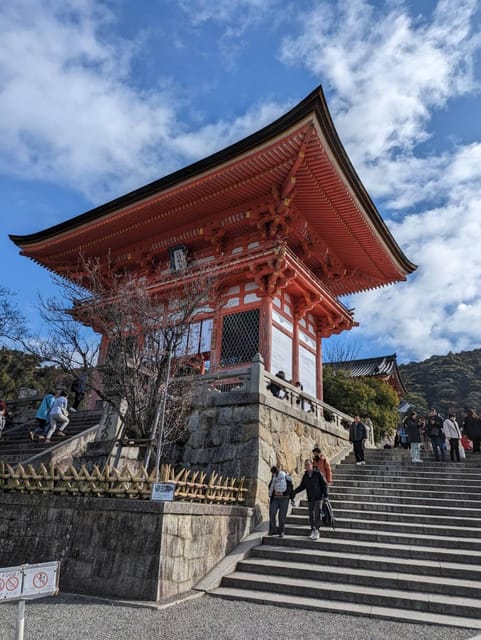
Then comes Kiyomizu-dera, the final destination and the biggest emotional payoff. Expect a 35-minute temple visit, and plan for crowds. Kiyomizu-dera is famously busy—about five million visitors a year from around the world.
The main focus is Kannon Bodhisattva, and you’ll see Buddhist statues connected to that worship, including Kannon. This stop works best if you let yourself slow down once you reach the main hall area. The guide’s explanations help you connect what you’re seeing to why it matters.
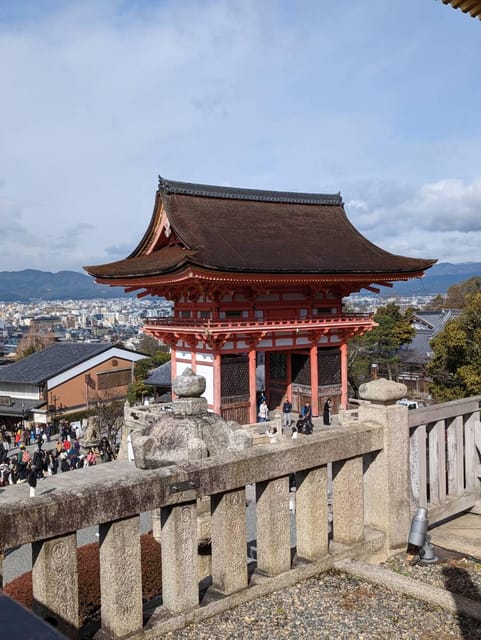
One of the most memorable architectural details is the wooden stage attached to the main hall. It’s described as a wooden structure built without nails. Even if you don’t know carpentry, that fact sparks curiosity. The guide also points you toward what to notice visually.
From that stage, the view is a big part of the experience. You can see a three-storied pagoda called Koyasu Pagoda, literally a pagoda for easy birth. It’s specifically tied to prayer—women visit and pray here for easy birth. That makes the pagoda feel personal, not just decorative.
Then there’s the meaning of the name: Kiyomizu means pure water. A stream of water runs down from the mountain behind the temple and has never dried up. You’ll see visitors lining up to drink it. That line can be slow, but it’s also one of the most traditional things to do at Kiyomizu-dera that doesn’t feel like a gimmick.
The precinct also includes iron items donated to the temple: an iron stick and iron clogs. The iron stick is very heavy. If you’re in the mood, try lifting it. If you’re not, watch others and laugh quietly—Kyoto is full of small rituals like this.
What you’ll learn about Jishu Shrine matchmaking—plus how this ends
After you exit the main hall, the tour wraps up. Before the end, the guide explains Jishu Shrine, known as a shrine for match making.
That last detail is useful. Kiyomizu-dera can feel like a complete experience by itself. But the moment the guide connects it to Jishu Shrine, you get a clearer sense of how these nearby spiritual stops fit into the larger web of Kyoto.
The tour ends at Kiyomizu-dera, so you’re also in a great spot to keep exploring on your own right after—if your legs survive.
Price and value: $80 per group up to 5 makes sense if you’ll ask questions
The price is $80 per group, up to 5 people. That’s not cheap in the abstract. But in practice, it can be excellent value for two reasons.
First, you’re paying for a guide who doesn’t just point and walk. Multiple guides connected with this experience use prepared materials—hand-drawn maps, sketches, and bullet-point explanations—to make Shinto and Zen understandable. If you’re the type who asks questions (or you’re traveling with someone who will), that guidance saves time and confusion.
Second, you’re getting a route that blends a major tourist magnet (Kiyomizu-dera) with a calmer Zen stop (Entokuin) and a story street (Nene-no-michi). A guided walk keeps you from missing the meaning behind the scenes you’d otherwise walk past.
Just budget for what’s not included. Temple admission fees are not included, so you’ll likely pay extra at stops. Transportation to and from the meeting point is also not included, so factor in train or bus costs if you’re not staying near Gion.
Who this tour suits best (and who might want a different plan)
This private historical walking tour is a great match if:
- You want a short, focused Kyoto route that still includes context for what you’re seeing.
- You like religious history enough to want the basics explained clearly.
- You’re okay with crowds at the big-name stop and you’d rather understand them than fight them.
It might be less ideal if:
- You prefer a purely quiet nature walk or you want minimal talking.
- You’re trying to keep costs ultra-low since temple admissions are extra.
And one small note based on the way guides work on this experience: if you care about religion, the guide’s explanations tend to go beyond surface facts into how shrines and Zen temples differ—and how worship is practiced.
Should you book this private Yasaka-to-Kiyomizu walk?
Yes, if your goal is to leave Kyoto with more than photos. This route gives you the big architectural moments (Kiyomizu’s stage, the Kannon focus, the Koyasu connection), plus a real calm pause at Entokuin’s dry rock garden. You also start in the right place—Yasaka Shrine—so the whole walk has a backbone.
Book it if you want a guide who brings prepared visuals and takes questions seriously. Skip it if you’re not interested in explanations and you’d rather go self-guided with zero planning.
If you’re on a first Kyoto trip and only have a half day for history, this is a smart use of time.
FAQ
FAQ
Where is the meeting point?
You meet at the west gate (red gate) of Yasaka Shrine, at Yasaka-Jinja Shrine Nishiromon Gate.
How long is the tour?
The experience is listed as 2 hours in duration.
Is this tour private?
Yes, it’s a private group tour. The price is per group up to 5 people.
What’s included in the price?
A live English guide is included.
Are admission fees included for the temples?
No. Admission fees to the temples are not included.
What is the main walking route between stops?
You start at Yasaka Shrine, then go to Entoku-in, then to Yasaka Kōshin-dō and a viewpoint, and finally to Kiyomizu-dera where the tour ends.
Which temple or garden is the Zen highlight?
Entokuin is the Zen temple stop, known for its dry rock-and-sand garden.
Where do you end the tour?
The tour ends at Kiyomizu-dera after you leave the main hall.
How do I get there by train?
If you use the Keihan Line, get off at Gion Shijo Station; if you use the Hankyu Line, get off at Kawaramachi Station. Walk east along Shijo Street and go up stone steps to the top to meet the guide in front of the red gate.
How do I get there by bus?
Get off at the bus stop named Gion. Look for the stone steps before the red gate.