REVIEW · KYOTO
Sushi – Authentic Japanese Cooking Class – the best souvenir from Kyoto!
Book on Viator →Operated by Japanese Cooking Class Roujiya · Bookable on Viator
Sushi gets personal in Kyoto, because you learn etiquette and make sushi with Kaori in her home kitchen. It is hands-on, not a demo, and the food lands with real confidence.
I also love the take-home package: you get recipes plus a clear guide to how Japanese dining works. One consideration: it runs about 2 hours starting at 11:30am and there is no hotel pickup, so you’ll want to reach Roujiya on time.
In This Review
- Quick hits
- Why this Kyoto sushi class feels like a real souvenir
- Kaori’s kitchen setup: small group, clear instructions, home atmosphere
- Japanese table manners you’ll actually use
- The core cooking lessons: umami, dashi, sushi rice
- Making sushi rolls and assembling multiple types
- Soup and pickled ginger: the flavors that round out the meal
- What’s included (and what’s not) so you can plan
- English instruction plus a take-home recipe pack
- Dietary needs and family-friendly realities
- Price and logistics: the trade-offs you should expect
- Should you book Japanese Cooking Class Roujiya?
- FAQ
- What time does the sushi class start in Kyoto?
- How long is the Japanese sushi cooking class?
- How much does it cost?
- What’s included in the price?
- Is the cooking class taught in English?
- What dietary needs can I request?
- Where do I meet for the class?
- Is hotel pickup or drop-off included?
- How many people are in the group?
Quick hits
- Small-group focus means you get real coaching while you roll sushi
- Kaori leads in English, including practical steps and cultural context
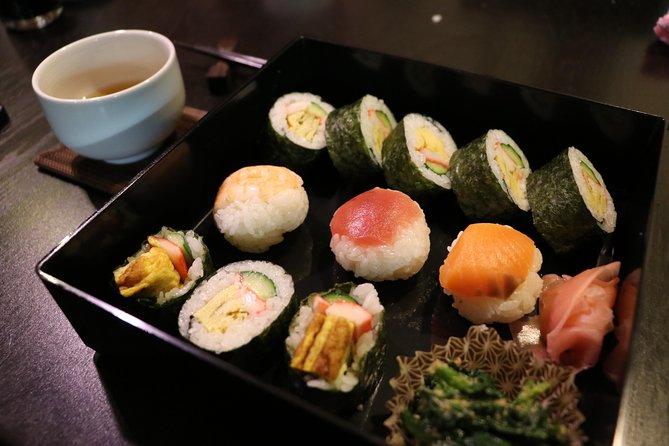
- You make multiple items: sushi rice, several sushi types, soup, and pickled ginger
- Hands-on etiquette training helps you eat correctly, not just cook
- Tea and an aperitif are included to keep the meal relaxed
- Recipes to take home turn this into a souvenir you can actually use
Why this Kyoto sushi class feels like a real souvenir
Sushi in Japan is more than taste. It is timing, texture, and manners at the table. In this class, you get all three, so the “memory” you take home is usable, not just photos.
The payoff is simple: you learn how sushi is built, from the base (sushi rice) to the flavor engine (dashi/umami) to the finishing touch (how you roll, handle, and eat). That makes your next sushi outing in Japan feel sharper, and your at-home attempt feel less like a mystery experiment.
You also leave with recipes. That matters because sushi is easy to mess up if you only watch someone else do it. With written steps, you can repeat the parts that matter most: rice seasoning, broth balance, and that quick pickled-ginger rhythm that clears the palate.
You can also read our reviews of more cooking classes in Kyoto
Kaori’s kitchen setup: small group, clear instructions, home atmosphere
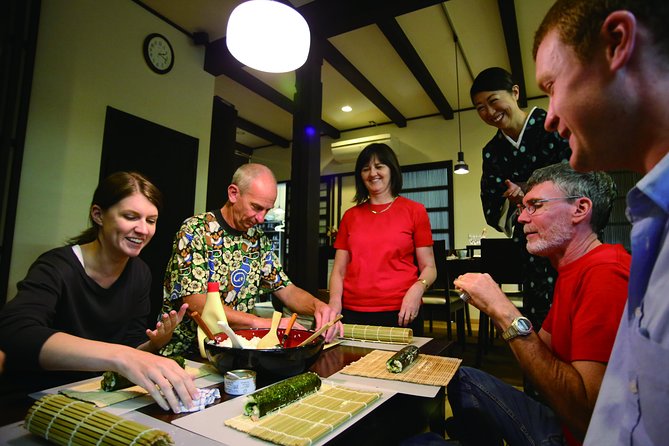
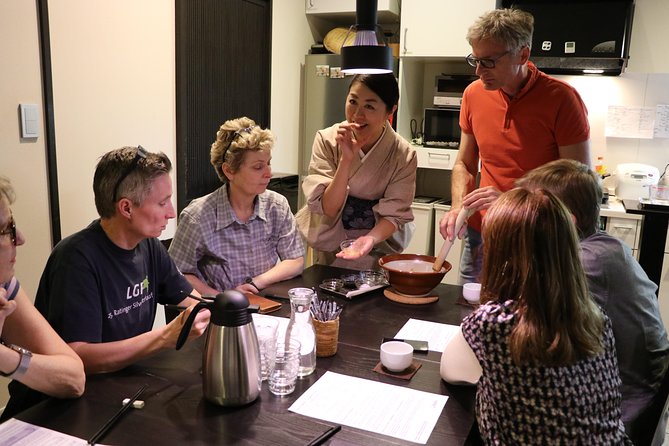
This class is run by Japanese Cooking Class Roujiya, with Kaori as the host and instructor. The teaching happens in a kitchen setting that feels clean, organized, and welcoming, the kind where you can concentrate without feeling rushed.
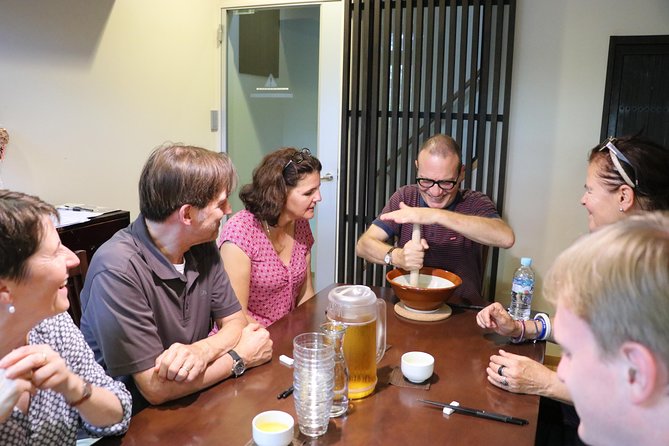
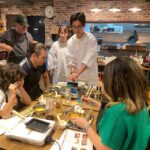
The group size is kept small (capped at eight in the class description, with a max of 12 travelers for the activity). That is the difference between getting a lecture and getting feedback. When your sushi rice is too sticky or your roll is uneven, you want a real person to point out the fix right away.
Plan on a guided rhythm: tasting a bit, then working with ingredients, then making your own sushi. One consistent theme in the experience is pacing that keeps you moving, but not flustered.
Japanese table manners you’ll actually use
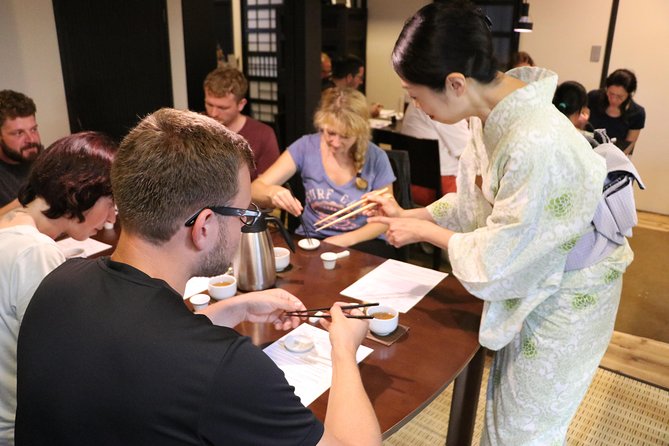
A lot of cooking classes stop at food. This one starts earlier—with dining etiquette. You learn Japanese table manners specifically tied to sushi dining, so you are not guessing once you sit down in a restaurant.
The practical value is huge. Sushi restaurants can feel strict if you don’t know what to do with your chopsticks, how to handle small bites, and how to approach the meal without fuss. Here, you build those instincts in a low-pressure setting.
You also get little “why” details along the way. For example, you learn about chopsticks and why Japanese chopsticks are shorter than Chinese ones. It is the kind of fact that sticks because it connects culture to everyday technique.
The core cooking lessons: umami, dashi, sushi rice
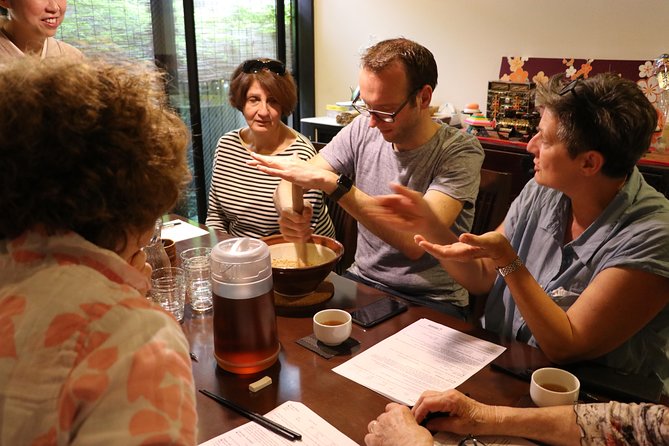
You will spend real time on flavor foundations, not just rolling. A big focus is umami, and you learn what it is and how it shows up in Japanese cooking. Once you understand that, sushi starts making more sense as a system, not just a roll with fish.
Then you work on dashi—a simple broth style made with seaweed and bonito flakes. You also learn how to make it and why the steps matter. When you know what you are tasting, your soup and sushi feel connected instead of separate.
Sushi rice is the other star lesson. You learn how to prepare it and why it is treated a certain way during cooking and cooling. One key tip you may hear in class: you fan the sushi rice to get the right texture. It is a small step, but it has a big effect on the final bite.
If you are the type who usually eats sushi without thinking about the engineering, this class shifts you into “builder mode.” You end up seeing how seasoning, temperature, and method create the balance Japanese-style sushi relies on.
Making sushi rolls and assembling multiple types
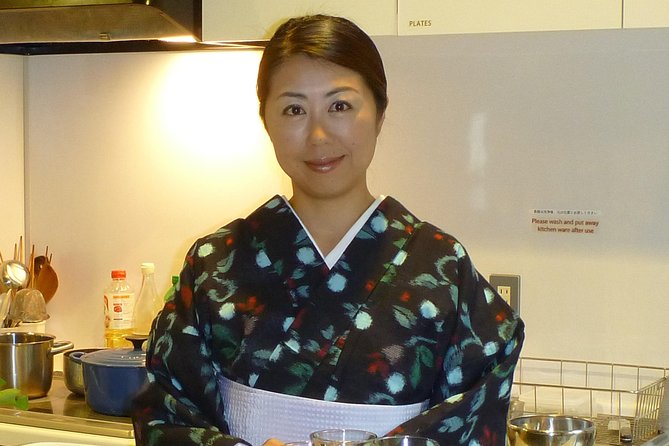
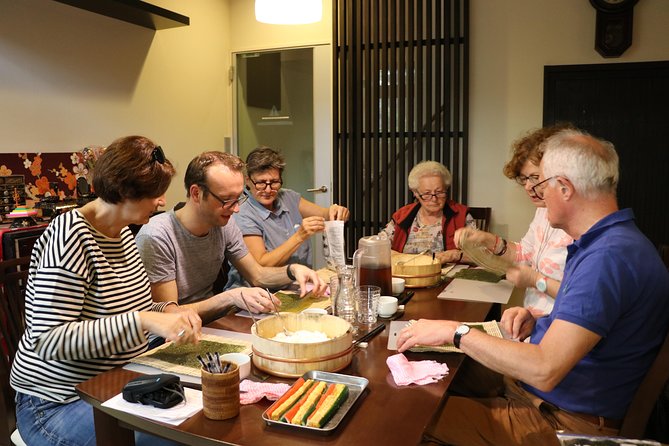
Yes, you will make sushi yourself. This is not a quick “roll one piece for the photo” workshop. You learn several types of sushi, and you get hands-on practice that builds skills in stages.
You may start with simpler components, then move toward more structured sushi assembly. The class format is designed so you can follow instructions in English and learn the reasoning behind the steps, not just the step itself.
The satisfaction here comes from actually producing food you can eat right away. You get that moment where everything clicks: rice behaves differently once you understand handling, and flavors come together more predictably once your broth and pickles are done with intention.
One good sign is how often people highlight that Kaori walks you through stages carefully, and checks that you’re doing things correctly. That matters because sushi is picky. Too much pressure, wrong amount of filling, or rice at the wrong temperature can ruin the texture.
You can also read our reviews of more tours and experiences in Kyoto


Soup and pickled ginger: the flavors that round out the meal
You do not just make sushi. You also work on Japanese soup and pickled ginger, which are not side dishes in Japan—they are part of the meal design.
Soup gives you a warm counterpoint to the bite of sushi. It also reinforces the broth concepts you learn with dashi, so the cooking stays connected. Pickled ginger, meanwhile, helps reset your palate. It turns each piece of sushi into a fresh experience instead of a long chain of similar flavors.
In class, these items are made alongside your sushi tasks, not after the fact. That means you understand them as part of the same process: build flavor, balance taste, then finish with the small palate-clearing details.
What’s included (and what’s not) so you can plan
The price is $72.67 per person for a session around 2 hours. For that, you get a meal, all ingredients for the cooking, an English-speaking cooking instructor, recipes, an aperitif, and Japanese green tea.
Here is why that feels like good value. You are paying for more than food. You are paying for instruction, ingredients, and a structured outcome you can repeat later with the included recipes. Sushi is also ingredient-dependent, so having everything sourced and prepped for you saves time and guesswork.
What’s not included is hotel pickup and drop-off. The meeting point is Roujiya at 22-58 Nishinokyo Ikenouchicho, Nakagyo Ward, Kyoto. It ends back at the meeting point.
So if you are staying far from central Kyoto, give yourself extra travel time. The class time starts at 11:30am, and you do not want to show up stressed.
English instruction plus a take-home recipe pack
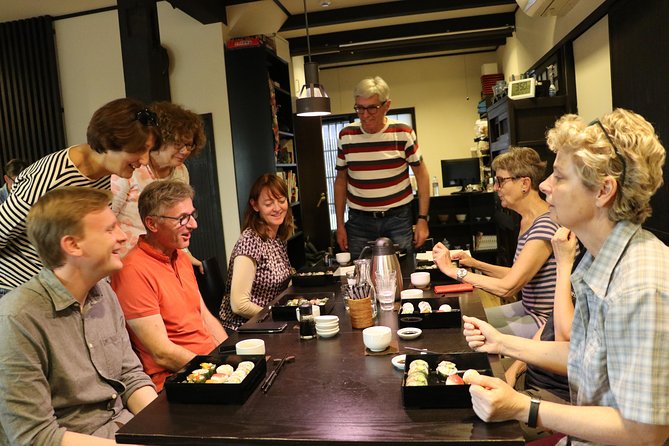
One reason this class works for many people is language support. You make several types of sushi, soup, and pickled ginger in English, with clear guidance throughout.
You also leave with recipes. Many people mention a take-home guide—one example includes a multi-page sheet covering Japanese manners and the recipes for sushi rice, soup, and pickled ginger. Even if your format is slightly different day to day, the point is the same: you get a paper trail for the steps.
That means your souvenirs stack differently than the usual magnets and snacks. You take home the ability to recreate the key pieces—rice, broth, and pairing flavors—rather than just one finished plate.
Dietary needs and family-friendly realities
You can advise specific dietary requirements at time of booking. That is the best way to get clarity on what can be adjusted for you.
The experience has also been described as family friendly, with adults and younger children in the same group. If you are traveling with kids who like hands-on tasks, sushi-making can be a strong fit because the work is tactile and visual.
Still, sushi has a component of precision. If you have very strict dietary needs, or you need a complete avoidance of certain ingredients, message the provider before the day so you are not surprised.
Price and logistics: the trade-offs you should expect
At $72.67 for roughly two hours, you’re paying for instruction and ingredients more than you’re paying for a restaurant meal. If your goal is purely to eat, you might wonder why it costs so much compared with buying sushi.
But if your goal is to learn the method, the price starts to make sense fast. You get a structured experience, recipes, and a chance to practice at home later without starting from scratch.
The main logistics trade-off is the meeting setup. There’s no hotel pickup, and Kyoto addresses can be tricky for some navigation apps. If you rely on a driver or map pin, use whatever exact location details the provider sends after booking, and aim to arrive a bit early.
Should you book Japanese Cooking Class Roujiya?
Yes, I think you should book it if you want more than a meal. This is a cooking class that teaches sushi as a craft: rice, dashi/umami, etiquette, and the supporting flavors like soup and pickled ginger. The small-group feel and the take-home recipes make it one of the rare food activities that turns into real skills.
Skip it only if you dislike hands-on cooking or you want a low-effort experience where you do little besides eat. Sushi rewards participation. If you come ready to work, this is one of the best souvenirs you can bring back from Kyoto.
FAQ
What time does the sushi class start in Kyoto?
The class starts at 11:30am.
How long is the Japanese sushi cooking class?
The experience runs about 2 hours (approx.).
How much does it cost?
It costs $72.67 per person.
What’s included in the price?
The price includes the meal, all ingredients for cooking, an English-speaking cooking instructor, recipes, an aperitif, and Japanese green tea.
Is the cooking class taught in English?
Yes, the instructor speaks English.
What dietary needs can I request?
You can advise any specific dietary requirements at the time of booking.
Where do I meet for the class?
You meet at Roujiya, 22-58 Nishinokyo Ikenouchichō, Nakagyo Ward, Kyoto, 604-8375, Japan.
Is hotel pickup or drop-off included?
No. Hotel pickup and drop-off are not included.
How many people are in the group?
The activity has a maximum of 12 travelers.