REVIEW · KYOTO
Men’s Kimono Lesson and Shopping in Kyoto
Book on Viator →Operated by Let's ask Shogo · Bookable on Viator
A kimono lesson feels more like skill-building. In Kyoto, you get a hands-on session with Shogo from Let’s Ask Shogo, taught inside a real men’s kimono store. I like that it’s not just a quick outfit swap; you’ll learn the steps and the meaning behind what you’re wearing, and I also love the practical shopping support if you want to take a kimono home.
The only catch is this is truly a lesson. You’ll need to be comfortable trying things on, following along, and getting hands-on help—so if you just want a photo moment and zero participation, it may feel like more work than you expected.
On the plus side, the format is small (up to 4 people), so you can ask questions and get corrections fast. You’re also starting from a fixed meeting point in Shimogyo Ward, near public transportation, which makes it easy to plug into a Kyoto day.
In This Review
- Key highlights you’ll care about
- Why this Kyoto kimono session beats rent-and-wear
- Meet Shogo at the shop in Shimogyo Ward
- The core lesson: juban, proper donning, and fit fixes
- Layers, meaning, and what to ask about in the store
- Practice that actually sticks: confidence, finishing touches, and folding
- Shopping inside a men’s kimono store (and the value of optional guidance)
- Price and timing: is $65.15 worth it?
- What to know if you’re going with a female partner
- Who this experience suits best (and who might rethink it)
- A realistic flow of your 2-hour session
- Should you book Men’s Kimono Lesson and Shopping in Kyoto?
- FAQ
- How long is the men’s kimono lesson in Kyoto?
- Where does the tour start?
- What’s the group size?
- Can my female partner or friend join?
- Do I have to buy a kimono during the experience?
- Is free cancellation available?
Key highlights you’ll care about
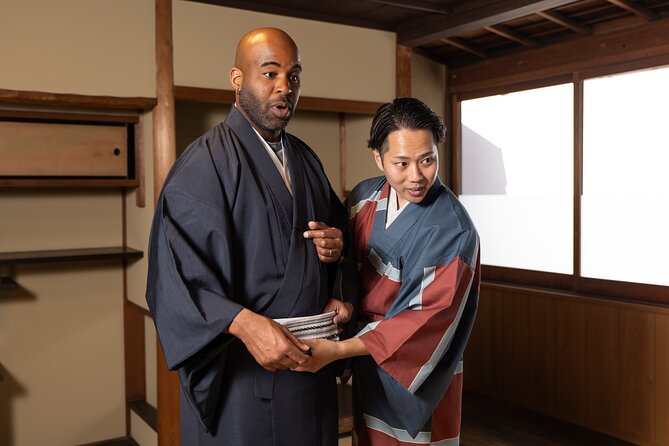
- Shogo teaches inside a real men’s kimono store in Kyoto, not a generic studio
- Step-by-step dressing practice (including starting with the juban)
- Small group size with a max of 4 people for more personal guidance
- Optional shopping help after the lesson, with support for choosing size and pieces
- You’ll learn how to handle the kit, including folding so you can manage it later
- Plan for a female partner: one person can watch for free, and Harumi can dress/teach women for an extra fee
Why this Kyoto kimono session beats rent-and-wear
A lot of kimono experiences in Japan stop at the surface. You get dressed, you pose, you walk out. This one is different in a useful way: it’s built around learning how to wear a men’s kimono with confidence.
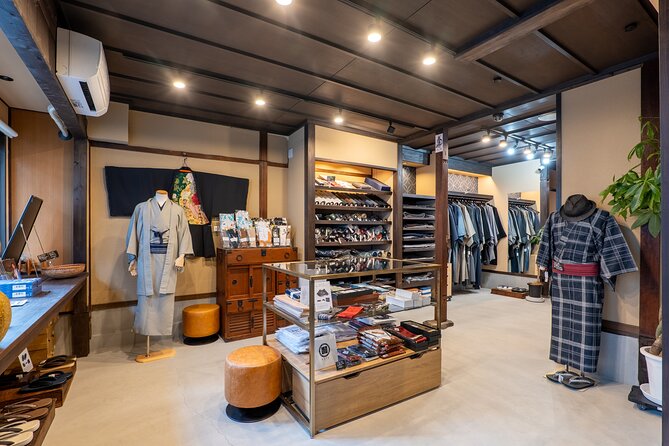
That shift matters. When you understand the order of putting things on, how the kimono sits, and what you’re adjusting, wearing one later stops feeling like a mystery. And when you’re in a real store setting with real clothing in front of you, you can ask practical questions right away—size, fit, color choices, and what different layers are for.
I also like that you can keep it beginner-friendly. The session is meant for first-timers and culture lovers, but it still respects your time by focusing on the essentials.
You can also read our reviews of more shopping tours in Kyoto


Meet Shogo at the shop in Shimogyo Ward
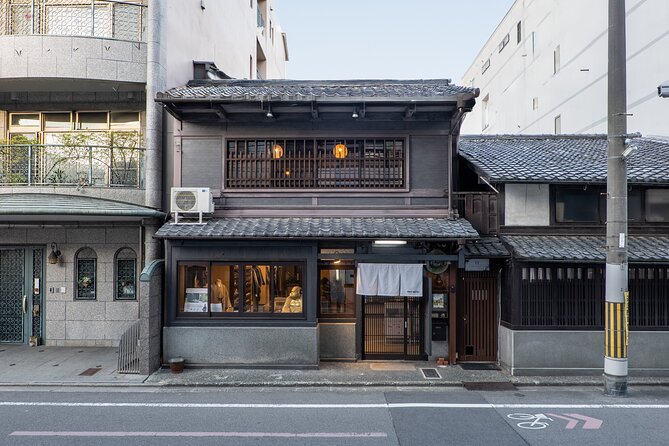
The meeting point is at 432 Iwatoyamachō, Shimogyo Ward, Kyoto (600-8445). The location is near public transportation, and the activity ends back at the same spot, so you’re not guessing where you’ll finish.
The store/classroom setup is one of the quietly smart parts of the experience. You’re not shuttled around. You arrive, you learn in the shop environment, and the day flows naturally into trying on more pieces and discussing purchases if you want them.
The session is set for about 2 hours, which is a good length for hands-on instruction. Too short, and you’d feel rushed. Too long, and you’d start overthinking every adjustment. This one aims for enough time to practice without turning it into a half-day project.
Small group size also helps. With a maximum of 4 people, you’re more likely to get corrections that actually apply to your body and your questions, instead of waiting your turn.
The core lesson: juban, proper donning, and fit fixes
This experience centers on teaching you how to put on men’s kimono correctly. In other words, the goal isn’t only to get you into a nice look—it’s to get the structure right.
A key early step is the juban (the inner layer). You’ll learn the proper procedure for donning it, then build from there. That order matters because the kimono’s final look depends on what you do underneath. Get the inner layer wrong, and the outer robe won’t sit right no matter how carefully you adjust the sleeves.
What makes this lesson especially practical is the focus on procedure. You’re guided through the steps, then you get to practice so the motions start to feel familiar.
If you’ve ever tried to put on a kimono alone, you know the danger: you’ll end up “fixing” one area while accidentally pulling something else out of place. This is where an instructor makes a real difference. Shogo is there to correct what you’re doing and explain why the adjustment helps.
And because the experience is held inside a men’s kimono store, you’re also learning in context. You can see how the pieces are meant to work together instead of treating them as disconnected items.
Layers, meaning, and what to ask about in the store
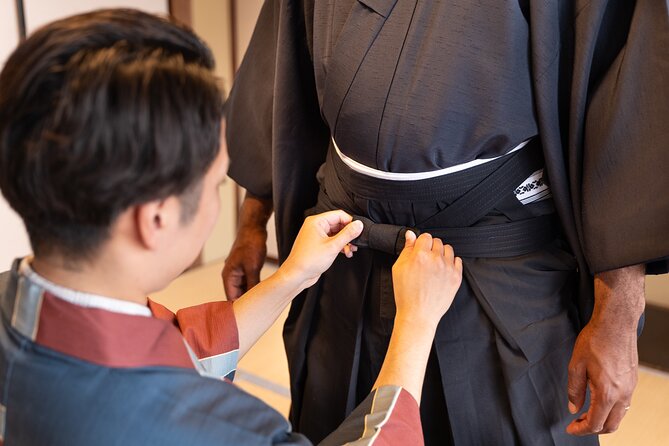
Men’s kimono are often described like a simple outfit. But once you start paying attention, they’re a system. This is where you’ll get more than just wearing instructions.
Shogo’s role isn’t only to show the motions. He also explains the cultural meaning behind the pieces. That matters because it turns a garment into something you understand. Instead of thinking, This looks great, you begin thinking, This piece is doing a job—and it likely reflects seasonality, formality, and personal style choices.
You’ll also get support while you’re shopping or considering shopping. The store environment is set up for that. After the lesson, you can bring questions directly to the people who handle these garments every day.
From what’s been shared in the experience itself, the guidance can include choosing appropriate size and color for the pieces in your set. That’s the kind of help that can save you from common mistakes—like picking something pretty in a photo but wrong for your body proportions or your intended use.
Practice that actually sticks: confidence, finishing touches, and folding
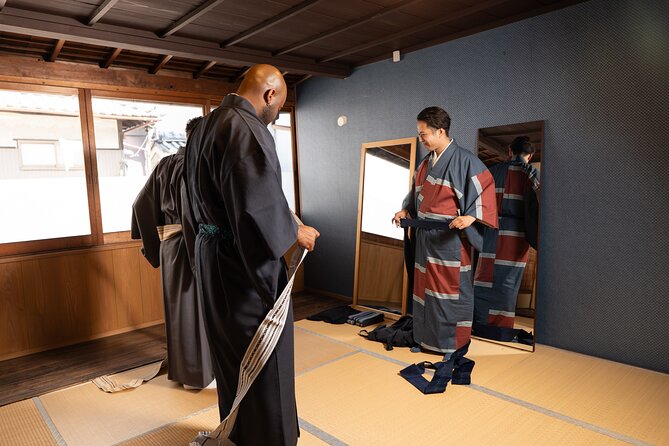
A kimono isn’t hard because the steps are complicated. It’s hard because small details matter, and you only notice them after you’re already wrapped up.
That’s why the practice portion is a big deal. You’re not just watching someone do it. You’re learning to put on the outfit yourself so it stops being dependent on the instructor.
The session also covers how to finish and manage the garment, including folding. Knowing how to fold a kimono properly is one of those practical skills that feels minor until you need it. Then it suddenly matters a lot: storage, wrinkles, and how your kimono stays in good shape.
Another subtle benefit: you learn how to speak up during the process. When someone is adjusting your fit and explaining what to do, you’ll start to notice what to ask—how tight is right, how the collar should look, and how the layers sit.
If you want to wear a kimono more than once—maybe for another event or a special day—this is the part that makes the experience worth it. You’re leaving with usable muscle memory.
You can also read our reviews of more tours and experiences in Kyoto





Shopping inside a men’s kimono store (and the value of optional guidance)
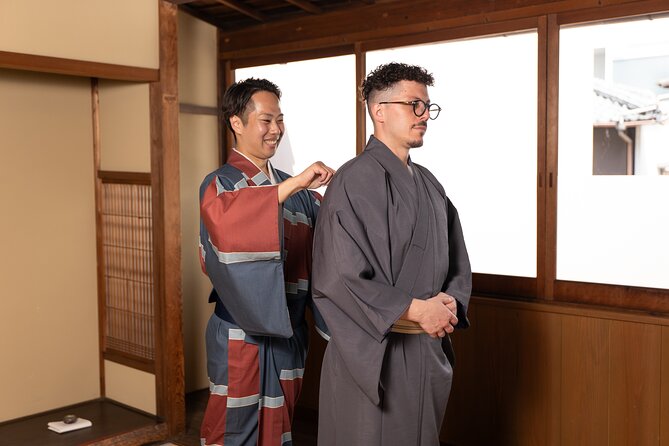
The “lesson and shopping” combo is what makes this experience feel like more than just a class. You’re in a real shop where you can browse and talk options after you’ve learned what to look for.
Importantly, shopping guidance is there if you want it—not as a trap. You can focus on learning and still end up with a good understanding of what the store carries, how pieces fit together, and what choices make sense.
If you do decide to buy something, you’ll be supported with the basics of selecting the correct size and color and building a set that makes sense. The store atmosphere can also help you compare options under normal lighting and real garment weight, not just on a mannequin or in a quick photo.
One thing to keep in mind: this isn’t a souvenir factory experience. It’s closer to a structured introduction to how men’s kimono are chosen. That can be a great fit if you want authentic guidance. It can feel slower if you just want something fast and cheap.
Also, if you already own kimono pieces, the session style can still be useful. You’re practicing what you’re doing with your own knowledge—and that often leads to better choices about what to pair or how to adjust.
Price and timing: is $65.15 worth it?
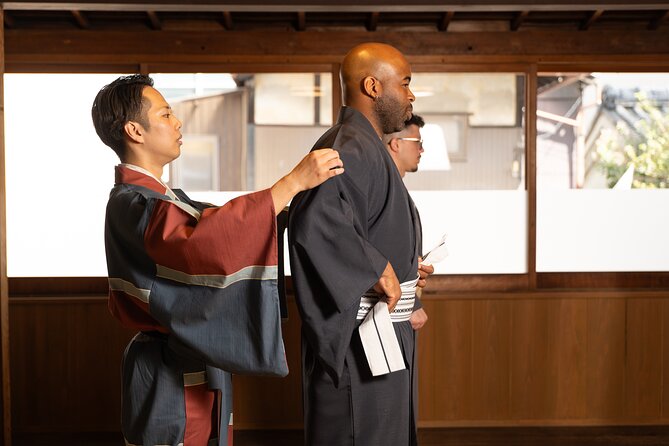
At $65.15 per person for about 2 hours, this isn’t the cheapest kimono-related activity in Kyoto. But it is easy to justify when you look at what you’re buying: instruction plus store-based context.
You’re paying for:
- guided dressing steps (including the juban)
- cultural explanations tied to what you’re wearing
- hands-on practice so you can repeat the process later
- the option of shop guidance afterward, including size and color help
The small group cap (max 4) also supports the value. With fewer people, you’re more likely to get feedback that helps you fix what you’re doing, right then.
Timing-wise, you’re not stuck all afternoon. Two hours fits well alongside other Kyoto stops, especially if you’re already planning to spend time in the Shimogyo area.
One extra detail: the experience uses a mobile ticket, and you’ll typically receive confirmation within 48 hours of booking (subject to availability). That reduces the “wait and wonder” feeling that some popular activities create during busy travel weeks.
What to know if you’re going with a female partner
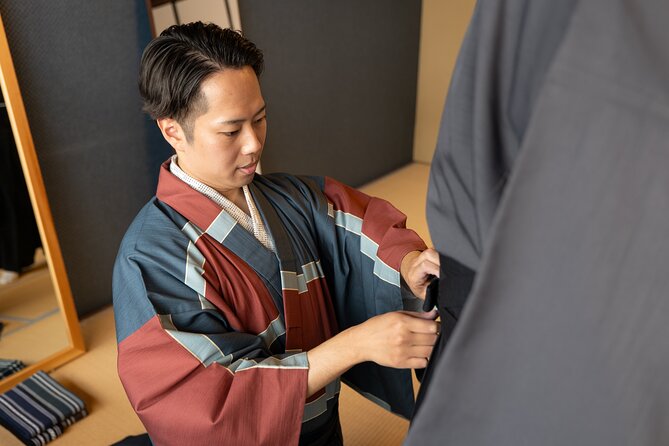
If you’re traveling with a female partner or friend, the setup is flexible.
One person can watch for free per booking. If your partner wants to be dressed or taught, Shogo’s wife Harumi can do that for an extra fee—best to ask after booking.
This is a practical point for planning. It means you can still do the men’s kimono-focused lesson without forcing your partner to sit through it only. If she wants hands-on instruction, the option exists.
Who this experience suits best (and who might rethink it)
This men’s kimono lesson is a great fit if you:
- want real instruction, not just dressing for pictures
- care about cultural meaning and want context while you learn
- like small-group, question-friendly formats
- might want to purchase your own kimono or parts later
It might be less ideal if you:
- only want a quick kimono photo and minimal interaction
- hate hands-on learning or being adjusted while dressing
- expect a shopping spree as the main event
A simple way to decide: if you’re the kind of person who enjoys learning how things work, you’ll probably get a lot out of it. If you want low-effort, high-output photos, you may prefer a more casual option.
A realistic flow of your 2-hour session
Here’s what the experience feels designed to do, from start to finish:
1) You meet at the shop in Shimogyo Ward and settle into the store/classroom space.
2) You get guided through the structure of men’s kimono, starting with the inner layer (the juban) and building outward.
3) You practice the donning steps so you can repeat them without panic.
4) You get explanation beyond technique, including why pieces matter culturally and how layers work together.
5) You wrap with finishing and handling, including how to fold correctly.
6) If you want, you shift into store discussion for sizing and shopping choices.
That order is smart. It prevents the classic problem: people shop first, then learn too late what to look for.
Should you book Men’s Kimono Lesson and Shopping in Kyoto?
I’d book this if your goal is skill, confidence, and understanding—not just a temporary look. The store setting, the hands-on guidance, and the small group format make the $65.15 price feel more like tuition than a costume rental.
Book it especially if you want to be able to wear a men’s kimono again someday. Learning how to put on the outfit in the right order and how to fold it properly gives you something you can use long after Kyoto.
Skip it or reconsider if you’re only after a quick photo moment or you don’t want any participation beyond watching. This experience works best when you’re willing to get involved.
If you’re on the fence, one last question to ask yourself: do you want to wear the kimono, or do you want to learn how to wear it? This one is built for the second option.
FAQ
How long is the men’s kimono lesson in Kyoto?
The experience is about 2 hours.
Where does the tour start?
The meeting point is 432 Iwatoyamachō, Shimogyo Ward, Kyoto, 600-8445, Japan, and it ends back at the same location.
What’s the group size?
There is a maximum of 4 travelers per session.
Can my female partner or friend join?
One guest can watch for free per booking. For an extra fee, Shogo’s wife Harumi can dress or teach women too; ask after booking.
Do I have to buy a kimono during the experience?
No. You can participate in the lesson, and you’ll receive expert guidance if you’d like to purchase a kimono.
Is free cancellation available?
Yes. You can cancel for a full refund up to 24 hours before the experience starts, with free cancellation available under that window.