REVIEW · KYOTO
Kyoto: Ramen Cooking Class at a Ramen Factory with Souvenir
Book on GetYourGuide →Operated by Factory Alliance · Bookable on GetYourGuide
Fresh ramen skills in just 90 minutes. This Kyoto ramen cooking class takes place at a ramen school tied to Menbaka Fire Ramen, and it’s built around making noodles from flour and customizing your bowl with real Miso, Salt, and Soy sauce choices. Instructors like Sakura and Moeka (English/Japanese) run the room with clear, high-energy guidance.
What I like most is the hands-on structure: you fold and shape dough into noodles, then flavor your chicken and build your soup base and bowl from scratch. I also love that you get the full recipe sent to you by email, so it’s not just a one-time meal. One possible drawback is that the entrance can be tricky—it’s on the basement floor, and the steps aren’t always where Google Maps expects them to be.
- Flour-to-noodles technique: you shape your own noodles rather than just assembling a bowl
- Taste-and-mix sauce time: Miso, Salt, and Soy show up in your choices
- Built-for-cooking-at-home: the full recipe gets sent to you by email
- Factory-style organization: fast, efficient steps so 90 minutes stays on track
- Photo-friendly team: staff helps capture the process with photos and video
In This Review
- Kyoto’s Ramen Factory Class: A Serious Brand, Not a Tourist Gimmick
- Why the Menbaka Fire Connection Matters
- 90 Minutes of Noodle Making: Folding, Punching, Kneading, and Shaping
- What You’ll Notice During the Class
- The Chicken and Broth Setup: Flavor Comes Before the Bowl
- Building Your Own Bowl: Miso, Salt, and Soy in Real Combinations
- Toppings and Condiments: Make It Yours
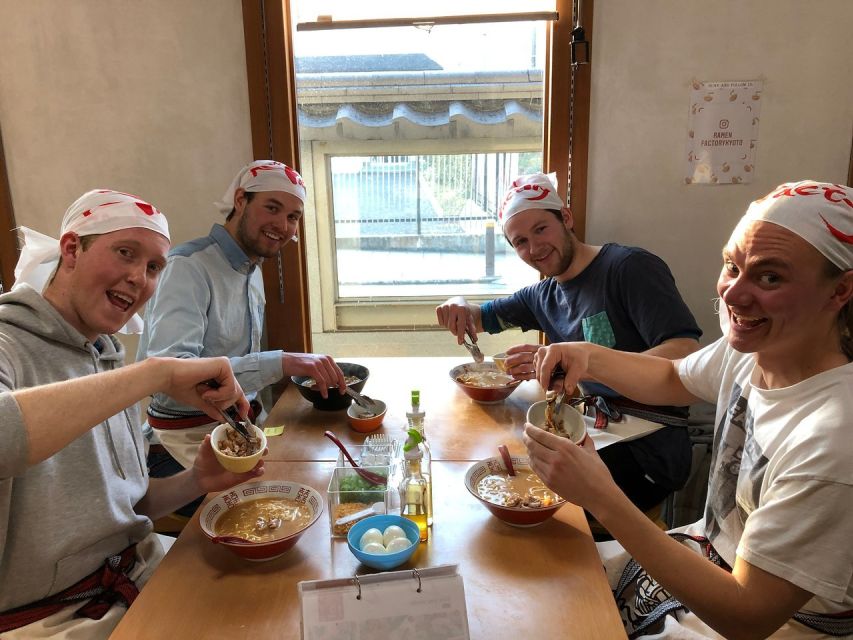
- What You Eat at the End: You’re Not Just Watching
- Recipe by Email and a Souvenir: Turning a Meal Into a Skill
- Is $127 Worth It?
- Location Near Demachiyanagi: Easy Walk, Basement Entrance Challenge
- Timing Tip for Your Day
- English Instruction and Dietary Options: Plan Ahead, Don’t Stress
- Who Should Book This Class (and Who Might Think Twice)
- Practical Tips Before You Go
- Should You Book This Kyoto Ramen Cooking Class?
- FAQ
- How long is the ramen cooking class?
- What does the class cost?
- What do I learn how to make?
- Which sauces are part of the experience?
- Do I get a recipe for cooking at home?
- Is drinks included in the price?
- Can the class accommodate dietary preferences?
- Where is the meeting point?
- Will I be photographed or filmed?
Kyoto’s Ramen Factory Class: A Serious Brand, Not a Tourist Gimmick
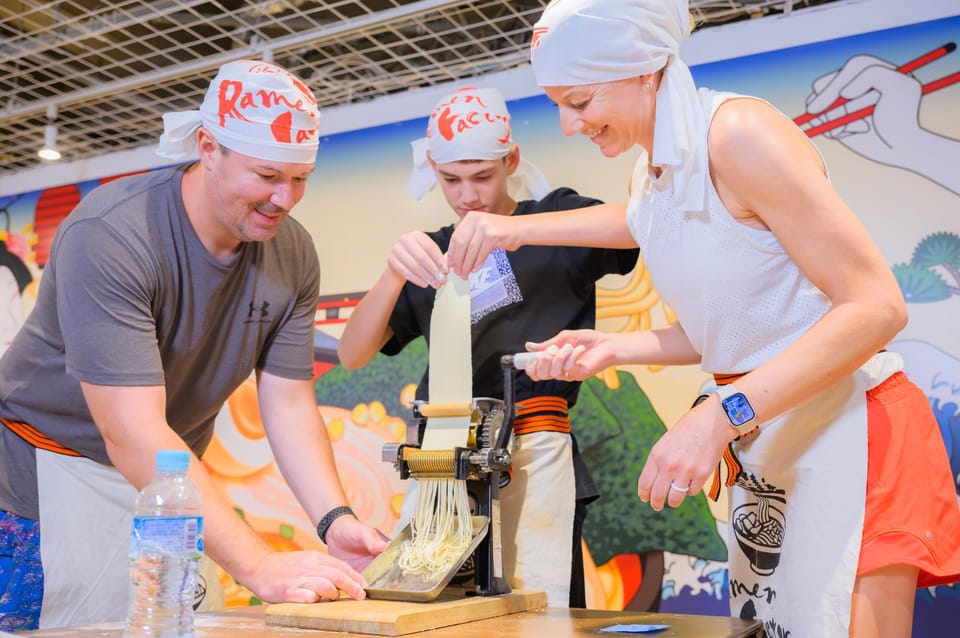
This isn’t a vague cooking workshop where you chop a few things and call it ramen. It’s centered on a ramen school atmosphere inside a ramen factory setting, linked to Menbaka Fire Ramen—one of Kyoto’s popular ramen houses. That matters because the class is designed like ramen itself: step-by-step, with attention to texture, timing, and flavor balance.
You’ll be working in an organized, classroom-to-kitchen flow. You start with a quick overview (including a process video), then move into hands-on prep: chicken seasoning, noodle making, and finally building and eating your bowl. Even with the fun tone, the instruction stays practical and structured.
Why the Menbaka Fire Connection Matters
Ramen has a reputation for being complicated, mostly because good ramen takes time. The factory format helps solve that problem. You’re learning techniques you can repeat, but the 90-minute window stays realistic because some preparation is handled behind the scenes. One detailed note from past participants: a lot of the work is already staged so you’re not waiting around for days-worth of processes.
You can also read our reviews of more cooking classes in Kyoto

90 Minutes of Noodle Making: Folding, Punching, Kneading, and Shaping
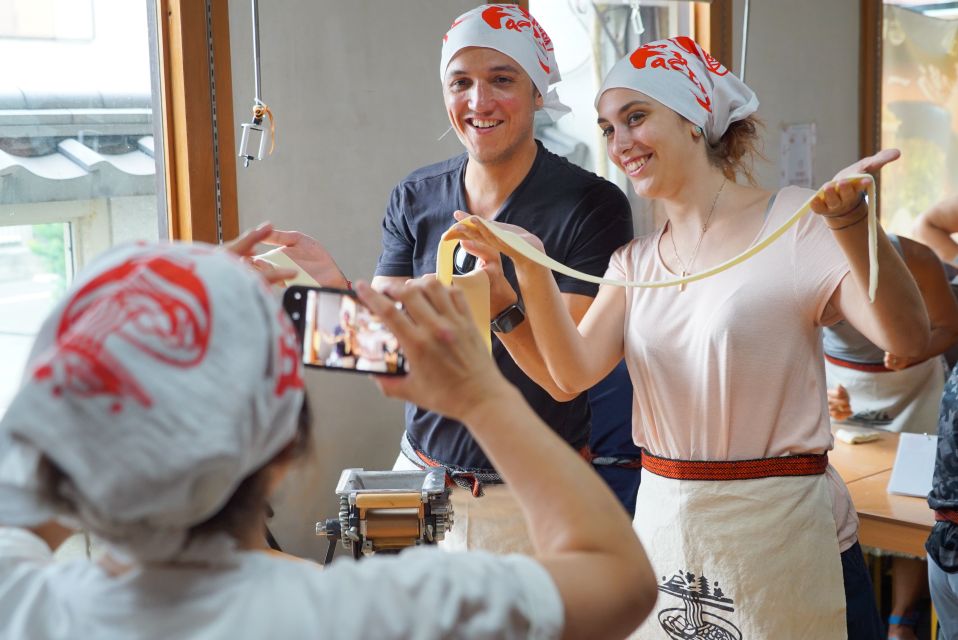
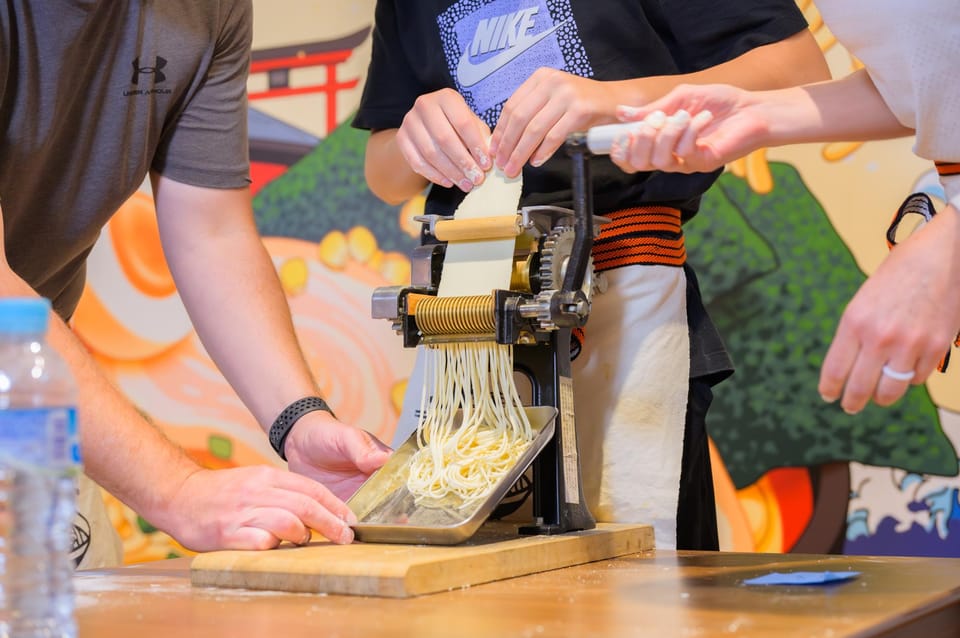
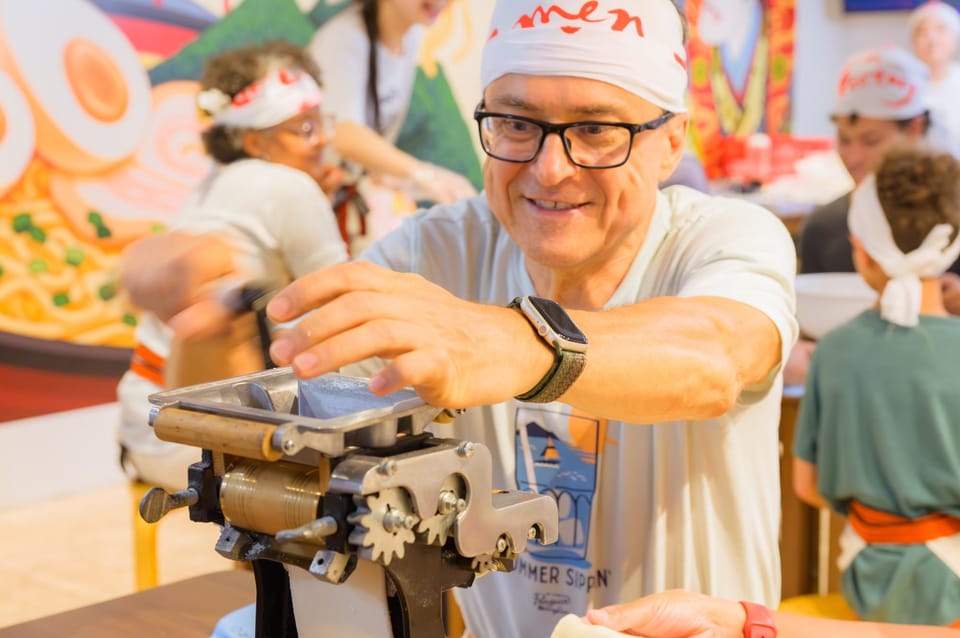
The star skill here is making noodles from flour—not buying ready-made noodles and pretending it’s authentic. You’ll go through the full noodle workflow: mixing and forming dough, then working it into noodles with techniques like punching, kneading, draining, and shaking as the dough turns into noodles. You also get the sense that ramen isn’t just taste—it’s texture.
One detail I’d treat seriously: the process includes folding the noodle dough over 100 times. That’s not just theatrics. Those folds are part of building structure, and you’ll understand why once you see how the dough behaves as it changes. It’s the kind of step that makes the class feel like actual training, not a demo.
What You’ll Notice During the Class
You’ll see a few things fast:
- The instructors keep you moving without rushing you into mistakes.
- The tools and ingredients are set up so your job is mainly doing the hands-on steps, not hunting for supplies.
- The pace is designed so beginners can finish with a bowl they feel proud of.
The Chicken and Broth Setup: Flavor Comes Before the Bowl
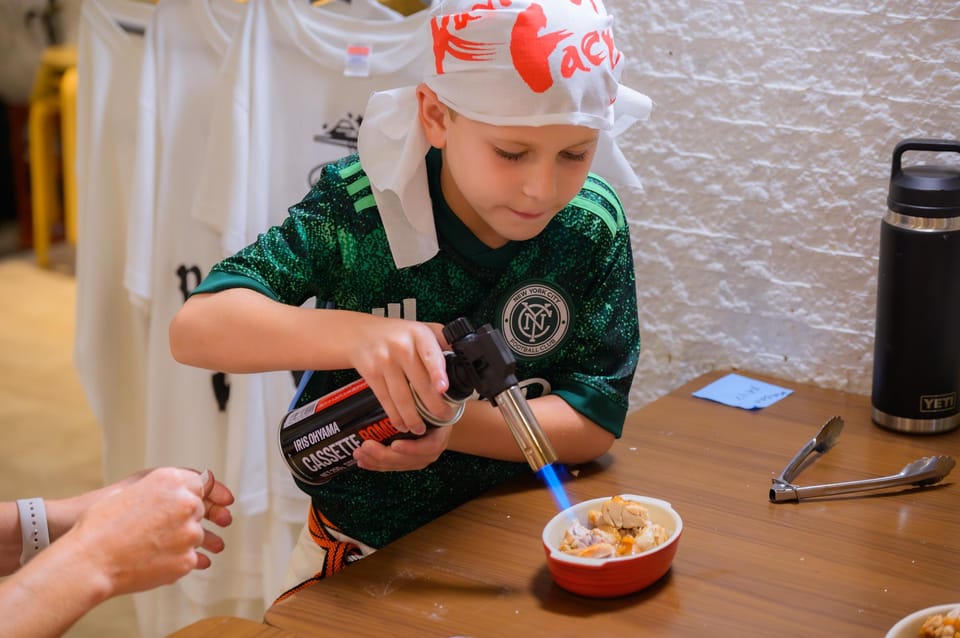
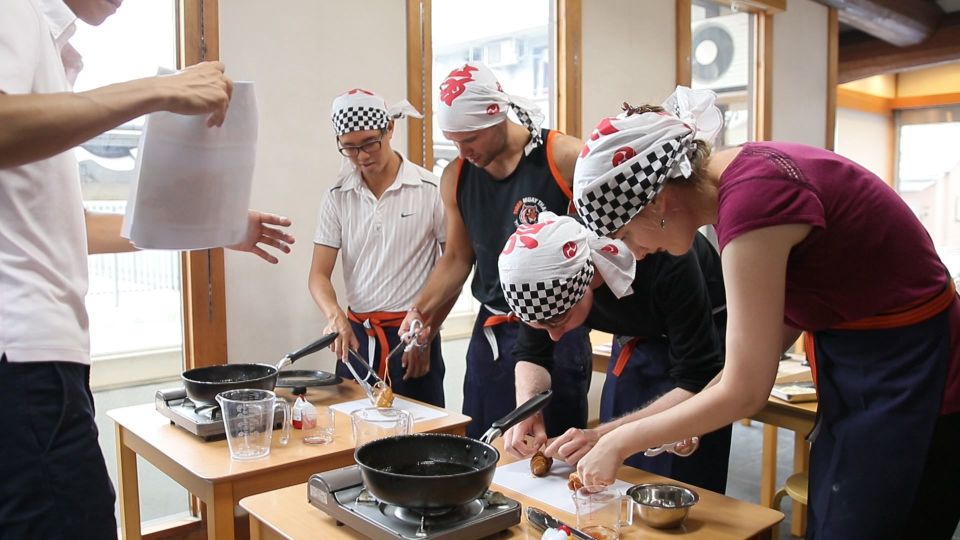
Ramen tastes like it does because the flavor foundation is built early. In this class, you season the chicken as part of the process, then you move into selecting the soup base and oils that will finish the final flavor. That sequence is useful for you at home later: it shows you what to do first if you want the result to taste layered instead of flat.
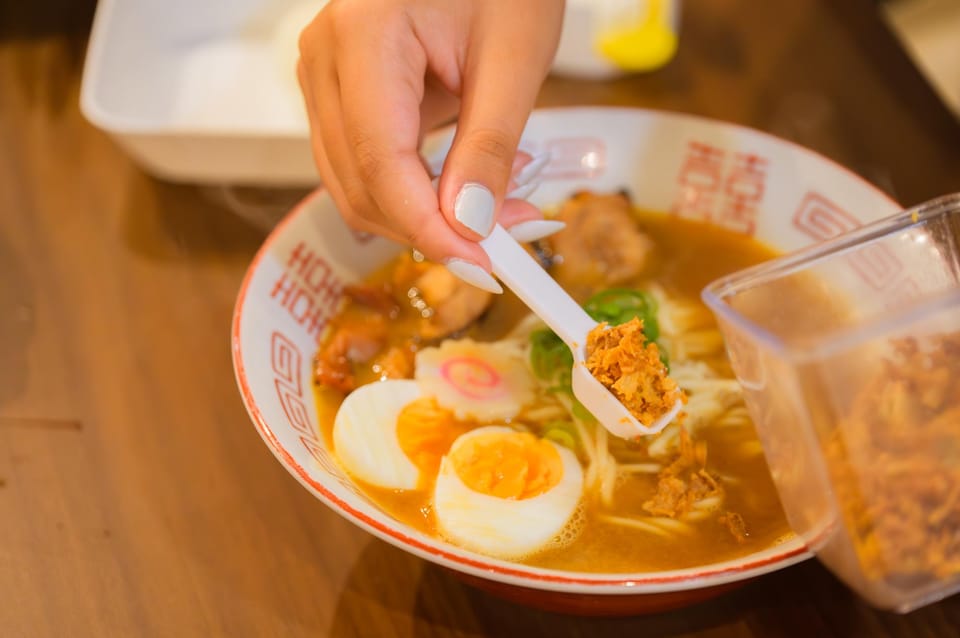
You’ll also choose how your bowl comes together, including toppings and condiments based on your preferences. That customization is a big part of the value here. You’re not just learning ramen once; you’re learning how to adjust ramen to your own palate.
Building Your Own Bowl: Miso, Salt, and Soy in Real Combinations
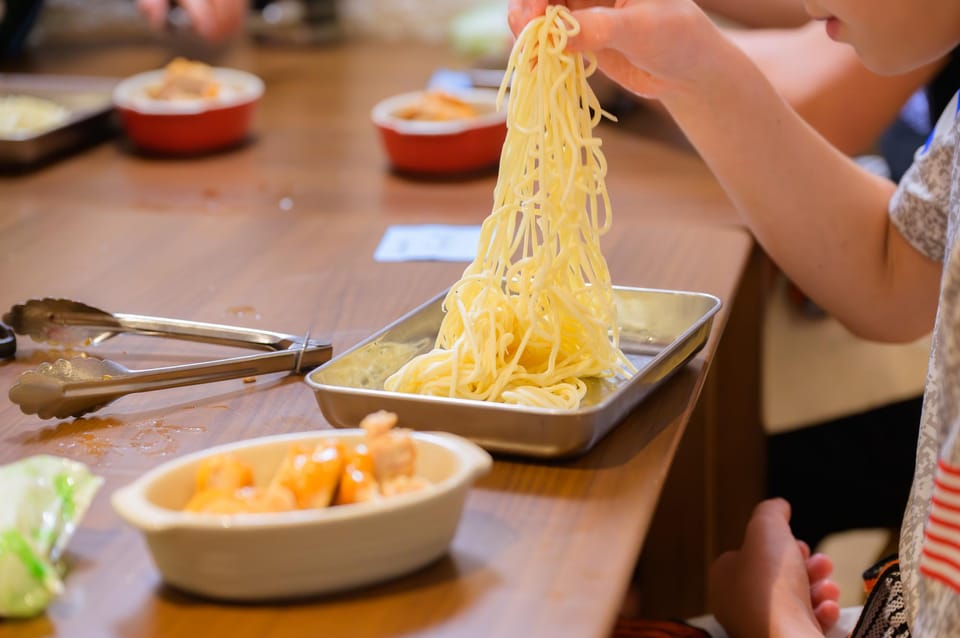
The highlight that keeps showing up is the sauce time. You taste and mix three featured ramen sauces: Miso, Salt, and Soy. Then you make decisions that pair sauces with your chosen soup base and oils.
Why that’s great for you: most ramen at restaurants is locked into a menu. In a class like this, you practice making the logic behind those flavors. You learn how miso reads deeper and rounder, salt tends to feel lighter and sharper, and soy often lands savory and grounded (your exact profile depends on the soup base and the oils you pick). Even if you don’t remember the science later, you’ll remember the difference because you tasted it.
You can also read our reviews of more tours and experiences in Kyoto




Toppings and Condiments: Make It Yours
After the core prep, you assemble your bowl. You’ll build your ramen plate with topping, egg, and condiments according to your taste. This is the part that feels like reward and also like training. You see how small changes—what you add and how much—affect the finished bowl.
What You Eat at the End: You’re Not Just Watching
You get to enjoy the ramen you made while you look back on the experience. That’s a surprisingly important piece for learning. Food-based skills stick better when you can connect your actions to the final result immediately.
And the end result seems to land well for most people. With an average rating of 4.9 out of 5 from 532 bookings, the theme is consistent: the noodles and bowl taste genuinely good, not like a class meal you politely swallow. People also highlight the staff’s energy and organization, which helps if you’re nervous about cooking in a group setting.
Recipe by Email and a Souvenir: Turning a Meal Into a Skill
One reason this class feels like value is that it doesn’t end when you leave the room. You get the full recipe sent to you by email, so you can try the ramen again at home. For me, that’s the difference between an activity and a skill you can reuse.
The souvenir also matters because it gives you something physical tied to the class. Options aren’t fully listed here, but you are told you’ll choose from 4 different types of souvenirs. Even better, you’ll wear a ramen apron and headscarf during the session—small, silly, fun details that make the whole thing feel like a real ramen day, not just a meal.
Is $127 Worth It?
At $127 per person for 90 minutes, the price isn’t cheap. But you’re paying for three things that add up:
- Instruction from an English/Japanese instructor
- All the hands-on training and staged ingredients for noodle making and bowl building
- A take-home recipe by email plus a souvenir
If you compare it to the cost of two meals out, it starts to make sense. This is more like a guided food lesson plus dinner, not only dinner.
Location Near Demachiyanagi: Easy Walk, Basement Entrance Challenge
The meeting point is a five-minute walk from Demachiyanagi Station on the Keihan line. You’re going to be on the basement floor, so get ready for stairs right away.
Here’s the practical tip that can save time: one participant warned that the entrance might not match what Google Maps suggests. If you’re coming from the street side, look for the set of stairs that’s behind the bus stop and follow directions to the staircase to the right of the supermarket.
Timing Tip for Your Day
Because it’s only 90 minutes, this works well as a side activity from other Kyoto sights. If your day is already packed with walking, this is one of those plans that resets your energy—you sit, work with your hands, eat, and you’re done before you feel exhausted.
English Instruction and Dietary Options: Plan Ahead, Don’t Stress
The instructors are listed as English and Japanese, and the class is set up to be beginner-friendly. Multiple participants describe the instructions as clear and well organized, and many mention the staff’s friendliness and help with photos and videos during the process.
Dietary needs are handled, but with a key caveat: you need to reach out to the local supplier after booking if you want a dietary option. Past participants gave examples like pescatarian support (tofu and fish broth were offered) and accommodation for diets including vegan. So you should plan early, but you’re not stuck assuming the class only works for one way of eating.
Who Should Book This Class (and Who Might Think Twice)
This is ideal if you want:
- a hands-on Kyoto food experience that ends with you eating what you made
- a skill you can repeat at home using the email recipe
- a guided ramen lesson that explains choices like sauces, soup base, and oils
It may not be perfect if:
- you want a strictly quiet, observational experience (this is interactive and hands-on)
- you’re sensitive to being recorded (you may be filmed or photographed as part of media production)
Practical Tips Before You Go

A few small things will help you enjoy the class more:
- Wear comfortable clothes for kneading and working with dough.
- Expect to be in the kitchen area for most of the 90 minutes, not just at a station watching.
- If you have dietary needs, message the supplier after booking rather than trying to improvise on the day.
- Bring your camera mindset. Staff has been helpful with photos and videos in the past, and you’ll want a few shots of your noodle-making moment and your finished bowl.
Also note the media notice: during the visit, you may be filmed or photographed for professional use worldwide. If that’s a concern, you can decide ahead of time how you want to handle it.
Should You Book This Kyoto Ramen Cooking Class?
I’d book it if you want a high-value Kyoto experience that turns into real at-home cooking. The standout combination is making noodles from flour, mixing Miso, Salt, and Soy, and leaving with an email recipe plus a souvenir. The class runs well for different ages and skill levels, and the consistent rating suggests the taste quality is strong, not just the “fun activity” part.
Skip it if you prefer ramen experiences that don’t involve hands-on cooking or if being filmed makes you uncomfortable. And do plan for the basement location and the entrance finding issue.
If you fit the first group—hands-on ramen fans and curious beginners—this is one of the most practical ways to learn the logic behind Kyoto ramen in a short time.
FAQ
How long is the ramen cooking class?
It lasts 90 minutes.
What does the class cost?
The price is $127 per person.
What do I learn how to make?
You’ll learn how to make ramen noodles from flour and how to build your ramen bowl, including chicken seasoning, choosing soup base and oils, and selecting toppings and condiments.
Which sauces are part of the experience?
The featured sauces you taste and mix are Miso, Salt, and Soy.
Do I get a recipe for cooking at home?
Yes. You’ll receive the full recipe via email.
Is drinks included in the price?
No. Drinks are not included.
Can the class accommodate dietary preferences?
You can request a dietary option by contacting the local supplier after booking. Some dietary needs have been accommodated in past classes.
Where is the meeting point?
It’s a five-minute walk from Demachiyanagi Station (Keihan line). The location is on the basement floor; you take the staircase to the right of the supermarket and go down.
Will I be photographed or filmed?
The activity includes a media shooting notice. You may be filmed or photographed for professional media use.