REVIEW · KYOTO
Kyoto: Samurai Sword Class by Experts in Traditional Arts
Book on GetYourGuide →Operated by Ginbu Co. · Bookable on GetYourGuide
A katana lesson in Kyoto is oddly moving. You learn Kenbu basics with expert instructors, plus a full costume-and-photo keepsake.
I love the hands-on structure: a short film, then you practice bowing, drawing, and stylized strikes step by step. I also love that the class stays small (up to 10), so you’re not just standing around. One thing to consider: there’s no waiting room, so arrive on time and expect to participate, not observe.
In This Review
- Samurai Kembu Theater: The Kyoto Dojo Where It All Happens
- 5 Key Reasons This Class Feels Worth It
- The 90-Minute Flow: What You Do From Start to Finish
- The short film: a quick mental warm-up
- Suit up and begin with the bow
- Drawing, striking, and replacing in the scabbard
- Respectful fencing etiquette: bow to the opponent
- Certificate time (yes, you’ll get one)
- Costume Changes and Photo Shoot: More Than a Souvenir
- What to wear so you don’t regret it
- Sword Handling Without the Big-Deal Fear Factor
- The instructor experience matters (and you’ll feel it)
- The Bonus Show: 10 Minutes or 30 Minutes of Kenbu Context
- What’s Included (and Why the Price Looks Fair in Kyoto)
- How to judge value beyond the sticker price
- Logistics You’ll Want to Plan for in Advance
- Meeting point location and building access
- No waiting room
- Safety and what you can’t bring
- No observation-only
- Who Should Book This Samurai Sword Class?
- Quick Decision Guide: Book or Skip
- FAQ
- FAQ
- Where is the meeting point for this class?
- How long does the experience last?
- What languages are offered?
- Is hotel pickup and drop-off included?
- What do I get with the price?
- Is there food included?
- Can children participate?
- Can I just watch instead of joining the training?
- What items are not allowed?
- Is free cancellation available?
Samurai Kembu Theater: The Kyoto Dojo Where It All Happens
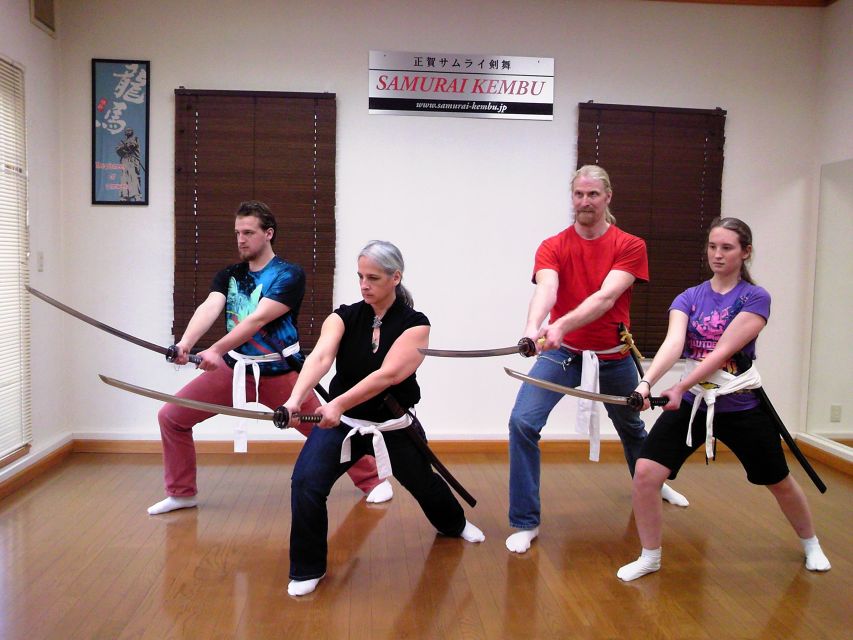
This class takes place at Samurai Kembu Theater, inside the Sanjo-hanamikoji area of Higashiyama-ku (35-7 Sanchome, Higashi-iru, Gozan Building, B1F). It’s the kind of place where the experience starts the moment you walk in: you’re not wandering a museum corridor hoping something interesting happens next.
The setup is also very practical for a first-timer. You’re in an environment built for training and demonstration, so you can focus on the routine: watch the basics, suit up, then go through the movements under guidance. And because the group is limited to 10 participants, the pace feels controlled. You get time to learn the sequence, correct your form, and then repeat it without feeling rushed.
5 Key Reasons This Class Feels Worth It
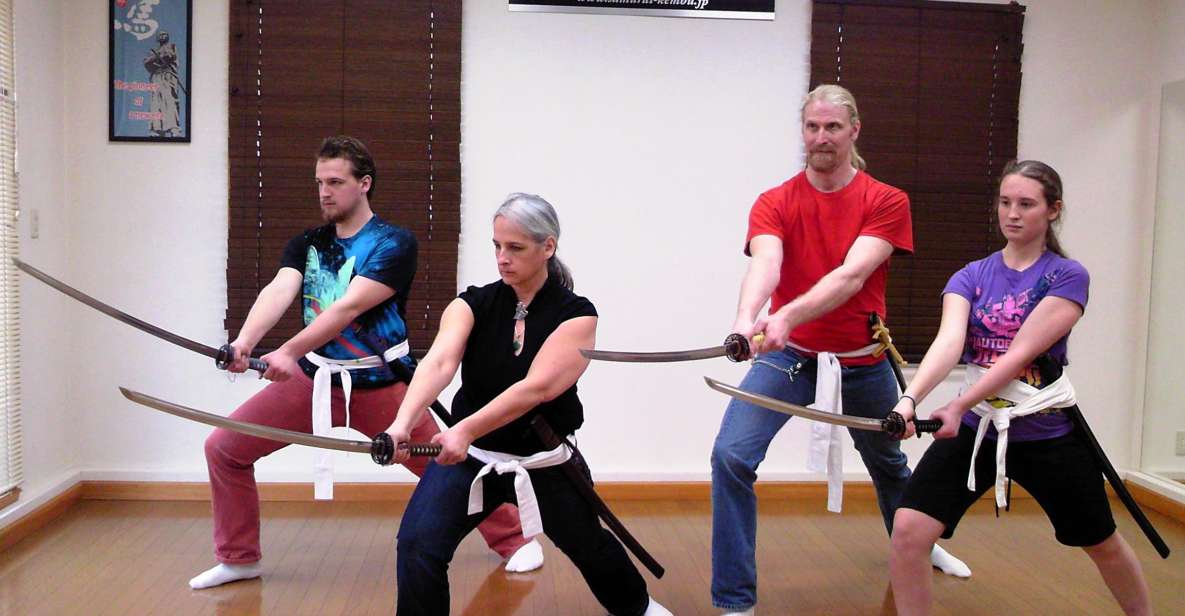
- Hands-on Kenbu training: you’re practicing sword movements, not just watching.
- A real costume moment: you get traditional outfit changes for photos.
- Step-by-step respect: bowing and opponent etiquette are part of the lesson.
- Keepsakes included: photo session, completion certificate, and a tenugui towel.
- Optional sword dance performance: a bonus show adds context after training.
You can also read our reviews of more tours and experiences in Kyoto

The 90-Minute Flow: What You Do From Start to Finish
This experience runs about 90 minutes to 2 hours, depending on the option you choose for the performance afterward. The lesson itself has a clear rhythm, and you’ll feel that even if it’s your first time with a sword or Japanese martial arts terms.
You’ll start inside the dojo at your booked time. You’re also told upfront that there’s no room for people who didn’t book (no waiting room), which matters in Kyoto because you don’t want to be sprinting across neighborhoods just to be told to come back later.
The short film: a quick mental warm-up
Before you touch anything, you watch a 4-minute film covering the basics. It’s meant to give you a simple map: what the movements are trying to express, what to pay attention to, and how the lesson is going to run. I like this approach because it stops the class from becoming pure guesswork. You’re not just handed a sword and told to copy.
Suit up and begin with the bow
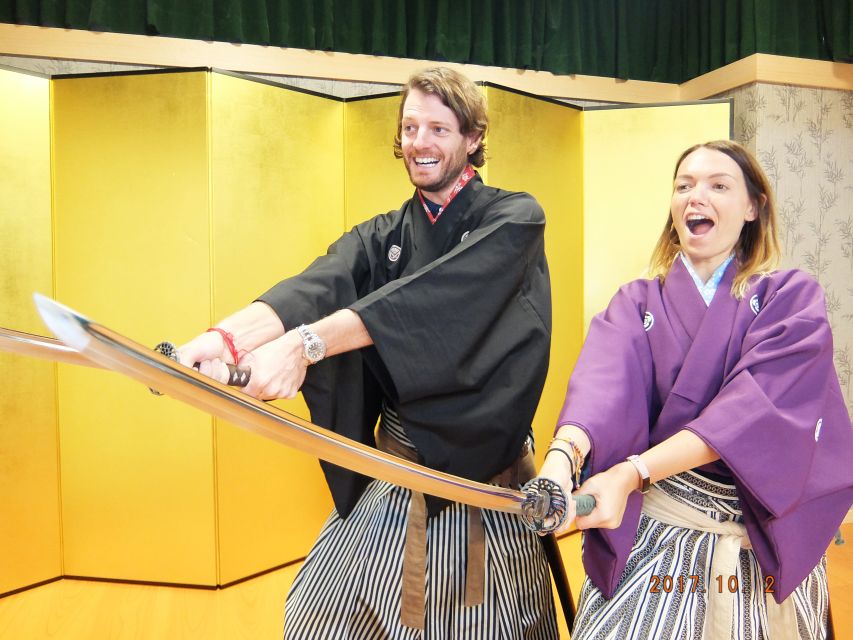
Then you suit up and take hold of your training sword. The class emphasizes bowing—first to your instructor—before the physical work starts. That might sound ceremonial, but in practice it sets the tone: control first, speed later.
One small but important detail here: you’re expected to follow safety and training instructions, and the class is not observation-only. You’re there to move.
Drawing, striking, and replacing in the scabbard
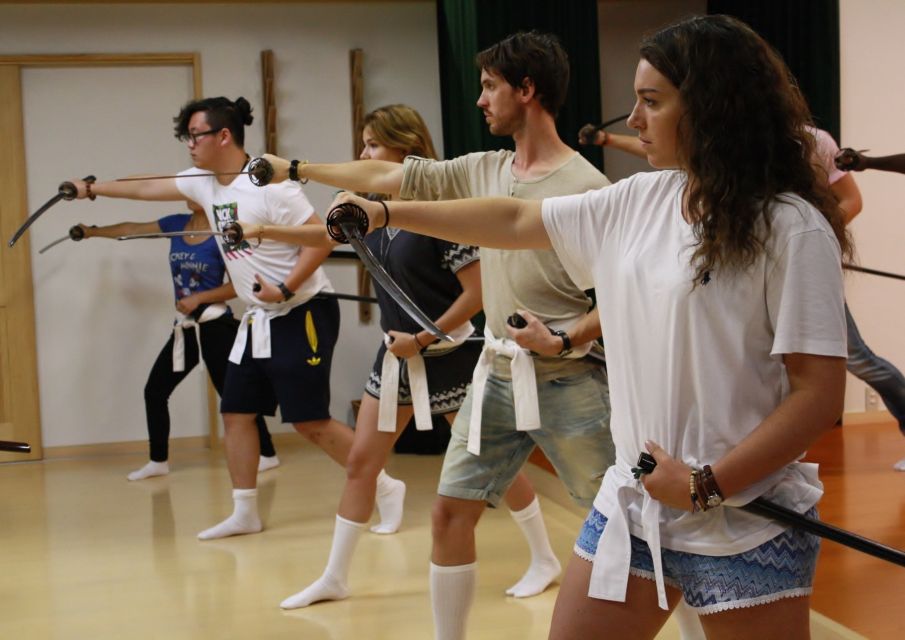
Next comes the core sequence. You practice:
- how to draw the sword
- how to return it to the protective scabbard
- how to strike using stylized movements (not chaotic flailing)
This is where Kenbu’s flavor shows up. The goal isn’t to injure anyone. It’s to learn a disciplined choreography—body alignment, timing, and form—while handling the sword safely.

Respectful fencing etiquette: bow to the opponent
After the main movement practice, you learn how to show respect to an opponent with the sword. In other words: it’s not only technique; it’s behavior. That matters because martial arts in Japan often treat movement and respect as one package.
Certificate time (yes, you’ll get one)
At the end, after a respectful bow to the instructor, you receive your completion certificate. It’s simple, but it gives the experience a “you did it” finish line.
Costume Changes and Photo Shoot: More Than a Souvenir
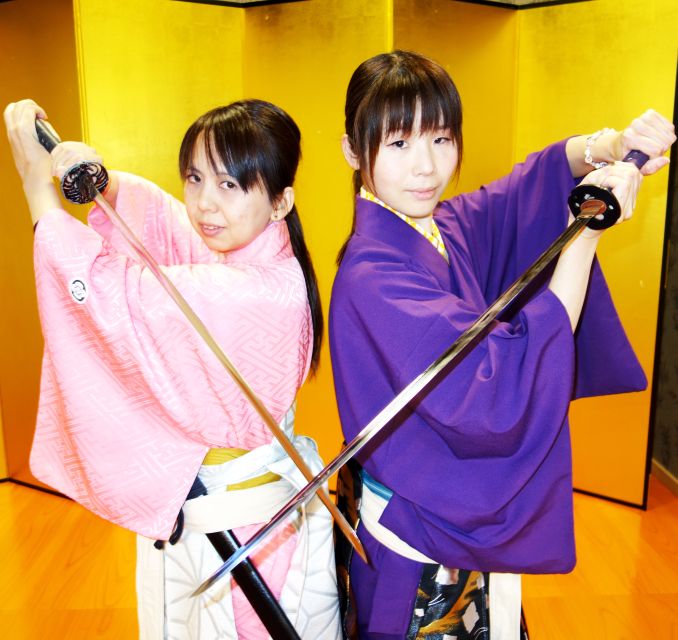
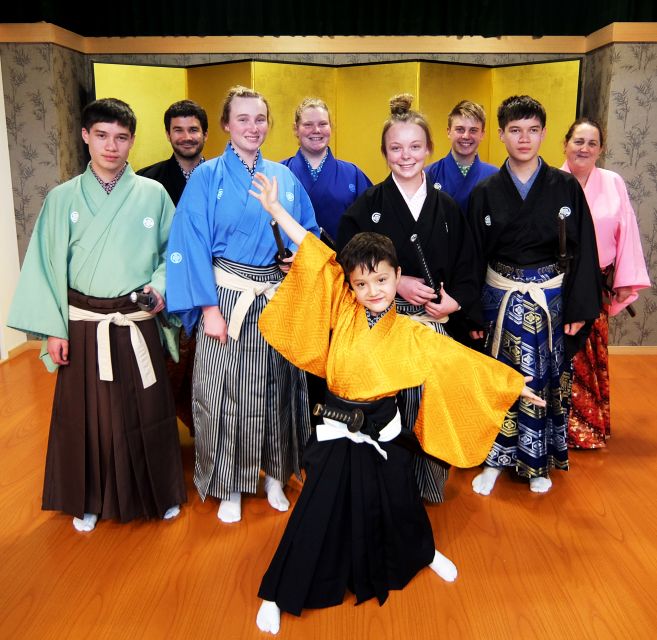
This is one of those classes where the costume isn’t just for show. The instructors help you into traditional samurai-style attire, and you get a short photo session in your costume.
What you can expect:
- you choose from available outfit options
- you wear the costume while practicing the key movements
- then you do a photo shoot so you can actually document the look and the pose
The class includes a photo session and gives you a souvenir item: a tenugui towel. Some people also mention taking home small costume pieces like a scarf or socks, which suggests the presentation is designed to feel rewarding beyond the certificate—even if the exact items may vary by session.
One practical drawback: costume changes take time and clothing matters. The instruction says visiting in a single hoodie or tights isn’t suitable for costume changes, so plan to wear something that can be adjusted. Also, don’t bring large luggage or bags—there’s no setup for storing bulky items.
What to wear so you don’t regret it
I’d treat this like a light workout plus a dress-up. Wear clothes that let you move: think flexible pants and a top you can adjust easily. If you show up dressed like you’re going to a temple visit, you might feel awkward when you need to change quickly and move with the sword.
Also, keep your hands and feet comfortable. You’re doing physical motions and you don’t want to spend the class thinking about clothing.
Sword Handling Without the Big-Deal Fear Factor
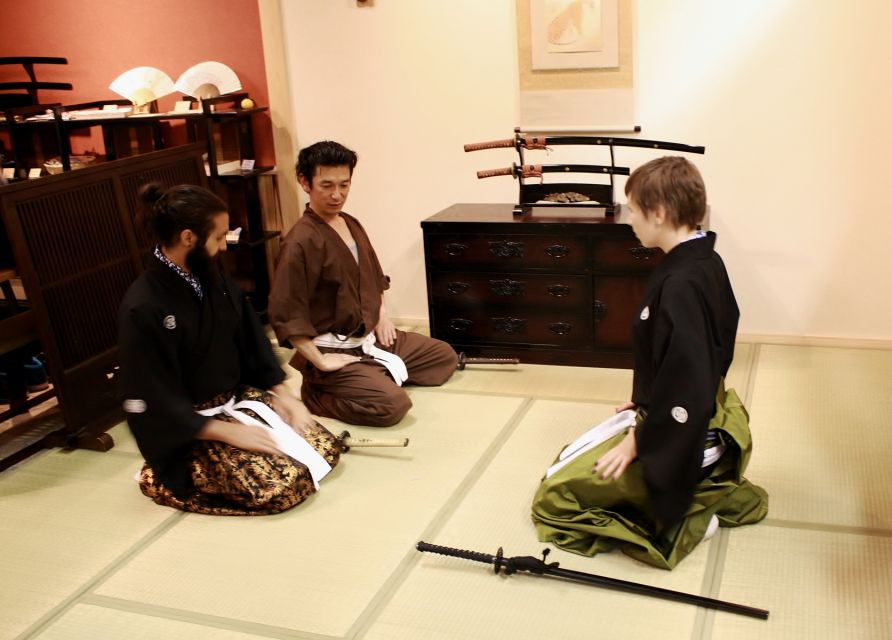
If you’re nervous about sword training, you’ll probably relax once you see the structure. This is not about teaching weapon combat. It’s about Kenbu as an art form and a choreographed discipline—stylized movement, controlled timing, and safe practice.
The lesson covers:
- bowing before training
- drawing and returning the sword to the scabbard
- striking movements using stylized technique
- respectful sword etiquette at the end
That sequence is smart for beginners. You start with rituals and posture, then you learn the physical mechanics, then you connect it to respectful “interaction” movements.
The instructor experience matters (and you’ll feel it)
From the instructor names showing up in prior sessions—people have mentioned Hoga sensei, Kazu sensei, Kazu/Kaz, Rui, and Hisyo—it seems like the teaching style is consistent: clear instruction plus personality. I’d expect a guide who explains what you’re doing and why, not just how to copy.
The class also includes an English-speaking instructor (and Japanese language support). That combination is a big deal if you want the meaning behind the movements, not only the steps.
The Bonus Show: 10 Minutes or 30 Minutes of Kenbu Context
At the beginning or end (depending on the option you choose), you can watch a performance with commentary from a sword dance instructor.
You get to choose between:
- a 10-minute performance option, or
- a 30-minute performance option
Why this matters: training is easier when you see the technique as performance first or last. The show gives you a clearer sense of what the class is aiming for—how movements look when done with full artistry, control, and timing.
If you’re deciding between the 10- and 30-minute options, my suggestion is simple:
- Pick the 10-minute option if your day is packed and you mainly want the hands-on portion.
- Pick the 30-minute option if you want more explanation and a longer taste of the tradition.
What’s Included (and Why the Price Looks Fair in Kyoto)
The price is listed at $64 per person, with a duration of about 90 minutes to 2 hours. For Kyoto, this is a pretty reasonable package because it includes more than a lesson.
Included:
- English-speaking instructor
- photo shoot
- tenugui towel
- completion certificate
Not included:
- food and drinks
- hotel pickup/drop-off
Also included in the experience flow are short films and a performance option, which means you’re getting both practice time and presentation time. You’re paying for instruction, safety guidance, outfit handling, and a structured cultural performance—not just a quick photo moment.
How to judge value beyond the sticker price
In practice, the best value part is that this class checks multiple boxes at once:
- you learn basic movement with a sword
- you handle the full routine (bowing, drawing, strikes, returning)
- you get a documented costume look
- you leave with a certificate and a small towel keepsake
If you’re someone who wants one or two memorable “you did it” experiences while in Kyoto, this is one of the more efficient ways to get that without needing prior martial arts experience.
Logistics You’ll Want to Plan for in Advance
No one wants surprise rules. Here are the practical points that affect your comfort on the day.
Meeting point location and building access
You’re meeting at Samurai Kembu Theater, B1F of the Gozan Building. That’s easy to miss if you’re walking fast, so give yourself a little extra time to find the right entrance.
No waiting room
The class says there is no waiting room. If you’re late, you may not be able to hang out nearby until your slot starts. Build in a buffer.
Safety and what you can’t bring
Not allowed:
- weapons or sharp objects
- pets
- smoking
- luggage or large bags
- food
- alcohol or drugs
- firework or explosive substances
So keep it simple: show up light, wear appropriate clothes, and let the instructors handle the gear.
No observation-only
This matters if you were thinking of sending a partner to watch. You should plan to participate, not just spectate.
Who Should Book This Samurai Sword Class?
This is a strong fit if you:
- want a hands-on cultural activity (not just sightseeing)
- like structured instruction and physical practice
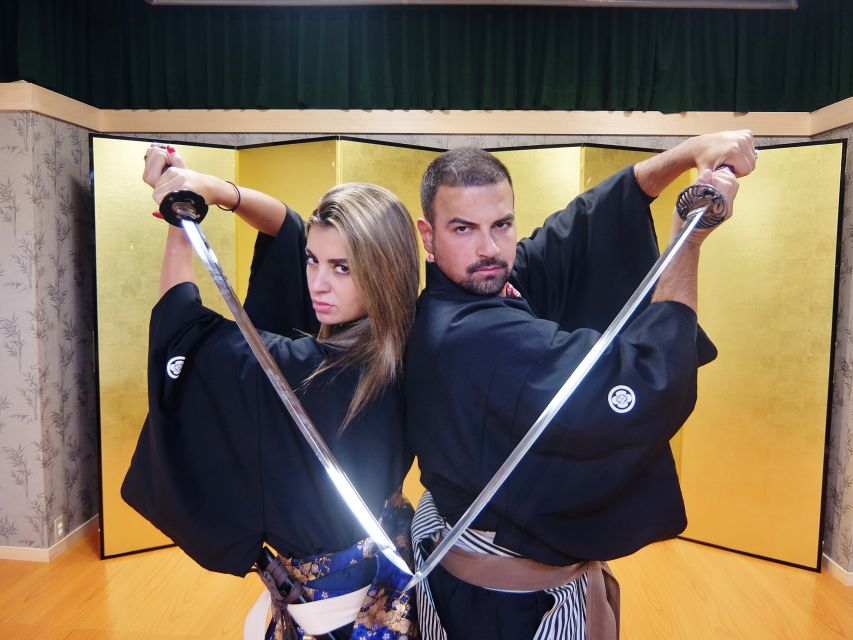
- want photos in traditional samurai attire that actually correspond to what you learned
- travel as a couple, friends, or family and want a shared, memorable activity
It may also work well for teens and adults. Some reviews describe families participating with kids around school age, but keep in mind the class notes it’s conducted with adult participants. If your child is between 5 and 10, it’s desirable they attend martial arts or have learning something, because the lesson is geared with adult pacing.
Not suitable:
- children under 4
Quick Decision Guide: Book or Skip
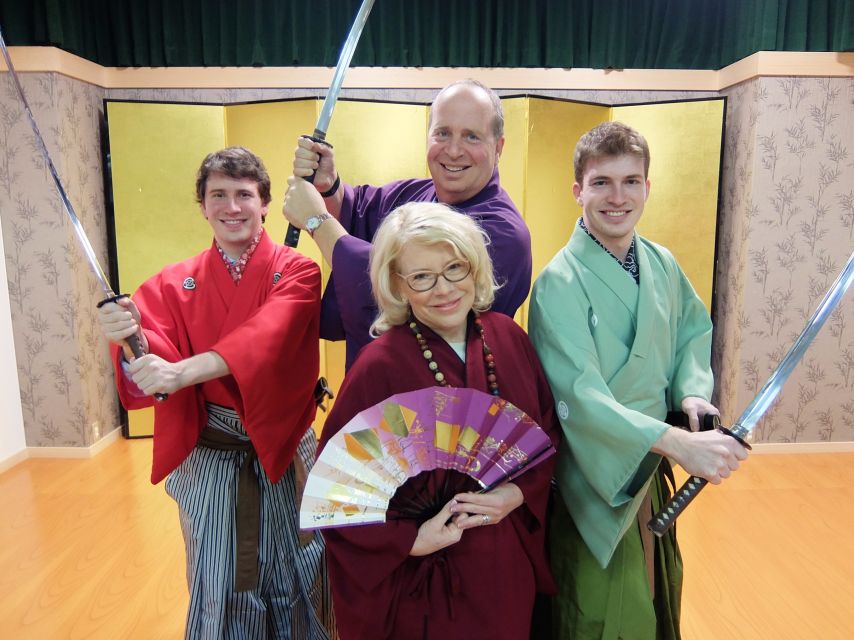
Book this class if you want a Kyoto experience that combines Kenbu practice, respectful ritual, and a legit costume photo moment in one neat package. At $64, the inclusion of the instructor, photo shoot, tenugui towel, and certificate makes it feel like a complete activity rather than a quick add-on.
Skip it if:
- you really don’t want to move around or participate physically
- you’re arriving with lots of luggage
- your clothing isn’t suited for quick costume changes
- you prefer pure observation experiences
FAQ
FAQ
Where is the meeting point for this class?
You meet at Samurai Kembu Theater (Kyoto dojo), 35-7 Sanchome (Higashi-iru, Sanjo-hanamikoji), Higashiyama-ku, B1F Gozan Building, Kyoto 605-0005.
How long does the experience last?
The duration is listed as 90 minutes to 2 hours.
What languages are offered?
The instructor supports English and Japanese.
Is hotel pickup and drop-off included?
No. Hotel pickup and drop-off are not included.
What do I get with the price?
You get an English-speaking instructor, a photo shoot, a tenugui towel, and a completion certificate.
Is there food included?
No. Food and drinks are not included.
Can children participate?
Children under 4 years are not suitable. For ages 5 to 10, it’s desirable that the child participates in martial arts or has learning something, since lessons are conducted with adult participants.
Can I just watch instead of joining the training?
No. The class is not observation only.
What items are not allowed?
Weapons or sharp objects, pets, smoking, luggage or large bags, food, alcohol and drugs, and explosive substances are not allowed.
Is free cancellation available?
Yes. You can cancel up to 24 hours in advance for a full refund.
If you want, tell me your travel dates and group makeup (solo, couple, family + ages), and I’ll suggest whether you should choose the 10-minute or 30-minute performance option.