REVIEW · KYOTO
Kyoto Gion Walking Tour for First Time Visitors
Book on Viator →Operated by Localized Walking & Food Tours · Bookable on Viator
Kyoto’s Gion can feel like a movie set with no map, but this small-group walk helps everything click fast, with a guide like Jay who uses clear English and visual aids to explain what you’re seeing. I also like that the route is built around major landmarks (Yasaka Shrine, Kennin-ji, and the Yasaka Pagoda area), so you’re not just wandering—you’re getting context while you stroll. The one thing to consider: it’s about 2 hours, so you won’t linger long enough to go deep into every site, and snacks aren’t included.
If you’re on your first day in Kyoto, the value is in getting your bearings. You’ll follow a guide through traditional streets and temple-and-shrine stops with free admission, while the group stays small (up to 15). The tour starts near Kyoto Tourist Lounge Gion and finishes at Yasaka Shrine, which is handy if you want to keep exploring afterward.
In This Review
- Key points I’d plan around
- Why this Gion walk works for first-timers
- Price and what you’re really paying for
- Meeting point near Kyoto Tourist Lounge Gion
- A 2-hour plan that doesn’t waste your time
- Stop 1: Gion streets near Yasaka Shrine
- Stop 2: Kennin-ji and the Zen/tea connection
- Stop 3: Yasui-Konpiragu Shrine and the enkiri/enmusubi stone
- Stop 4: Hōkan-ji Temple (Yasaka Pagoda) above the streets
- Stop 5: Ninenzaka’s historic slope and preserved street feel
- Stop 6: Yasaka Shrine with vermilion gates and lanterns
- What makes the guide experience different (Jay and the map obsession factor)
- Who should book this Kyoto Gion walking tour
- Weather, comfort, and simple prep
- Should you book this Gion walking tour?
- FAQ
- How long is the Kyoto Gion walking tour?
- What’s the group size limit?
- Is admission included for the temples and shrines you visit?
- Do I need snacks during the tour?
- Where does the tour start and end?
- What type of ticket do I get?
- Is there an in-person guide?
- What happens if the weather is bad?
Key points I’d plan around
- Small group (max 15) keeps the experience calm, so you can ask questions and actually hear the explanations.
- Free-entry stops mean the $20 goes mostly to guiding and navigation, not ticket costs.
- Mobile ticket makes check-in easier (no paper hunt).
- Gion + Higashiyama junction gives you a smart first look at the historic streets and the temple/shrine feel of the area.
- Kennin-ji + Zen/tea backstory adds meaning to the calm spaces you walk through.
- Finish at Yasaka Shrine so you can transition naturally to more Gion wandering.
Why this Gion walk works for first-timers
Gion is Kyoto’s geisha district in the classic sense: machiya townhouses, traditional teahouse streets, and those cozy cobblestone lanes that look like they were built for slow looking. The trouble for most first-time visitors is simple. You can walk Gion for hours and still feel like you’re just moving between pretty streets.
This tour fixes that with two practical ingredients: a guide who can point out what matters and a plan that links the sites together in a logical order. You start in Gion, then move toward nearby Zen and Shinto landmarks, and finish around Yasaka Shrine. That flow matters because the area makes more sense when you understand how these places relate to each other geographically and historically.
The group size helps too. With up to 15 people, you’re not stuck behind dozens of phones held up at chest level. You can hear the guide, and you’re more likely to feel like you’re sightseeing with purpose rather than survival.
And at $20 per person, it’s easy to justify. You’re paying for the guide’s time, the context, and the route—while most of what you visit is free to enter. That balance is what makes it feel like a good value, especially if you’re only in Kyoto for a short window.
You can also read our reviews of more walking tours in Kyoto

Price and what you’re really paying for
The headline is $20 per person for roughly two hours. The deeper reason it feels fair is this: the tour includes the in-person guide and all fees and taxes, while the admission at the stops is free.
So you’re not buying access. You’re buying interpretation. In a place like Gion, that’s the difference between seeing wooden facades and actually understanding why they’re preserved, why shrines and temples sit where they do, and what the specific landmarks mean to local culture.
One practical note: snacks aren’t included. That’s not a deal-breaker, but it does affect how you plan. If you’re sensitive to hunger, consider grabbing a bite before you meet or doing a quick stop after you finish near Yasaka Shrine.
Meeting point near Kyoto Tourist Lounge Gion
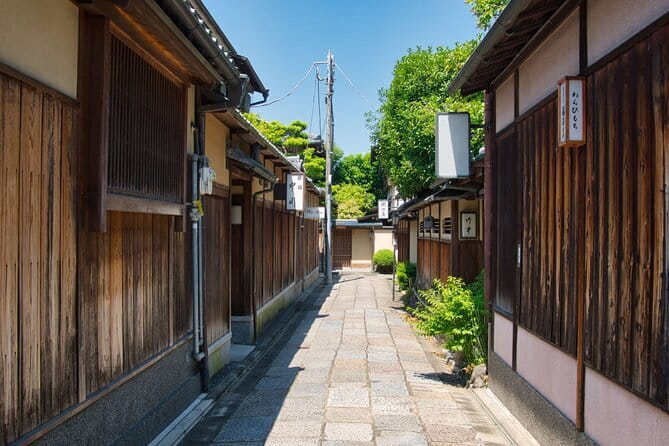
You’ll start at Kyoto Tourist Lounge Gion (557-4 Komatsu Cho, Pare Gion, 101, 四丁目-557-4 小松町, Higashiyama-ku, Kyoto 605-0811). The end point is Yasaka Shrine (625 Gionmachi Kitagawa, Higashiyama Ward, Kyoto 605-0073).
Why I like giving you this detail: walking tours succeed or fail based on the first five minutes. If you know exactly where you’re heading, you can focus on arriving calmly instead of doing last-minute translation gymnastics. Also, since it’s near public transportation, you can usually connect to it without stress once you’re in central Kyoto.
Confirmation comes at booking, and the ticket is handled as a mobile ticket. In other words, bring your phone and make sure you can access the booking info on the day.
A 2-hour plan that doesn’t waste your time
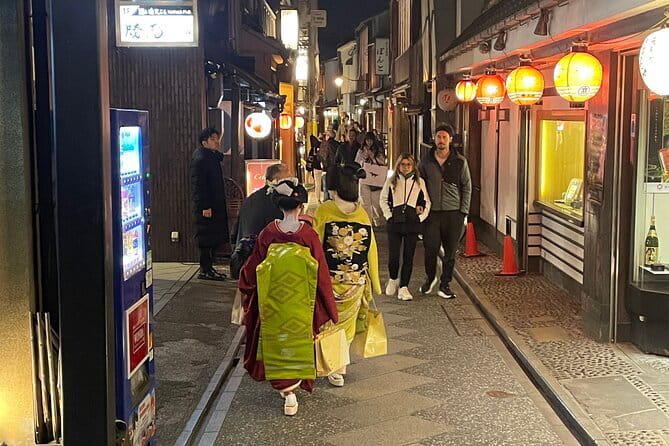
The pacing is straightforward: six stops across Gion and the Higashiyama area, with short on-site windows. That setup is ideal for orientation, not for deep study. You’ll get enough time to see the key features, but the guide’s main job is to help you understand what you’re looking at while you’re moving between places.
If you’re the type who likes to linger for photos, this still works—just know you’ll probably return later to spend more time at your favorite stop. The tour feels like the opening chapter. After that, you can choose your own storyline.
Stop 1: Gion streets near Yasaka Shrine

You begin in Gion, the famous geisha district with preserved wooden machiya townhouses, traditional teahouses, and cobblestone streets. This first stop sets the tone fast. It’s where you learn how the neighborhood is organized—streets, side lanes, and the way landmarks cluster around major shrine-temple gravity.
This matters for first-timers because you can’t appreciate the later stops unless you know the basic layout of the area. Gion also gives you visual anchors: you see the kind of architecture and street character Kyoto is known for, before you head toward the religious sites.
One thing to keep in mind: Gion is photogenic, so it can be tempting to slow down constantly. The guide’s context helps you decide what’s worth extra attention and what to treat as background texture.


Stop 2: Kennin-ji and the Zen/tea connection
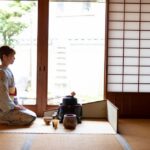
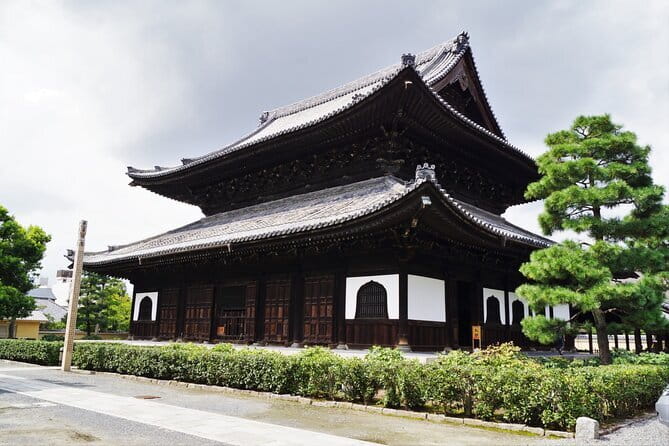
Next up is Kennin-ji, one of Kyoto’s oldest Zen Buddhist temples, founded in 1202 by the monk Eisai. The tour highlights that Eisai is closely tied to Zen Buddhism and tea culture in Japan, which adds a layer beyond the usual building-and-garden appreciation.
Why I think this stop is valuable for your first visit: it changes your pace. Gion can feel like a lively “Kyoto look.” Kennin-ji feels like the calm version of the same culture. You get a breather, and you also get a historical thread—how ideas and practices traveled and took root.
A practical consideration: because the visit window is short, you’ll want to focus on the main impression rather than expecting to process every detail. The guide’s explanations help you choose what to notice: the sense of age, the Zen atmosphere, and why this temple is still relevant centuries later.
Stop 3: Yasui-Konpiragu Shrine and the enkiri/enmusubi stone
Then the route shifts to Shinto at Yasui-Konpiragu Shrine, described as a small but significant shrine tucked near Gion’s busier streets. It’s especially known for its unique enkiri/enmusubi stone, associated with cutting and connection.
Even if you don’t know the terminology ahead of time, the guide’s job here is to translate the symbolism into something you can actually carry with you. In Kyoto, shrines and the small details around them often represent wishes and life events. When you understand that, you’ll see people’s actions differently—more intentional than random.
The trade-off is time. Since it’s a brief stop, treat it as a moment to register the shrine’s most distinctive feature and listen carefully to the story behind it.
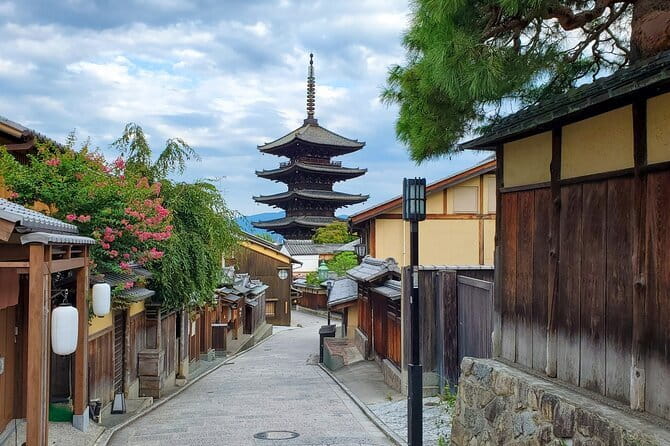
Stop 4: Hōkan-ji Temple (Yasaka Pagoda) above the streets
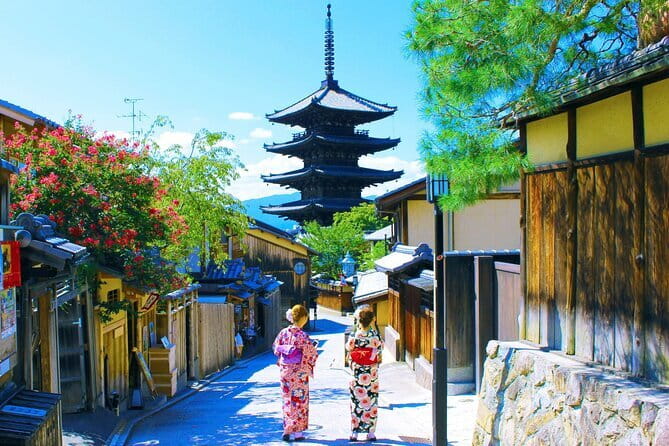
From there you reach Hōkan-ji Temple, also known as the Yasaka Pagoda area. This is one of Kyoto’s iconic sights: a graceful five-story pagoda rising above the surrounding streets in the Higashiyama district.
This is the “wow” stop for many people—not because you’ll stare forever, but because you often see the pagoda from the right street angle. It gives you a visual target, and suddenly you can map the neighborhood in your head.
Practical photo note: pagodas reward the right viewing point. The guide can help you stand where the composition works, so you’re not just taking shots from wherever you happened to stop.
Stop 5: Ninenzaka’s historic slope and preserved street feel
Next is Ninenzaka, a historic slope in the Higashiyama district known for well-preserved traditional architecture and a stone-paved street. This stop is less about one single monument and more about the feeling of walking through old Kyoto.
Sloped streets like this are part of why Kyoto feels different from flatter cities. You get a sense of how streets were built for movement and how neighborhoods evolved. The guide’s talk helps you see the street as more than a photo background.
One drawback for some people: because it’s a public, pedestrian street, you might find sections where people slow down. The group is small and managed, but you still may have to pause occasionally just because that’s how streets work.
Stop 6: Yasaka Shrine with vermilion gates and lanterns
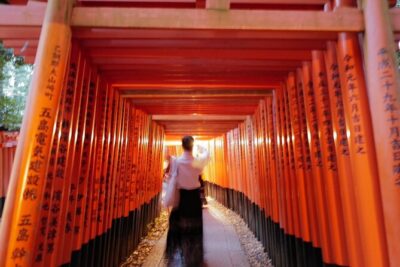
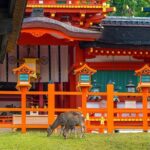
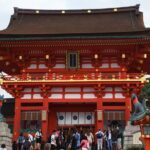
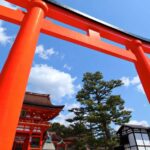
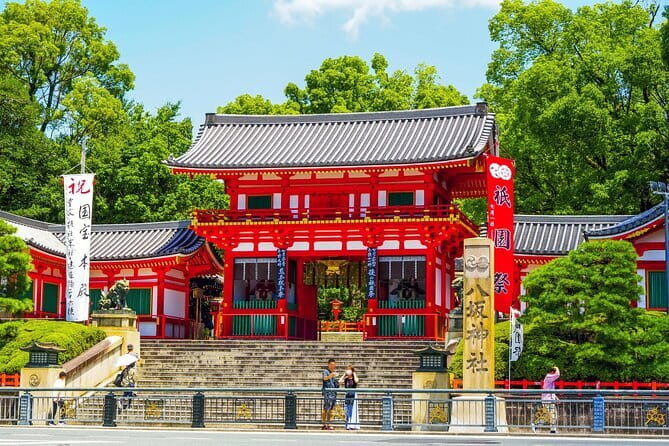
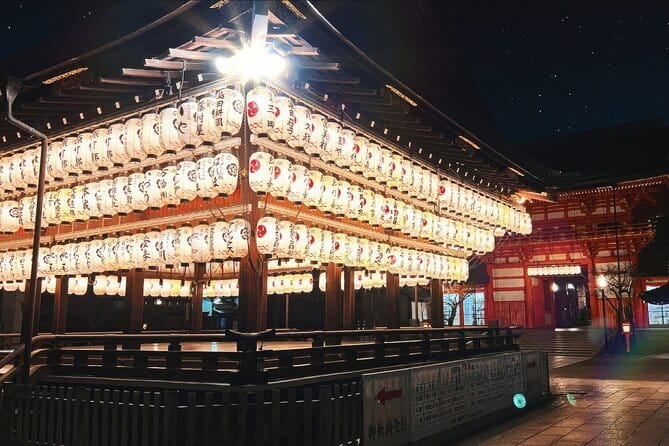
The tour finishes at Yasaka Shrine, also called Gion Shrine. It’s one of Kyoto’s most important Shinto shrines, famous for vermilion gates and lanterns that light up the area.
Finishing here is a smart move. Even if you’re new to Kyoto, Yasaka Shrine is widely recognized, and the atmosphere around it is easy to enjoy right after you’ve heard the surrounding context. You end at a place where you can keep going on your own schedule—dinner, more shrine exploring, or just another round of Gion wandering.
If you want a simple strategy: take the tour as your first pass, then return later for longer looks at the shrine grounds or to linger in the streets that made the strongest impression.
What makes the guide experience different (Jay and the map obsession factor)
A highlight from the guide’s style is how he explains things in English with clarity and uses pictures to support the talk. That matters because Kyoto’s details can be hard to decode on your own—what you’re looking at might not be obvious, and signage isn’t always your best friend.
There’s also a practical charm in the way the guide shares navigation advice. One review described a love of maps, and I get why that stands out. In Gion, your brain needs reference points: where you are, what direction you’re facing, and why certain turns take you to a different “feel” of neighborhood. A guide who thinks about those things saves you energy so you can enjoy the walk.
The small-group size amplifies the guide’s value. With fewer people, you’re more likely to ask a question and get a direct answer rather than a fast recap while everyone moves on.
Who should book this Kyoto Gion walking tour
This is a great fit if:
- It’s your first day in Kyoto and you want quick bearings in the Gion/Higashiyama area
- You prefer a guided plan over trying to figure out routes alone
- You like history and cultural context, but you don’t want a full-day itinerary
- You want to see multiple major sights in a short window, especially ones with free entry
It might not be the best choice if:
- You want lots of quiet time at each stop (this is short and efficient)
- You’re expecting snacks to be part of the package
- You’re sensitive to walking for a couple of hours (you’ll be on your feet most of the time)
Weather, comfort, and simple prep
This tour needs good weather. That’s not unusual in Kyoto, where rain can change cobblestone footing fast and reduce photo options. Wear comfortable shoes you trust on stone streets.
Since snacks aren’t included, plan for that gap. And since it’s a walking tour with a set flow of stops, don’t plan an emergency schedule right after it. Build buffer time, especially if you want to linger near Yasaka Shrine once you finish.
Should you book this Gion walking tour?
Yes—if you’re a first-time visitor who wants Gion to make sense quickly, this is a smart, low-stress way to start. The price is approachable, the admissions at the stops are free, and the guide adds meaning to what you’d otherwise see as pretty but unexplained streets and buildings.
Skip it only if you already know Kyoto’s layout well, or if you prefer to spend long, quiet stretches at one site rather than sampling several landmarks in a guided loop.
If you book, I’d treat the tour as your orientation pass. Then pick one or two places that captured your attention—Kennin-ji for Zen calm, Yasaka Shrine for Shinto drama, or the Yasaka Pagoda area for skyline views—and give those your extra time afterward.
FAQ
How long is the Kyoto Gion walking tour?
It’s about 2 hours long (approx.).
What’s the group size limit?
The tour has a maximum of 15 travelers.
Is admission included for the temples and shrines you visit?
Yes. All admission tickets listed for the stops are free, and the tour includes all fees and taxes.
Do I need snacks during the tour?
Snacks are not included, so it’s a good idea to plan to eat before or after.
Where does the tour start and end?
It starts at Kyoto Tourist Lounge Gion and ends at Yasaka Shrine.
What type of ticket do I get?
You receive a mobile ticket.
Is there an in-person guide?
Yes, the tour includes an in-person guide.
What happens if the weather is bad?
The tour requires good weather. If it’s canceled due to poor weather, you’ll be offered a different date or a full refund.