REVIEW · KYOTO
Kyoto: Local Food Tasting Tour at the Nishiki Market
Book on GetYourGuide →Operated by Japan Wonder Travel · Bookable on GetYourGuide
Kyoto’s kitchen lesson starts at Nishiki. This small-group tour turns one of Japan’s oldest food markets into an easy, guided sampler, with a local host steering you toward real Kyoto flavors like hamo tempura and wagyu steak skewers. I also love how it’s built around short tastings and simple explanations, so you taste first and figure out what’s going on second.
One big thing to plan around: the tour doesn’t accommodate dietary restrictions or allergies, so it’s not a safe choice if you need vegetarian/halal/kosher/gluten-free or allergy-specific handling.
In This Review
- Quick hits before you go
- Nishiki Market: Kyoto’s 400-year food street, guided at human speed
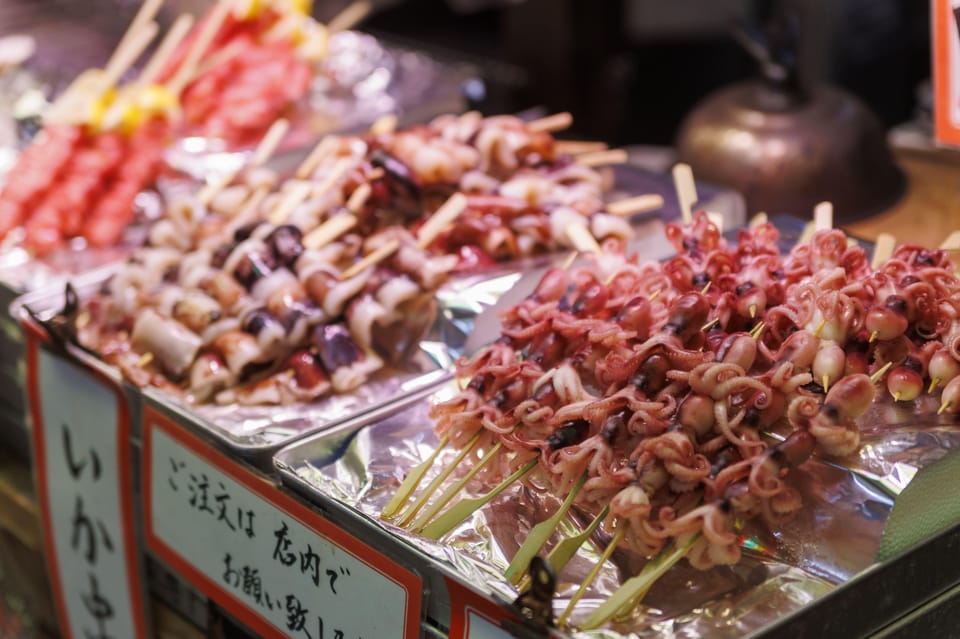
- What you actually eat: yuba, obanzai, hamo tempura, wagyu skewers, and snack extras
- The route after Nishiki: shrine pause, Shinkyogoku arcade, Teramachi street, plus a quick hidden stop
- How the guide changes the whole experience (and why the pacing feels fair)
- Tea ceremony add-on: 2:00 PM kimono dressing and a real 90-minute session
- Price and value: where $78 turns into five tastings and a guided map of Kyoto food
- Who should book this Nishiki food tour, and who should skip it
- Should you book Kyoto’s Nishiki Market local food tasting tour?
- FAQ
- How long is the Nishiki Market food tasting tour?
- How many people are in the group?
- Is the tour in English?
- Where does the tour start?
- How much food is included?
- Is an optional tea ceremony available?
- Do they accommodate dietary restrictions or allergies?
- What should I bring for the tour?
- Is the tour wheelchair accessible?
- Is free cancellation available?
Quick hits before you go
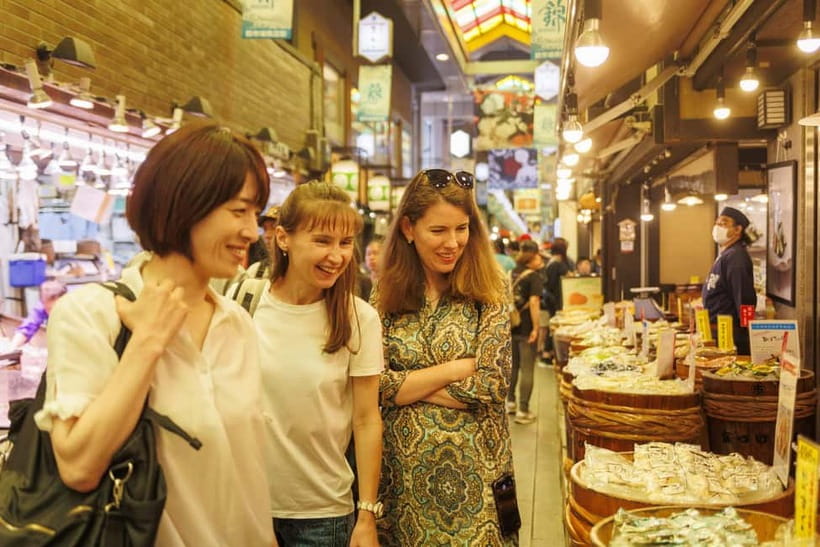
- Nishiki Market, with context: Walk the market’s 400-year-old lanes and learn what you’re actually looking at.
- Five named Kyoto specialties: You’ll sample items such as yuba, obanzai, hamo tempura, and wagyu steak skewers.
- More than food stops: A quick shrine visit, then time in shopping arcades and streets like Shinkyogoku and Teramachi.
- Small group (max 6): Easier questions, easier pacing, less getting swept along.
- Optional tea ceremony at 2:00 PM: If you choose it, expect kimono dressing and a 90-minute session near Nishiki.
Nishiki Market: Kyoto’s 400-year food street, guided at human speed
Nishiki Market is famous for a reason. It’s a long-running food corridor in Kyoto, often called Kyoto’s Kitchen, and it runs like a living timeline. You’ll be walking inside a market that’s been around for about 400 years, with roughly 130 food stalls feeding the daily rhythm of the neighborhood.
Here’s why a guided walk works so well on your first visit. Left on your own, Nishiki can feel like sensory overload—signs, steam, snack smells, tiny menus, and lots of people all moving in different directions. This tour keeps you oriented. You get an English-speaking local guide who helps you decide where to go next and what each stop is really known for, instead of just grabbing whatever looks hottest in the moment.
The tour also leans into the idea that food in Kyoto is tied to place and season, not just taste. As you move through the market, you’ll hear stories about the items and the everyday culture around them—things that are hard to pick up if you only read a label and hope for the best.
And because the group is capped at 6 participants, you’re not constantly fighting for space to ask a question or to pause when something catches your eye. That matters in Nishiki.
You can also read our reviews of more food & drink experiences in Kyoto
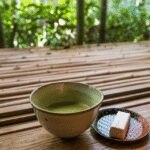

What you actually eat: yuba, obanzai, hamo tempura, wagyu skewers, and snack extras
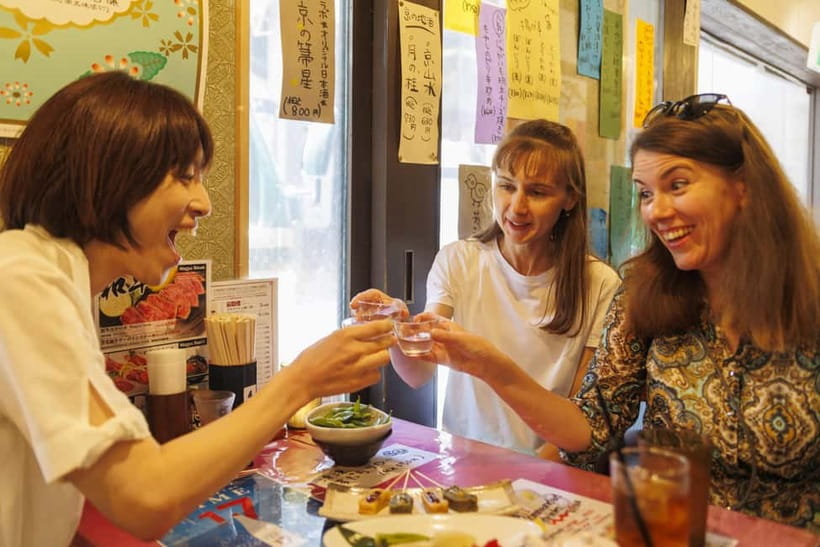
This is not a sit-down meal where you choose one entree and wait. It’s a tasting-focused plan. You’ll spend around 1.5 hours at Nishiki with food tastings at several carefully selected shops, and you’ll get 5 special foods plus extra small bites.
The named specialties are a strong snapshot of Kyoto’s culinary identity:
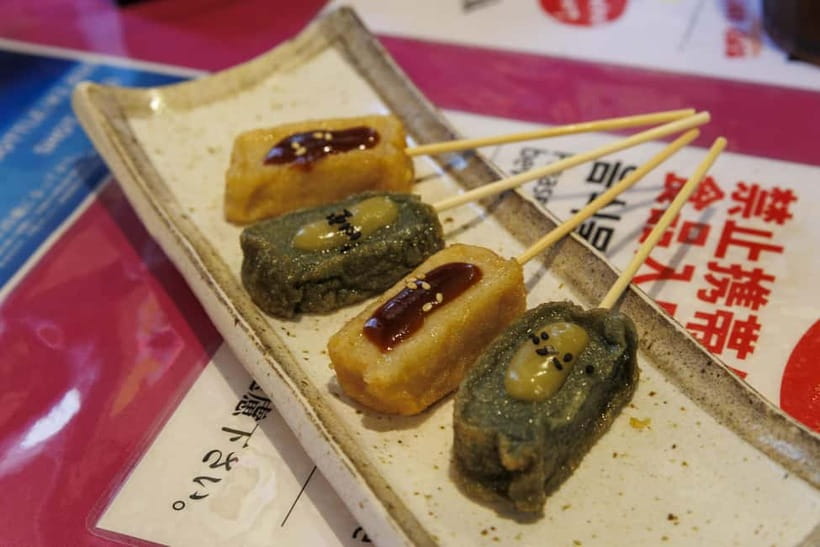
- Yuba: Often associated with Kyoto, it’s a tofu skin specialty that feels both delicate and deeply local.
- Obanzai: Kyoto’s home-style dishes. This gives you a taste of everyday cooking rather than only famous tourist plates.
- Hamo tempura: A seasonal specialty fish, known for being treated with care. If you like trying something specific to the season, this is the kind of stop you want.
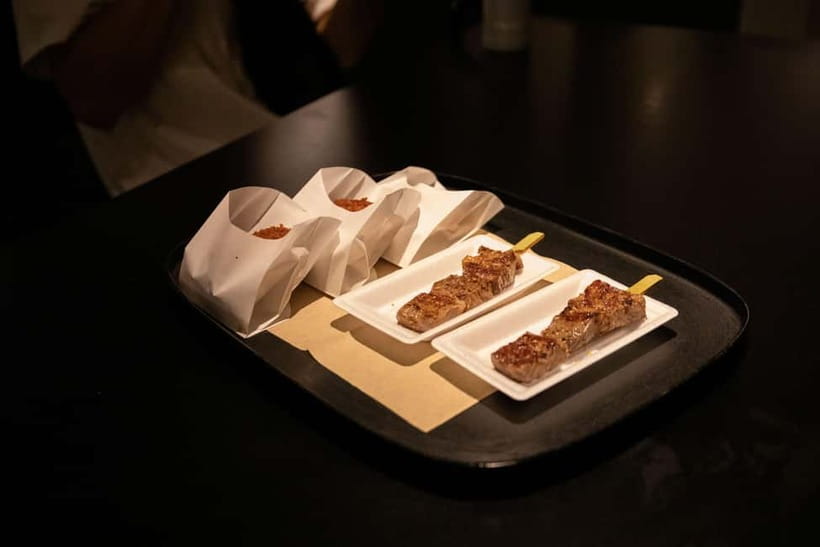
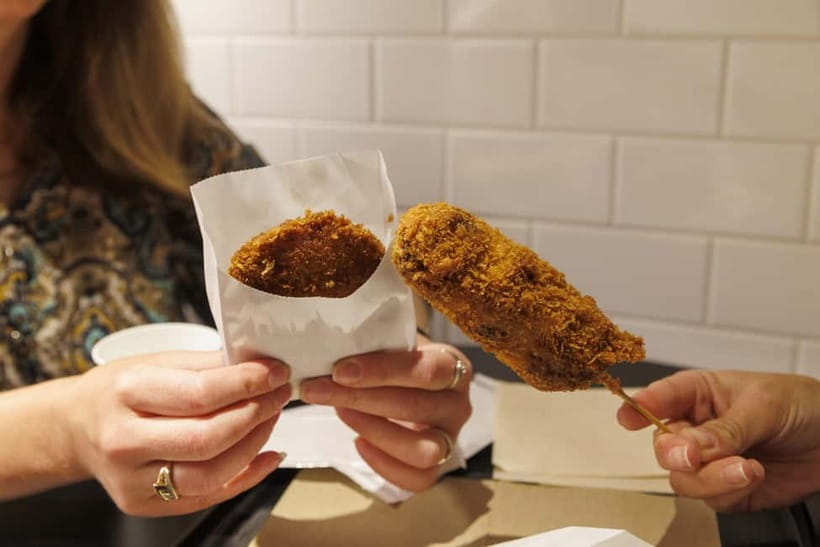
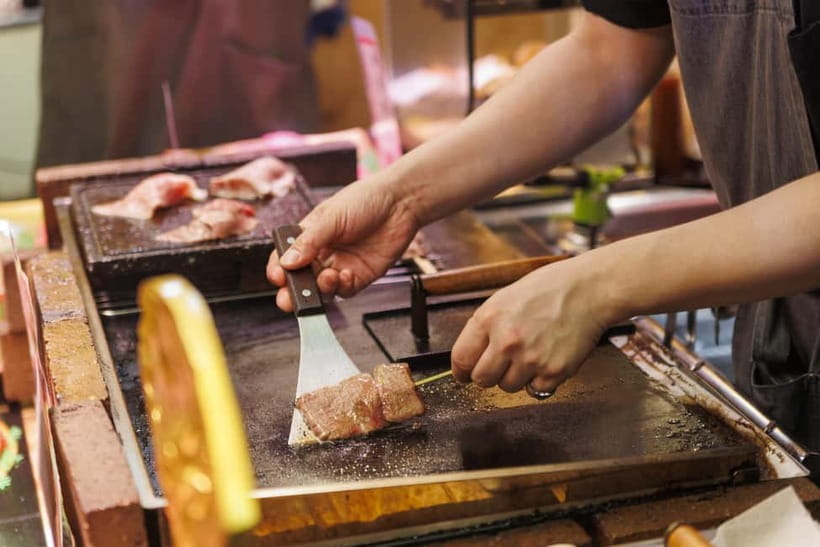
- Wagyu steak skewers: You’ll taste Japan’s beef culture in a street-friendly format—no formal plating required.
Beyond the five named items, you also get tastings tied to flavors and pantry culture: Kyoto seasonings, crackers, and Japanese flavored honey are listed as part of the sampling. That combination is smart. It helps you remember more than one texture and one flavor lane, instead of leaving Nishiki with only one “wow” memory.
I like that the tour doesn’t force a single taste profile. You get plant-based Kyoto comfort (yuba and obanzai), a seasonal seafood moment (hamo), and then a richer meat bite (wagyu). That mix makes it easier to understand how Kyoto cooking can shift depending on ingredient, season, and cooking style.
The route after Nishiki: shrine pause, Shinkyogoku arcade, Teramachi street, plus a quick hidden stop
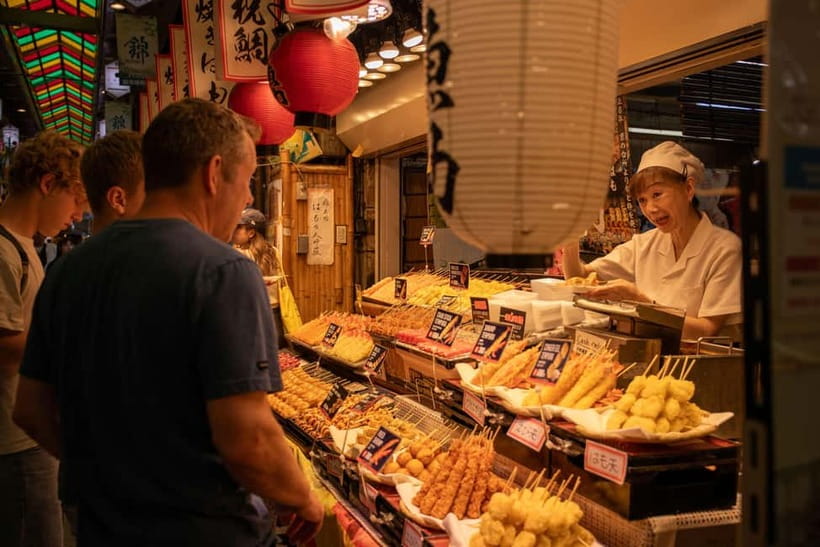
The tour isn’t only “eat, repeat, exit.” You do get pulled out of the market bubble—briefly—so the food experience lands with more meaning.
After the Nishiki portion, there’s a short stop at Nishiki-Tenmangu Shrine (about 10 minutes). Even if it’s brief, it acts like a reset. It breaks up the constant snack focus and gives you a chance to switch gears from tasting to observing Kyoto’s everyday spiritual rhythm.
Then you move into the shopping world:
- Shinkyogoku Shopping Arcade: about 45 minutes of guided walking, plus shopping and sightseeing time.
- Teramachi Street Shopping District: about 30 minutes of visiting with guidance.
These stretches matter because they show you what’s around the food lanes—where locals shop, wander, and pick up everyday items. It’s also a practical advantage: by the time you reach Teramachi, you’ll likely feel less frantic about where to go next. You’ll already have the rhythm of the area in your head.
There’s also a 10-minute hidden gem stop. The exact spot isn’t listed in the details you provided, but the point is clear: it’s a short guided break that typically rewards people who like small surprises and quick photo chances.
How the guide changes the whole experience (and why the pacing feels fair)
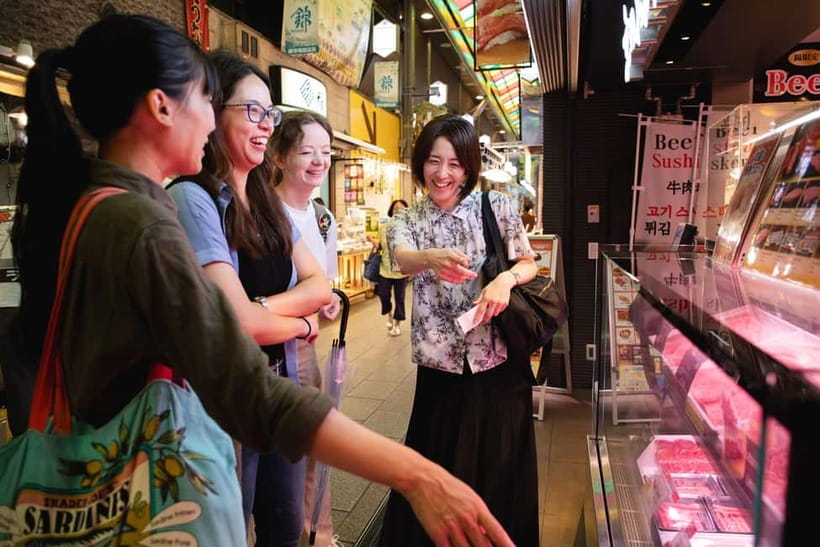
This tour lives or dies on the guide. You’ll get a local English-speaking host, and the tour is designed for a small group so they can keep the pace steady and answer questions as you go.
I’m especially drawn to this style of guiding because it treats food as a story, not just a product. Guides on these kinds of tours tend to explain things that most visitors skip: what a shop is known for, why one ingredient matters here, and what you’re tasting beyond the flavor itself. In the feedback for this activity, names like Takuna, Hide, Yume, Toshi, and Ayu come up as examples of hosts who connect food with wider Japan context and keep the experience relaxed rather than rushed.
You’ll also notice the tour uses short guided windows: 10 minutes at the shrine, 45 minutes in Shinkyogoku, 30 minutes on Teramachi. That structure helps you stay energized. Nishiki is sensory-heavy. A good guide prevents you from burning all your appetite in the first 20 minutes.
One practical note: the meeting point can vary depending on what starting option you booked, and it’s near busy streets. The best move is to arrive a bit early, ready to double-check the exact spot listed for your reservation.
Tea ceremony add-on: 2:00 PM kimono dressing and a real 90-minute session
If you want more than food, there’s an optional tea ceremony tied to this experience. It starts at 2:00 PM, and you’ll need to make your own way to the venue near Nishiki Market after the tour.
This is a 90-minute session with a professional process:
- You begin with professional kimono dressing.
- You then take part in the ceremony guided by a seasoned tea master.
- You learn the meaning behind each movement and gesture.
- You get time for commemorative photos in a traditional setting.
This add-on is best if you like slowing down and turning one cultural tradition into something you can actually watch and learn. It also works well because it’s timed after you’ve already visited Nishiki—you’ll have a full sensory morning or midday, then you switch into a calmer, more deliberate experience.
Just keep your schedule tight between the tour end and the 2:00 PM start, since the ceremony venue is not listed as included pickup.
You can also read our reviews of more tours and experiences in Kyoto
Price and value: where $78 turns into five tastings and a guided map of Kyoto food
At $78 per person for about 3 hours (270 minutes), this tour is priced for a guided food sampler with actual included bites—not just a lecture and a vague recommendation.
Here’s what you’re getting for the money, in plain terms:
- A local guide and small-group format (max 6).
- Five special foods (yuba, obanzai, hamo tempura, wagyu skewers, and more).
- Additional tastings like seasonings, crackers, and Japanese flavored honey.
- Guided time in multiple areas: Nishiki plus shrine and shopping streets.
If you’ve spent time in Kyoto, you know prices add up quickly once you start tasting at random stands. This package approach helps you sample more types of food in less time, with guidance that reduces the “wrong order” risk.
That said, value depends on you being able to eat what’s offered. The details are clear: dietary restrictions and allergies can’t be accommodated. So the deal is great if you’re flexible with food and just want the best Kyoto bites. If you need strict dietary control, you’ll likely end up paying anyway for a tour that can’t safely work for you.
Who should book this Nishiki food tour, and who should skip it
This tour makes the most sense for:
- First-time visitors who want a guided way to navigate a dense food market
- Curious food lovers who like tasting small portions across multiple shops
- People who prefer a plan that combines food + culture + a little sightseeing without heavy transportation
It’s less suitable if:
- You use a wheelchair or have mobility impairments (it’s noted as not suitable)
- You need accommodations for vegetarian, halal, kosher, gluten-free, or any allergy-related restrictions
- You plan to bring pets or large luggage/bags (not allowed)
Practical tip from the basic prep list: wear comfortable shoes and bring rain gear. Nishiki weather can shift, and the tour is walking-based.
If you’re the kind of traveler who likes getting a local’s shortcuts—what to try first, where to slow down, and what’s worth your attention—this is a strong match.
Should you book Kyoto’s Nishiki Market local food tasting tour?
Yes, if you want a guided way to eat your way through Kyoto’s best-known market, with five named specialties and time to understand what you’re tasting. The small group pacing is the reason it works: you get more chance to ask questions and actually enjoy the market instead of only surviving it.
Skip or reconsider if you have dietary restrictions or allergies, since the tour can’t adjust for them. Also be honest about mobility—this is a walking tour.
If you’re planning your afternoon with the optional tea ceremony, this tour can be a clean one-two combo: first you learn Kyoto through food, then you slow down and learn Kyoto through tea.
FAQ
How long is the Nishiki Market food tasting tour?
It runs about 3 hours, or 270 minutes.
How many people are in the group?
It’s a small group limited to 6 participants.
Is the tour in English?
Yes, the live tour guide speaks English.
Where does the tour start?
The meeting point may vary depending on the option you book.
How much food is included?
You’ll get 5 special foods (including yuba, obanzai, hamo tempura, wagyu steak skewers, and more) plus additional food tastings like Kyoto seasonings, crackers, and Japanese flavored honey.
Is an optional tea ceremony available?
Yes. If you select it, the tea ceremony begins at 2:00 PM and lasts about 90 minutes.
Do they accommodate dietary restrictions or allergies?
No. Dietary restrictions and allergy-related requests are not accommodated, including vegetarian, halal, kosher, gluten-free, or allergies.
What should I bring for the tour?
Bring comfortable shoes and rain gear.
Is the tour wheelchair accessible?
No. It’s not suitable for wheelchair users or people with mobility impairments.
Is free cancellation available?
Yes. You can cancel up to 24 hours in advance for a full refund.
![[Kyoto Street Shot] Recording every wonderful moment of travel with shutter (free kimono experience) - Meeting Spot and the Real Timing: When to Arrive](https://l.discoveringkyoto.com/wp-content/uploads/kyoto-street-shot-recording-every-wonderful-moment-of-travel-with-shutter-free-kimono-experience-400x267.jpg)