REVIEW · KYOTO
Fushimi Inari & Nara Highlights Walking Tour
Book on Viator →Operated by KAMNAVI Tours · Bookable on Viator
Torii gates and temple giants in one smooth day. I love the Fushimi Inari vermilion torii tunnel and the photo-ready mood of Kasuga Grand Shrine with its famous lanterns. It’s a great way to compress Kyoto-to-Nara highlights into a single day without the usual stress.
What makes it feel easy is the private guide who handles the route and the pacing. You start at Kyoto Station, then head over toward Nara so you’re spending your energy looking and learning instead of comparing trains and maps.
One thing to plan for: Todai-ji Temple admission and the public transportation costs aren’t included, so your final spend is higher than the headline tour price.
In This Review
- Key Highlights You’ll Actually Feel During the Day
- Why This Fushimi Inari to Nara Tour Works for Limited Time
- Kyoto to Nara: Getting There Without Losing Your Day
- Stop 1: Fushimi Inari Taisha Otabisho and Its Torii Tunnel
- Stop 2: Todaiji Temple’s Scale and the Hallway Routine
- Stop 3: Kasuga Grand Shrine Lanterns, Branch Shrines, and Deer Energy
- The Private Guide Advantage: Pace, Routing, and Better Sightseeing
- Price and Value: What the Tour Covers vs. What You’ll Pay Onsite
- Timing and Weather: The 6-Hour Reality Check
- Who This Tour Suits Best (And Who Might Want Another Plan)
- Should You Book This Fushimi Inari & Nara Highlights Walking Tour?
- FAQ
- How long is the tour?
- What time does the tour start?
- Where do we meet and where does the tour end?
- Is the tour private?
- What is included in the price?
- Are admission fees included for all stops?
- How much is public transportation?
- Do I get a ticket on my phone?
- Is cancellation free?
- Is the tour suitable for everyone?
Key Highlights You’ll Actually Feel During the Day
- Thousands of torii at Fushimi Inari Taisha Otabisho: A walk under red gates that’s instantly recognizable and very photogenic.
- Nara’s Todai-ji Temple scale: You get the setting to understand why this site is famous for massive wooden architecture.
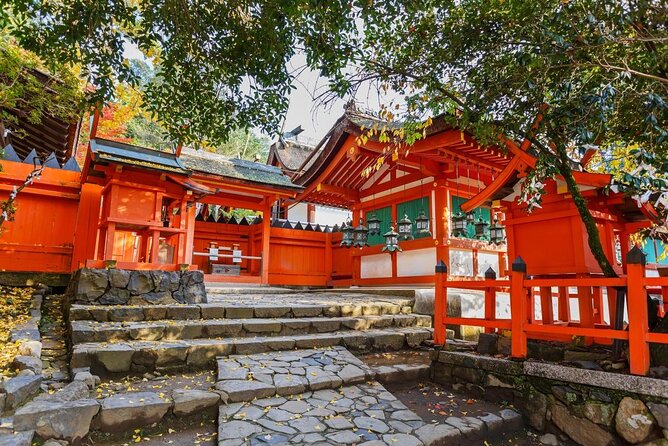
- Kasuga Grand Shrine lanterns and shrine network: Learn why there are about 3,000 lanterns and roughly 1,000 branch shrines connected to the main shrine.
- A guide who helps you move efficiently: Less time stuck figuring out where to go next.
- Free entry at two of the three stops: Fushimi Inari Otabisho and Kasuga Grand Shrine have free admission on this route.
- A realistic 6-hour day: Long enough to enjoy it, short enough to keep you from feeling rushed or exhausted.
Why This Fushimi Inari to Nara Tour Works for Limited Time
If your Kyoto trip is short, you can end up with a weird problem: Kyoto has so much to see, but Nara is also on many must-do lists. This kind of day tour is a practical fix. You’re not trying to “find everything” on your own. You’re hitting the major stops that matter most to first-timers.
I like the way this route is designed around contrast. You start with Fushimi Inari, known for the torii tunnel, where the atmosphere is almost visual storytelling. Then you shift to Nara’s older temple culture—first Todai-ji, then Kasuga Grand Shrine, where the vibe changes again with lanterns and the famous deer area nearby. In one day, you see multiple layers of Japanese religious architecture without needing a second full travel day.
The other big advantage is how it reduces decision fatigue. You’re not negotiating for your own timeline. You’re walking with a guide, so you can spend more time noticing details like the scale of temple spaces and the layout of shrine precincts.
You can also read our reviews of more walking tours in Kyoto


Kyoto to Nara: Getting There Without Losing Your Day
The day runs with a straightforward backbone: you meet at Kyoto Station at 9:00 am, then you end at Nara Station. That matters because getting out of Kyoto’s station maze and into the next leg can be the biggest time sink for independent travel.
Nara is about an hour by train from Kyoto, and the day plan keeps that travel segment from swallowing your sightseeing time. By the time you reach Nara, you’re already in “temple mode,” not “figure-out-transport mode.”
Also, you’re not stuck piecing the day together yourself. Your guide helps manage the order and pace across stops. That’s a big deal if you’ve ever tried to jump from one popular site to another and accidentally waste time backtracking.
Stop 1: Fushimi Inari Taisha Otabisho and Its Torii Tunnel
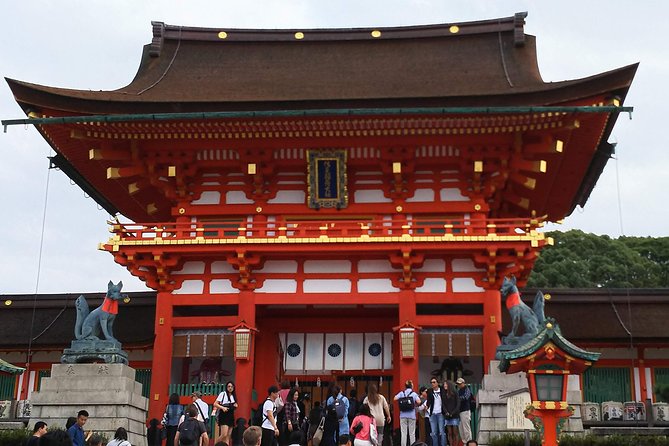
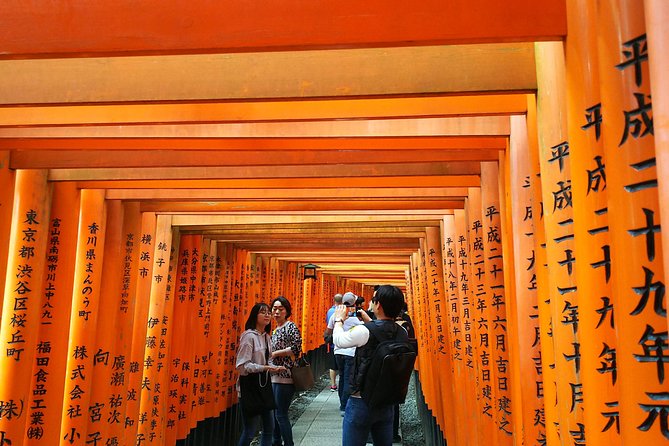
This is the stop that makes people stop and stare. Fushimi Inari Taisha Otabisho is famous for its spectacular tunnel of thousands of vermilion torii gates. The gates are donated by worshippers in appreciation of good fortune they received, which gives the place more meaning than it might seem at first glance.
What you’ll feel here is visual momentum. As you move through the corridor of torii, the repetition makes the walkway feel like it’s guiding you deeper. Even if you’re not a shrine expert, you’ll get the sense that this is a place designed for continuous movement and reflection.
Practical note: this stop is listed with 1 hour and free admission, so it’s a great “anchor” on a day itinerary. You can enjoy it without needing to surrender your whole morning.
Photo tip: Go slow for a few minutes. The torii tunnel looks good from almost any angle, but if you rush, you’ll miss the shots where gates align and the background falls into place. Try stepping aside before you take photos so you don’t end up with the same crowded viewpoint every time.
Stop 2: Todaiji Temple’s Scale and the Hallway Routine
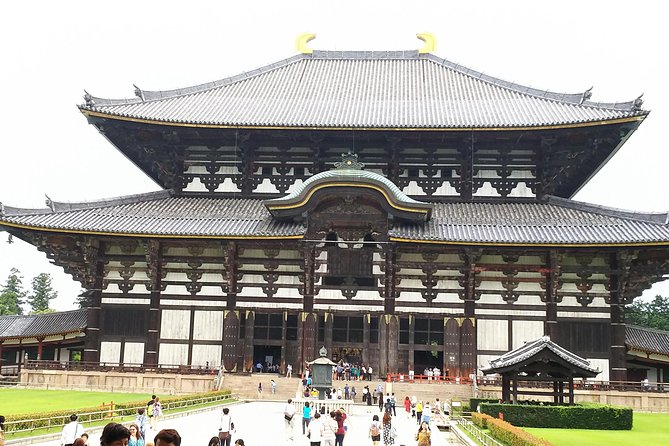
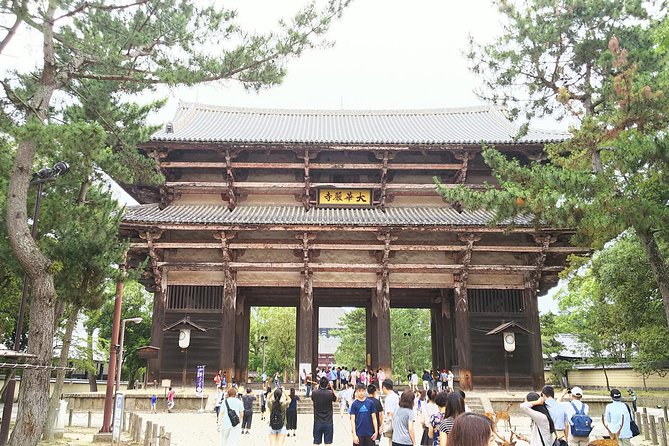
Next comes Todaiji Keidaicho, centered on one of Japan’s most famous feats of wooden architecture. The highlight here is that it’s renowned as the largest wooden building in the world. Once you enter the corridor, the scale can be genuinely surprising—this isn’t a small temple you can skim quickly.
There’s also a simple on-site routine that helps you understand how a temple visit works in practice. You cleanse your hands and mouth at a purifying trough before going further. Even if you’ve done this somewhere else in Japan, the fact that it’s part of your route here makes the experience feel more complete.
The tradeoff: Todai-ji admission isn’t included. You’ll need to budget ¥800 per person for this stop. The good news is that the temple is a major “must-see” in Nara, so this cost usually feels justified when you’re trying to see the big names in a single day.
Time wise, you’re looking at about 1 hour at this stop. That’s enough to understand the scale and walk through the key interior approach without feeling like you’re just passing by.
Stop 3: Kasuga Grand Shrine Lanterns, Branch Shrines, and Deer Energy
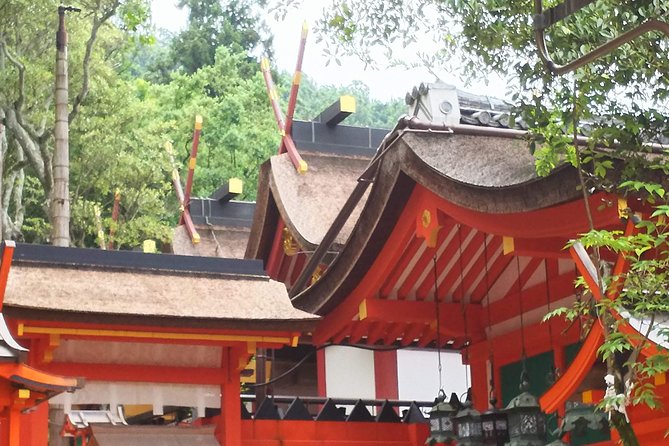
The final stop is Kasuga Grand Shrine, and it’s built for atmosphere. The shrine is about 1,300 years old and holds around 1,000 branch shrines across Japan. That’s a helpful fact because it explains why Kasuga feels like more than a single site—it’s part of a wider religious network.
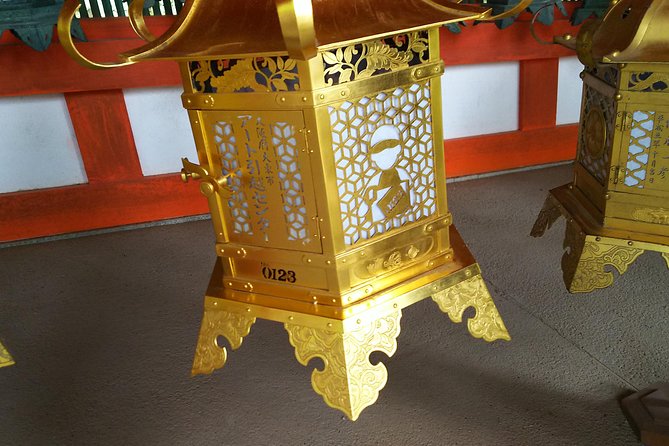
Then there are the lanterns. There are more than 3,000 lanterns in its precincts, and they’re described as the largest in Japan. Visually, that’s the detail that makes Kasuga a standout even if you’re tired. You’ll see light and shadow changing as you move, and it’s exactly the kind of setting where good planning beats wandering.
This stop also has free admission, which is a nice budget relief. With roughly 1 hour on the schedule, you get time to wander the precincts and take in the shrine spaces without dragging the day into an exhausting evening.
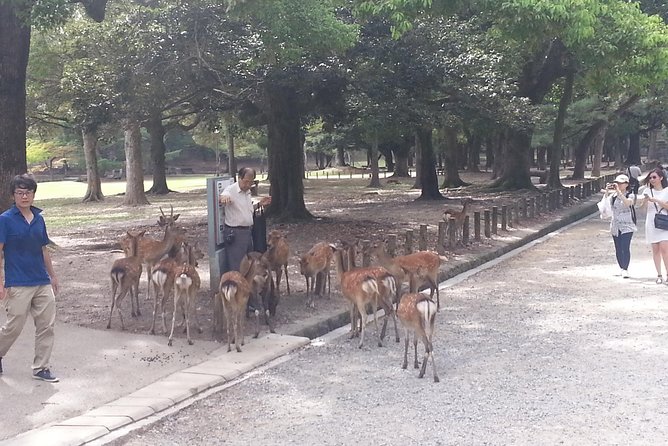
Also, plan for the deer factor around Nara shrine areas. One of the most memorable parts of the day is often simply seeing Nara’s deer near the shrines, plus the feeling of being in an area that locals and visitors associate with ritual and tradition.






The Private Guide Advantage: Pace, Routing, and Better Sightseeing
On a day that covers two major regions, the guide isn’t a nice extra—it’s what keeps the day smooth.
Here’s what you get from a private guide setup like this:
- You avoid map stress. The guide navigates the flow of stops so you can stay focused on sights, not directions.
- You can take photos more easily. When you’re not rushing to the next corner, you can pause where the sightlines are strongest.
- You learn while you walk. The route connects architecture and religious meaning, which helps the stops feel more coherent rather than random checkmarks.
The experience is also built around clear segments—each stop has a dedicated time window. That helps you relax. You don’t feel like you have to “keep up” with a chaotic itinerary or wonder when you’ll finally get your turn at the best viewpoint.
If you’re the type who likes to understand what you’re looking at—why torii are placed where they are, why lanterns are so important, why Todai-ji’s scale matters—this guide-led format is a strong match.
Price and Value: What the Tour Covers vs. What You’ll Pay Onsite
The tour price is $106.10 per person, and the included cost is the guide fare.
What’s not included matters for real budgeting:
- Public transportation fare: ¥1,380 per person
- Todaiji Temple admission: ¥800 per person
- Meals: not included
So is it worth it? For me, the value comes down to what you’re buying: convenience plus guided time across two major highlights. If you’re going to do Fushimi Inari and Nara anyway, a guided route helps you avoid losing half a day to logistics and decision-making. Your biggest “extra spend” is transit and Todai-ji admission, and both are tied to core parts of the experience rather than optional add-ons.
A smart way to look at it: this tour saves you from having to design the entire day and interpret what you’re seeing as you go. If you want that structure and context, the price can feel reasonable—especially for a one-day visit.
Timing and Weather: The 6-Hour Reality Check
The day runs for about 6 hours. That’s long enough to cover the big sites, but short enough that you’ll still have energy after you return.
One operational detail you should respect: the experience requires good weather. If weather is poor, you’ll be offered a different date or a full refund. That’s not just fine print. Fushimi Inari’s torii walk and shrine precinct strolling can feel very uncomfortable when conditions aren’t good.
Since you start at 9:00 am, you’ll want to treat this like a morning-first day. Wear shoes that work for uneven temple areas and lots of walking. Bring water, and plan for a steady rhythm: one temple after another, with enough time at each stop to actually absorb what you came for.
Who This Tour Suits Best (And Who Might Want Another Plan)
This tour is best for you if:
- You have limited time and want both Fushimi Inari and Nara in one day.
- You’d rather spend your time looking at architecture than planning a route.
- You like a day that’s organized enough to feel easy, but not so packed that you can’t enjoy the places.
It may be less ideal if:
- You’re the kind of traveler who prefers total independence and doesn’t want to pay for a guide.
- You’re tightly budgeted and don’t want to handle the add-on costs for transit and Todai-ji admission.
Because it’s a private tour (only your group participates), it’s also a strong choice if you want a more controlled experience than large group tours.
Should You Book This Fushimi Inari & Nara Highlights Walking Tour?
If your wishlist includes Fushimi Inari and Nara’s top shrine and temple hits, I’d lean yes. This is a practical route that prioritizes the places people actually travel for: the torii tunnel at Fushimi Inari, Todai-ji’s massive wooden architecture, and Kasuga’s lantern-filled shrine grounds.
Book it if you want an easy route with a guide, strong photo opportunities, and enough structure to stop you from getting lost or wasting time. The one clear reason to hesitate is budget: once you add transit and Todai-ji admission, your total spend is higher than the headline number. If you can handle that and you’re traveling on a one-day window, this tour is a solid, efficient way to get real Nara atmosphere without turning Kyoto into a logistics project.
FAQ
How long is the tour?
It’s listed as about 6 hours.
What time does the tour start?
The start time is 9:00 am.
Where do we meet and where does the tour end?
You start at Kyoto Station and end at Nara Station.
Is the tour private?
Yes. It’s a private tour/activity, so only your group participates.
What is included in the price?
The included item is the guide fare.
Are admission fees included for all stops?
Not all. Todai-ji Temple admission isn’t included (it’s listed as ¥800 per person). Fushimi Inari Otabisho and Kasuga Grand Shrine are listed as free admission.
How much is public transportation?
Public transportation fare is listed as ¥1,380 per person and is not included.
Do I get a ticket on my phone?
The tour includes a mobile ticket.
Is cancellation free?
Yes. You can cancel for a full refund if you cancel at least 24 hours in advance of the experience start time.
Is the tour suitable for everyone?
It notes that it is accessible for limited eye sight and limited mobility. It also includes mixed notes about animals/pets, so you should confirm directly with the provider if that’s important for you.