Gion’s lantern-lit lanes tell stories fast. This Kyoto Geisha Walking Tour is interesting because you’re not just staring at pretty streets—you’re walking with a guide who explains what you’re seeing and why it matters in Gion and geiko/maiko culture. You’ll also have real chances to spot geiko and maiko as they head to appointments.
I also like how the route builds meaning stop by stop, especially with off-the-beaten-path photo stops and temple sights that most people rush past. One consideration: this is a walking tour and it is not suitable for people with mobility impairments or wheelchair users, so plan accordingly.
In This Review
- Key highlights to look for
- Entering Gion: the streets that set the mood
- Meeting point by Hotel Alza Kyoto and the red umbrellas
- How spotting geiko and maiko actually works on this walk
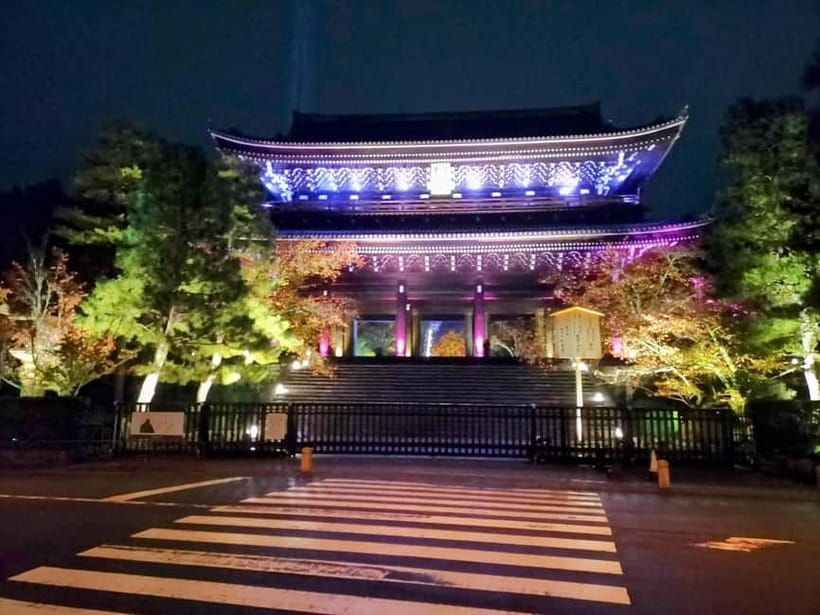
- Hokan-ji Pagoda, Kennin-ji, and Chion-in: the culture stops you’ll remember
- Hokan-ji Pagoda: a Kyoto heritage symbol
- Kennin-ji Temple: serenity that slows your pace
- Chion-in Temple: an often overlooked treasure area
- Machiya townhouses, teahouses, and the “how Gion is built” details
- Photo stops that don’t require perfect luck
- Comfortable timing for a 2-hour Gion walk
- What you get beyond the walk: the restaurant and shopping recommendations
- Value check: $25 for 2 hours in one of Japan’s most specific neighborhoods
- Should you book this Kyoto Geisha Walking Tour?
- FAQ
- How long is the Kyoto Geisha Walking Tour?
- How much does the tour cost?
- What language is the tour guide?
- Where do I meet the guide?
- What will I see during the tour?
- Does the tour include photo opportunities?
- Is the tour good for people with mobility issues?
- Can I cancel for a refund?
- Can I reserve now and pay later?
Key highlights to look for
- Geiko and maiko sightings on the way to appointments (an opportunity, not a scheduled performance)
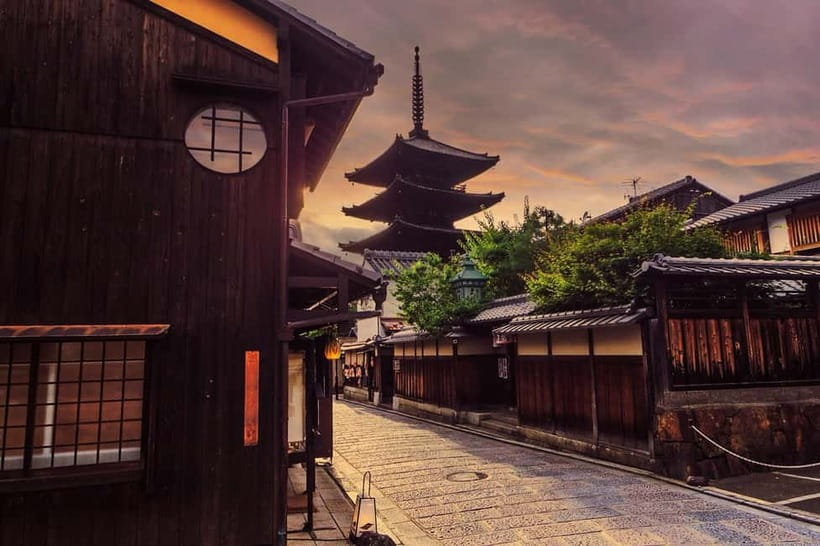
- Temple and heritage stops including Hokan-ji Pagoda, Kennin-ji, and Chion-in
- Machiya townhouses and teahouse streets that show how the district is shaped
- Photo-focused side streets with guidance on where to stand
- A guide who finishes with practical picks for restaurants, bars, shops, and more
Entering Gion: the streets that set the mood
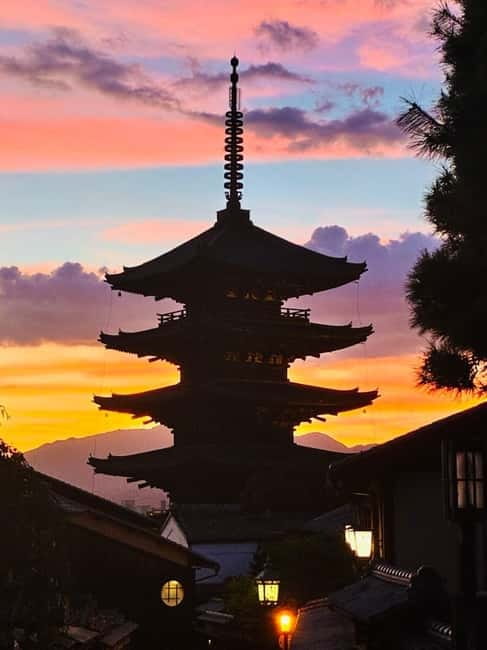
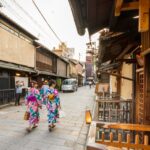
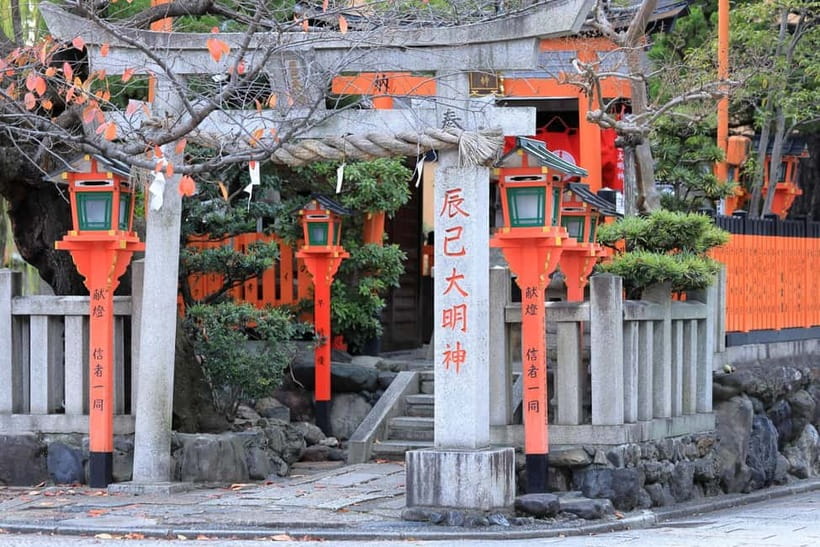
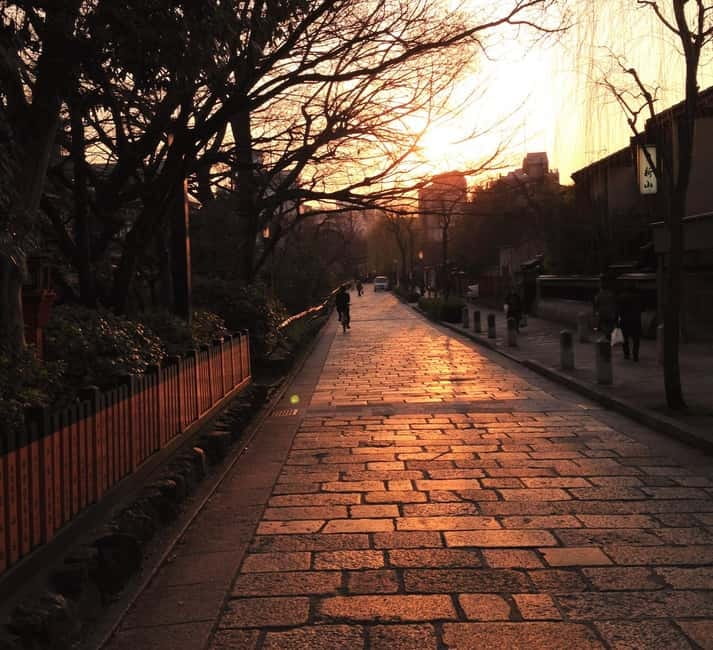
Gion is Kyoto at its most cinematic. You’ll stroll cobblestone lanes lined with teahouses and traditional buildings, and as evening comes on, the lantern-lit atmosphere turns the whole neighborhood into a slow, storybook walk.
What makes this tour worth doing here is that the focus stays grounded. You’re not chasing vague legends—you’re learning how this part of Kyoto works, how traditions show up in everyday life, and why certain corners feel different from the main shopping streets.
You can also read our reviews of more walking tours in Kyoto

Meeting point by Hotel Alza Kyoto and the red umbrellas
The tour starts on a side street next to Hotel Alza Kyoto. Look for the red parasol or umbrellas with marble seats underneath, and you’ll be in the right place.
This matters more than you’d think. Kyoto’s lanes can confuse even confident walkers, and a clear meeting point helps you start calm and on time instead of doing that frantic “where is everyone” dance.
How spotting geiko and maiko actually works on this walk
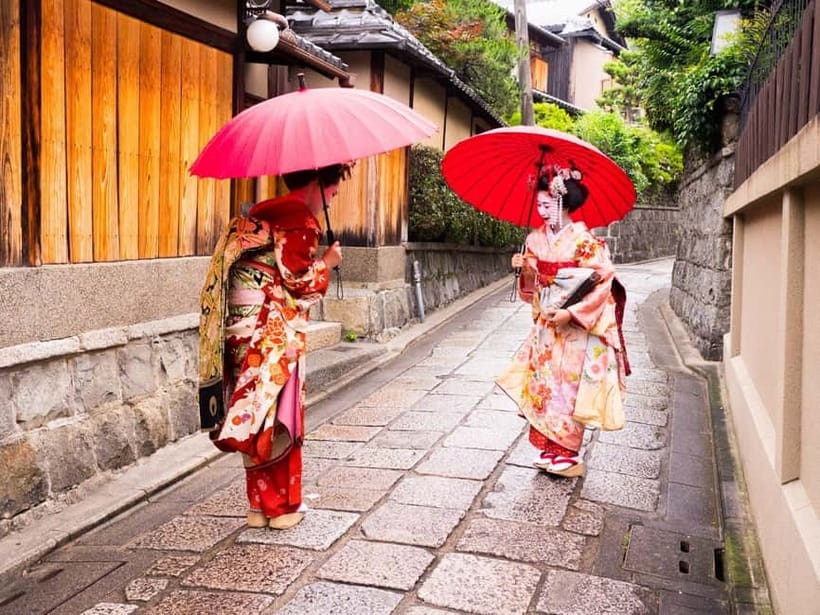
One of the main draws is the chance to see elegantly dressed geiko and maiko as they go to appointments. Your guide helps you look in the right places and at the right moments, which is the difference between random luck and a more thoughtful experience.
A practical note: sightings can be hit-or-miss. Even with a good guide and a good route, geiko and maiko are not running a public show. The tour gives you the opportunity and the context, so you understand what you’re seeing without turning it into a hunt.
Hokan-ji Pagoda, Kennin-ji, and Chion-in: the culture stops you’ll remember
This tour uses religious and historical sites to explain how the district’s identity formed over time. You’ll visit several highlights, and each one adds a different layer to the story.
Hokan-ji Pagoda: a Kyoto heritage symbol
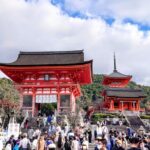
You’ll get the chance to marvel at Hokan-ji Pagoda, described as a symbol of Kyoto’s cultural heritage. It’s a strong visual anchor in the district, the kind of landmark that helps you orient mentally as you move through narrow streets.

Kennin-ji Temple: serenity that slows your pace
Next comes Kennin-ji Temple, noted as the oldest Zen temple in Kyoto. Even if you’re not a temple person, this stop tends to land well because it gives you a quiet reset during a walk that’s otherwise focused on streets, teahouses, and human stories.
In practical terms, this is where you can take a breath, listen carefully, and let the guide’s explanations settle. It’s easier to connect culture to place when the pace drops for a moment.
Chion-in Temple: an often overlooked treasure area
The itinerary also includes Chion-in Temple, called out as an often overlooked option and home to three designated national treasures within its grounds. That combination—less crowded feel plus major heritage—makes it an efficient stop for anyone who wants depth without feeling like they’re repeating the same classic postcard route.
Machiya townhouses, teahouses, and the “how Gion is built” details
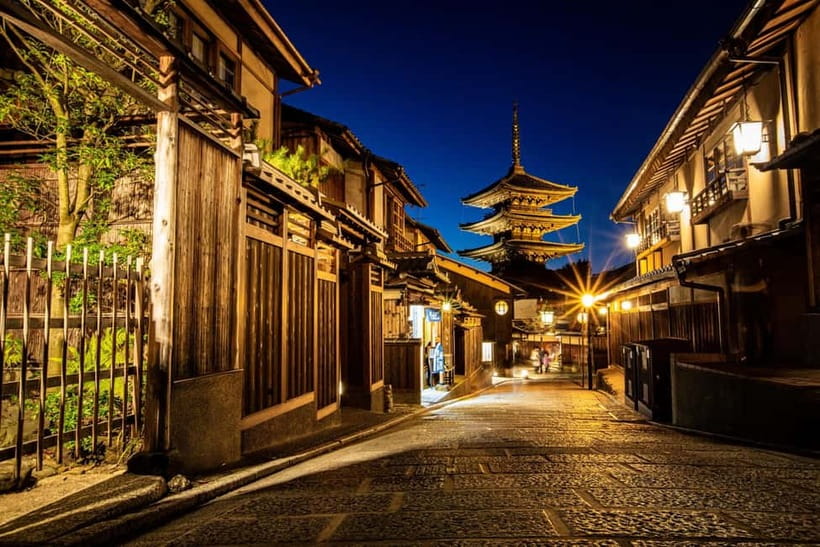
Gion isn’t only about what you see from the main street. You’ll walk past areas with beautifully preserved machiya townhouses, and you’ll see the district’s character change as you move between lanes and pockets that feel more private.
You’ll also have a chance to visit or view charming tea houses, including discussion of the role they play in geisha culture. The tour notes that exclusive private performances happen for wealthy clientele, and that context helps you understand why certain buildings and areas stay discreet.
For shopping, the walk includes quaint boutique-style souvenir shops. That’s useful because you’re not stuck with only high-traffic tourist counters—you can pick up small things in a way that matches the neighborhood’s feel.
Photo stops that don’t require perfect luck
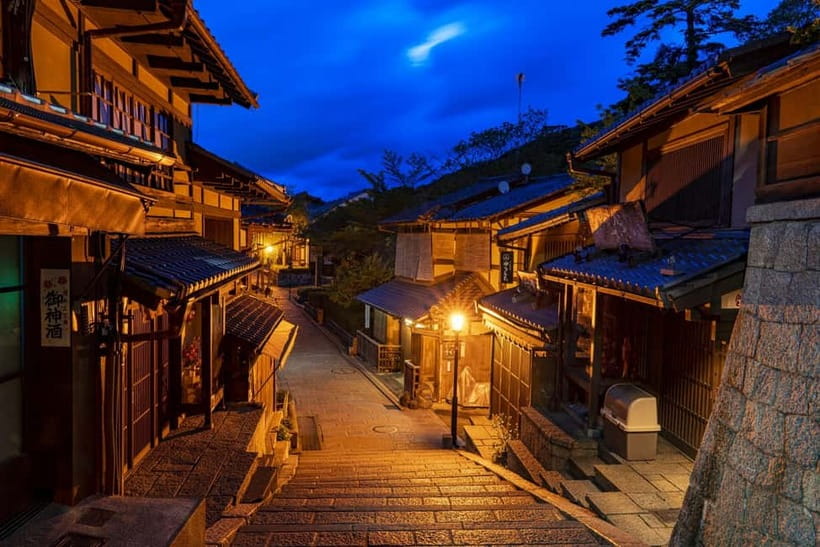
This tour is set up for photos, with opportunities to take stunning pictures at off-the-beaten-path locations along the way. The best part is that you’re not just told to take photos—you get guidance on where to stand so you can frame the streets, architecture, and atmosphere without blocking anyone.
I like tours that treat photos as part of the experience instead of an afterthought. When you understand what you’re photographing—why it’s there, what it represents—you tend to get better images and a better story to remember later.
Comfortable timing for a 2-hour Gion walk
The tour runs about 2 hours, and that short window is a big deal. Gion can be deceptively big on foot, and 120 minutes is enough time to get meaning without burning the whole afternoon.
Many people also use it strategically as an early Kyoto activity. It’s a great way to get your bearings, learn what to look for on your own later, and then use the rest of your day for meals, shopping, and extra wandering.
One more practical point: in colder months, the walking adds up. If you’re going in winter, dress warm and plan for chilly air between stops—especially if you expect to linger for photos or to watch for geiko and maiko.
What you get beyond the walk: the restaurant and shopping recommendations
Towards the end of the tour, your guide shares a detailed list of tried-and-trusted recommendations. That includes restaurants, bars, shops, and lots of ideas for the rest of your time in Kyoto.
This is the kind of add-on that quietly makes a tour worth it. You leave with direction, not just memories. And if you’re the type who hates making decisions at dinner time, this section alone can save you from eating at the first place with a friendly sign.
Value check: $25 for 2 hours in one of Japan’s most specific neighborhoods
At $25 per person for a 2-hour live English-guided walk, the value comes from more than just covering distance. You’re paying for interpretation—how the guide connects Gion streets, temples, and geisha culture origins to what you actually see on the ground.
You’re also paying for efficiency. Instead of trying to piece together where to go in Gion while also trying to understand geiko/maiko culture, you follow a route that highlights the district’s most relevant sights and gives context on the way.
Add in the photo stops and the end-of-tour recommendations, and the price starts to make sense as a planning tool, not only a sightseeing activity.
Should you book this Kyoto Geisha Walking Tour?
Yes, if you want a structured, street-level introduction to Gion that explains what you’re seeing. This works especially well as a first Kyoto neighborhood experience because it helps you understand geiko/maiko culture, spot what matters in the district, and then immediately apply that knowledge to where you eat and what you do next.
Book it if you like guided storytelling and practical advice—plus you want temple and heritage stops mixed into a walk that feels very Kyoto, very fast. Skip it only if mobility is an issue, since it isn’t designed for wheelchair users or people with mobility impairments.
FAQ
How long is the Kyoto Geisha Walking Tour?
The tour lasts about 2 hours.
How much does the tour cost?
It’s listed at $25 per person.
What language is the tour guide?
The live tour guide speaks English.
Where do I meet the guide?
Meet on a side street next to Hotel Alza Kyoto. Look for the red parasol/umbrellas with marble seats underneath.
What will I see during the tour?
You’ll walk through the Gion district, look for geiko and maiko as they go to appointments, and visit sights including Hokan-ji Pagoda, Kennin-ji Temple, and Chion-in Temple.
Does the tour include photo opportunities?
Yes. The experience includes opportunities to take photos at off-the-beaten-path locations along the way.
Is the tour good for people with mobility issues?
No. It is not suitable for people with mobility impairments and it is not for wheelchair users.
Can I cancel for a refund?
Yes. Free cancellation is available up to 24 hours in advance for a full refund.
Can I reserve now and pay later?
Yes. The tour offers a reserve now & pay later option.