REVIEW · KYOTO
Kyoto Arashiyama Walking Tour: Bamboo, Monkeys, Gardens & Secrets
Book on Viator →Operated by Japanify Tours · Bookable on Viator
Bamboo, monkeys, and quiet Kyoto routes. I love the small-group feel that keeps things organized, and I also like how Tenryu-ji Garden goes beyond the usual photo stops. One heads-up: the Monkey Park climb is 20–25 minutes and fairly steep.
This is the kind of tour that helps you enjoy Arashiyama instead of wrestling it. You start at Saga-Arashiyama Station, you get swept through shrines, gardens, and viewpoints, and you finish back in the Arashiyama area without having to plot a route all day. Guides like Teri and Marie are big on practical context, plus they’ll keep you moving at a steady pace.
In This Review
- Key points before you go
- Arashiyama is famous. This tour makes it make sense.
- Starting at Saga-Arashiyama Station (and avoiding the station-name trap)
- Nonomiya Shrine: a small stop with a big cultural role
- Okochi Sanso Garden: peace after the bamboo
- Bamboo Forest Trail: the iconic walk, with less chaos
- Tenryu-ji Temple and Sōgenchi Teien: the UNESCO garden moment
- Togetsukyo Bridge and the Kimono Forest: river views and photo angles
- Monkey Park Iwatayama: the best pay-off needs the steep climb
- Lunch break and getting food that won’t derail your day
- Guides, pacing, and why this feels smoother than DIY
- Rules you should know before you go (especially for the monkey park)
- Price and value: why $65.57 can be a good deal
- Best time and best fit for this Arashiyama walk
- Should you book this Kyoto Arashiyama walking tour?
- FAQ
- How long is the Kyoto Arashiyama Walking Tour?
- Where do I meet, and where does the tour end?
- What language is the tour offered in?
- What’s included in the price?
- Is lunch included?
- Is the Monkey Park hike difficult?
- Are pickup services available?
- Are there any restrictions on recording or smart glasses?
- What if I’m booking solo?
Key points before you go
- Admission included for the main stops, so you’re not constantly checking ticket lines or prices mid-walk.
- Quieter routing through backstreets and lesser-crowded paths when you can.
- Two very different gardens: Okochi Sanso’s calm and Tenryu-ji’s UNESCO grounds.
- Monkey Park hilltop requires effort: a 20–25 minute hike with a steep feel near the top.
- Small group cap (max 12) keeps questions flowing and makes photo moments easier.
- No recording rules: no live streaming, and smart glasses with recording capabilities aren’t allowed.
Arashiyama is famous. This tour makes it make sense.
Arashiyama has a reputation for bamboo, but the area is really a slice of Kyoto where religion, landscape design, and everyday life overlap. What I like about this tour plan is that it doesn’t treat Arashiyama like a checklist. You get guided context as you walk, so the sights connect instead of feeling random.
The bamboo is still here—of course—but you also get shrines, garden design, and river-and-mountain views. Then you top it off with the Monkey Park hilltop, where the real payoff is the experience of watching monkeys up close (with the right kind of distance and respect).
The one drawback you should plan for is the hiking. If you’re not comfortable with a steep climb, the Monkey Park portion will be the toughest part of the day. Everything else is straightforward walking and short time at each stop.
You can also read our reviews of more walking tours in Kyoto


Starting at Saga-Arashiyama Station (and avoiding the station-name trap)
You meet at Saga-Arashiyama Station, and that matters more than you’d think. Arashiyama has multiple stations with very similar names, and they aren’t close to each other. If you end up at the wrong one, you’ll lose time before the tour even starts.
Once you link up with your guide, you get a short buffer to settle in and look around before you head out. This early time is useful: it helps you understand the flow of the area and makes the rest of the day feel easier.
This is also a smart structure if you’re coming from Kyoto City. The tour is built around a train-station start and a finished point back in central Arashiyama, so you can keep your day schedule cleaner and reduce stress about transfers.
Nonomiya Shrine: a small stop with a big cultural role
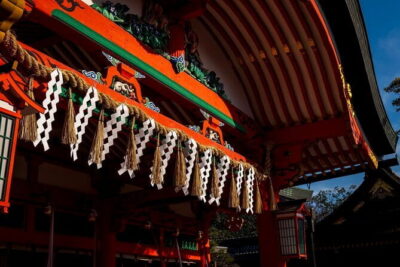
Nonomiya Shrine is short on time but long on meaning. This is a Shinto shrine with historical significance in Arashiyama, and it’s tied to traditional purification rituals connected to imperial princesses who later served as priestesses at Ise.
Why it’s worth your time: a shrine like this gives you a different lens on the district. Instead of only seeing nature and famous scenery, you also see the spiritual framework that’s part of daily life here. Even if you don’t read every detail, your guide’s explanations help you understand what you’re looking at.
You’ll only spend around ten minutes here, so don’t treat it as a quick photo break. Instead, treat it as the warm-up that helps the rest of the day feel coherent.
Okochi Sanso Garden: peace after the bamboo
Next comes Okōchi Sansō Garden, a peaceful garden tucked away with a sense of privacy. The setting is especially nice because it feels like a retreat—one of those places where the noise level drops as you move inward.
It’s also historically tied to a Japanese actor’s private villa, which gives the garden a personal story behind the beauty. What I like most is the contrast: you’re in a famous bamboo region, but this stop slows you down. That’s valuable, because bamboo can overwhelm you if you’re only chasing the loudest sights.
You’ll have about half an hour here, which is enough time to enjoy paths, pond views, and the garden’s layout without feeling rushed. If you’re the type who likes taking it in at a calm pace, this is your “breathe” stop.
Bamboo Forest Trail: the iconic walk, with less chaos
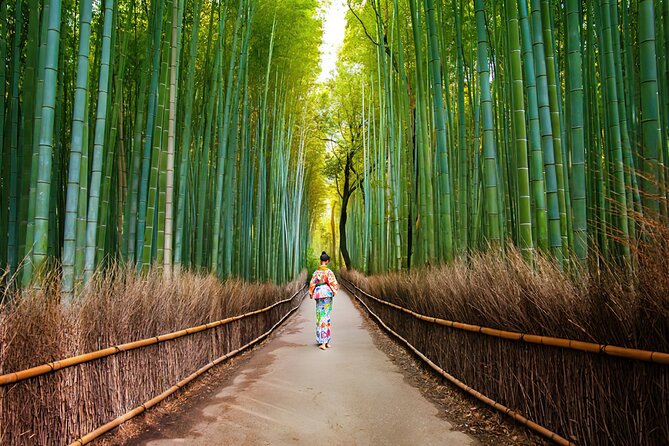
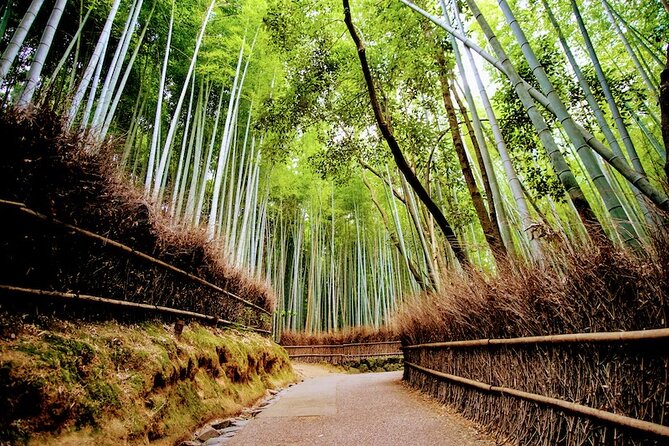
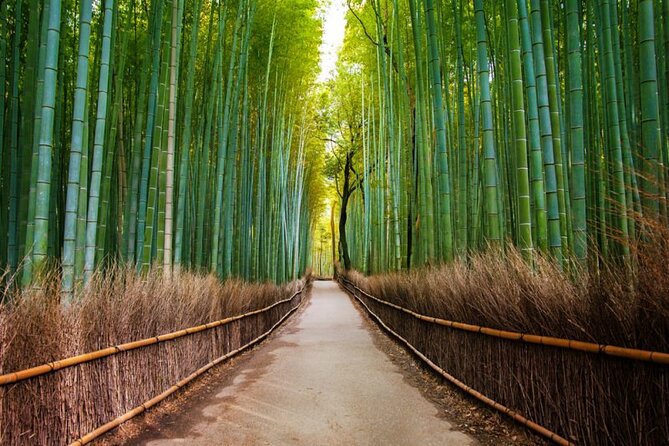
After Okochi Sanso, you step into the Bamboo Forest Trail—close to the station area and designed for walking right into the famous grove.
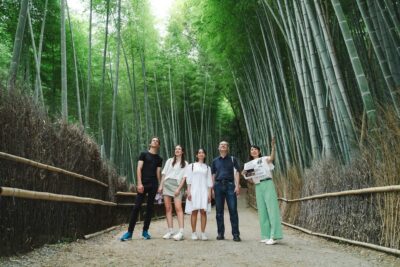
Yes, you’ll see the towering bamboo people come for. But the real value here is how the tour helps you experience it without getting stuck in the worst bottlenecks. Your guide can steer you to better timing and quieter pathways, which changes the vibe from crowded to contemplative.
Expect a slower, sensory kind of walk. The bamboo creates a tunnel effect, and even if you’ve seen pictures before, the height and the sound-shift from surrounding streets can feel surprisingly different. If you want your photos to look less like a crowd scene, this is where the guide’s routing pays off.
Admission for this part is included, so you don’t need to worry about stepping out and buying a ticket mid-flow.




Tenryu-ji Temple and Sōgenchi Teien: the UNESCO garden moment
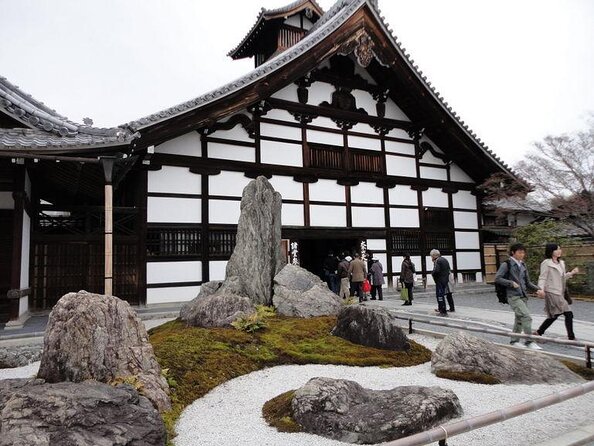
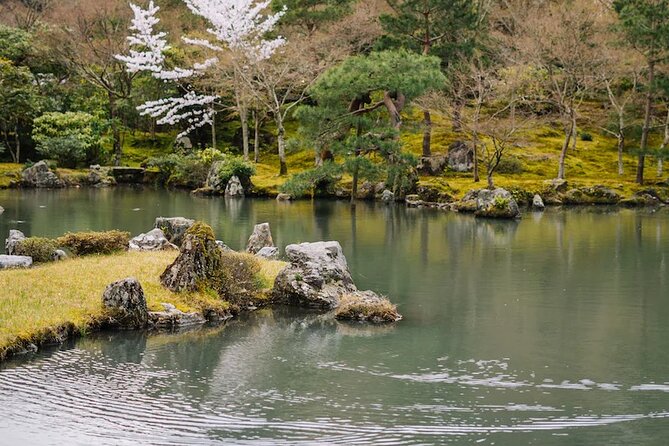
Tenryū-ji Temple is a highlight for a reason. You’ll visit the Tenryu-ji Garden (Sōgenchi Teien), a UNESCO World Heritage Site, and the garden is often considered one of Japan’s best. This is where Arashiyama turns into “garden design in motion.”
The layout matters. You’re not just walking past pretty scenes—you’re seeing how water, stones, and viewing angles are used to shape what you feel. With a guide, you’ll understand what to notice, like why certain spots are framed, how the garden encourages different perspectives, and what the landscape is meant to represent.
You’ll spend about 35 minutes here, which is an ideal length. Long enough to walk the main areas and take in the calm, not so long that you’re trapped when the day is still young.
If you’ve only ever done bamboo-and-monkeys in Kyoto, this garden stop is the piece that adds cultural weight.
Togetsukyo Bridge and the Kimono Forest: river views and photo angles
Togetsukyo Bridge is a classic Arashiyama view point. From here, you get a broad look at the Hozu River and the surrounding mountains, and your guide will set you up for the best angles.
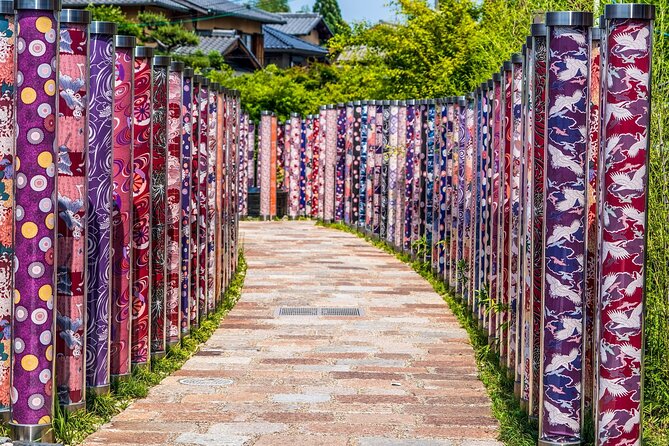
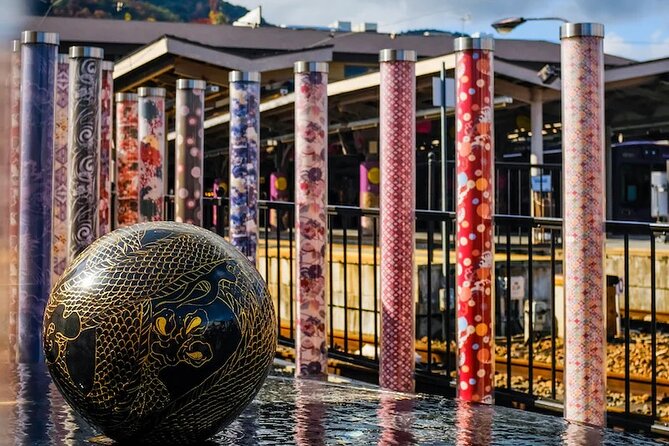
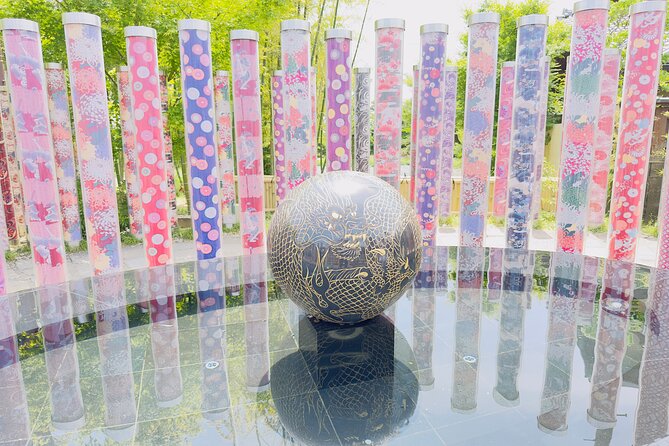
This stop also ties in with the Kimono Forest area, mentioned as part of the route on the way to the bridge. If you’re wondering what that is, it’s basically a photo-focused moment—useful if you like quick, colorful snapshots, but don’t let it steal your attention away from the river view.
The bridge itself is short on time (around 15 minutes), so treat it as a targeted stop. Look, take photos, enjoy the scenery, and then move on. If you linger without a plan, crowds can build right where you don’t want them.
What I like is that the tour keeps you from feeling scattered. You’re at the bridge for the view, not for wandering.
Monkey Park Iwatayama: the best pay-off needs the steep climb
Here’s the moment many people book for, and it’s also where you should be honest with yourself about effort.
From the bridge, you hike up to Monkey Park Iwatayama. The hike takes about 20–25 minutes and can feel steep, especially near the top. If your legs prefer flatter walks, bring your patience and take it slow. This part is about getting to a viewpoint where the payoff is worth it.
Once you’re up there, you’ll have around an hour at the park. That time matters. Monkeys move. They pause. They look around. You need a little slack to see the behavior you came for instead of just catching a glimpse.
A practical tip: keep your distance and follow your guide’s cues. The experience works best when everyone stays safe and the monkeys stay wild. Also remember the tour has rules about not recording or live streaming during the whole walk. That means you’re meant to enjoy the moment, not turn it into a feed.
If you’re nervous about monkeys, don’t worry too much. Most people are surprised by how quickly the setting feels natural once you’re up there.
Lunch break and getting food that won’t derail your day
There’s a quick lunch break built into the flow (about 35 minutes), and lunch is not included.
Since the day is already structured, you’ll want to use this time efficiently. Pick something simple and fast nearby rather than hunting far away and risking a delay. The good news is the tour ends in the Arashiyama area, so if you want to eat again after, you’ll have options.
Also consider the timing of your hike. Monkey Park can work up an appetite, but it also can make you want to rest after. If you need a slower post-hilltop pace, plan a lighter lunch.
Guides, pacing, and why this feels smoother than DIY
The biggest praise across the experience is the guide and the pace. Guides like Teri, Marie, and Osin are repeatedly praised for clear explanations and for keeping the day moving like clockwork. That matters because Arashiyama can feel like a theme park if you don’t have a route.
You’ll also see why small-group size helps. With a maximum of 12 travelers, it’s easier for your guide to spot the person who’s falling behind and adjust without chaos. Questions are answered as you go, not dumped into a lecture at the end.
Another smart touch: your guide helps you find quieter lanes and less crowded routes. One review specifically called out how the tour can avoid the worst of the Saturday crush. That’s not just comfort—it’s also better photo timing and calmer garden viewing.
Some guides even add small extras, like sake tasting or a Polaroid-style photo souvenir. These sound like guide-led surprises, not guaranteed inclusions, so treat them as bonus culture if they appear.
Rules you should know before you go (especially for the monkey park)
This tour has clear conduct rules. Recording and live streaming are not allowed during the whole tour. Smart glasses with recording capabilities (like Ray-Ban Meta glasses) aren’t permitted either.
Why this matters: people get excited in Arashiyama, and monkeys in particular are a magnet for cameras. The rules help protect the experience and keep things safe and respectful.
Also note the language setup. Tours are in English only. If you want a different language like German or Italian, you’ll need to ask before booking.
Finally, come prepared for active walking. Most people can participate, but you should be ready for that monkey park hilltop hike.
Price and value: why $65.57 can be a good deal
At about $65.57 per person for a 5–6 hour tour, this is priced like a guided “value day” rather than a bare-bones walk.
Here’s what you’re paying for, and why it’s worth considering:
- Admission is included for the main sights you’ll otherwise queue for or research: Tenryu-ji, Okochi Sanso, Monkey Park, and other itinerary stops.
- You get a guide who explains what you’re looking at, so you’re not just moving between landmarks.
- The route reduces navigation hassle. Arashiyama has enough station confusion that a guide can save time before you even start.
If you were to DIY this, you’d spend time figuring out the order, dealing with crowd timing, and paying multiple admissions separately. The tour turns that into a smooth plan.
Is it for everyone? If you hate group pacing or you want full freedom to wander slowly all day, a DIY approach might suit you better. But if you want a well-run day with built-in highlights, this price feels reasonable.
Best time and best fit for this Arashiyama walk
This tour is a good fit for people who want a structured introduction to Arashiyama: bamboo, gardens, a UNESCO temple garden, and the Monkey Park experience—all in one day.
It also fits families and active travelers who don’t mind a trek. Some reviews mention kids enjoying the day, especially the monkeys, but the hike is the part that will decide if it feels fun or frustrating.
One more seasonal note from guide talk in reviews: Arashiyama can feel cooler than the rest of Kyoto. Bring layers and be ready for changing conditions, especially if you’re hiking after a bridge viewpoint.
If you’re short on time and want the big Arashiyama hits without bouncing between stations, this tour is a very practical choice.
Should you book this Kyoto Arashiyama walking tour?
Book it if you want a guided Arashiyama day that includes admissions, keeps you out of the worst crowd patterns, and gives you context at temples and gardens. The combination of Tenryu-ji Garden, Okochi Sanso’s calm, and the Monkey Park hilltop is a strong set of contrasts, and the guide-led pace is a big reason this tour works.
Skip or reconsider if you strongly dislike steep climbs, or if you plan to spend the whole day lingering slowly on your own. The monkey hike is the trade-off that drives the whole experience.
FAQ
How long is the Kyoto Arashiyama Walking Tour?
The tour lasts about 5 to 6 hours.
Where do I meet, and where does the tour end?
You meet at Arashiyama Monkey Park Iwatayama in Kyoto and the tour ends at the same Arashiyama Monkey Park Iwatayama area.
What language is the tour offered in?
The tour is in English only. Other languages like German or Italian may be available if you ask before booking.
What’s included in the price?
Admission tickets for the stops on the itinerary are included, along with a knowledgeable and bilingual tour guide.
Is lunch included?
No. Lunch is a quick break and lunch and dinner are not included.
Is the Monkey Park hike difficult?
There is a 20–25 minute hike to the Monkey Park hilltop, and the path is a bit steep.
Are pickup services available?
No pick up is not available.
Are there any restrictions on recording or smart glasses?
Recording and live streaming are not allowed during the whole tour, and smart glasses with recording capabilities are not allowed.
What if I’m booking solo?
Solo travelers can book, but there is a 2 guests minimum requirement for the tour to proceed. If only one guest is booked, the tour may be canceled with refund or rescheduling options.