REVIEW · KYOTO
Kyoto Flea Market Cultural Exchange with English Learners
Book on Viator →Operated by EB Tour · Bookable on Viator
Skip the usual Kyoto script. This experience takes you to the To-ji Temple flea markets (Kobo-ichi and Kotto-ichi) with a local guide who helps you make sense of what you’re seeing and how to talk about it. I like that it turns shopping into conversation, not just browsing, and it stays centered on real Kyoto street culture rather than a checklist.
The second thing I really like is the focus on language exchange. Your guide is an English learner from Kyoto, so you’re not just hearing history in a lecture—you’ll talk customs, ask questions, and get practical help while you look for antiques and vintage goods.
One possible drawback: the tour is built around market-style shopping and haggling tips, so if you want strict fixed-price browsing with zero negotiation energy, you may find the vibe a little more active than expected.
In This Review
- Key things to know before you go
- Why To-ji Temple markets are a smarter way to see Kyoto
- Meeting your local English-learner guide and how the chat works
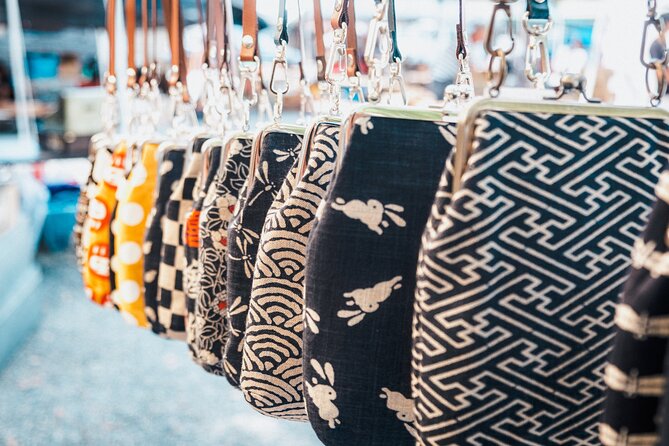
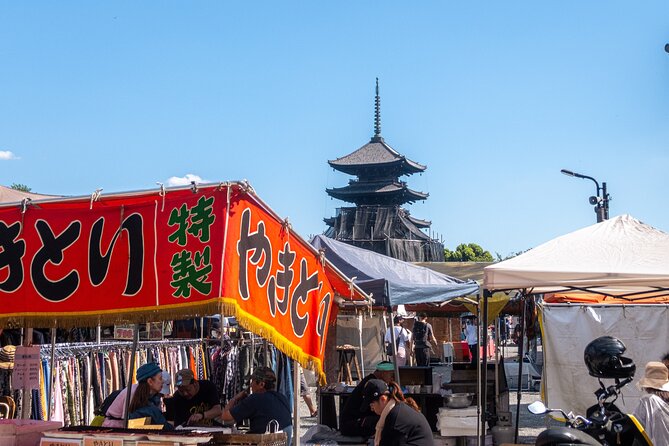
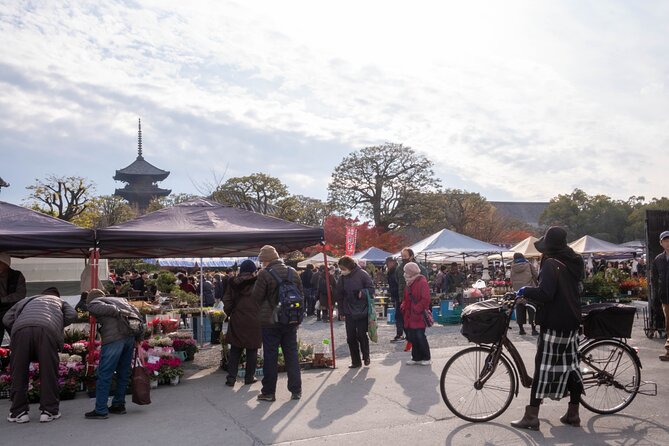
- Kobo-ichi and Kotto-ichi: what you’ll see in the stalls
- How the haggling tips actually help (without making it awkward)
- The To-ji Temple grounds: a calm contrast to the market
- Timing, group size, and private-tour feel
- Price and value: why $13 per person can make sense
- What to bring so you actually enjoy the hunt
- Who this tour suits best (and who might want something else)
- Should you book this Kyoto flea market exchange?
- FAQ
- How long is the Kyoto Flea Market Cultural Exchange with English Learners?
- Where does the tour start and end?
- Is this tour private?
- What kinds of items might I find at the flea market?
- Does the tour include public transportation or admission?
- Will I practice English during the tour?
- What happens if weather is poor or I cancel?
Key things to know before you go
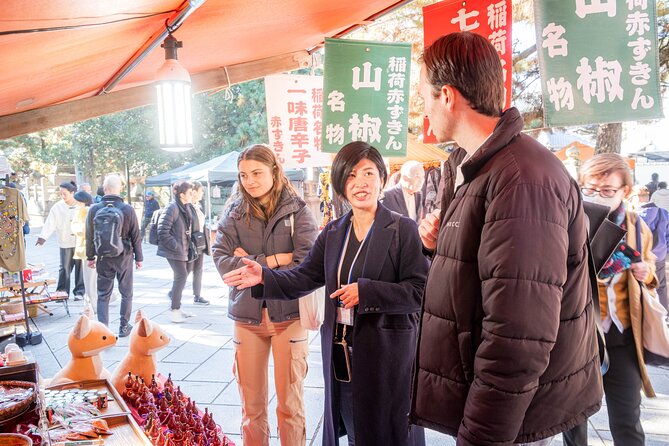
- To-ji Temple markets: You’ll visit flea market areas known as Kobo-ichi and Kotto-ichi.
- English exchange focus: Your guide is a Kyoto resident learning English, so conversation is part of the point.
- Real shopping targets: Expect antique ceramics, vintage clothing, old toys, and collectible-type finds.
- Short walk, private group: About 1 hour 30 minutes to 2 hours, for just your group.
- Weather matters: The experience requires good weather.
Why To-ji Temple markets are a smarter way to see Kyoto
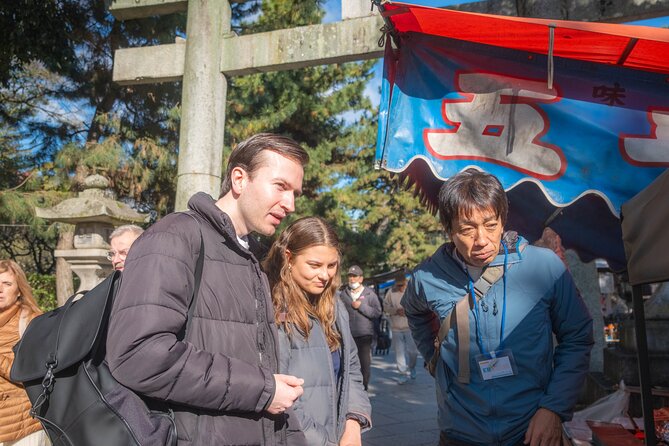
Kyoto can feel like a stage set if you only follow the big sights. This tour gives you something more human: you’re walking through market culture tied to a major temple, where people show up to trade stories as much as objects.
What makes To-ji special here is how the flea-market areas and the temple grounds work together. You’re not choosing between temples and shopping—you’re doing both, and you get help reading the scene as you go. The items you’ll encounter also aren’t random souvenirs. You might see antique ceramics, vintage clothing, old toys, and collectible-style merchandise, which makes the search feel more personal than “buy a thing and leave.”
Also, the price-to-time ratio is unusually good for an English-focused guide plus a guided walk. At about $13 per person for roughly 90 minutes to 2 hours, you’re paying for interpretation and conversation, not a high-priced museum ticket day.
You can also read our reviews of more shopping tours in Kyoto


Meeting your local English-learner guide and how the chat works
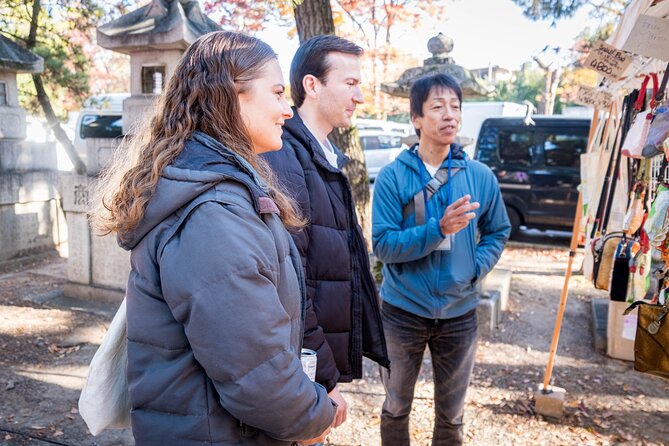
A big part of the value is who’s leading. Your guide is a local Kyoto resident who is also an English learner. That changes the whole dynamic. Instead of you being the spectator, you’re a participant in the exchange.
From what you can expect, the guide will:
- talk with you about Japanese customs
- answer questions as you explore
- use your time on the street to practice English together
- share practical advice for shopping in the market setting
This is also where the tour feels different from a standard “guided walk.” You’re likely to ask, “What’s this?” and “How do people decide?” and you’ll get real answers geared to daily life—not just textbook facts.
In the past, guests have highlighted that the guides were kind, fun to talk with, and genuinely interested in Japan. That matters because flea markets can be overwhelming even when you know what to look for. A guide who can keep the conversation moving and explain what’s worth your attention can turn stress into curiosity.
Kobo-ichi and Kotto-ichi: what you’ll see in the stalls
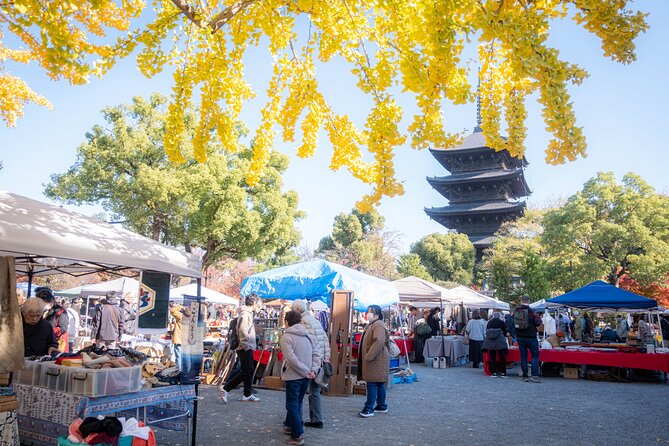
You’ll spend the core time moving through the flea market areas at To-ji. These market zones—Kobo-ichi and Kotto-ichi—are the reason many people come for this kind of experience in Kyoto: it’s where you can hunt for older, more interesting objects rather than mass-made tourist items.
Here’s what you should be ready to spot as you walk:
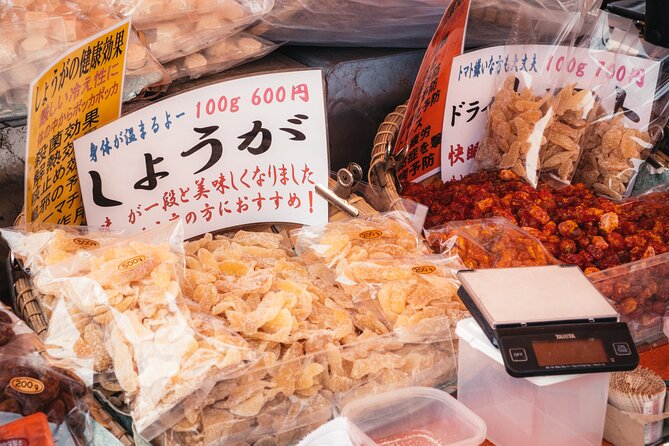
- Antique ceramics (think older tableware or decorative pieces)
- Vintage clothing
- Old toys
- Rare collectible-type items
You don’t need to be an expert collector to enjoy it. The fun is in learning how people describe items and what questions to ask. Your guide can help you understand categories and the kind of value the seller is aiming for, which makes you a better shopper even if you only buy one small souvenir.
One practical note: flea market shopping moves at a slower pace than a temple photo stop. Bring energy for looking and asking questions. You’ll likely spend more time pausing than you expect, because that’s where you’ll learn how to speak up and compare what you’re seeing.
How the haggling tips actually help (without making it awkward)
People often think “haggling help” just means numbers. Here, it’s more useful than that. Since your guide is part of the exchange, they can guide you through the flow of negotiation in a way that feels natural.
What you can count on:
- support while you negotiate prices
- help choosing what to say so your questions land well
- guidance on what’s reasonable to ask for, based on the item category
If you’ve never bargained in Japan, this is a smart way to learn without putting your confidence on the line. Your guide acts like a translator for both language and market etiquette. Even when you’re not buying, you’ll understand the logic behind pricing—why one stall asks more than another and how sellers respond.
And even if you don’t bargain hard, the tips are still worth it. The tour helps you avoid the classic mistake of treating every price tag like the final word and missing out on how bargaining works in local shopping culture.
The To-ji Temple grounds: a calm contrast to the market
After you’ve worked through the market energy, you also get time to explore the temple grounds. The “free area” around the temple is included in the experience window, so you can reset for a bit.
To-ji is famous for its five-story pagoda, and standing in that space gives you perspective on why this location hosts so many people in the first place. The temple setting also makes it easier to appreciate the market as part of a living place, not a separate tourist attraction.
What I like about this balance is that you don’t have to choose between calm and action. You get a walking market culture moment, then a quieter temple atmosphere where you can slow down, look up, and take a breather.
You can also read our reviews of more tours and experiences in Kyoto



Timing, group size, and private-tour feel
This is designed to be a private walking experience for just your group. That matters for two reasons.
First, you can ask questions at your pace. Markets don’t always behave like timed museum tours. With a private group, you don’t have to keep up with someone else’s speed or tolerate someone else’s shopping priorities.
Second, the language exchange works better in smaller settings. You’ll get more chances to talk instead of watching from the edge.
In terms of timing, expect about 1 hour 30 minutes to 2 hours. That’s long enough to see multiple stalls and still feel like you’re finishing with a sense of what you want. It’s also short enough that you can pair it with other Kyoto plans the same day.
Start time is 1:00 pm, with the experience starting at 544 Yamabushiyamachō, Nakagyo Ward, Kyoto and ending at To-ji Temple (1 Kujōchō, Minami Ward, Kyoto).
Price and value: why $13 per person can make sense
At around $13.01 per person, the ticket price is budget-friendly for what you’re buying: a guided, conversation-led market walk plus hands-on help with negotiation and cultural context.
Here’s how I’d think about value:
- You’re not paying only for translation. You’re paying for a local person who knows how the market works.
- Admission is listed as free, and the temple grounds access is part of the experience.
- You’re also getting practical shopping support. That often ends up saving money, because you’re less likely to overpay or buy without understanding what you’re looking at.
The tour does include gratuities. Mobile tickets are used, which can reduce friction on the day of your walk.
One cost to keep in mind: public transportation is not included. The tour uses public transportation as part of the plan, so you’ll want to budget for transit fares separately.
What to bring so you actually enjoy the hunt
This kind of market visit is where “good intentions” meet reality. Bring the basics that make shopping and talking easier.
I’d suggest:
- Comfortable shoes for uneven ground and stall hopping
- A small cash reserve, if you plan to negotiate or buy items (even with translation support)
- A light bag you can carry while you keep looking
- Curiosity. If you treat it like a quiz, it gets fun fast
Also, set expectations. You’re not aiming for a single perfect purchase. You’re aiming to learn the language of the market—what’s valued, how people talk, and how sellers respond.
Who this tour suits best (and who might want something else)
This tour is a great fit if you want:
- English conversation with a local who’s learning too
- a guided way to shop flea markets without feeling lost
- haggling help and a cultural explanation of how it works
- a short, private walk that doesn’t swallow your whole afternoon
It’s also a good choice for travelers who like antiques, vintage items, or collectible-type shopping and want to talk while they look.
You might consider a different style of tour if you:
- hate price negotiation and want fixed-price shopping only
- prefer strict schedules and hate wandering
- can’t handle walking in markets for a short period
Finally, good weather matters. The experience requires it, so plan around forecasts.
Should you book this Kyoto flea market exchange?
I’d book it if your idea of a great day in Kyoto includes real people, street-level culture, and practical help. The strongest reason to choose this is the guide dynamic: a Kyoto resident who’s learning English brings conversation to the front, and that’s what turns a market walk into a memory you can talk about later.
It’s also a smart “value” pick. For a low per-person price, you’re getting a guided route, cultural context, and support in shopping and negotiation—plus a temple contrast afterward.
Just be honest with yourself about one point: you’re stepping into a marketplace where bargaining and talk are normal. If that sounds fun rather than stressful, this is an easy yes. If you want silence, fixed pricing, and zero negotiation energy, look for a different tour style.
FAQ
How long is the Kyoto Flea Market Cultural Exchange with English Learners?
Plan for about 1 hour 30 minutes to 2 hours.
Where does the tour start and end?
It starts at 544 Yamabushiyamachō, Nakagyo Ward, Kyoto, and ends at To-ji Temple, 1 Kujōchō, Minami Ward, Kyoto.
Is this tour private?
Yes. It’s a private tour/activity, and only your group will participate.
What kinds of items might I find at the flea market?
You can expect stalls with items like antique ceramics, vintage clothing, old toys, and collectible-type treasures.
Does the tour include public transportation or admission?
Admission is free (and the temple grounds area is free), but public transportation is not included.
Will I practice English during the tour?
Yes. Your guide is an English learner, and you’ll have conversations about Japanese customs during the walk.
What happens if weather is poor or I cancel?
The experience requires good weather. If it’s canceled due to poor weather, you’ll be offered a different date or a full refund. If you cancel, the amount you paid is non-refundable.