REVIEW · KYOTO
Kyoto: Private tour with Kyoto’s licensed guide. Spanish
Book on GetYourGuide →Operated by Kyoto Guide · Bookable on GetYourGuide
Kyoto can feel big fast. This private, Spanish-led route keeps you moving with a city-licensed Kyoto guide while you get iPad-style explanations that make the temples click. I like that the itinerary bundles the key sights—Golden Pavilion, Nijo Castle, Fushimi Inari, Kiyomizu-dera, and Gion—into one day, so you leave with a clear sense of where everything fits. The main drawback is the pace: it’s a walking tour with public transportation, so you’ll want solid mobility and comfortable shoes.
You start at Kyoto Station, ride the subway/train/bus legs together, and then slow down where it matters with guided time inside major sites. You also get help beyond the landmarks: the guide takes your photos, and after the tour you can explore with more confidence (plus you’ll likely get spot recommendations). If you’re planning a trip for kids, or you need frequent rests (or have back issues), this is probably not the best match.
In This Review
- Key Points Worth Noting
- A Private Kyoto Day With a City-Licensed Spanish Guide
- Pickup at Kyoto Station and the Transit Rhythm
- Kinkaku-ji (Golden Pavilion): What to Look For
- Entrance fee reality check
- Nijo Castle: Tokugawa Power You Can Walk Through
- Entrance fee reality check
- Nishiki Market: A Short Lunch Stop That Keeps You on Track
- Value note
- Fushimi Inari Taisha: Torii Gates and the Fox-Statue Trail
- Entrance fee reality check
- Kiyomizu-dera and the Sannenzaka Streets You’ll Remember
- Entrance fee reality check
- Gion With Geiko and Maiko: Evening-Style Atmosphere
- Price and Value: Is $180 Worth It?
- What you’re paying for
- What you must still budget for
- Pace, Footing, and Who This Tour Fits
- Photo Rules and Rain-or-Shine Reality
- Should You Book This Private Spanish Kyoto Tour?
- FAQ
- What language is the tour conducted in?
- Where is the pickup location in Kyoto?
- How long is the tour?
- Is this a private tour or a shared group?
- Which major sights are included?
- Are temple entrance fees included?
- Is food included in the price?
- Do I need to pay for the guide’s transportation?
- Does the tour run in rain or shine?
- Are photos allowed everywhere inside temples?
Key Points Worth Noting
- City-licensed, Spanish live guide for clear context at every major stop
- iPad explanations that help you understand what you’re seeing (especially the big visual stuff)
- Photo help included, so you’re not stuck playing phone photographer all day
- Temple entrance fees are mostly separate, so budget for Nijo Castle plus Kinkaku-ji and Kiyomizu-dera
- All-day walking + transit, with rain or shine and some photo limits inside temples
A Private Kyoto Day With a City-Licensed Spanish Guide
The best thing about a private guide day in Kyoto is not just comfort—it’s explanation. Kyoto’s top sites are famous, but they can also feel like a checklist if you don’t know what you’re looking at. With a Kyoto City official certified guide (in Spanish), you get the story behind each place while you’re still there, not after you’ve gone home.
I also like the added support of the iPad explanations. You can stand in front of a landmark and get help connecting the dots—what this temple represents, how the architecture ties to belief or power, and what details matter for your photos. It’s especially useful when the tour is rain or shine and you want your time to stay meaningful.
One more practical plus: this is a private group, so you can ask questions as you go. In the Spanish booking reviews, the guide Roberto is specifically praised for sharing knowledge in a friendly way and answering questions with confidence. That kind of calm, real Q&A beats reading a guidebook on your phone while you’re trying to keep up with crowds.
You can also read our reviews of more guided tours in Kyoto
Pickup at Kyoto Station and the Transit Rhythm
You meet at Kyoto Station Building, and pickup is in front of Seven Eleven. That matters because Kyoto Station can be a maze, and starting cleanly reduces stress before you even reach the first temple.
The route uses a mix of subway/metro, trains, and a bus/coach. You’ll see “legs” of travel between the main sights rather than long, exhausting transfers all at once. The day is structured: you get a guided block at each must-see spot, then you move on together.
A key detail: transportation fees for you are not listed as included. The guide’s entrances and transportation are covered, but your own subway/train/bus costs and lunch are your responsibility. Plan for that so there are no surprises mid-day.
Also note two tour rules that affect your day:
- No smoking
- No food or drinks in the vehicle
Not a big deal, but if you want snacks for later, stash them for when you’re on foot or at the market.
Kinkaku-ji (Golden Pavilion): What to Look For
Kinkaku-ji, the Golden Pavilion, is one of Kyoto’s best-known landmarks for a reason. It’s a UNESCO World Cultural Heritage site and a Zen Buddhist temple. The most eye-catching feature is the gold leaf—on the upper two floors—used historically to show wealth, power, and devotion.
When you walk into a place like this without context, it can become a quick photo stop. A guided explanation changes that. You can look at the gold leaf not just as decoration, but as a deliberate statement tied to status and belief. Your guide’s iPad support helps you keep the symbolism straight while you’re standing there.
Practical tip: the tour notes that inside some temples, there are places where photos are forbidden. Don’t fight it—follow signs and your guide’s advice. If you care about photos, it helps to ask where you can shoot freely before you start snapping.
Entrance fee reality check
Kinkaku-ji entrance is not included. The tour lists an entrance fee of 500 yen (about US$3.10) as a guide value.
Nijo Castle: Tokugawa Power You Can Walk Through
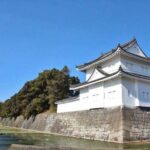
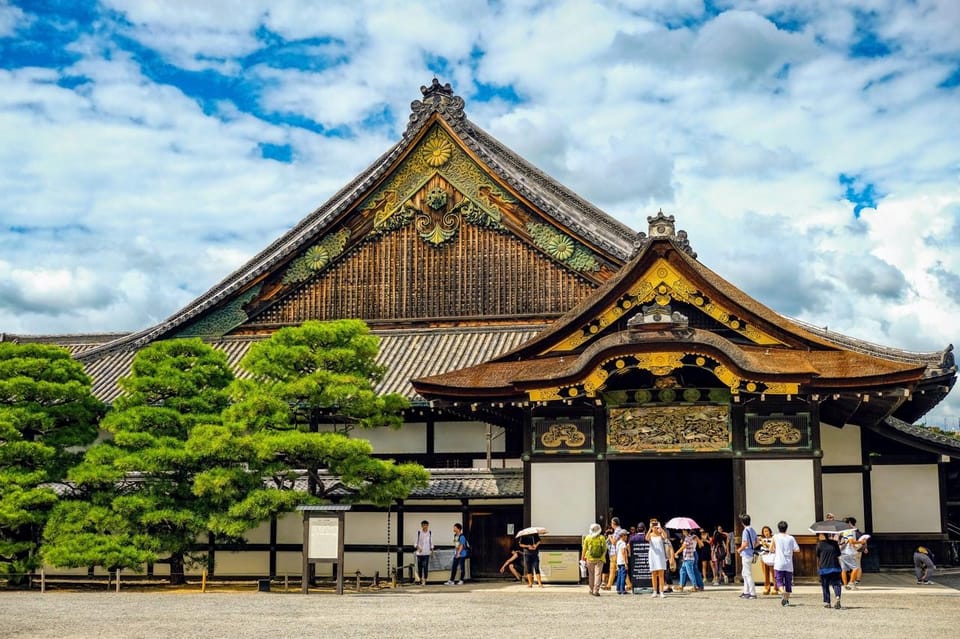
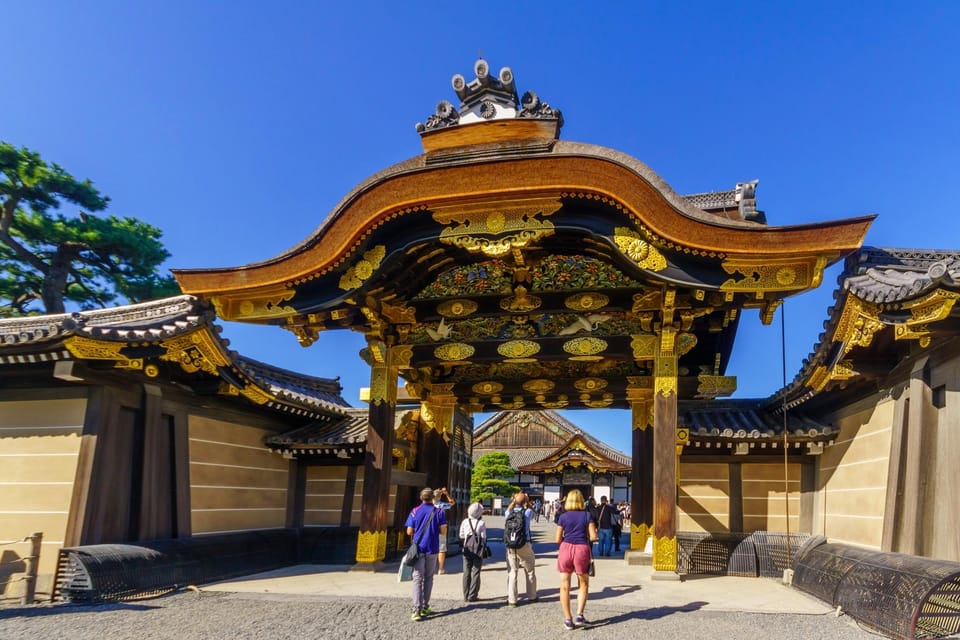
Next up is Nijo Castle, a UNESCO World Heritage site that connects Kyoto directly to the Edo period (1603–1867). This isn’t just a pretty complex; it’s described as a symbol of shogunal authority—the kind of place where political power was on display, day after day.
Here’s what makes the explanation valuable: Nijo Castle was once the residence of Tokugawa Ieyasu, the founding shogun of the influential Tokugawa dynasty. The tour frames the site as a center of influence that shaped Japan for over 200 years. That timeline matters. If you understand that context, the castle reads differently—less like ancient buildings, more like an operating system of authority.
You’ll have guided time here (listed at about 1.5 hours). That’s enough time to cover the big historical meaning without feeling rushed. If you’re the type who likes to ask questions, this stop is usually where a good guide can really make the period feel clear.
You can also read our reviews of more private tours in Kyoto

Entrance fee reality check
Nijo Castle entrance is not included. The listed fee is 1,300 yen (about US$8.50).
Nishiki Market: A Short Lunch Stop That Keeps You on Track
After the castle, you’ll take a break at Nishiki Market, often called Kyoto’s Kitchen. It’s described as a shopping street in central Kyoto that mixes traditional and modern food, ingredients, and crafts. The plan includes a short lunch time here.
This is a smart scheduling choice. You get a chance to eat and reset without turning the day into a half-day hunt for the perfect place to eat. Since food and drinks aren’t included, this is the moment when you decide what you want to spend money on.
What to expect in practice: the market is a walk-through environment. You’ll see lots of items related to cooking and eating—ingredients, snacks, and small gifts. If you’re picky about dietary needs, treat the lunch time as your best window. Don’t assume you’ll have a long sit-down meal later.
Also remember the tour rule: no food or drinks in the vehicle. So any snacks you buy are yours to handle once you’re out walking.
Value note
Even though the lunch is short, it’s part of a reason this tour works: you’re not spending your whole Kyoto day deciding where to eat.
Fushimi Inari Taisha: Torii Gates and the Fox-Statue Trail
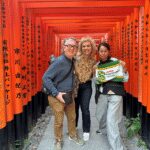
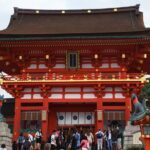
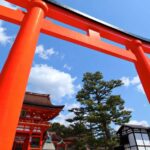
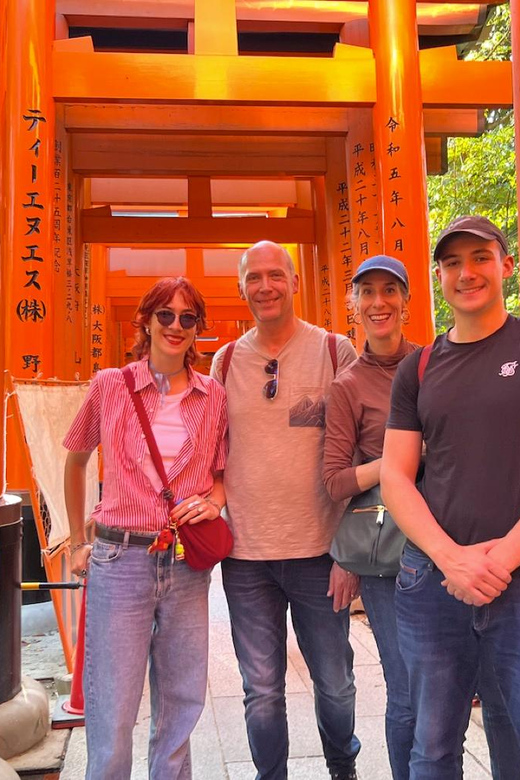
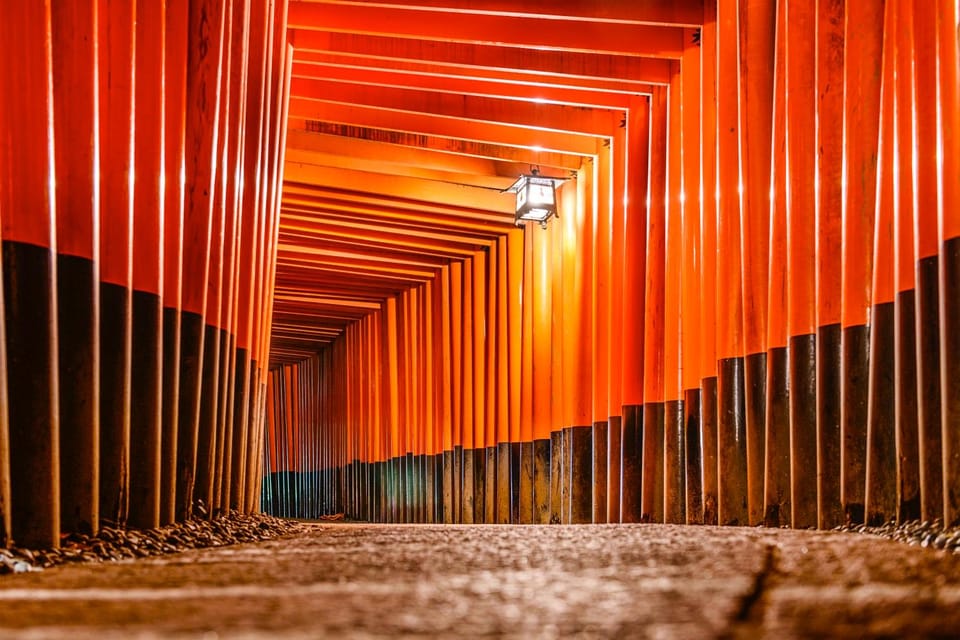
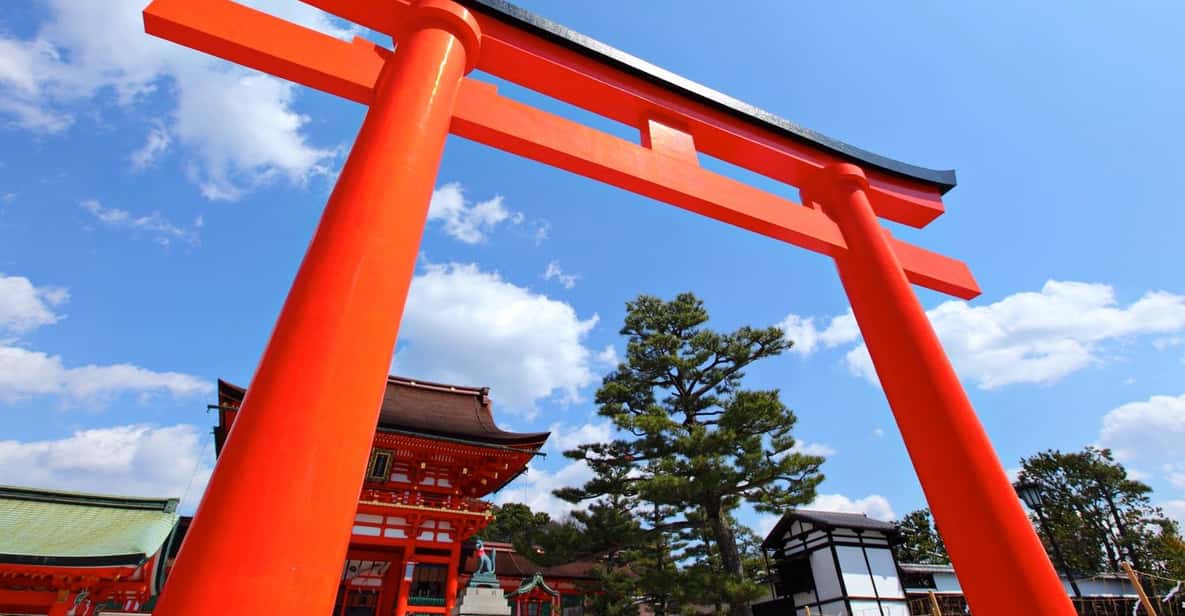
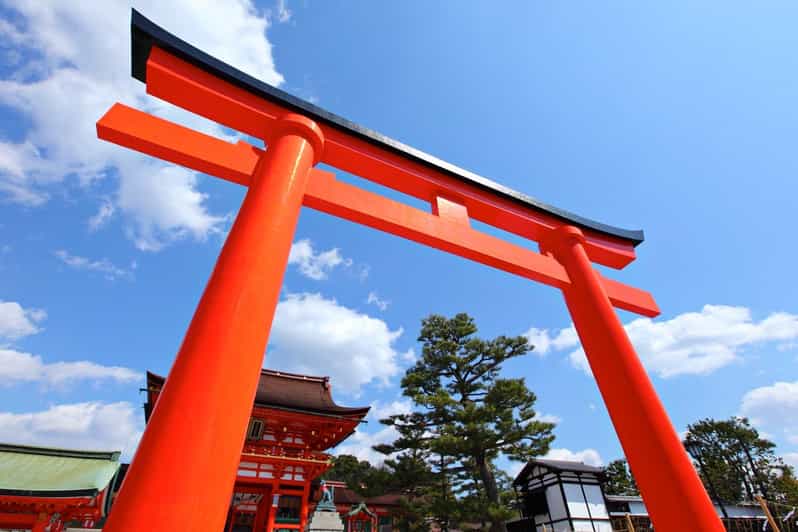
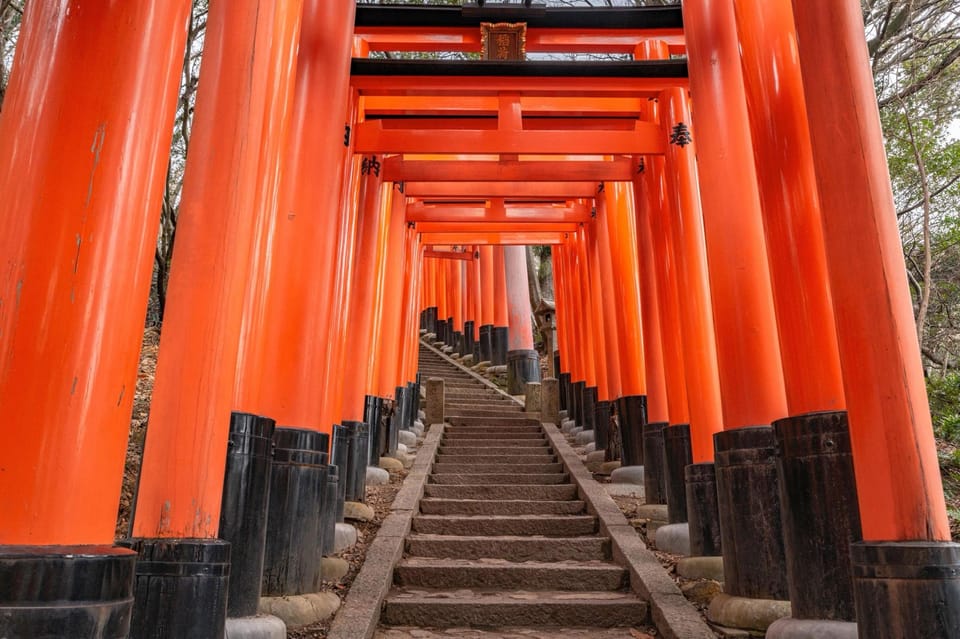
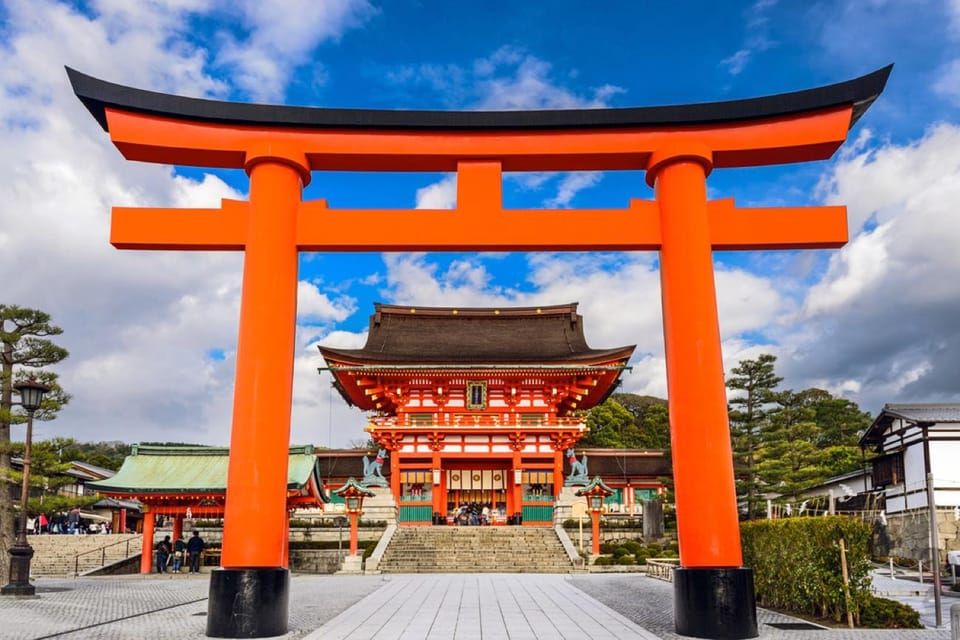
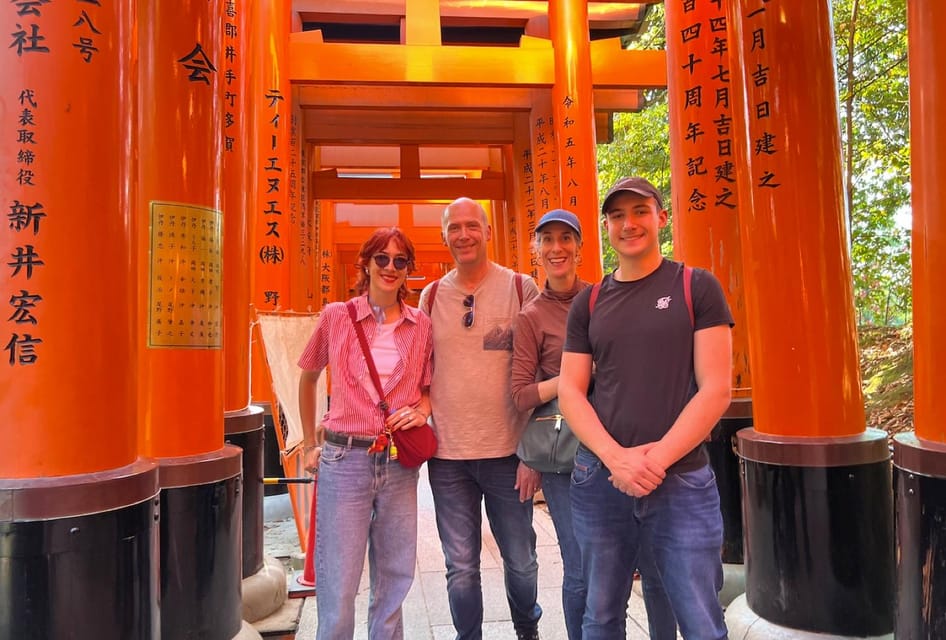
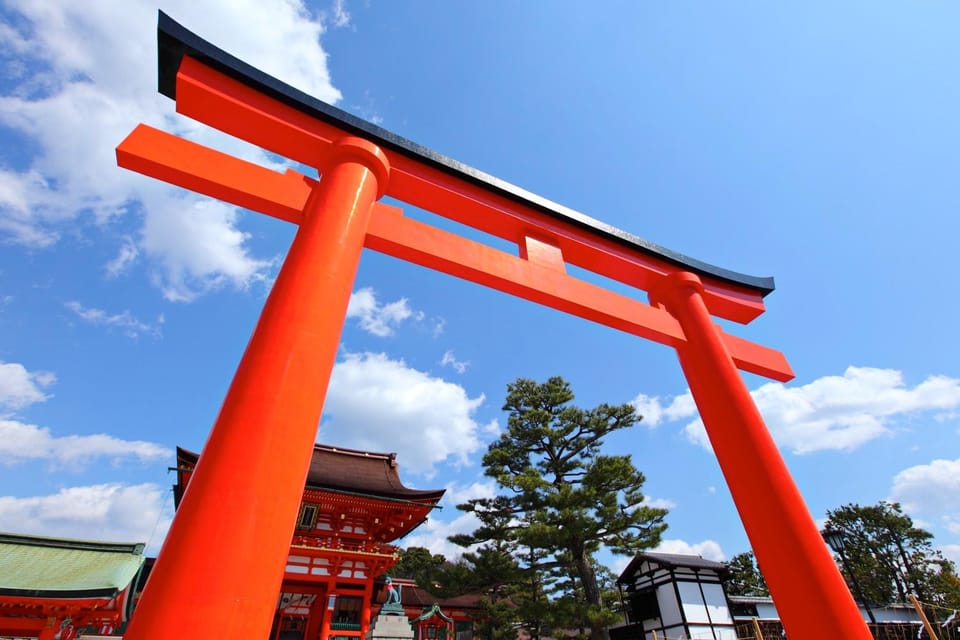
Then comes one of Kyoto’s most dramatic visual experiences: Fushimi Inari Taisha. This shrine is tied to Shinto spirituality, and its highlight is the collection of vermilion torii gates.
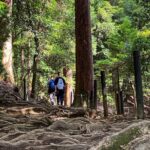
The description you get from the tour is the kind that helps you enjoy the walk rather than just pose near the famous view. You’ll stroll along paths behind the main structures, where the routes can intertwine. It’s not only scenic—it’s a reminder that this is a spiritual site with a layout meant for walking.
You’ll also notice fox statues scattered throughout the grounds. Those details give you a sense that the place is layered: it’s not just gates and crowds; it’s symbols and stories.
The guided time is listed at about 75 minutes, which is long enough to experience the flow without feeling like you’re sprinting to the next photo moment.
Entrance fee reality check
Fushimi Inari is listed as free on this tour.
Kiyomizu-dera and the Sannenzaka Streets You’ll Remember
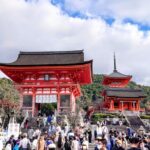
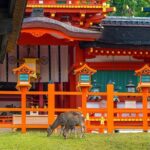
Kiyomizu-dera is another UNESCO stop and one of Japan’s most famous temples. The tour frames it as steeped in history and Buddhist traditions. The key “Kyoto” add-on isn’t just the temple itself—it’s the streets around it.
You’ll also visit the area of Sannenzaka and Ninenzaka, which are described as lively shopping streets with stalls for Kyoto sweets, souvenirs, and traditional crafts. This is where Kyoto stops feeling like architecture and starts feeling like everyday life—snack smells, handmade items, and people moving through narrow lanes.
A good guide helps you time this part of the day. You have about 1.5 hours of guided time at Kiyomizu-dera plus walking on foot afterward. That means you get temple context first, then you can wander the surrounding streets with better understanding of what you’re seeing.
Photo note again: some areas inside temples may forbid photos. If you want a clean set of shots, plan for your best angles outside restricted zones.
Entrance fee reality check
Kiyomizu-dera entrance is not included, listed at 500 yen (about US$3.10).
Gion With Geiko and Maiko: Evening-Style Atmosphere
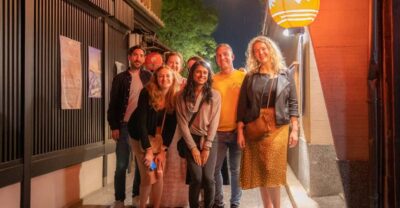
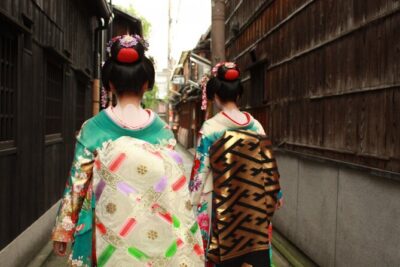
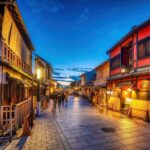
Your last guided stop is Gion, one of Kyoto’s most famous districts for traditional arts and performances. Here you’ll learn the Kyoto-specific names: geiko (Kyoto’s term for geisha) and maiko (apprentice geisha).
The tour description focuses on what matters: they perform traditional arts like music, dance, and tea ceremonies. You’ll also see the architecture that preserves the past—wooden machiya townhouses, tea houses known as ochaya, and narrow cobblestone streets.
One practical expectation: during the evening, you might spot geiko or maiko in full attire heading to appointments. This isn’t something you can control, but being there with your guide means you’ll know what to look for and how to behave respectfully if you do spot someone.
The tour time in Gion is shorter (about 30 minutes guided), which fits the day’s overall pacing. You should expect atmosphere and orientation more than a long, deep stop.
Price and Value: Is $180 Worth It?
At $180 per person, this is not a budget group tour. But it’s also not priced like a luxury private driver-and-guide package where you sit and get chauffeured. This pricing fits a very specific value: a licensed Kyoto guide, a structured route of major sights, and extra explanation support via iPad.
Here’s how I’d judge the value in real life:
What you’re paying for
- A guide who can explain Kinkaku-ji, Nijo Castle, Fushimi Inari, Kiyomizu-dera, and Gion in Spanish
- A private setting where you can ask questions and not feel lost
- Photo help: the guide can take as many pictures of you as you want
- A day plan that uses public transportation efficiently instead of leaving you to map everything on your own
What you must still budget for
Entrance fees (not all):
- Golden Pavilion: 500 yen
- Kiyomizu-dera: 500 yen
- Nijo Castle: 1,300 yen
- Fushimi Inari: free
- Geisha district/Gion: free
And also:
- Food and drinks
- Your own transportation costs (the activity notes transportation fee as not included)
So the honest way to think about it: the base price pays for your guided experience and the time-won logic of a smart route. You still pay for temple tickets you enter and for your meals.
If you already know exactly how you’ll navigate Kyoto, a self-guided day could be cheaper. But if you want your time to feel guided, with explanations that help you understand each site immediately, the value is strong.
Pace, Footing, and Who This Tour Fits
This tour is described as a walking tour that uses public transportation. It’s also explicitly stated that the guide will not climb mountains or take you up long stairs.
Still, “not mountains” doesn’t mean “easy.” Inside temples there’s quite a bit of walking, and it’s not recommended if you need to rest frequently due to overweight or age, or if you use leg prosthetics. It’s also not suitable for:
- Children under 7
- People with back problems
- People over 287 lbs (130 kg)
- People with low level of fitness
So who should book it? People who:
- Can handle steady walking for a full day
- Want structured sightseeing rather than wandering randomly
- Prefer a Spanish guide who can answer questions as you go
- Want to see the big Kyoto hits in one go and then explore on your own afterward with more confidence
If you’re traveling with mobility constraints, you may want to look for a shorter, less walking-heavy itinerary. This one is built for movement.
Photo Rules and Rain-or-Shine Reality
Two details that help your expectations:
- The tour operates rain or shine
- Inside some temples, there are places where photos are forbidden
That means you should bring a practical mindset. Comfortable shoes matter. Even if it’s not long-stair climbing, wet stone and crowded lanes can feel harder than you expect.
The iPad explanations can also help on rainy days. When visuals are less clear outdoors, having the guide explain key points while you’re sheltered or paused can keep the experience from turning into only weather and umbrellas.
Also, this tour includes the option for many photos. If photography is part of the trip joy for you, it’s a good setup—no awkward, constant self-timer switching.
Should You Book This Private Spanish Kyoto Tour?
Book it if you want:
- A private, Spanish-led introduction to Kyoto’s biggest landmarks
- Real explanations at each stop (not just a photo sprint)
- A guide who can answer questions and help you understand what you’re seeing through iPad visuals
- A day plan that ends with enough confidence to wander Kyoto afterward
Skip or reconsider if:
- You need frequent rest breaks or have mobility limits that make temple walking difficult
- You’re traveling with young kids
- You want entrances fully included and food already handled, because those are separate costs here
My bottom line: this is a strong option for travelers who want structure and clarity, not guesswork. The route hits the big names—Kinkaku-ji, Nijo Castle, Nishiki Market lunch, Fushimi Inari, Kiyomizu-dera, and Gion—and the guide support (Spanish + iPad explanations + photo help) makes the day feel more meaningful than doing it alone.
FAQ
What language is the tour conducted in?
The tour is conducted in Spanish.
Where is the pickup location in Kyoto?
Pickup is included in front of Seven Eleven at the Kyoto Station Building.
How long is the tour?
The duration is 510 minutes.
Is this a private tour or a shared group?
It’s a private group.
Which major sights are included?
The tour includes Kinkaku-ji (Golden Pavilion), Nijo Castle, Nishiki Market, Fushimi Inari Taisha, Kiyomizu-dera, and Gion.
Are temple entrance fees included?
No. Entrance fees are not included for Golden Pavilion (500 yen), Kiyomizu-dera (500 yen), and Nijo Castle (1,300 yen). Fushimi Inari and Geisha District are listed as free.
Is food included in the price?
No. Food and drinks are not included, though Nishiki Market includes a short lunch break.
Do I need to pay for the guide’s transportation?
The guide’s entrance fees and transportation are noted as not necessary to pay. Your own transportation fees are listed as not included.
Does the tour run in rain or shine?
Yes, it runs rain or shine.
Are photos allowed everywhere inside temples?
Not always. The tour notes that inside some temples there are places where taking pictures is forbidden.