REVIEW · KYOTO
Kyoto: Gion Geisha District Walking Tour – Stories of Geisha
Book on GetYourGuide →Operated by Localized Walking & Food Tours · Bookable on GetYourGuide
Gion at night feels like a living stage. This Kyoto geisha district walking tour pairs old wooden streets with real context, so the costumes and traditions make sense. I like that it’s built around walkable districts like Gion and Pontocho, not just a quick photo stop. The route is also flexible enough that you can ask questions as you go.
I also love the way the tour connects places to people, from street life in Pontocho to performance legends tied to the area. For example, you’ll pause at the statue of Izumo-no-Okuni and learn why that figure matters to Japanese stage art. One thing to keep in mind: sightings of geisha and maiko depend on their schedules, so treat it as a chance, not a guarantee.
In This Review
- Key Things to Notice on This Gion Geisha Walk
- Nighttime Gion and Pontocho: What This 2-Hour Walk Really Gives You
- Meeting at Ben’s Cookies Kyoto Shijo: Start Easy, Stay on Schedule
- Pontocho Alley and Izumo-no-Okuni: Street Life Meets Stage Origins
- Gion Streets and Yasaka Shrine: How the District Feels Like a Neighborhood
- Gion Corner and Hanamikoji Street: The Best Place to Slow Down and Ask
- Spotting Geiko and Maiko: How to Think About It Without Getting Frustrated
- Price and Value: Why $20 for Two Hours Can Be a Smart Spend
- Who This Tour Fits Best (and Who Might Want a Different Plan)
- The Respect Factor: Simple Rules That Make the Walk Better
- Should You Book This Kyoto Geisha District Walking Tour?
- FAQ
- Where do I meet the guide?
- How long is the Kyoto Gion Geisha District walking tour?
- What language is the tour guide in?
- Is this tour suitable for children?
- Do I need to bring anything?
- Is alcohol allowed during the tour?
- Is there free cancellation?
- Can I reserve and pay later?
Key Things to Notice on This Gion Geisha Walk
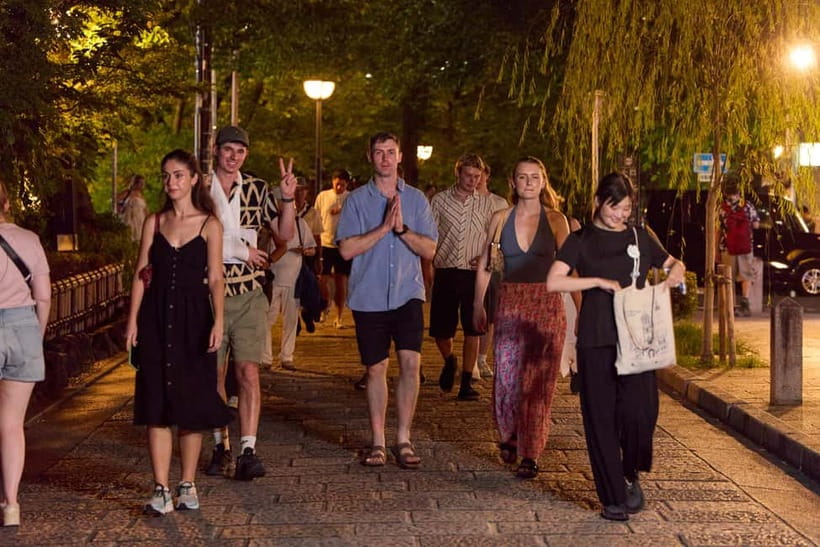
- Nighttime route through Gion and Pontocho: the alleyways and teahouse streets feel different after dark.
- Izumo-no-Okuni statue stop: performance history gets tied to a real landmark, not just trivia.
- Yasaka Shrine and Hanamikoji Street: major waypoints that help you read the district at walking pace.
- Gion Corner quick visit: a short stop that connects the ideas behind the entertainment world.
- Live English/Spanish local guide: you can ask questions while your feet are already on the ground.
- Bring water: it’s a 2-hour walk, and you’ll want something to sip on.
Nighttime Gion and Pontocho: What This 2-Hour Walk Really Gives You
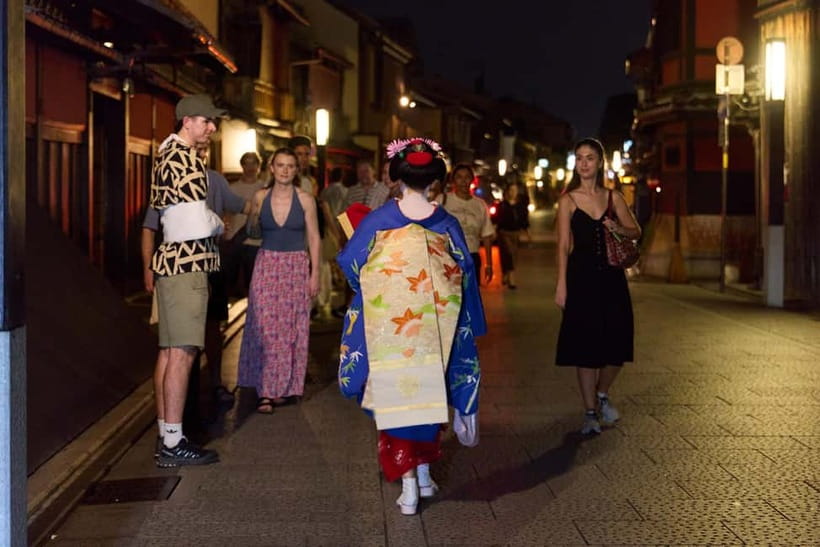
Kyoto’s geisha districts work best when you slow down and let the streets explain themselves. This tour is timed for the evening vibe, when narrow lanes in Gion and Pontocho feel like part of the original rhythm of the neighborhood. You’re not racing from temple to temple. You’re moving through the places where performances, appointments, and training-era traditions used to be the main story.
The biggest value is interpretation. The guide doesn’t just point at old buildings. They connect what you’re seeing to how the culture functions: who performs, how artistry is shaped, and why certain spots matter. If you’ve only seen geisha-style imagery online, this kind of grounded walk helps you stop treating it like costume drama.
Also, this is the kind of experience that works even if you know nothing. Many guides on this route are praised for adjusting their stories for people from first-timers to those who already know the basics. That matters because you don’t want a lecture that either talks over your head or repeats what you already read.
You can also read our reviews of more walking tours in Kyoto

Meeting at Ben’s Cookies Kyoto Shijo: Start Easy, Stay on Schedule
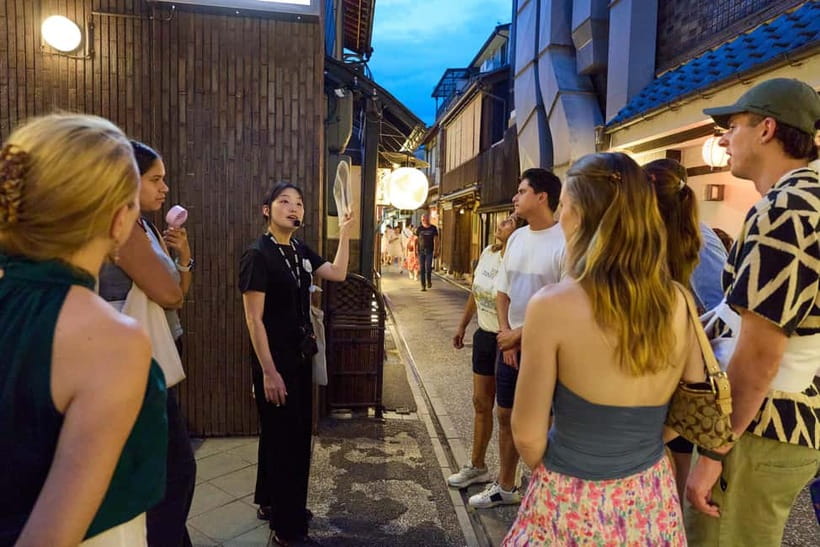
You meet your guide in front of Ben’s Cookies Kyoto Shijo, and they’ll be holding a sign board. I like meeting points like this because you avoid the usual Kyoto chaos of matching a description to a street corner. You know the landmark, you know the timing, and you can focus on the walk instead of doing last-minute navigation.
From there, you’ll head out into the district at night with the guide setting the tone: what you’re about to see, what to pay attention to, and what questions are worth asking. That first stretch is useful because it trains your eye for the differences between streets, storefronts, and the pacing of people moving through the area.
Practical tip for you: show up a little early so your group forms calmly and you’re ready to start walking right away. This tour is short at two hours, so every minute counts.
Pontocho Alley and Izumo-no-Okuni: Street Life Meets Stage Origins
The tour begins its “atmosphere building” in Pontocho Alley, a famous stretch of traditional eateries and elite clubs along the river. Even if you’ve only seen Pontocho in daylight photos, walking it at night changes how it feels. The buildings look closer. The street feels more like a corridor than an attraction.
What I like here is that the guide can explain how geisha culture ties into entertainment spaces without turning it into myth-babble. You get the sense that these were not random back streets, but organized social and performance zones. The alley section is also where your walking pace and attention start to matter most, because the streets are narrow and details show up fast.
Next comes a pause at the statue of Izumo-no-Okuni. This is a smart pivot. Instead of staying stuck on geisha imagery alone, you learn about a woman associated with the invention of kabuki, and how performance art in Japan connects to the broader tradition of public spectacle. It’s a good stop for two reasons:
- It gives a concrete name you can remember later.
- It helps you see that Japan’s stage arts are connected through individuals and eras.
After the statue, you’ll keep moving and cross the river as you continue deeper into the geisha district story. That crossing also helps you feel the district boundaries. You’re not just walking in circles—you’re transitioning between spaces that operate differently.
Gion Streets and Yasaka Shrine: How the District Feels Like a Neighborhood
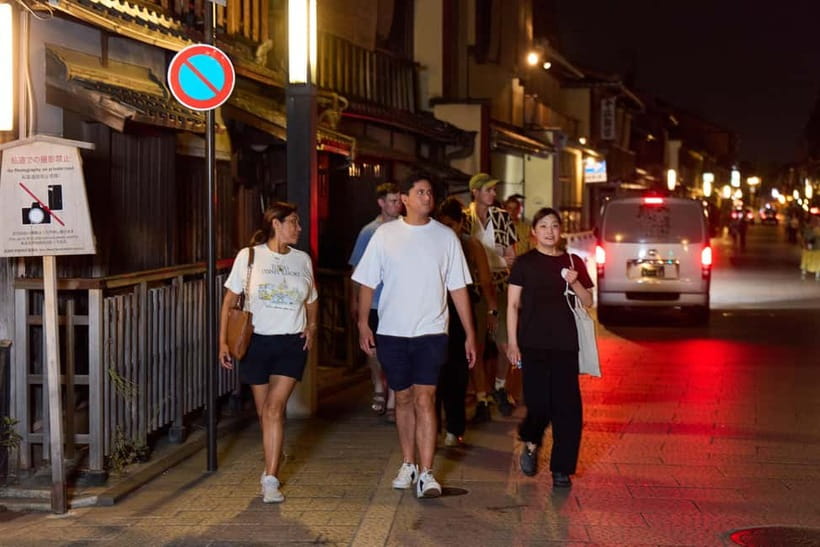
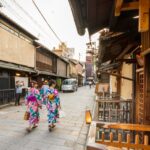
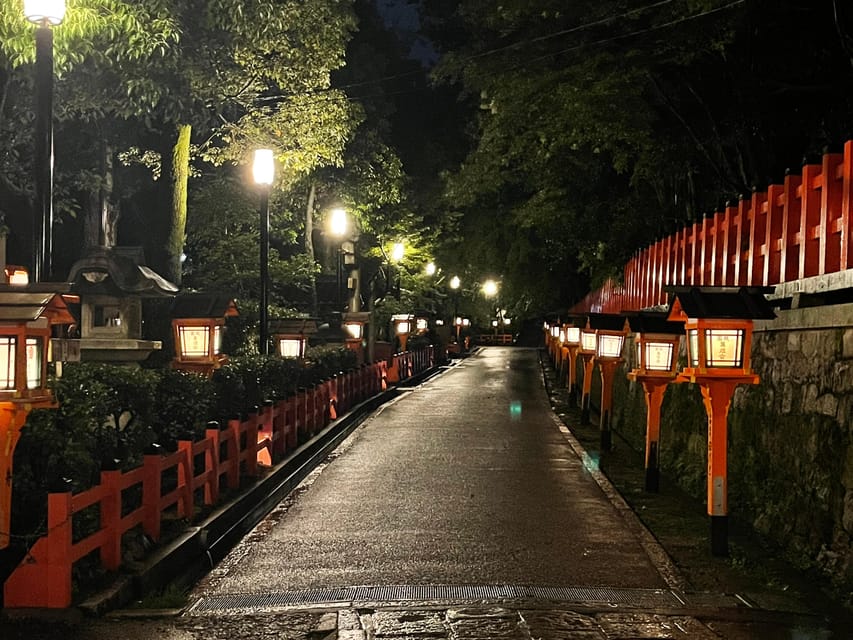
Then the tour shifts into Gion, Kyoto’s best-known geisha district. This is where you’ll spend a good chunk of time walking the older streets and seeing the teahouse-style architecture up close. At night, the details matter: wood, lantern-like lighting, and the way the lanes funnel foot traffic.
One of the strengths of this tour is that it treats Gion as a living neighborhood, not a theme park. The guide’s stories help you understand why certain streets got reputation, why certain traditions endure, and how training and appointments shape evening movement. The route is also designed so you might encounter geiko and maiko en route to appointments, which is exactly the kind of moment that makes the “stories” feel real instead of abstract.
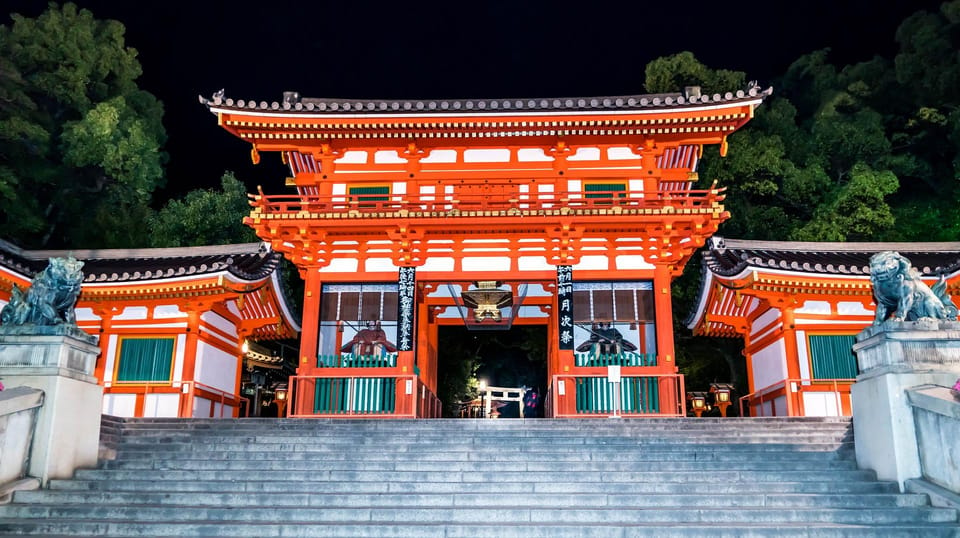
From there, you visit Yasaka Shrine. This stop helps you widen the frame beyond entertainment alone. Even if you’re mainly here for geisha culture, the shrine connection gives context for how Kyoto’s cultural life overlaps: religion, ritual, seasonal timing, and the social world that grew around it. It’s a useful counterweight to the idea that geisha districts exist in a vacuum.
A small but important note for you: the shrine stop adds walking time and changes the crowd density. If you prefer quieter sightseeing, plan to stay flexible and let your guide steer your timing. Night walks can slow down naturally when people gather.
Gion Corner and Hanamikoji Street: The Best Place to Slow Down and Ask
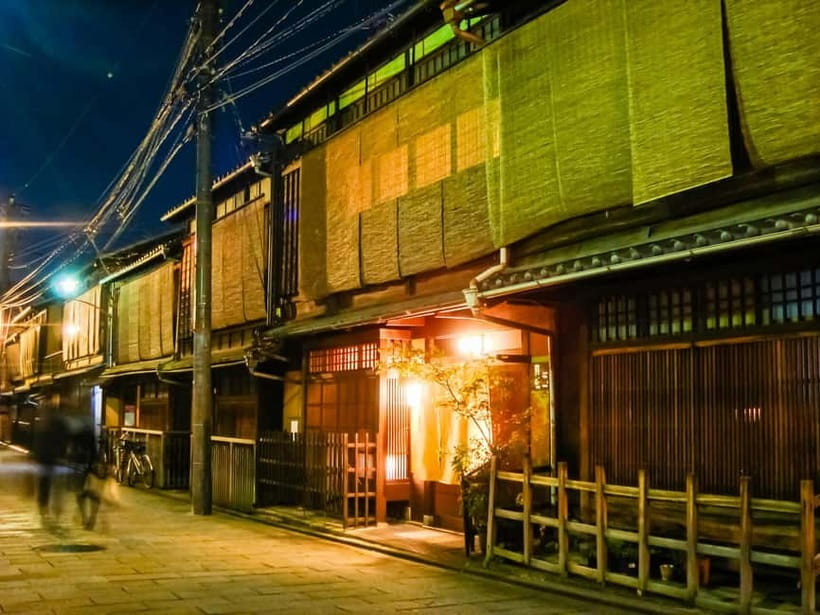
The tour includes a stop at Gion Corner and then moves to Hanamikoji Street, one of the most recognizable lanes in the district. This section is where I’d expect most first-timers to finally connect the dots. Hanamikoji is visually striking, but it’s also practical as a storytelling stage: the guide can point out what you’re seeing and how it connects to the entertainment world and daily life.
This is also a section where I recommend you actually use the chance to ask questions. The tour is set up for dialogue as you walk, and the guide can tailor answers on training, roles, and the difference between geiko and maiko. If you’ve wondered how strict traditions are today, or why certain arts are learned in a particular way, this is the moment to ask instead of hoping you’ll remember later.
You’ll likely notice your own change in pace here. Early on, you’re scanning for details. Later, the guide’s explanations can make you slower and more observant. That’s when the tour feels like more than a “see Gion” checklist.

Spotting Geiko and Maiko: How to Think About It Without Getting Frustrated
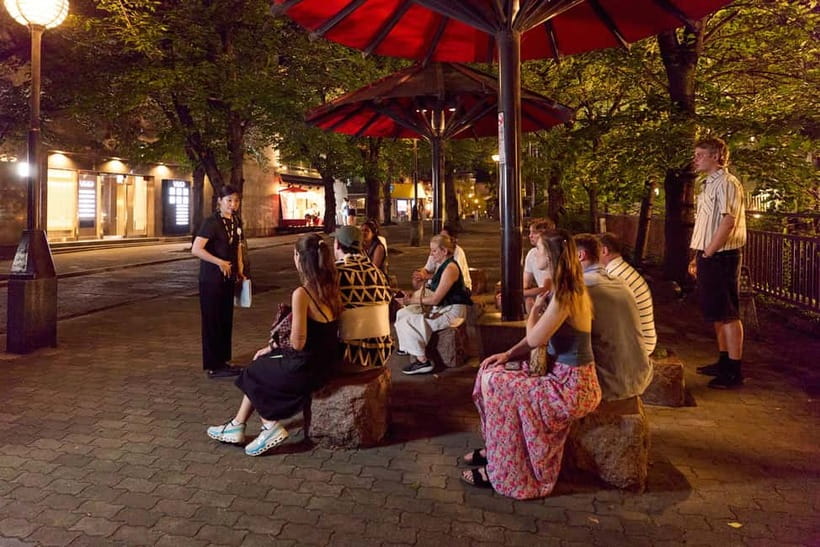
The tour promises chances to encounter geisha and maiko en route to appointments. Still, nighttime street life is not a controlled theater. People move. Schedules shift. Some nights may offer more visible moments than others.
So here’s a better way to think about it: the tour is valuable even if you don’t see a figure up close. Why? Because you’re learning what to look for and what the district means. Your guide is focused on the thriving traditions, not just a headcount of sightings.
Also, don’t underestimate how much the pacing affects your experience. If your group is patient and you keep walking at the guide’s rhythm, you’ll be in position to notice small things: how people move, how streets connect, and how the district operates after dark.
Price and Value: Why $20 for Two Hours Can Be a Smart Spend
At $20 per person for a 2-hour nighttime walk, this is one of the cheaper ways to get a local lens on a famous Kyoto topic. You’re paying for structure and interpretation more than for access to a private site. And that’s where value shows up.
If you tried to do this yourself, you’d have two problems:
- You’d be guessing which streets and landmarks matter most.
- You’d miss the “why” behind what you’re seeing.
This tour turns those guesses into clear context, with a live guide in English or Spanish. The guide-led format is especially worth it at night, because your time and attention are limited. Two hours disappears faster than you think, and this tour uses that time on the right stops: Pontocho Alley, Izumo-no-Okuni, Gion, Yasaka Shrine, Gion Corner, and Hanamikoji Street.
One more value signal: the rating sits at 4.7 from 2,187 reviews. That’s not a guarantee of your exact experience, but it does suggest the format lands well for most people.
Who This Tour Fits Best (and Who Might Want a Different Plan)
This is a strong pick if you want:
- A night plan that feels local rather than generic.
- A cultural walking experience with time for questions.
- An introduction to the world of geisha culture in Kyoto’s most famous districts.
It’s not suitable for children under 10, so plan accordingly if you’re traveling as a family with younger kids. It’s also a walking tour, so you’ll want to be comfortable on foot for the full 2 hours.
If you’re the type who likes history but hates standing still, this works well. The guide’s stories ride along with the streets, and the stops are spaced so you’re not stuck in one place for long.
The Respect Factor: Simple Rules That Make the Walk Better
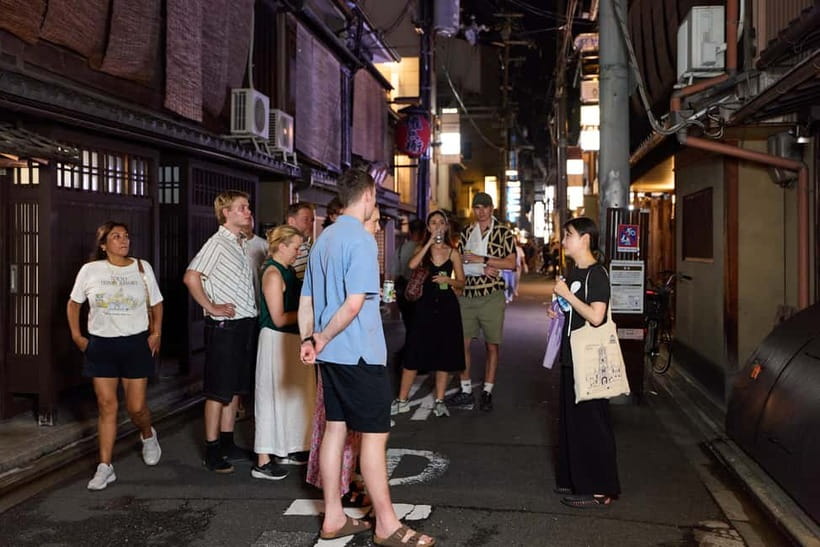
The tour explicitly says no alcohol and drugs, and that makes sense for a cultural district where the focus should stay on observation and respect. You’re also told to bring water, which is practical for any nighttime walking plan.
In my view, the best way to enjoy this is to treat it like a guided cultural walk, not a nightlife outing. The tour is about traditions, appointments, and the living world behind the reputation.
Should You Book This Kyoto Geisha District Walking Tour?
Book it if you want a short, focused evening experience that helps you understand Gion and Pontocho beyond the postcard view. The combination of key landmarks—Pontocho Alley, Izumo-no-Okuni, Yasaka Shrine, Gion Corner, and Hanamikoji Street—plus time to ask questions gives you a lot of meaning for the money.
Skip it or swap plans if you only care about maximum geisha sightings. This walk is designed around cultural context and district storytelling, and sightings depend on what’s happening that night. If you’re hoping for guaranteed encounters, you might end up disappointed.
If you’re curious, respectful, and ready for a real neighborhood at night, this one is an easy yes.
FAQ
Where do I meet the guide?
Meet your guide in front of Ben’s Cookies Kyoto Shijo. Your guide will be holding a sign board.
How long is the Kyoto Gion Geisha District walking tour?
The tour lasts about 2 hours.
What language is the tour guide in?
The live tour guide is available in English and Spanish.
Is this tour suitable for children?
It is not suitable for children under 10.
Do I need to bring anything?
You should bring water.
Is alcohol allowed during the tour?
No, alcohol is not allowed.
Is there free cancellation?
Yes. You can cancel up to 24 hours in advance for a full refund.
Can I reserve and pay later?
Yes. You can reserve your spot and pay later to keep plans flexible.