REVIEW · KYOTO
Kyoto Gion Geisha District Walking Tour – The Stories of Geisha
Book on Viator →Operated by Localized Walking & Food Tours · Bookable on Viator
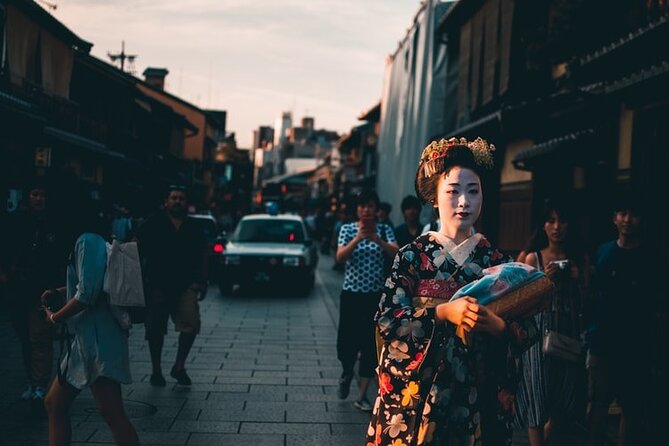
Kyoto’s Gion turns quieter after dark. This small-group walking tour is built for that exact moment, when the lanterns help you notice details you’d miss in daylight and when geisha and maiko head to appointments through the old streets. You get a friendly, fact-packed guide-led route designed to feel intimate, not like you’re part of a moving crowd.
I like two things most: the small group size (max 15) and the way the route focuses on Gion’s key corners in the evening, including Hanamikoji Street and Yasaka Shrine. One thing to consider: it’s still an evening walk—Kyoto can feel cold, and there’s only so much you can cover in about 2 hours, so it’s a great intro, not a full-day deep seminar.
In This Review
- Key highlights
- Kyoto Gion After Dark: When the Neighborhood Finally Feels Real
- Price and Time: Is a $25 Ticket Good Value for Kyoto?
- The Route Starts at Ben’s Cookies Shijo and Ends at Yasaka Shrine
- Stop 1: The Izumo-no-Okuni Statue and Kabuki’s Forgotten Origin Story
- Stop 2: Minamiza and the Theater Side of Kyoto’s Performance World
- Stop 3: Tatsumi Bridge and Gion Shinbashi’s Classic Scene
- Stop 4: Hanamikoji Street, Where Geisha Culture Meets Architecture
- Stop 5: Gion Corner and the Performing Arts Lens
- Stop 6: Yasaka Shrine, the Big Kyoto Landmark That Closes the Loop
- Small Group Size and Real Guide Energy: What Makes This Tour Feel Different
- What to Bring and How to Time Your Evening in Kyoto
- Who This Tour Fits Best (and Who Might Want Something Else)
- Should You Book This Kyoto Gion Geisha District Walking Tour?
- FAQ
- How long is the Kyoto Gion geisha district walking tour?
- How much does the tour cost?
- What is the group size limit?
- What is the meeting point and end point?
- Is bottled water included?
- Does the tour include admission fees?
- What does the tour focus on?
- What kind of ticket do I receive?
- Is the tour dependent on weather?
- Is there a cancellation deadline?
Key highlights
- Small group tour (max 15) that stays personal and question-friendly
- After-dark route through Gion when you can actually see the neighborhood, not just crowds
- Iconic stops including Hanamikoji Street and Yasaka Shrine
- Arts and performance context, from kabuki history to cultural performances at Gion Corner
- Free-to-visit viewpoints like the Izumo-no-Okuni Statue and Tatsumi Bridge area
Kyoto Gion After Dark: When the Neighborhood Finally Feels Real
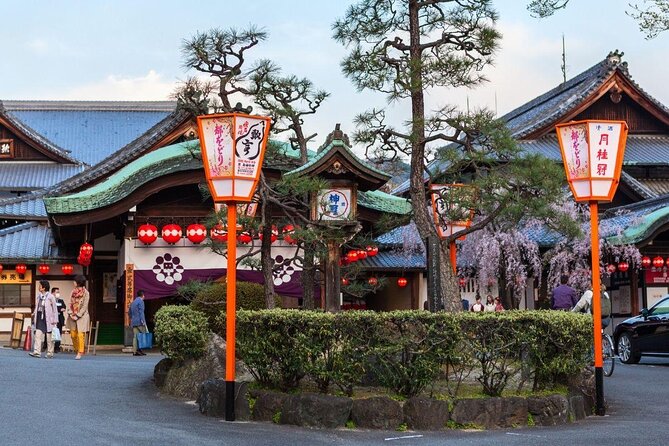
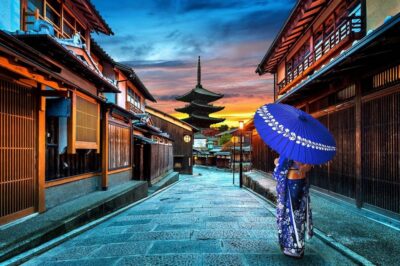
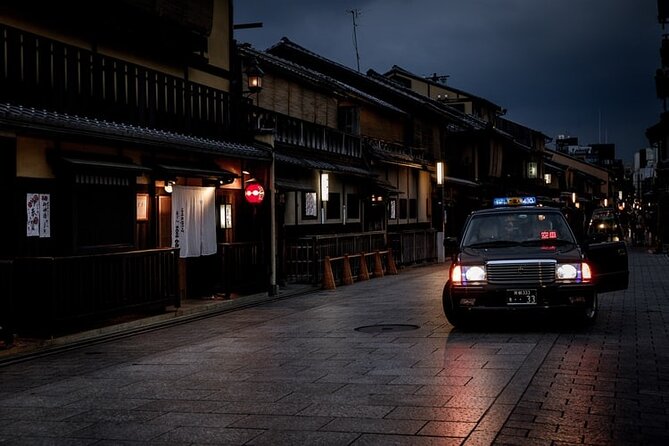
Gion in daytime can feel like a theme park version of itself—full of visitors, quick photos, and people speeding through. After dark, the mood changes. Streets become calmer. Details show up: wooden facades, the rhythm of lanes, and the way the neighborhood is arranged around traditions that still matter.
That’s where this tour scores. You’re not just walking the famous map dots. You’re walking the same area in a slower, more respectful way, when the district is working—appointments are happening, and the streets look like they belong to residents and performers, not just passersby. The pace also helps: it’s about 2 hours, so you can stay engaged without turning the experience into a marathon.
If you’re here for your first look at Kyoto’s geisha world, you’ll get more than surface-level visuals. You’ll learn the context behind what you’re seeing, including connections to theater and performance traditions. And because the group stays small, your guide has room to answer questions instead of rushing everyone along.
You can also read our reviews of more walking tours in Kyoto


Price and Time: Is a $25 Ticket Good Value for Kyoto?
At $25 per person for about 2 hours, this is one of those tours that feels fair immediately. You’re paying for three things: a guided path (so you don’t waste time hunting for the right spots), context (so the sights make sense), and timing (so you see Gion when it’s less crowded).
You also get practical value in the format. The tour uses a mobile ticket, and stops include points where admission is listed as free (for example, the Izumo-no-Okuni Statue and Tatsumi Bridge area viewpoints). That means you’re not hit with add-on entry fees mid-walk.
What you’re not buying is a long, all-day experience or a guarantee of seeing a geisha or maiko in motion at every corner. Still, for most first-time visitors, the trade-off is worth it: you come away with a clearer mental picture of how Gion is organized and why certain places matter.
The Route Starts at Ben’s Cookies Shijo and Ends at Yasaka Shrine
Your walk begins at Ben’s Cookies Kyoto Shijo (89 Shinchō, Shimogyo Ward). Starting there is handy because it’s a very recognizable meeting spot, and it puts you in a good position to begin your evening route toward Gion.
The tour ends at Yasaka Shrine (625 Gionmachi Kitagawa, Higashiyama Ward). That matters because Yasaka Shrine is a natural anchor point. Once the tour ends, you’re already in an area where you can keep exploring at your own pace—especially if you want to pair the evening atmosphere of Gion with a major Kyoto landmark.
The tour is listed as near public transportation, which is useful in Kyoto, where getting from point to point can be easier than you expect if you plan around transit lines. Since it’s a walking tour, wear shoes you’d use for an evening stroll, not sandals that feel sketchy on uneven pavement.
Stop 1: The Izumo-no-Okuni Statue and Kabuki’s Forgotten Origin Story
The first stop is the Izumo-no-Okuni Statue, located in the Gion district. This is a free stop and takes about 10 minutes. Why it’s on a geisha-focused walk? Because Japanese performance culture didn’t spring out of nowhere—there are storylines connecting entertainment traditions across eras.
Izumo-no-Okuni is linked to the legend of kabuki’s origins. Even if you don’t know kabuki from your last trip to a theater, this stop helps you understand something important: geisha culture and the broader world of stage arts share historical DNA. You’re not just collecting pretty street views—you’re building a framework for what performance meant in Kyoto, and why it still shapes the way people interact with the arts.
A small heads-up: this stop is mostly about story and symbolism. If you want hands-on, hands-you-a-reality type moments, you may find the real payoff later when the walk shifts to streets and venues tied to everyday cultural life.
Stop 2: Minamiza and the Theater Side of Kyoto’s Performance World
Next up is Minamiza, a historic theater known for hosting kabuki performances. Like the first stop, it’s a short visit (listed as around 10 minutes), and the goal here is context rather than deep theater history.
For me, this is a smart pairing. People often think of geisha culture as something separate from mainstream performance history. Standing near a kabuki landmark helps connect the dots between old forms of entertainment—costumes, drama, and storytelling traditions—and the refined etiquette that became part of geiko and maiko life.
This also gives you something to look for as you walk. After Minamiza, you’ll be more alert to the idea that the arts are not just something that happens on a stage. They’re embedded in the city’s layout, its institutions, and its daily rhythms.
If you’re hoping for a nonstop stream of photo stops, note the pacing is mostly interpretive. The payoff is that your understanding improves quickly.




Stop 3: Tatsumi Bridge and Gion Shinbashi’s Classic Scene
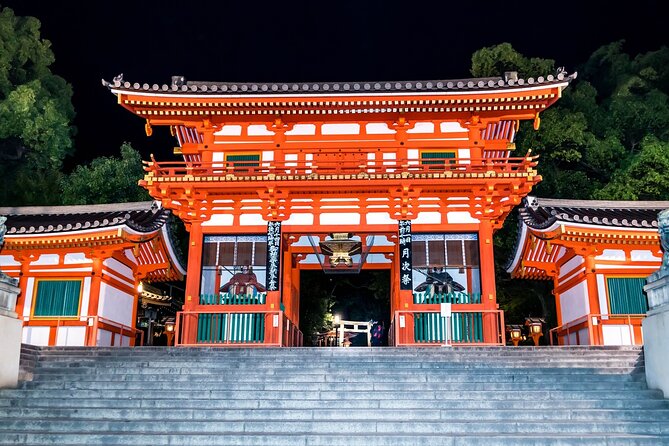
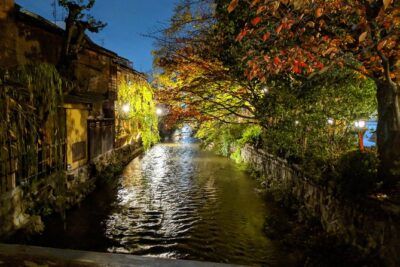
Your third stop centers on the Tatsumi Bridge area, also connected with Gion Shinbashi—a neighborhood known for traditional tea houses and the geisha culture atmosphere. This is another free stop around 10 minutes.
Bridges sound simple, but in Kyoto they often act like stage props for the city. A bridge changes how you see the street geometry. It frames views and slows your thinking just enough to notice what the neighborhood is built around: walking corridors, cultural storefronts, and the quiet logic of where people gather and meet.
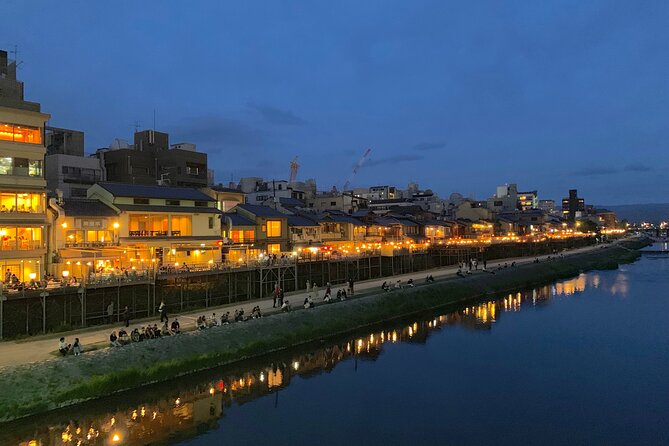
This is also where you start feeling the district’s mood shift. During the day, Gion can be crowded enough that your eyes only catch the loudest signs. At night, you can better appreciate the textures—wood, stone, lantern light—and how the street feels more “lived-in” than “visited.”
One consideration: if you’re very sensitive to cold, this is a good moment to mentally prepare. Evening Kyoto air can sneak up on you, and you’ll be standing around for viewpoints.
Stop 4: Hanamikoji Street, Where Geisha Culture Meets Architecture
Then you hit Hanamikoji Street, one of the most famous thoroughfares in Gion. This is listed as about 10 minutes and is described as lined with traditional machiya houses, plus tea houses and upscale dining.
This stop is the visual heart of the walk. Hanamikoji is where you get the instant Kyoto postcard feel—but the guide-led part matters. It’s easy to walk down a famous street and treat it like a corridor for photos. With the right explanations, you start seeing why certain buildings and lanes matter to geisha culture: how the architecture supports privacy, how the street layout affects everyday movement, and how visitors historically interacted with the district.
This is also where small-group size earns its keep. If you’re in a group of 2 or 3, you can ask questions without feeling like you’re interrupting a production line. With up to 15 people, the tour stays lively while still allowing personal attention.
If I had to pick a “must-see” moment on this itinerary, it’s Hanamikoji at the pace the tour uses—slow enough to notice details, not so slow that you lose the feeling of momentum.
Stop 5: Gion Corner and the Performing Arts Lens
After the street scenes, the tour shifts to Gion Corner, described as a cultural center and performance venue offering a condensed experience of traditional Japanese arts.
This stop is about 10 minutes, and it helps you connect your walking impressions to how Kyoto presents tradition to the public. Even if you’re not planning to sit for a full show on this trip, Gion Corner gives you a useful angle: you’re not only looking at where performances happen; you’re learning how performances and cultural knowledge are packaged, shared, and understood.
Why this matters for geisha culture: geisha traditions don’t exist in isolation. They interact with broader public-facing culture. Understanding that relationship makes everything you’ve seen in Gion feel more coherent.
If you love theater, arts, and the idea of how cultural forms survive in modern life, this is a great pairing spot. If you’re more focused on street atmosphere than performance context, you’ll still get value, but you may prefer the street stops.
Stop 6: Yasaka Shrine, the Big Kyoto Landmark That Closes the Loop
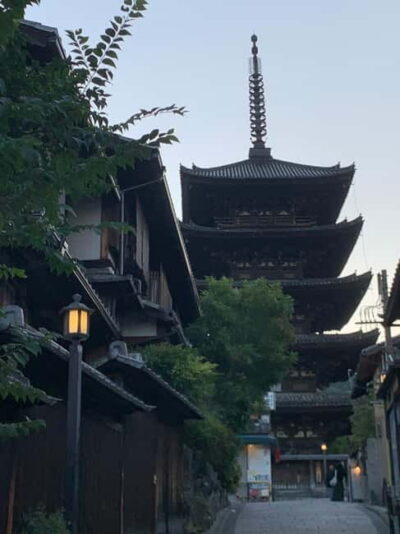
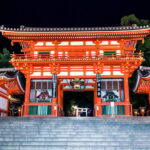
The tour ends at Yasaka Shrine, which is one of the most prominent shrines in the city and located in the Gion district. This is a free stop (listed as 10 minutes), and it works as a powerful closing note.
Shrines like Yasaka are part of Kyoto’s identity, not just its sightseeing list. When you finish here, you have two layers of understanding: you’ve seen a district built around arts and etiquette, then you’ve ended at a major spiritual site tied to Kyoto’s wider cultural life.
Also, it’s a practical ending. Yasaka Shrine is a place you can orient around afterward—grab a snack, wander nearby lanes, or catch transit. You don’t feel like you’re dropped into a dead end after your tour ends.
If you’re the kind of traveler who likes a walk with a clear beginning and end, this finishing point feels tidy.
Small Group Size and Real Guide Energy: What Makes This Tour Feel Different
The biggest praise behind this tour is simple: the guides. You get the sense that the guide isn’t just reciting facts—they’re answering questions and tying details together.
In past departures, guides like Shin, Deborah, Melanie, Manuel, Joy, Sakuri, Nami, Kenji, and Ben are named in reviews for being friendly, engaging, and very ready to explain how the district works. I love that mix of enthusiasm and clarity. It turns a walking tour into an actual conversation.
Another repeatedly mentioned strength is the way guides point out unassuming spots. Instead of only stopping at obvious photo spots, they explain why certain buildings or street cues matter in geisha culture. That’s the difference between “I saw Gion” and “I understand Gion.”
One review mentioned chilly winter walking and the value of bringing a big coat. That lines up with what you’ll feel in the evening: even if you start fine, you’ll likely want warm layers once the sun drops.
What to Bring and How to Time Your Evening in Kyoto
Since the tour is after dark, your comfort affects your enjoyment more than you’d think. Bring warm layers. A scarf or light gloves can make you feel human again after standing near streets for photos or explanations.
You also might want:
- Comfortable walking shoes
- A warm outer layer, especially in colder months
- Water, because bottled water is not included
The tour requires good weather. If conditions are poor, it can be rescheduled or you get a full refund. So don’t plan the rest of your evening as if this is guaranteed to run no matter what.
Timing matters too. This tour is designed for the part of the day when Gion feels more like a neighborhood than a stage. If you’re deciding between a daytime walk and this one, the after-dark concept is the big reason to choose it.
Who This Tour Fits Best (and Who Might Want Something Else)
This tour is ideal if you’re:
- A first-time visitor to Kyoto who wants context fast
- Interested in geisha culture and the arts linked to Kyoto
- Wanting a small-group feel, not a big bus-style crowd experience
- Traveling with teens or adults who like stories and history without drowning in textbooks
It may not be the best match if you want:
- A long, hour-by-hour deep dive lasting most of the day
- A tour that focuses strictly on shopping or eating
For most people, though, it hits a sweet spot: you leave with a clearer mental map and a better sense of why certain Gion sights matter.
Should You Book This Kyoto Gion Geisha District Walking Tour?
Book it if you want a short, guided, after-dark introduction to Gion that doesn’t feel like a crowd herding exercise. The max 15 group size, the evening timing after the worst tourist crush, and the mix of cultural stops (street, shrine, and performance-related venues) make it a strong value at $25.
Skip it (or consider a different type of tour) if you’re extremely weather-sensitive or you hate standing around briefly for viewpoints and explanations. And if you expect to see a geisha for sure, adjust your mindset: this is a culture-and-context walk through Gion, and that’s where it shines.
If you want Kyoto to feel like Kyoto—quiet, detailed, and human—this evening route is one of the smartest ways to start.
FAQ
How long is the Kyoto Gion geisha district walking tour?
It’s about 2 hours.
How much does the tour cost?
The price is $25.00 per person.
What is the group size limit?
The tour has a maximum of 15 travelers.
What is the meeting point and end point?
It starts at Ben’s Cookies Kyoto Shijo and ends at Yasaka Shrine.
Is bottled water included?
No, bottled water is not included.
Does the tour include admission fees?
All fees and taxes are included.
What does the tour focus on?
It focuses on the Gion geisha district atmosphere after dark, with guided stops in the area.
What kind of ticket do I receive?
You get a mobile ticket.
Is the tour dependent on weather?
Yes. The experience requires good weather; if it’s canceled due to poor weather, you’ll be offered a different date or a full refund.
Is there a cancellation deadline?
Free cancellation is available, with a full refund if you cancel at least 24 hours before the experience start time.