REVIEW · KYOTO
Kyoto Early Morning Tour with English-Speaking Guide
Book on Viator →Operated by GuideMe Japan · Bookable on Viator
Kyoto looks best before it wakes up. This early-morning tour is built for calmer photo time and easier sightseeing, when the big Kyoto names still feel almost… manageable. You’ll hit Fushimi Inari, the Arashiyama bamboo grove, and Kinkaku-ji on a route that’s paced for a small group of up to 8.
Two things I really like: the morning timing (you get photos with far fewer people in your way), and the way the guide helps you move like a local, including public transit know-how. Guides such as Haruki, Akira, Aya, and Genki come through with clear English and a knack for explaining what you’re seeing so it doesn’t feel like a checklist.
One consideration: you’ll still be walking and transferring by transit for several hours. Also, Kinkaku-ji has an extra entrance fee, so you’ll want to budget for that plus the transit fare.
In This Review
- Key Highlights Worth Planning For
- Why This Early Morning Kyoto Route Feels Different
- Stop 1: Fushimi Inari-taisha and the Art of Going Before Everyone
- Stop 2: Arashiyama Bamboo Grove Without the Crowd Noise
- Stop 3: Kinkaku-ji (Golden Pavilion) and What to Budget
- The Public Transit Lesson: Why It’s Part of the Value
- How the Pace Works Over 5 to 6 Hours
- Group Size, Guide Style, and Why Reviews Keep Mentioning Them
- Price and Value: What You Pay Versus What You Get
- Who This Tour Suits Best (and Who Might Skip It)
- Should You Book This Early Morning Kyoto Tour?
- FAQ
- How long is the Kyoto Early Morning Tour?
- What are the main stops on the tour?
- Is the tour price the full cost?
- What size is the group?
- Do I need to bring money for temples and transit?
- Is the guide English-speaking?
- What happens if the weather is bad?
- Is there a cancellation window?
Key Highlights Worth Planning For
- Go early to reduce crowd pressure at Fushimi Inari and along the main paths
- Small groups of max 8 keep the pace friendly and photo stops actually work
- English-speaking guides (examples include Haruki, Akira, Aya, Genki) add context, not just directions
- Arashiyama Bamboo Grove at its quietest for better atmosphere and photos
- Local public transit is part of the experience so you learn Kyoto’s layout fast
- Kinkaku-ji costs extra (entrance fee not included), so you should plan ahead
Why This Early Morning Kyoto Route Feels Different
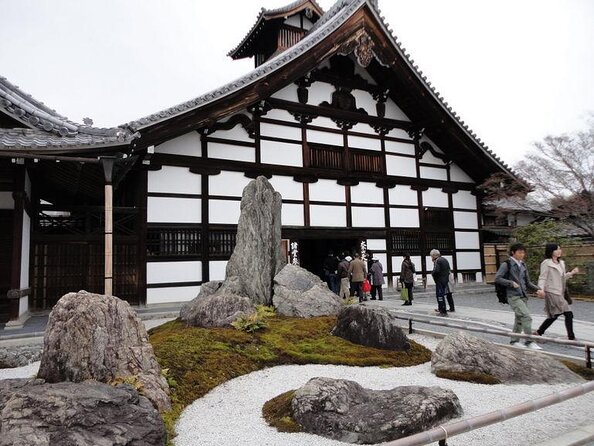
If your Kyoto plan includes the big three—Fushimi Inari, Arashiyama, and the Golden Pavilion—this tour tackles the real problem: timing. Go later and you’ll spend energy weaving around groups. Go early and the same landmarks feel more like places you discovered, not places you survived.
The tour is also designed around small-group momentum. With a maximum of 8 travelers, you’re not constantly waiting for lagging stragglers, and your guide can slow down for questions and photos without turning the whole day into a stop-and-go mess. Even better, the schedule includes travel time, so it doesn’t pretend the logistics don’t exist.
Another value point I like: it’s not just sightseeing. You also get a practical lesson on how to use Kyoto’s public transit. That matters because the best souvenir you can bring home from Kyoto is confidence—being able to move on your own after this tour ends.
If you’re traveling with kids, this pacing can work well too. Several guides mentioned in past groups (like Aya and Genki) are described as patient and able to keep the experience flowing without rushing children.
You can also read our reviews of more guided tours in Kyoto
Stop 1: Fushimi Inari-taisha and the Art of Going Before Everyone
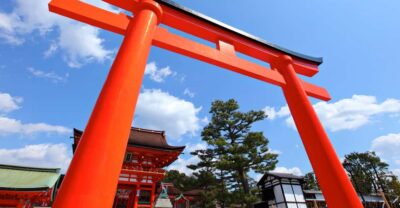
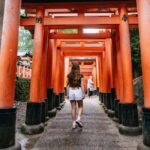
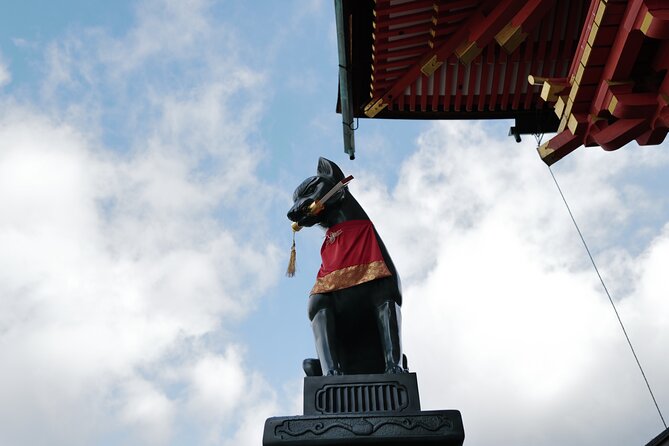
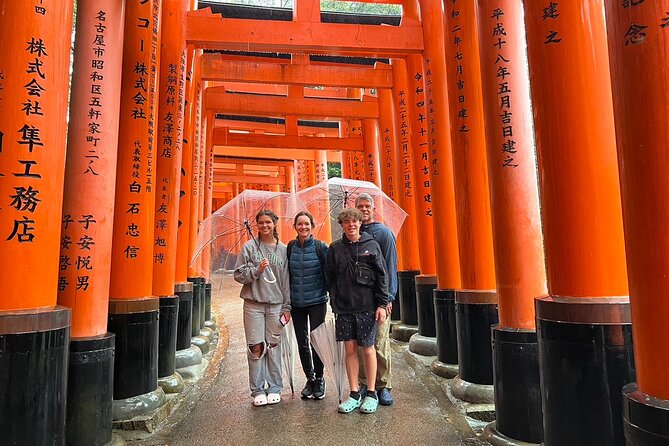
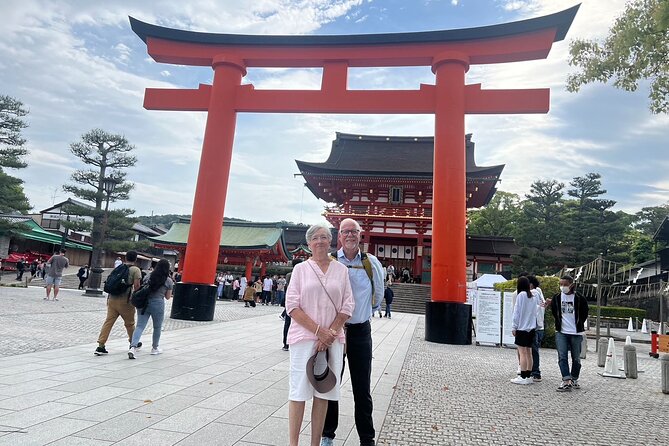
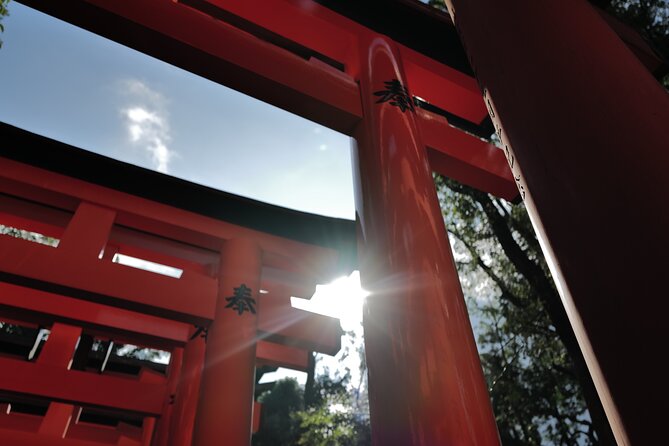
Fushimi Inari-taisha is the shrine that turns up everywhere in Kyoto photos, thanks to its famous rows of red torii gates. The magic is in the walk: thousands of gates that gradually pull you forward, so the shrine feels bigger than a single building.
Going early is the whole game here. The earlier start helps you avoid the worst crowd crush, so you can actually follow the paths and line up photos without strangers constantly cutting through your frame. The atmosphere also tends to feel more focused—you’re less likely to feel like you’re part of a herd.
What I’d expect during your time here is a guided approach to the place, not just a “here are gates, good luck” moment. Your guide’s job is to explain what you’re seeing and why it matters, so you understand the shrine beyond the iconic red color.
Practical note: this is a walking-heavy stop. Even if the route isn’t a full hike for everyone, you’ll still cover distance between key areas. Wear shoes you’re comfortable with for several hours, and bring a light layer if the morning is cool.
If you’re the kind of traveler who likes small details, the best guides on this route (like Haruki and Genki, based on guide mentions) are the ones who can turn a famous scene into something you can narrate later.
Stop 2: Arashiyama Bamboo Grove Without the Crowd Noise
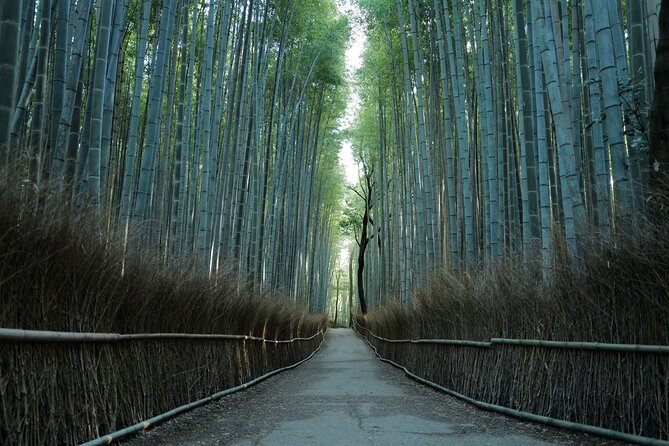
Arashiyama Bamboo Grove is one of those places that can either feel surreal or annoyingly busy. Early timing is what makes it swing toward surreal.
At this stop, you’ll see towering bamboo stalks that create a tunnel-like effect. The breeze and movement through the grove help it feel alive, not staged. With fewer people in the morning, you can take photos from more angles and spend time just watching—especially if your brain tends to get overstimulated in busy tourist hotspots.
A smart thing about this tour’s design is the balance between “must-see” and “slow down.” Several comments around this experience point to the fact that the group doesn’t feel herded. You should have time for both photos and understanding what you’re looking at.
One more advantage: the route keeps the day moving, so you don’t lose the rest of your Kyoto afternoon to delays. That matters because once you’ve seen the highlights early, you’re free to explore neighboring streets, grab a bite, or return to a favorite spot with a calmer mindset.
If you enjoy taking pictures, ask your guide where the best angles are before you start snapping. A lot of these guides (Aya and Hina are examples that show up in guide mentions) are good at suggesting photo spots, not just moving you along.
Stop 3: Kinkaku-ji (Golden Pavilion) and What to Budget
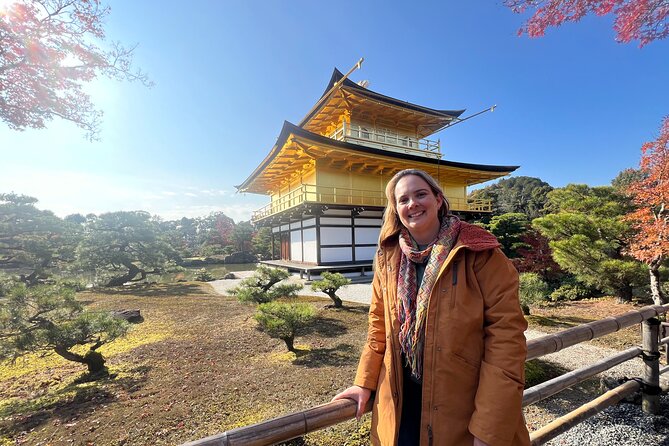
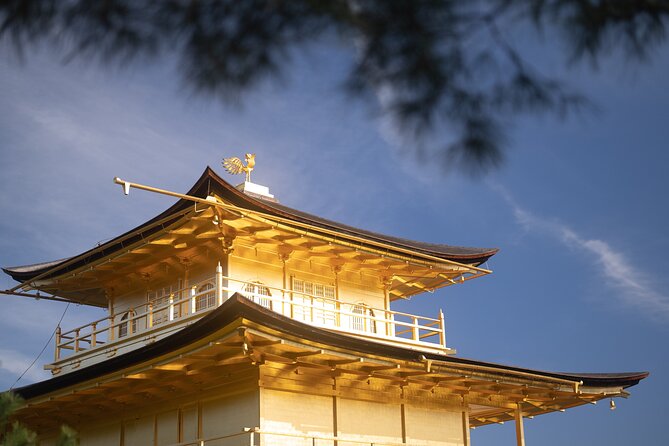
Kinkaku-ji, also called the Golden Pavilion, is the Kyoto landmark that feels almost too perfect—until you see it in person. The main draw is the gold-leaf style appearance and the way it reflects in its surroundings (when conditions allow). It’s the kind of temple that looks stunning even if you’re not chasing “architecture nerd” details.
This stop runs about an hour, which is a realistic amount of time for your brain to actually absorb it. Too short and it’s rushed; too long and you end up staring the same view from the same angle. An hour is usually enough to enjoy the main pavilion area and still keep the rest of your schedule from feeling cramped.
Cost-wise, here’s the key line item: the Kinkaku-ji entrance fee is not included. The listed fee is ¥500 per person. So even though the tour price is fixed, you should plan for that add-on.
Also remember: the tour is partly about transit. Your day isn’t just three attractions; it’s three attractions plus getting there smoothly. The idea is that the guide handles the friction, so you can enjoy the sights.
The Public Transit Lesson: Why It’s Part of the Value
A lot of Kyoto tours give you directions at a high level and then drop you off. This one gives you something more practical: guidance on using public transportation. You’ll actually ride transit as part of the experience, and your guide will help you navigate the system.
This is useful for two reasons:
1) It reduces stress on a day when you’re already waking early and walking a lot.
2) It helps you understand Kyoto’s layout so you can plan the rest of your trip with less guesswork.
Several guide mentions describe that the transit time is easy to handle and feels like a normal part of the city, not a chaotic scramble. That “we’re doing what locals do” feeling is part of what makes early tours worth it.
One thing to know before you go: the public transportation fare is not included. It’s listed at about 1240 yen. Add that to your mental budget so you’re not surprised on the day.
You can also read our reviews of more tours and experiences in Kyoto
How the Pace Works Over 5 to 6 Hours
The total tour time is about 5 to 6 hours, including travel time. That length sounds long on paper, but it often feels reasonable because the tour doesn’t waste time. You’re moving through three major areas while the guide keeps the stops efficient.
The pace tends to land in the middle: not a sprint, not a slow drift. You should have enough time for:
- walking through major highlights,
- taking photos at key viewpoints,
- and hearing explanations that connect the sites to each other.
You should also plan for moderate physical effort. The tour is suitable for travelers with moderate fitness, not for people who need fully accessible, low-walking sightseeing throughout.
If you’re someone who hates rushing, this tour’s early timing helps. When crowds are lighter, you spend less time waiting for paths to clear. That makes the schedule feel calmer even when you’re walking.
Group Size, Guide Style, and Why Reviews Keep Mentioning Them
The group cap of 8 is a big deal in Kyoto. With bigger groups, the tour becomes a race and the guide becomes traffic control. Here, the smaller size helps you actually interact.
From guide names that show up repeatedly in feedback—Haruki, Akira, Aya, Genki, Karin, and others—the pattern is consistent: the best guide moments come from clear English, good pacing, and a sense of humor or patience when questions pop up. Some guide mentions also highlight how they handle families well, including helping children stay engaged without dragging the group.
Even if you’re not the type who asks many questions, a strong guide changes what you notice. Instead of seeing “a shrine” or “a bamboo forest,” you start recognizing story threads: why the place looks the way it does, what visitors usually miss, and how Kyoto’s culture shows up in small details.
This is also why I’d recommend this tour as a first or second day in Kyoto. It’s an orientation shot of the city’s major textures.
Price and Value: What You Pay Versus What You Get
At $68.98 per person, the tour sits in the “you’re paying for time saved and friction removed” category. You’re not just buying a seat. You’re buying:
- early timing that helps you beat crowds,
- an English-speaking guide,
- the structure of a route through three iconic areas,
- and public transit support so you learn Kyoto faster.
Then there are the extra costs you should factor in:
- Kinkaku-ji entrance fee: ¥500 per person
- Public transit fare: about 1240 yen
- Food and drinks: not included
When I look at value, the question is simple: would you want to spend your limited Kyoto energy figuring out timing, routes, and logistics on your own? If you’re okay doing that, you might save money. If you want a calmer first taste of Kyoto highlights, this price can feel fair.
The best part is that after the tour ends, you still have the afternoon and evening open. That’s not a small win in a city where many people schedule too much in one day.
Who This Tour Suits Best (and Who Might Skip It)
This tour is a great match if you:
- want to see Kyoto’s headline attractions without the heaviest crowds,
- like photography but hate having strangers constantly in your frame,
- want to learn Kyoto transit so you can travel with more confidence later,
- prefer small groups and guided context.
It’s also useful if you’re on a tight schedule. Three major areas in about half a day gives you flexibility for the rest of your trip.
You might want to choose another approach if you:
- dislike walking or transfers and need a mostly sedentary sightseeing day,
- don’t want any extra costs for temple entry and transit,
- or you only want one location rather than a three-stop sampler.
Should You Book This Early Morning Kyoto Tour?
I’d book it if you value calm, timing, and a guide who can make famous sights feel meaningful. Early morning matters here because the whole tour concept is built around beating crowds at Fushimi Inari, getting better photo time in Arashiyama, and experiencing Kinkaku-ji without the late-day crush.
I’d also book it if you want more than photos—you want a practical Kyoto skill set. The public transit piece can pay off the same day, and again the next day when you’re planning on your own.
Just go in knowing the trade-offs: you’ll be walking, you’ll pay the Kinkaku-ji entrance fee, and you’ll budget for transit fare. If that sounds acceptable, this tour is one of the most sensible ways to start a Kyoto trip.
FAQ
How long is the Kyoto Early Morning Tour?
It runs about 5 to 6 hours in total, including travel time.
What are the main stops on the tour?
You’ll visit Fushimi Inari-taisha, Arashiyama, and Kinkaku-ji (the Golden Pavilion).
Is the tour price the full cost?
Not quite. The tour includes the English-speaking guide, but it does not include public transportation fare (about 1240 yen), food and drinks, and the Kinkaku-ji entrance fee (¥500 per person).
What size is the group?
This tour has a maximum of 8 travelers per group.
Do I need to bring money for temples and transit?
Yes. You should plan for the Kinkaku-ji entrance fee and public transportation fare, since both are listed as not included.
Is the guide English-speaking?
Yes, the tour includes an English-speaking guide.
What happens if the weather is bad?
The experience requires good weather. If it’s canceled due to poor weather, you’ll be offered a different date or a full refund.
Is there a cancellation window?
You can cancel for a full refund up to 24 hours in advance of the experience’s start time.