REVIEW · KYOTO
Kyoto: Nijo Castle, Kiyomizu & Fushimi Inari Guided Tour
Book on GetYourGuide →Operated by AMIGO TOURS JAPAN GK · Bookable on GetYourGuide
Kyoto, packed into one well-paced day. What makes this tour work is the early Arashiyama access and guided stops at Nijo Castle and Kiyomizu-dera, so you get context without spending your whole day plotting routes. I also like how the group stays organized with clear meeting points. The trade-off: it’s an 11-hour day with walking on uneven temple grounds and long lines at the big-name sights.
If you want the Golden Pavilion, you’ll need the prebooked ticket option. The good news is that the schedule is built around the places most first-timers come to see, with real free time at Fushimi Inari to wander the torii trails at your own pace. Consider it a smart shortcut through Kyoto’s greatest hits, but not a slow, off-the-map experience.
In This Review
- Key things that make this Kyoto day tour click
- Getting Oriented: Meet at Hotel Keihan and Let the Bus Do the Work
- Arashiyama Bamboo Grove Early Access: 70 Minutes Before the Crowds
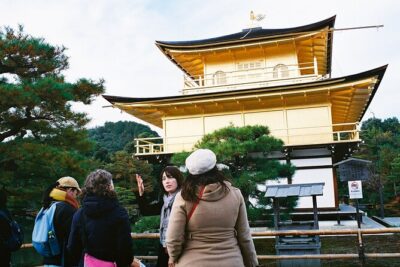
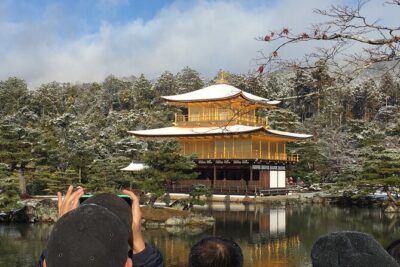
- Kinkaku-ji Golden Pavilion: Worth It If You Choose the Ticket Option
- Nijo Castle and the Nightingale Floors: A Shogun-Era Reality Check
- Kiyomizu-dera: Wooden Stage Views and Time to Wander Nearby
- Fushimi Inari Taisha: Use Your 1.5 Hours to Walk, Not Just Look
- Price and Value: Why $54 Can Make a One-Day Kyoto Plan Easier
- What the Day Feels Like: Pacing, Comfort, and Walking
- Who This Tour Is Best For (and Who Might Prefer Something Else)
- Should You Book It? My Practical Recommendation
- FAQ
- Which languages are the guides?
- How long is the tour?
- What is included in the ticket price?
- Is the Golden Pavilion visit guaranteed?
- What happens if Nijo Castle isn’t accessible?
- Where do you get dropped off?
Key things that make this Kyoto day tour click

- Early Arashiyama timing: you go before the biggest crowd crush
- Bilingual guiding (English and Spanish): names like Cesar and Angeles show up again and again in the praise
- Nijo Castle focus: gardens, traditional rooms, and the famous nightingale floors
- Kiyomizu-dera viewpoints + street time: temple views plus time to wander the area
- Fushimi Inari free-roam: torii-gate walking instead of a rushed photo stop
- Smooth transport: many riders rate the ride and driver highly, with comfortable pacing between stops
Getting Oriented: Meet at Hotel Keihan and Let the Bus Do the Work
Your day starts at Hotel Keihan Kyoto Grande, outside the hotel, where your guide waits with an Amigo Tours sign. The handoff is straightforward: show up about 10 minutes early, check in, then settle in. From there, the bus becomes your “base move” for Kyoto—less subway juggling, fewer transfers, more time spent actually looking at temples.
One thing I like for a one-day Kyoto plan: the tour is built around transportation between each major site, not you self-navigating. Even with traffic, you’re not spending your energy figuring out trains, walking directions, and ticket counters while you’re already tired from travel.
Also, you’ll hear the day explained in both English and Spanish. Guides such as Cesar, Angeles, Paula, and Pastor are repeatedly mentioned for handling the language switching smoothly. If you’re traveling with a friend who doesn’t speak Japanese, that matters. It keeps the whole group together and helps you understand what you’re seeing—not just where to stand for a picture.
You can also read our reviews of more guided tours in Kyoto

Arashiyama Bamboo Grove Early Access: 70 Minutes Before the Crowds
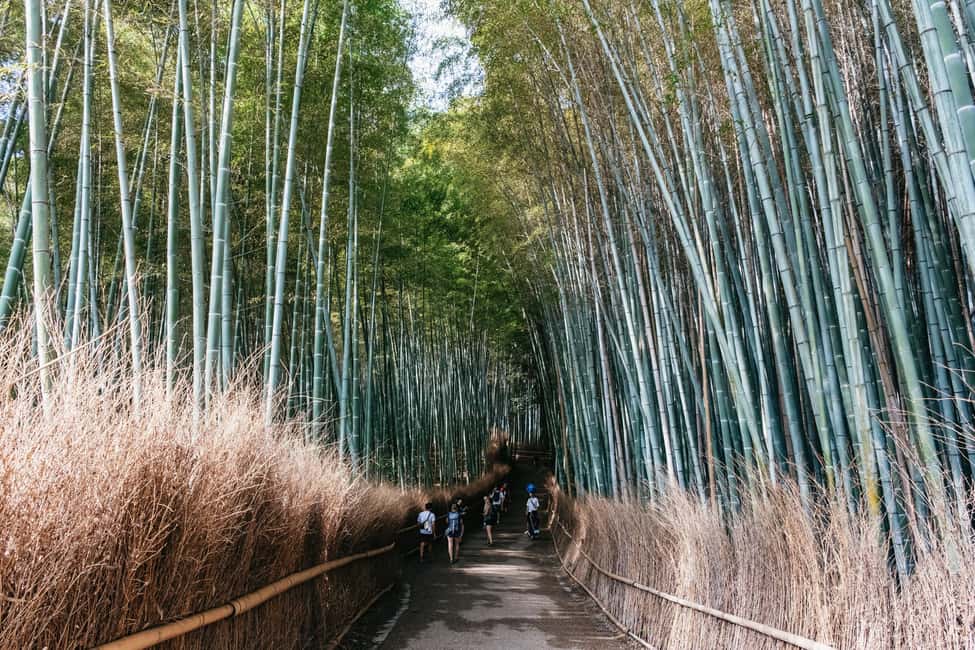
Arashiyama Bamboo Grove is one of those places where the photos can’t fully explain the feeling. You start with a bus ride and then get about 70 minutes on foot. The key advantage here is timing: early access means fewer people blocking your line of sight under those tall bamboo stalks.
What you’ll notice fast is how the path changes your pace. You’re not sprinting between landmarks. You’re strolling along leafy lanes where the air feels cooler and quieter than the streets nearby. Bring your camera, but also just look up. The canopy effect is the whole point.
Practical tip: wear comfortable shoes and keep water handy. Bamboo paths can be a little uneven, and Arashiyama often lands on warm days in Kyoto. If you’re the type who likes photos, this is also the stop where the guide’s photo help tends to shine—getting everyone positioned without turning the whole thing into a chaotic line.
Kinkaku-ji Golden Pavilion: Worth It If You Choose the Ticket Option
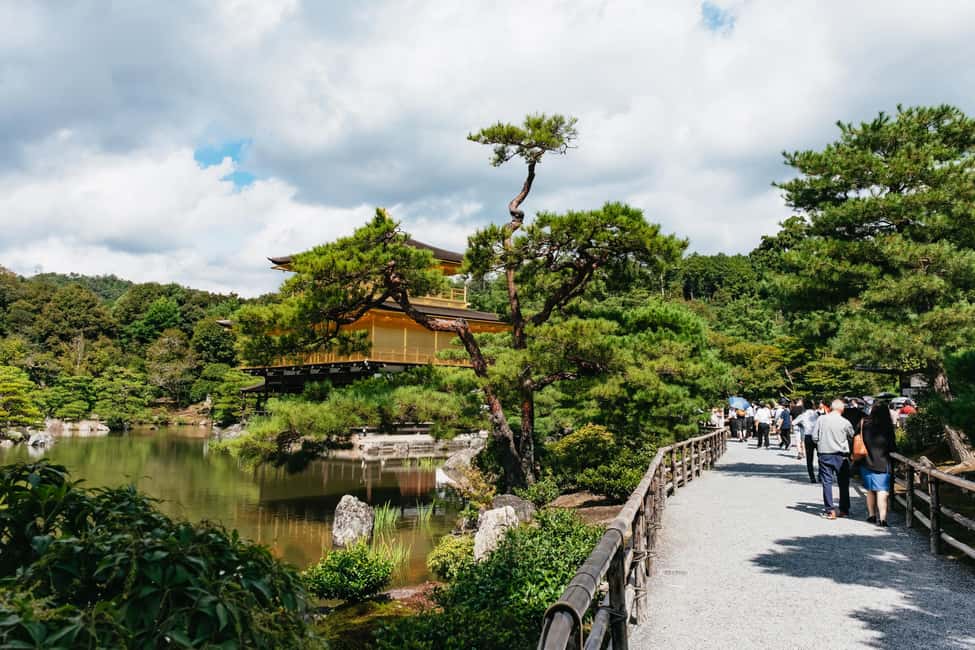
The Golden Pavilion (Kinkaku-ji) is included only if you purchased the right ticket option in advance. If you did, you’ll get about 45 minutes there—enough time to see it from the classic angles and walk the surrounding garden areas at an unhurried pace.
Kinkaku-ji isn’t just a pretty building. It’s the mix of gold leaf, pond reflections, and carefully designed grounds that makes people pause. You get the iconic look, but you also get to understand why this spot matters: it’s one of Kyoto’s best examples of how Japanese architecture and landscape planning work together.
If you didn’t choose the ticket option, don’t panic. The tour still focuses on major Kyoto sites. But if Kinkaku-ji is on your must-see list, plan for the ticket ahead of time so your day doesn’t lose one of its biggest payoff stops.
Nijo Castle and the Nightingale Floors: A Shogun-Era Reality Check
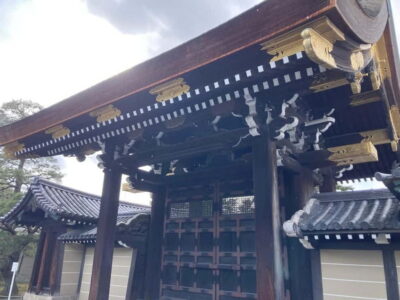
Next comes Nijo Castle, with about 1.5 hours on site. This is a big deal if you like the practical side of history—how power was protected, how rooms were arranged, and how daily life looked for the ruling class.
The standout feature is the so-called nightingale floors—a security system designed to make noise when someone steps on them. It’s the kind of detail that turns a “cool castle” into something you’ll remember because it’s functional, not decorative.
You’ll also spend time in the castle gardens and traditional rooms with tatami-style living spaces. That combination matters. The rooms show you the formality of the era; the grounds show you the relationship between aesthetics and everyday movement through the property.
One important heads-up: Nijo Castle might not be accessible on some days due to circumstances beyond the operator’s control. If that happens, the tour swaps in a visit to Sanjūsangen-dō Temple instead. It’s a smart backup, and it’s the kind of contingency you want built into a one-day plan.
Kiyomizu-dera: Wooden Stage Views and Time to Wander Nearby
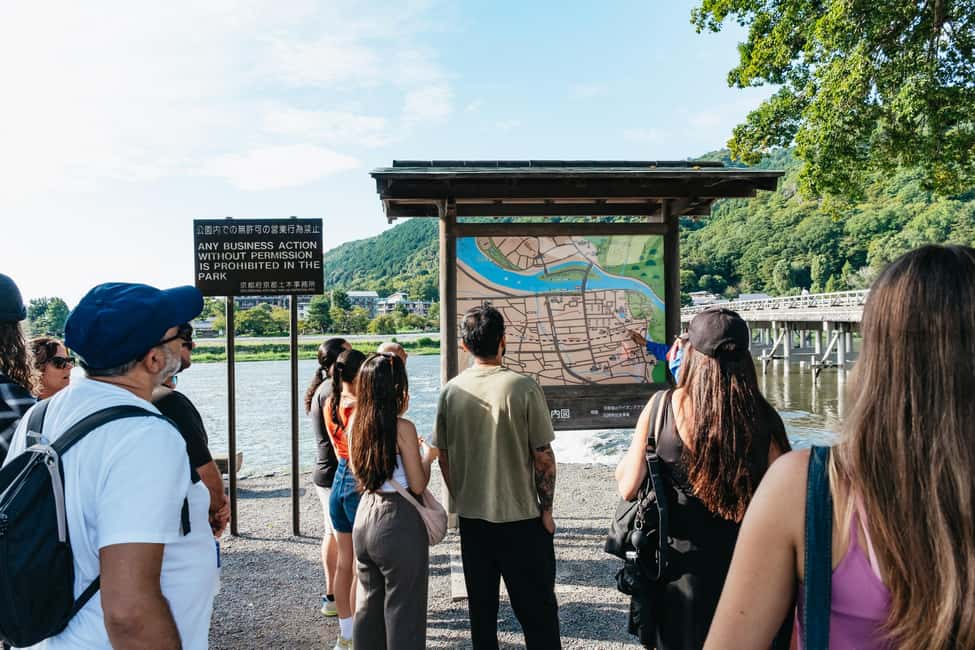
Then you head to Kiyomizu-dera. Access depends on the ticket option you purchased in advance, and the stop runs longer—about 2.5 hours total with time for the visit plus lunch.
Kiyomizu-dera is famous for views, and not just from one spot. The temple’s wooden stage setup gives you a sense of how the site relates to the valley below. You’ll see people stopping at different angles, and you’ll understand why once you’re there.
The other reason this stop works in a guided day: you also get time for the surrounding area. The temple neighborhood has traditional sweets and craft shops, so you can mix temple time with quick browsing. If you’re hunting for a calm moment after busy sites, this is often where you find it—especially if you take a break from the densest crowd routes and walk toward quieter side lanes.
Practical tip: Kiyomizu-dera involves walking and standing. Even if your shoes are comfortable, give your legs a little respect here. That’s also where having water and sunscreen pays off.





Fushimi Inari Taisha: Use Your 1.5 Hours to Walk, Not Just Look
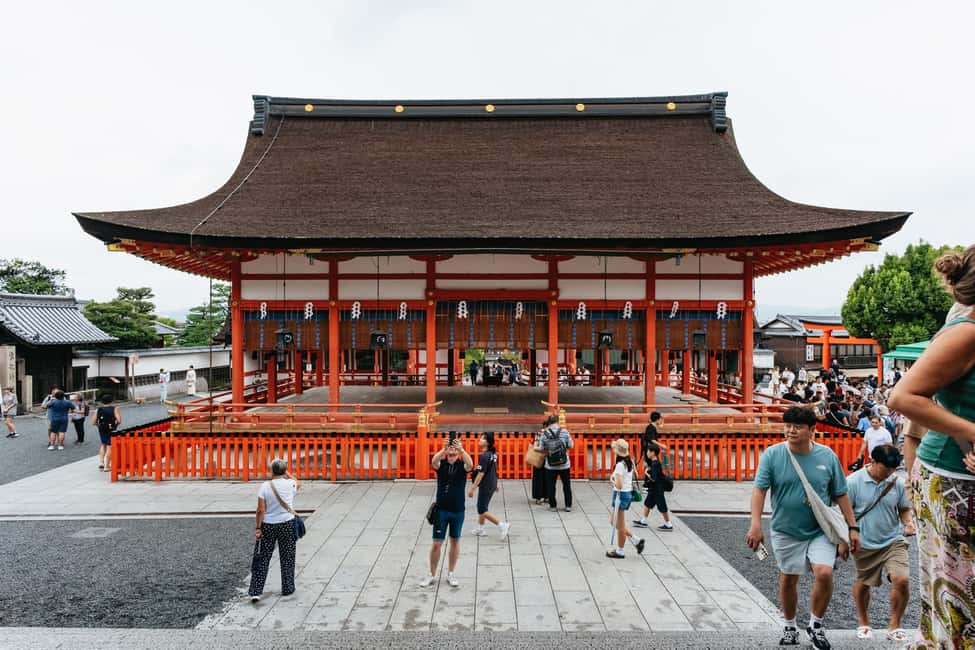
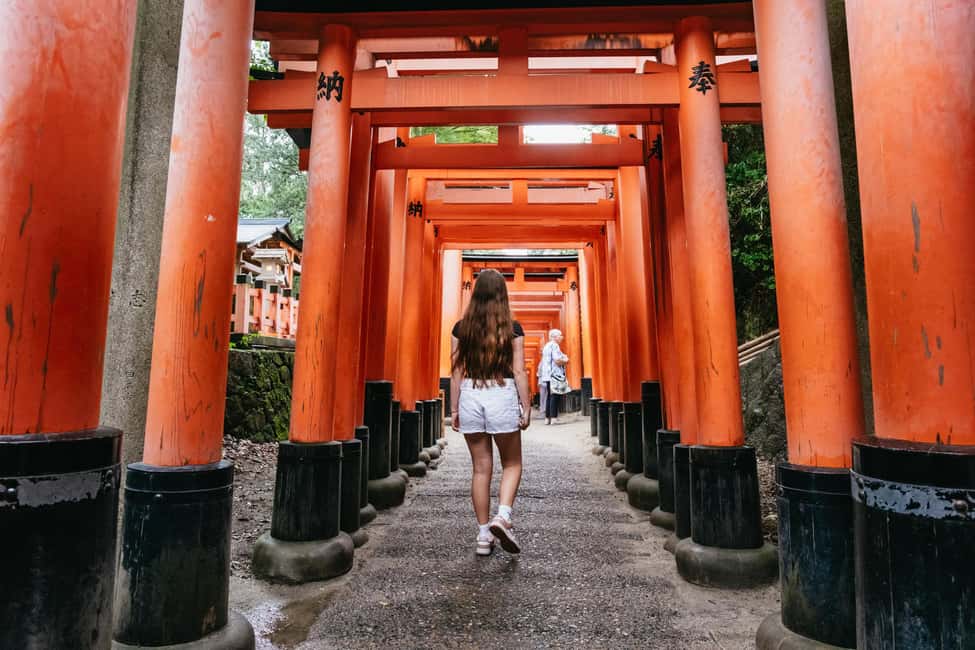
Fushimi Inari Taisha is the last big stop, with about 1.5 hours of free time. This is where the tour’s structure helps you. Instead of rushing through with everyone herded behind a guide, you’re given enough room to explore the torii-gate trails in your own rhythm.
The scene is famous for a reason: thousands of bright red torii gates that climb up the mountain path. The trick is deciding how far you want to go. You can do a quick loop for the iconic gate tunnel effect, or keep walking upward for more of the spiritual and quiet feel as the crowds thin.
A good strategy for your free time:
- Start by walking steadily through the gate tunnel sections first.
- Stop when you find a spot where the gates frame a view behind you.
- If it gets crowded, head to the edges of the main trail for a breather.
When you’re done, your day winds down with drop-off at either Fushimi Inari Taisha or Kyoto Station (depending on the day’s arrangements). Kyoto Station is often more useful if you’re connecting to another city or picking up dinner plans.
Price and Value: Why $54 Can Make a One-Day Kyoto Plan Easier
At $54 per person for an 11-hour highlights day, this tour’s value comes from three things: transportation, guided context, and site admissions (where ticket options apply).
Without a tour, you can absolutely piece together a DIY day. The issue in Kyoto isn’t just price. It’s timing and “decision fatigue.” You’re trying to coordinate multiple famous sites across different neighborhoods, then handle admissions and queues. This tour removes the planning overhead. You show up, ride, and get guided orientation at each stop.
It’s also a fair price point for families and first-timers who want a strong overview without committing to a week of logistics. Many riders highlight the smooth bus ride and the way drivers navigate Kyoto traffic efficiently. Add in bilingual guiding, and you’re paying for someone to translate the meaning of what you’re seeing, not just point at it.
A small consideration: food and drinks are not included. So if you’re the type who likes to eat seated meals, budget for it. If you’re fine with snacks and grabbing something simple near temple streets, you’ll probably feel good about the overall value.
What the Day Feels Like: Pacing, Comfort, and Walking
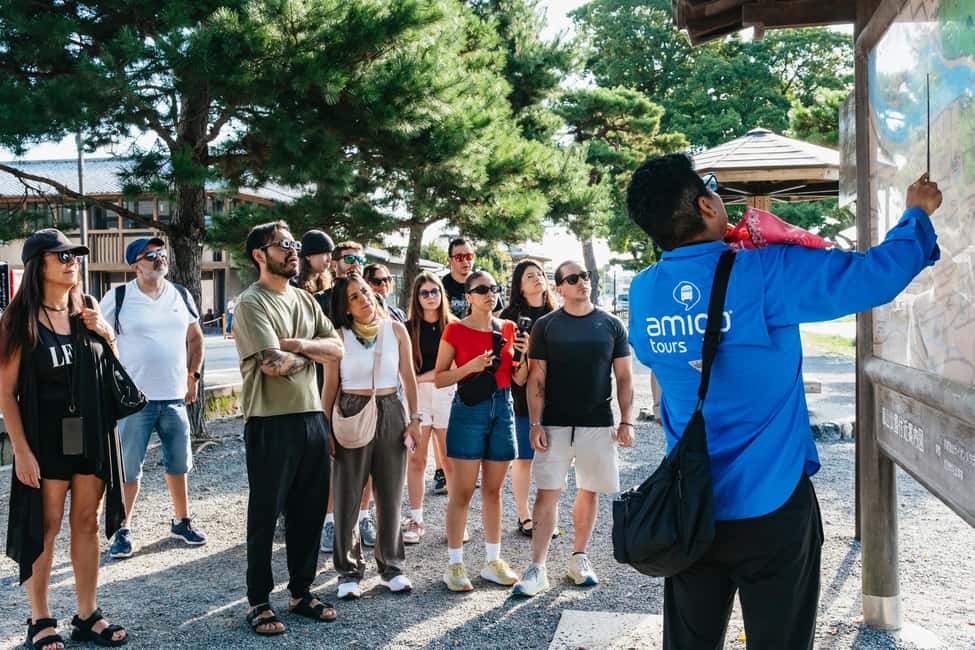
This is a long day. Even if the bus segments are comfortable, you’ll still do a mix of riding and walking—mostly on foot around the major sights. Reviews often call out that the tour doesn’t feel frantic, with short travel breaks between stops. That pacing matters because it keeps you from turning sightseeing into a grind.
For comfort, the big win is that the coach is described as clean and well-air-conditioned, with drivers keeping things smooth. That’s not glamorous, but in Kyoto summer heat (or winter chill when you’re waiting outdoors), it changes your mood.
The flip side is fitness and surfaces. This tour is not suitable for people with mobility impairments or wheelchair users, which makes sense given the temple steps and uneven ground.
If you’re in decent shape and you pack smart (water, sunscreen, hat), the mix of guided explanation plus free exploration tends to feel like a balanced day rather than a checklist.
Who This Tour Is Best For (and Who Might Prefer Something Else)
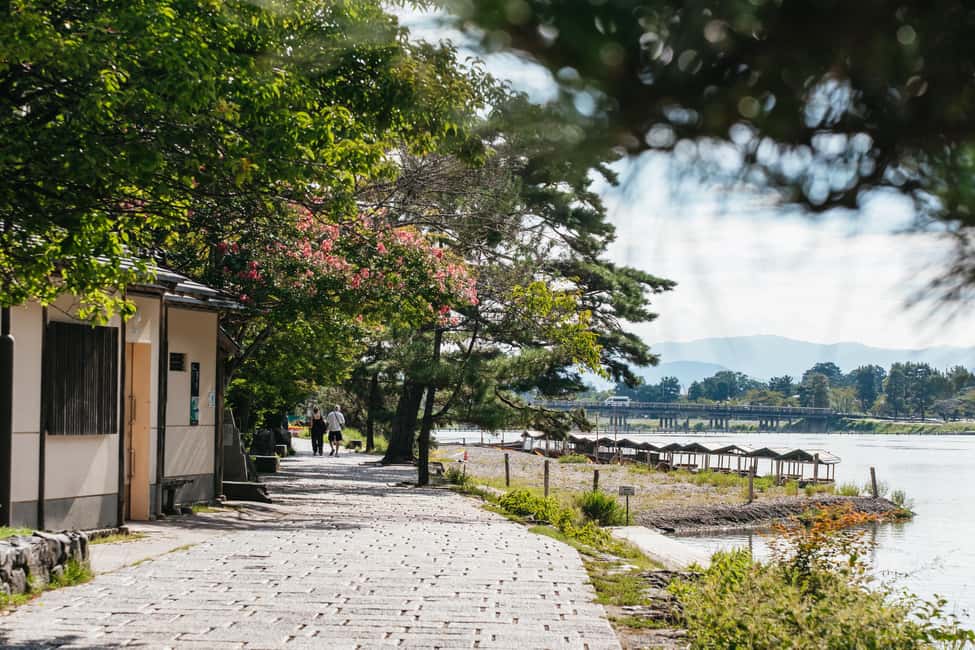
This day tour shines if:
- You’re visiting Kyoto briefly and want a fast, guided sweep of the top sites.
- You like learning why places matter, not just where the photo angles are.
- You want bilingual support and a group plan that keeps you moving without stress.
You might want a different approach if:
- You want one neighborhood only, slow wandering, or less crowd time.
- You need step-free access or wheelchair-friendly routes.
- You’re okay doing your own route planning and ticketing and prefer a lighter schedule.
If you’re traveling solo, the guided structure can feel reassuring. It’s also a solid pick if your Japanese is limited and you’d rather ask questions in English or Spanish than guess what you’re looking at.
Should You Book It? My Practical Recommendation
I’d book this tour if you’re aiming for a one-day “Kyoto highlights” win with less stress. The early timing at Arashiyama, the castle specifics at Nijo, the views at Kiyomizu-dera, and the free-roam torii walking at Fushimi Inari create a complete arc that covers Kyoto’s main themes.
Before you buy, double-check the ticket options for the Golden Pavilion and the admissions that depend on prebooking. If those are must-dos for you, choose the right ticket setup so your day includes everything you came for.
FAQ
Which languages are the guides?
The tour provides a bilingual guide in English and Spanish.
How long is the tour?
The total duration is about 11 hours.
What is included in the ticket price?
You get transportation from the meeting point, a bilingual guide, and admission to the Golden Pavilion, Nijo Castle, and Kiyomizu-dera if the corresponding ticket option was selected in advance. Food and drinks are not included.
Is the Golden Pavilion visit guaranteed?
The Golden Pavilion visit is included only if you have purchased the ticket in advance with the option that covers it.
What happens if Nijo Castle isn’t accessible?
If Nijo Castle can’t be visited, the tour includes a visit to Sanjūsangen-dō Temple instead.
Where do you get dropped off?
Drop-off is at either Fushimi Inari Taisha or Kyoto Station, depending on the tour’s setup for the day.