REVIEW · KYOTO
Kyoto: Gion Night Tour Stories of Geisha and Maiko
Book on GetYourGuide →Operated by Localized Walking & Food Tours · Bookable on GetYourGuide
Gion at dusk turns history into a walk. This small-group tour takes you through Kyoto’s Gion district right when the crowds thin and you may catch quick glimpses of geisha heading to evening appointments. It’s a practical way to learn what’s going on behind the scenes, without doing a full day of sightseeing.
I love that the guide turns geisha and maiko culture into clear, street-level stories you can actually remember. I also like the hands-on skill of spotting teahouses and traditional signs hidden in the alley maze.
One drawback to plan for: sightings are brief and unpredictable, so it helps to be patient and present. Also, the live tour guide is in Spanish, so language could matter for your comfort.
In This Review
- Key things that make this Kyoto Gion night tour worth your time
- Why Gion at dusk turns into a living story
- From Ben’s Cookies Kyoto Shijo to a smooth start
- Statue of Izumo-no-Okuni: a meaningful first stop
- Shirakawa Canal: the quiet side of Kyoto’s charm
- The real skill: spotting teahouses and their hidden signs
- A photo stop with context (not just a snapshot)
- Gion Corner: another guided pause in the middle of the lanes
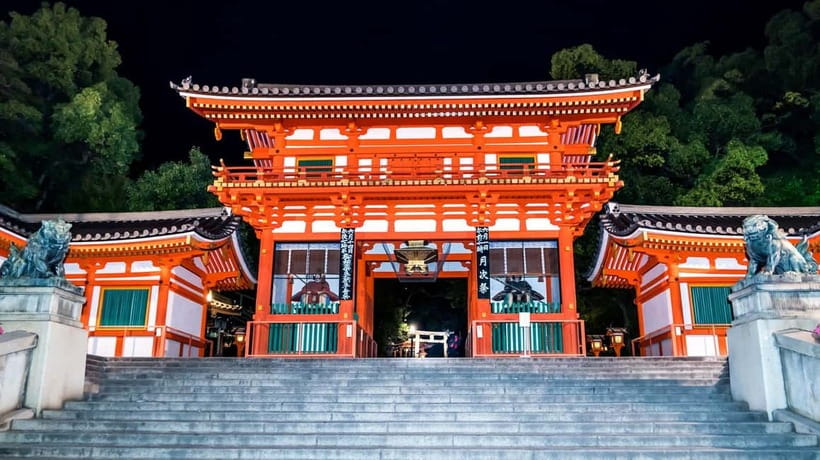
- Yasaka Shrine: finishing where the night already feels Kyoto
- Price and value: what $22 buys in real terms
- Who should book this Gion night tour—and who should skip it
- Should you book this Kyoto Gion Night Tour?
- FAQ
- How long is the Kyoto Gion Night Tour Stories of Geisha and Maiko?
- What is the group size for this tour?
- What language is the live tour guide?
- Where do I meet the tour guide?
- What are the main stops on the walk?
- What’s included in the ticket price?
- Is it suitable for children?
- What’s the cancellation policy and booking flexibility?
Key things that make this Kyoto Gion night tour worth your time
- Dusk timing in Gion: you see the district when it feels quieter and more “real.”
- Small group (max 15): fewer people means more room for questions and better pacing.
- Geisha and maiko storytelling: the guide explains culture and history in a way that fits the walk.
- Teahouse-sign spotting: you leave knowing what to look for in Gion’s alleys.
- Photo stops that don’t waste time: quick chances to capture the vibe and keep moving.
- Yasaka Shrine finish: you end in a classic Kyoto spot that’s easy to roll into next.
Why Gion at dusk turns into a living story
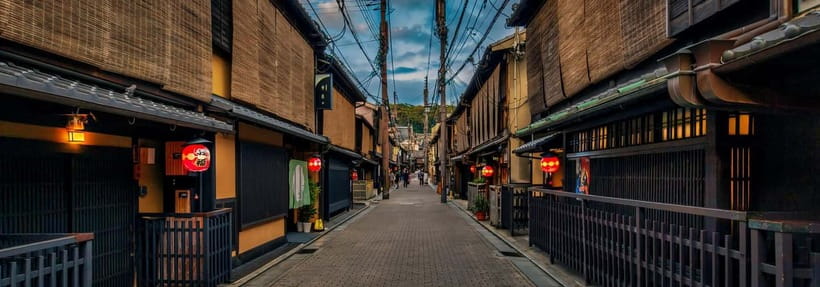
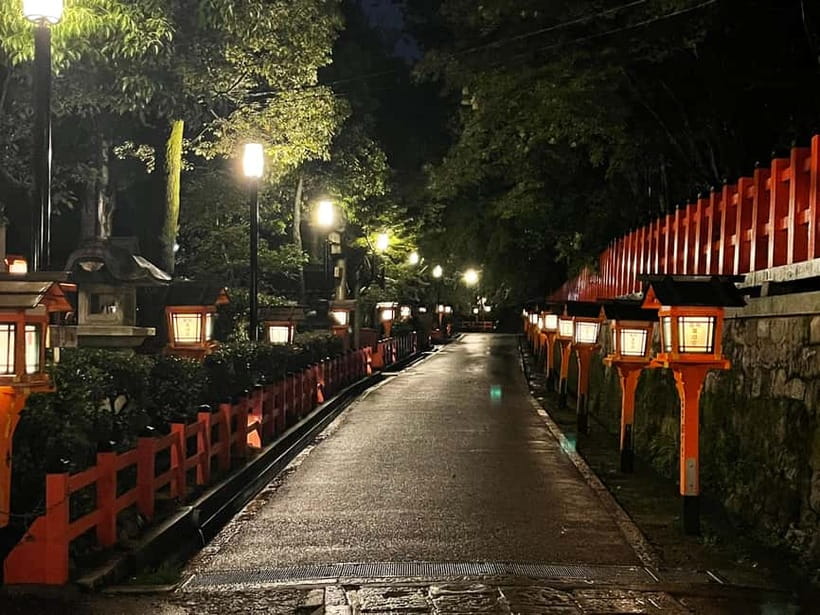
If you’ve only seen Gion in daylight, you’ve seen the “postcard.” This is the version where the lighting feels softer and the street rhythm changes. The tour is designed around that in-between hour—sunset into early evening—when the energy shifts and the district starts to look like itself again.
You’re not just walking past pretty buildings. You’re learning how Gion works: the cultural background behind geisha, how the routines shape what you notice, and why certain spots matter. That context makes even a short lane feel purposeful, not random.
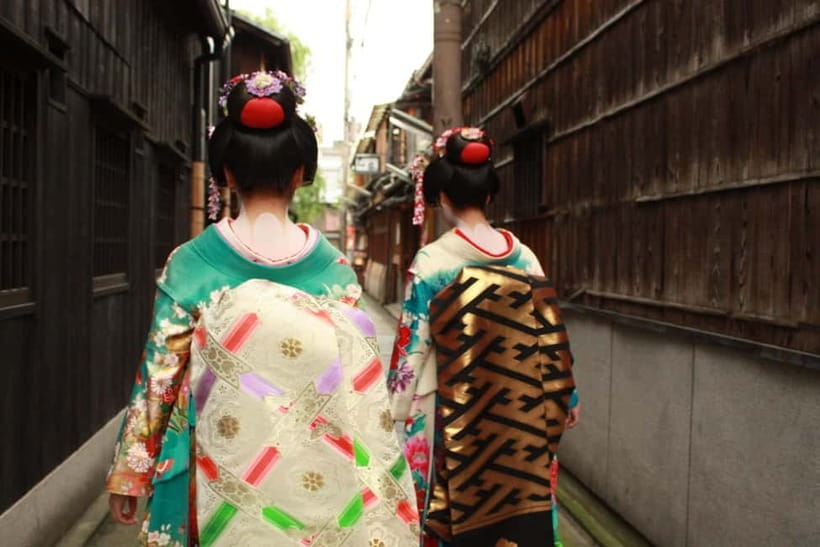
This is also when you’re most likely to see a quick glimpse of someone in traditional dress moving through the area. Don’t count on a full performance or a long stare-down with anyone. But you’ll understand what you’re seeing, which beats guessing.
You can also read our reviews of more evening experiences in Kyoto


From Ben’s Cookies Kyoto Shijo to a smooth start
The meeting point is easy: Ben’s Cookies Kyoto Shijo. The guide holds a sign with the tour name, so you’re not playing Where’s Waldo in a crowded street.
From there, you get a short guided lead-in (about 5 minutes). It matters more than it sounds. A quick orientation helps you understand what you’ll be looking for, and it prevents the common beginner problem: taking photos of the wrong thing because you didn’t know what mattered.
This is a walking tour with a steady flow. It’s also small enough (up to 15 people) that the guide can adjust pace—especially useful in narrow lanes where you’ll naturally bunch up.
Practical tip: wear shoes you’d be happy wearing for 2 hours in Kyoto at dusk. The “romantic” look of Gion doesn’t come with flat ground and perfectly spaced sidewalks.
Statue of Izumo-no-Okuni: a meaningful first stop
One of your early stops is the statue of Izumo-no-Okuni, with about 15 minutes of guided time. This is where the tour builds the cultural thread before you move deeper into the district.
The value here isn’t that you spend forever at a single landmark. It’s that you get a guided explanation right when your attention is fresh. By the time you’re walking the quieter streets, you’ll already have the background the guide is using to connect everything.
If you like tours that give you mental bookmarks—small moments that help you remember the bigger story—this part does that job. It’s also a good photo moment, since the light at dusk tends to make stone and wood look especially good.
Shirakawa Canal: the quiet side of Kyoto’s charm
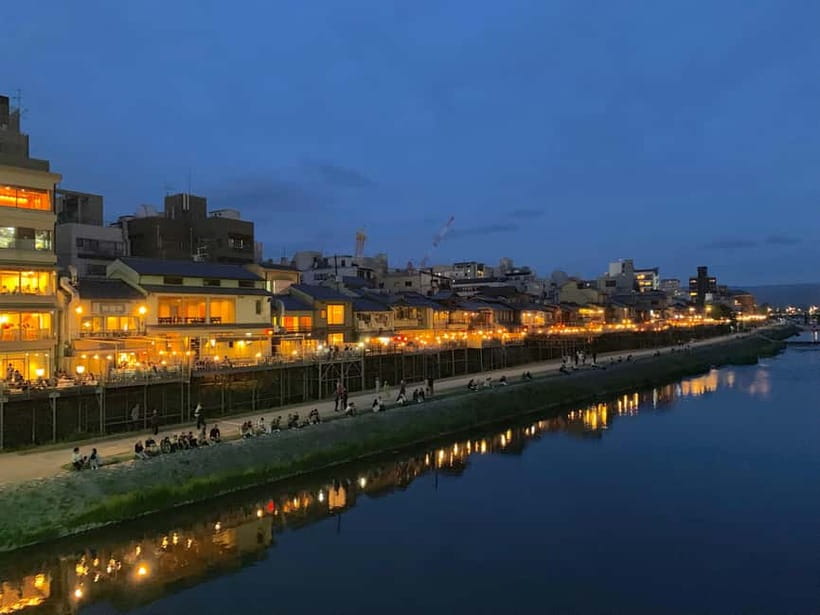
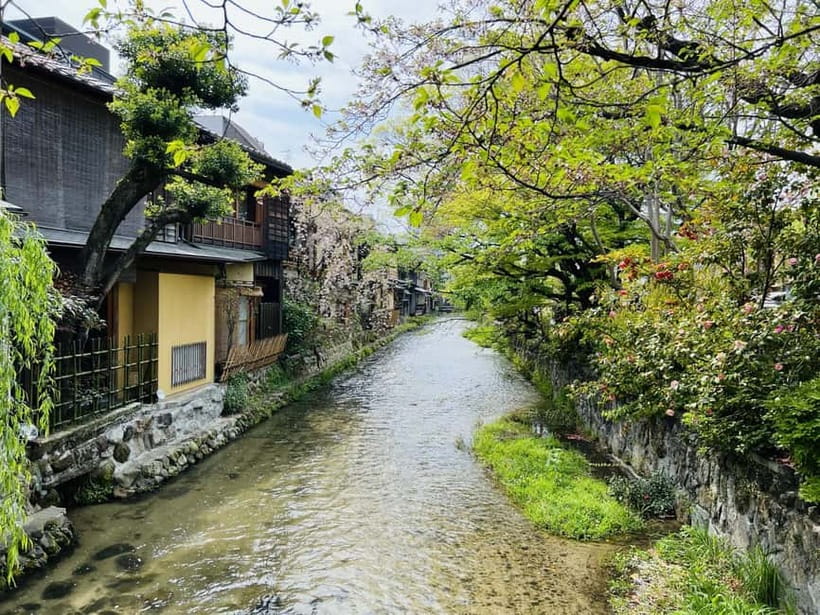
Next up is Shirakawa Canal, again with about 15 minutes for walking and guide context. This is a great contrast point. The canal area gives you breathing space and a different visual rhythm from the tight alley streets.
For me, canal stops work well on tours like this because they slow you down for a second. You can look around, let the stories settle, and then re-enter the Gion lanes with better focus.
You’ll also be in a spot where the atmosphere feels more layered—water reflections, evening light, and the sense that Gion isn’t only about storefronts and crowds. It’s about place and routine.
The real skill: spotting teahouses and their hidden signs
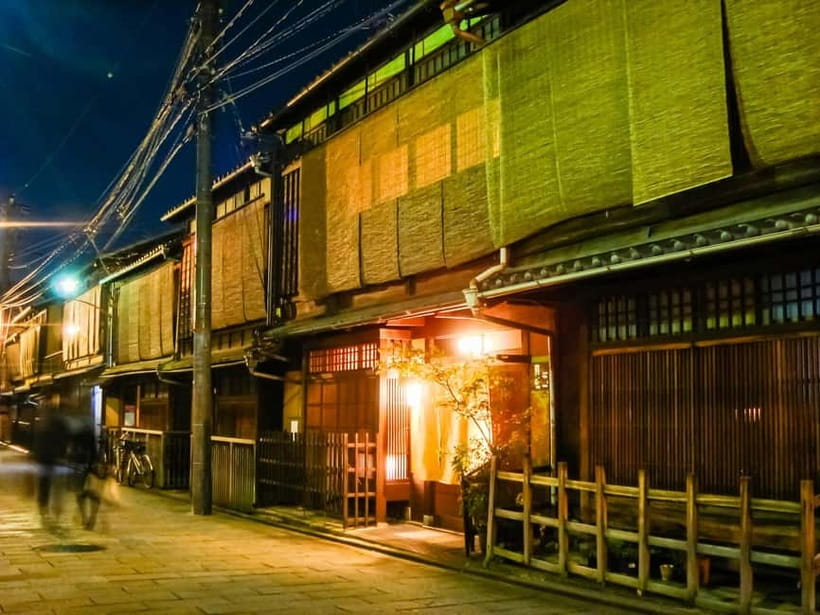
This tour stands out for one reason: it teaches you how to recognize teahouses and traditional symbols. Instead of treating Gion as scenery, you start treating it like a language.
The guide shows you what to look for in the alley network—how certain visual cues connect to the traditional life of the district. You’re not expected to memorize everything. But you’ll notice more during the walk, and more importantly, you’ll notice more after the tour when you’re wandering on your own.
This is the kind of “local knowledge” that changes your future sightseeing. Once you can read the district’s cues, you stop seeing only buildings and start seeing structure: who uses which spaces, and why certain areas feel reserved or ceremonial.
Also, the guide’s storytelling is built to match what you’re seeing right then. So when the tour points out a traditional sign or teahouse-related detail, it doesn’t feel random. It feels like you earned it.




A photo stop with context (not just a snapshot)
After the canal, you’ll have another photo stop and short visit with guided explanation (about 15 minutes). The point isn’t to turn you into a full-time photographer. It’s to give you a quick “pause and learn” moment before you continue deeper.
These stops are where your attention matters most. If you only half-pay attention, you’ll walk away with the photos but not the meaning. If you slow down for the guide’s explanation, the photos become reminders instead of decoration.
And because the group is capped at 15, it’s usually easier to look, listen, and still get your turn for photos without feeling like you’re stuck behind a tripod army.
Gion Corner: another guided pause in the middle of the lanes
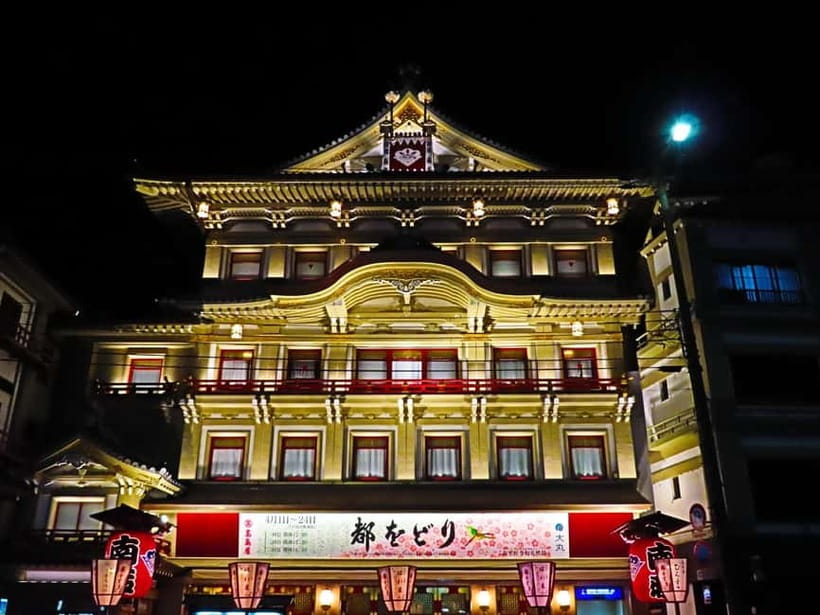
You’ll also stop at Gion Corner for a photo stop, a visit, and guided talk (about 15 minutes). Think of it as a gear shift: more cultural explanation, then back to the street.
Stops like this matter because they prevent the tour from turning into a long walk where you’re just collecting impressions. Instead, you get structured moments where the guide brings the story back together.
Even if you’re not sure what every corner of Gion is called, you’ll understand how the guide is connecting the cultural ideas to the physical layout of the district. That’s what makes it feel like more than just moving from one scenic spot to the next.
Yasaka Shrine: finishing where the night already feels Kyoto
The tour’s final stretch includes Yasaka Shrine—with another guided stop of about 15 minutes and ending at the shrine itself. Finishing here is smart. Yasaka Shrine is one of those anchors that helps you transition from a focused tour to free time.
By the time you arrive, dusk has usually fully set in, and the area feels alive without being chaotic in the same way some tourist hubs can get. If you want to keep exploring right after, you’re already in the right neighborhood.
And if you’re hoping for a satisfying “close,” this ending works. You get a final guided moment, then you can decide whether to roam, snack, or just soak in the atmosphere for a bit.
Price and value: what $22 buys in real terms
The price is $22 per person for a 2-hour small-group walking tour. That’s not “cheap,” but it’s also not trying to be a private, high-end experience. The value is mainly in the guide-led cultural interpretation and the small-group format.
Where you feel the value:
- Small group (max 15) means you’re not swallowed by a crowd.
- Culture taught while you walk: you learn what to look for as the district unfolds.
- Teahouse-sign tips: you leave with a practical skill, not only photos.
Also, a strong guide changes everything on a tour like this. On this experience, guides have been praised for explaining the streets and geisha material clearly and in an engaging way. Some guides (like Pedro, in the kind of experiences people talk about) even add helpful ideas for where to eat in the area afterward.
Keep your expectations realistic for what $22 can deliver. This is not a guaranteed geisha encounter. But it’s a guided, structured way to understand Gion, and that understanding is what you can carry with you.
Who should book this Gion night tour—and who should skip it
This tour fits best if you:
- Want to understand geisha and maiko culture in a guided, street-level way.
- Like walking tours with stops that include context, not just views.
- Appreciate small groups and the calm that comes with visiting at dusk.
It’s also a good match for first-timers in Kyoto who feel overwhelmed by “where to start” in Gion. The guide essentially gives you a mental map: which cues matter, where the story connects, and what to notice as you go.
Skip it if:
- You can’t do a Spanish-led tour comfortably, since the live guide language is Spanish.
- You’re traveling with children under 12, since the tour isn’t suitable for that age group.
- You need guaranteed performers on cue. This tour is designed around atmosphere and the chance for brief glimpses, not a timed show.
Should you book this Kyoto Gion Night Tour?
I’d book it if you want something more thoughtful than a standard “see the streets” walk. The standout benefit is the combination of dusk timing and practical teachable knowledge—especially learning how to spot teahouses and interpret traditional signs.
You should choose something else if you’re mainly chasing a guaranteed, long geisha viewing. But if you’re happy with fleeting moments, and you’d rather understand what you’re seeing than just hunt for a sighting, this tour has the right balance.
If your priority is clear guidance, a friendly professional pace, and the kind of street explanations that make Gion feel real, this one earns its place on your Kyoto list.
FAQ
How long is the Kyoto Gion Night Tour Stories of Geisha and Maiko?
It lasts 2 hours.
What is the group size for this tour?
It’s a small-group experience with a maximum of 15 participants.
What language is the live tour guide?
The live tour guide is listed as Spanish.
Where do I meet the tour guide?
You meet at Ben’s Cookies Kyoto Shijo. The guide will be holding a sign with the name of the tour.
What are the main stops on the walk?
Key stops include the statue of Izumo-no-Okuni, Shirakawa Canal, Gion Corner, and Yasaka Shrine, which is also where the tour finishes.
What’s included in the ticket price?
You get a guided walking tour in Gion with historical and cultural explanations about geisha and maiko, plus tips for identifying teahouses and traditional symbols.
Is it suitable for children?
No, it isn’t suitable for children under 12.
What’s the cancellation policy and booking flexibility?
You can cancel up to 24 hours in advance for a full refund, and you can reserve now and pay later.