REVIEW · KYOTO
Kyo-arashi Shibori Scarf Class
Book on Viator →Operated by Kyoto Shibori Museum · Bookable on Viator
Shibori turns silk into patterns you control. At the Kyoto Shibori Museum, you’ll learn the kyo-arashi folding-and-dyeing method for a personalized silk scarf, with staff guiding you through each step. It’s a hands-on Kyoto experience that feels simple once you see how the folding creates the final look.
Two things I really like: you get to dye your scarf in colors you choose, and you’re not stuck watching paint dry. While your fabric dries, you can browse the museum and try on a shibori kimono. That mix of making + seeing the craft context makes the class feel like more than just a quick souvenir.
One thing to consider: the actual class time is short, about 30 minutes to 1 hour, and there’s a minimum age of 12. If you’re traveling with younger kids, you’ll need a backup plan.
In This Review
- Key points to know before you go
- Why Kyo-arashi Shibori Feels Different (Folding Drives the Design)
- Kyoto Shibori Museum: Where You Start and How the Class Runs
- Making Your Silk Scarf: Pipe Wrapping to the Big Unfold
- Customizing Color Without Feeling Overwhelmed
- While It Dries: Museum Displays and Shibori Kimono Time
- How Long It Takes, and What That Means for Your Kyoto Schedule
- Price and Value: Is $50.30 Fair for a Finished Silk Souvenir?
- Who Should Book This (And Who Might Skip)
- Small Tips That Make the Day Easier
- Should You Book the Kyo-arashi Shibori Scarf Class?
- FAQ
- How long does the Kyo-arashi shibori scarf class take?
- Where is the meeting point for the class?
- What will I make during the class?
- Does the price include museum admission?
- Can I try on a kimono during the experience?
- Is this a private class?
- What is the minimum age to join?
- How do I receive the ticket?
- Is there free cancellation?
Key points to know before you go
- A guided kyo-arashi process: pipe-wrapping, string winding, dyeing, pressing, and unfolding your results
- Your scarf, your colors: you customize dye preferences for the finished silk scarf
- Museum time is built in: while your scarf dries, you can explore displays and the museum area
- Kimono try-on included: you can dress up in a shibori kimono during the downtime
- Private group class: it’s instructor-led with only your group participating
Why Kyo-arashi Shibori Feels Different (Folding Drives the Design)

Kyo-arashi shibori is all about timing, pressure, and folds. Unlike crafts where you paint a picture step by step, this one starts with shaping the fabric first. Then you dye it. The final pattern shows up after you unwind, roll, press, and unfold.
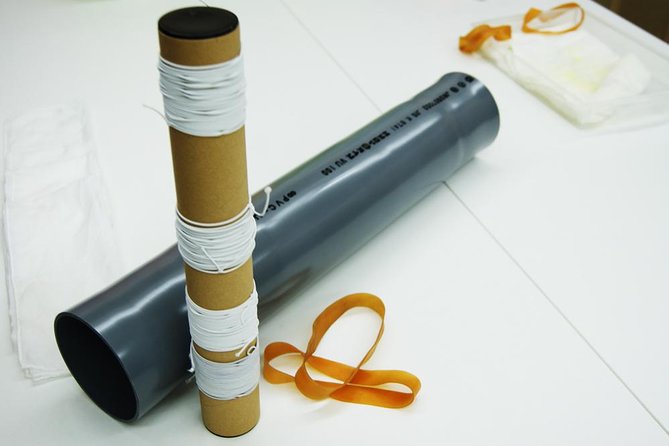
That’s the magic—and the challenge. If you think you’ll be doing art like drawing, you may start off a bit tense. But the instructor keeps the steps clear: fold the fabric in a specific way, wrap a pipe in the fabric, wind string around it, then squish the fabric down the pipe before dyeing. Those instructions turn something that looks intimidating into a repeatable process.
If you’re a first-timer, the structure helps a lot. Past participants also noted that the instructors give clear guidance and speak great English, with one instructor named Nina specifically mentioned by students. That matters, because shibori has a lot of tiny “do it like this” moments.
You can also read our reviews of more tours and experiences in Kyoto


Kyoto Shibori Museum: Where You Start and How the Class Runs
You meet at the Kyoto Shibori Museum (135-5 Shikiamichō, Nakagyo Ward, Kyoto, 604-8261). The class runs from there and ends back at the meeting point, so you’re not scrambling across town afterward.
This isn’t a big public show. It’s listed as a private tour/activity, meaning only your group participates. Also, classes are usually individual, which is a big deal for a technique as step-by-step as shibori. You get more than one person’s attention, not just a quick demo you copy from a distance.
You can choose from multiple start times, which helps if your Kyoto days are already packed. And the ticket is delivered as a mobile ticket, so you’re not juggling paper tickets in the crush of transit and temples.
Practical note: the museum is near public transportation, and there’s parking for two cars plus bicycle parking. If you’re using transit, plan a little extra time to find the exact entrance and settle before your start.
Making Your Silk Scarf: Pipe Wrapping to the Big Unfold
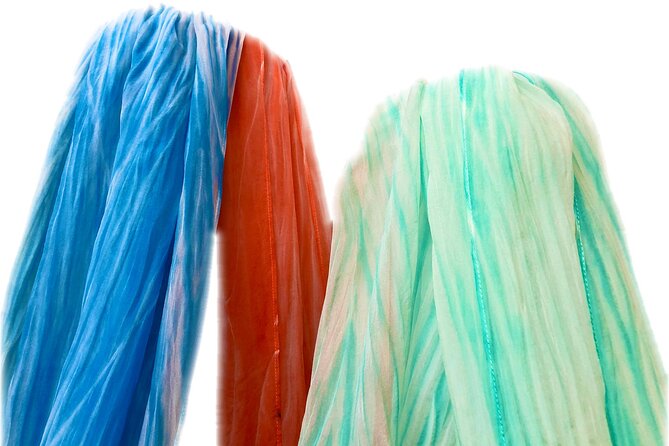
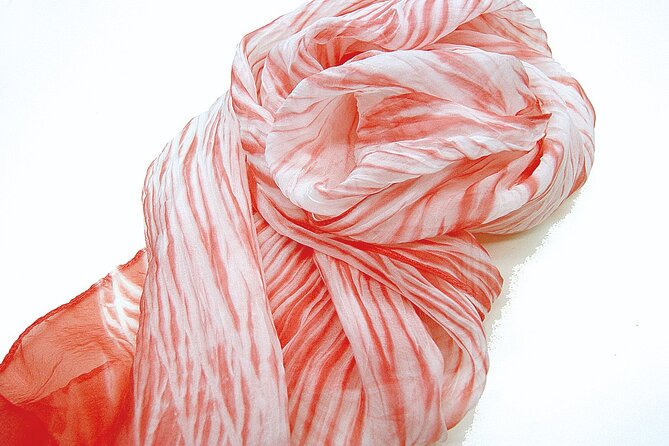
This is the heart of the experience: dyeing a long silk scarf using the kyo-arashi shibori technique. The scarf size is listed as 70 inches x 17 inches (180 cm x 44 cm)—long enough to wear as a scarf or use as a wrap-style fashion piece later.
Expect the session to move through a clear sequence:
- Fold the fabric in the required way
- Wrap a pipe with the fabric
- Wind string around the pipe
- Squish the fabric down to set the shaping
- Dye the fabric in your chosen color(s)
- Unwind the string and roll with a towel, then press
- Unfold to see the pattern you made
The dye step is where most people get surprised. From the outside, shibori looks like it should be totally random. Inside the process, it’s very controlled. The folds and the string-wrapped structure guide where the dye hits and where it resists.
The result is the “wow” moment. You’re not buying a scarf pre-made. You’re watching the pattern emerge from a method you just carried out. That feeling is why this class consistently scores so high for first-timers and craft lovers.
Customizing Color Without Feeling Overwhelmed
A good class doesn’t just teach technique. It makes decisions feel doable.
Here, you’re allowed to customize your scarf to your color preferences. That doesn’t mean you need to be a color expert. In most craft settings like this, you’re choosing among dye options the studio offers, and the staff can help you land on a mix that works with the shibori pattern.
My advice: if you’re unsure, pick colors that match what you actually wear in real life. Dark navy, deep indigo-like tones, or softer shades tend to show pattern detail well. And since you’re making a souvenir you’ll live with, go with something that won’t just look good in photos.
Also, keep in mind the class is designed to finish within 30 minutes to 1 hour. The pace is focused. If you want to linger on every choice, that’s not the format. But if you’re okay following guidance and making quick decisions, you’ll have a smooth experience.
While It Dries: Museum Displays and Shibori Kimono Time
The best “bonus” part of this experience is what happens after dyeing.
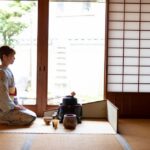
Once your scarf is set to dry, you’re free to browse the museum displays and try on a shibori kimono. This matters because it turns downtime into value. Instead of waiting in silence for your scarf to finish, you’re learning what you just touched.
Museum time also helps you connect technique to tradition. Shibori isn’t just a pattern; it’s a craft language. The displays give you context for why certain folds and shaping methods matter.
One practical tip: treat the kimono try-on as your mini photo window. Your scarf won’t be ready yet, but you’ll be able to enjoy the look and atmosphere right away. And if your group is traveling with people who love style moments, this is an easy win.
The museum also has a gift shop, and it’s worth a quick stop while you’re there. You’ll likely see additional shibori items and tools that help you understand the bigger picture of what you just did.



How Long It Takes, and What That Means for Your Kyoto Schedule
The class runs about 30 minutes to 1 hour. That’s an excellent time fit for Kyoto. You can do it between other activities without losing half a day.
The schedule flexibility is also a plus. Multiple start times let you match your day. If you’re doing temples in the morning and shopping later, you can pick a slot that doesn’t break your rhythm.
The biggest timing consideration is drying time. Your scarf needs time to set before you unfold and see the full pattern. The studio builds in that waiting window and then uses it smartly: museum browsing and kimono try-on.
If your day is tightly planned, aim for a slot that doesn’t leave you racing to your next reservation. You’ll enjoy the museum time more when you don’t feel rushed.
Price and Value: Is $50.30 Fair for a Finished Silk Souvenir?
At $50.30 per person, this class sits in a range that often feels “reasonable but not cheap.” The value depends on what you want out of Kyoto.
Here’s what you’re paying for, in practical terms:
- A guided workshop with professional supervision
- A finished silk scarf customized through dyeing
- Museum admission included
- Kimono try-on included during the drying period
If your goal is a quick photo stop, this probably isn’t the best use of money. But if you want an item you made with your own hands plus a clear craft lesson, it makes a lot of sense. You’re leaving with a tangible souvenir that isn’t mass-produced, and you’re doing it in an environment focused on the craft.
Also, remember that the class is short. That’s not a drawback on value. In Kyoto, short focused activities often win. You get a complete experience without spending the entire day commuting and waiting.
Who Should Book This (And Who Might Skip)

This is a strong fit for:
- First-timers who want real instruction, not just watching
- People who like crafts that are more process-driven than design-driven
- Families where everyone meets the minimum age of 12
- Travelers who want a Kyoto activity that’s cultural and hands-on, not only sightseeing
It may be less ideal if:
- You’re looking for a long, lecture-style museum experience
- You want free-form art without structure
- You’re traveling with kids under 12 (the minimum age is clearly stated)
Since the class is private and usually individual, it can also be a good choice if you don’t want to blend into a crowd.
Small Tips That Make the Day Easier

These are the things I’d do to make your session smoother:
- Arrive a few minutes early so you can settle before your start time.
- Wear something comfortable. You’ll be working with fabric and moving through steps.
- If you care about how your scarf will look later, choose colors that match your wardrobe.
- Use the drying time. The museum displays and kimono try-on are part of why the class feels complete.
If you’re the type who likes seeing how things work, take your questions to the instructor during the active steps. That’s when the team is most helpful.
Should You Book the Kyo-arashi Shibori Scarf Class?
I think this is a good booking if you want a Kyoto souvenir with a story attached. You’ll leave with a personalized silk scarf made through kyo-arashi folding and dyeing, and you’ll get museum access plus a kimono try-on without paying extra for the “extras.”
Book it if you:
- like hands-on experiences
- want something more meaningful than a store-bought scarf
- can work within a 30–60 minute class window
- meet the minimum age of 12
Skip it if you’re after a long guided tour or you need an activity that includes younger kids.
If you’re on the fence, here’s the simple test: will you be excited to learn a real craft process and unfold your own pattern at the end? If yes, you’ll probably love this.
FAQ
How long does the Kyo-arashi shibori scarf class take?
The class runs about 30 minutes to 1 hour (approximately).
Where is the meeting point for the class?
You start at the Kyoto Shibori Museum, 135-5 Shikiamichō, Nakagyo Ward, Kyoto, 604-8261, Japan.
What will I make during the class?
You’ll make a kyo-arashi shibori silk scarf. The scarf size is listed as 70 inches x 17 inches (180 cm x 44 cm).
Does the price include museum admission?
Yes. Admission to the museum is included.
Can I try on a kimono during the experience?
Yes. You have the opportunity to try on a kimono while your fabric is drying.
Is this a private class?
Yes. It’s listed as a private tour/activity, with only your group participating.
What is the minimum age to join?
The minimum age is 12 years, and adult pricing applies to all ages.
How do I receive the ticket?
You receive a mobile ticket.
Is there free cancellation?
Yes. You can cancel for a full refund up to 24 hours in advance of the experience’s start time.