Gion looks different after dark. This 90-minute Gion evening walk puts you in lantern-lit streets when the crowds thin out, with iconic sights still right there—just calmer, prettier, and easier to enjoy.
I especially like the small-group feel (max 10) and the way the guide keeps it conversational. You’ll hear clear stories about Geiko and Maiko culture, and the walk includes photo help at key spots. Guides named Shumpei and Nick show up in past departures, and that style comes through in how relaxed and friendly the experience feels.
One possible drawback: you’re moving for about 70 to 90 minutes, and some of the ground is old-street uneven. If you have a back problem, this may not be the best plan, and you’ll want truly comfortable shoes.
In This Review
- Key highlights worth getting excited about
- Why Gion after dark feels more like Kyoto
- Price and value: what $32 really buys you
- Starting at Shijo Kiyamachi without stress
- Hanamikoji Street: the classic Gion look, in calmer light
- Yasui Kompira-gū Shrine and the power stone idea
- Hōkan-ji Temple (Yasaka Pagoda): the night photo everyone wants
- Ninenzaka slope at night: old streets with a slow pace
- The end at Yasaka Shrine: a long-watching finish
- Sake in hand: a small cultural touch (and a smart way to pace yourself)
- What makes the group size and guide style matter
- Practical logistics you’ll actually care about
- Who this tour is best for
- Should you book this Gion evening walk?
- FAQ
- How long is the Kyoto Gion evening walk?
- Is the tour in English?
- What landmarks are included?
- Is sake included?
- How big is the group?
- Where does the tour start and end?
- Is it suitable for everyone?
Key highlights worth getting excited about
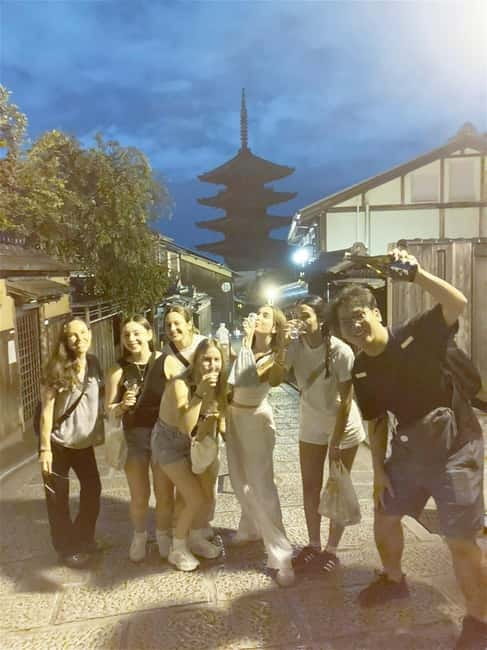
- Lantern-lit Gion after dark when sightseeing feels calmer and more photogenic
- Max 10 people so you can ask questions and actually talk with the guide
- Photo assist at key stops so you’re not fighting your camera while learning the stories
- Sake included as you walk, tied to the cultural context (and you’ll want to be respectful)
- Iconic landmarks like Yasaka Pagoda (Hōkan-ji) and Yasaka Shrine, covered without the daytime crush
Why Gion after dark feels more like Kyoto
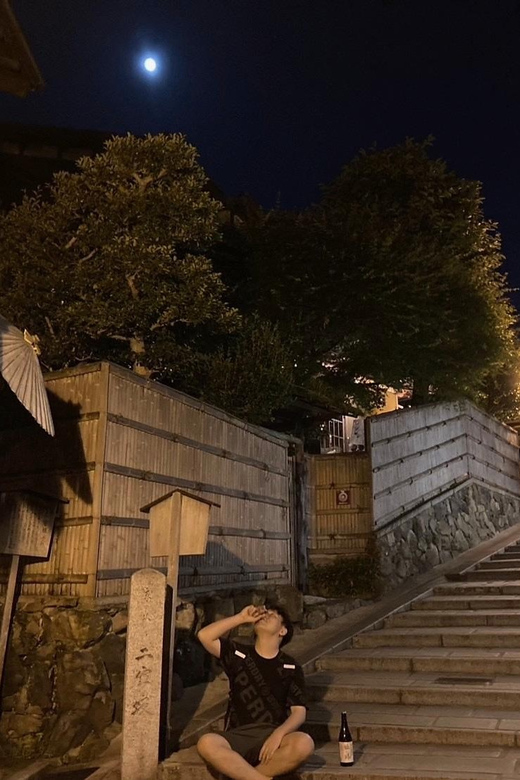
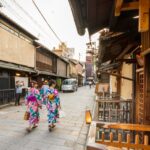
Daytime Gion is famous for a reason. But at night, the district shifts. The lantern light softens everything, the streets feel quieter, and you can actually see the details: wooden facades, narrow lanes, and those “this belongs in a film” corners that you miss when people are packed in.
This tour is built for that timing. You start in the Shijo Kiyamachi area, then move through the heart of Gion on foot at a relaxed pace. The route is compact enough that you get multiple highlights in 90 minutes, but not so rushed that it feels like a checklist.
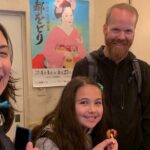
I also like that the experience doesn’t act like a classroom. It’s a walk with a local friend, meaning you can ask practical questions like where to eat next or what to focus on the following day. That simple shift—from lecture to conversation—makes the time feel personal.
You can also read our reviews of more walking tours in Kyoto

Price and value: what $32 really buys you
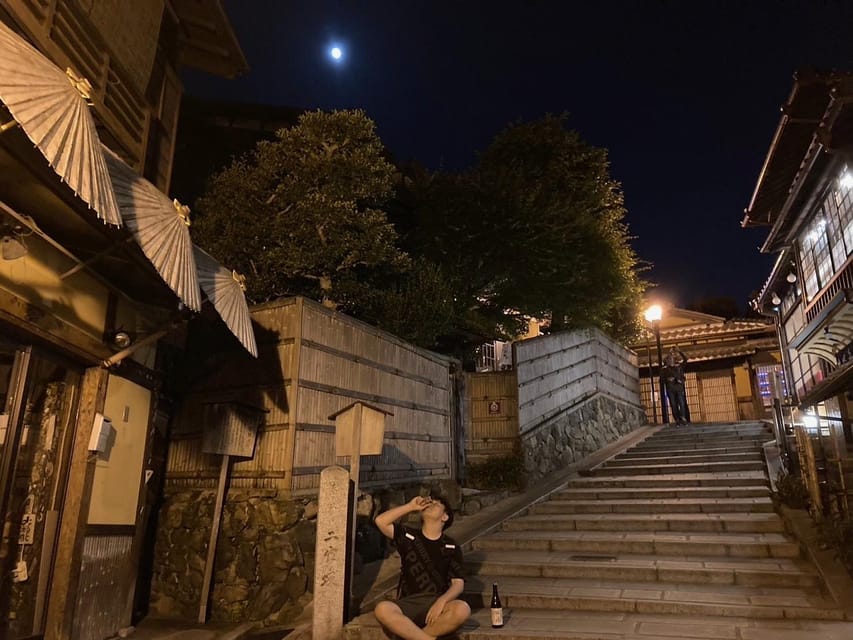
At $32 per person, this isn’t a “big museum ticket” kind of price. It’s closer to paying for a guided evening with a few very specific extras: a local sake cup and photo assistance at key spots.
You’re getting about 70 to 90 minutes of guided walking, led in English, for a small group of up to 10. That matters in Kyoto, where the difference between enjoying a neighborhood and just passing through it is often local context—why a place matters, what you’re looking at, and what to notice. For this tour, those explanations are tied directly to the streets and shrines you’re standing in front of.
If you’re the type of traveler who wants the “story behind the photo,” this tends to be good value. If you just want to wander without guidance, you might skip it—because you’ll be paying for the guide, sake, and help with photos.
Starting at Shijo Kiyamachi without stress
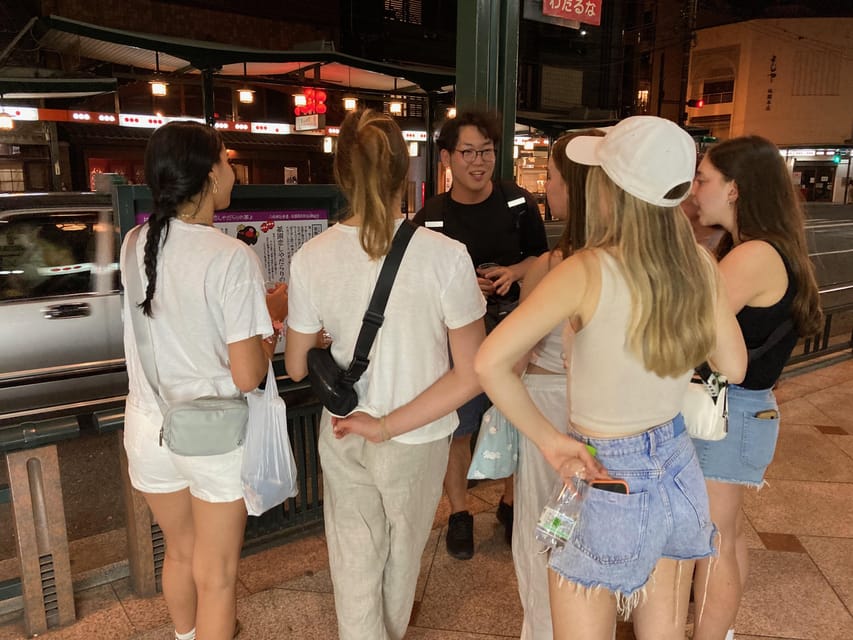
The meeting point is Shijo Kiyamachi, near a McDonald’s. You’ll find the guide between McDonald’s and the Japanese restaurant Kikunoi Roan along Kiyamachi Street, holding a sign that says Otatrip Guide.
Two practical tips help the evening go smoothly:
- Arrive on time. The tour starts promptly, and if the group is ready, departure won’t wait.
- Plan for a short walk to the meeting spot. Kyoto streets can be easy to misread at night, especially when you’re juggling directions and maps.
You’ll also want to keep your voice low in residential and sacred areas. It’s the kind of small courtesy that keeps your experience respectful—and helps the neighborhood feel like Kyoto, not a stage.
Hanamikoji Street: the classic Gion look, in calmer light
The first big stop is Hanamikoji Street, Kyoto’s most famous Geisha district lane. In daytime, Hanamikoji can feel like a photo line. At night, it shifts into something more atmospheric: lantern glow on wood, tea-house silhouettes, and that sense of stepping into an older rhythm.
What you’ll do here:
- A photo stop and guided walk, around 15 minutes total for this section.
- A chance to get context about the street and the traditions you’re seeing.
This is where the photo assist can pay off fast. The guide can help you position yourself, time your shots with the lighting, and avoid crowd-blocking. It’s also a good moment to ask general questions—like what the terms Geiko and Maiko actually mean in everyday use, and how the district’s culture fits into modern Kyoto.
Yasui Kompira-gū Shrine and the power stone idea
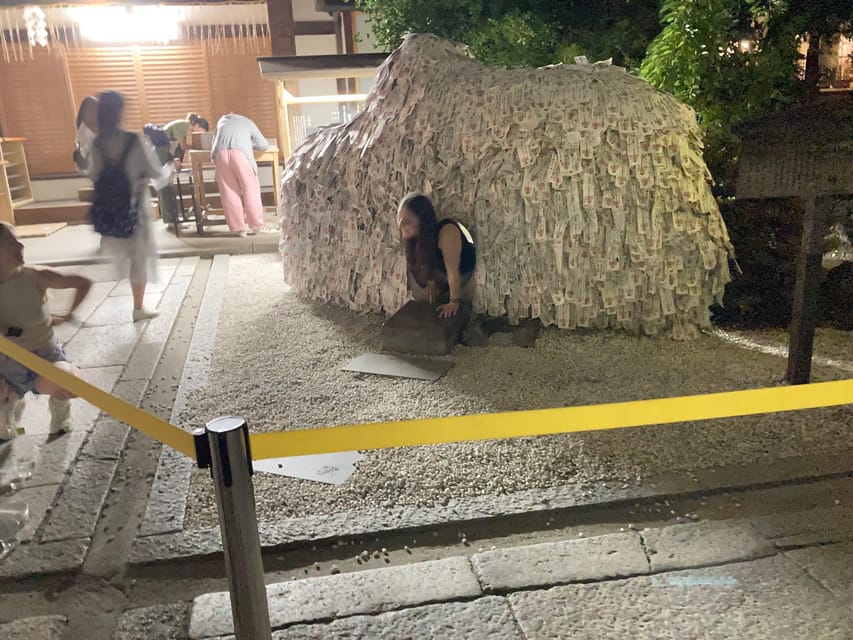
Next you head to Yasui Kompira-gū Shrine for a shorter photo stop and visit (about 10 minutes). The standout detail is the shrine’s power stone, linked to a practice locals come for—cutting bad ties and building good ones.
Why this stop is valuable: it grounds the evening in something more than scenery. Even if you’re not deeply into Shinto specifics, you’ll get the story behind what you’re seeing. And because it’s a shrine, it can feel quietly serious even when the rest of the district is playful.
A heads-up: shrine areas can be sacred and used by local worshippers. Keep your pace steady and your volume low, and you’ll get a better experience without rushing past people’s space.
You can also read our reviews of more food & drink experiences in Kyoto


Hōkan-ji Temple (Yasaka Pagoda): the night photo everyone wants
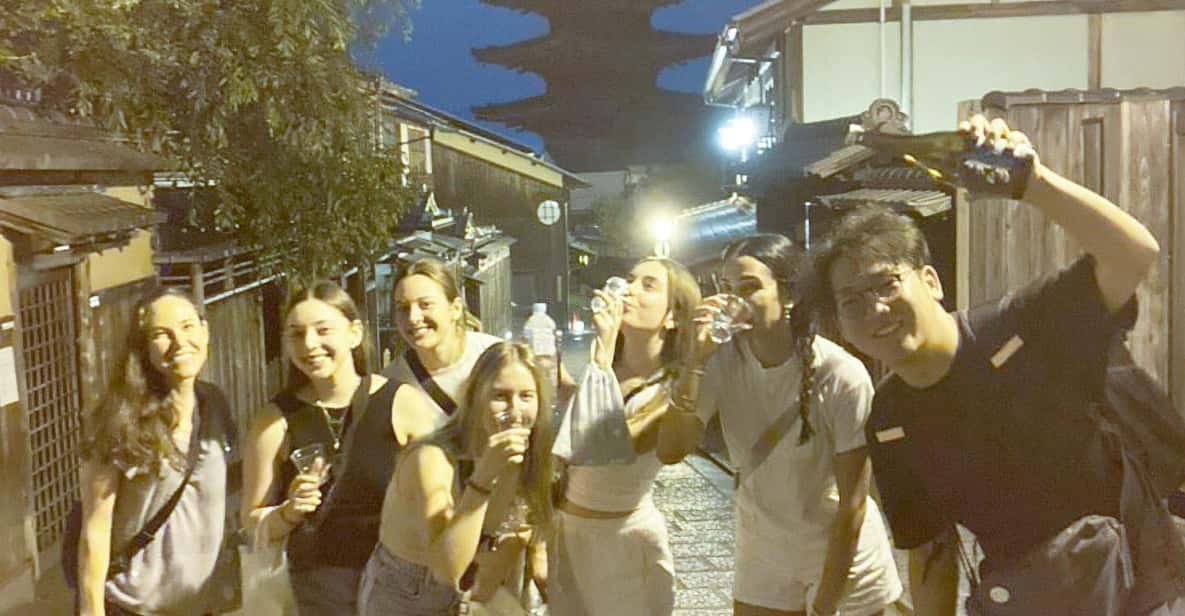
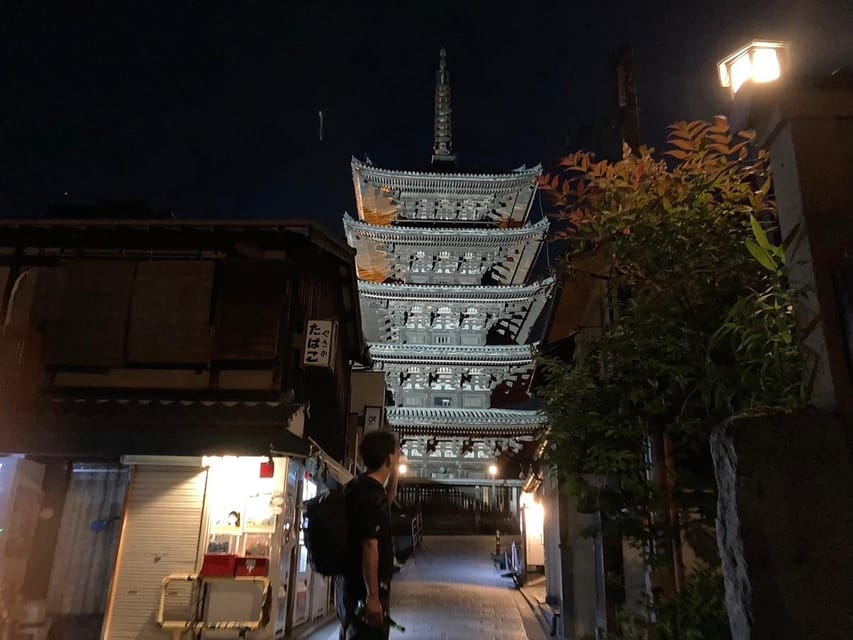
Then comes one of Kyoto’s most photographed landmarks: Yasaka Pagoda, also known as part of Hōkan-ji Temple. You get another photo stop plus a guided moment (about 10 minutes).
At night, the five-story pagoda is lit in a way that feels designed for postcards—but without the daytime density. This is exactly the kind of stop that can be frustrating on your own: you’ll see the pagoda, but the timing, the angles, and the best places to stand can be confusing when the area is busy.
With guidance, you can focus on enjoying the view rather than constantly repositioning. And the guide’s explanation helps you see the pagoda as a cultural landmark, not just a structure.
Ninenzaka slope at night: old streets with a slow pace
The walk continues to Ninenzaka, the charming cobblestone slope known for its traditional wooden townhouses. The tour gives you about 10 minutes here for a photo stop and guided visit.
Night turns Ninenzaka into something calmer and more “time travel.” The slope’s textures and the way buildings lean inward toward the street create that classic Kyoto geometry—especially under soft light.
Practical note: cobblestones can be uneven. Even if you think you’re fine on your feet, give yourself a chance to slow down. Comfortable shoes aren’t optional for this part.
Also, in rain, the streets can be even quieter. One past participant described how a rainy evening made Gion feel especially peaceful, with the lanterns doing the heavy lifting for atmosphere.
The end at Yasaka Shrine: a long-watching finish
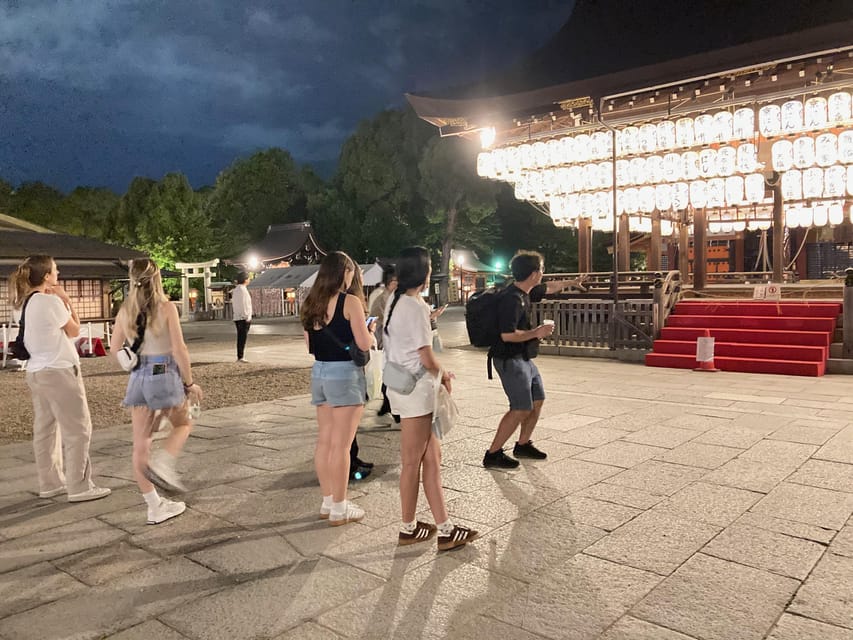
Your tour finishes at Yasaka Shrine, another major spiritual landmark that has watched over Gion for more than 1,300 years. You’ll end your evening here, after the series of photo stops and guided segments.
This is a smart place to end for two reasons:
- You get a sense of continuity. The evening isn’t only about “what’s pretty now.” It ties into how Gion’s traditions have lasted.
- You’re in a strong anchor location for your next move, whether you’re heading to dinner or continuing exploring Kyoto.
If you want to keep the evening going, the shrine finish is a good launching point—without feeling like the tour just stops mid-street.
Sake in hand: a small cultural touch (and a smart way to pace yourself)
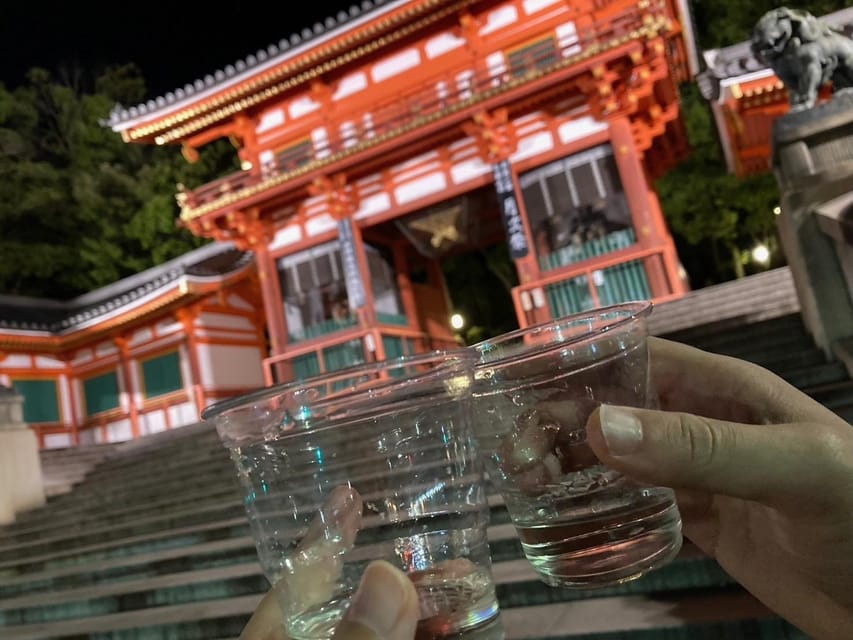
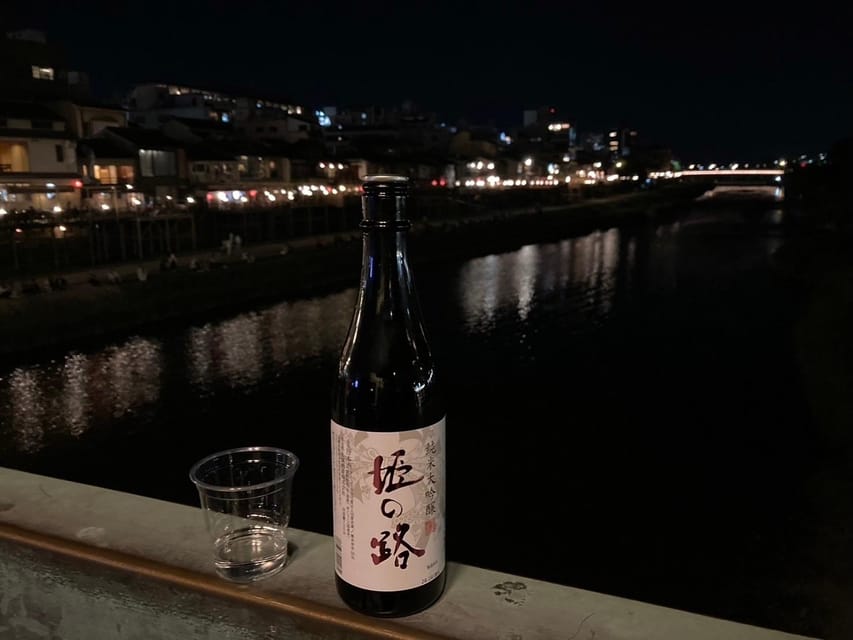
A cup of local sake is included. You’ll sip as you stroll through lantern-lit streets, which turns an ordinary walk into a more memorable experience.
Two important points keep this fun:
- Take it slow. The walk is relaxed, but you still move for close to the full time.
- Stay responsible and respectful. The tour includes a quiet reminder: voices low in residential and sacred areas, and smoking isn’t allowed. In Japan, those simple norms matter.
One past participant even mentioned that the sake quantity and quality felt generous. Another noted that having sake during the walk made it more exciting and memorable. Either way, it’s a clear value add at this price point.
What makes the group size and guide style matter
Max 10 people isn’t just a number. It changes the whole vibe. In smaller groups:
- You’re less likely to get pushed around at photo stops.
- Questions don’t get cut off.
- The guide can adjust the pace when someone needs a moment.
Past experiences also show that the guide often blends humor with clear explanations. One person described their guide as funny, patient, and generous with sake. Another praised Shumpei specifically for making the group feel comfortable and for answering everything from history questions to anime-related curiosity.
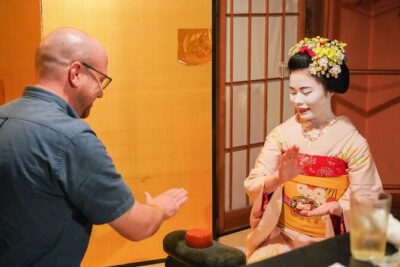
And while you might not see geiko or maiko directly on every evening, one participant said they saw actual Geishas during their walk. It’s not something you can bank on, but it tells you the tour is routed in a way that can put you close to real life in the district.
Practical logistics you’ll actually care about
This is a walking tour, so plan for:
- Comfortable shoes (especially with Ninenzaka’s cobblestones).
- A steady pace for about 70 to 90 minutes of walking.
- Low volume in sacred and residential areas.
Not allowed: smoking.
Not suitable for: people with back problems. Even if you think you can handle short walking, uneven street surfaces and repeated stops for photos can add strain.
If you’re coming with a plan for dinner right after, give yourself a little buffer. The tour ends at Yasaka Shrine, and you’ll likely want a few minutes to orient yourself before heading out.
Who this tour is best for
This tour fits you if:
- You want Gion at night but don’t want to spend your evening guessing where to look and what to notice.
- You like a small group and conversational pacing.
- You enjoy culture explained in plain English, tied to places you can point at.
- You want a photo-friendly route with assistance included.
It may not fit you if you:
- Prefer self-guided wandering with zero structure.
- Have back issues or mobility limitations that make cobblestones and extended walking hard.
- Expect a long stop at each landmark. This is a compact 90-minute evening, not a slow, multi-hour deep cultural appointment.
Should you book this Gion evening walk?
I’d book it if your Kyoto plans include Gion but you want the experience to feel personal, relaxed, and well-timed. For $32, the mix of sake, photo help, and guided context at major landmarks (Hanamikoji, Yasaka Pagoda/Hōkan-ji, Yasui Kompira-gū, Ninenzaka, Yasaka Shrine) is exactly the kind of value that makes a short evening count.
Skip it only if you know you won’t enjoy walking for an hour-plus, or if you’d rather spend your night doing your own route without guidance.
If you’re on the fence, ask yourself one question: do you want Gion’s stories as you’re looking at the streets? If the answer is yes, this is a very satisfying way to spend an evening in Kyoto.
FAQ
How long is the Kyoto Gion evening walk?
The tour lasts about 90 minutes total, with roughly 70 to 90 minutes spent walking with the guide.
Is the tour in English?
Yes, the live tour guide speaks English.
What landmarks are included?
You’ll cover Hanamikoji Street, Yasui Kompira-gū Shrine, Hōkan-ji Temple (Yasaka Pagoda), Ninenzaka, and finish at Yasaka Shrine.
Is sake included?
Yes. A cup of local sake is included so you can enjoy it as you stroll.
How big is the group?
It’s a small group limited to a maximum of 10 participants.
Where does the tour start and end?
The meeting point is at Shijo Kiyamachi. The tour finishes at 八坂神社 (Yasaka Shrine).
Is it suitable for everyone?
It’s not suitable for people with back problems, and comfortable shoes are recommended since it is a walking tour.