REVIEW · KYOTO
Secret Eastern Kyoto Biking Adventure
Book on Viator →Operated by 株式会社 MATATABI · Bookable on Viator
Kyoto gets easier when you pedal. This Secret Eastern Kyoto Biking Adventure strings together Gion backstreets and big landmarks in about 2 to 2.5 hours, and I like how it stacks quick photo stops with a couple of longer temple moments—plus an included local matcha break at Murinan. The main trade-off is simple: you’re on a bike for a decent chunk of time, so plan for moderate riding stamina.
What really sells it is the small-group feel and the way the guide keeps the ride interesting with Kyoto culture explanations. With a maximum of 4 travelers and a mobile ticket, it’s set up to feel organized but not rigid, and you still get the kind of Kyoto temple-and-green-tea experience that’s hard to replicate on your own.
In This Review
- Key highlights at a glance
- Why bike eastern Kyoto instead of walking or taking a bus
- Meet at Ōhashichō and get rolling
- The 2-hour ride: the itinerary stop-by-stop
- Gion and Shirakawa Minami Avenue (Stop 1)
- Tatsumi Bridge (Stop 2)
- Heian Shrine and the big torii moment (Stop 3)
- Nejirimampo / Keage Tunnel (Stop 4)
- Nanzenji Fukuchicho (Stop 5)
- Murinan: matcha and garden time (Stop 6)
- Temple with an emperor’s sign, then a huge gate (middle stops)
- Maruyama Park: cherry blossom focus (Stop 7)
- Nenenokomichi: scenic path time (Stop 8)
- A famous Kyoto tower stop
- Yasui-Konpiragu and its rock focus (Stop 9)
- Kennin-ji Temple: gardens and paths (Stop 10)
- Back to Gion: Geisha district atmosphere (Stop 11)
- What “go at your own pace” looks like on a guided bike tour
- Price and value: what $119 buys you in Kyoto
- Timing, seasons, and what to wear (so you enjoy the ride)
- Who this tour is best for (and who should reconsider)
- Should you book this Secret Eastern Kyoto Biking Adventure?
- FAQ
- FAQ
- How long is the Secret Eastern Kyoto Biking Adventure?
- What does the tour cost?
- How many people are on this bike tour?
- Is admission included for the stops?
- Is the tour suitable for kids?
- Where do I meet the tour?
- Will I need a certain fitness level?
- Can I cancel for a full refund?
Key highlights at a glance
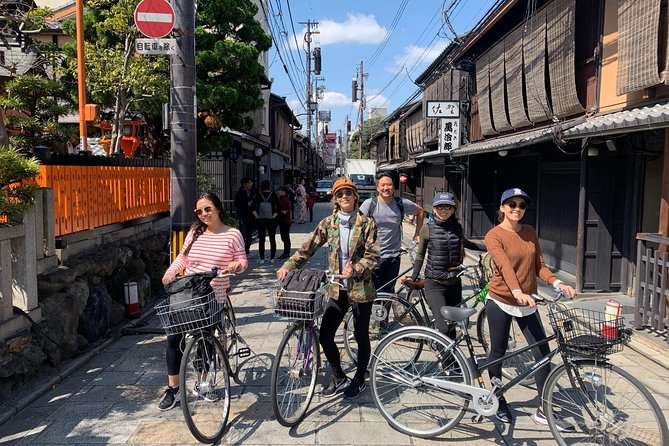
- Backstreets that help you beat time: scenic routes meant to avoid traffic and keep your sightseeing moving.
- Small group pace (max 4 travelers): you’re not packed into a bus-sized situation.
- Heian Shrine’s huge torii gate: a classic Kyoto landmark you’ll hit efficiently.
- Murinan includes matcha: a real pause, not just a photo stop.
- Lots of short stops with photo payoff: think Gion, bridges, tunnels, and paths—timed so you don’t drag.
- Temple time plus neighborhood flavor: major sites mixed with quieter eastern Kyoto streets.
Why bike eastern Kyoto instead of walking or taking a bus
Kyoto is gorgeous, but it can also be slow. Walking means long gaps between stops, and buses can turn a day into a waiting game. This tour is built around a different logic: ride smart, see more, and use bikes to connect areas without burning your whole time moving.
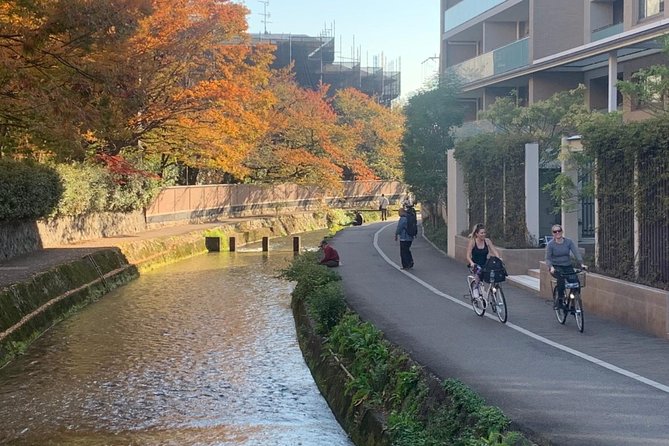
The tour’s route philosophy is practical—use scenic backstreets to cut down on traffic friction. That matters because the difference between a great day and a mediocre one often comes down to whether you lose time in transit.
You can also read our reviews of more cycling tours in Kyoto
Meet at Ōhashichō and get rolling
You meet in Higashiyama Ward, Ōhashichō, at Ōhashichō 117 京阪三条北ビル (Kyoto 605-0009). The location is described as near public transportation, which is a big deal in Kyoto where route planning can eat energy.
From the start, the vibe is meant to be easygoing: a guide handles the flow, and you don’t have to assemble an itinerary on the spot. The tour ends back at the meeting point too, so you’re not scrambling for your next plan at the end of the ride.
The 2-hour ride: the itinerary stop-by-stop
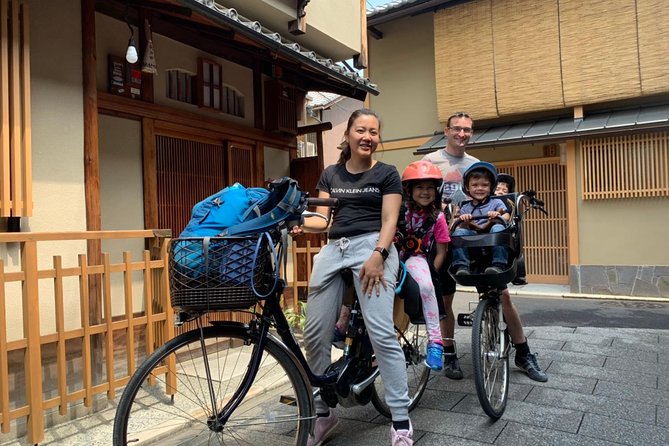
This is a “move, pause, look, and learn” format. Many stops are only about 5 minutes, so treat those as quick photo + orientation moments. The longer blocks are where you’ll slow down and actually take in the gardens and temple atmosphere.
Gion and Shirakawa Minami Avenue (Stop 1)
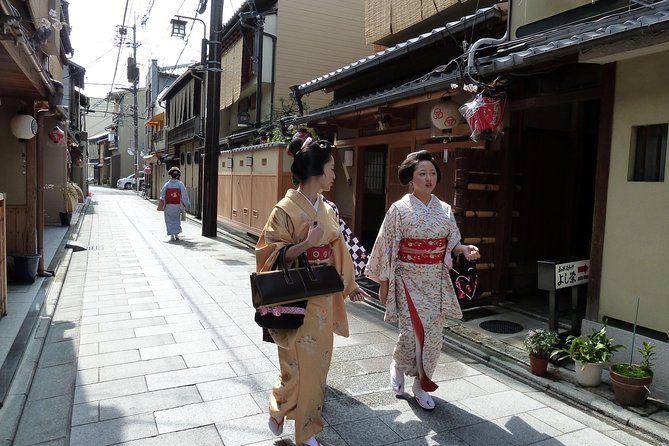
You start in Gion, with a stop along Shirakawa Minami Avenue. This is one of those historic Kyoto street scenes that’s become a go-to wedding photo backdrop—meaning you get the classic look fast.
What I like about starting here is that it gives you instant Kyoto mood before you branch out. The drawback: because it’s short, you’ll want to be ready to shoot quickly and then move.
Tatsumi Bridge (Stop 2)
Next up: Tatsumi Bridge, framed as a strong photo spot in the area. Short stop, clear purpose—capture the view and keep going.
If you’re the type who hates racing through photo moments, you’ll still be fine here, but you’ll get the most out of it if you come with your camera settings ready.




Heian Shrine and the big torii moment (Stop 3)
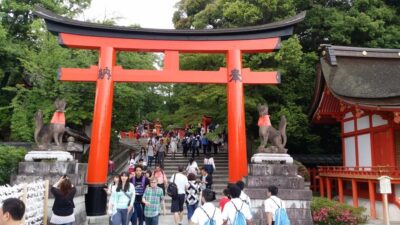
Then you hit Heian Shrine for about 20 minutes, with emphasis on its huge torii gate and shrine. This is a “Kyoto landmark in your face” stop—exactly what you want on a limited timeline.
A longer stop helps you do more than snap pictures. You can walk some paths around the shrine area and actually absorb the scale. The only caution: it’s still a bike tour, so don’t expect a leisurely half-day.
Nejirimampo / Keage Tunnel (Stop 4)
At Nejirimampo (Keage Tunnel) you get a quick hit—around 5 minutes—focused on the tunnel itself. It’s a great reminder that eastern Kyoto has plenty of character beyond the famous postcard spots.
Photo tip: tunnels can make lighting tricky on phones. If you’re bringing a camera, this is one of those moments where you’ll want to test quickly and then get your shot.
Nanzenji Fukuchicho (Stop 5)
You spend about 20 minutes at Nanzenji Fukuchicho, described as one of the head temples in eastern Kyoto. This gives you some temple depth after the more “street-and-photo” earlier rhythm.
Why it works: the tour alternates. You’re not bouncing from major attraction to major attraction without breathing room. Here you’re more likely to slow down and notice garden and path details.
Murinan: matcha and garden time (Stop 6)
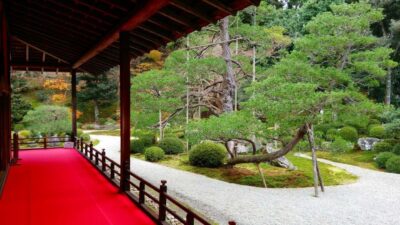
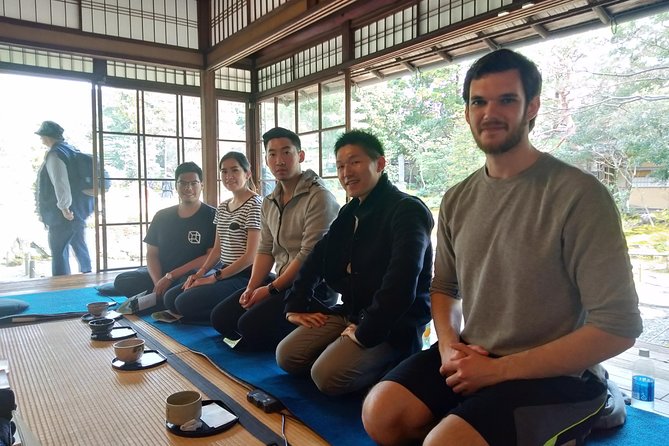
This is the tour’s signature pause. Murinian is about 20 minutes and includes local matcha tea. After earlier fast stops, this is where the pacing turns into something more memorable.
I think this stop is the true value add for many people: you’re not just touring sights; you’re taking a Kyoto-style break. The garden setting and the tea make it feel like you’ve stepped into a quieter slice of the city—even though you’re still in an itinerary that moves.
Temple with an emperor’s sign, then a huge gate (middle stops)
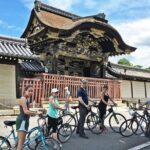
After Murinan, the route includes a great temple with an emperor’s sign and another stop with a huge gate and temple. The exact emphasis here is clearly on historic, landmark-style architecture—things you can recognize even if you don’t have names memorized.
Because these stops aren’t described with detailed timing in the same way as others, treat them as important but focused photo/visit moments. If you’re the kind of traveler who wants to read every sign, you’ll want to use your time efficiently: look, take photos, then step back so you can actually absorb.
Maruyama Park: cherry blossom focus (Stop 7)
You roll into Maruyama Park for about 5 minutes, and it’s highlighted as a top cherry blossom place, with a garden and pond. Timing matters here: if you’re visiting during blossom season, this quick stop can feel especially satisfying.
Even if it’s not peak bloom, parks with ponds often photograph beautifully and give you a calmer break in the middle of a ride day. The downside is obvious: 5 minutes is enough for a taste, not a full stroll.
Nenenokomichi: scenic path time (Stop 8)
At Nenenokomichi, you get another short stop (about 5 minutes) on a beautiful path with interesting scenery. This is a good moment to switch modes from “landmark hunting” to “slow looking.”
If you’re prone to rushing, this is where you’ll need to remember it’s okay to stand still for 30 seconds. Paths like this often look average in photos but feel better when you slow down.
A famous Kyoto tower stop
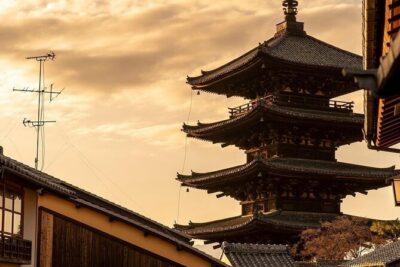
Another quick viewpoint stop is included: one of the most famous towers in Kyoto. The itinerary doesn’t spell out the tower name in the same way as the shrine temples, but the intent is clear—get a signature skyline/landmark moment without turning the day into a long detour.
If tower views are a priority for you, use this stop to shoot from the best angle quickly, then enjoy the area around it rather than waiting for the perfect photo.
Yasui-Konpiragu and its rock focus (Stop 9)
Next is Yasui-Konpiragu with a note that a greatest rock is waiting for you. You’ll get a quick look (about 5 minutes) that’s more “specific attraction” than “wander the grounds.”
Short and focused can be great, especially in a bike day. Just don’t expect time for a long temple soak.
Kennin-ji Temple: gardens and paths (Stop 10)
You wrap the temple-heavy portion at Kennin-ji Temple. The stop is about 5 minutes, with mention of huge gardens and paths.
That sounds short, but it actually fits the structure: you’ll get an orientation sense of the temple grounds, enough to appreciate why it’s a Kyoto name. If you want a deep temple visit, plan a separate visit later. This tour gives you the hit, not the marathon.
Back to Gion: Geisha district atmosphere (Stop 11)
The final stop includes Gion again, framed as the geisha district. It’s a smart landing point: you end where the Kyoto atmosphere is most recognizable, and it’s easy to continue exploring on foot afterward.
This last stop also helps you transition out of the ride. You’ll be closer to evening strolling areas, and you won’t feel like you’re ending in the middle of nowhere.
What “go at your own pace” looks like on a guided bike tour
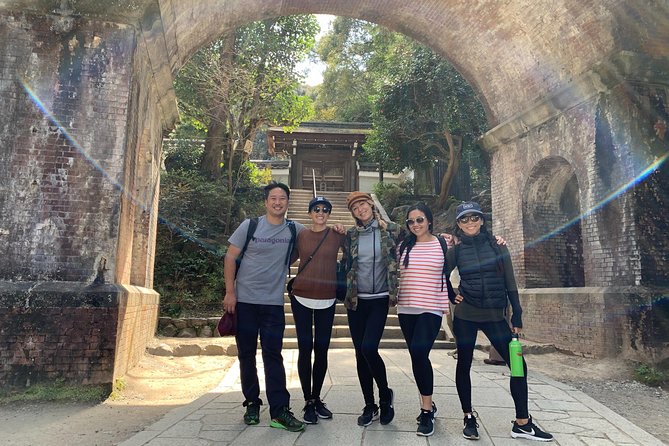
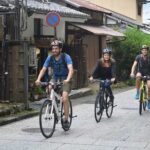
One of the best parts of this kind of tour is that you can blend structure with comfort. In the ride day described, the guide role is to keep you moving and informed, while still letting you set your own rhythm within the stops.
That showed up in a review experience where the guide—Ben—kept things professional and helped the group go at their own pace. Even on a tight itinerary, that matters. It means you can linger a touch at Murinan or frame your photos a bit better without feeling like you’re slowing a whole busload of people.
In plain terms: this is the kind of tour where you’ll feel guided, not herded.
Price and value: what $119 buys you in Kyoto
At $119, you’re not paying for a “walk to temples” DIY approach. You’re paying for a system: bike-based routing, a guide, time efficiency, and cultural context, plus at least one real included experience.
Here’s the value breakdown you can feel during the day:
- Most stops are listed as free admission, so you’re not constantly buying tickets.
- Murinian is the one explicitly noted as included, with matcha tea.
- The rest of what you’re paying for is the guide’s ability to connect these places with minimal wasted time, using scenic backstreets instead of getting stuck in traffic delays.
So the question isn’t just whether $119 feels fair. It’s whether your day in Kyoto would be better spent in motion with a guide than in planning and waiting on your own. If you want momentum and you’re okay sharing the road with a short itinerary, this pricing starts to feel like a solid deal.
Timing, seasons, and what to wear (so you enjoy the ride)
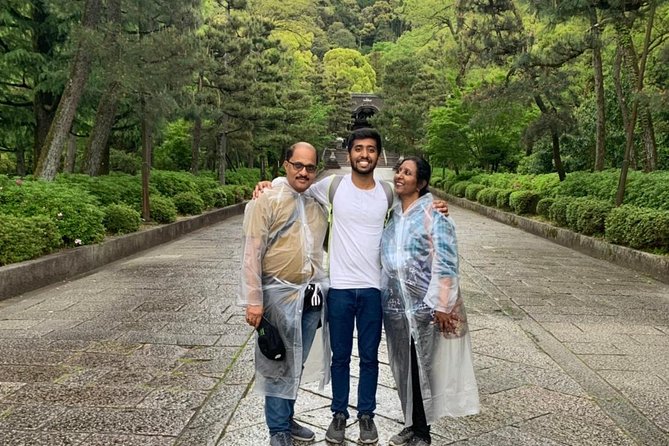
This is a moderate-fitness bike tour, around 2 to 2.5 hours. That means your comfort matters more than your speed. Wear shoes you can walk in after you stop. Dress in layers because Kyoto weather can shift, and you’ll be outdoors the whole time.
For seasonal timing, Maruyama Park being cherry blossom-focused is a real clue. If blossoms are in season, that quick stop can deliver big visual payoff. If not, it’s still a pond-and-garden reset that breaks up the temple streak.
Also, plan your photo mindset. Since many stops are about 5 minutes, you’ll get the best results if you decide what matters most at each one. One great frame beats ten blurry ones.
Who this tour is best for (and who should reconsider)
This tour is a strong fit if:
- you want to see a lot efficiently in a short Kyoto window
- you enjoy temples and gardens but don’t want to spend half your day commuting
- you like the “ride with context” style, where explanations keep you from getting bored between stops
- you’re comfortable with moderate physical fitness
You might reconsider if:
- riding for 2 to 2.5 hours sounds like a deal-breaker
- you prefer totally unstructured pacing with lots of time inside each site
- you want a deep, sit-down temple experience at every stop. This ride is built for breadth.
And because the group is capped at 4 travelers, it’s also a good option if you don’t want a big crowd energy.
Should you book this Secret Eastern Kyoto Biking Adventure?
I’d book it if your Kyoto plan needs momentum and you want to hit multiple eastern highlights without wasting hours on transit. The mix of Gion atmosphere, major sights like Heian Shrine, and a culture-and-tea break at Murinian gives you variety without dragging the schedule.
I’d also book it if you like guided context. The route is designed so you’re not just biking from one “look” to the next—you’re getting cultural descriptions while you move, which helps the day feel cohesive.
I’d skip it if you’re mainly looking for long temple time or if you’re unsure about your comfort cycling for a couple of hours. In that case, a more leisurely, walking-focused day might suit you better.
FAQ
FAQ
How long is the Secret Eastern Kyoto Biking Adventure?
It’s about 2 hours to 2 hours 30 minutes.
What does the tour cost?
The price is $119.
How many people are on this bike tour?
The tour maximum is 4 travelers.
Is admission included for the stops?
Most stops are listed as free admission. Murinian is the stop noted as having admission included (with matcha tea).
Is the tour suitable for kids?
Children aged 1-3 are welcome, but a special bike is required. An additional fee of ¥2,500 per bike is charged on the day of the tour, if available.
Where do I meet the tour?
Meet at Kyoto, Higashiyama Ward, Ōhashichō, 117 京阪三条北ビル.
Will I need a certain fitness level?
You should have a moderate physical fitness level.
Can I cancel for a full refund?
Yes. Free cancellation is available, and you can cancel up to 24 hours in advance for a full refund.