REVIEW · KYOTO
Kyoto Arashiyama Bamboo Forest & Scenery Customized Private Tour
Book on Viator →Operated by Japan Wonder Travel · Bookable on Viator
Bamboo in Kyoto looks like a movie set. This private 4-hour Arashiyama and Sagano walk pairs the famous bamboo forest with iconic bridges and hillside temples, all shaped around what you want to see and photograph. You get a local who can explain the place in plain English while you move at a comfortable pace.
I love the flexibility here. Your guide can help you choose 2–3 stops from a menu of classic sites (like Tenryu-ji or Togetsukyo Bridge) plus quieter temple options if you want something less crowded. I also like the way the guides show up in the details: people have praised English skills and patient pacing from guides such as Takuma Goda, Osamu, Fuji, Kazu, and Na(o).
One thing to consider: this is mostly walking, and there’s no hotel pickup. You’ll meet at JR Saga-Arashiyama Station and handle any transfer between spots with public transit or taxis (extra cost), plus entrance fees where applicable.
In This Review
- Key Points You’ll Care About
- Arashiyama Bamboo Forest Meets Sagano Temples
- Price and Logistics: A Private Walk With No Van
- How Customization Really Works (Pick 2–3 Stops)
- Start at Saga-Arashiyama Station (A Better Day Begins Here)
- Togetsukyo Bridge: The Iconic 155 Meters
- Tenryu-ji Temple: Zen Gardens and Seasonal Changes
- Okochi Sanso Garden: A Villa Garden Built by Denjiro Okochi
- Jojakkoji, Nisonin, and Giōji: Autumn Maples and Heartbreak Stories
- Jojakkoji
- Nisonin
- Giōji
- Adashino Nembetsu-ji and Otagi Nenbutsu-ji: Kyoto Gets Strange in the Best Way
- Adashino Nembetsu-ji
- Otagi Nenbutsu-ji
- Saga Toriimoto Traditional Buildings and Iwatayama Monkey Park
- Saga Toriimoto Traditional Buildings Preservation Area
- Monkey Park Iwatayama
- Bamboo Forest Street: How to Enjoy It Without Getting Worn Out
- Who This Tour Suits (And Who Might Prefer a Different Plan)
- Should You Book This Kyoto Arashiyama Bamboo Forest Private Tour?
- FAQ
- How long is the Kyoto Arashiyama Bamboo Forest & Scenery private tour?
- Where do I meet the guide?
- Is this tour private to my group?
- Are entrance fees included?
- Do I need to be able to walk a lot?
- What if it rains?
- Can I cancel for a full refund?
Key Points You’ll Care About
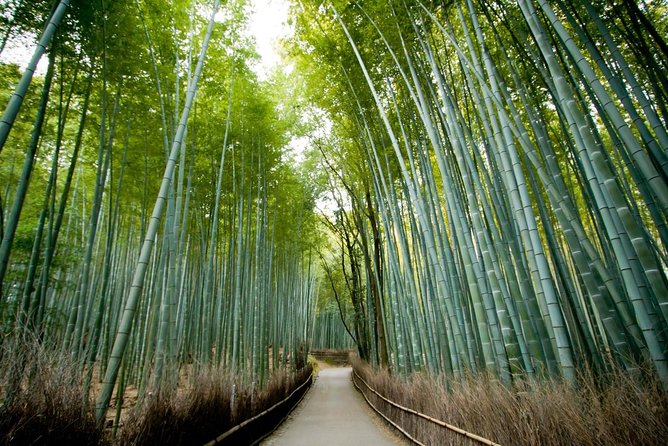
- Private and customizable: pick 2–3 places from the stop menu based on your interests
- Licensed local English guide: history and what to notice, explained clearly
- Bamboo Forest Street plus classic Arashiyama views like Togetsukyo Bridge
- Choose your vibe: serene Zen gardens, autumn-foliage maples, or quieter hillside temples
- Moderate walking with rain-or-shine scheduling, so plan for shoes and weather
Arashiyama Bamboo Forest Meets Sagano Temples
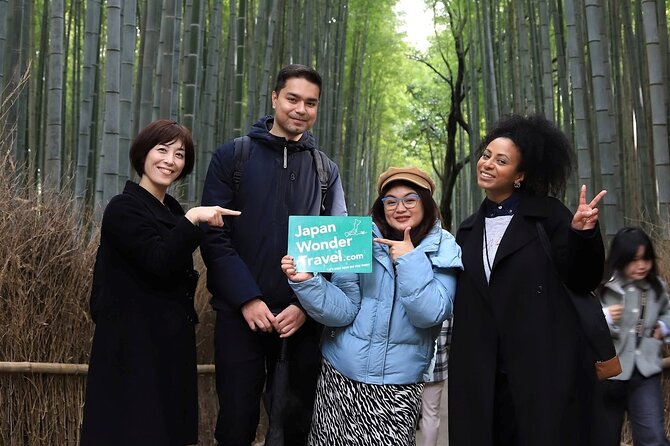
Kyoto is great at temples, but Arashiyama and Sagano feel different from the center of the city. The vibe shifts to rivers, hillsides, and temple grounds that look like they were made for slow wandering. This tour is designed for exactly that: a walking day where you move through the scenery without fighting the chaos of big group tours.
You’re also buying something practical: a guide who can tell you what you’re looking at. At places like Tenryu-ji, Okochi Sanso, and the hillside temples, it’s easy to see the beauty and still miss what makes each place special. A local guide helps you slow down in the right spots and understand why these gardens and buildings mattered.
And because it’s private to your group, you’re not stuck with a rigid agenda where you have to wait your turn for every photo and every gate. The day can flex based on your pace, your photo priorities, and whether you’d rather stay longer in one garden than check off another stop.
You can also read our reviews of more private tours in Kyoto
Price and Logistics: A Private Walk With No Van
At $132.14 per person for about 4 hours, the value is in the guide and the customization—not in a big bus-and-ticket bundle. You’re not paying for a fancy private vehicle here. In fact, a private van is not included, and you’ll return to the meeting area at the end.
Here’s what that means for you:
- You meet at JR Saga-Arashiyama Station (in front of a ticket gate). No hotel pickup.
- Between sites, you may use public transportation or local taxis. Those transfer costs are extra.
- Some stops are free to enter, while others (like major temples or the monkey park) are not included.
So the math can work out well if you want a guided walk and are okay with handling your own getting-to-the-meetup logistics. If you’re expecting a door-to-door service, this setup won’t feel smooth.
Finally, it runs rain or shine. Kyoto weather changes fast, so plan for it. Comfortable shoes matter more than a good outfit.
How Customization Really Works (Pick 2–3 Stops)
The best feature is simple: you choose 2–3 places to visit based on your preferences. That doesn’t mean the guide just hands you a list and walks off. It means you can shape the day around what you care about most.
Your guide can steer you toward the classics if you want “first-time Arashiyama,” or toward quieter temple experiences if you’d rather trade crowds for calm. Many of the most memorable parts of Arashiyama aren’t the main postcard spots—they’re the in-between moments: a viewpoint from a hillside path, a garden corner with the right angle, a temple compound that feels tucked away.
Your stop options include:
- Togetsukyo Bridge
- Tenryu-ji Temple
- Okochi Sanso Garden
- Jojakkoji
- Nisonin
- Giōji Temple
- Adashino Nembetsu-ji
- Otagi Nenbutsu-ji
- Saga Toriimoto Traditional Buildings Preservation Area
- Monkey Park Iwatayama
- Bamboo Forest Street
- Plus free “starter” time around Saga-Arashiyama Station
Not every stop fits every mood. The customization lets you avoid the one thing that ruins Kyoto sightseeing days: doing too much and enjoying too little.
Start at Saga-Arashiyama Station (A Better Day Begins Here)
Your tour meets at Saga-Arashiyama Station on the JR line, right in front of a ticket gate. That’s a smart choice because it puts you close to the heart of Arashiyama’s moving routes while still keeping you in the neighborhood rather than bouncing in from far away.
Since there’s no pickup, you’ll want to plan your arrival so you aren’t rushing. If you’re using public transit, build in a buffer. Kyoto stations can be easy once you’re oriented, but you’ll appreciate breathing room before your guide takes you off the main walkway.
Also, this is a walking tour with a moderate amount of walking. You don’t need to be an athlete, but you do need shoes that handle uneven ground and temple paths. If your feet get cranky, the beauty won’t matter.
Togetsukyo Bridge: The Iconic 155 Meters
If there’s one “instant wow” stop in Arashiyama, it’s Togetsukyo Bridge. It’s about 155 meters long and crosses the Katsura River, with Arashiyama’s mountains in the background.
This is one of those places where your guide’s timing matters. You’ll likely spend less time just staring and more time learning where to stand, how to frame the view, and what the river and mountain backdrop means for the area’s identity.
A practical note: this is a high-visibility spot, so expect lots of people if you’re there during peak hours. But don’t write it off. The trick is to use the bridge as your scenic foundation, then shift to quieter stops.
Tenryu-ji Temple: Zen Gardens and Seasonal Changes
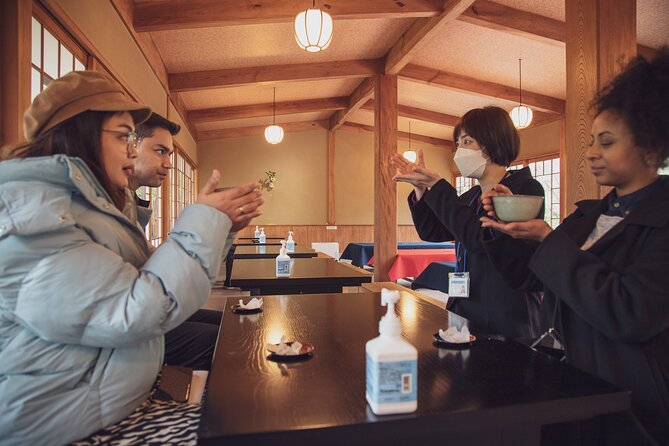
Tenryu-ji Temple is a major Zen site and a UNESCO World Heritage location. It’s known for its garden, where the feel changes across the seasons—so your visit has a built-in reason to return someday.
In practical terms, Tenryu-ji is where your guide’s storytelling becomes real. You’ll notice details faster when someone can explain what you’re seeing and why the garden was designed the way it was. The temple grounds can also be a welcome slow-down after the river views.
Important for your budget: admission is not included here.
If your group wants one “anchor” temple that feels classic and meaningful, Tenryu-ji is usually the safest bet.
Okochi Sanso Garden: A Villa Garden Built by Denjiro Okochi
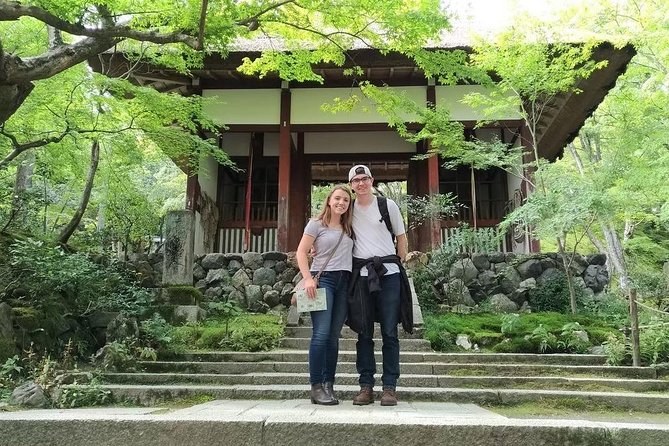
If you want beauty with a side of Hollywood-ish Kyoto, look at Okochi Sanso Garden. It was built by Denjiro Okochi, a famous actor known for samurai films, and he spent about 30 years creating this garden-villa setting.
The garden covers roughly 19,800 square meters, and the details matter: the space is large enough that you can feel like you’re moving through different “scenes,” not just walking in a single yard. In spring and autumn, it’s surrounded by cherry blossoms and the sort of seasonal changes Kyoto does better than anywhere else.
Again, admission is not included.
This stop is a good match if you like gardens and viewpoints and want something that feels more like a designed experience than a temple checklist.
Jojakkoji, Nisonin, and Giōji: Autumn Maples and Heartbreak Stories
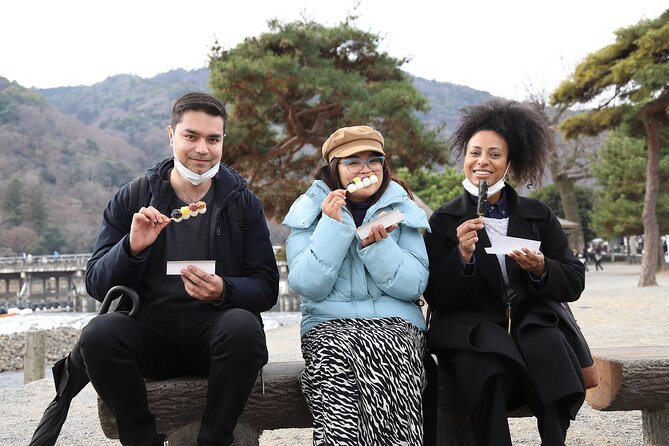
These hillside temples are where Sagano starts feeling personal.
Jojakkoji
Jojakkoji sits on the hillside of Mt Ogura, famous for autumn foliage since the late Heian period. There are about 200 old maple trees that can turn red, orange, and yellow. If you visit when the maples peak, this stop can be one of the day’s strongest photo moments.
Admission is not included.
Nisonin
Nisonin is quieter and famous for surviving the passage of about 1,200 years. It’s called “Nison-in” because it enshrines the two principal Buddhas. If you like temples with an understated mood, this is the kind of place where you notice your own pace slowing down.
Admission is not included.
Giōji
Giōji Temple is known as a temple of tragic love. It’s linked to a story about a lady dancer who lost favor and spent time as a nun after a broken heart. It’s a reminder that Kyoto’s religious sites aren’t only architecture—they’re connected to real people and real emotions.
Admission is not included.
These three stops work well together if you want “temples with meaning,” not just temples for photos. If you prefer one big scenic temple and a couple of smaller, calmer ones, your guide can help you blend the right mix.
Adashino Nembetsu-ji and Otagi Nenbutsu-ji: Kyoto Gets Strange in the Best Way
Not every Kyoto temple is meant to feel polished and pretty. Two of the most memorable options here are darker, more unusual, and very human.
Adashino Nembetsu-ji
This place has a long connection to burial, starting with wind burial and later shifting to earth burial. People dedicated a stone Buddha here, mourning separation of the dead. It’s quiet in a different way than most tourist-famous sites—more reflective, less performative.
Admission is not included.
Otagi Nenbutsu-ji
Otagi Nenbutsu-ji traces back to the 8th century, then became uninhabited during WWII. It was later abandoned after a typhoon in 1950 caused extensive damage. The result is a site that feels marked by time and recovery, not “frozen in tradition.”
Admission is not included.
If your group likes Kyoto that goes beyond the usual postcard circuit, these stops can be the highlight—even if they’re not the prettiest on first glance.
Saga Toriimoto Traditional Buildings and Iwatayama Monkey Park
Arashiyama isn’t only temples and bamboo. It also has living texture: old farm-style buildings and a wild-feeling animal park.
Saga Toriimoto Traditional Buildings Preservation Area
Toriimoto is a conservation area at the far end of Sagano. It’s about 600 meters along Atago Highway leading to Atago Shrine and includes farmhouse-style buildings with thatched roofs. This is a great “breather” stop, especially if your legs are feeling it.
Admission is free.
Monkey Park Iwatayama
If you like animals, Monkey Park Iwatayama is an option. Around 120 Japanese macaques live in the wild in this park area, and you can see them throughout the year.
Admission is not included.
This stop works best if you can handle a bit of walking uphill and you’re comfortable with animal viewing rules. It’s also a nice contrast: you go from garden and temple stillness to a natural, active scene.
Bamboo Forest Street: How to Enjoy It Without Getting Worn Out
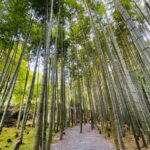
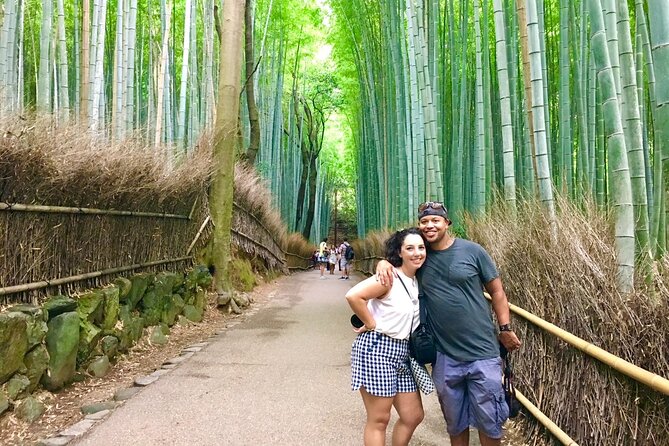
Yes, Bamboo Forest Street is famous for a reason. There are thousands of tall bamboo stalks, and the area can feel like a fairy tale in motion. Even if you’ve seen photos, being there in real life changes your sense of scale.
But here’s the practical bit: bamboo can get crowded, and crowd fatigue is real. The best strategy is to use your guide to manage your time. You’re not just walking through a photo zone—you’re learning where to stand, how to pace your photos, and how to take a breath when the walk gets busy.
Bamboo Forest Street is free to enter, which helps. You can spend time lingering without feeling like every minute costs money. If your guide is one of the praised ones—people have pointed out extra patience and help finding great photo angles—this stop tends to land as one of your best memories of the day.
Who This Tour Suits (And Who Might Prefer a Different Plan)
This tour makes the most sense if you:
- Want a private, guide-led walking day in Arashiyama and Sagano
- Like the idea of choosing 2–3 stops instead of doing everything
- Care about explanations—what something is, why it matters, and what to notice
- Are fine with moderate walking and meeting at a station (no hotel pickup)
You might want a different style of tour if you:
- Need frequent rest with zero walking
- Expect door-to-door transport included in the price
- Want a totally self-paced day without guide guidance
If you’re bringing kids, it can still work well, especially because the pacing is flexible and guides are described as patient. Still, it’s not a stroller-free plan because temple paths and uneven ground are part of the experience.
Should You Book This Kyoto Arashiyama Bamboo Forest Private Tour?
I’d book it if you want Arashiyama done your way: with a local English guide, the freedom to pick 2–3 stops, and enough flexibility to spend time where your eyes want to stay.
It’s also a great choice if you’re visiting Kyoto for the first time and want the major highlights—Togetsukyo Bridge and Bamboo Forest Street—without feeling like a camera on a stick. The temple options give you range too: classic Zen at Tenryu-ji, garden time at Okochi Sanso, and quieter, more unusual sites like Adashino Nembetsu-ji and Otagi Nenbutsu-ji.
I’d pass if you’re relying on a van, hate walking, or need entrance fees and transport fully wrapped into the ticket price.
If your plan is a guided, walking-based Arashiyama day with strong flexibility, this is a solid bet.
FAQ
How long is the Kyoto Arashiyama Bamboo Forest & Scenery private tour?
It’s listed as approximately 4 hours.
Where do I meet the guide?
You meet at JR Saga-Arashiyama Station, in front of a ticket gate.
Is this tour private to my group?
Yes. It’s a private tour/activity, and it’s only for your group.
Are entrance fees included?
Optional entrance fees are not included. Some stops are free (like Togetsukyo Bridge and Bamboo Forest Street), while others (such as Tenryu-ji and Okochi Sanso Garden) have admission not included.
Do I need to be able to walk a lot?
You should have moderate physical fitness. A moderate amount of walking is included, so wear comfortable walking shoes.
What if it rains?
The tour takes place rain or shine.
Can I cancel for a full refund?
Yes—free cancellation is available. You must cancel at least 24 hours in advance for a full refund.