REVIEW · KYOTO
Kyoto East Early Morning Walking Tour
Book on Viator →Operated by Oh! Ohkini Tours · Bookable on Viator
7:30 a.m. makes Kyoto feel like yours. This Kyoto East early morning walking tour keeps you in Higashiyama before the big day-trippers arrive, with stops that go straight for the cultural hits like Minamiza Theater and the five-story Yasakanoto pagoda. I love the way you get an easy-on-your-feet intro to the area while still seeing the big landmarks, and I also love the calm photo time around Yasakanoto. One thing to consider: this walk includes sloped streets—especially later near Sannenzaka—so comfy shoes matter.
What makes it especially good value is that the tour is guided and the admissions are free, so you’re paying mainly for an English-speaking guide and route know-how, not ticket fees. It’s about 2 hours and covers roughly 2.3 km, ending near Kiyomizu-dera when you can continue at your own pace. Also, set expectations early: this is not a Gion Geisha-style tour.
In This Review
- Key highlights at a glance
- Why this 7:30 a.m. Higashiyama walk is such a smart move
- Meeting points, the route length, and how the walk will feel
- Stop 1: Minamiza Theater and the Kabuki connection you might miss
- Stop 2: Yasaka Shrine for Shinto stories and festival context
- Stop 3: Yasakanoto, the five-story pagoda photo moment
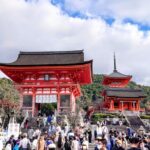
- Stop 4: Kiyomizu-dera—panoramic views from the wooden stage
- The Sannenzaka sloped street walk and the story behind the name
- Value for the price: what $50.73 buys you in Kyoto
- What you’ll get from the guide (and how it changes your day)
- Who this tour fits best—and who might want a different plan
- Should you book this Kyoto East early morning walking tour?
- FAQ
- How long is the Kyoto East Early Morning Walking Tour?
- How far do you walk?
- What time does the tour start?
- Where is the meeting point and where does the tour end?
- Is this tour private?
- What’s included in the tour price?
- Are entrance fees included?
- Do I need to eat before the tour?
- Can I cancel for a full refund?
Key highlights at a glance
- Start at Minamiza Theater to connect Kabuki roots with today’s Kyoto
- Yasaka Shrine early-quiet time for Shinto stories in a calmer setting
- Yasakanoto photo moments at the five-story pagoda without the later crush
- Kiyomizu-dera finish with panoramic views from the wooden stage
- Sannenzaka sloped old-town walk with the story behind the name Sannenzaka
Why this 7:30 a.m. Higashiyama walk is such a smart move
If you’ve ever done Kyoto mid-morning, you know what happens next: the sidewalks fill up, your pace slows, and every photo angle turns into a people-jam. Starting at 7:30 am is the antidote. You’re walking through historic Higashiyama while it’s still in its morning mode—cooler air, lighter crowds, and a steadier rhythm for listening to your guide.
The tour is only about 2 hours (around 2.3 km / 1.45 miles), so it’s not one of those all-day marathons. You’ll have time to enjoy the stops and still keep momentum. And because it ends at Kiyomizu-dera, you’re positioned right where many visitors want to be later—without feeling like you waited in line for hours just to get started.
The big win here is pacing plus meaning. You don’t just walk past famous sights; you get context for what you’re seeing—Kabuki origins, Shinto traditions, and the role this area plays in Kyoto’s daily life and festivals. That turns a famous neighborhood into something you actually understand.
You can also read our reviews of more walking tours in Kyoto

Meeting points, the route length, and how the walk will feel
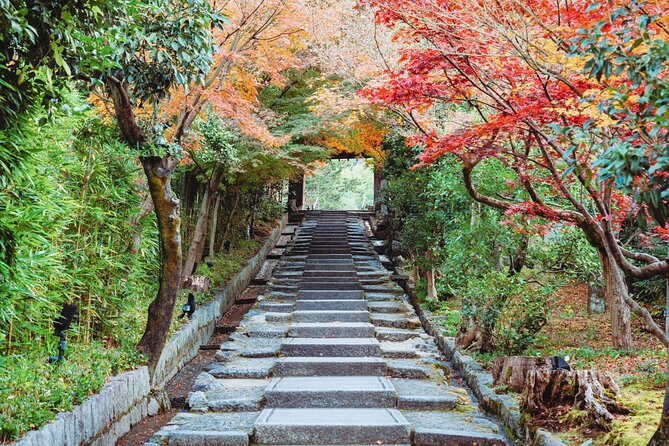
You meet at 208 Nakanochō, Higashiyama Ward, Kyoto, 605-0075. The tour starts at 7:30 am and ends at Kiyomizu-dera, 1-chōme-294 Kiyomizu, Higashiyama Ward, Kyoto, 605-0862.
Because it’s a walking tour, there’s no hotel pickup or drop-off, and transportation to the meeting point isn’t included. That said, it’s described as near public transportation, which usually makes mornings easier—arrive early, then just plug in and go.
About the physical side: it’s not described as a hard hike, but you are moving through Higashiyama’s terrain. The itinerary specifically includes a sloped street experience near the end (Sannenzaka), so plan for some uphill/downhill walking. If you’re the type who hates “comfortably annoying” stairs and slopes, bring shoes with grip and skip anything too slick.
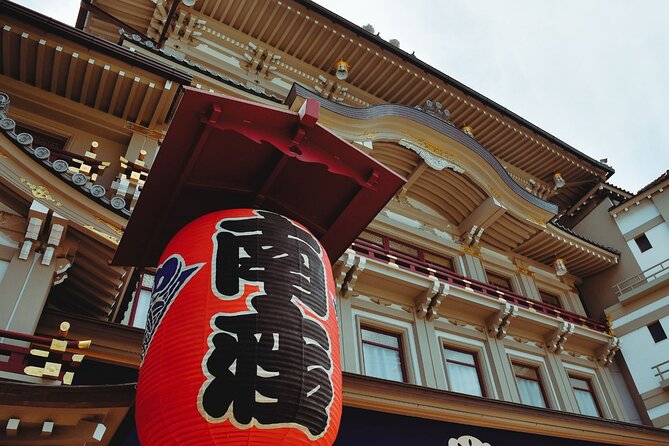
Stop 1: Minamiza Theater and the Kabuki connection you might miss
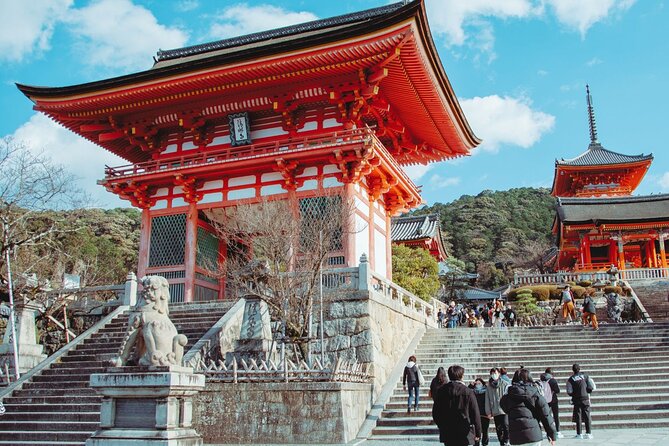
You kick off at Minamiza Theater, known as the birthplace of Kabuki in Kyoto. Even if you’re not a theatre-history person, this stop works because it ties Kyoto’s identity together: performing arts weren’t just entertainment—they shaped neighborhoods, schedules, and local culture.
This stop is quick (about 15 minutes) and admission is free. What you’ll get in that short window is the kind of perspective that changes how you look at Kyoto later in the day. You’re basically telling your brain: this city has deep roots in art forms that still leave fingerprints on the streets.
Practical tip: since it’s early, you may feel slightly in-between morning wakefulness and sightseeing energy. That’s fine. Think of Minamiza as your warm-up—historical context first, then you’re ready for temples and shrines.
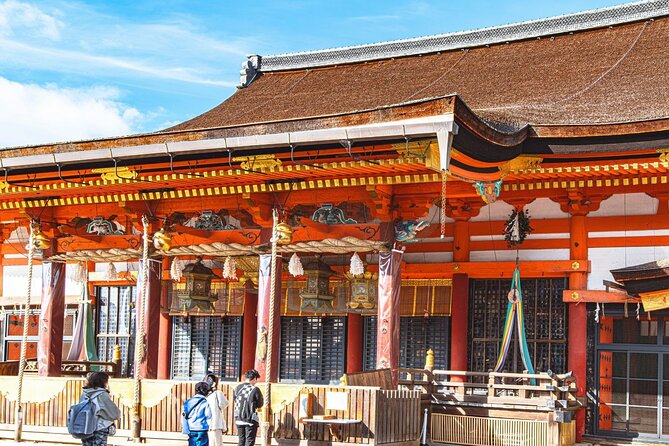
Stop 2: Yasaka Shrine for Shinto stories and festival context
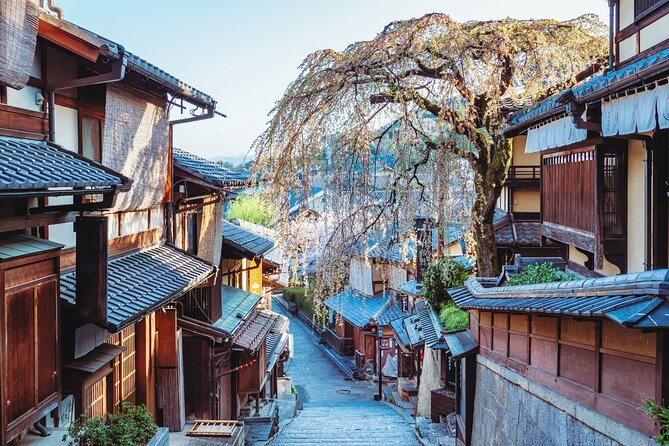
Next comes Yasaka Shrine, another free stop with about 15 minutes on the clock. This is where the tour shifts from arts history into living traditions. Your guide explains the shrine’s cultural importance and its role in local festivals and Shinto practice.
Why this works on a morning walk: shrines often feel overwhelming when you arrive later, when you’re tired or rushing. Early, you’re more likely to notice the details that matter—how the space is organized and why festivals show up the way they do. Even with a short visit, the guide’s explanations help you read what you’re seeing instead of just photographing it.
You also get a sense of how Higashiyama functions as a real district, not just a postcard set. That’s one of the most repeatable benefits of a guided morning: you start building the mental map that keeps the rest of Kyoto from feeling like disconnected stops.
Stop 3: Yasakanoto, the five-story pagoda photo moment
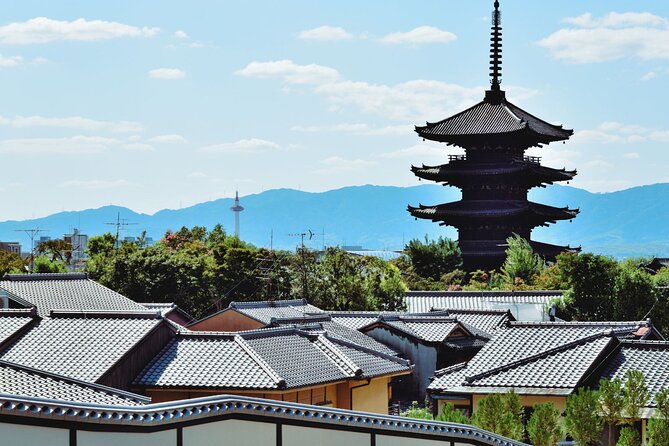
Then you hit Yasakanoto, with a close look at the five-story Yasaka Pagoda. This stop is short (about 5 minutes), but it’s one of the most visually rewarding parts of the itinerary—and it’s explicitly a great photo spot.
Five minutes might sound like nothing, but it’s timed well. In early morning light, this kind of pagoda view looks clean and sharp. You’re also less likely to feel like you’re fighting for angles.
If you’re photographing, do this: decide on one “must-capture” frame first, then use the extra seconds for alternates. That way you leave with a real keeper shot, even if a group blocks your preferred background for a moment.
You can also read our reviews of more tours and experiences in Kyoto

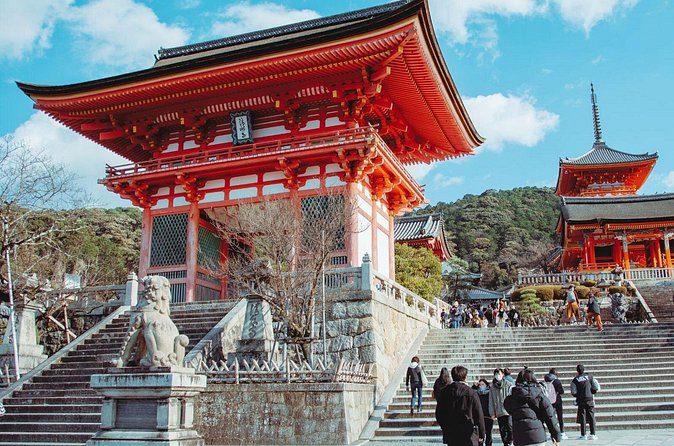
Stop 4: Kiyomizu-dera—panoramic views from the wooden stage
The tour concludes at Kiyomizu-dera, a UNESCO World Heritage Site. The guided portion is about 10 minutes, and then you can explore the sacred grounds at your own pace.
This is where that early start pays off in a different way. Kiyomizu-dera is popular, but ending your tour here means you’re already in the area when your energy is still decent. The big payoff is the panoramic view experience from the temple’s wooden stage—you’ll understand what you’re standing in before you settle in to take it all in.
Because the tour ends after the temple’s guided close, you control the next steps:
- If you want slower photos, you can slow down.
- If you want to keep moving toward other sights, you can pivot.
That flexibility is valuable, especially in Kyoto where day plans often change based on crowds, weather, and what you’re actually enjoying.
The Sannenzaka sloped street walk and the story behind the name
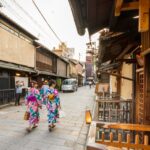
After the main shrine-and-temple sequence, you’ll walk up the charming sloped street lined with traditional shops—Sannenzaka. The tour includes the fun part: hearing local legends and the story behind the name Sannenzaka, which makes the area feel more alive than a retail strip.
Sannenzaka is also a practical “endgame” street. It’s the perfect bridge between landmark sights and the rest of your day: you can browse, snack later, and follow your curiosity without feeling like you’ve missed the important stuff.
Be honest about your pace here. Slopes tend to speed people up (because they want to be done) and also make people slip or stumble (because they don’t watch their footing). Stay aware, take the stairs when you need to, and let the street atmosphere do the work.
Value for the price: what $50.73 buys you in Kyoto
The price is $50.73 per person for an approximately 2-hour guided walk. That might sound high at first glance—until you break down what’s included.
You’re getting:
- An English guided walking tour
- Local tips and recommendations
- Stops with free admissions (the tour notes all entrance tickets are free)
What you’re not getting:
- Food or drinks
- Transport to and from the meeting point (you’re walking to meet-up)
- Hotel pickup/drop-off
So the value comes down to one thing: a guide who can point you to meaning and help you plan the rest of the day. If you’re a first-time visitor, that can easily be worth more than the cost, because you’ll save time later by knowing where to eat and where to wander.
Even if you’re not first-time, this kind of early structure helps you stop “collecting sights” and start building a flow. Kyoto gets better when you understand why places are where they are—and when you have a plan for what comes next.
What you’ll get from the guide (and how it changes your day)
The itinerary is built around major waypoints, but the real difference is what your guide adds between them. Expect fun facts and cultural insights as you move through the district, plus useful suggestions for what to do right after the tour.
One detail I really like: the tour is timed so you finish near Kiyomizu-dera, and you can grab breakfast or a snack afterward. Also, the tour explicitly notes that cafés usually open around 9:00 am, so you should eat before you start. In other words, the guide plan is set up for sightseeing first, food second.
And one more expectation-setting note that matters: this is not a Gion Geisha tour. If you want geisha-related lore, this tour won’t be that focus. It’s more about Higashiyama culture, shrines, and the streets around Kyoto’s most famous temple area.
Who this tour fits best—and who might want a different plan
This is a great match if:
- You’re going to Kyoto for the first time and want a fast, meaningful start in Higashiyama
- You prefer an early schedule to avoid the biggest crowd crush
- You like walking tours where someone else handles the order of sights
- You’re travelling solo and want local context without having to research everything yourself
It’s less ideal if:
- You don’t like slopes or you expect flat-ground strolling only
- You want a long, slow temple day with time for lots of quiet sitting
- You specifically want a Gion Geisha experience (this one is clearly not that)
Should you book this Kyoto East early morning walking tour?
I’d book it if you want a Kyoto morning that feels purposeful. The combination of early start, free-entry stops, and practical local tips is exactly how you get momentum in a city that can otherwise overwhelm you with famous names.
Book it especially if you’re the type who wants to understand what you’re seeing—not just snap photos and hope it makes sense later. The Minamiza Theater start and the Yasaka Shrine context set a strong tone, and finishing at Kiyomizu-dera means you’re ready to continue on your own terms.
If slopes worry you, wear grippy shoes and plan for slower steps near Sannenzaka. Otherwise, this is a solid “first day in Kyoto” kind of tour—short enough to fit nearly any schedule, and good enough to make the area click.
FAQ
How long is the Kyoto East Early Morning Walking Tour?
It’s about 2 hours.
How far do you walk?
The walk is about 2.3 km (1.45 miles).
What time does the tour start?
The start time is 7:30 am.
Where is the meeting point and where does the tour end?
You start at 208 Nakanochō, Higashiyama Ward, Kyoto. The tour ends at Kiyomizu-dera, 1-chōme-294 Kiyomizu, Higashiyama Ward, Kyoto.
Is this tour private?
Yes. It’s a private tour/activity, and only your group participates.
What’s included in the tour price?
It includes an English guided walking tour and local tips and recommendations. Admission fees are free.
Are entrance fees included?
Entrance tickets for the stops are listed as free, so you won’t pay admission fees for these stops.
Do I need to eat before the tour?
Yes. The tour notes cafés open around 9:00 am, so have breakfast before the start.
Can I cancel for a full refund?
Yes. Free cancellation is available up to 24 hours before the experience start time for a full refund.