REVIEW · KYOTO
Kyoto: Kinkakuji, Golden Pavilion Guided Tour
Book on GetYourGuide →Operated by DeepExperience, Inc. · Bookable on GetYourGuide
Gold leaf, quiet ponds, and fast answers. This Kyoto guided tour helps you see the Golden Pavilion and another nearby temple with just enough time to soak it in and still get great photos.
What I like most is the guided run toward the best temple viewpoints, including the reflection in the pond, and the way a good guide explains what you’re actually looking at—history, architecture, and day-to-day temple life.
One real consideration: Kinkaku-ji can get crowded, especially if you’re there mid-day, and the tour’s 90–210 minute range means you’ll want to move with purpose.
In This Review
- Key highlights that matter on the ground
- Kyoto’s Golden Pavilion: Why This Tour Feels Efficient
- Kinkaku-ji’s Golden Pavilion: What You Should Actually Look For
- Your Best Photo Window: The Pond Reflection Moment
- Touring the Gardens and Teahouse Without Feeling Rushed
- Ryōan-ji After Kinkaku-ji: The Calmer Second Act
- Meeting Points and Where the Day Starts
- Price and Time Value: Is $64 a Smart Buy?
- English-Speaking Guides: What the Best Ones Do
- Crowds: How to Still Have a Pleasant Visit
- Who This Tour Fits Best (And Who Might Skip It)
- Should You Book This Kyoto Kinkaku-ji + Ryōan-ji Guided Tour?
- FAQ
- How long is the Kyoto Kinkakuji guided tour?
- How much does the tour cost?
- What does the tour include?
- Is the tour guide available in English?
- Where do we meet for the tour?
- What stops are included during the tour?
- Where does the tour end?
- Is it a private tour?
- What’s the cancellation policy?
- Can I book without paying immediately?
Key highlights that matter on the ground
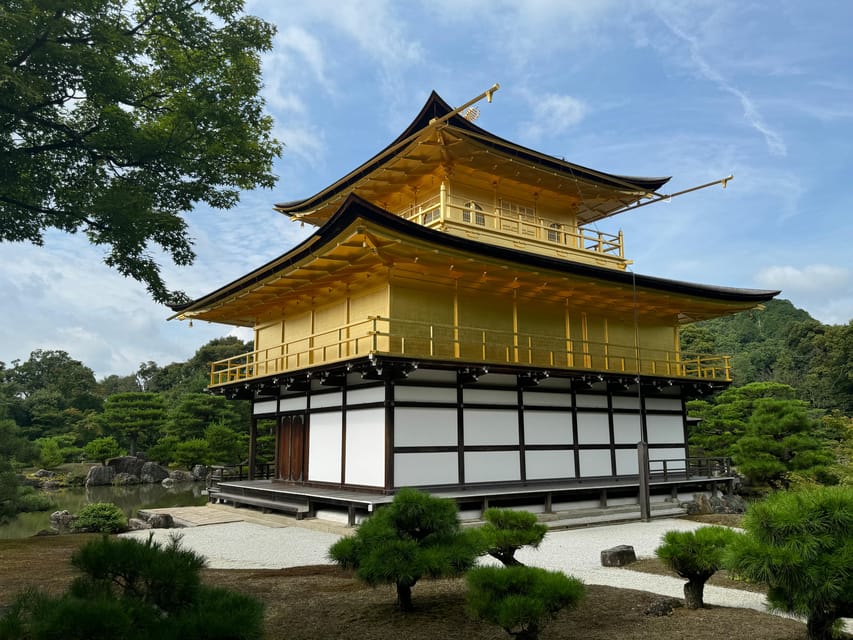
- Golden Pavilion photo setup: You’ll get pointed toward viewpoints that make the pond reflection work for your camera.
- Gold-leaf stories you can use: Guides connect what you see to the temple’s design and past.
- Gardens + teahouse time: You’re not stuck in a rush—there’s room to wander and pause.
- Ryōan-ji guided follow-up: A calm second temple stop keeps the day from feeling like a one-photo sprint.
- Private or small-group feel: Fewer people can mean a more relaxed pace and easier questions.
Kyoto’s Golden Pavilion: Why This Tour Feels Efficient
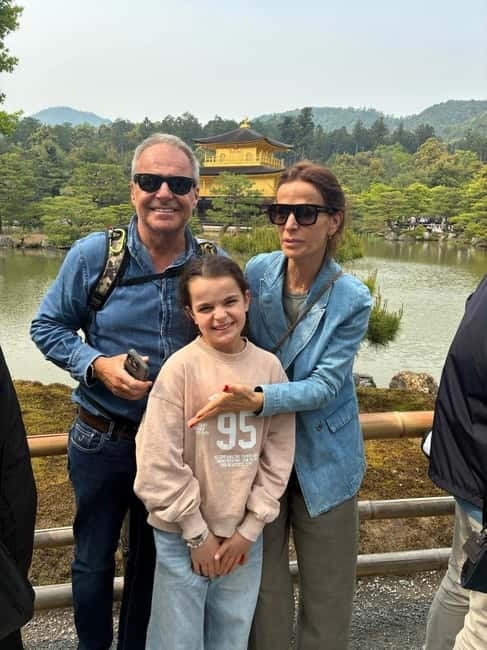
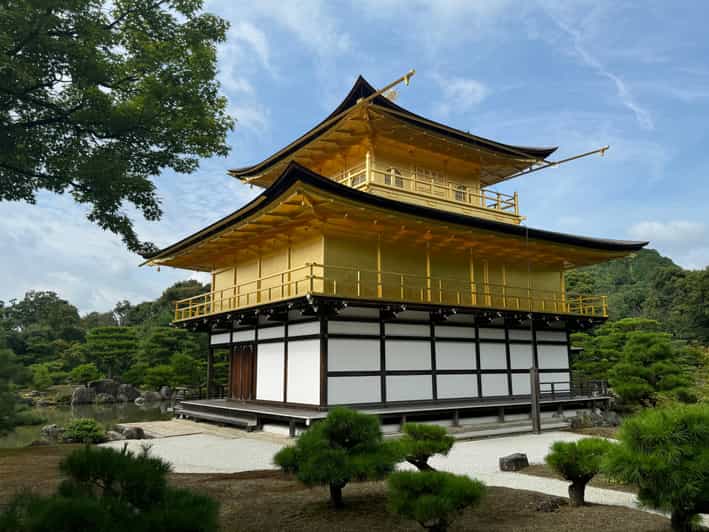
Kinkaku-ji is one of those places that hits you before you understand it. The top floors covered in gold leaf shimmer against the pond, and suddenly everything looks deliberate—angle, water, sky, the whole composition. Even if you’ve seen photos before, being there in person is the moment it clicks.
This tour is built for people who want more than a checklist. You start with Kinkaku-ji, get guided context while you’re walking, and then finish at another major temple, Ryōan-ji, with its own guided time. That sequencing matters. It keeps the day from becoming one crowded stop where you only manage a quick glance and a blur of selfies.
I also like that the tour is practical about time. You’re looking at a 90–210 minute experience depending on the start option and the flow of the day. In Kyoto, that kind of structure helps—especially when you’re balancing other sights, transit, and the reality of lines.
You can also read our reviews of more guided tours in Kyoto

Kinkaku-ji’s Golden Pavilion: What You Should Actually Look For
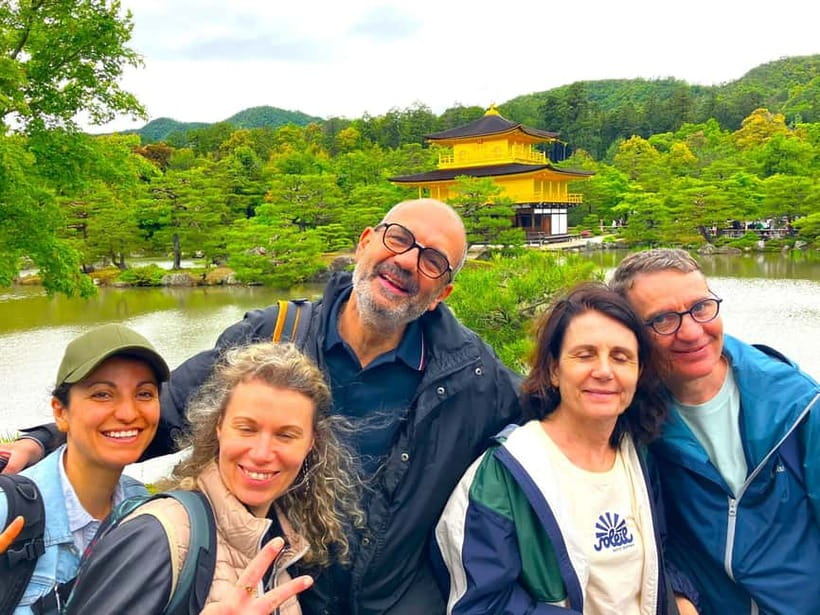
At Kinkaku-ji, the headline is obvious: the Golden Pavilion. The upper floors are sheathed in gold leaf, so the building can look brighter or softer depending on the light. This is why the pond is such a big deal. When the water catches the structure, you’re not just seeing a temple—you’re seeing a reflection that photographers chase all day.
But here’s the smarter part: a guide helps you notice the details that make the gold leaf feel less random. You’ll hear stories tied to the temple’s background and architecture, so you’re not walking around thinking, Okay… pretty. Instead you’re learning why certain views work and what the design is doing.
The guided approach can also help you keep your footing and your patience. Temple grounds are beautiful, but they aren’t a theme park with a clear line of where to stand. A guide does the quiet work for you: suggesting where to pause, how to look, and how to turn your time into photos that aren’t just blurry brightness.
Your Best Photo Window: The Pond Reflection Moment
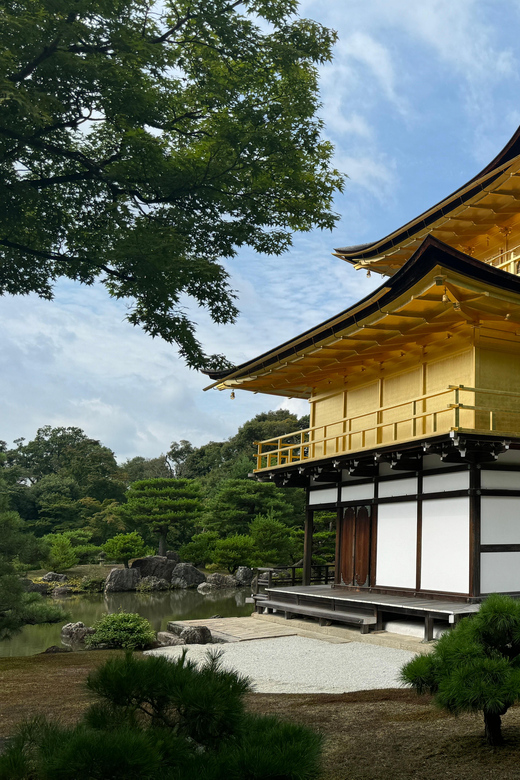
If you’re going to spend your time on one part of this day, make it the reflection. Kinkaku-ji’s pond gives you those classic mirror-like views when the angle is right and when you’re standing at the right spot. The tour specifically builds in photo time and photo stops, which is a big value if you care about getting images you’ll actually like later.
I’m practical about photos. I don’t want a tour that says time for photos and then disappears you into a crowd with no direction. This one is set up so you can take a few shots without constantly guessing. You’ll also have a better sense of how to frame the pavilion against the water, so your shots start looking intentional instead of accidental.
Bring the basics: a phone charged up, a camera with a clean lens, and a small towel or tissue for wiping off any spots if you’re outdoors for a while. Also, if you notice you’re in a busy patch, don’t fight the crowd. Pause, let people move, then take your shot when the view opens up.
Touring the Gardens and Teahouse Without Feeling Rushed
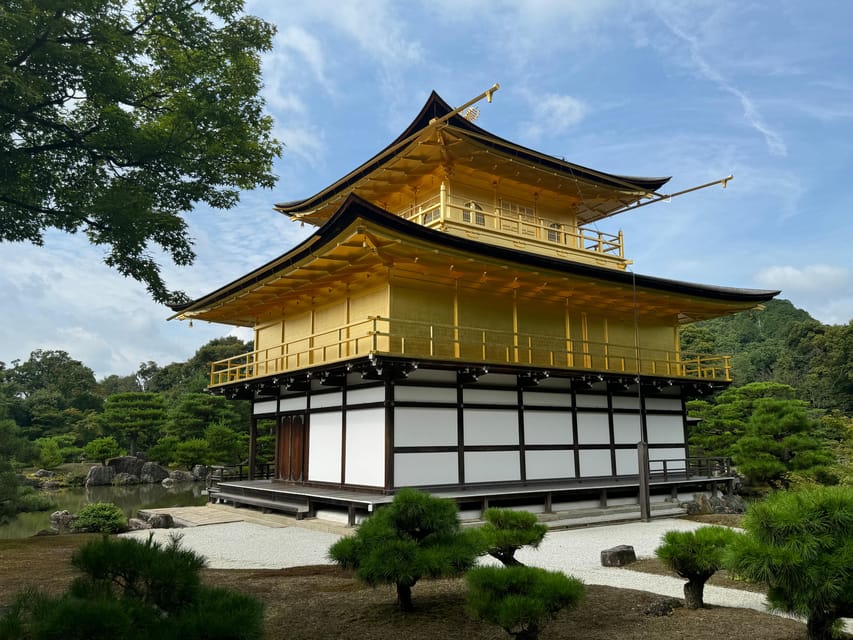
After the pavilion moment, the experience shifts from spectacle to atmosphere. You can wander the well-kept temple grounds at an easy pace, taking in garden paths and quiet corners. You’ll also have time near a small teahouse, which adds a little human scale to the scene.
This is where the guided part keeps paying off. The guide doesn’t just point out buildings. They share context—what the place means, how it fits into religious traditions, and what visitors should understand while they’re there. That kind of explanation changes how you experience stillness. You start watching rather than scanning.
One of my favorite ways to enjoy Kinkaku-ji is simple: slow down for the waterline. The temple looks different when you pay attention to the edge where gold meets pond. If you treat that as a mini stop, not just a background detail, the whole place feels more real.
Ryōan-ji After Kinkaku-ji: The Calmer Second Act
Ryōan-ji is the follow-up temple stop, and it works well after Kinkaku-ji. The day has variety built in: first the bright iconic pavilion and pond views, then a more subdued temple experience with guided time.
Because the tour includes a guided component at Ryōan-ji too, you’re not left wondering what’s special here. Even if you’ve never visited before, the guide’s storytelling helps you connect the dots while you walk. That’s a big deal in Kyoto. If you don’t understand what you’re seeing, you can miss the emotional tone temples are designed to create.
Practical tip: keep some energy for this second stop. It’s easy to spend your whole attention at Kinkaku-ji, then show up to Ryōan-ji ready to rush. The best payoff comes when you treat it like a proper second chapter, not a cleanup stop.




Meeting Points and Where the Day Starts
The tour has two starting options: Sōmon and Yamazaki-an. The meeting point can vary depending on what you book, so you’ll want to confirm the exact location ahead of time.
Why this matters: in Kyoto, small changes in where you start can shift your whole timing. If you’re doing other sights the same day, choose the start option that lines up best with how you’re moving around town. Either way, you’ll end with a drop-off option that can be Sōmon or Ryōan-ji Sanmon, which is useful if you’re connecting to lunch or your next neighborhood.
If you like structure, this format delivers. You’ll know where you’re going next, and the guide handles the flow.
Price and Time Value: Is $64 a Smart Buy?
At $64 per person, this tour sits in the “worth it if you plan well” category. It’s not a cheap impulse buy, but it also isn’t trying to charge you for convenience with nothing inside.
Here’s what you’re paying for, in plain terms:
- Guide time and commentary during both temple stops
- Admission to Kinkaku-ji
- A guided pace that helps you hit the important viewpoints without wasting half your day guessing
The value is strongest if you want to see both temples without spending extra mental energy planning routes, figuring out photo spots, and sorting out what’s worth your attention. If you’re the type who enjoys learning as you walk, the guide fee is a big part of the ROI.
If you mostly want a slow solo wander and you don’t care about explanations, you might find you can do it on your own. But if you care about reflection photos and want context while you’re there, this is priced like a time-saver.
English-Speaking Guides: What the Best Ones Do
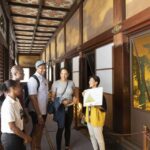
One theme that shows up again and again is preparation and clarity. Guides like Julien, Tomoko, Nadia, Hikari-san, Kina, Kaito, and Teppei are described as friendly, organized, and skilled at turning temple details into stories you can remember.
That doesn’t mean every guide will be the same style. It does mean you should expect more than basic facts. Good guides help you connect three things:
1) What the structure looks like from where you’re standing
2) What the temple means historically and religiously
3) How daily maintenance and tradition shape what you see today
You’ll also hear helpful Kyoto extras. Some guides are praised for suggesting a lunch spot after the tour, which can make the rest of your day easier.
If you want to ask questions, this kind of tour is set up for it. A guide can answer in a way that’s practical, not textbook.
Crowds: How to Still Have a Pleasant Visit
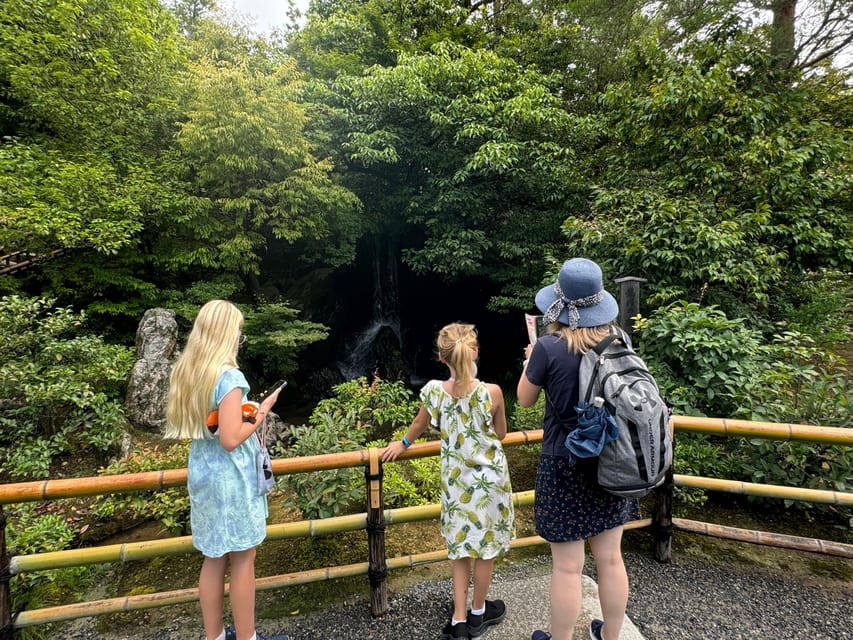
Kinkaku-ji is famous for a reason, so yes, you should expect crowds, especially around peak hours. That’s not a reason to avoid it. It just means you should plan your attitude.
The tour helps because it keeps you moving through the experience in a guided rhythm. Instead of standing in the busiest line of people, you’ll be directed toward where you can pause and take photos. When the area tightens up, you have something useful to do: listen, look, adjust your angle, wait for the view to open.
If you’re sensitive to crowds, you might also decide to avoid going at the busiest time of day. The tour can still work, but your comfort level will depend on timing.
Who This Tour Fits Best (And Who Might Skip It)
This tour is a great fit if you want:
- A fast, high-impact way to see Kinkaku-ji with a plan
- Guided explanations for both temples, not just photo stops
- Better chances at getting reflection photos that look like you planned them
- A private or small-group experience where asking questions feels easy
It may be less ideal if you:
- Want to spend half a day slowly wandering at your own rhythm without structure
- Don’t care about context and are fine reading signage on your own
- Prefer a fully unhurried schedule where you can linger in one spot for a long time
Should You Book This Kyoto Kinkaku-ji + Ryōan-ji Guided Tour?
I’d book it if your goal is simple: see the Golden Pavilion properly, take photos that actually work, and leave with a clearer understanding of what you saw—without spending hours on planning. The combination of Kinkaku-ji admission plus guide-led time, plus the second temple stop, makes the $64 feel reasonable for the amount of guided sightseeing you get.
You’ll get the most from it if you show up ready to walk, pause when the guide tells you to, and treat the pond reflection like your main event. If that’s your style, you’ll come away feeling like you didn’t just visit Kyoto—you understood a piece of it.
FAQ
How long is the Kyoto Kinkakuji guided tour?
The duration is listed as 90 to 210 minutes, depending on the starting time and option booked.
How much does the tour cost?
It’s $64 per person.
What does the tour include?
It includes a live tour guide and admission to Kinkaku-ji, the Golden Pavilion.
Is the tour guide available in English?
Yes. The tour is offered in English and Japanese.
Where do we meet for the tour?
The meeting point may vary depending on the option booked. Starting locations include 総門 and やまざき庵.
What stops are included during the tour?
You’ll visit Kinkaku-ji (with photo time and guided sightseeing) and also have a guided tour at Ryōan-ji.
Where does the tour end?
Drop-off locations can include 総門 and 龍安寺山門, depending on the option booked.
Is it a private tour?
Private or small groups are available.
What’s the cancellation policy?
Free cancellation is available up to 24 hours in advance for a full refund.
Can I book without paying immediately?
Yes. The reserve & pay later option is available, so you can reserve your spot and pay nothing today.