REVIEW · KYOTO
Kyoto: Local Home Visit and Japanese Calligraphy Class
Book on GetYourGuide →Operated by Kangetsu Kyoto · Bookable on GetYourGuide
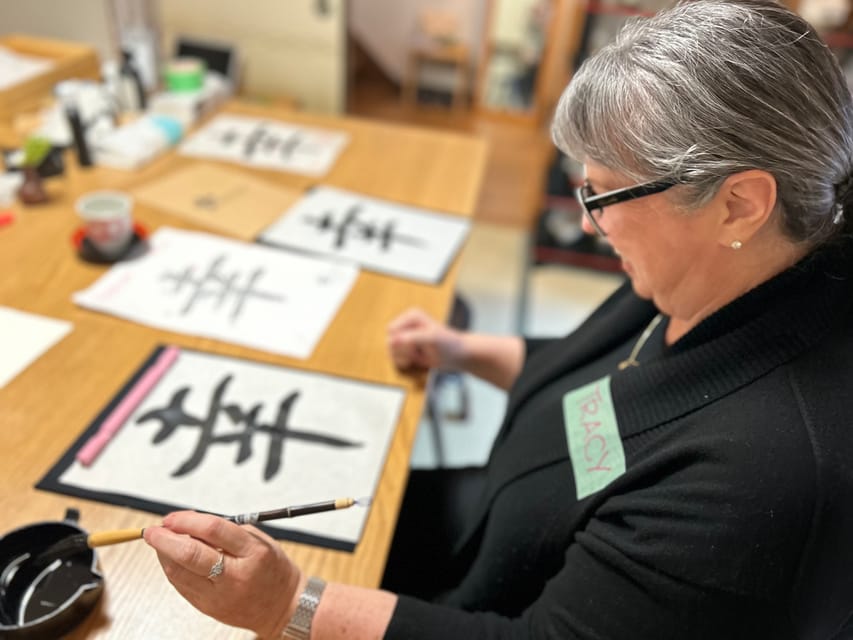
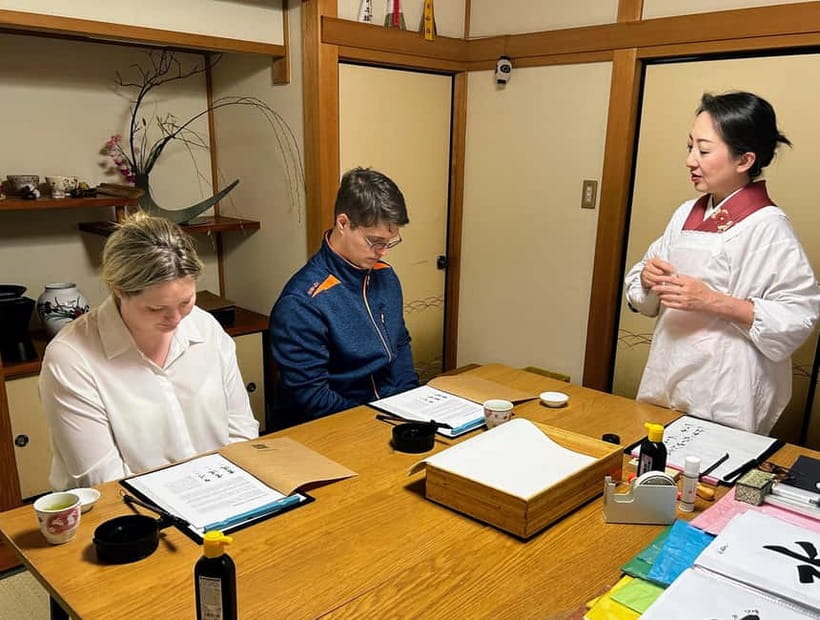
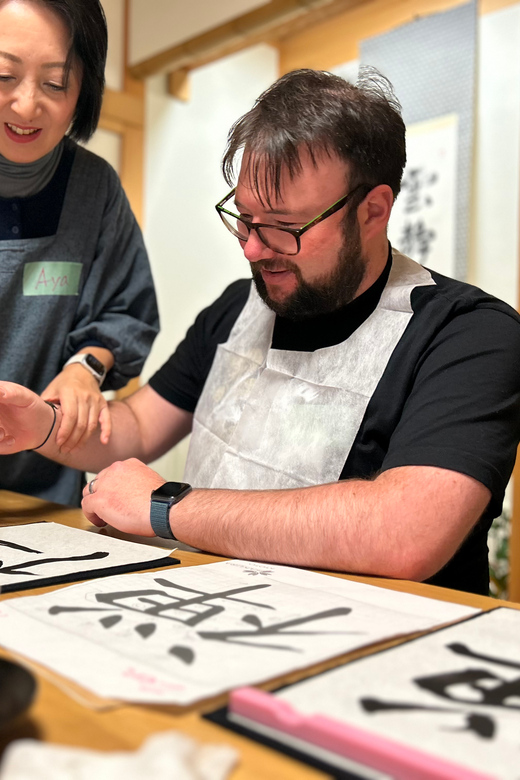
Your brush learns faster than your eyes—especially when you follow the exact brush movements Aya and her assistant guide you through. I love the chance to take home your own kanji on washi, a real souvenir you can display. One thing to plan for: class time is only 1 hour, and arriving late can cut it down.
I also like that this isn’t a classroom feel. It happens in a local home setting near Nijo Castle, and you can even chat with the hosts, which turns the hour into something more human than a craft demo.
The home rules matter. You’ll need socks (no bare feet), shoes off indoors, and you’ll want to skip strong fragrances so everyone stays comfortable.
In This Review
- Key Things You’ll Notice Right Away
- A Kyoto Calligraphy Lesson in a Local Home Near Nijo Castle
- What Happens in the 1-Hour Class: Ink, Washi, and Correct Strokes
- Choosing a Kanji With Meaning (Love, Peace, Strength, Wisdom)
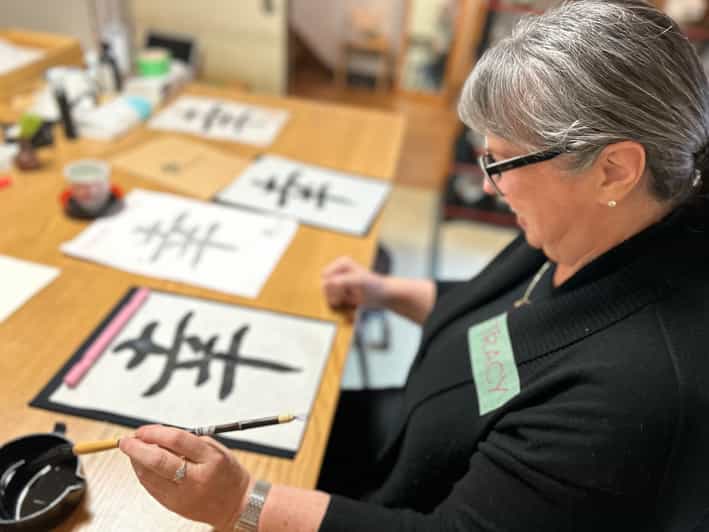
- From Practice to Keepsake: Your Finished Piece on Washi
- Getting There and Staying on Time (So Your Hour Isn’t Cut)
- Is $66 Good Value for This Kyoto Experience?
- Socks-Only Home Rules: Small Stuff That Makes a Big Difference
- Who This Class Fits (and Who Should Skip It)
- Should You Book This Kyoto Calligraphy Class?
- FAQ
- How long is the Kyoto local home calligraphy class?
- How much does it cost, and is it per person?
- What’s included in the price?
- Where is the meeting point?
- What do I need to bring?
- Are shoes allowed indoors?
- Is the class wheelchair accessible?
- What languages are the instructors?
- What happens if I’m late?
Key Things You’ll Notice Right Away
- Accurate brush-stroke teaching that focuses on how to form each kanji correctly
- A real-home setting near Nijo Castle instead of a storefront workshop
- Your personal choice of kanji meaning, then practicing until it looks right
- Tools, ink, and washi provided, so you can start immediately
- A keepsake you can bring home, including the option to add your name in Japanese
- Small/private group feel, with lots of patience while you learn
A Kyoto Calligraphy Lesson in a Local Home Near Nijo Castle
This experience gives you a calm kind of Kyoto culture. Not the quick-photo kind. The slow hand kind. You’re in Honshu, and the class is set up just west of one of Kyoto’s big UNESCO sites—Nijo Castle—so you can combine it easily with sightseeing before or after.
The class itself happens at a local home location about 200 meters west of Nijo Castle, on the north side of Ebisugawa Street (just west of Nishinotoin Street). If you’re standing on the right spot and looking across the street, you should see the Lions Mansion building on the south side. It’s a convenient area, but the addresses can be confusing, so use the venue name in your map app—not just a street name.
What I like most is the atmosphere. You’re not learning calligraphy in a theme-park environment. It feels like you’re stepping into someone’s daily world for a short lesson, and that makes the whole hour more memorable than copying characters from a worksheet.
And yes, you’re learning kanji strokes, but you’re also picking up the mindset behind them. Multiple instructors and assistants help you practice, correct your motion, and keep you relaxed while the ink does its job.
You can also read our reviews of more tours and experiences in Kyoto

What Happens in the 1-Hour Class: Ink, Washi, and Correct Strokes
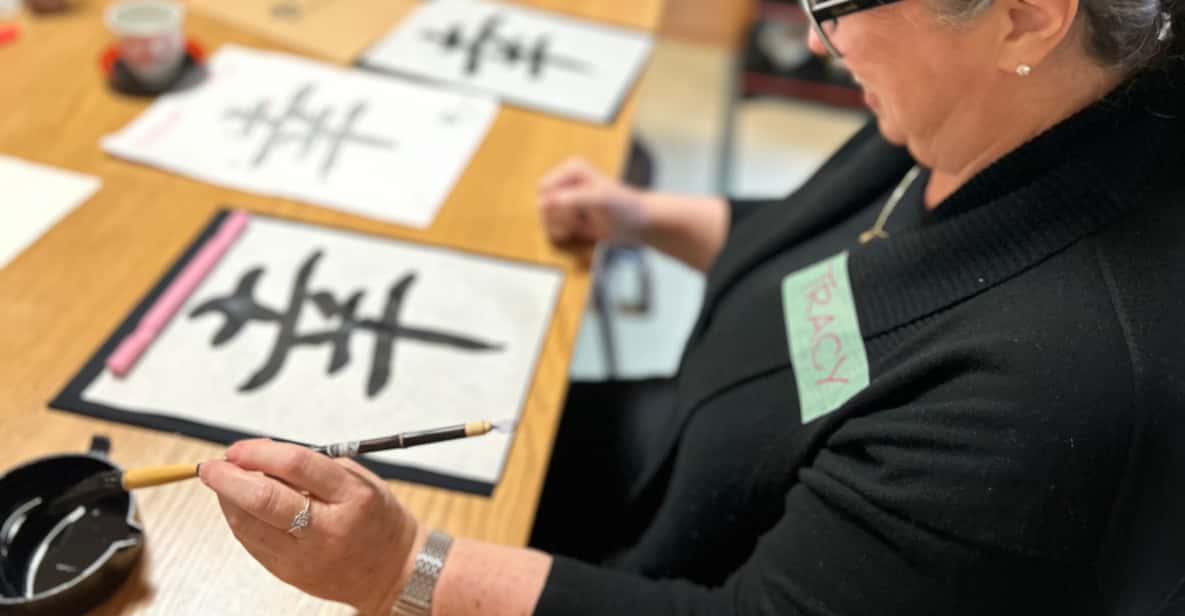
Plan for a straightforward flow: instructions, tools, practice, and a final piece you can take home.
You’ll start with guidance on Japanese calligraphy basics—especially how the brush should move. This is where the lesson becomes useful, because calligraphy isn’t just drawing kanji. It’s about stroke order, pressure, speed, and control. When you get those fundamentals, your characters stop looking like random shapes and start looking intentional.
You’ll also have the core materials handled for you:
- calligraphy tools rental
- ink
- Japanese paper (washi)
So you don’t need to hunt down supplies or worry about bringing the right brush. That matters because calligraphy supplies can be pricey if you’re tempted to buy after one session.
In the class, you’ll practice selected kanji. You’ll learn the motion, then try it yourself, then try again with corrections. The pace is realistic for beginners—you won’t become a master in an hour, and that’s not the point. The goal is to leave with a piece that looks good and feels meaningful, plus the technique to keep improving later if you want.
A fun detail from what you can experience here: you’re not just writing the character once and calling it done. You’ll get enough practice time to feel the rhythm of the brush. Then you’ll finalize your work on washi so it holds that satisfying calligraphy look.
Choosing a Kanji With Meaning (Love, Peace, Strength, Wisdom)
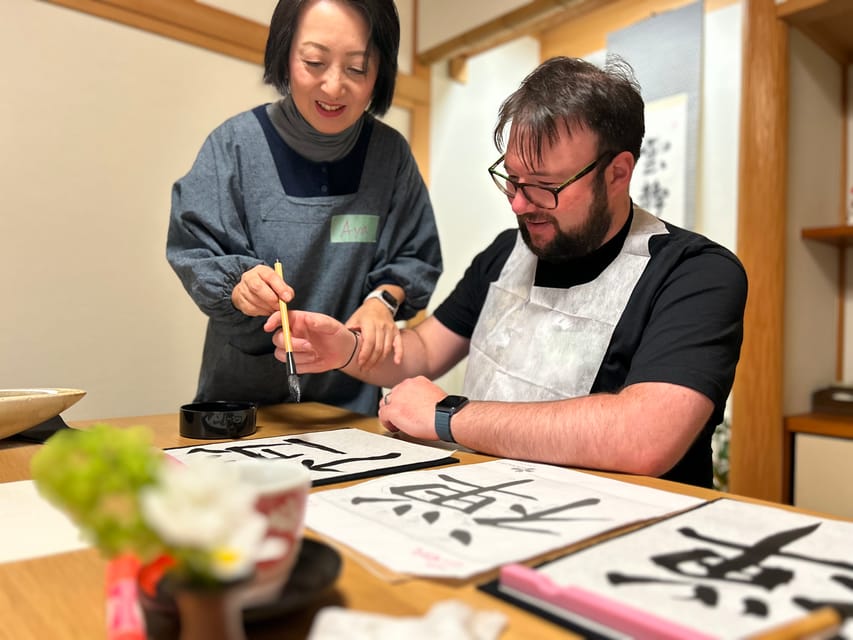
One of the best parts is that your final character isn’t totally random. You’ll choose a kanji that resonates with you—things like love, peace, strength, or wisdom. When you pick a meaning first, the strokes feel less like an assignment and more like you’re making something personal.
This is also where the lesson becomes quietly powerful. Calligraphy forces you to slow down. Even if you’re not thinking about mindfulness, the physical act of controlling the brush pressure and direction makes you focus. You notice small mistakes faster. You correct them sooner. And the ink keeps you honest.
Then you may add extra personalization by writing your name in Japanese. That turns your souvenir into something uniquely yours, not just a character you copied.
If you want a keepsake that feels more than decorative, this is how you get it. You’re not buying a postcard. You’re bringing home writing with your own intention.
From Practice to Keepsake: Your Finished Piece on Washi
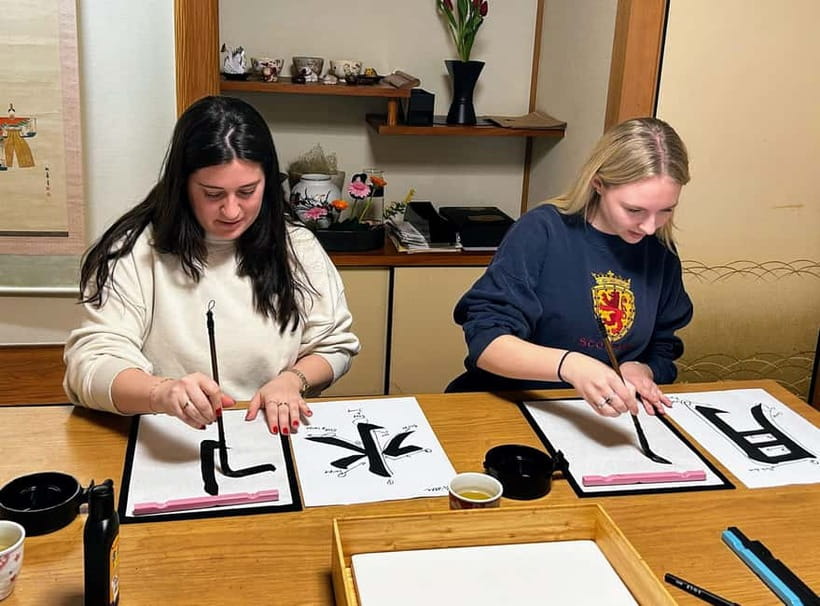
Your final result is a physical artwork you can bring home. That’s the practical upside, but there’s also a real emotional one: you’ll be holding something you made with your own hand, not something you watched someone else produce.
Because you’re working on washi, the texture and ink behavior give the finished piece that traditional feel. And since the tools and paper are provided, your experience doesn’t depend on guessing what to bring or whether you chose the right materials.
Many classes like this also help you document the moment. In at least some sessions, the hosts take photos and video of the experience, and you may end up with images to remember the day. Even if you’re not a big photographer, it helps to have something to look back on later when your character starts drying in real life.
One small consideration: calligraphy doesn’t forgive rushed strokes. Your first try might be messy. That’s normal. The teacher’s job here is to help you land the strokes correctly by the time you’re finishing your piece.
Getting There and Staying on Time (So Your Hour Isn’t Cut)
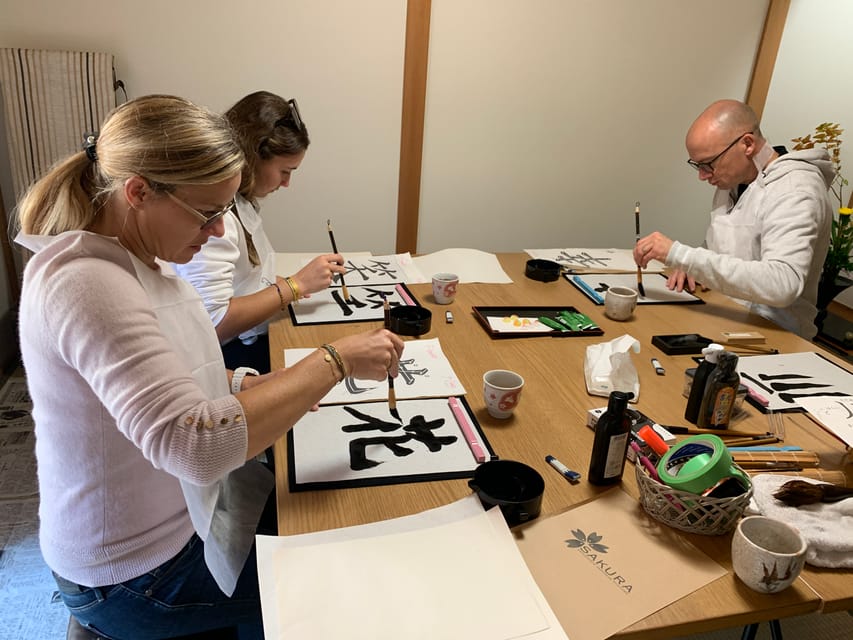
Location is close to Nijo Castle, but details matter because Kyoto can have repeated place names and similar addresses.
Before you go:
- Enter the venue name in your map app. Don’t rely only on the address.
- If you take a taxi, give the driver the phone number for the venue.
- Arrive 5 minutes before your start time. There’s no waiting space if you arrive too early.
Timing rules are strict. If you arrive late by more than 15 minutes, the class might not run. Even if it does, your session can be shortened. For a one-hour activity, that’s a real deal—so treat it like a train connection, not a casual walk-in.
Here’s the smart way to handle it: plan your visit to Nijo Castle with a buffer. If you’re pairing this with another stop, don’t schedule it back-to-back.




Is $66 Good Value for This Kyoto Experience?
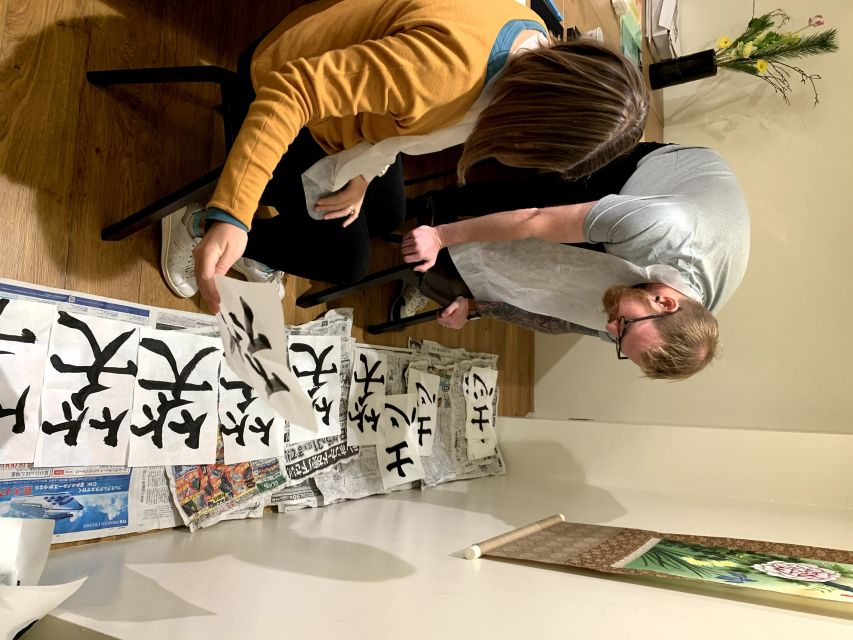
At $66 per person for a 1-hour private-group style class, value depends on what you want out of Kyoto.
You’re getting more than a one-time craft:
- instruction in correct brush movements
- materials provided (tools, ink, washi)
- a finished piece you take home
- a small-group or private feel, which helps you get corrections instead of just watching
If you’ve been thinking about buying a souvenir calligraphy sheet later, the math usually flips toward booking this. You get to do the work and leave with a personalized piece, not a mass-made item.
Also, you’re paying for your teacher’s time and technique. Calligraphy takes repetition to get right. In one hour, you won’t master it—but you can learn how to move the brush correctly, which is what makes practice later actually productive.
In short: it’s a fair price if you want a hands-on cultural experience with a real output you’ll display at home.
Socks-Only Home Rules: Small Stuff That Makes a Big Difference
This is one of those experiences where the rules are there for comfort and cleanliness. You’ll want to follow them so everyone can focus on the lesson.
What you need to know:
- Bring socks. Bare feet aren’t acceptable.
- Shoes are not allowed indoors.
- Smoking and vaping aren’t allowed, including indoors.
- Avoid alcohol and drugs.
- Skip strong fragrances.
If you wear strong perfumes or lotions, consider going lighter that day. It’s not about being polite in a vague way—it’s about keeping shared indoor space comfortable.
Wheelchair access is listed, so you should be fine if you need accessibility accommodations, but if you want extra reassurance, it’s worth confirming details with the provider.
Who This Class Fits (and Who Should Skip It)
This activity works best for adults and older teens who enjoy learning a skill even if it’s new. It’s also a good match for couples—many people book something like this as a memorable Kyoto moment.
It’s not suitable for children under 13, so families with younger kids should consider a different cultural stop.
If you’re visiting in Kyoto’s hot season, an hour indoors with a calm activity can be a lifesaver. If you want something less crowded than the classic temples, this is a quieter kind of Kyoto.
And if you’re the type who enjoys “doing” instead of “looking,” calligraphy is a great way to make the trip stick.
Should You Book This Kyoto Calligraphy Class?
Yes, if you want a real Kyoto cultural skill you can take home—one character at a time. Book it when you value correct technique, a hands-on experience, and a finished artwork you can display later.
I’d pause if:
- you hate tight timing (the class is short and late arrivals can cut it)
- you don’t want to follow indoor home rules like socks-only and no shoes
- you’re expecting a long, full mastery workshop (this is a starter lesson, not years of training)
If you can show up on time, wear socks, and go in with a beginner mindset, this turns into one of those hours you remember every time you see the piece on your wall.
FAQ
How long is the Kyoto local home calligraphy class?
The class lasts 1 hour.
How much does it cost, and is it per person?
It costs $66 per person.
What’s included in the price?
You get instructions about Japanese calligraphy, calligraphy tools rental, ink, and Japanese paper (washi).
Where is the meeting point?
The location is about 200 meters west of Nijo Castle (UNESCO). It’s on the north side of Ebisugawa Street, just west of Nishinotoin Street, with the Lions Mansion building across the street on the south side. Use the venue name in your map app to find it.
What do I need to bring?
Bring socks. Bare feet aren’t acceptable. If you forget, socks may be available for purchase.
Are shoes allowed indoors?
No. Shoes are not allowed indoors.
Is the class wheelchair accessible?
Yes, it is wheelchair accessible.
What languages are the instructors?
The instruction is available in English and Japanese.
What happens if I’m late?
You should arrive 5 minutes early. The class may not be offered if you arrive more than 15 minutes late, and lesson time can be shortened if you arrive late.