REVIEW · KYOTO
Kyoto: Discover Every Bit of Kyoto Imperial Palace
Book on GetYourGuide →Operated by DeepExperience, Inc. · Bookable on GetYourGuide
Royal Kyoto has quiet corners. This guided walk through the former imperial grounds explains how Japan’s imperial family lived and ruled before the capital shifted to Tokyo in 1869, with stops focused on ceremony spaces like Shishinden and the calm rhythm of the palace gardens.
I especially like two things: the way the guide connects architecture to real-life court tradition, and the slow, pleasant pace you get for viewing the landscaped grounds. If you land with a strong guide (Yoshi is one example people rave about), you’ll come away with answers to lots of history questions, not just photo spots.
One consideration: the experience depends on the guide. If you’re hoping for lots of detail and interpretation, you’ll want to choose a time when you feel confident in the guide pairing, because a weaker explanation can make the booking feel less worth it.
In This Review
- Key things to look for on this Kyoto Imperial Palace visit
- Kyoto Imperial Palace in Kyoto Gyoen: what the 1-hour focus gets you
- Meeting at Hamaguri Gomon Gate: start where the story begins
- Shishinden and ceremony halls: seeing imperial power as architecture
- Emperor’s personal residence: court life explained beyond dates
- The gardens of Kyoto Gyoen: serenity with meaning
- How much value you get for $38 and a 1–1.5 hour visit
- What your group size and English guide change
- Who should book this Kyoto Imperial Palace tour?
- Should you book Kyoto Imperial Palace with DeepExperience?
- FAQ
- Where is the meeting point for the Kyoto Imperial Palace tour?
- How long is the guided visit?
- Is entry to Kyoto Imperial Palace included?
- Is the tour in English?
- Is this tour private or small group?
- What will I see during the tour?
Key things to look for on this Kyoto Imperial Palace visit
- Hamaguri Gomon Gate meeting point: you’ll start in the right place, with a guide holding a yellow DeepExperience sign
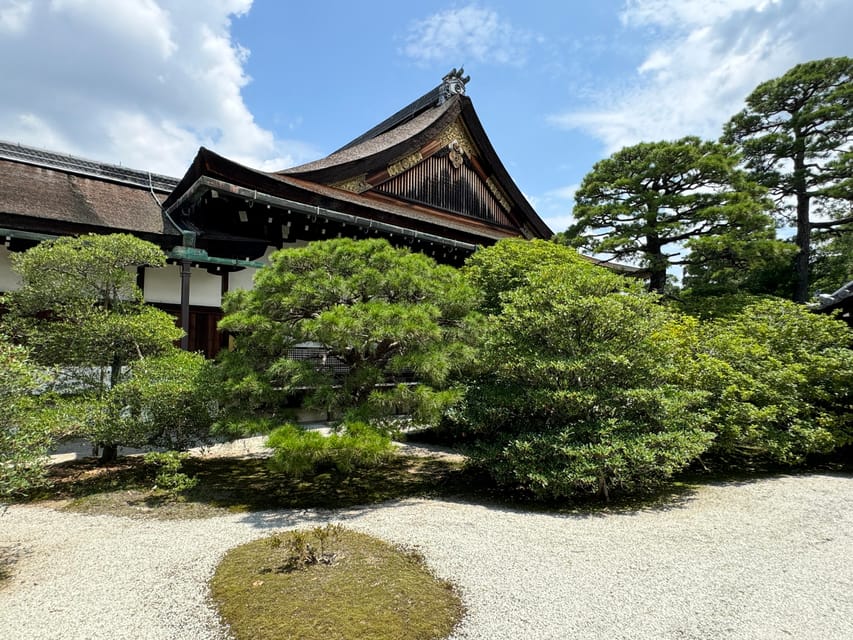
- Shishinden, the main ceremony hall: the focal point for major imperial events on these grounds
- Court-life context at the Emperor’s personal residence: built around what daily life meant, not just dates
- Kyoto Gyoen National Garden stroll: serene, traditional Japanese landscaping you can actually enjoy
- Multiple buildings for official functions: you won’t just see one spot—you’ll see the complex’s structure
- English live guide with small-group options: better chances for questions than big bus tours
Kyoto Imperial Palace in Kyoto Gyoen: what the 1-hour focus gets you
The Kyoto Imperial Palace grounds sit inside Kyoto’s Gyoen National Garden, and the setting does half the work for you. It’s not a loud, high-energy attraction. It’s quieter. More like a place you’d slow down on, even if you didn’t have a guide.
What this tour adds is focus. You’re not just wandering around random buildings. You’re guided through the logic of the complex—where ceremony spaces fit, why the main hall matters, and how the grounds relate to the imperial family’s day-to-day life at the Emperor’s personal residence. That’s the real value for most people: the interpretation turns the site from “pretty historic structures” into something you understand.
Also, there’s a useful time reality check. The tour duration is listed as 1 hour, and the guided visit portion can run around 1.5 hours. Either way, it’s short enough that you won’t burn a whole afternoon, but long enough for a meaningful story if your guide is on point.
And because the entry to Kyoto Imperial Palace is included (free), you’re paying mainly for the guided explanation, not a ticket price layered on top. That matters for value in Kyoto, where some guided tours stack costs fast.
You can also read our reviews of more tours and experiences in Kyoto.



Meeting at Hamaguri Gomon Gate: start where the story begins
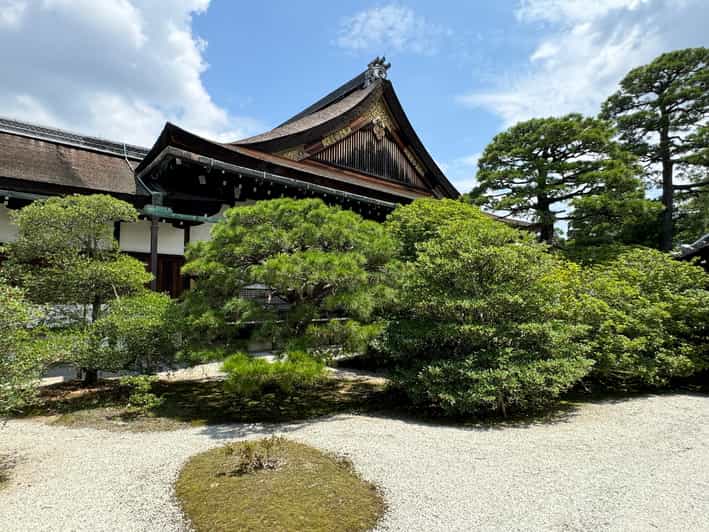
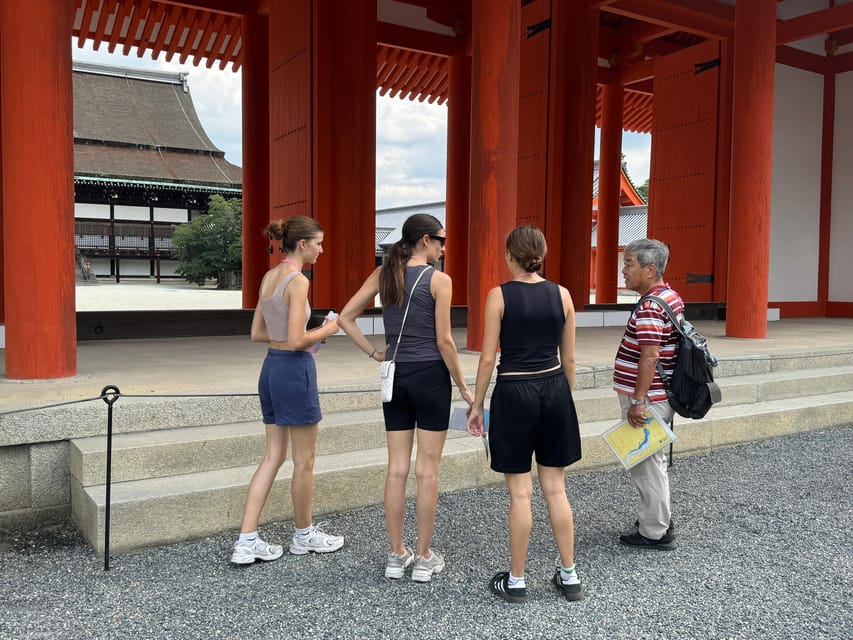
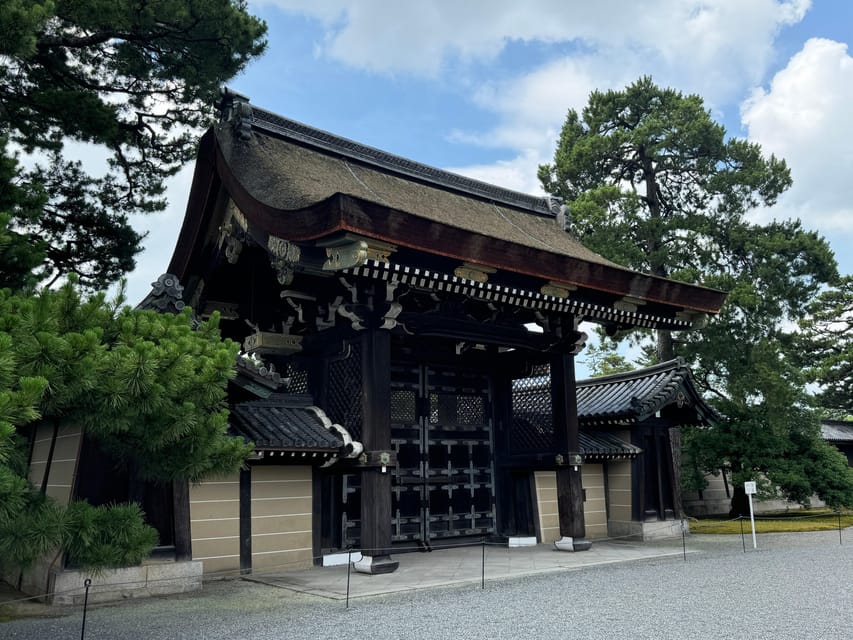
Your first step is finding the right gate. The meeting point is in front of the Hamaguri Gomon Gate (Hamagurigomon) of Kyoto Imperial Palace. Your guide will be waiting with a yellow sign that says DeepExperience—an easy visual cue once you’re there.
This sounds simple, but it’s practical. Kyoto’s palace area can be easy to approach from the wrong side, especially if you’re also trying to match timing with garden crowds. Starting at Hamaguri Gomon helps you get oriented immediately, so the tour can move into history rather than spending time searching.
From there, you’ll walk into the palace grounds and begin the guided route. The goal is to see key areas without turning the visit into a stamina test. A lot of Kyoto sightseeing is “one more stop, one more stop.” This one is about fewer stops with clearer meaning.
If you like a guided pace that still leaves room to look around, this starting setup helps. You don’t have to wrestle with navigation first, then translation second.
Shishinden and ceremony halls: seeing imperial power as architecture
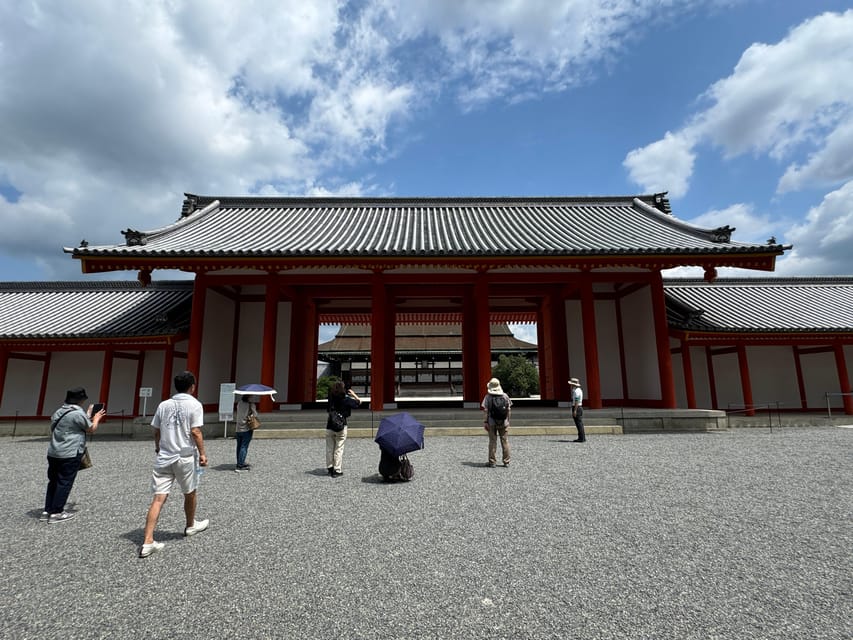
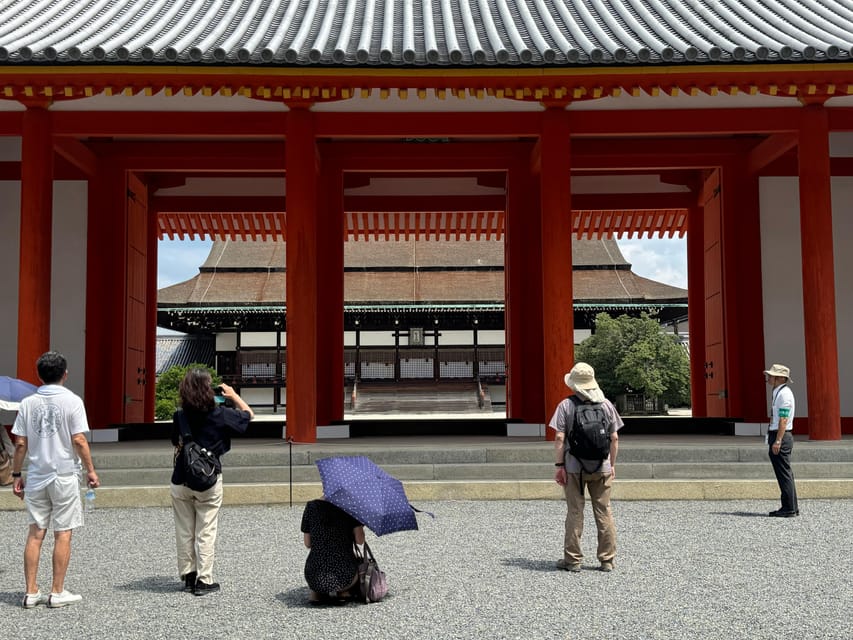
The biggest “wow” anchor here is the main hall, Shishinden. On a basic visit, you might notice it as an impressive, traditional building. With a guide, you’ll start reading it differently—like a space designed for specific ceremonial purposes.
The tour is built around halls used for important imperial ceremonies. That means you’re not only looking at surfaces. You’re learning why certain spaces existed within the palace complex and what kind of events they supported. Even if you don’t remember every detail, the mental picture sticks: imperial ceremonies needed rooms that matched rank, ritual flow, and formality.
Think of it like a museum label, but spoken in plain English. You see the hall, then you understand the function. That’s a big upgrade over just taking photos and hoping the significance reveals itself.
One more practical benefit: the hall and ceremony spaces give you a natural centerpiece for your visit. When you know what you’re aiming for, the rest of the walk has structure. Even the quieter garden areas start to make sense as part of the same palace world.
Emperor’s personal residence: court life explained beyond dates
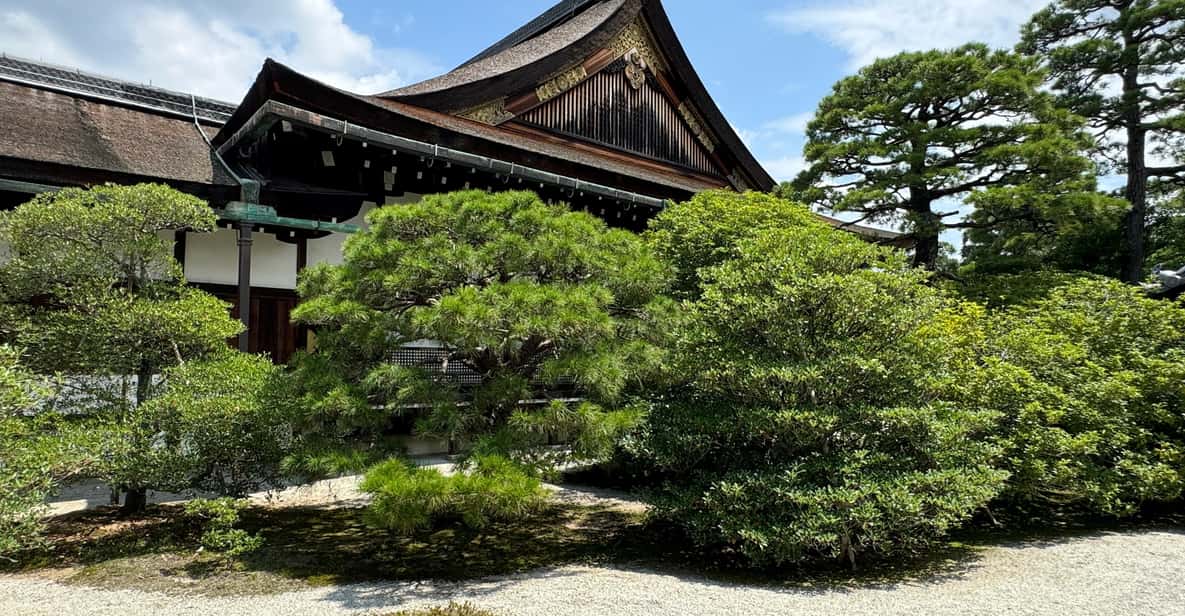
The tour’s story doesn’t stop at “royal buildings.” It also focuses on daily life in the imperial court at the Emperor’s personal residence.
That’s a subtle but important shift. Many historical tours in Japan focus heavily on battles, rulers in broad strokes, or big political changes. Here, you get more of the lived-in aspect—how court life worked, at least as presented through the palace grounds and what the spaces were built to support.
This is where a strong guide makes a difference. A dynamic, well-prepared guide can connect tradition, hierarchy, and daily routines in a way that feels understandable rather than like memorizing a timeline. One positive example from past guests highlights a guide who could answer many questions with a friendly, thoughtful tone. That kind of responsiveness matters because imperial history can feel distant until someone makes it relatable.
If you’re the type who likes questions—What does this room do? Why is that building here?—you’ll likely appreciate the guided conversation. If you’re more interested in pure sightseeing and don’t want interpretation, you may feel the “explainy” portion is less necessary. But for most people, the court-life context is what turns the palace into an actual story.
The gardens of Kyoto Gyoen: serenity with meaning
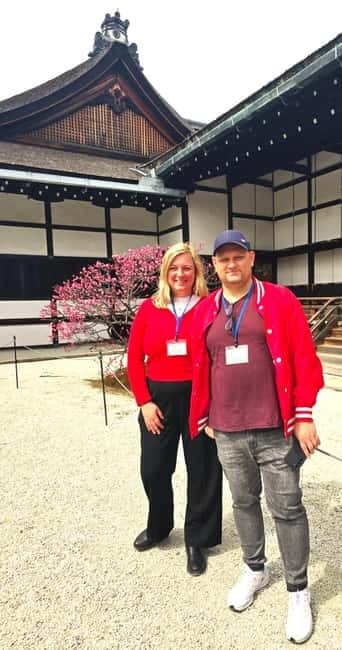
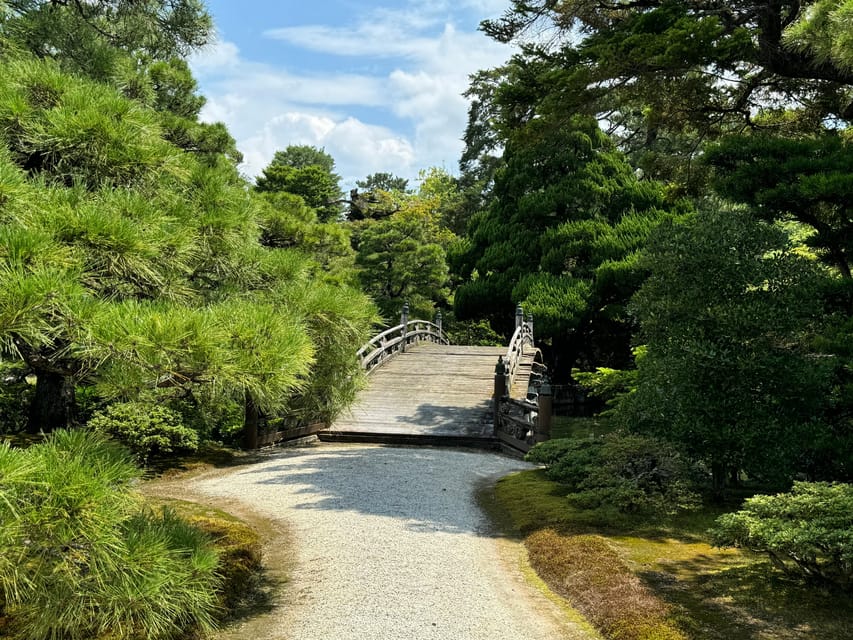
After the ceremonial focus, the pace turns softer. You’ll stroll through beautifully landscaped gardens within Kyoto Gyoen National Garden, and you’ll get a chance to absorb the setting without sprinting.
Gardens are often treated as background scenery in tours. Here, they matter because they’re part of the palace experience—traditional Japanese landscaping designed for calm movement and seasonal mood. Even if you’re not a garden expert, you’ll feel the difference between “walk through a park” and “walk through a palace garden system.”
This is also a great place to slow down your attention. Shifting from architecture to nature gives your brain a break, and it helps you remember what you heard earlier. You see the main hall, you learn about the ceremonial world, and then you walk into the quieter spaces that shaped the atmosphere of court life.
One past guest specifically called out the interior garden as jaw-dropping beautiful, which matches what many people want from Kyoto: peace plus visual detail. The tour’s short duration also means you don’t have time to get bored. You’re never stuck in the same mode for too long.


How much value you get for $38 and a 1–1.5 hour visit
At $38 per person, this isn’t a bargain-price bus tour. It’s a guided cultural visit where you’re paying for an English live guide plus included entry to Kyoto Imperial Palace.
Here’s why it can still be good value.
- The entry component is free with the tour, so you’re not double-paying for admission.
- The site is a complex, not a single building, so the guide helps you connect multiple structures and ceremonial spaces into one coherent visit.
- The timing is compact. You get a story and a walk without losing half a day.
Is $38 “cheap”? Not really. But in Kyoto, short guided experiences often cost around this level, especially when they include entry and a live guide. If you care about context—what these halls were for, how the imperial family lived on these grounds—then the price starts to look reasonable.
If you’re only trying to check off a famous name from a list and you’re happy reading minimal information on your own, then a guided tour might feel like extra spending. In that case, you can treat this as a choice: do you want the meaning handed to you in English, or do you prefer to go at your own reading pace?
For most visitors who want understanding, not just images, I’d call this a fair value.
What your group size and English guide change
This tour is offered in English with a live guide. It also supports private or small groups, which is a big deal for a palace visit.
Small groups mean:
- you can ask questions without feeling like you’re interrupting
- the guide can keep everyone moving smoothly through the complex
- you’re less likely to feel rushed at the exact moments you want to look
Language matters too. Imperial history and ceremonial terminology can get tricky. With an English guide, you’re not stuck decoding on your own while walking through formal spaces.
Also, the meeting setup helps reduce stress. The guide holding a yellow DeepExperience sign at Hamaguri Gomon means you can get on track quickly and start listening right away.
Who should book this Kyoto Imperial Palace tour?
I’d point you toward this experience if you:
- want a guided explanation of imperial ceremonies and palace architecture
- enjoy traditional Japanese settings—especially gardens—where the pace stays calm
- prefer English context over guessing what buildings meant
- want a focused 1–1.5 hour visit without turning it into a full-day project
You might skip or rethink it if you:
- mainly want photos and aren’t interested in explanation
- dislike tours that feel too guided
- are comfortable exploring historical sites on your own with minimal interpretation
One more real-world tip: because the quality depends heavily on the guide, it helps to choose a time slot that fits your expectations. If you love conversation and Q&A, you’ll likely get more out of a lively, responsive guide. If your goal is just to walk quietly and see what’s there, set that expectation going in.
Should you book Kyoto Imperial Palace with DeepExperience?
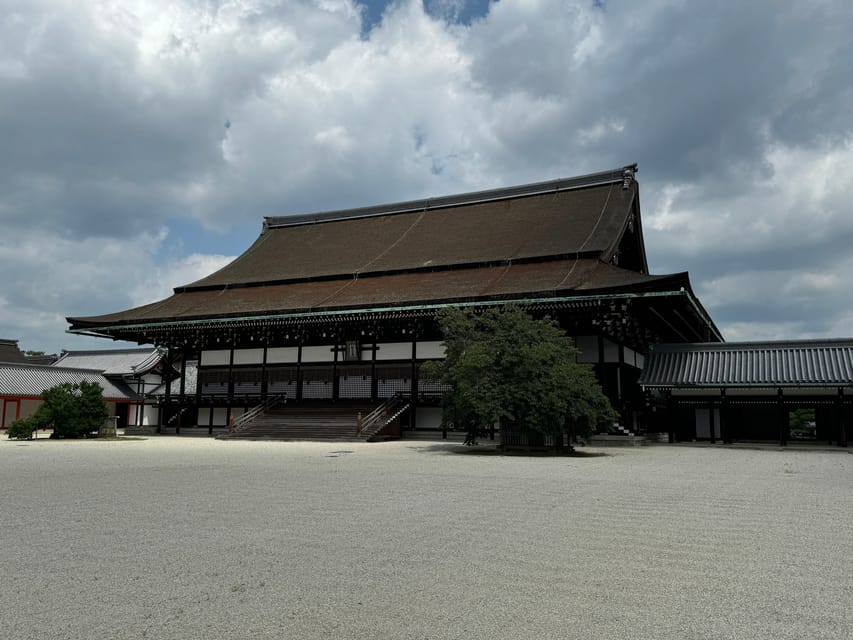
Book it if you want the palace grounds to make sense fast. This tour gives you a structured view of the complex: ceremony focus around Shishinden, context for the Emperor’s residence and court life, and a satisfying stroll through the gardens in Kyoto Gyoen.
I’d also say it’s worth booking if you’re on a schedule and don’t want to waste time figuring out what to prioritize once you arrive. The meeting point at Hamaguri Gomon and the included entry reduce friction, so you spend your limited time learning instead of hunting.
But be honest with yourself. If you’re the independent type who enjoys reading quietly and doesn’t care much about guided interpretation, you may feel the guide isn’t necessary. In a case like that, consider going on your own and using whatever background material you like.
If your goal is understanding, this is a solid choice.
FAQ
Where is the meeting point for the Kyoto Imperial Palace tour?
Meet in front of the Hamaguri Gate (Hamagurigomon) of the Kyoto Imperial Palace. The guide will be waiting with a yellow sign that says DeepExperience.
How long is the guided visit?
The tour duration is listed as 1 hour. The guided tour time shown in the experience flow is about 1.5 hours.
Is entry to Kyoto Imperial Palace included?
Yes. Entry to Kyoto Imperial Palace is included with the tour, and it’s described as free with the experience.
Is the tour in English?
Yes, the live tour guide language is English.
Is this tour private or small group?
Private or small groups are available.
What will I see during the tour?
You’ll visit the Kyoto Imperial Palace grounds in Kyoto Gyoen National Garden, including the main hall (Shishinden), other buildings used for ceremonies and official functions, and the serene landscaped gardens. The guide also explains imperial family traditions, ceremonial hall significance, and daily life in the imperial court at the Emperor’s personal residence.