Kyoto on a private van feels like a cheat code. This 6-hour afternoon trip stacks big-name temples with calmer, off-the-main-road stops—and you mostly do it without fighting buses or crowds. You’ll also get a real guide in English, with time to ask questions as you cross the city.
I especially love the balance: major sights like Kinkakuji (Golden Pavilion) and Fushimi Inari, plus quieter places around Arashiyama and the mountains. Second, I like that you’re not just looking out the window—you stop for meaningful moments, like temple gardens in moss and an old cedar tree locals worship.
One thing to weigh: plans can shift with season and conditions, and some stops involve short walks or stairs. If a site is closed or an area is too crowded, you may get fewer stops than the published list for that day.
In This Review
- Key highlights worth planning around
- Why a 1:00 pm private van beats the usual Kyoto scramble
- Golden Pavilion and the Kyoto “wow” factor, minus the bus drama
- Arashiyama in three acts: bamboo, mossy gardens, and quieter temple corners
- Gio-ji Temple: moss, thatched-roof calm, and a gentler pace
- Arashiyama Bamboo Forest: iconic path, plus a surprising detail
- Otagi Nenbutsu-ji Temple: statues and the older Arashiyama mood
- Arashiyama-Takao Parkway and the mountains’ big-picture views
- Arashiyama-Takao Parkway: seasonal color from the road
- Mount Ogura Observatory: Kyoto from above
- Hozukyo Observatory: Hozu Gorge views and river culture
- Sacred rituals and a secret cedar-tree viewpoint that feels real
- Nakagawa Hachiman Shrine: touch the ancient cedar
- Kitayama Big Daisugi: the cedar platform with a narrow-road feel
- Crossing town the efficient way: geisha district by car, Heian Jingu torii, then Inari
- A 600-year-old geisha district street, viewed from the car
- Heian Jingu Shrine: the huge torii moment
- Fushimi Inari at a better time of day
- Price and value: what you’re really paying for
- When this tour is the best fit for you
- The “should I book?” decision
- FAQ
- How long is the Kyoto Highlights & Hidden Gems in Nature private van tour?
- Where can I be picked up and dropped off?
- What time does the tour start?
- Is the guide available in English?
- Are temple and shrine admission fees included?
- Is this a private tour?
- Can I cancel for a full refund?
Key highlights worth planning around
- Private pickup and drop-off anywhere in Kyoto City saves you time and stress
- English guide Daiki brings history and Buddhism context to what you see
- Arashiyama timing and side stops help you experience bamboo and gardens with less chaos
- Mountain lookouts and Hozu Gorge views give you Kyoto from higher ground
- Ritual stops with local feel, like touching an ancient cedar at Nakagawa Hachiman Shrine
- Photo-friendly geisha district viewing by car, with proper etiquette in mind
Why a 1:00 pm private van beats the usual Kyoto scramble
Kyoto is gorgeous, but it can also be a logistics puzzle. From pick-up to sight order, this tour is built around the idea that you should spend your energy on seeing, not commuting. You start at 1:00 pm, which is smart—by the time you reach Fushimi Inari, the crowds often feel more manageable and the light turns more flattering.
The minivan matters too. It’s comfortable, and reviews mention air conditioning and a careful driver—exactly what you want when you’re bouncing between temples, shrines, and viewpoints. And since it’s private, you’re not forced to keep pace with a big bus group.
You can also read our reviews of more guided tours in Kyoto

Golden Pavilion and the Kyoto “wow” factor, minus the bus drama
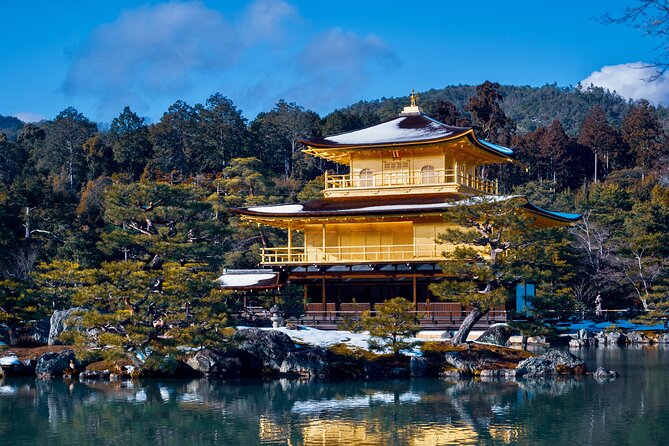
Most first-time Kyoto itineraries hit the big sights in a straight line. This one aims for impact with less wasted time. Kinkakuji Temple (Golden Pavilion) is the opener, and it’s an easy win for a first wow moment—because the setting and the gold-leaf look hit you fast, even if you’ve seen photos before.
Here’s why the private-van approach helps: you’re not glued to bus timetables, and you can move on quickly when crowds get thick. Admission isn’t included (budget about ¥1,400 per person total for entry fees), but the payoff is still strong when you avoid the “time lost getting there” problem.
A small note: this stop is listed as about 45 minutes. That’s enough to see the pavilion and get your bearings, but it’s not a long, slow-study session. If you love photography and want extra time, just tell your guide and ask if timing can stretch.
Arashiyama in three acts: bamboo, mossy gardens, and quieter temple corners
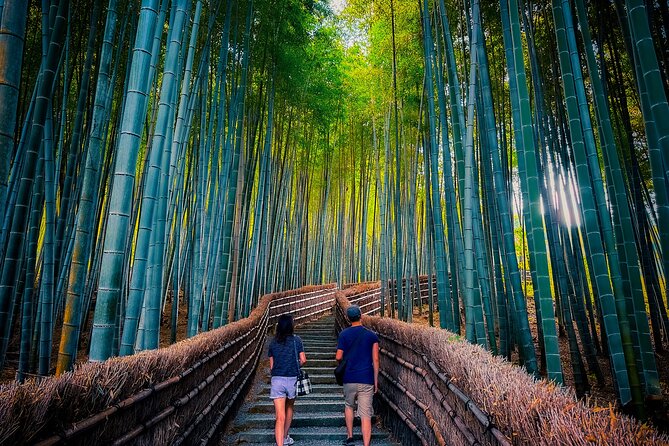
Arashiyama is famous, and the bamboo forest is the headline. But fame brings crowds, and crowds change the experience. This tour doesn’t pretend that bamboo is empty. Instead, it builds in multiple Arashiyama-area stops so you still get value even if one area is packed.
Gio-ji Temple: moss, thatched-roof calm, and a gentler pace
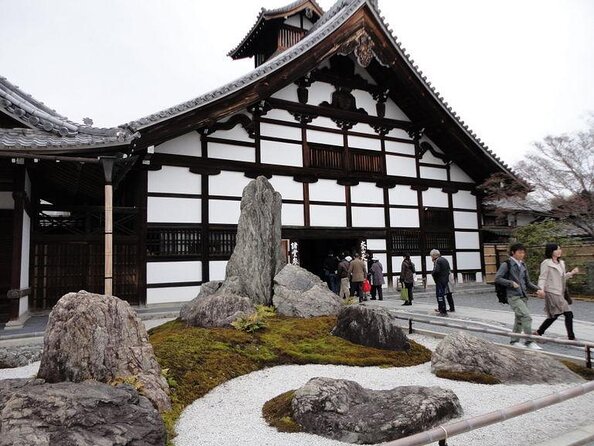
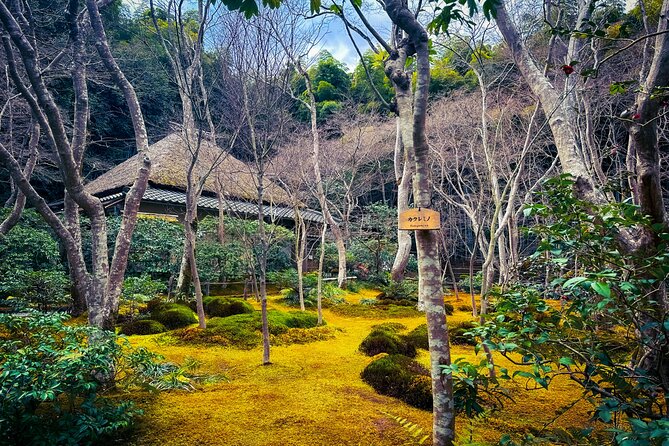
Right before bamboo, you visit Gio-ji Temple—small, quiet, and designed around stillness. The garden is described as mossy with a modest thatched hut, plus bamboo nearby. If you’re tired of rushing, this is the kind of stop that slows your pulse back down.
Arashiyama Bamboo Forest: iconic path, plus a surprising detail
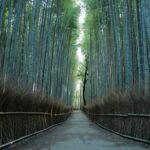
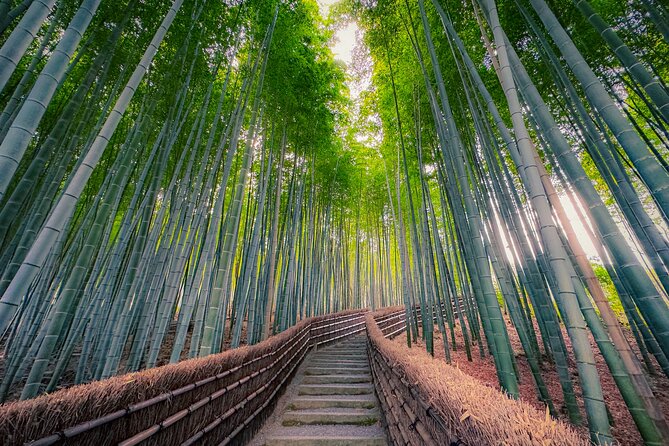
Then comes Arashiyama Bamboo Forest, where the goal is the iconic walk and the sound you can hear along the way. The guide adds context beyond the scenery, including bamboo’s origin and how it connects to the story of light inventions associated with Edison. That’s the sort of detail that makes you look at the same stalks differently.
Time here is listed at about 15 minutes. It’s short by design. You get the experience without losing your whole afternoon to a bottleneck.
One practical heads-up: the reviews include an example where the bamboo area was skipped because it was too crowded. If you’re booking specifically for bamboo, go in with a flexible mindset: the guide can adjust to keep the day enjoyable.
You can also read our reviews of more private tours in Kyoto

Otagi Nenbutsu-ji Temple: statues and the older Arashiyama mood
Next is Otagi Nenbutsu-ji, a smaller temple set in an older Arashiyama district. The area is described as well-maintained, and the vibe is far less hectic than the main shopping lanes. The stop is short—around 15 minutes—but it’s the kind of place that rewards quick attention because the details are concentrated.
Arashiyama-Takao Parkway and the mountains’ big-picture views
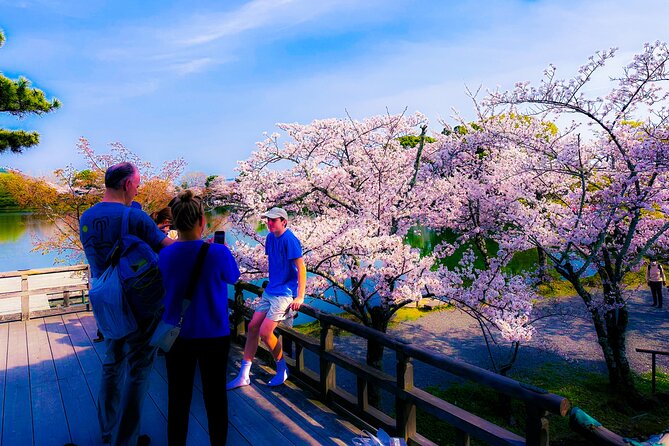
After the Arashiyama cluster, the tour shifts outward into mountain country. Two stops make the change feel dramatic: a scenic parkway ride and then viewpoints that open up the whole region.
Arashiyama-Takao Parkway: seasonal color from the road
You’ll drive along Arashiyama-Takao Parkway, described as starting from north Arashiyama and beginning at a tourist toll gate. The road is covered with about 2,000 cherry-blossom trees in April and maple trees in November—so the scenery depends heavily on season. If you’re traveling in spring or fall, this part can be photo-heavy in the best way.
This stop is listed at about 45 minutes, and admission is marked as included for this segment.
Mount Ogura Observatory: Kyoto from above
Then you get Mount Ogura Observatory, described as offering a view of the whole city from the mountain. It’s short—about 5 minutes—but it’s a strong way to reset your sense of scale. Kyoto is easy to experience as “temples and neighborhoods.” A viewpoint reminds you it’s also valleys, rivers, and ridgelines.
If you’re prone to motion sickness, the minivan ride is usually manageable, but still: mention any sensitivity ahead of time.
Hozukyo Observatory: Hozu Gorge views and river culture
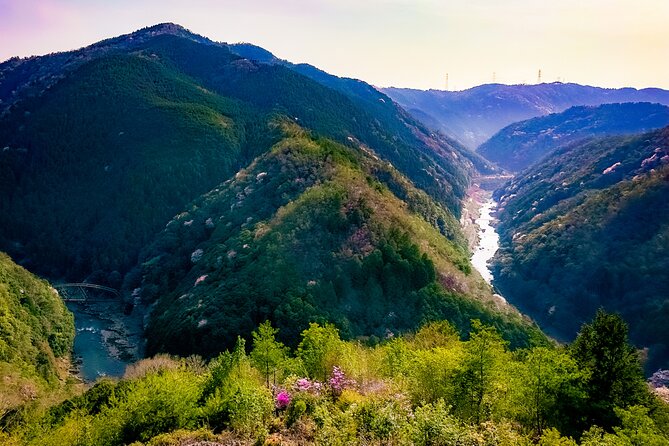
Next is Hozukyo Observatory, focused on the famous Hozu Gorge. It’s also tied to traditional hard-stream boat rafting, so even if you don’t do the boat, you’re seeing the kind of place locals recognize for the river’s personality.
This is another about 5-minute stop. The design of the itinerary is clear here: quick lookouts, then back on the road.
Sacred rituals and a secret cedar-tree viewpoint that feels real
Some tours are just photo stops. This one includes moments with a local “why” behind them, which is the stuff that tends to stick in your memory after the camera battery dies.
Nakagawa Hachiman Shrine: touch the ancient cedar
At Nakagawa Hachiman Shrine, the highlight is an ancient cedar tree described as the oldest in the area. You’re encouraged to touch the tree, framed as receiving the spirit’s power. Whether you treat it as spirituality, symbolism, or a cultural practice, it’s a grounded moment compared with the more theatrical big-name landmarks.
This stop is about 5 minutes, and it’s free. Quick, meaningful, and not rushed in a bad way.
Kitayama Big Daisugi: the cedar platform with a narrow-road feel
Then you reach Kitayama Big Daisugi, described as a secret spot with giant platform cedar trees accessed by a narrow cliff road. It’s positioned as far north and away from casual foot traffic, which makes it feel removed from the standard sightseeing lanes.
You’ll have about 10 minutes there, and it’s free. The time is tight, so look first for the structure and scale, then decide if you want photos or a slower look. If you’re a detail photographer, ask the guide to pause a bit so you can frame shots without sprinting.
Crossing town the efficient way: geisha district by car, Heian Jingu torii, then Inari
This tour is not timid. It takes you across Kyoto to pack in a lot of variety in a single afternoon.
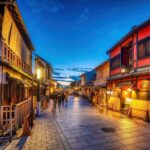
A 600-year-old geisha district street, viewed from the car
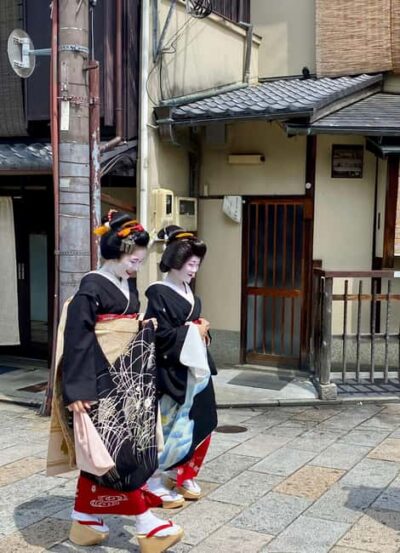
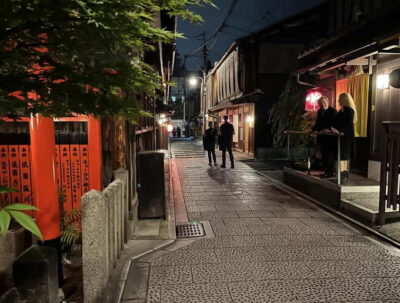
One portion is all about a 600-year-old street known for geishas—but you view it by car to avoid walking through crowd zones. The rules here matter: taking photos of geishas needs their permission. The fact that the tour specifically flags this tells you the guide is paying attention to local etiquette, not just speed.
If you’re hoping to shoot street photos, treat this as a window into the area’s atmosphere rather than a guarantee of portraits. Even in cities like Kyoto, the best street shots often come from patience, not squeezing.
Heian Jingu Shrine: the huge torii moment
You’ll stop at Heian Jingu Shrine for its torii gate, labeled as Kyoto’s biggest red torii gate built for the Imperial Shrine. The height is listed as 24.4 meters (80 feet), which explains why people remember it. This is a short 5-minute stop and free entry, so go in ready to notice scale and color rather than expect a long shrine walk.
Fushimi Inari at a better time of day
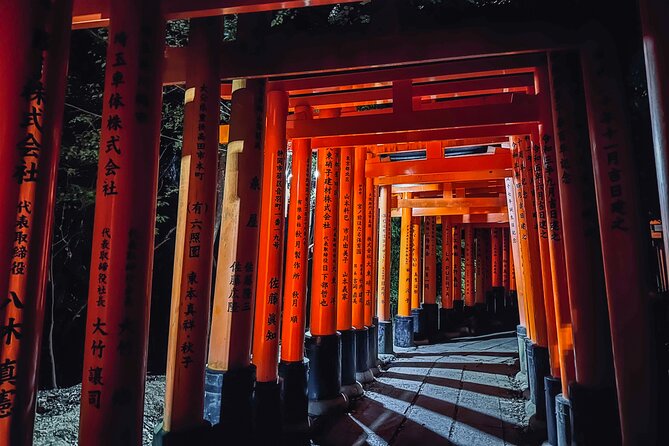
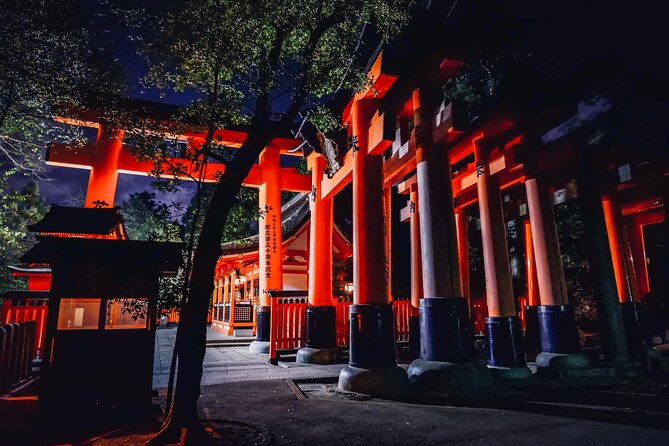
Finally: Fushimi Inari-taisha Shrine, the famous red torii corridor with thousands of gates. The listing notes more than 10,000 gates dedicated now, and the path is often described as SenbonTorii.
This is the longest block at about 40 minutes, and it’s free. The key advantage for you is timing. With a start at 1:00 pm and stops earlier in the afternoon, you may catch parts of Inari in that late-day rhythm when people are still around but the push feels different. One review specifically mentioned enjoying Inari at night with way fewer people, so there’s a good chance the route timing helps.
Practical tip: wear shoes that handle uneven temple walkways. Even with short stops, Kyoto ground can be slick or textured, especially as the day shifts.
Price and value: what you’re really paying for
The price is $230.61 per group (up to 1) for a 6-hour private van tour. That sounds pricey until you translate it into what usually costs you time: private transportation, driver skills, parking, and a fluent English guide.
You’re also not just buying access to landmarks. You’re buying:
- Pickup and drop-off anywhere in Kyoto City, so you don’t lose half a day to getting to the right bus stop
- Fuel, tolls, and parking fees bundled into the experience
- A guide who can adjust the day to your interests and the reality on the ground
One review pointed out that the tour charges per vehicle rather than per person, which matters if you’re traveling as a small group. If your travel style is “we want to see a lot without being tired,” the cost can feel fair.
Entry fees are extra—about ¥1,400 per person total. Budget that so you don’t get surprised when you’re standing in front of a ticket gate.
When this tour is the best fit for you
This works especially well if:
- You have limited time in Kyoto and want big highlights plus quieter nature-and-shrine moments
- You value explanations while you walk—this is built around Buddhism and history context
- You want nature viewpoints and temple stops without switching buses three times
- You prefer comfortable transport and a driver who knows the flow
It may be less ideal if you want long, slow stays at just one temple. The stops are frequent and many are short. You’ll get breadth and variety more than a deep dive into one site.
If mobility is a concern, the tour notes that some places require walks and stairs. Ask your guide ahead of time what you can handle, and they can often help with pacing.
The “should I book?” decision
I’d book this if your top goal is a smooth day that mixes famous Kyoto with calmer pockets, all with a guide named Daiki who can turn sightseeing into understanding. You’ll likely feel your day is efficient without feeling rushed, especially with the 1:00 pm start and the mountain lookouts built in.
Skip it only if you hate the idea of a flexible route where some stops could change due to crowds or closures. Also, if you want a very walk-heavy itinerary, you might find the short stops frustrating. For most visitors, though, this is a smart way to see real Kyoto without spending your holiday doing route planning.
FAQ
How long is the Kyoto Highlights & Hidden Gems in Nature private van tour?
It runs for about 6 hours.
Where can I be picked up and dropped off?
Pickup and drop-off are offered anywhere in Kyoto City.
What time does the tour start?
The start time is listed as 1:00 pm.
Is the guide available in English?
Yes. The tour includes a local Japanese guide with expert knowledge and fluent English.
Are temple and shrine admission fees included?
No. Admission fees are not included, and the total entry fees are listed as approximately ¥1,400 per person.
Is this a private tour?
Yes. It’s a private tour/activity, and only your group participates.
Can I cancel for a full refund?
Yes. Free cancellation is available up to 24 hours in advance for a full refund.