REVIEW · KYOTO
Private Kyoto Tour with Licensed Guide & Vehicle (Max 15 persons)
Book on Viator →Operated by Japan Guide Agency · Bookable on Viator
Kyoto feels easier when someone drives and explains. This private tour rolls you between top sights without wrestling with buses or confusing transfers.
I especially like the door-to-door hotel pickup plus a private vehicle that keeps your day moving. I also like the flexibility: you choose 3–4 walking stops from the big sightseeing list, so the route matches your interests instead of forcing a one-size plan.
One thing to consider: the tour is built around short stops (often about 15 minutes), and entrance fees are not included, so you’ll want a little planning budget for temples and castles.
In This Review
- Key highlights at a glance
- Kyoto Logistics: why a private car changes your day
- How the 6-hour format really works (and how to choose your 3–4 sites)
- Fushimi Inari-taisha, torii gates, and the faster way to feel the place
- Gion and the market-to-dinner rhythm: classic Kyoto without the stress
- Kiyomizu-dera and the Kyoto Imperial Palace: two kinds of power
- Higashiyama-style walks and the Zen temple chain
- Nijo Castle and Kinkaku-ji: Edo-era and the gold standard
- Arashiyama and Tenryu-ji: when Kyoto turns scenic and calmer
- Price and value: what $634.72 per group is really buying
- Guide and driver experience: why names like Michi and Yuka matter
- Small practical considerations that can affect your route
- Should you book this private Kyoto tour?
Key highlights at a glance
- Private vehicle, not packed public transit: less time in stations, more time on the ground
- Licensed English-speaking guide: history and practical context as you walk
- Pick 3–4 sites from a long Kyoto menu: customize your day
- Includes guided time at major icons like Fushimi Inari and Kiyomizu-dera
- Most stops are quick (about 15 minutes): great for coverage, not for lingering
Kyoto Logistics: why a private car changes your day
Kyoto can be a dream—until you’re standing at a bus stop with ten directions and a map that looks like modern art. This is where the private vehicle earns its keep.
With this tour, you get the simple formula:
- You start with pickup.
- You ride in comfort to the next highlight.
- You walk the sights with a guide, then get back in the car.
That matters because many of Kyoto’s best-known areas are close in spirit but far in real time. Driving plus a guide means fewer dead ends, less backtracking, and more time actually seeing temples, neighborhoods, and market streets rather than plotting routes.
Also, the tour is designed for efficiency. The schedule uses short timed visits at multiple locations (often around 15 minutes each; a few are even shorter). That’s ideal if you want to say you saw the big stuff in one day.
You can also read our reviews of more guided tours in Kyoto
How the 6-hour format really works (and how to choose your 3–4 sites)
This experience runs about 6 hours. The key included promise is a customizable walking tour of 3–4 sites chosen from the tour’s sightseeing list.
Think of it like this:
- The car handles the distance.
- Your guide handles the order and the explanations.
- Your choices control what kind of Kyoto you get: shrine gates, geisha districts, golden pavilions, Zen gardens, imperial spots, mountain temples, or a market-and-dinner day.
A practical way to choose your 3–4 sites:
- Pick one “wow” landmark (examples from the list include Fushimi Inari-taisha or Kinkaku-ji).
- Pick one neighborhood with atmosphere (Gion, Pontocho, Higashiyama).
- Pick one temple/garden focus (Nanzenji, Ginkakuji, Ryoan-ji, Tenryuji, and more).
- Leave one spot as a flexible “buffer” that matches your energy and walking tolerance (some are free areas like Nishiki Market shopping streets).
Because the visits are short, your guide will likely prioritize the most meaningful parts you can cover efficiently. You won’t get the slow, sit-and-stare pace of a dedicated half-day at one temple—but you will get a broad sense of Kyoto’s styles in one go.
Fushimi Inari-taisha, torii gates, and the faster way to feel the place
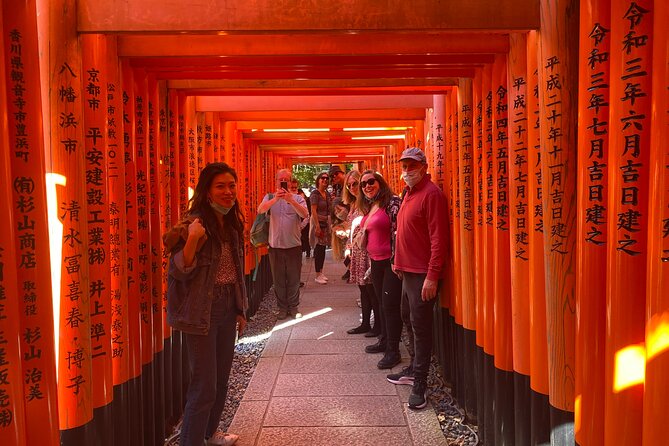
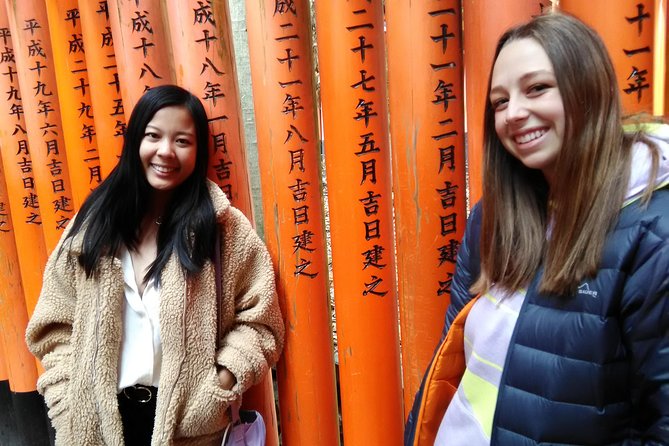
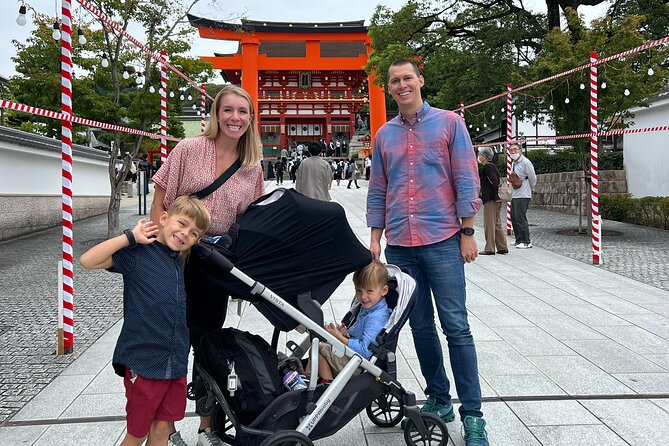
Fushimi Inari-taisha is the stop most people picture first in Kyoto, and for good reason. The tour includes a short visit here (about 15 minutes, with free admission listed for this stop).
What makes this stop work on a private itinerary is direction. Fushimi Inari is easy to “do” wrong if you just chase the most photographed view and miss how the shrine site unfolds. With a guide, you get a smoother flow through the torii experience and the surrounding context.
One line in the tour description frames this as seeing parts of the experience that are more than the standard quick-tour feel. Even if you’re only here briefly, having a guide helps you focus on what you’re actually looking at, not just where the crowds are.
Gion and the market-to-dinner rhythm: classic Kyoto without the stress
Two of the most characterful add-ons are Gion and Nishiki Market (both listed as free-admission stops).
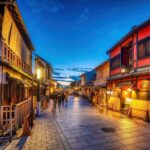
- Gion is where you can get lost fast in the maze of narrow streets. On a private tour, your guide helps you navigate the lanes without guessing. It also makes it easier to slow down at the right corners instead of walking past the best views because you’re focused on directions.
- Nishiki Market is packed, noisy, and deliciously hectic. The advantage of having it built into your schedule is timing. You’ll spend a focused window here rather than hoping you’ll stumble into it at the right moment.
Then you may get a taste of the evening energy with Pontocho (listed as free). Pontocho is a narrow dining alley near the Kamogawa River area, and it feels different from the busier shopping zones. Even in a short visit, it gives you a Kyoto “after-hours” vibe.
If you like your Kyoto days to include food and atmosphere, this mix is a strong one.
Kiyomizu-dera and the Kyoto Imperial Palace: two kinds of power
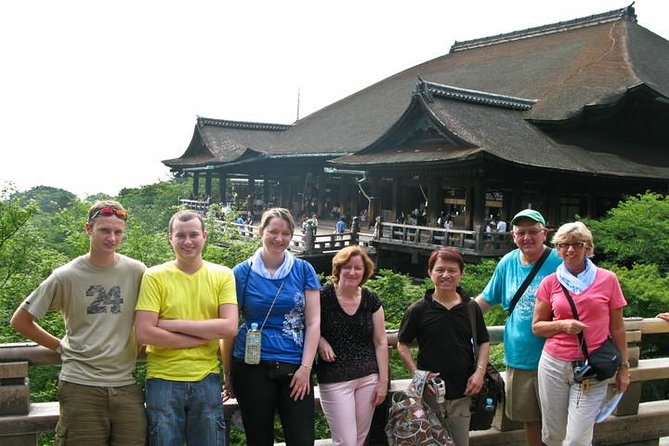
The tour includes Kiyomizu-dera Temple as one of the big guided walks, with admission not included for that stop (listed as not included).
Kiyomizu-dera is popular for a reason, but it can also become “crowd scenery” if you don’t have guidance. The benefit here is a guided visit—so you learn what you’re looking at while you walk the grounds, rather than only reacting to the crowd density.
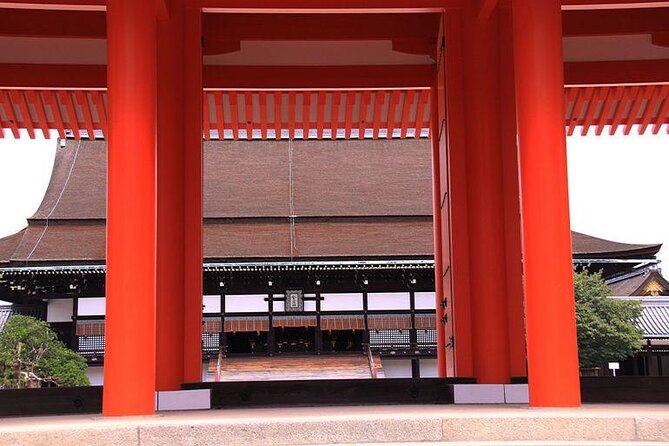
The tour also includes Kyoto Imperial Palace (Kyoto Gosho), again with admission not included. This is a different side of Kyoto than the temple gates. It’s about how the imperial court operated and how Kyoto functioned as Japan’s political center before power shifted to Tokyo.
If you want a day that balances spirituality (Kiyomizu-dera) with governance and formal history (Kyoto Imperial Palace), this is a nice pairing. The short stops won’t replace a longer temple day, but they give you an organized overview.
You can also read our reviews of more private tours in Kyoto

Higashiyama-style walks and the Zen temple chain
Higashiyama is one of Kyoto’s best-known historic areas, and this tour includes Higashiyama Ward as a free stop.
This part of the day is great if you enjoy old-street textures: slopes, preserved streetscapes, and the feeling that the city’s past is still built into the streets. Even with a short time window, it helps you place Kyoto’s temples into a wider “old Kyoto” setting.
Then the tour’s list offers a strong Zen and temple sequence you can pick from, including:
- Ginkakuji (Silver Pavilion)
- Nanzenji Suirokaku
- Tofuku-ji
- Ryoan-ji (famous rock garden)
Most of these are listed as admission not included, which is exactly why you should plan a little cash or card budget for temple entry.
A key practical tip: if you choose several ticketed temple sites in the same day, your day can start to feel like a ticket line + walking sprint. Balance ticketed stops with free areas like Higashiyama, Pontocho, or neighborhood streets so you keep the day enjoyable, not transactional.
Nijo Castle and Kinkaku-ji: Edo-era and the gold standard
Two headline names on the tour list are:
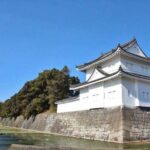
- Nijo Castle (UNESCO World Heritage; admission not included)
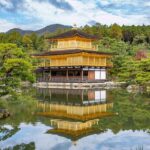
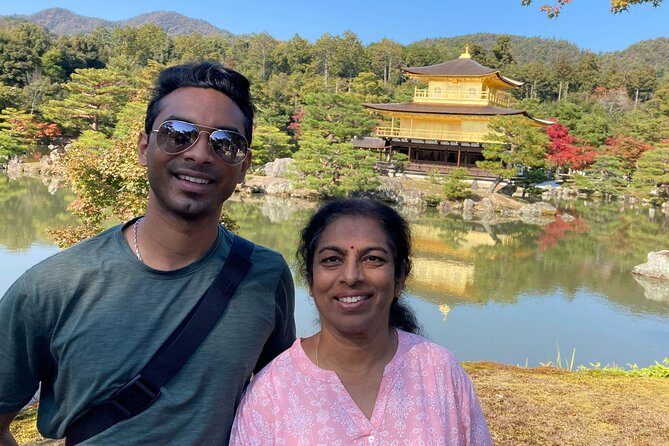
- Kinkaku-ji (Golden Pavilion / Rokuonji) (admission not included)
Nijo Castle gives you a shogun-era story in a walkable setting. Even with a short visit, you can understand why it’s UNESCO-listed—because the design isn’t just pretty; it’s functional and political.
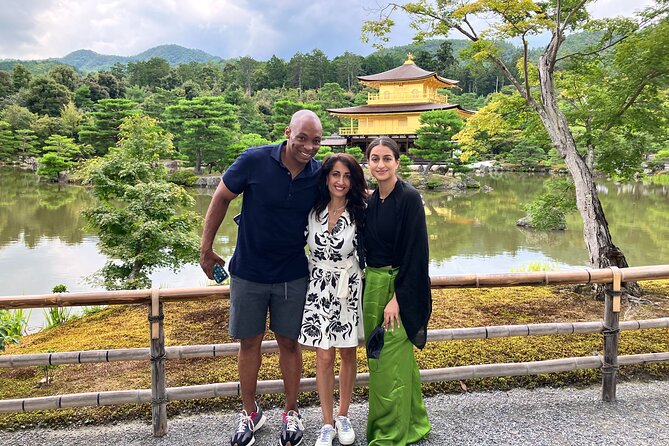
Then there’s Kinkaku-ji, Kyoto’s gold icon. Kinkaku-ji is often crowded, and the tour description doesn’t promise an empty temple. The value here is that your guide helps you time your viewing and get the key perspective without wasting your limited 6 hours circling.
If your “must-see” list includes one of these, prioritize it as one of your 3–4 chosen walking stops. You’ll still get a full day, but the most important part won’t get squeezed.
Arashiyama and Tenryu-ji: when Kyoto turns scenic and calmer
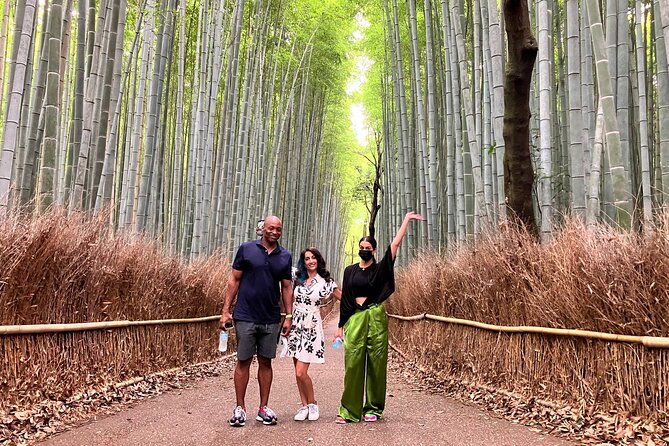
If you want Kyoto to feel less like a highlight checklist and more like a walk through scenery, look at the Arashiyama options on the list.
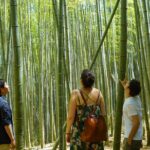
The tour can include parts of the Arashiyama area and major temples in that region, such as Tenryu-ji Temple (admission not included).
Arashiyama has a different vibe than central Kyoto. Even though it’s touristy, the setting—along with the temple gardens—can feel quieter. A guided stop here is useful because it helps you focus on what’s worth your eyes and what’s just background noise.
You might also see additional western Kyoto choices in the tour list (like Sagano-area temple stops). The key idea remains: choose them if you want nature scenery plus historic temple design within one day.
Price and value: what $634.72 per group is really buying
The price is $634.72 per group (up to 2) for about 6 hours. That sounds high until you break down what’s included.
You’re paying for:
- a licensed local English-speaking guide
- a private vehicle
- door-to-door hotel transfers
- a customizable guided walking route of 3–4 sites
For two people, the math is simpler than it looks: you’re sharing the cost of transport and guide time. The biggest value is not just comfort; it’s friction removal. You’re skipping the mental overhead of routes, transfers, and timing between far-apart Kyoto sights.
When this is a great deal:
- You’re traveling with limited time and want big coverage.
- You’d rather spend effort on walking and photos, not figuring out buses.
- Your group benefits from flexibility (you can steer toward your interests).
When it might feel less worth it:
- If you already know Kyoto transit well and you’re comfortable building a full day yourself.
- If you plan to take the slowest pace at every ticketed temple. This tour is built for efficient coverage.
Guide and driver experience: why names like Michi and Yuka matter
The tour works only as well as the guide does, and the reviews you provided highlight real patterns.
People praised guides who:
- keep the day moving without making it feel rushed
- tailor the route based on what makes sense for their group
- explain what you’re seeing in a way that stays interesting
- use humor and option-making instead of lecturing
Some examples of guide names that show up in the feedback include Michi, Noriko, Yuka, Olive (Miwako), Ken, Haru, Tomy, and Shuji. You might meet someone like one of them, and the consistent theme is adaptability.
If you want a day that feels personalized, do one simple thing when you book: clearly list your top interests (temples vs. neighborhoods, gardens vs. markets, how much walking you truly want). This is the backbone of customization.
Also, driver comfort shows up often. One review specifically called out a comfortable car and smooth driving, which is exactly what you need when your day includes repeated walking windows.
Small practical considerations that can affect your route
A few details can change how smooth your day feels:
- Entrance fees are not included. Many major sites on the list show admission not included (Nijo Castle, Kiyomizu-dera, Ginkakuji, Kinkaku-ji, and others). Bring cash or get ready with a card mindset.
- Lunch is not included. Your guide can help you time food stops or point you to options, but you should plan to pay for meals yourself.
- Stop durations are short. The itinerary’s structure (often 15 minutes per stop) is designed for variety. If you love one temple above all else, tell your guide so they can protect that time.
- Child seats are limited. Booster seats exist in limited supply, rear-facing car seats are not available, so you’d need to contact the operator if this applies to your group.
- Group size at max is 15, but it’s still private. It’s described as a private tour where only your group participates. In practice, smaller groups usually mean easier pacing and fewer compromises.
Should you book this private Kyoto tour?
Book it if you want a high-coverage Kyoto day without the friction of transit planning. It’s especially smart for first-time visitors, couples, or anyone who wants to see major highlights like Fushimi Inari-taisha, Gion, Nishiki Market, and at least one major temple such as Kiyomizu-dera or Kinkaku-ji—all within about 6 hours.
Skip it or switch strategy if your dream Kyoto day is slow and deep at one site, or if you already have a strong plan and confidence with Kyoto transit. This tour is built for seeing a lot efficiently, not for giving one place all day.
My take: if your goal is to leave Kyoto with the feeling that you understood the city’s different moods—shrine gates, old streets, Zen gardens, and imperial-era formality—this format does that job well.