REVIEW · KYOTO
Kyoto Urushi Lacquer Factory Tour and Chopstick Making Experience
Book on Viator →Operated by JTB KYOTO OFFICE · Bookable on Viator
Kyoto smells like something old, and yet practical. This tour takes you through the urushi lacquer craft from sap collection to refined material, then you’ll do a hands-on chopstick lacquer application you keep. I love how the guide walks you through both the history and the real production steps, and I also love that the finish is tangible: you leave with a pair of lacquer chopsticks. One catch: you’ll want clothes you’re okay getting dirty, and there isn’t large luggage storage on site.
The setting helps, too. You start inside a factory store (Und.) where you can see the tools and items lacquer artists use, not just finished souvenirs. Then the focus shifts to the workshop level, where the process stops being abstract and turns into something you can feel in your own hands—within a tight 90 minutes.
In This Review
- Key Highlights Worth Your Time
- Entering the Tsutsumi Asakichi Workshop World in Central Kyoto
- What Urushi Lacquer Is Really About (and What You’ll Learn)
- The Store Stop: Seeing Tools and Materials Before You Touch Anything
- The Factory Tour: From Sap Collection to Finished Lacquer
- The Top-Floor Chopstick Workshop and Fuki-Urushi Application
- Price, Timing, and Small-Group Value You Can Actually Judge
- Who This Tour Fits Best (and When to Skip It)
- Booking Notes That Actually Matter
- Should You Book This Kyoto Urushi and Chopstick Tour?
- FAQ
- What is the duration of the Kyoto Urushi Lacquer Factory Tour and Chopstick Experience?
- Where does the tour take place?
- What time does the tour start?
- Is the tour conducted in English?
- How many people are in the group?
- Do I take the chopsticks home?
- What should I wear?
- Is luggage storage available?
- Is transportation included?
- What happens if the minimum number of participants is not met?
- Is the experience refundable if I cancel?
Key Highlights Worth Your Time
- A factory tour tied to real output: Tsutsumi Asakichi refines over 70% of Japan’s domestic urushi lacquer.
- English private-style guidance for small groups: up to 5 travelers, conducted entirely in English.
- A hands-on fuki-urushi chopstick session: you apply lacquer and take your chopsticks home.
- From sap to usable lacquer: you’ll hear how sap is collected, refined, and prepared for craftsmen.
- Modern-day purpose from a 4th generation owner: the goal is safer, high-quality urushi in everyday goods too.
Entering the Tsutsumi Asakichi Workshop World in Central Kyoto
This is one of those Kyoto activities that doesn’t just point at tradition—it shows you how it works. You meet at Tsutsumi Asakichi Urushi Japan (Shimogyo Ward, Inarichō). The location is in the center of Kyoto and near public transportation, so you’re not forced into a long commute just to reach a niche craft stop.
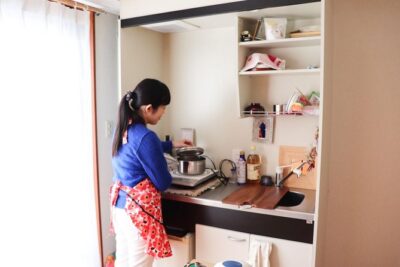
You’ll start at the factory’s store space, called Und., where the vibe is part craft shop and part working studio. This matters because lacquer work is tool-and-material heavy. When you see items and tools for lacquerware artists right up front, the later factory explanation makes more sense. You’re less likely to think urushi lacquer is some mysterious magic powder that only exists in museums.
The tour runs about 1 hour 30 minutes and starts at 10:00 am. You’ll get a mobile ticket, and the activity ends back at the meeting point. For most people, that means less stress. You’re not bouncing across town all day.
The small group size (maximum 5) is another quiet win. With fewer people, it’s easier to ask questions about what you’re seeing—especially since the tour is entirely in English.
Do note the practical limits: there’s no large luggage storage. If you’re traveling light, great. If you’re not, plan to handle your bags before you show up.
You can also read our reviews of more tours and experiences in Kyoto.

What Urushi Lacquer Is Really About (and What You’ll Learn)
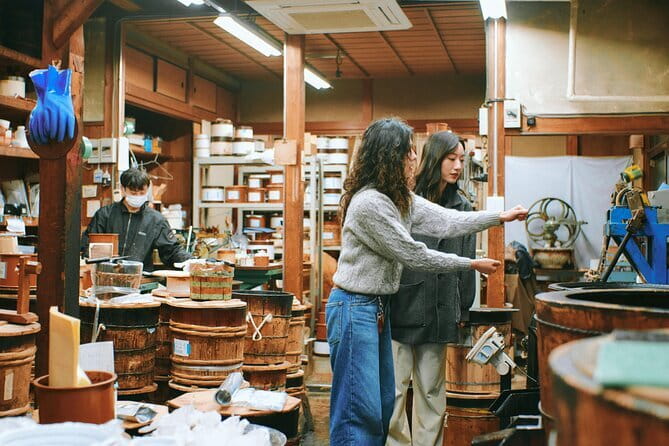
Urushi lacquer comes from the sap of the Japanese lacquer tree. In this experience, you don’t just get the headline definition. The guide explains the process from collection through refinement until the lacquer can be used by craftsmen.
That “until it can be used” piece is where this tour earns its value. It’s easy to think the craft is simply about painting an object. In reality, making lacquer usable takes care and preparation, and that’s what the tour highlights. You’ll see well-kept secrets related to refining and coloring lacquer for local craftsmen. The exact chemistry of the material isn’t spelled out in the info you provided, so don’t expect a scientific lecture. Instead, expect a craft-focused walkthrough—how the material gets prepared so artisans can build durable work.
One detail I really like is the scale claim: Tsutsumi Asakichi refines over 70% of Japan’s domestic urushi lacquer. That’s not just marketing fluff. It means you’re seeing a production mindset, not a one-off hobby operation. The tour feels grounded because the factory is central to what lacquer artists across Japan rely on.
You also get context for why this factory still matters today. Tsutsumi Asakichi Urushi was founded in 1909, and the company saw a decline in traditional lacquer production and use through the 20th century. The current 4th generation owner is working to bring urushi back into everyday life—promoting safe use of high-quality lacquer not only for traditional goods, but also for modern items.
This is the kind of story that changes how you shop. If you’ve ever bought a lacquer item and wondered how it stays glossy for years, this tour gives you respect for the material itself—not just the final look.
The Store Stop: Seeing Tools and Materials Before You Touch Anything

Before you go into the factory spaces, you start in the shop area at Und. This is more useful than it sounds. Lacquerware artisans don’t work only with an artist’s eye. They work with tools, materials, and know-how that takes years to refine.
In the store section, you’ll get a sense of the ecosystem around lacquer work: items and tools for artists. That sets you up to understand what you’re about to see in the factory tour. You’re not arriving cold. You’re already primed to connect the explanation to the reality in front of you.
This also helps you manage expectations. Some craft tours end up being mostly talk, with a thin hands-on moment. Here, the hands-on part is built into the program right after the factory viewing. When you walk from the shop into the workshop floor later, you’ll know what role the lacquer plays in the finished chopsticks.
A practical note: because this is a working craft environment, you should treat the day like you might get a little messy. That links to the later clothing reminder—wear clothes you’re fine getting dirty. You don’t need to show up wearing painter clothes, but you should avoid your nicest shoes and your most delicate outfit.
The Factory Tour: From Sap Collection to Finished Lacquer
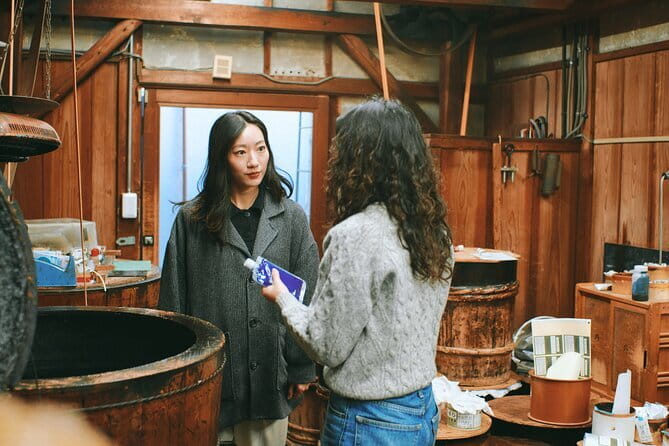
The core of the experience is the factory tour itself, where your guide explains the whole workflow. You’ll learn about collecting sap from the Japanese lacquer tree and the refinement that follows. You’ll also see parts of the process tied to refining and coloring lacquer for local craftsmen.
What I find valuable here is the sequencing. The guide doesn’t just drop facts. The tour flows in a way that helps you understand why lacquer can’t be treated like ordinary paint. You need a material that’s prepared properly, and you need an understanding of what craftsmen need it to do.
You’ll walk through areas connected to refined production, and you’ll pick up subtle ideas about why urushi lacquer has such a reputation. A lot of crafts feel “traditional” in a way that’s frozen in time. This one feels traditional and functional. The factory’s focus on high-quality lacquer for craftsmen across Japan shows that the process remains relevant.
There’s also a human thread. Tsutsumi Asakichi Urushi’s mission today is about restoring urushi’s presence beyond heritage pieces—encouraging safer, better use in modern goods too. Even if you don’t speak Japanese, you’ll feel this shift in the way the tour frames lacquer as an ongoing craft, not a dead practice.
That framing matters if you’re choosing between craft tours. If you want a souvenir factory stop, skip this. If you want a production-oriented craft story with a real payoff at the end, this delivers.
The Top-Floor Chopstick Workshop and Fuki-Urushi Application
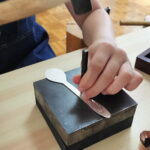
This is the part most people will remember. After the factory tour, you go to the workshop area on the top floor. There, you apply lacquer on a pair of chopsticks using the traditional fuki-urushi technique.
The big advantage here is that the activity is short enough to stay fun, but hands-on enough to feel like you did something real. You’re not just watching someone do one step. You’re actively applying lacquer as part of the experience.
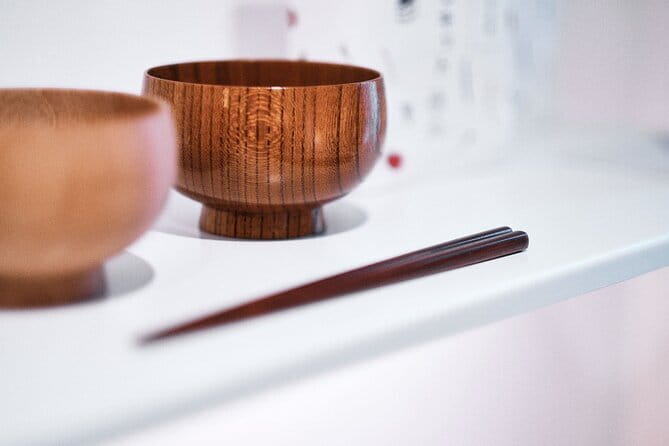
You’ll also take the chopsticks home as a present and a memory from the factory visit. That matters more than it might sound. A lot of craft demos give you a photo and a basic shop bag. This gives you an object that connects directly to the process you just learned.
What to prepare for during the workshop:
- Expect a controlled, step-by-step instruction from your guide.
- Plan on slow, careful work—lacquer isn’t something you rush.
- Wear clothing that can handle a little mess, since the tour itself flags that you may get dirty.
If you’re the type who likes making, this is the moment where craft becomes personal. If you’re not a maker, it still works because the guide handles the tricky parts conceptually and you handle the application.
One more reason I like this workshop: it’s tied to a practical everyday use item. Chopsticks are familiar. Urushi is not. When you combine the two, you understand the mission of bringing lacquer into everyday life.
Price, Timing, and Small-Group Value You Can Actually Judge
At $97.55 per person for about 90 minutes, this isn’t a budget activity. But it also isn’t a long, complicated tour that eats half your day. You’re paying for three things that overlap less often than you’d think:
1) a guided factory tour focused on urushi production,
2) access to a workshop space,
3) a hands-on lacquer application that ends with you taking an object home.
The guide is included, and the tour includes both store and factory time. You also get the application of lacquer to a pair of chopsticks. If you’ve ever noticed how craft tours often charge extra for the “making” portion, it’s nice that the core hands-on moment is built in.
It’s also a small group by design: maximum 5 travelers. That makes the price easier to justify because you’re more likely to get answers to questions and not spend the entire time listening to a crowd.
Logistics are fairly light. There’s no private transportation included, so you’ll want to get yourself to the meeting point. The good news is that it’s near public transportation, and the central Kyoto setting means you can pair it with nearby sights.
Start time is 10:00 am. If you’re building a day around this, arrive a little early so you can check your bearings calmly and not rush into the workshop with a late start.
One consideration: the price is listed as non-refundable under the rules you provided, so think of it as a planned slot, not a casual maybe.
Who This Tour Fits Best (and When to Skip It)
This tour is a strong match if you want an authentic craft experience that’s hands-on, but still structured. You’ll likely enjoy it most if you:
- like traditional Japanese crafts but want more than a quick demo,
- enjoy materials and process (sap, refinement, coloring), not just finished objects,
- want a take-home item created during the tour,
- prefer English guidance and smaller groups.
It may be less ideal if you have tight clothing restrictions or you hate getting a bit messy. The tour explicitly asks you to wear clothes suitable for getting dirty, and there’s no large luggage storage. If you’re traveling with a bulky suitcase and you can’t comfortably stash it elsewhere, plan your day around that reality.
Also consider your time style. At 90 minutes, it won’t eat your whole day. But it also won’t replace a big sightseeing block. If you want a full day of walking Kyoto temples, this works best as a side anchor on a craft-focused morning.
Booking Notes That Actually Matter
A few details help you avoid last-minute surprises.
- The tour requires a minimum of 2 participants to operate. If that minimum isn’t met, it may be canceled by the day before, with either a different date/experience offered or a full refund.
- The tour is conducted entirely in English.
- The group size is limited to a maximum of 5 travelers.
- The provider reserves the right to cancel due to weather or unforeseen circumstances.
Also, the experience is marked non-refundable and cannot be changed for any reason. That makes it a good choice when your Kyoto plans are firm.
Finally, confirmation is received at booking time, and the tour uses a mobile ticket.
Should You Book This Kyoto Urushi and Chopstick Tour?
If your goal is to see how Japanese lacquer is made, not just buy lacquer, I’d book it. The combination of factory process (sap collection and refinement), a small group English guide, and a top-floor workshop where you actually apply lacquer to chopsticks is a strong package for $97.55.
Skip it only if getting dirty clothing is a dealbreaker, you need large luggage storage on-site, or you’re looking for a longer, temple-style Kyoto day. Otherwise, this is the kind of experience that gives you both context and a take-home object—and that mix is rare.
FAQ
What is the duration of the Kyoto Urushi Lacquer Factory Tour and Chopstick Experience?
It takes about 1 hour 30 minutes.
Where does the tour take place?
The meeting point is Tsutsumi Asakichi Urushi Japan, 600-8098 Kyoto, Shimogyo Ward, Inarichō, 540番地. The tour ends back at the meeting point.
What time does the tour start?
The start time is 10:00 am.
Is the tour conducted in English?
Yes. The tour is conducted entirely in English.
How many people are in the group?
The maximum group size is 5 travelers.
Do I take the chopsticks home?
Yes. You will apply lacquer to a pair of chopsticks and take them with you as a present and memory from the factory visit.
What should I wear?
Wear clothes suitable for getting dirty, since you will apply lacquer.
Is luggage storage available?
No large luggage storage is available.
Is transportation included?
Private transportation is not included.
What happens if the minimum number of participants is not met?
The tour requires a minimum of 2 participants to operate. If it’s canceled because the minimum isn’t met, you’ll be offered a different date/experience or a full refund.
Is the experience refundable if I cancel?
No. It is non-refundable and cannot be changed for any reason.