REVIEW · KYOTO
Kyoto Higashiyama Walking Private Tour
Book on Viator →Operated by Oh! Ohkini Tours · Bookable on Viator
Kyoto feels personal on foot. This private Higashiyama walking tour strings together Gion streets, shrines, and temple views in about 3 km, with stone steps and gentle slopes along the way, plus a local guide who calls out what to notice.
I love the small group size (up to 6), because it stays relaxed and you can ask questions. I also love how the route mixes big icons with quieter lanes like Ishibe-koji, so the walk feels like Kyoto, not a checklist.
One thing to think about: there’s no hotel pickup, and the pace includes climbing stone steps. If you want totally flat walking only, this tour may feel more active than you expect.
In This Review
- Key moments worth planning for
- Why Higashiyama on foot beats the checklist
- Meeting at Minamiza Theater and the smooth start
- Gion’s Minamiza Theater and Hanamikoji: where culture meets street life
- Yasaka Shrine: vermilion gates and how locals pray
- Ishibe-koji and Nene no Michi: the calmer Kyoto lanes
- A quiet Yasaka Pagoda photo viewpoint
- Sannenzaka’s slope and the market-energy approach to Kiyomizu-dera
- Kiyomizu-dera: the UNESCO stage and panoramic views
- What the local guide adds beyond the landmarks
- Price and logistics: is $52.03 for 3 hours good value?
- Who this private Higashiyama walk is best for
- Should you book the Kyoto Higashiyama Walking Private Tour?
- FAQ
- How long is the Kyoto Higashiyama Walking Private Tour?
- How far do you walk?
- What group size is this private tour?
- Where is the meeting point?
- Where does the tour end?
- What sights are included?
- Is food and drink included?
- Is transportation or hotel pickup included?
- FAQ
- Can I get a full refund if I cancel?
- What fitness level do I need?
- Do I get a ticket on my phone?
- Is the tour only for my group?
- What language is the guide?
- How far in advance should I book?
- Is there shopping during the tour?
- Is the route mostly walking?
Key moments worth planning for
- Minamiza Theater at Gion’s edge: a quick look at one of Japan’s oldest kabuki theaters and why it matters in Kyoto culture.
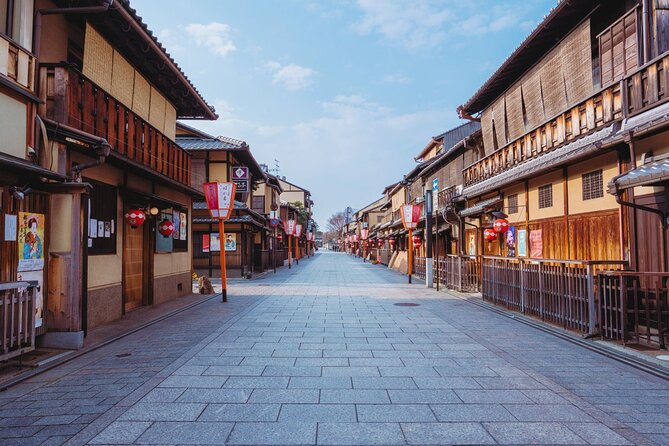
- Hanamikoji Street strolling: preserved teahouses on a classic Gion lane, with a chance to spot geisha or maiko if the timing works.
- Yasaka Shrine with vermilion gates: learn how locals pray for good fortune and protection.
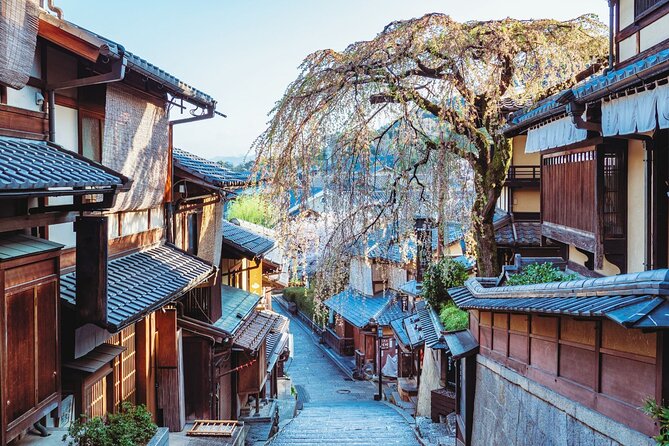
- Ishibe-koji stone alley photos: a narrow, preserved pocket of old Kyoto that feels calmer than the main streets.
- Yasaka Pagoda viewpoint: a quiet photo stop with a five-story wooden pagoda framed by traditional townhouses.
- Kiyomizu-dera’s stage and city views: the UNESCO highlight, with panoramic viewpoints from the wooden stage.
Why Higashiyama on foot beats the checklist
Higashiyama rewards slow walking. You get the rhythm of neighborhoods—quiet side streets, gradual climbs, and temple-city scenery—without the stress of trying to coordinate multiple routes on your own.
What makes this tour work well is that it’s designed as a human-scale walk. About 3 km in roughly 3 hours means you’re not racing, and the guide can point out details that are easy to miss when you’re just following signs.
Also, you’re not walking blind. My guide Akari had the kind of local storytelling that makes landmarks feel less like photos and more like places with daily meaning. I especially liked how her guidance kept the walk moving while still leaving space to pause for photos.
You can also read our reviews of more walking tours in Kyoto


Meeting at Minamiza Theater and the smooth start
You start at Minamiza Theater, right where Gion begins to take over the streets. The exact address is: Minamiza Theater, 松竹南座 2F西ロビ, Kyoto (Higashiyama Ward, Nakanochō). It’s an easy anchor point because it’s a recognizable landmark and it puts you right into the Higashiyama mood from minute one.
You’ll also have a mobile ticket, which is handy. No hunting for paper while your phone buzzes with route info and payment reminders.
Since this is a walking tour, plan your own way to the meeting point. There’s no hotel pickup, so you’ll want to arrive early enough to feel unhurried before the group starts.
Gion’s Minamiza Theater and Hanamikoji: where culture meets street life
The first stop is a quick look at Minamiza Theater, one of Japan’s oldest kabuki theaters, positioned at the entrance to Gion. Even if you’re not a theatre person, it’s a strong opening. Kabuki has deep roots in Japanese performance, and the location gives you a sense of how Kyoto’s arts culture shows up right on the street.
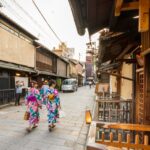
From there, you stroll down Hanamikoji Street. This is the preserved lane in Gion lined with traditional teahouses. The vibe is classic Kyoto: narrower street feel, old-style architecture, and lots of opportunities to slow down and look up.
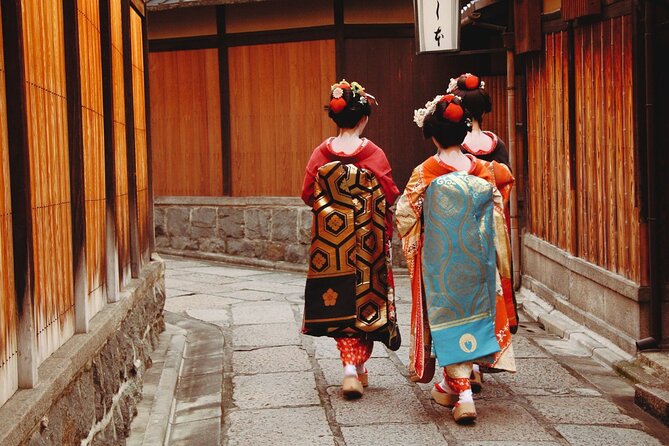
If you’re lucky, you might spot geisha or maiko heading to an appointment. Timing is never guaranteed on a walk like this, but having a guide helps you avoid staring rudely and instead watch from the right angles and distances.
Yasaka Shrine: vermilion gates and how locals pray
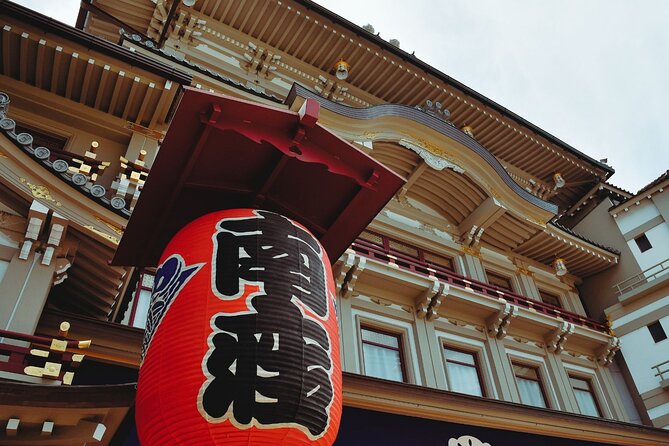
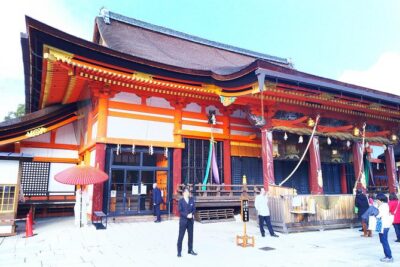
Yasaka Shrine is one of Kyoto’s key Shinto shrines, and it anchors the middle of the walking route. You’ll see the vibrant vermilion gates and feel the shift from street theatre to spiritual space.
What I liked most was learning how locals think about protection and good fortune. It’s not just a place to photograph; it’s a place where people come with real intentions. That perspective makes your visit feel more grounded.
The shrine area can also feel busy depending on timing, so it helps to have a guide managing pacing. You’ll get time to look without feeling like you’re constantly squeezed into other people’s lines.
Ishibe-koji and Nene no Michi: the calmer Kyoto lanes
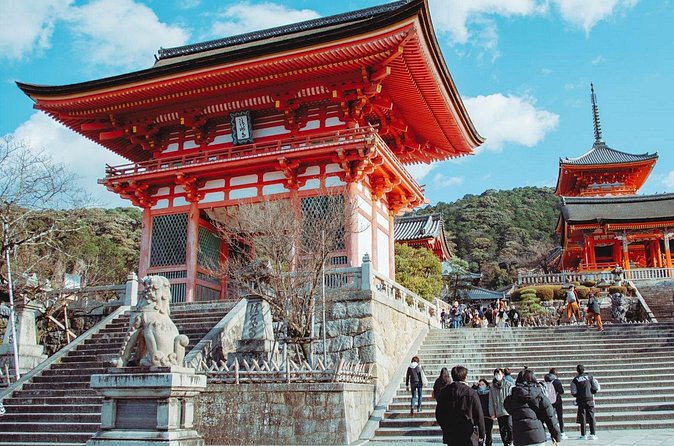
After the larger landmark energy, the tour moves into smaller, quieter spaces. First up is Ishibe-koji, a narrow, stone-paved alley that feels like a pocket of older Kyoto. Buildings along the lane are beautifully preserved, and it’s genuinely suited for photos because the street is tight enough to frame the architecture without looking chaotic.
Next is Nene no Michi, a scenic path named after Nene, the beloved wife of samurai Toyotomi Hideyoshi. This is the kind of detail a guide makes meaningful. Without context, you’d treat it like another pedestrian path. With it, you’re walking through a route tied to historical naming and memory.
A practical note: these lanes are still part of a walking tour with gentle climbs and steps. Wear shoes that can handle stone underfoot without making you think about every step.
You can also read our reviews of more private tours in Kyoto


A quiet Yasaka Pagoda photo viewpoint
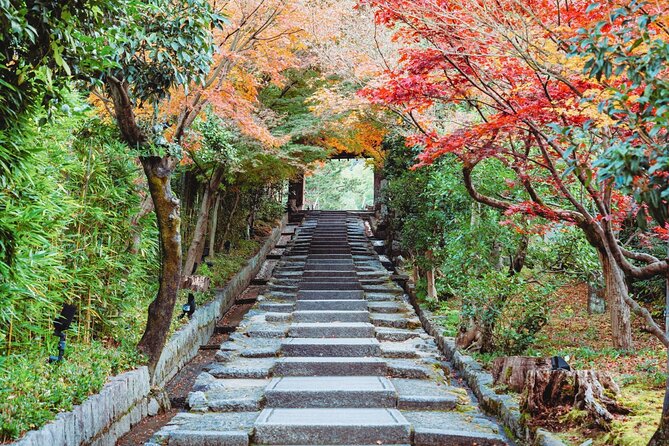
This tour includes a photo stop at a viewpoint of Yasaka Pagoda. The pagoda is a five-story wooden landmark, and the view is framed by traditional townhouses nearby.
I liked this stop because it acts like a breather before the big final payoff. You get a calmer moment to compose photos and take in the layers of the neighborhood, rather than spending the entire tour looking straight up at signage.
If you care about photos, this is one of the points where it pays to slow down. A guide can also help you choose a spot where you’re not constantly blocking other people’s angles.
Sannenzaka’s slope and the market-energy approach to Kiyomizu-dera
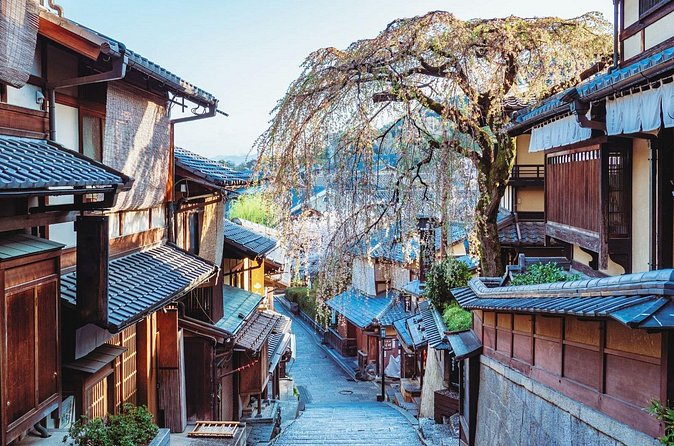
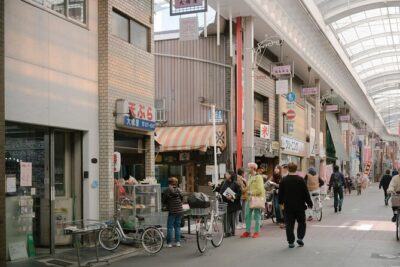
From the pagoda viewpoint, the walk leads you down Sannenzaka. This is a gently sloping stone path lined with shops and cafés, so it blends history with everyday commerce.
What makes Sannenzaka work for a walking tour is the transition feeling. You’re moving from quiet corners into the more lively local street world. Even if you don’t buy anything right away, it’s a good place to get your bearings for later shopping and snacks.
You’ll want to keep in mind that food and drinks aren’t included. So treat Sannenzaka as an area to graze, not a meal included with the tour. Your guide’s suggestions can be useful here, especially if you want a stop that feels local rather than tourist-only.
Kiyomizu-dera: the UNESCO stage and panoramic views
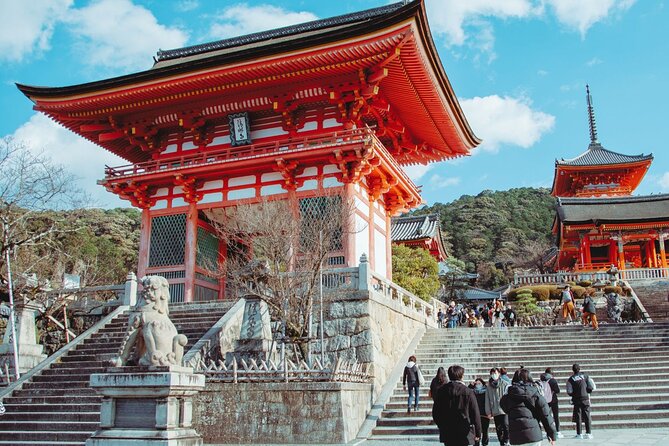
The final main highlight is Kiyomizu-dera Temple, a UNESCO World Heritage site. This is the big moment in Higashiyama, and you’ll get to see the wooden stage overlooking Kyoto.
The temple’s spiritual significance is part of the experience, but the reason people talk about it is the view. From the stage area, you get that panoramic feel over the cityscape, with a sense of scale that’s hard to recreate from street level.
Expect crowds at the major viewpoints, especially at popular times. But with a guided walk, you can usually plan your viewing moment rather than getting stuck in one spot while others move on.
Also, remember the walking portion. You’re finishing a route that includes stone steps earlier in the tour, so give yourself permission to move slowly near the temple grounds and not rush the stage.
What the local guide adds beyond the landmarks
Landmarks are the headline, but the guide is the story engine.
In my experience with Akari, the most practical value came from the side recommendations. She didn’t just name places; she gave tips for what to look for and how to fit it into your walking flow after the tour.
The tour includes local recommendations for where to eat, shop, and explore after you finish. That matters because Higashiyama can be overwhelming if you’re trying to decide everything on your own after a full morning or afternoon of walking.
If you want a tour where someone helps you plan your next step, this one does that well.
Price and logistics: is $52.03 for 3 hours good value?
At $52.03 per person for about 3 hours, this tour is priced for a guided experience with real site coverage, not a rushed bus-style overview. You’re paying for an English-speaking local guide, access to the main stops (including Kiyomizu-dera, Yasaka Shrine, and Sannenzaka), and a small-group setup limited to 6 guests.
The value really depends on how you travel. If you like walking, want context for what you’re seeing, and don’t mind paying a bit for convenience and expertise, it’s a solid deal.
If you prefer to wander completely on your own and already have a plan for the major sights, you might spend less without a guide. But you’ll likely trade away the pacing and the interpretation that turns the route into a smoother experience.
Logistically, plan for a walking start and finish. No hotel pickup or drop-off means you’ll handle getting to Minamiza Theater yourself, then end near Kiyomizu-dera with a scenic city-view spot.
Who this private Higashiyama walk is best for
This tour fits best if you want a guided walk through classic Kyoto neighborhoods at an easy-to-manage pace. Because it’s private and capped at 6 guests, it works well for couples, small groups, and anyone who hates feeling like one more face in a larger crowd.
I’d especially recommend it if:
- you want major sights plus quieter lanes in one outing
- you care about respectful cultural context, not just photos
- you want local help planning food and shopping right after
One caution: it’s listed for travelers with moderate physical fitness. If you’re okay with stone steps and gentle slopes, you’ll be fine. If you need fully flat walking, you may want a different style of tour.
Should you book the Kyoto Higashiyama Walking Private Tour?
I’d book this if you want your first Higashiyama experience to feel guided but not stiff. The mix of Gion’s Hanamikoji atmosphere, Yasaka Shrine’s spiritual presence, stone alleys like Ishibe-koji, and the payoff at Kiyomizu-dera gives you a full, satisfying arc in about 3 hours.
I would skip it only if you strongly dislike walking uphill or you want a tour where everything is done for you from the hotel door. Since there’s no pickup and the route includes steps, it’s best for travelers who can handle getting yourself to Minamiza Theater and walking the whole loop at a comfortable pace.
FAQ
How long is the Kyoto Higashiyama Walking Private Tour?
The tour lasts about 3 hours.
How far do you walk?
The walk is about 3 km.
What group size is this private tour?
It’s limited to 6 guests.
Where is the meeting point?
The tour starts at Minamiza Theater in Higashiyama Ward, Kyoto.
Where does the tour end?
The tour ends at a scenic spot near Kiyomizu-dera Temple with a beautiful city view.
What sights are included?
You’ll visit key areas including Kiyomizu-dera Temple, Yasaka Shrine, and Sannenzaka, along with stops such as Minamiza Theater, Hanamikoji Street, Ishibe-koji, Nene no Michi, and a Yasaka Pagoda viewpoint.
Is food and drink included?
No. Food and drinks are not included.
Is transportation or hotel pickup included?
No. There is no hotel pickup and no transportation to or from the meeting point.
FAQ
Can I get a full refund if I cancel?
Yes. You can cancel up to 24 hours in advance for a full refund.
What fitness level do I need?
You should have a moderate physical fitness level.
Do I get a ticket on my phone?
Yes. The tour uses a mobile ticket.
Is the tour only for my group?
Yes. It’s private, so only your group participates.
What language is the guide?
The guide is English-speaking.
How far in advance should I book?
On average, it’s booked 29 days in advance.
Is there shopping during the tour?
Sannenzaka has shops and cafés, and your guide will also share local tips on where to shop after the tour.
Is the route mostly walking?
Yes. It’s a walking tour with no hotel pickup or drop-off.