REVIEW · KYOTO
Kyoto: Arashiyama Bamboo, Temple, Matcha, Monkeys & secret spots
Book on Viator →Operated by Japan Tour Adventure · Bookable on Viator
Bamboo is only the start here. This Kyoto small-group walk (max 12) strings together the Arashiyama Bamboo Forest area, a private garden tea moment with matcha, and the monkey viewpoint, so you see the whole story instead of just a photo stop.
I like how the tour stays human-sized and steady on your feet, and how guides keep you moving without feeling rushed. I also love that you get scheduled entry to major sights—Okochi Sanso Garden, Tenryu-ji, and Monkey Park—so you can spend your energy actually looking, not figuring out tickets.
One thing to plan for: it is a true walking tour, and the end of the trip involves a steep uphill hike to the monkeys. If you go in hot weather or with limited mobility, bring your best shoes and pace yourself early.
In This Review
- Key points worth knowing before you go
- Why Arashiyama bamboo needs a plan
- The 5-hour walking style: what it feels like
- Stop 1: Arashiyama Park and the early bamboo view
- Stop 2: Okochi Sanso Garden matcha in a former tea house
- Stop 3: Tenryu-ji Temple’s pond-and-koi moments
- Stop 4: Arashiyama shopping street time with translation help
- Stop 5: Togetsukyo Bridge for river-view photos
- Stop 6: Monkey Park Iwatayama hike and viewpoint payoff
- Price and value: what you’re really paying for
- When to go and what to pack
- Who this Arashiyama tour suits best
- Should you book this Arashiyama tour?
- FAQ
- How long is the Arashiyama walking tour?
- Is this tour mostly walking or by bus?
- What’s included in the price?
- What is not included?
- Where does the tour start and where does it end?
- Do I need good walking shoes?
- What if the weather is bad?
- What if I’m traveling solo?
Key points worth knowing before you go
- Bamboo plus the area around it: You go beyond the famous grove to gardens, temple grounds, and the river-view bridge.
- Okochi Sanso matcha inside a former tea house: A warm pause that feels like a reset button in the middle of a walk.
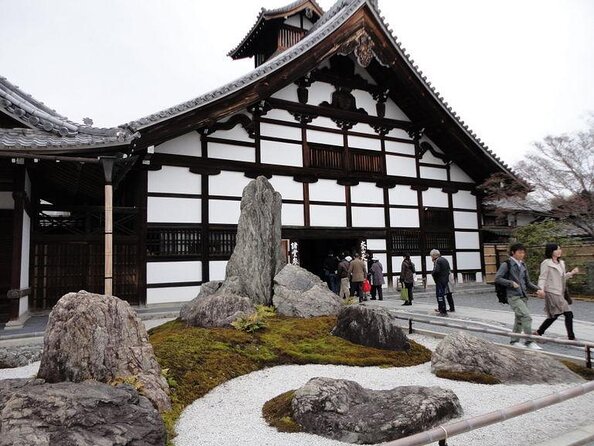
- Tenryu-ji with pond-and-koi time: The stop is short, but it is focused on the temple scenes people actually come to see.
- Small group, steady rhythm: You get help with questions and shopping stops without being swallowed by big crowds.
- Monkey Park hike at the end: The payoff is great views, but it is uphill (15–20 minutes) with steep sections.
Why Arashiyama bamboo needs a plan
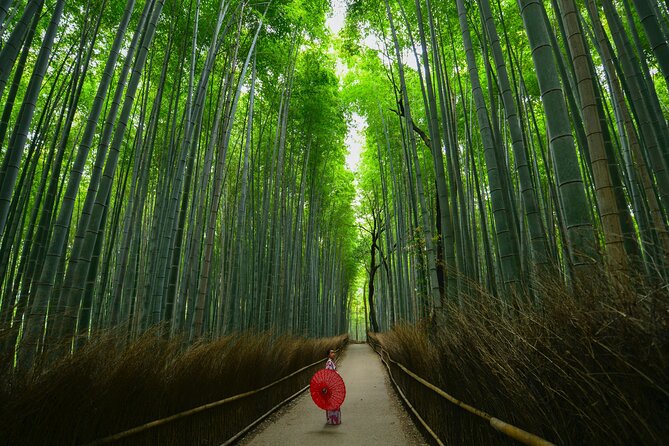
Arashiyama is one of those Kyoto areas where the bamboo forest steals the show. But the best part is what sits just beyond it: gardens that feel designed for quiet, temples set into the landscape, and river views that make the whole neighborhood click.
This tour is built for that bigger picture. You start in the Kameyama area and work your way through the most important nearby landmarks, including Tenryu-ji and the iconic Togetsukyo Bridge. Then you finish with the climb to Monkey Park Iwatayama, where you get the classic Kyoto panorama with a lot of monkey energy.
One underrated value: having a guide helps you understand what you are seeing while you are seeing it. Based on guide feedback from past groups (names like Toru, Karim, and Francis come up often), the storytelling tends to be the kind that makes temples and gardens feel less like a checklist and more like places with purpose.
You can also read our reviews of more tours and experiences in Kyoto.



The 5-hour walking style: what it feels like
Plan on about 5 hours on foot, with some stops that are intentionally short. This is not a bus-and-dropoff day. You’ll be walking most of the time, and your pace depends on the group, the weather, and how fast you want to linger at each photo moment.
That steady pace is why the small group size matters. With a maximum of 12 people, you can ask questions without shouting, and the guide can actually keep an eye on timing (especially when you are heading toward the bridge and later the monkey viewpoint).
Logistics matter here:
- You need to arrive at the meeting point 15 minutes early, because the tour cannot wait for late guests.
- The tour ends at Monkey Park Iwatayama, not back at the first stop.
- If you’re the type who likes to pause often, factor in extra time inside gardens and temple areas.
Stop 1: Arashiyama Park and the early bamboo view
You begin at Arashiyama Park in the Kameyama area. The first stretch is your warm-up: you’ll walk into the bamboo forest zone and push up toward the park viewpoint. The idea is to help you get oriented and see bamboo from a more interesting angle than just standing at street level.
This first stop is also practical. It sets the tone for your day. If you’ve ever been to the bamboo area when it is packed, you already know the challenge: it becomes hard to slow down. Starting early in the sequence helps you transition from crowded-looking to calmer-looking, even if you still share space with other visitors.
A key tip: use this portion to take your “baseline” photos, then later you can choose better angles without starting over.
Stop 2: Okochi Sanso Garden matcha in a former tea house
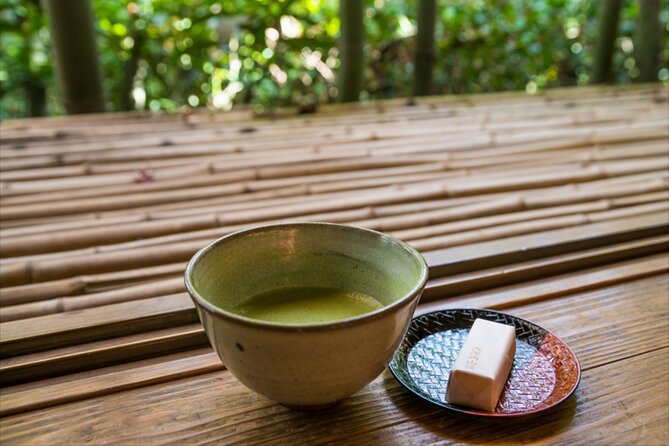
Next is Okochi Sanso Garden, and this is where the tour adds that welcome change of pace. You get about 45 minutes here, including a chance to sit down for a warming bowl of matcha served in a former tea house that now works as a rest area.
Why this stop is so worth your time: gardens in Kyoto reward slowness. You can’t really rush them and still appreciate the design—paths, views, and quiet corners that make you feel like you stepped into another tempo. The matcha break also gives you something more than a drink. It gives you a reason to stop moving.
In past guides’ styles (Francis and others are praised for patient pacing), this is often the part where people look up from their phones and start noticing details again.
Stop 3: Tenryu-ji Temple’s pond-and-koi moments
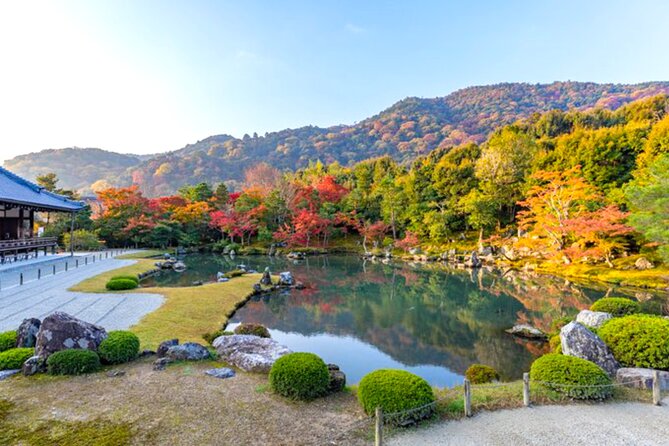
From Okochi Sanso you move to Tenryu-ji Temple for about 45 minutes. Tenryu-ji is one of those Kyoto names that holds up, even if you do not know much before you arrive. Here, the stop is built around what you can see both indoors and outdoors.
A highlight is the temple pond and its koi fish. Even in short visits, that pond scene tends to anchor everything else: the architecture framing the water, the way the grounds open up, and the calm that surrounds the main sights.
The guide’s role matters at this stop. If you want to understand what you are looking at (temple layouts, garden features, and why the placement of things feels intentional), the structure of a guided visit can prevent you from zoning out and only half-processing the scenery.

Stop 4: Arashiyama shopping street time with translation help
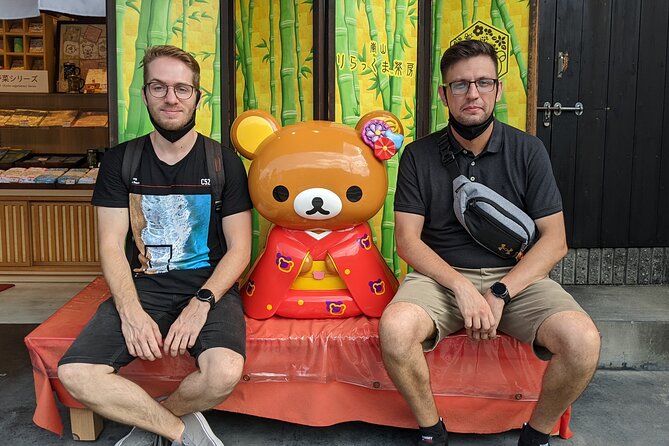
After the temple, you get about 1 hour at Arashiyama’s shopping street. This is not a rushed “walk through to buy souvenirs” moment. The tour is more flexible here: you can stop at the shops you actually want, and the guide provides shopping and translation assistance.
This matters for two reasons:
- Small shops often have the best food and crafts, but menus and labels can be tricky.
- Translation help can save time, so you are not spending your limited Kyoto hours turning your phone into a dictionary.
If you’re thinking about snacks, this is also a logical moment to do it. And from guide comments in earlier experiences (people mentioning local food tips), you’ll usually leave with smarter ideas than random impulse buys.
Stop 5: Togetsukyo Bridge for river-view photos
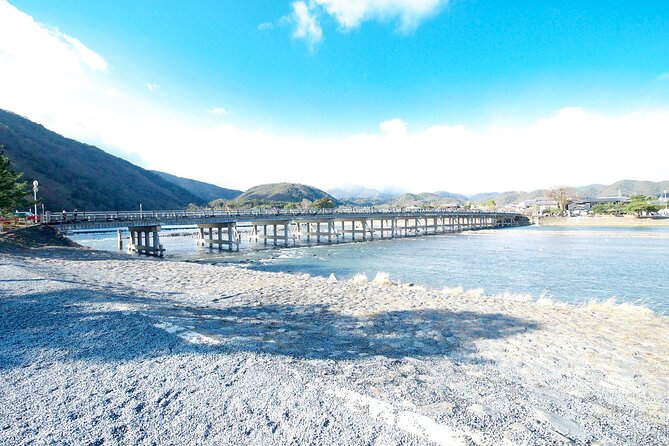
Then comes Togetsukyo Bridge, one of the most iconic picture points in the area. You get about 15 minutes, which is enough to get a bridge shot plus a view down toward the Katsura River.
A small warning: 15 minutes can feel like a blink if you want to change angles, but it’s still a good plan. You’re walking a lot already. This is a timed window so you don’t lose the rest of the day to photos.
If you want more control over your photos, try:
- one wide shot first,
- then move to a slightly different angle,
- then decide if you want a close-up detail shot or if you’re done.
Stop 6: Monkey Park Iwatayama hike and viewpoint payoff
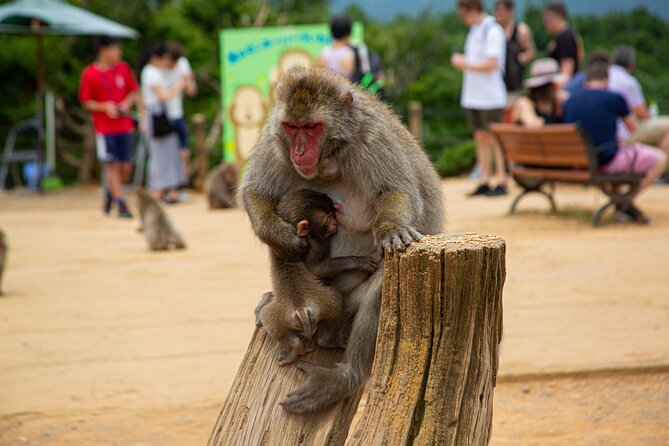
The day ends at Arashiyama Monkey Park Iwatayama. Before you get to the monkeys, you tackle a short hike (15–20 minutes) through a steep path. The tour information is clear about this, and the reviews back it up: it can be a real workout, especially in heat.
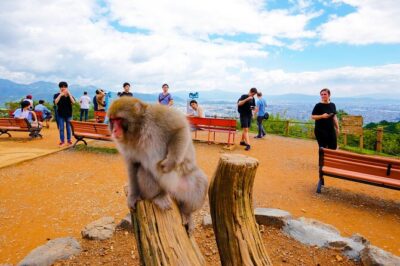
Once you reach the top, the view makes the effort make sense. This is the payoff moment—Kyoto scenery far below, and monkeys doing what monkeys do: moving, grooming, and occasionally ignoring everyone like they have an appointment elsewhere.
Two practical tips that genuinely help:
- Wear shoes with grip. The path is steep.
- Bring a small layer plan. If the day is hot, you might still want something for sun glare when you’re standing still at the viewpoint.
Is it for everyone? It is especially popular with families and kids because the monkeys are engaging even if you do not talk much about history. Still, because the climb is uphill, people who struggle with steep walking should think carefully before booking.
Price and value: what you’re really paying for
At $89.54 per person, this is not a bargain. But it also is not just “someone walking you around.”
Your money covers:
- the guide fee,
- entry to Okochi Sanso Garden,
- entry to Tenryu-ji,
- entry to Monkey Park Iwatayama,
- plus shopping/translation assistance.
You’re also buying time. Instead of spending your day on ticket lines, map chaos, and translation guesswork, the tour gives you a route with included entries and built-in context while you’re walking.
What is not included is also important: lunch and shopping/souvenirs are on you. So if you like to snack or buy small gifts, plan a budget on top of the tour price.
When to go and what to pack
This part depends on your comfort, not just the calendar.
Heat is the biggest factor. Several people flag that the hike to the monkey park can be tough in summer-style temperatures. If you go in warm months, I’d treat the climb as a workout and plan your pace from the start of the tour.
If weather turns iffy, the experience is described as requiring good weather. That usually means you’ll want to keep an eye on forecasts and be ready for plan changes if conditions are poor.
Packing basics that match the reality of the walk:
- comfortable shoes with good grip,
- a weather-ready layer (rain protection if needed),
- sunscreen if you’re visiting in sunny months,
- and something small to drink during the day.
Who this Arashiyama tour suits best
This tour fits best if you want a structured walk through the Arashiyama highlights without spending your brain on logistics.
It’s a good choice if you:
- want more than bamboo-only photos,
- like gardens and temple sights but want help understanding what you’re seeing,
- enjoy a small group pace where you can ask questions,
- are okay with walking a lot and ending with an uphill climb.
It may be less ideal if you:
- prefer a lighter, mostly flat sightseeing day,
- do not feel comfortable on steep paths,
- hate changing plans due to weather.
Should you book this Arashiyama tour?
If your goal is to see Arashiyama as a whole neighborhood—bamboo, matcha in a garden retreat, Tenryu-ji’s pond scenes, bridge views, and the monkey park—then yes, I think this is a strong way to do it. The price makes sense when you factor in the included temple and garden entries plus translation support, and the small group size keeps the experience from feeling like cattle herding.
Book it if you can handle a steep end-of-tour hike and you want a day that mixes calm garden time with Kyoto’s most famous photo stops. Skip it (or be cautious) if your walking comfort is limited, because the monkey park climb is the biggest physical demand of the whole route.
FAQ
How long is the Arashiyama walking tour?
The tour is approximately 5 hours, with timing that can vary by around 30 minutes.
Is this tour mostly walking or by bus?
This is a walking tour, not a bus tour.
What’s included in the price?
The price includes the guide fee, Okochi Sanso entrance ticket, Tenryuji entrance ticket, Monkey Park entrance ticket, and shopping/translation assistance.
What is not included?
Shopping and souvenirs, and lunch are not included.
Where does the tour start and where does it end?
It starts at 18-12 Sagatenryūji Kurumamichichō, Ukyo Ward, Kyoto, 616-8373, Japan, and it officially ends at Arashiyama Monkey Park Iwatayama.
Do I need good walking shoes?
Yes. The access to the top of the Monkey Park requires a short hike (15–20 minutes) through a steep path, so comfortable shoes and reasonable physical condition are important.
What if the weather is bad?
The experience requires good weather. If it’s canceled due to poor weather, you’ll be offered a different date or a full refund.
What if I’m traveling solo?
Single travelers can book, but there is a 2 guests minimum rule for the tour to run. If it does not meet the minimum, the session might be canceled, and you’ll be notified with options for rescheduling or a full refund.