REVIEW · KYOTO
Kyoto Morning Tour from Kyoto or Osaka
Book on Viator →Operated by JTB Global Marketing & Travel Inc. · Bookable on Viator
Three Kyoto icons, in one morning.
This half-day route is a smart way to see UNESCO sites fast while staying comfortable on an air-conditioned bus. I especially like that entrance fees and transport between stops are folded into the price, so you’re not juggling tickets while time is ticking. The trade-off: the pace can feel rushed in crowded areas, and the Kyoto Imperial Palace may be swapped on days it’s closed.
You’ll start near Kyoto Station and end there too. That matters because it keeps the rest of your day simple—Kyoto is best when you can wander after you’ve got your bearings.
In This Review
- Quick highlights before you go
- The smart logic of a Kyoto morning highlights tour
- Getting to the bus: Kyoto Avanti meeting point and what the timing really means
- Stop 1: Nijo Castle—Tokugawa power, nightingale floors, and a focused 50 minutes
- Stop 2: Kinkakuji Golden Pavilion—gold architecture plus garden calm, with real crowd friction
- Stop 3: Kyoto Imperial Palace—what you see, and the closure swap that can change your day
- Bus comfort and group size: where value is real, and where it can be tight
- Guides make the difference: who you might get and what to look for
- Who this Kyoto morning tour is best for
- Should you book this tour?
- FAQ
- How long is the Kyoto Morning Tour?
- What does the price include?
- Is food and drinks included?
- Where do I meet the guide?
- Where does the tour end?
- Do I get hotel pick-up and drop-off?
- What happens if Kyoto Imperial Palace is closed?
- Can I cancel for a full refund?
Quick highlights before you go
- 4 hours 40 minutes of guided sightseeing, with a set trio of stops
- Nijo Castle, Kinkakuji, and the Imperial Palace area (with planned alternatives when closed)
- Admissions and transport included, plus a licensed English guide interpreter
- Air-conditioned vehicle rides between landmarks to save your energy
- Max group size of 40, so it’s not huge but can still get loud in bottlenecks
- Drop-off at Kyoto Station in front of Kyoto Avanti (near the Hachijo Exit)
The smart logic of a Kyoto morning highlights tour
Kyoto can overwhelm you fast. The big temples, the palaces, the gardens—each one deserves time. This tour’s logic is to bundle three of the most famous places into one morning so you can taste Kyoto even if you’re on a tight schedule.
You’re not just hopping between photo stops. You also get transport, entry tickets (for Nijo Castle and Kinkakuji), and an English-speaking licensed guide interpreter. That combination is what makes a half-day tour worth considering—especially if you’re new to the city or trying to avoid transit math.
Still, go in with open eyes about pace. Several recent guides have been praised for being organized and fun, but the structure is inherently “efficient.” If you want slow and quiet, you’ll probably feel the time pressure at at least one stop.
You can also read our reviews of more tours and experiences in Kyoto
Getting to the bus: Kyoto Avanti meeting point and what the timing really means
The tour starts and ends at Kyoto Avanti, at 31 Higashikujō Nishisannōchō in Minami Ward. You’ll be dropped in front of Kyoto Avanti, across from Kyoto Station’s Hachijo Exit, and that’s also where the tour ends.
Why this matters: Kyoto Station is a huge hub. It makes this tour easy to plug into the beginning or middle of your trip, especially if you’re coming from Osaka or moving hotels around. You don’t need a complicated plan for getting home after.
One more practical note: seats aren’t designated. That’s common on day tours, but it means you’ll want to be early enough to pick a spot you like (front tends to mean easier viewing and fewer distractions).
If you’re joining from Osaka: the extra info indicates an English-speaking assistant is involved on the outbound trip from Hotel Granvia Osaka to the Sunrise Tours desk in Kyoto Avanti B1F. It’s not “hotel pickup/drop-off” in the usual sense, so expect that you’ll still need to be at the meeting-area point that the tour uses.
Stop 1: Nijo Castle—Tokugawa power, nightingale floors, and a focused 50 minutes
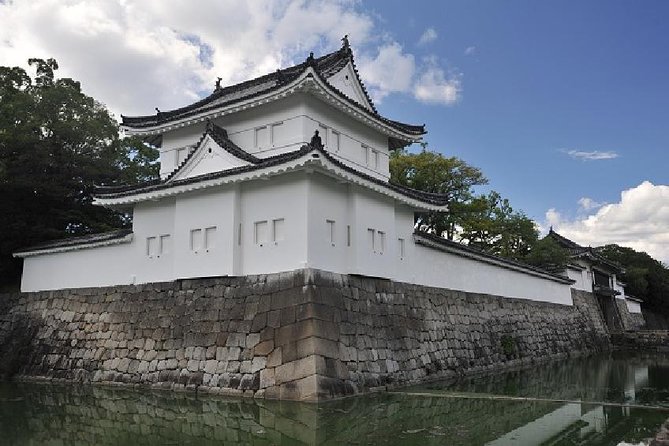
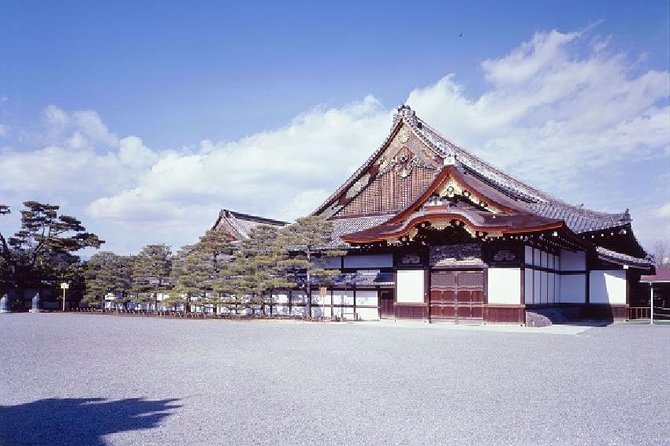
Nijo Castle is your first stop and the clock starts right away. You get about 50 minutes, and admission is included.
What makes Nijo special is the blend of political muscle and crafted details. Built on the orders of Tokugawa Ieyasu, the first shogun of the Tokugawa shogunate, the castle complex is known for multiple connected structures made with cypress wood. Inside, you’ll find a lot of decorative work—carvings and interiors highlighted in the program.
You’ll also notice how the tour tries to keep things efficient. Ninomaru Palace is described as a must-see for its elaborate carvings and décor. In practice, that means you’ll likely spend your time targeting the main interiors and key garden areas rather than drifting endlessly.
A drawback to expect: this is a timed stop, and castles can still involve steady walking and stair/threshold changes. If you’re carrying a bag, keep it light. If you’re wearing shoes that need a break-in period, now’s not the time.
Stop 2: Kinkakuji Golden Pavilion—gold architecture plus garden calm, with real crowd friction
Next comes Kinkakuji Temple, the famous Golden Pavilion. You get about 45 minutes, and admission is included.
Kinkakuji’s key visual is the pavilion itself. The wooden structure is covered in thin layers of pure gold, and it’s set beside a pond. That pond-front setting is a big part of why people love this temple—even when you’re surrounded by other visitors, the setting gives you a sense of symmetry and stillness.
The practical side: this stop can feel busy and slow because everyone is trying to experience the sightlines at the same time. One review noted that Kinkakuji has a one-way flow that includes a climb over uneven rocky steps. You should expect uneven footing and plan accordingly.
Audio is another real-world factor. In a couple of feedback examples, people said it was hard to hear the guide in crowded areas. The fix is simple: if you rely on audio for history, you may want to wear earplugs anyway (they reduce the ambient noise), and position yourself so you’re facing the guide when you can.
Stop 3: Kyoto Imperial Palace—what you see, and the closure swap that can change your day
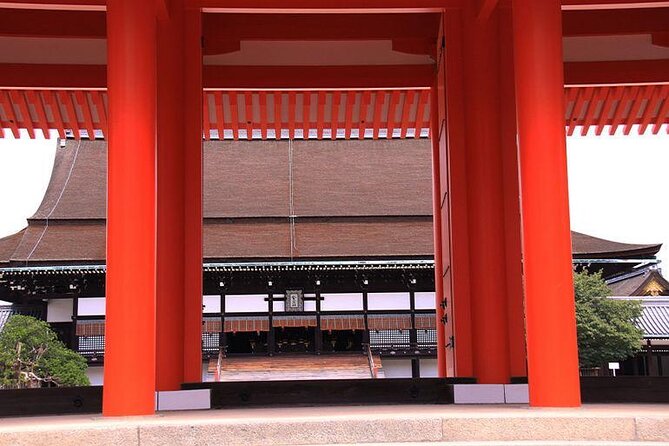
The third stop is the Kyoto Imperial Palace area, scheduled for about 40 minutes. The program says admission here is free.
This is the part of the itinerary where “wanting the palace” meets “calendar reality.” The palace served as the Emperor’s residence until the capital moved to Tokyo around 1868. Even when you’re not inside for a long stretch, the architectural simplicity and the history of imperial ceremonies are the point.
Here’s the key rule you need to understand: the palace is closed to visitors on Mondays (or the following day if Monday is a holiday) and on days when there is an Imperial Household Agency event. On those days, the tour visits Kitano Tenmangu Shrine instead. If the closed day falls on the 25th, the tour visits Nishi Hongan-ji Temple.
So, should you treat “Imperial Palace” as guaranteed? Not really. You should treat it as “the plan when open.” This is the tour’s main consideration, and it’s where disappointment can happen if it isn’t clear when you’re booking or expecting to walk through the palace grounds.
My advice: if your primary goal is the palace specifically, check the opening situation for your date before you book. If it’s closed, don’t treat the swap as a consolation prize—the shrine and temple alternatives still carry major Kyoto meaning, but they won’t satisfy the same “palace interior” desire.

Bus comfort and group size: where value is real, and where it can be tight
At $87.19 per person, this tour is priced for convenience: you’re paying for a guided route, transport, and admission fees in a single package. For a half-day that covers three major landmarks, the value is strongest when you’d otherwise be paying for separate tickets, taking taxis, and spending your first morning figuring out transit.
Comfort-wise, the vehicle is air-conditioned, which is a genuine win—especially in warmer months. And the group size caps at 40 travelers, which usually keeps it manageable. It’s not empty-quiet, though. Kyoto’s top sights draw crowds, and when everyone shows up at once, you’ll feel it.
The most common “watch-outs” in the feedback are about hearing and timing:
- The group can be crowded in narrow areas, making it hard to hear the guide clearly.
- Some people felt the stops were a bit rushed, meaning you get the big moments but not long lingering time.
There’s also one technical detail worth knowing: one review specifically said a microphone setup to personal headphones wasn’t used for their group. That doesn’t mean it never happens. But if you’re the type who needs audio clarity for stories and facts, build in the possibility that you’ll sometimes have to rely on watching and reading your own impressions more than listening.
Guides make the difference: who you might get and what to look for
This tour includes a National Government Licensed English Guide Interpreter, and the overall experience often depends on how smoothly that guide keeps the group moving while still making the history click.
In the feedback data, certain guide names stood out: Casey (often written as KC), Jun, Jessie, and Mr. Harada. The consistent praise pattern: organized pacing, engaging storytelling, and taking good care with questions and photos.
So here’s what you can do to get more out of any guide, regardless of who’s assigned:
- Be near the front or side when the crowd thickens.
- Ask quick questions during natural pauses (instead of during moving segments).
- When you hear a “this is the main thing” cue, prioritize that sightline. Your time is short by design.
Who this Kyoto morning tour is best for
This is a good fit if you:
- Want a structured introduction to Kyoto’s biggest icons in one morning
- Like having entry fees and transport included
- Prefer not to build your own route when you’re short on time
- Enjoy history through guided context rather than self-guided wandering
It may be a poor fit if you:
- Want slow, quiet temple time with minimal walking
- Are very sensitive to crowds and noise levels
- Need the Kyoto Imperial Palace specifically, without any closure risk
- Plan to rely on crisp audio for every fact (crowds can interfere, and audio setups can vary)
Should you book this tour?
I’d book this Kyoto morning highlights tour if your priority is efficiency plus a guided overview. The combination of Nijo Castle, Kinkakuji, and the Imperial Palace area (or its alternatives) gives you a strong “first chapter” of Kyoto, and the drop-off at Kyoto Station makes it easy to keep exploring right after.
I would hesitate only if Imperial Palace access is your make-or-break goal for the day. The tour has known swap rules for closures, and refunds aren’t offered for alternative destinations—so your best move is date-checking first.
If your schedule allows, this is also a great pairing with later, slower visits. Use the tour to get the big landmarks under your feet, then return on your own time to what pulled you in.
FAQ
How long is the Kyoto Morning Tour?
It’s about 4 hours 40 minutes.
What does the price include?
The price includes an English guide interpreter fee, admission fees, and transportation costs between stops.
Is food and drinks included?
No. Food and drinks are not included.
Where do I meet the guide?
You meet at Kyoto Avanti, 31 Higashikujō Nishisannōchō, Minami Ward, Kyoto, near Kyoto Station’s Hachijo Exit.
Where does the tour end?
You end in front of Kyoto Avanti (across from Kyoto Station Hachijo Exit).
Do I get hotel pick-up and drop-off?
Hotel pick-up and drop-off are not included. The additional info notes an English-speaking assistant for the outbound trip from Hotel Granvia Osaka to the Sunrise Tours desk in Kyoto Avanti B1F.
What happens if Kyoto Imperial Palace is closed?
If it’s closed to visitors (such as on Mondays, the following day if Monday is a holiday, or on Imperial Household Agency event days), the tour visits Kitano Tenmangu Shrine instead. If the closed day is the 25th, it visits Nishi Hongan-ji Temple.
Can I cancel for a full refund?
Yes. You can cancel up to 24 hours in advance for a full refund.