REVIEW · KYOTO
From Kyoto: Nara Guided Morning Tour
Book on GetYourGuide →Operated by Japan Panoramic Tours · Bookable on GetYourGuide
Nara in the morning hits different. This half-day plan packs Todaiji and the Great Buddha Hall, plus Nara Park deer time and Kasuga Taisha’s shrine atmosphere, all before the afternoon crowds. I especially like how it runs like a clean route: guided stops where you need context, then breathing room where you can just look and wander. The main drawback to plan for is the half-day ending in Nara, not back in Kyoto, so you’ll need your own plan for the return.
On the ground, you’ll get a professional English-speaking guide, and audio headsets with language options like Spanish, French, German, Italian, Portuguese, and Ukrainian. Expect a smooth start from Tully’s Coffee at Kyoto Avanti and a comfortable air-conditioned coach with free Wi‑Fi. Just keep in mind the walking includes stairs and hills, so comfy shoes really matter.
In This Review
- Key Things I’d Watch For
- Morning Departure From Kyoto: Tully’s Coffee to Nara by Coach
- Todaiji Temple and the Great Buddha Hall: Nara’s Must-Do Moment
- Nara Park Deer Encounters: How to Have Fun and Avoid Getting Nipped
- Kasuga Taisha Shrine: Lantern Atmosphere Before the Afternoon Surge
- How the Timing Works in a 4-Hour Half-Day
- Comfort, Guides, and Audio Headsets in 7 Languages
- Price and Value: Is $77 Worth a Half-Day in Nara?
- What to Bring and Rules That Actually Matter
- Who This Tour Fits Best (and Who Should Skip)
- Should You Book This Kyoto to Nara Morning Tour?
- FAQ
- What time does the tour start from Kyoto?
- Where does the half-day tour end?
- Is transportation included?
- Is a guide included, and what language is it?
- Are audio headsets included, and which languages are offered?
- Can you feed the deer in Nara Park?
- What should I bring for the tour?
Key Things I’d Watch For
- Great Buddha Hall first: you get the big-ticket sight early, when the experience feels more manageable.
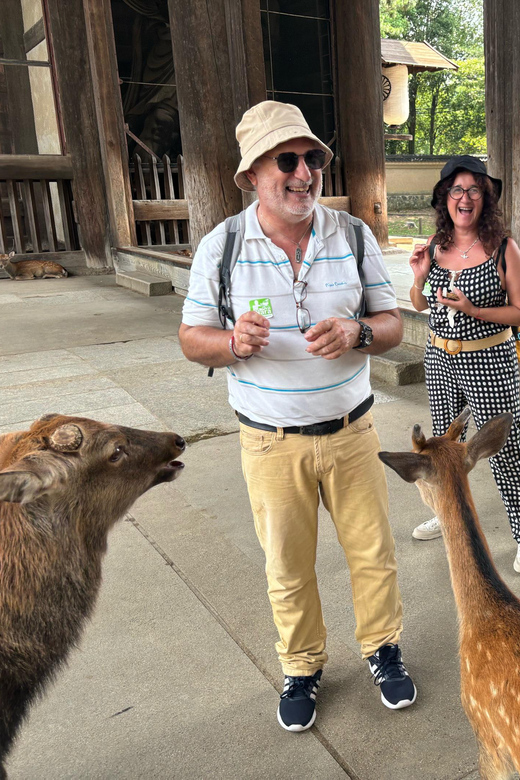
- Nara deer feeding rules: allowed, but only with the park’s special crackers, and the deer can be pushy if you’re not ready.
- Kasuga Taisha’s lantern approach: the stone lantern paths create a quiet, ceremonial mood even outside festival season.
- Half-day logistics: this ends at Kintetsu-Nara Station around noon, so you’re handling Kyoto return on your own.
- Guides + headsets: English live commentary plus multilingual audio makes it easier for mixed groups to follow.
- Weather-proof planning: you’ll be outdoors at the park and shrine, so bring hat/sunscreen or rain gear.
Morning Departure From Kyoto: Tully’s Coffee to Nara by Coach
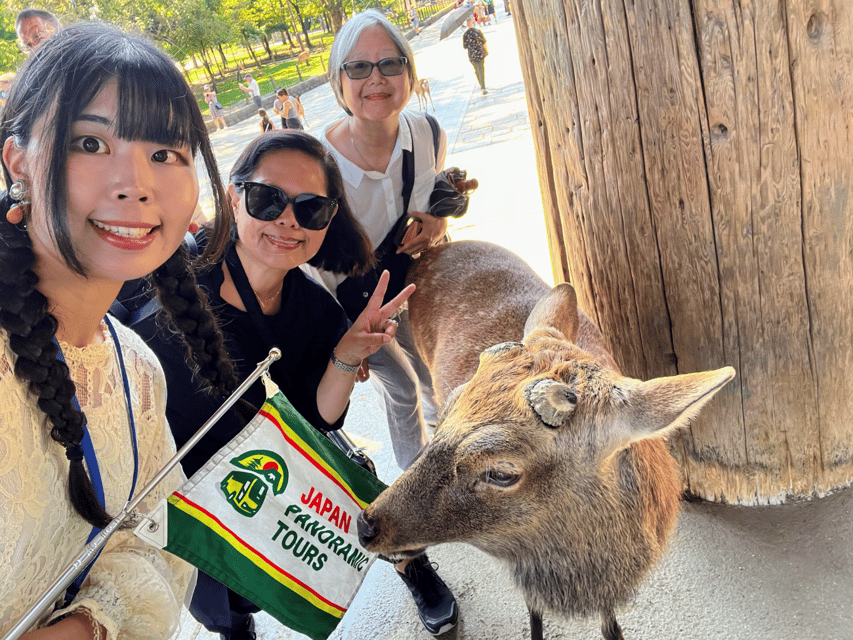
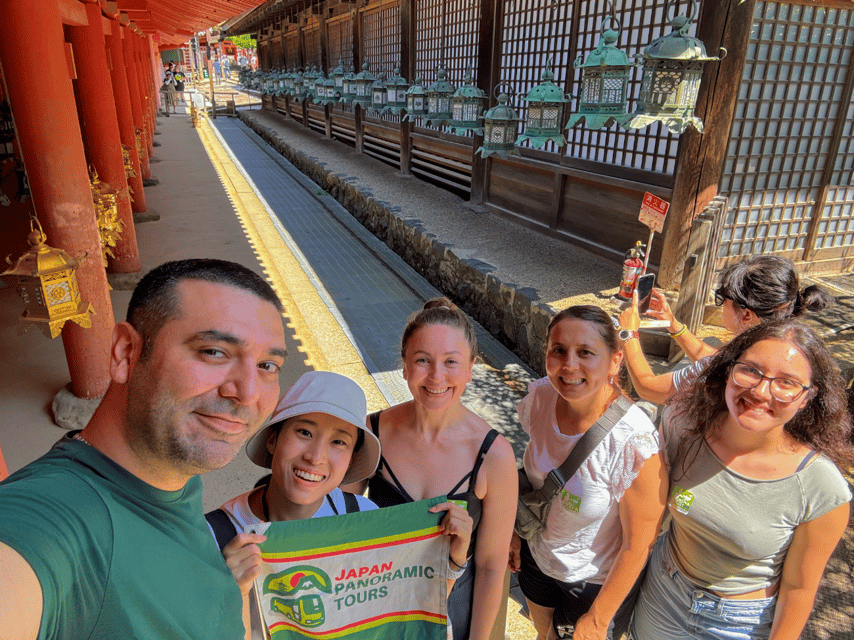
Your day starts at 7:50 AM at the Tully’s Coffee side of Kyoto Avanti (look for the green and white Japan Panoramic Tours flag). The coach pulls out around 8:00 AM, and the drive is about an hour, giving you just enough time to settle in without feeling like you’re commuting all day.
This transport detail matters more than it sounds. Nara’s old neighborhoods and temple areas aren’t built for easy car access, and a coach keeps everyone together so the guide can time entrances and walking loops. Plus, the coach is air-conditioned with free Wi‑Fi, which is a nice perk when you’re tracking your next ride after you finish at the station.
Tip: if you’re prone to underestimating Japan transit mornings, treat this as a “be early” tour. The bus departs on time, and there’s no option to jump in mid-route if you’re late.
You can also read our reviews of more guided tours in Kyoto

Todaiji Temple and the Great Buddha Hall: Nara’s Must-Do Moment
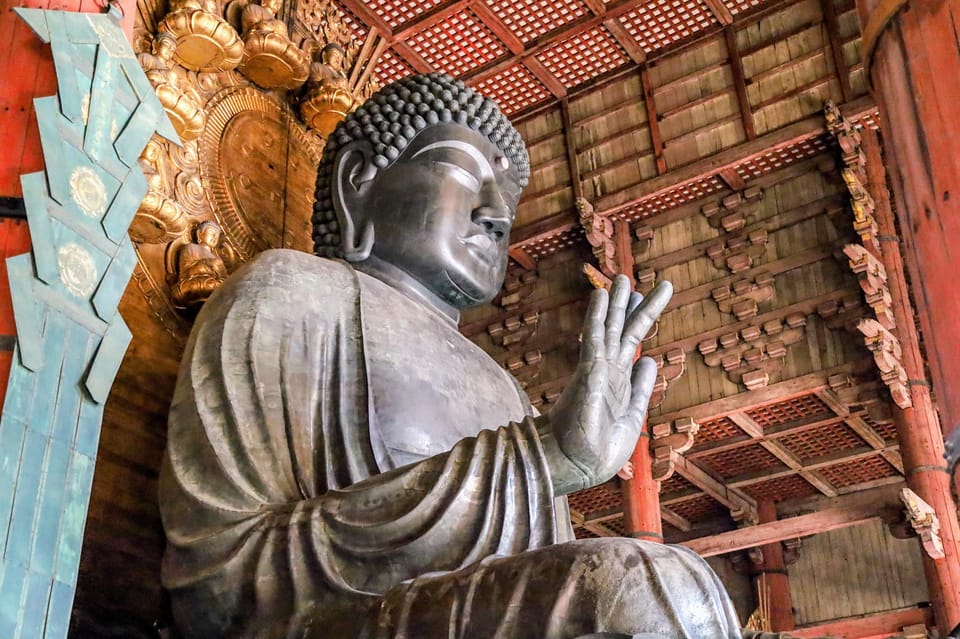
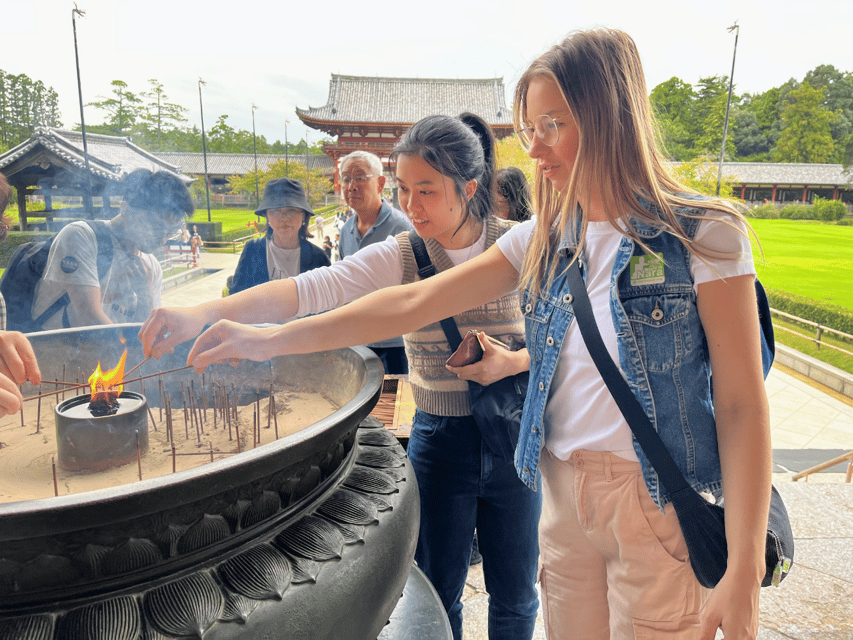
Your first major stop is Tōdai-ji Temple, one of Nara’s headline sites. As you approach, you’ll come face-to-face with the Great Buddha Hall (Daibutsuden), the enormous wooden structure that houses the Great Buddha of Nara. Even if you’ve seen photos, the scale works better in person, because you’re standing inside the space that was designed to amplify the main figure.
You’ll also pass the Nandaimon Gate, the grand entrance into the Todaiji complex. This gate is one of those “you’ll recognize it instantly” landmarks, and it sets the tone as a threshold—like you’re stepping into a major spiritual district rather than just entering a single building.
Here’s what I like about this order: you start with the temple heavyweight while your energy is still fresh. Later in the day, you’ll be moving through a park and a shrine with lots of outdoor strolling. Doing Todaiji first helps the overall half-day feel balanced, not rushed-chaotic.
Practical note: you’ll have a guided segment here (about 50 minutes). That’s enough time to understand what you’re seeing—especially the significance of the Great Buddha—without turning it into an endless queue-and-lectures situation.
Nara Park Deer Encounters: How to Have Fun and Avoid Getting Nipped
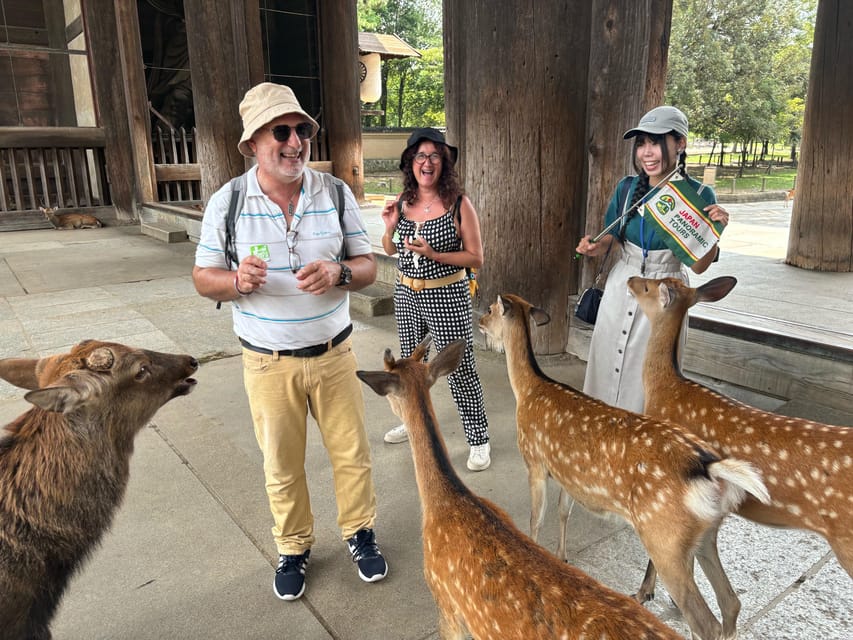
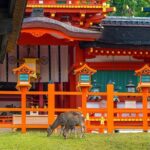
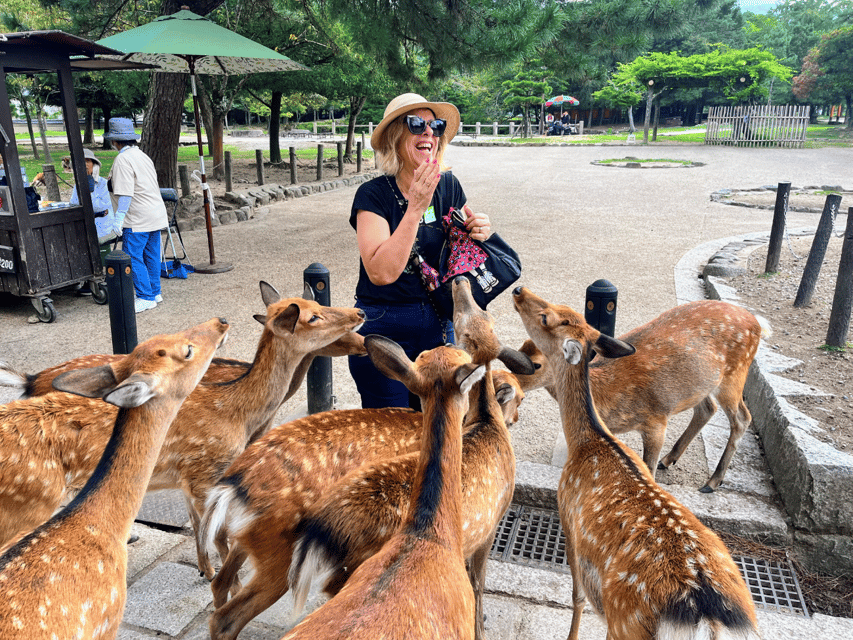
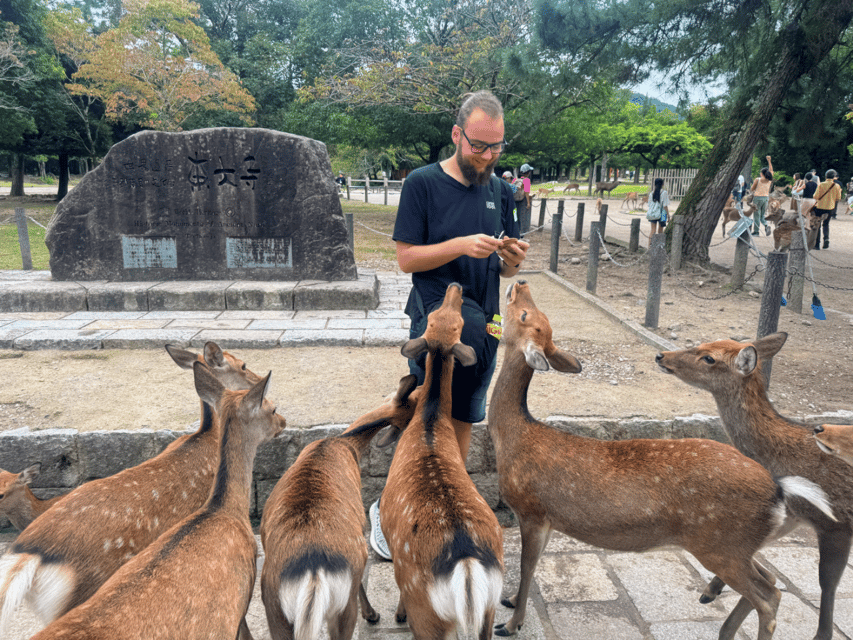
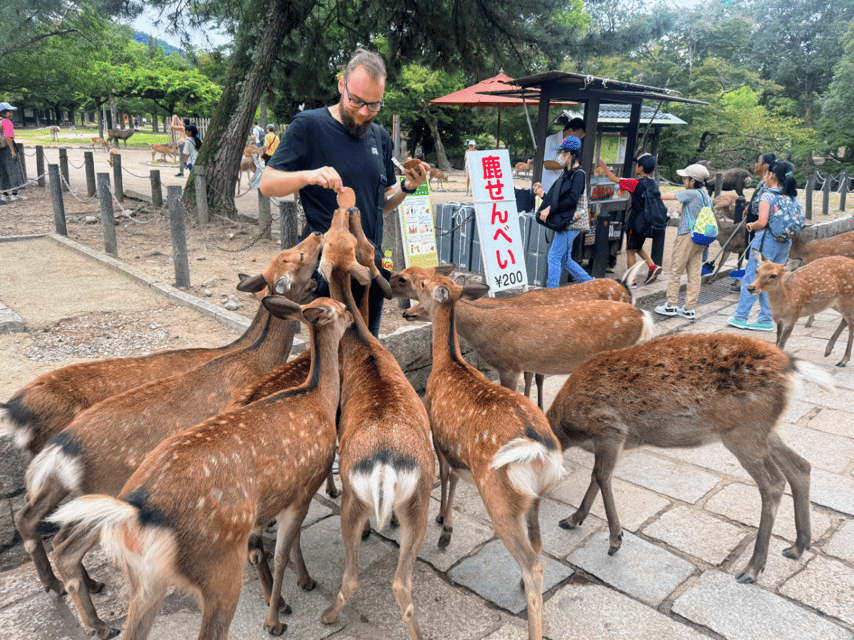
Right by Todaiji is Nara Park, and the deer are the reason many people come. You’ll have a free time window (about 30 minutes) to roam. The key detail is that there are over 1,400 wild deer in the park, and they do not behave like distant zoo animals. They come close because they’ve learned that visitors may have food.
Feeding is allowed, but only with the special crackers sold in the park, and it’s on you to do it responsibly. I’d treat deer feeding like a small skill, not a casual photo moment. Keep the crackers controlled, and watch how the deer approach you. If you don’t have crackers in your hands, the best move is to keep your hands visible and clearly empty so they don’t assume you’re about to offer food.
One really useful habit: keep your crackers secured until you’re ready. If you pull them out constantly, deer can cluster fast. This can get chaotic in a short window, and the deer can get pushy if you’re surrounded.
Also, there’s a reality check: the deer can be friendly and still act like deer. A little space and calm body language goes a long way. You’ll enjoy the encounter more if you’re not trying to chase a perfect selfie while holding food.
Kasuga Taisha Shrine: Lantern Atmosphere Before the Afternoon Surge
After the park, you’ll head to Kasuga Taisha Shrine, a UNESCO World Heritage Site. This is where the tour shifts from “animal chaos” to “quiet ceremonial walking.”
Kasuga Taisha is famous for its 3,000 stone lanterns along the pathways. You’ll see the lantern lines as you move through, and they create that sense of a shrine precinct that’s been tended for ages. The early timing helps too: morning light and a more relaxed pace make the shrine feel more reflective than performative.
Your guided time here is about 40 minutes, which is enough to learn what you’re looking at—shrines and their lantern traditions can be hard to interpret if you arrive without a guide’s context. Once the guide explains the why, the route becomes more than photo spots.
One small operational detail: the order of stops can change depending on traffic and weather. If conditions are rough, you might find the walking pace is adjusted, but the shrine is always part of the core plan.
How the Timing Works in a 4-Hour Half-Day
This is a 4-hour experience with a very clear arc: Kyoto morning start, about an hour to get to Nara, two major heritage sites plus park time, and a finish around 12:00 PM at Kintetsu Nara Station.
That timing is the biggest trade-off to understand. You see the big three: Todaiji, Nara Park deer, and Kasuga Taisha. What you don’t do is linger all day or add extra neighborhoods. Instead, the tour gives you a focused morning hit, then leaves you to decide what you want next.
The upside is value of time. If your Kyoto days are packed, a half-day Nara plan helps you add a major cultural experience without sacrificing your entire day. The downside is that the return trip to Kyoto is not included, and the end location is Nara Station, not back at your Kyoto meeting point.
If you’re the type who likes a plan on paper, decide your return route before the morning. The bus is part of the outbound connection, but once you’re dropped at the station, you’re on your own for getting back.
You can also read our reviews of more tours and experiences in Kyoto
Comfort, Guides, and Audio Headsets in 7 Languages
This tour mixes live guidance and audio support. You’ll travel with an English-speaking professional guide, plus audio headsets for multiple languages (Spanish, French, German, Italian, Portuguese, and Ukrainian, with English handled through the guide). That makes a difference when your group isn’t all English-speaking.
I also like the way this format reduces confusion. You’re not stuck trying to hear one person across a crowd, and the audio helps you keep up while you’re walking between landmarks. It’s a small tech detail, but it helps the tour feel smoother.
Guide style is part of the experience too. The route benefits from hosts who keep things upbeat and organized; names like Ciel, Tommy, Den, Sakura, Nagomi, and Mai show up frequently in the guide stories tied to this itinerary. That usually means your morning is guided with personality, not just facts.
And if you’re the kind of traveler who loves small tips (like where to eat after you’re done), you may get that too. Some guides are known for offering restaurant suggestions right after the tour ends.
Price and Value: Is $77 Worth a Half-Day in Nara?
At $77 per person for about 4 hours, this is not the cheapest way to reach Nara—but it’s also not paying for fluff. You’re paying for three high-value components:
- Guided interpretation at Todaiji and Kasuga Taisha, where context makes a big difference.
- Admission to Todaiji, so you don’t have to figure that out on your own.
- Transportation by air-conditioned coach with free Wi‑Fi, plus multilingual audio support.
The biggest value question is how you handle the return to Kyoto. Since the half-day tour ends around noon in Nara, you may add the cost (and time) of your Kyoto return. If you already plan to spend more time in Nara after the morning, that trade can feel less painful. If you’re trying to get back to Kyoto quickly and cheaply, make your return plan ahead so you’re not stressed at the end.
If you want a “big sights, minimal planning” morning, I think the price makes sense. If you’re comfortable navigating transit and prefer DIY sightseeing, you might do it cheaper on your own—but you’d miss the guided flow that keeps the morning from turning into guesswork.
What to Bring and Rules That Actually Matter
This tour is practical about what you’ll need because it’s partly outdoors and partly in heritage sites with crowd flow.
Bring:
- Comfortable shoes (moderate walking plus stairs and hills)
- Hat and sunscreen
- Camera
- Water
- Cash (helpful for small purchases, including park crackers)
Also keep these rules in mind:
- No flash photography
- Smoking is not allowed
- No intoxication and no alcohol/drugs in the vehicle
- Don’t litter
- Bikes aren’t allowed
- Feeding deer is allowed only with the park’s special crackers
One more crowd-management tip for the deer area: keep your body calm and your hands under control. If you’re holding crackers, you’re basically sending a message. If you’re empty-handed, show that clearly so you’re not accidentally begging for a deer entourage.
Who This Tour Fits Best (and Who Should Skip)
This works especially well if you:
- Want the top Nara sites in one morning
- Prefer a guided route that keeps you oriented
- Travel with mixed languages and appreciate the audio headset options
- Like animals but want the feeding done responsibly with clear guidance
It’s less ideal if you have mobility concerns. The tour notes it’s not suitable for people with mobility impairments or wheelchair users, and the walking includes stairs and hills.
If you’re traveling with kids, it can still be a good match as long as they can handle steady walking and waiting in temple areas. The deer time is often the most memorable part of the morning, and that’s where you’ll likely get the happiest reactions—just remember it’s not a quiet petting zone.
Should You Book This Kyoto to Nara Morning Tour?
Book it if you want a fast, high-impact Nara morning: Todaiji’s Great Buddha, deer in Nara Park, and Kasuga Taisha in one organized flow, with coach comfort and multilingual audio support. The whole thing is designed to reduce planning stress, which is exactly what you want when you’re short on time.
Skip or think twice if your priority is a full-day exploration, or if you strongly need the tour to handle your return to Kyoto. Because this half-day ends around noon at Kintetsu Nara Station, you should already be comfortable moving through transit on your own, or you should plan a lunch-and-stay strategy in Nara after the tour.
FAQ
What time does the tour start from Kyoto?
You meet at 7:50 AM at Tully’s Coffee in Kyoto Avanti, and the departure is 8:00 AM.
Where does the half-day tour end?
The tour finishes at Kintetsu-Nara Station around 12:00 PM.
Is transportation included?
Yes. You ride an air-conditioned coach with free Wi‑Fi.
Is a guide included, and what language is it?
Yes. You get a professional English-speaking tour guide, and you also receive audio headsets with additional language options.
Are audio headsets included, and which languages are offered?
Yes. Audio headsets are included for Spanish, French, German, Italian, Portuguese, and Ukrainian.
Can you feed the deer in Nara Park?
Yes, feeding the deer is allowed, but only responsibly and only with the special crackers sold in the park.
What should I bring for the tour?
Bring comfortable walking shoes, a hat, sunscreen, water, a camera, and cash. The tour also involves walking with stairs and hills.