REVIEW · KYOTO
Kyoto: Meet the Geisha Maiko with Gion Walking Tour
Book on GetYourGuide →Operated by Japan Wonder Travel · Bookable on GetYourGuide
A private maiko visit changes how you see Kyoto. You’ll meet a maiko (apprentice geisha) and a former geiko in an Ochaya (tea house), then get a personal conversation that goes way past sightseeing. Before that, your guide takes you through Gion’s streets so the whole experience feels grounded, not staged.
What I love most is the up-close performance plus the Q&A conversation, where you can ask about training, daily life, and tradition. I also like that the walk is short but intentional, with guided stops that help you read the neighborhood before you head indoors.
One thing to consider: the performance happens on the 2nd floor with stairs, so this isn’t a fit if you have mobility limits or use a wheelchair. Also, on rainy days the venue has rules about wet socks/clothes, so bring a strategy.
In This Review
- Key highlights that make this tour special
- Entering a private Ochaya appointment in Gion
- Gion walking route: canal, shrine, Hanamikoji, and photo stops
- A practical note on the pace
- Inside the Ochaya: what you’ll see and who you’ll meet
- The performance and Q&A: where the culture clicks
- The performance
- The Q&A
- Kimono option and the socks rule (don’t skip this)
- Photos, permission, and etiquette inside the venue
- Price and value: what $106 buys you in real terms
- Who should book this tour (and who shouldn’t)
- Should you book this Geisha Maiko in Gion tour?
- FAQ
- How long is the tour?
- What is included in the experience?
- Where do I meet the guide?
- Do I need to wear socks?
- Can I take photos or record video?
- What happens if it rains?
- Is the performance accessible by elevator?
- Is this tour suitable for kids or mobility issues?
- Is there free cancellation?
Key highlights that make this tour special
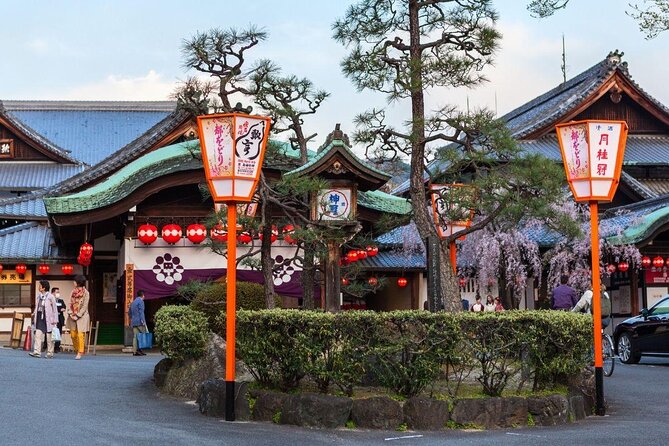
- Private Ochaya meeting with a maiko and a former geiko
- Live performance (typically 1–2 dances) right in the venue, not a theater
- Conversation + Q&A with both sides, plus venue-owner insight
- Guided Gion walk to connect what you see outdoors with what you learn indoors
- Socks + etiquette rules that protect the experience (and your access)
Entering a private Ochaya appointment in Gion
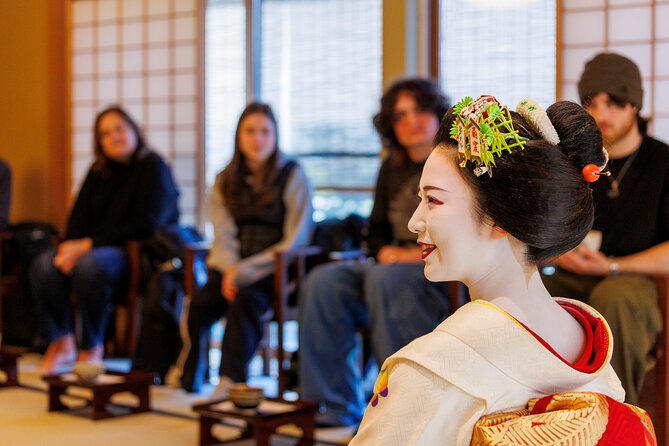
This tour is built around one rare moment: getting invited into an Ochaya setting where a maiko is present, not just photographed at a distance. Gion can look like a picture postcard from the street, but the value here is that you’re stepping into the culture behind the postcard.
In practical terms, you start with a guided walk through Gion. Then you move into a private residence/tea-house venue called an Ochaya, where you’ll watch a short live performance by the maiko and hear stories directly from a maiko and a former geiko. The vibe is calm and respectful. You’re not herded through a script. You’re there to listen, ask questions, and understand how the tradition works from the inside.
This is also one of the few Kyoto experiences where the conversation matters as much as the dance. Many guests highlight the Q&A time as the most rewarding part because it turns stereotypes into specifics—how training shapes habits, what daily routine looks like, and what preserving tradition actually means.
You can also read our reviews of more walking tours in Kyoto


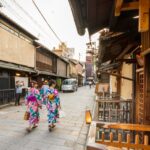
Gion walking route: canal, shrine, Hanamikoji, and photo stops
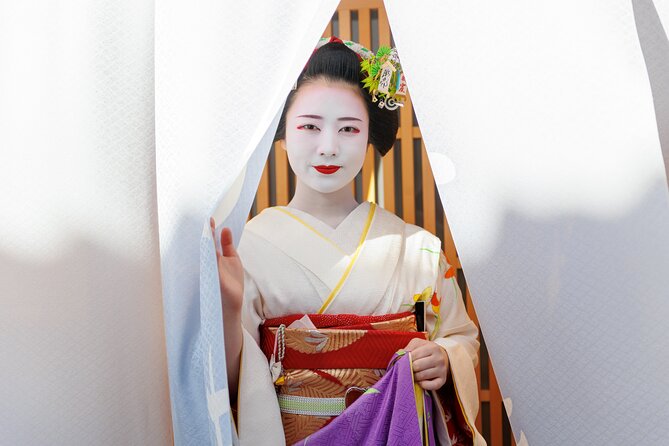
The outdoor part is about getting oriented fast. You’re spending roughly 70–80 minutes with a guide in Gion, and it’s paced so you can actually see details rather than just shuffle between landmarks.
Your walk can start from one of two places:
- Shirakawa Canal
- A kimono rental store option near Gion (you change into your kimono first, then head on your own about 3 minutes to the Izumo-no-Okuni statue, where your guide waits)
From there, the route typically includes a quick loop of stops such as:
- Shirakawa Canal (guided, about 30 minutes)
- Tatsumi-jinja Shrine (brief guided stop)
- Hanamikoji Street (guided stop)
- Gion Corner (guided stop)
- Kenninji Temple (photo stop plus about 15 minutes sightseeing/tour)
- Miyagawasuji (photo stop and longer visit, about 1.5 hours)
You finish at Miyagawasuji.
Why this matters: when you reach the Ochaya, you’ll have a mental map of the neighborhood. You’ll also know what you’re looking at—why particular streets feel important to the world of maiko/geiko living and working in Gion. Instead of leaving the walk with random photos, you leave with context you can carry into the Q&A.
A practical note on the pace
The route is designed to be “walkable,” but the tour length can run a bit longer depending on the day. That matters in Kyoto. If you’re trying to catch a specific dinner reservation, give yourself buffer time.
Inside the Ochaya: what you’ll see and who you’ll meet
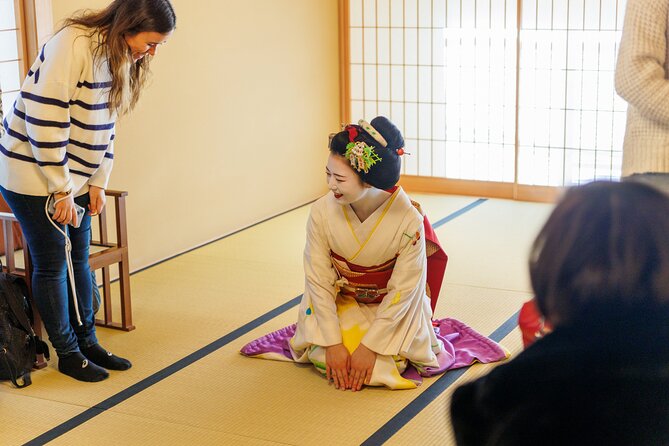
This is the heart of the tour: the meeting in a private tea-house venue called Ochaya. You’ll spend about 90 minutes in the meeting experience, and it includes multiple parts:
- A live performance by the maiko
- A conversation with the maiko
- A conversation-style Q&A where a former geiko and a venue owner share insights
- A photo session with the maiko
The performance is usually described as a short set—often 1–2 dances. Don’t assume it will feel like a long stage show. The real “time value” comes from the talk afterward, where you can ask follow-up questions and get direct answers.
In the Q&A, the tone tends to be personal but respectful. Guests often mention that the former geiko’s stories can feel warm and human, not like history lessons. That’s also where you pick up the “unseen” pieces: how tradition survives when the outside world changes, and how etiquette, discipline, and relationships shape daily life.
The performance and Q&A: where the culture clicks
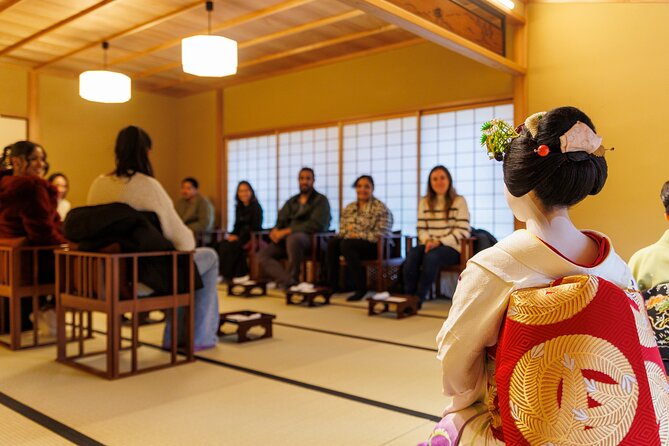
If you only cared about a dance, you could watch performances in many places. What makes this tour different is what happens before and after that dance.




The performance
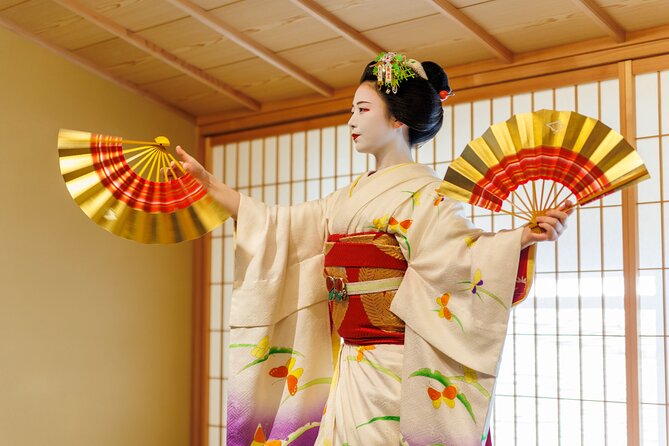
You’ll watch the maiko perform inside the venue—on the 2nd floor, reached by stairs only. That means you’ll need a little mobility comfort for the venue access. You also must wear socks at the performance venue. On rainy days, the venue has strict comfort rules: avoid wet clothes and wet socks when you arrive.
The Q&A
This is the part that most guests remember as the most meaningful. You can ask questions about:
- training and development
- life in the geisha/geiko world
- traditions and how they’re understood today
Many guests also mention that the guide helps translate and keeps the flow respectful, especially if you ask something specific or personal. Guides who have led tours like Takuma, Mika, Eric, Ellie, Yuko, Naomi, Ayako, Tom, and Chiko have been praised for clear English translation and patience, which matters because your best questions deserve good understanding on both sides.
A quick tip from experience: go in with 2–3 questions you actually care about, not a long list. When the moment is intimate, focused questions get the best answers.
Kimono option and the socks rule (don’t skip this)
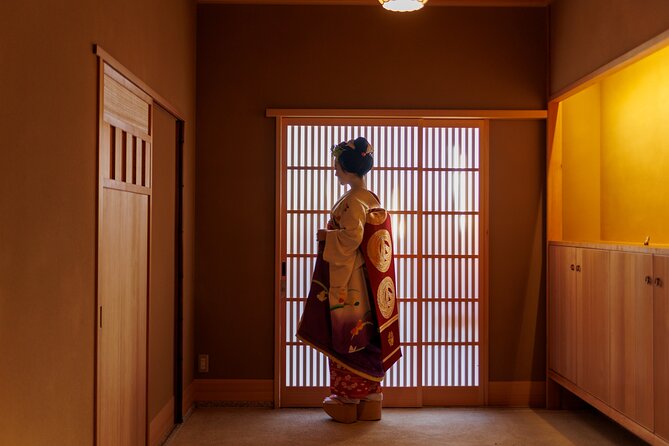
Some departures include a kimono rental option. If you choose it, plan for the handoff carefully:
- After you change into your kimono, you must go on your own to the Izumo-no-Okuni statue, about a 3-minute walk from the rental store.
- Your guide will meet you there.
Also: socks aren’t optional. The information is explicit that you MUST wear socks at the performance venue. Bring socks you’re comfortable walking in, and if it’s rainy, bring a plan to keep them dry during the walk.
On rainy days, the tour runs rain or shine. You’ll use an umbrella during the walking portion, but you still need to arrive ready for the venue rules (no wet socks/clothes). That’s not a “nice-to-have.” It’s the difference between feeling comfortable and feeling stressed.
Photos, permission, and etiquette inside the venue
You can take photos and record video, but only in specific windows.
- Photography and video recording are allowed during the performance and during the photo session.
- If you want to upload photos of the maiko on the internet, you must get direct permission from the maiko beforehand.
- You cannot upload any video on the internet.
This is one of those areas where following the rules protects the people involved and the setting itself. The tour is designed to be respectful, and you’ll feel that from the moment you arrive.
If you care about getting good photos, the best move is to treat the allowed moments like mini photo shoots: be ready, keep your attention on your timing, and don’t scramble for your camera halfway through the performance.
Price and value: what $106 buys you in real terms
At $106 per person, this isn’t a budget add-on. So I judge it on what you get that you can’t easily DIY.
What you’re paying for:
- Access to an Ochaya meeting setting (a private residence/venue)
- A live maiko performance in that setting
- A conversation + Q&A with a maiko, a former geiko, and an owner
- A guided Gion walk that sets context so you understand what you’re seeing
For many first-time visitors, Kyoto’s “geisha spotting” experience is frustrating: you can see costumes, but you can’t ask questions. This tour swaps that for a guided, structured cultural exchange where listening is part of the deal.
Also, the group size is kept small, and that matters here. In a small group, the Q&A feels like a conversation rather than a lecture. One guest noted a group of about seven, and that size is exactly where you’ll feel comfortable asking follow-ups.
Who should book this tour (and who shouldn’t)
This experience fits best if you:
- want a real look behind the costumes and headlines
- enjoy respectful Q&A and cultural explanations
- care about tradition explained by people who live it
It’s not suitable if:
- you’re traveling with children under 10
- you have mobility impairments or you use a wheelchair
- you’re not comfortable with stairs to reach the performance room
If you’re healthy and mobile, the main “physical prep” is simple: bring socks, be ready for stairs, and keep your socks/clothes dry on rainy days.
Should you book this Geisha Maiko in Gion tour?
Yes, I think you should book it if you want the kind of Kyoto moment that doesn’t vanish after the photo. The value isn’t just the dance. It’s the access to a maiko and former geiko conversation in a private Ochaya setting, plus the way the Gion walk helps you understand what you’re seeing.
Book it especially if you like experiences where etiquette, discipline, and story matter. If you’re worried about stairs, wet-weather rules, or you need wheelchair accessibility, then skip it.
If you do book, go with a calm mindset. This isn’t a rapid checklist. It’s an honor-based cultural exchange. Show up ready to listen, ask thoughtful questions, and follow the photography rules—then you’ll get far more out of it than the price tag suggests.
FAQ
How long is the tour?
The duration is typically 3 to 5 hours, depending on the day.
What is included in the experience?
You get a local English-speaking guide, a Gion walking tour (about 70–80 minutes), a maiko meeting (about 90 minutes), a live performance by a maiko and former geiko (usually 1–2 dances), a conversation with the maiko and venue owner, a Q&A, and a photo session with the maiko.
Where do I meet the guide?
The meeting point can vary by the option you book. Common options include Shirakawa Canal or the kimono rental store option, where you’ll change first and then meet your guide at the Izumo-no-Okuni statue.
Do I need to wear socks?
Yes. You MUST wear socks at the performance venue, and you should bring socks.
Can I take photos or record video?
Photography and video recording are allowed only during the performance and the photo session. If you plan to upload photos of the maiko online, you must obtain direct permission from the maiko beforehand. You cannot upload any video online.
What happens if it rains?
The tour runs rain or shine. On rainy days, avoid arriving with wet clothes and wet socks at the venue. Use an umbrella during the walk.
Is the performance accessible by elevator?
No. The maiko performance is held on the 2nd floor, and access is by stairs only.
Is this tour suitable for kids or mobility issues?
It is not suitable for children under 10, people with mobility impairments, or wheelchair users.
Is there free cancellation?
Yes. You can cancel up to 24 hours in advance for a full refund.