REVIEW · KYOTO
Kyoto Early Bird English Tour: Gion & Higashiyama(Private opt)
Book on Viator →Operated by OTAKU hopper · Bookable on Viator
Kyoto wakes up early, and so should you. This Kyoto Early Bird English Tour is built for the quiet hours in Gion and Higashiyama, with a guide to help you move smoothly from shrine to street to viewpoint without getting stuck with a map. I especially like that the route hits major landmarks like Kiyomizu-dera and ends at Yasaka Shrine, plus you get professional photos taken during the walk. One thing to consider: it’s a walking experience with a moderate fitness level, and Kiyomizu-dera admission isn’t included.
What makes this outing feel worth it is the balance of famous stops and photo-friendly timing. The guide commentary also matters here—you’re not just passing sights, you’re learning what to notice as you go (like why certain shrines are prayed at for very specific hopes). A possible drawback: because it’s only about 3 hours, you’ll want comfortable shoes and a realistic expectation that each stop is a “see it well, then move on” moment rather than a long sit-down visit.
In This Review
- Key things to know before you go
- Gion to Higashiyama: why this early bird route works
- Meeting point near Kawabatacho: start where Higashiyama begins
- The guide factor: Ikki Kataoka, English clarity, and the photo bonus
- Stop 1: Gion, Kyoto’s classic geisha district street feel
- Stop 2: Hanamikoji Street and the small thrill of spotting geisha or maiko
- Stop 3: Yasui-Konpiragu for bad-relationship cutting prayers
- Stop 4: Yasaka Noto (Hokanji) and the no-nails wooden pagoda story
- Stop 5: Sannen-zaka and Ninen-zaka for stepped-street Kyoto shopping vibes
- Stop 6: Kiyomizu-dera, the UNESCO draw (and the one extra cost)
- Stop 7: Yasaka Koshin-Do and colorful temple decoration contrast
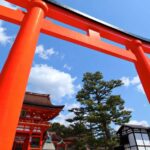
- Stop 8: Yasaka Shrine, prosperity and the end of the loop
- Duration and pacing: 3 hours of “see it, don’t rush it”
- Price and value: what $64.01 buys you in Kyoto terms
- What to wear, and what to bring (so the walk feels easy)
- Who this tour suits best
- Should you book the Kyoto Early Bird English Tour?
- FAQ
- FAQ
- How long is the Kyoto Early Bird English Tour?
- Is this tour private?
- What stops are included in the itinerary?
- Do I have to pay for Kiyomizu-dera Temple?
- Are photos included?
- Where does the tour start and end?
Key things to know before you go
- English guidance that keeps the route logical from Gion into Higashiyama without you second-guessing turns
- Morning timing that helps you enjoy iconic streets and temple areas before peak crowds
- A guide who can shoot photos, including the very hands-on approach from Ikki Kataoka
- UNESCO World Heritage Site stop included in the route via Kiyomizu-dera (with the entrance fee added on-site)
- Multiple classic Kyoto lanes like Hanamikoji and the Sannen-zaka / Ninen-zaka steps streets on the same loop
Gion to Higashiyama: why this early bird route works
If your Kyoto plan includes Gion and Higashiyama, you’ve probably already realized the problem: everything is close, and that makes it easy to waste time. Walking between major areas is simple—until you add crowds, wrong turns, and figuring out what to prioritize at each stop.
This tour tackles that head-on. It’s a guided loop built around the sights people come for: the geisha district streets of Gion, the shrine-and-temple cluster of Higashiyama, and a signature temple visit at Kiyomizu-dera. With an English-speaking guide, you get commentary that helps you understand what you’re looking at while you’re walking, not after the fact. And because it’s a private tour option (your group only), you’re not stuck waiting on a mixed-size group pace.
The “early bird” angle isn’t marketing fluff either. The morning start time (for the early slot, including the 7am option mentioned in guide-focused feedback) is meant for enjoying the streets before they feel like a theme-park line. If you like photos without a wall of people in them, start early on purpose. Kyoto rewards you for it.
You can also read our reviews of more private tours in Kyoto

Meeting point near Kawabatacho: start where Higashiyama begins

The tour starts at a very specific landmark: Statue of Izumo-no-Okuni, Kawabatacho, Higashiyama Ward, Kyoto. It’s a helpful detail because it anchors the whole walk. You’ll also end back at the same meeting point, so you don’t need to worry about trains or a second rendezvous point at the end of your morning.
Two practical tips matter here. First: give yourself enough buffer to arrive on time—if you’re late, you can’t join and there’s no refund. Second: since it’s a walking experience with a moderate fitness level, you’ll enjoy the tour more if you arrive with shoes you trust for uneven stone lanes.
The guide factor: Ikki Kataoka, English clarity, and the photo bonus
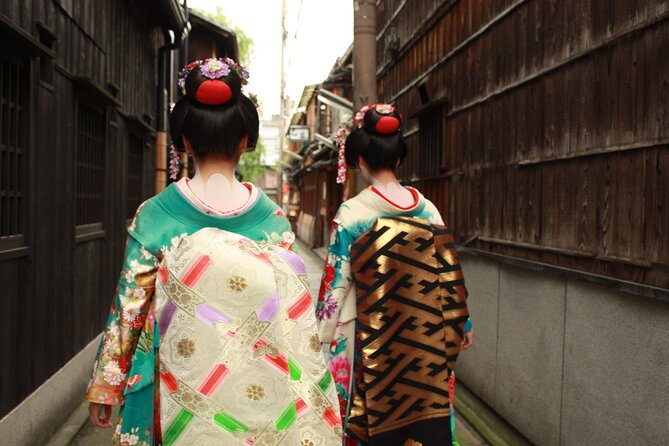
This is where the experience can tilt from good to memorable: the guide. The tour is led by a passionate local English-speaking guide, and the big upgrade is that professional photos are taken during the tour.
In particular, Ikki Kataoka comes up in feedback for two reasons. One is communication: clear English and patience, including support for visitors who may move more slowly. The other is that he can act like a photography coach during the walk—especially in the early slot, where there’s better light and fewer interruptions. If you’d like Kyoto photos that don’t look like they were taken while rushing, this is a meaningful inclusion.
Even if you already plan to take your own shots, having someone else manage timing and angles can save you energy. You spend less time fiddling with your phone on crowded stairs and more time looking at the sights.
Stop 1: Gion, Kyoto’s classic geisha district street feel
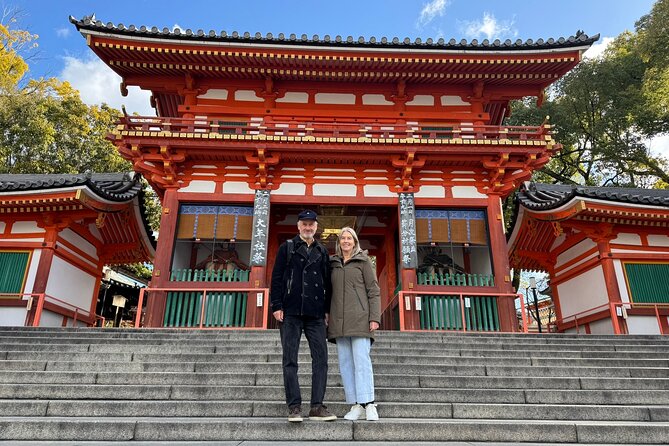
You begin in Gion, Kyoto’s most famous geisha district. It’s known for preserved traditional streets and the look of older Kyoto architecture. In a short walking window, you’ll get the “you are in the right place” feeling quickly—wooden storefronts, teahouse atmosphere, and that sense of old-world Kyoto.
This stop is only about 10 minutes, so think of it as orientation. Your guide’s commentary here is the key. You’re not just sightseeing a pretty district—you’re learning what you should notice: the relationship between narrow streets, traditional facades, and the way life has continued in these lanes.
Stop 2: Hanamikoji Street and the small thrill of spotting geisha or maiko
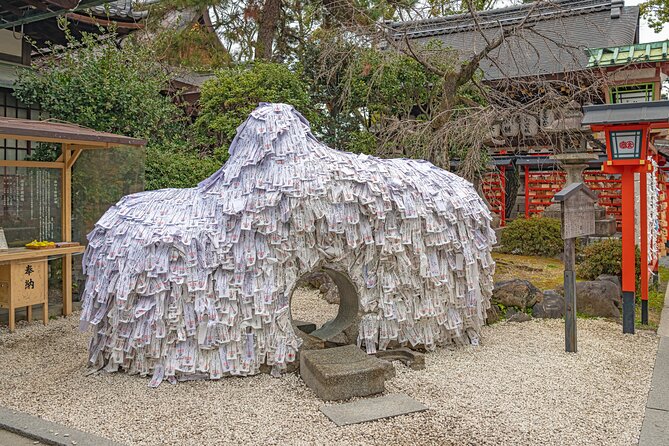
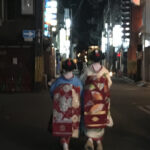
Next up is Hanamikoji Street, the famous Gion lane where you might see geisha and maiko. The idea isn’t to promise sightings (that depends on real life), but the value of this stop is that it’s the concentrated, recognizable part of Gion.
It’s scheduled for about 15 minutes, and that’s enough time to walk the street slowly with purpose rather than sprinting through. You’ll likely pass traditional teahouses and machiya-style wooden buildings. If you want photos that look like Kyoto postcards but still feel respectful, this is where timing matters.

Stop 3: Yasui-Konpiragu for bad-relationship cutting prayers
Then the walk turns into something more spiritual and specific: Yasui-Konpiragu. This shrine is described as a place people pray to end bad relationships and shift into better connections. That kind of focus makes Kyoto shrines feel different from generic “see a temple” stops.
It’s only 15 minutes, but the point is not a long ritual. It’s to understand the shrine’s identity and what visitors come for. If you like symbolism and local meaning, this is a great mid-morning stop because it adds depth without slowing the itinerary too much.
Stop 4: Yasaka Noto (Hokanji) and the no-nails wooden pagoda story
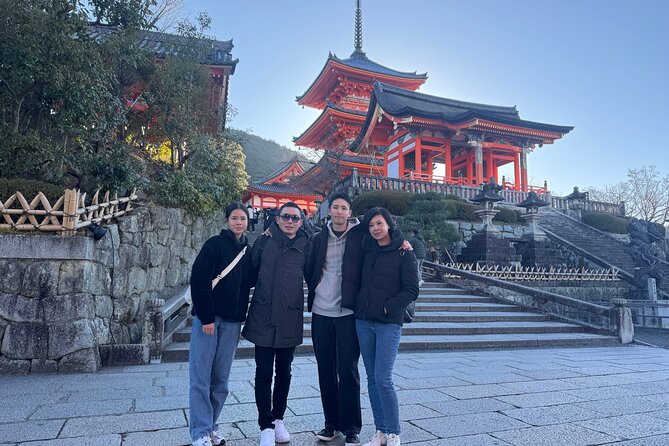
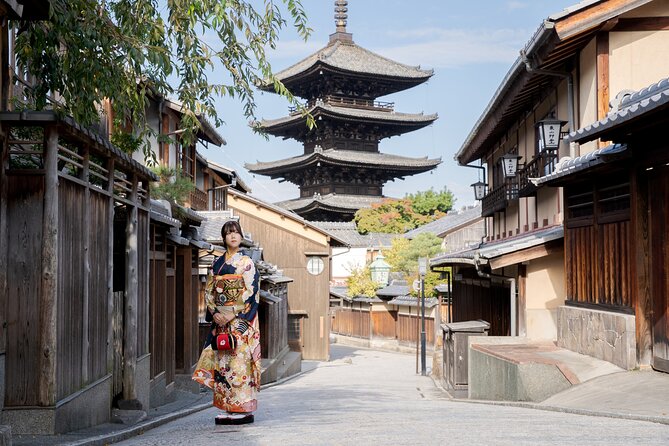
You’ll see Yasaka Noto (Hokanji temple) next. The highlight here is architectural: one of the oldest wooden structures in Japan, noted for being built without nails. The scale is described as overwhelming, which is important because photos sometimes don’t convey size well.
The stop is about 15 minutes, so again, this is a “get it in front of your eyes” moment. If you enjoy noticing construction details and the way old wood ages, you’ll get more from this stop by slowing down for a minute at the edges of the structure to take in proportions.
Stop 5: Sannen-zaka and Ninen-zaka for stepped-street Kyoto shopping vibes
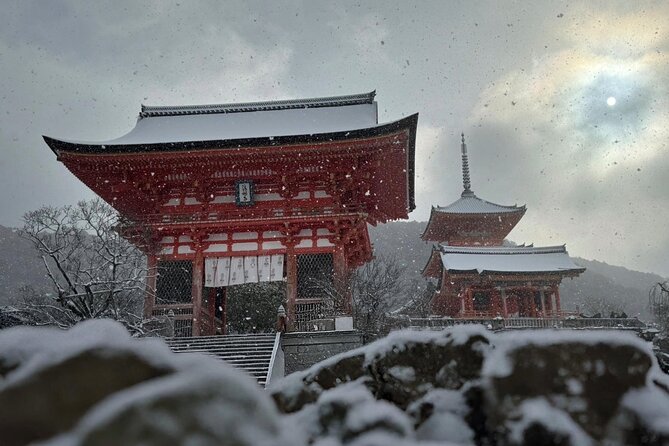
After the architecture and shrine stops, the route moves into the postcard lanes: Sannen-zaka and Ninen-zaka. These are stone-paved streets lined with shops and restaurants in historic-style wooden buildings.
You get about 15 minutes here. That’s enough time to enjoy the feel of the lanes without turning it into an hour of browsing. If you do stop for snacks, keep it quick—this tour keeps a tight loop pace, and you’ll want to stay on schedule for the Kiyomizu-dera visit.
Also, the stairs and stones can be a pain if you’re wearing slick footwear. Comfortable shoes aren’t optional on this kind of route.
Stop 6: Kiyomizu-dera, the UNESCO draw (and the one extra cost)
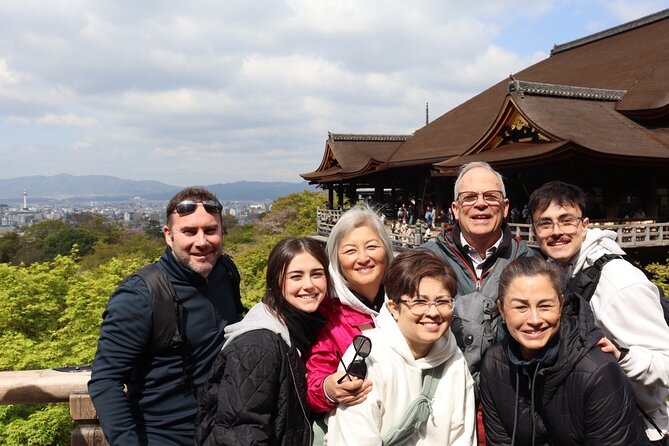
Now for the big ticket: Kiyomizu-dera Temple. This is listed as a main highlight and is scheduled for about 1 hour. Admission is not included, with the entrance fee listed at ¥500 per person, so you’ll want to have cash or a payment method ready.
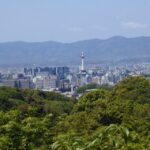
Why it’s worth the extra cost: it’s the route’s UNESCO World Heritage stop, and it’s also described as offering panoramic views from a mountain-top setting. Even if you’ve seen photos online, the real value here is the combination of the site’s scale and the payoff of the viewpoint area.
One practical note: Kiyomizu-dera is the most popular spot on the itinerary. It doesn’t matter how early you go—this is still a famous temple—so plan to move with the flow and expect some waiting at the busiest sections. The guide helps you manage that time better than you would alone.
Stop 7: Yasaka Koshin-Do and colorful temple decoration contrast
After Kiyomizu-dera, you’ll visit Yasaka Koshin-Do, described as a temple with an unknown construction date. The standout here is visual: colorful decorations, especially notable because many temples are comparatively subdued in tone.
This stop runs about 15 minutes. It’s a good palate cleanser after Kiyomizu-dera because it shifts your attention from monumental views to detail and color. If you enjoy photography, this is also a stop where color can make your images feel distinct rather than repetitive temple-to-temple.
Stop 8: Yasaka Shrine, prosperity and the end of the loop
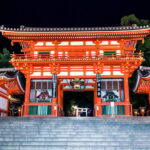
Your final destination is Yasaka Shrine, scheduled for about 30 minutes. It’s described as the headquarters of 2,300 related shrines across Japan, and it’s dedicated to gods of prosperity and protection. You also get time here to linger a bit more than the earlier stops, which makes sense because it’s a natural endpoint for the walking circuit.
This last stretch is useful because it gives you closure. You’ve built up from Gion’s streets to Higashiyama’s shrines and steps lanes, and then you land at a major shrine with enough time to soak it in.
Duration and pacing: 3 hours of “see it, don’t rush it”
The tour runs approximately 3 hours. That length is part of its value. It’s long enough to get real coverage—Gion, multiple shrine/temple stops, a UNESCO site, and the famous lanes between—but short enough that you can still do other Kyoto plans the same day.
Because each stop is timed (often around 10–15 minutes, with Kiyomizu-dera at 1 hour), you should think of it as guided focus. You won’t get hours at each location. Instead, you’ll get a curated route where the guide helps you decide what matters most in each spot.
If you’re the type who wants to read every sign for 30 minutes, you may feel slightly time-pressed. If you like moving with intention and learning key context as you go, this pacing works well.
Price and value: what $64.01 buys you in Kyoto terms
The price is listed at $64.01 per person. At first glance, it’s not a steal. But value in Kyoto often comes down to how much you prevent headaches: navigating early morning streets, learning what to notice at each shrine and temple, and saving time you’d otherwise spend figuring out routes and priorities.
Here’s what you’re getting that supports the value:
- A local English-speaking guide who gives commentary instead of just pointing
- Professional photos taken during the tour
- A route that includes multiple major sights and culminates with Yasaka Shrine
- Optional flexibility with private or small-group formats
One cost you should factor in: Kiyomizu-dera entrance is ¥500 per person. That’s separate, but at least it’s clearly stated. If you were going to Kiyomizu-dera anyway, the tour price is easier to justify because your guided routing and photo moment are doing the heavy lifting.
Also, it’s often booked about 43 days in advance on average. That’s a clue: early slots can fill up, especially the quieter morning options. If you know your travel dates, don’t procrastinate.
What to wear, and what to bring (so the walk feels easy)
Since it’s a walking experience with a moderate physical fitness level, your comfort depends on basics:
- Wear comfortable walking shoes for stone lanes and stairs
- Keep your itinerary mindset tight: you’ll be moving regularly
- Bring water if you know you’ll need it, since food and drinks aren’t included
If you’re sensitive to cold mornings, dress for it. Early bird tours often feel crisp before the city warms.
Who this tour suits best
This tour fits best if you:
- Want the Gion + Higashiyama highlights without piecing together multiple routes
- Like learning quick, practical context from an English guide
- Care about photos and would rather not rely on luck for timing
- Prefer a structured morning plan you can repeat on your own later
It may not be ideal if you need long, slow visits at each temple, or if you don’t want to pay the extra Kiyomizu-dera fee.
Should you book the Kyoto Early Bird English Tour?
If your goal is a high-signal morning in Kyoto—a guided sweep through Gion, key shrines, the step streets, and Kiyomizu-dera—this tour is an easy yes. The strongest reasons are practical: early timing, clear English guidance, and professional photos with a guide who pays attention to pacing (including patient support for older visitors, as reflected in guide-focused feedback).
Book it if you’re excited to cover a lot efficiently without feeling lost. Skip it if you want unhurried time in each location or you’re uncomfortable with a steady walking route and stairs.
FAQ
FAQ
How long is the Kyoto Early Bird English Tour?
It runs for about 3 hours.
Is this tour private?
Yes. The experience is listed as a private tour/activity, meaning only your group participates. There’s also an option for small-group formats.
What stops are included in the itinerary?
The route includes Gion, Hanamikoji Street, Yasui-Konpiragu, Yasaka Noto (Hokanji temple), Sannenzaka/Ninenzaka, Kiyomizu-dera Temple, Yasaka Koshin-Do, and Yasaka Shrine.
Do I have to pay for Kiyomizu-dera Temple?
Yes. The Kiyomizu-dera Temple admission fee (¥500 per person) is not included.
Are photos included?
Yes. Professional photos are taken during the tour.
Where does the tour start and end?
It starts at the Statue of Izumo-no-Okuni, Kawabatacho, Higashiyama Ward, Kyoto and ends back at the meeting point.